
Ethos refers to the distinctive character or spirit
![Defining & Re-rooting Professions ‘a group. . . [primarily] pursuing a learned art as](https://slidetodoc.com/presentation_image_h/8a3a16f82ac23e27d0feccf5f5f7dc62/image-4.jpg "Defining & Re-rooting Professions ‘a group. . . [primarily] pursuing a learned art as")
- Slides: 13
‘Ethos’ refers to the ‘distinctive character’ or ‘spirit’ of a community or culture. It goes beyond an ethics of outof-the-ordinary dilemmas, decisions and doing, to one of ordinary, everyday character, culture and communal being. ‘Ethos’ is also an acronym for ‘Evangelical Theology of Society’; evangelical deepening our roots in the reconciling, peace-making gospel and work of Christ.
Developing a Christian Ethos @ Work Professional Ethical Character For Individuals & Institutions Dr Gordon Preece
Defining & Re-rooting Professions ‘a group. . . [primarily] pursuing a learned art as a common calling in the spirit of public service (it may incidentally be a means of livelihood)’. ‘Since we have a great High Priest who has passed through the heavens let us hold fast to our profession’ (Heb 4: 14 cf 3: 1, 10: 23, 1 Tim 6: 12) Monastic roots of the classic professions, cf. rule of life
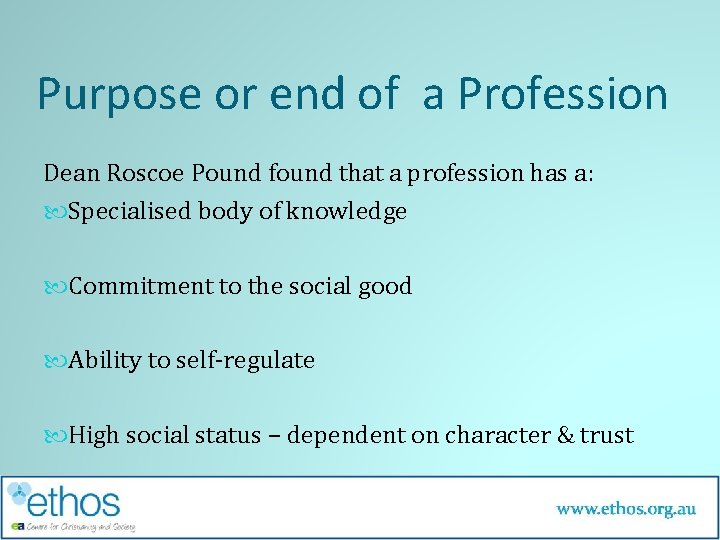
Purpose or end of a Profession Dean Roscoe Pound found that a profession has a: Specialised body of knowledge Commitment to the social good Ability to self-regulate High social status – dependent on character & trust
A Profession’s specific social good A profession has a sense of & seeks the social good. Each profession does so according to training & expertise: doctors as health; engineers as safe structures; social workers as care & justice. Professionals need to develop a particular appreciation or understanding of some defining end.
Real & Role Morality There is also a cross-over between professions & values/virtues. No group should be so tunnel-visioned on specialised specifics/role morality, as to ignore universal social standards or real morality e. g. LA psychiatrists & client confidentiality, priests, confession & abuse re mandatory reporting (cf 1 Cor 5) Professionals ask what sort of person & professional Should I be? What sort of community will I help create?
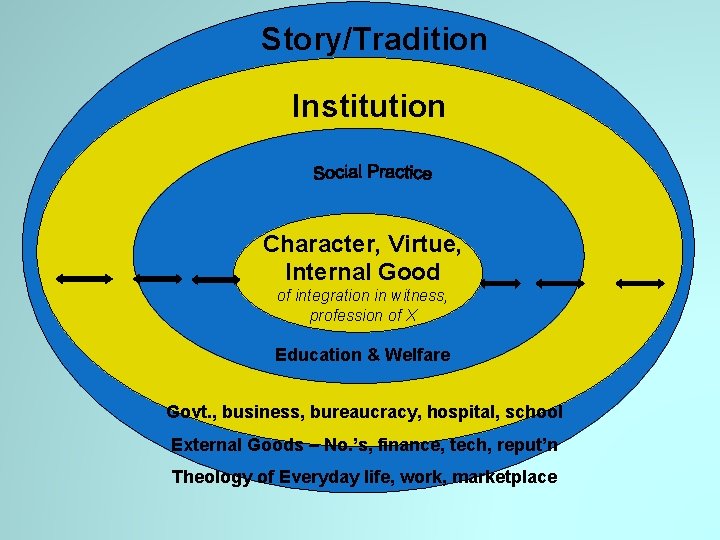
Story/Tradition Institution Character, Virtue, Internal Good of integration in witness, profession of X Education & Welfare Govt. , business, bureaucracy, hospital, school External Goods – No. ’s, finance, tech, reput’n Theology of Everyday life, work, marketplace
http: //www. imdb. com/video/imdb/vi 2130 490905? playlist. Id=tt 5168192&ref_=tt_ov_vi
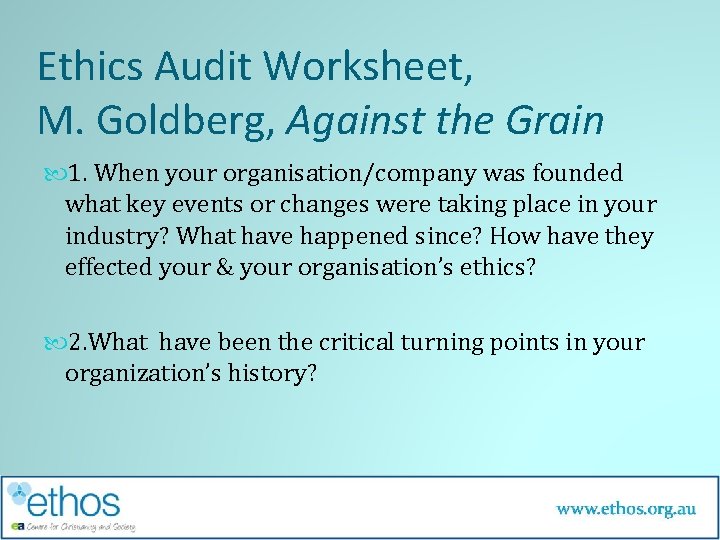
Ethics Audit Worksheet, M. Goldberg, Against the Grain 1. When your organisation/company was founded what key events or changes were taking place in your industry? What have happened since? How have they effected your & your organisation’s ethics? 2. What have been the critical turning points in your organization’s history?
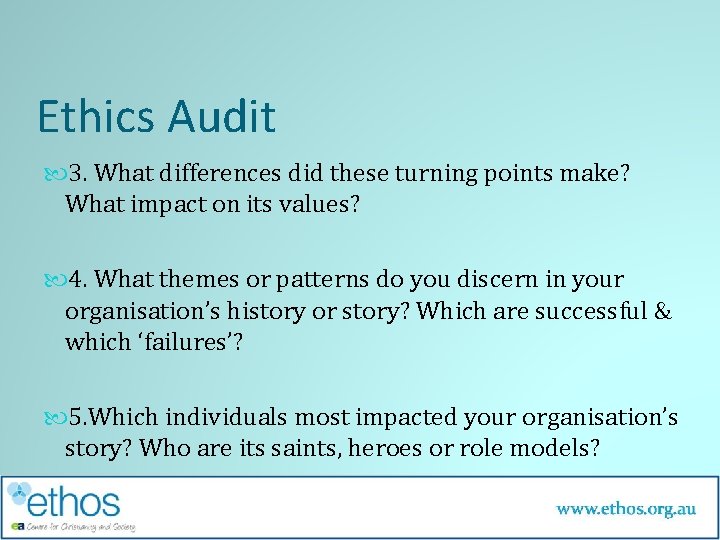
Ethics Audit 3. What differences did these turning points make? What impact on its values? 4. What themes or patterns do you discern in your organisation’s history or story? Which are successful & which ‘failures’? 5. Which individuals most impacted your organisation’s story? Who are its saints, heroes or role models?
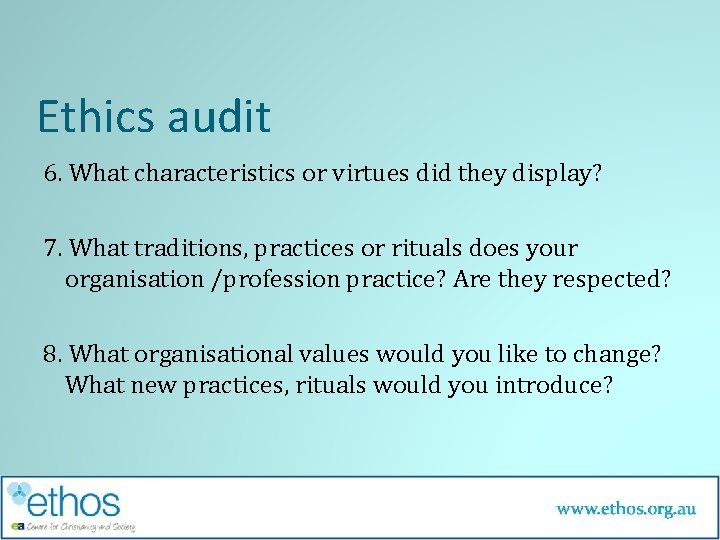
Ethics audit 6. What characteristics or virtues did they display? 7. What traditions, practices or rituals does your organisation /profession practice? Are they respected? 8. What organisational values would you like to change? What new practices, rituals would you introduce?
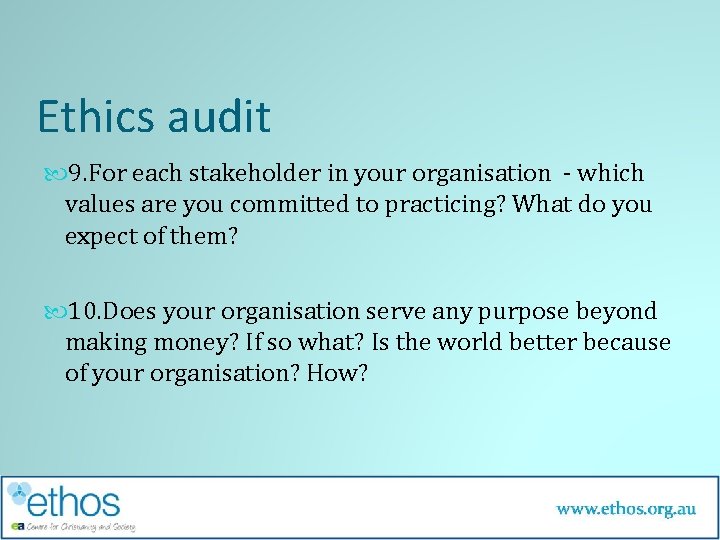
Ethics audit 9. For each stakeholder in your organisation - which values are you committed to practicing? What do you expect of them? 10. Does your organisation serve any purpose beyond making money? If so what? Is the world better because of your organisation? How?