
Ethos Pathos Logos The Art of Rhetoric What
- Slides: 12
Ethos, Pathos, & Logos The Art of Rhetoric
What is rhetoric? Aristotle defines rhetoric as › According to Aristotle, rhetoric is "the ability, in each particular case, to see the available means of persuasion. " He described three main forms of rhetoric: Ethos, Logos, and Pathos In simple terms, rhetoric is the art of speaking or writing EFFECTIVELY.
There are several ways to appeal to an audience. Among them are appeals to ethos, pathos and logos.
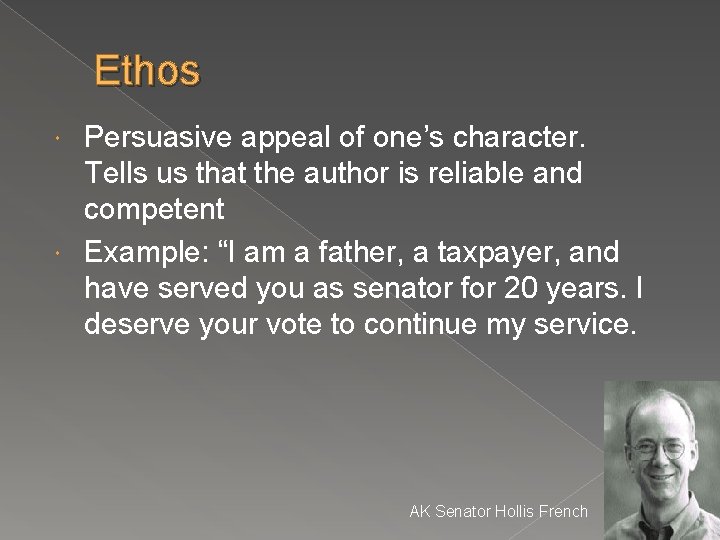
Ethos Persuasive appeal of one’s character. Tells us that the author is reliable and competent Example: “I am a father, a taxpayer, and have served you as senator for 20 years. I deserve your vote to continue my service. AK Senator Hollis French
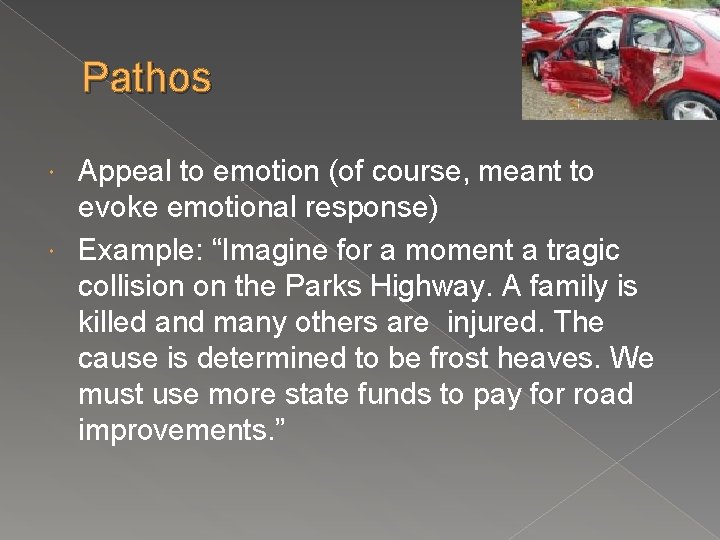
Pathos Appeal to emotion (of course, meant to evoke emotional response) Example: “Imagine for a moment a tragic collision on the Parks Highway. A family is killed and many others are injured. The cause is determined to be frost heaves. We must use more state funds to pay for road improvements. ”
Logos Appeal to reason (evokes a rational response) Example: “Alaska’s roads are in a state of disrepair. Without quality roads, our transportation system will falter and hinder our economy. Hence, we must use more state funds to pay for road repairs. ”
Repetition and Parallelism Repetition and parallelism are rhetorical devices in which repeated words and patterns provide rhythm, enhance ideas, and organize complex passages. In the following example, notice the parallel grammatical form (noun+ action verb) plus the repetition of the one word, change, create strong rhythms when the text is spoken, cementing the message in listeners' minds. EXAMPLE Times change. People change. Companies change. Have you changed?
Example "Veni, vidi, vici" = “I came, I saw, I conquered” Do you know who said this?
Rhetorical Question Definition: a figure of speech in the form of a question posed for its persuasive effect without the expectation of a reply. “How much longer must our people endure this injustice? ” “Why must you disrupt my class? ”
Verbal Irony Definition: a figure of speech in which what is said is the opposite of what is meant. The students are as calm as a coop full of angry hens. I enjoyed the movie as much as getting a root canal.
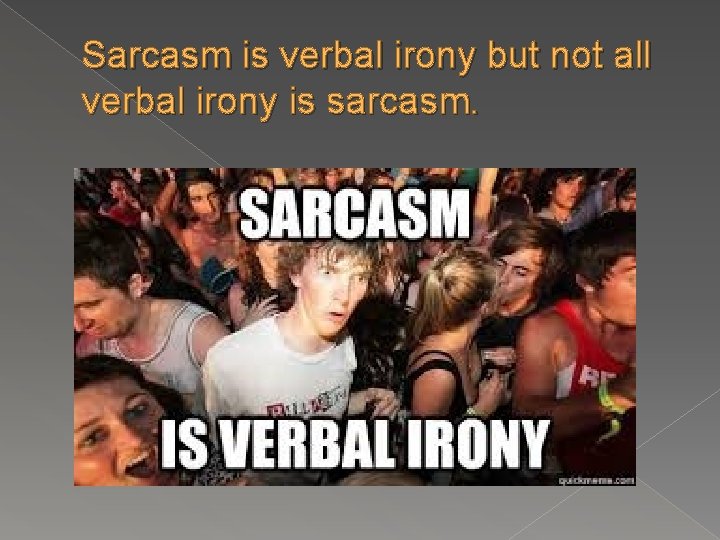
Sarcasm is verbal irony but not all verbal irony is sarcasm.
https: //www. youtube. com/watch? v=gf 81 d 0 Y S 58 E https: //www. youtube. com/watch? v=Sf. Ax. Upe Vh. Cg&list=PLUt_PBZQzj_D 7 w. Pfn. SXm 9 Ho 1 pfcq_Cg. G