
ETHOS Argument by Character ESTABLISHING ETHOS DECORUM You
ETHOS Argument by Character
ESTABLISHING ETHOS: DECORUM “You persuade a man only insofar as you can talk his language by speech, gesture, tonality, order, image, attitude, idea: identifying your ways with his. ” - Kenneth Burke
ESTABLISHING ETHOS: DECORUM 1 - Decorum � Rhetorical � Decorum � “When � To decorum is the art of fitting in anywhere. tells the audience: Do as I say AND as I do. ” in Rome, do as the Romans do. ” show proper decorum, act the way your audience expects you to act– not necessarily like your audience.
ESTABLISHING ETHOS: DECORUM TIPS. 1 - Before you begin to argue, ask yourself: What do they expect? 2 - Don’t assume a character that strays too far from your own. 3 - Adapt to the particular occasion. 4 - When in doubt, use camouflage.
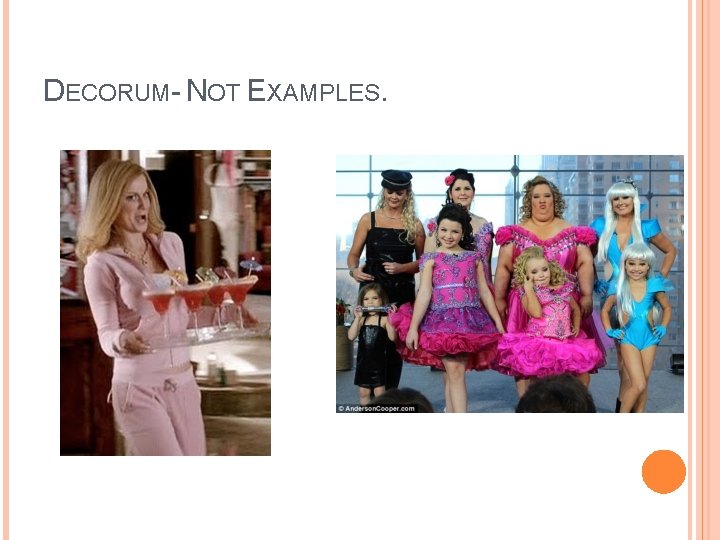
DECORUM- NOT EXAMPLES.
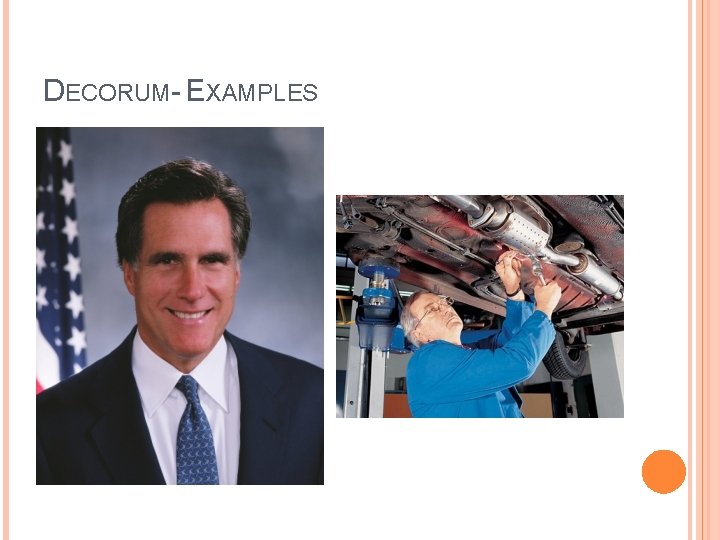
DECORUM- EXAMPLES
ESTABLISHING ETHOS: DECORUM Persuasion doesn’t depend on being true to yourself. It depends on being true to an audience. 9/11 Bullhorn speech Night of 9/11
ESTABLISHING ETHOS: MAKE THEM LIKE YOU Virtue= The Audience believes you share their values. A person who upholds the values of a group is rhetorically virtuous.
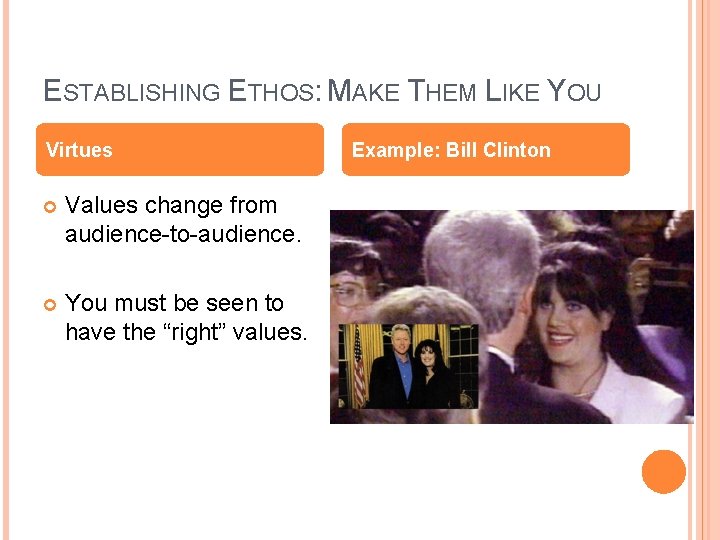
ESTABLISHING ETHOS: MAKE THEM LIKE YOU Virtues Values change from audience-to-audience. You must be seen to have the “right” values. Example: Bill Clinton
ESTABLISHING ETHOS: MAKE THEM LIKE YOU How to pump up your rhetorical virtues for an audience: 1 - Bragging 2 - Character References Joe Biden (start 4: 30) 3 - Reveal a tactical flaw- show some defect that shows your dedication to the audience’s values George Washington: Forgive me, gentlemen, for my eyes have grown dim in the service of my country. Switch sides when the powers that be do. � When you know you will lose, preempt your opponent by taking his side.
ESTABLISHING ETHOS: SHOW LEADERSHIP Practical Wisdom: The audience should consider you a sensible person, as well as sufficiently knowledgeable to deal with the problem at hand. Use the kind of common sense that gets things done. An instinct for making the right decision on every occasion. “Street Smarts. ”
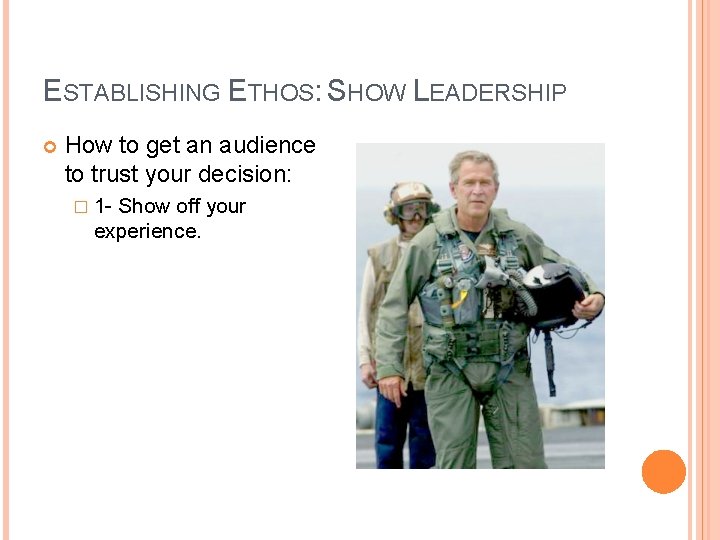
ESTABLISHING ETHOS: SHOW LEADERSHIP How to get an audience to trust your decision: � 1 - Show off your experience.
ESTABLISHING ETHOS: SHOW LEADERSHIP How to get an audience to trust your decision: � 1 - Show off your experience. � 2 - Bend the Rules (if you have no other choice)
ESTABLISHING ETHOS: SHOW LEADERSHIP How to get an audience to trust your decision: � 1 - Show off your experience. � 2 - Bend the Rules (if you have no other choice) � Seem to take the middle course. It helps to make the audience think your adversary’s position is extreme.
ESTABLISHING ETHOS: WIN THEIR TRUST “Disinterested Goodwill” combines selflessness and likability.
ESTABLISHING ETHOS: WIN THEIR TRUST Disinterested Uninterested
ESTABLISHING ETHOS: WIN THEIR TRUST Disinterested= Free of any special interest. How to make your audience believe in your selflessness: � The reluctant conclusion= Seem to deal reluctantly with something you are really eager to prove. (p. 73) � The personal sacrifice= Act as if the choice you advocate for hurts you personally. (p. 74) � Dubitatio= Make it seem you have no tricks. Show doubt in your Rhetorical skills.
ESTABLISHING ETHOS: WIN THEIR TRUST Make it seem as though you have no tricks: Dubitatio=Dubious. �A knowledgeable audience tends to sympathize with a clumsy speaker and even mentally argue his case for him. � Lincoln’s country-bumpkin image disguised a brilliant political analyst who could speak lucidly about the issues. � In His ethos made the audience trust his sincerity while doubting his intellect– until he showed them his intellect. argument, you don’t rest on you personality and reputation, you perform them.
- Slides: 18