
ETHNOGRAPHIC METHODS LEARNING OBJECTIVES 1 Identify major ethnographic
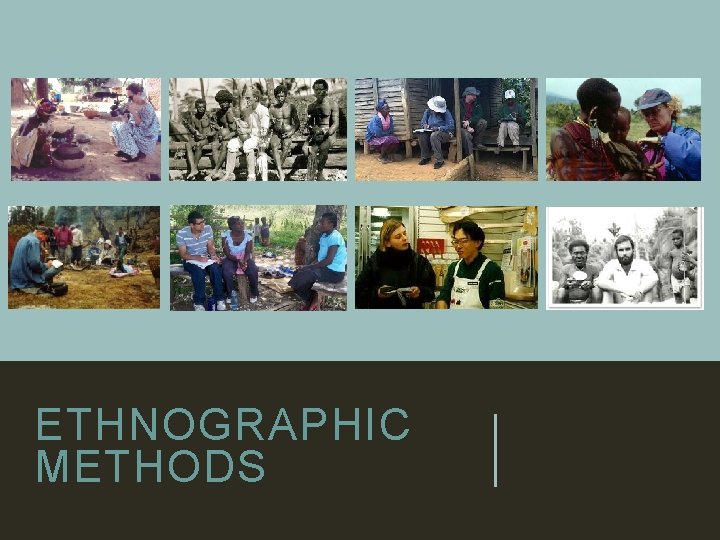
ETHNOGRAPHIC METHODS
LEARNING OBJECTIVES 1. Identify major ethnographic techniques & what type of information is gained from each technique. 2. Describe ethnographic techniques by identifying specific anthropological examples. 3. Summarize the methods used by anthropologists to study human populations. 4. Identify the anthropological sub-discipline that most commonly employs ethnographic methods.
OUTLINE OF LECTURE • Review of Scientific Method • Ethnography • Techniques • Survey Research • Ethical Issues

SCIENTIFIC METHOD Four basic steps: Ask a question what this question be based off of? Formulate a hypothesis Test the hypothesis Come to a conclusion – accept or reject the hypothesis Accept hypothesis = theory
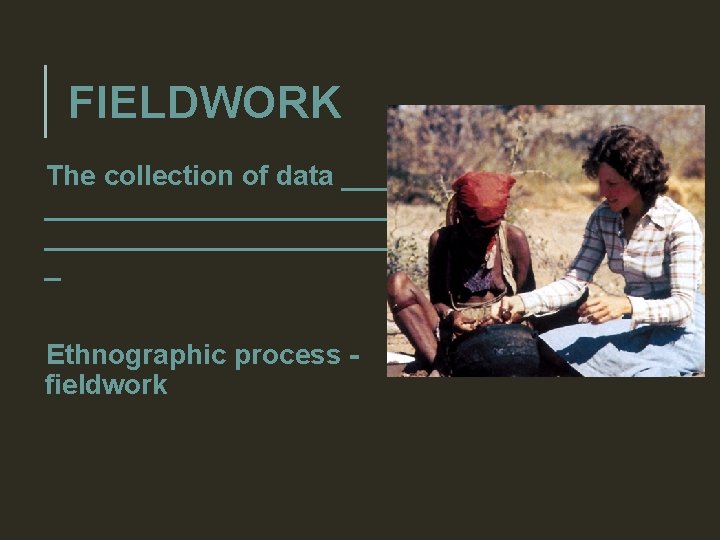
FIELDWORK The collection of data _____________ _ Ethnographic process fieldwork

TYPES OF FIELDWORK Single-Sited Fieldwork Multi-sited Fieldwork • __________ • _________ __________ • Movement between _____ • Tracing a _________________________

EL BARRIO ANTHROPOLOGIST: PHILIPPE BOURGOIS • Award-winning ethno-graphic account of selling crack in El Barrio • Spanish Harlem – 1995: • Single-sited: __________ • Multi-sited: __________________________ __
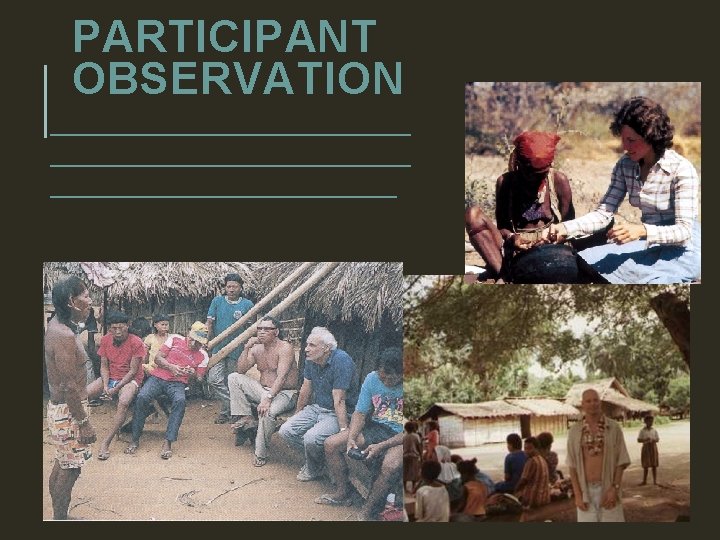
PARTICIPANT OBSERVATION _________________________
PARTICIPANT OBSERVATION • Best way to ______________ • Allows for mental, emotional and physical contact with the individuals
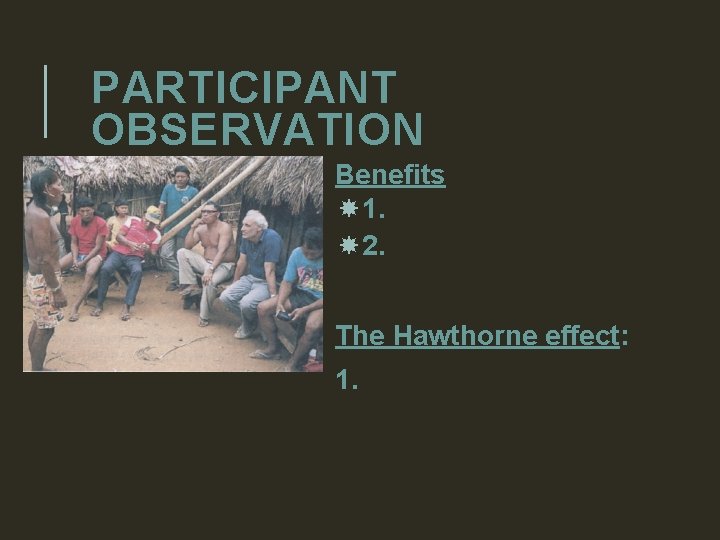
PARTICIPANT OBSERVATION Benefits 1. 2. The Hawthorne effect: 1.
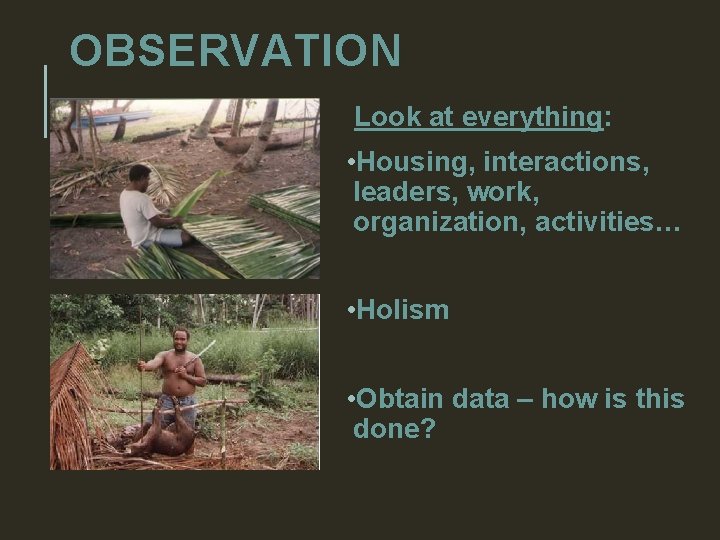
OBSERVATION Look at everything: • Housing, interactions, leaders, work, organization, activities… • Holism • Obtain data – how is this done?

INTERVIEWS Interviews 1. 2. What information can be gained from these types of interviews?

DIALECTIC OF FIELDWORK • Process of building a bridge of understanding • Between anthropologist & informants • Why is this important for successful fieldwork? • Example: Komachi, nomadic people in Iran • _________ And • _________

DIFFERENT TYPES OF DATA Qualitative Quantitative • 1. • 2.
RISKS ASSOCIATED WITH FIELDWORK Social violence Disease Culture shock _________________________________ Unlikable subjects

ETHICS AND RESPONSIBILITY IN CULTURAL ANTHROPOLOGY Why did it come about? Dangers for the subjects AAA standard code of ethics ___________
- Slides: 16