
Ethics in the Workplace JOE CORDERO DIRECTOR OFFICE
- Slides: 26
Ethics in the Workplace JOE CORDERO, DIRECTOR OFFICE OF ETHICS AND COMPLIANCE CHIEF ADMINISTRATIVE OFFICE COUNTY OF SAN DIEGO NOVEMBER 14, 2016
What do we mean by “Ethics” and why are we talking about it?
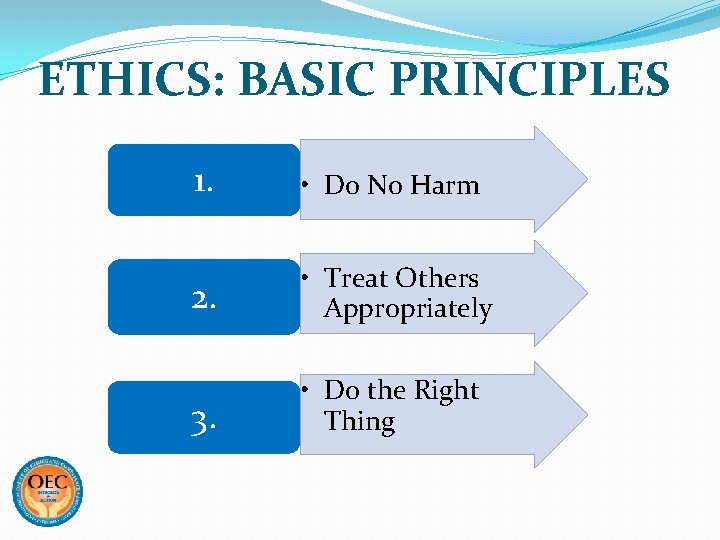
ETHICS: BASIC PRINCIPLES 1. • Do No Harm 2. • Treat Others Appropriately 3. • Do the Right Thing
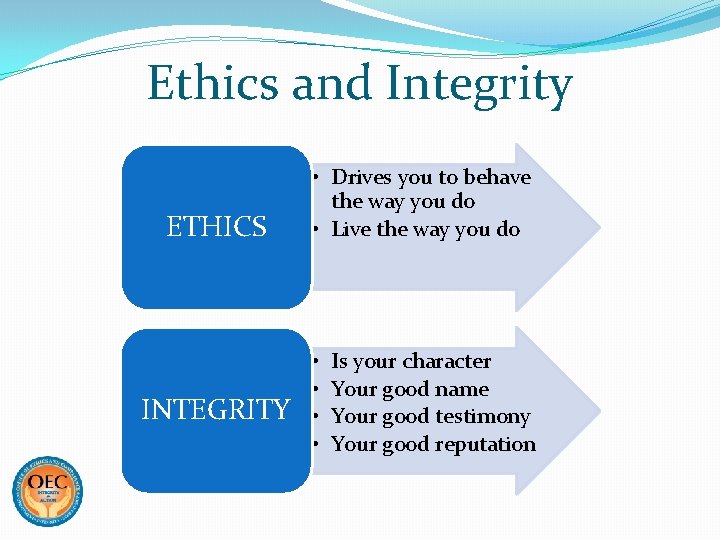
Ethics and Integrity ETHICS INTEGRITY • Drives you to behave the way you do • Live the way you do • • Is your character Your good name Your good testimony Your good reputation
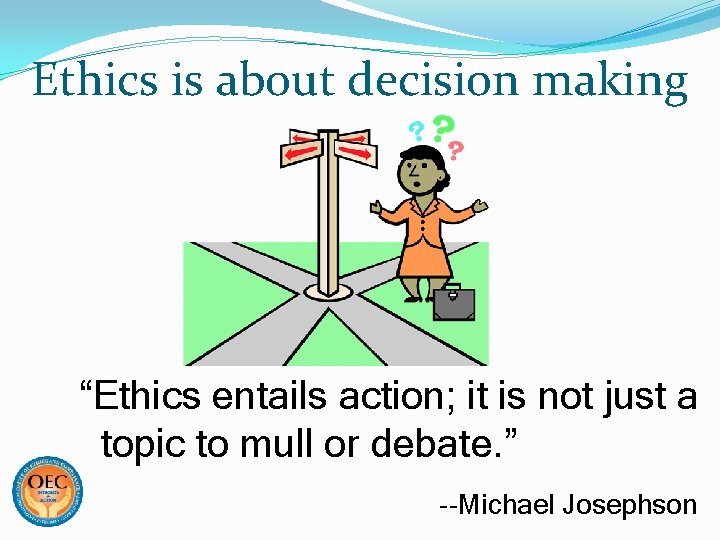
Ethics is about decision making “Ethics entails action; it is not just a topic to mull or debate. ” --Michael Josephson
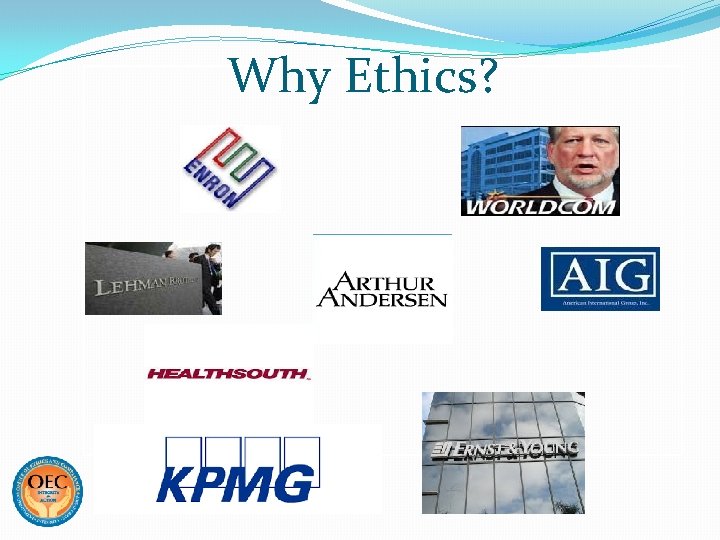
Why Ethics?
US Sentencing Commission Federal Sentencing Guidelines for Organizations Mandate to appoint high level person to oversee effective program to prevent and detect legal violations Establish standards, communicate them, train, monitoring, discipline misconduct, corrective actions Board oversight Access to senior officials Attention to culture
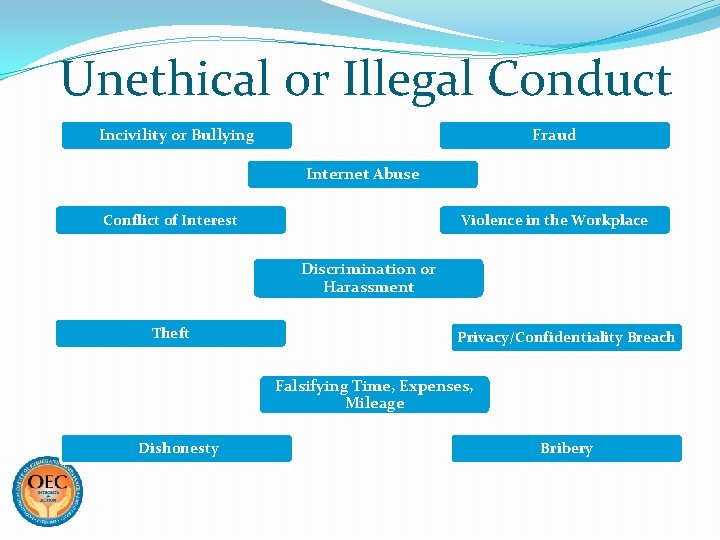
Unethical or Illegal Conduct Incivility or Bullying Fraud Internet Abuse Conflict of Interest Violence in the Workplace Discrimination or Harassment Theft Privacy/Confidentiality Breach Falsifying Time, Expenses, Mileage Dishonesty Bribery
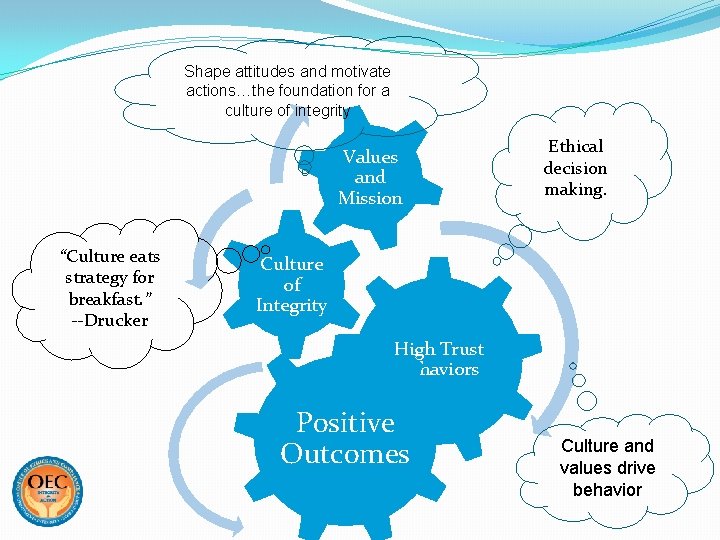
Shape attitudes and motivate actions…the foundation for a culture of integrity Values and Mission “Culture eats strategy for breakfast. ” --Drucker Ethical decision making. Culture of Integrity High Trust Behaviors Positive Outcomes Culture and values drive behavior
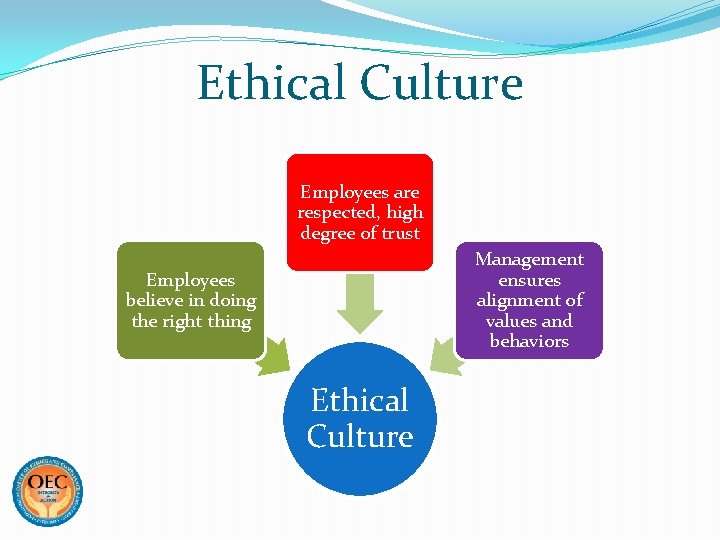
Ethical Culture Employees are respected, high degree of trust Management ensures alignment of values and behaviors Employees believe in doing the right thing Ethical Culture
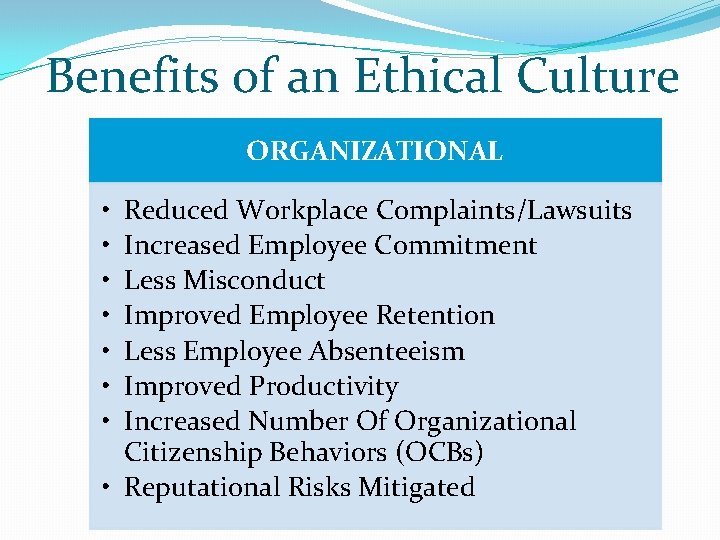
Benefits of an Ethical Culture ORGANIZATIONAL • • Reduced Workplace Complaints/Lawsuits Increased Employee Commitment Less Misconduct Improved Employee Retention Less Employee Absenteeism Improved Productivity Increased Number Of Organizational Citizenship Behaviors (OCBs) • Reputational Risks Mitigated
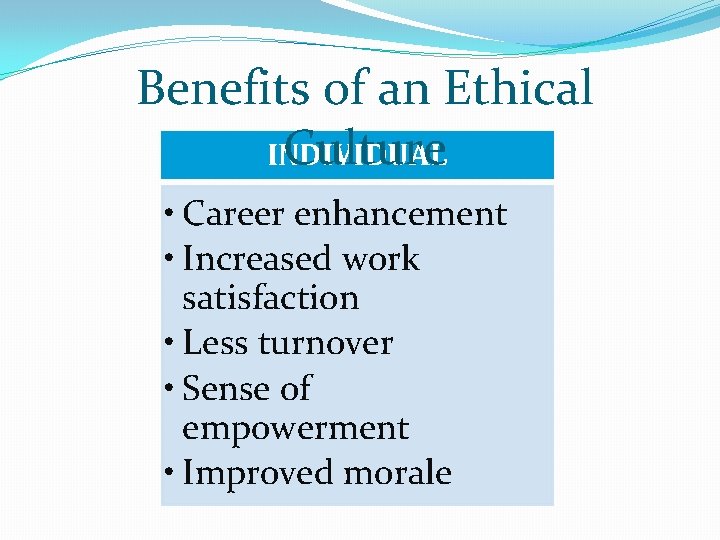
Benefits of an Ethical Culture INDIVIDUAL • Career enhancement • Increased work satisfaction • Less turnover • Sense of empowerment • Improved morale
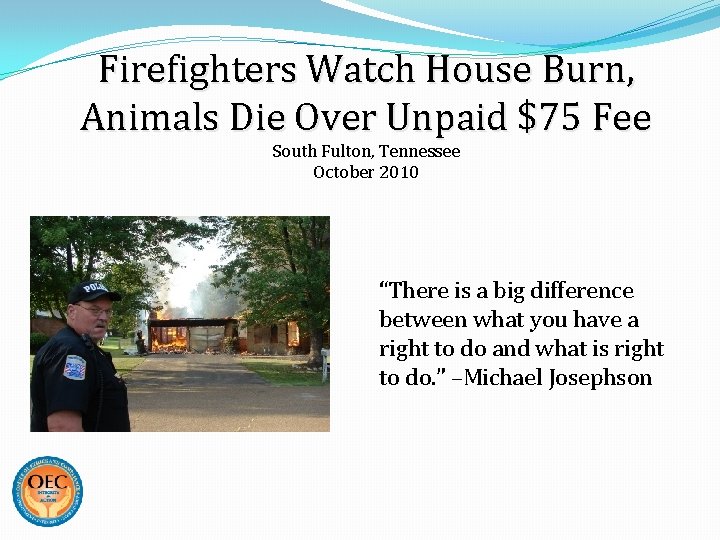
Firefighters Watch House Burn, Animals Die Over Unpaid $75 Fee South Fulton, Tennessee October 2010 “There is a big difference between what you have a right to do and what is right to do. ” –Michael Josephson
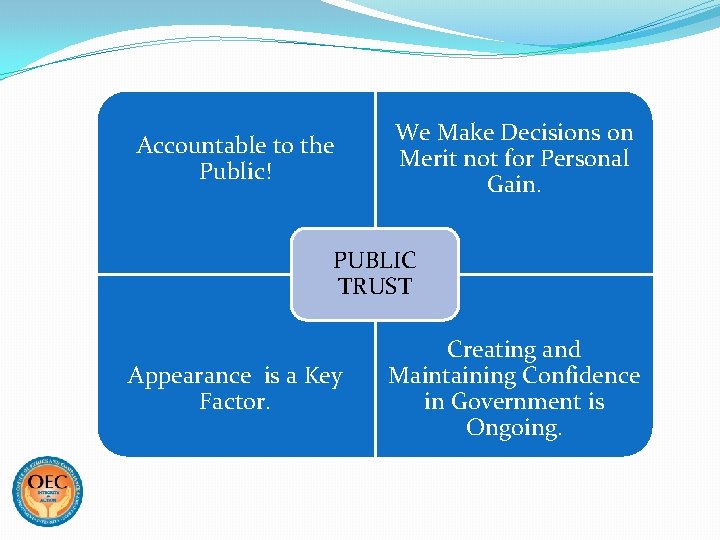
Accountable to the Public! We Make Decisions on Merit not for Personal Gain. PUBLIC TRUST Appearance is a Key Factor. Creating and Maintaining Confidence in Government is Ongoing.
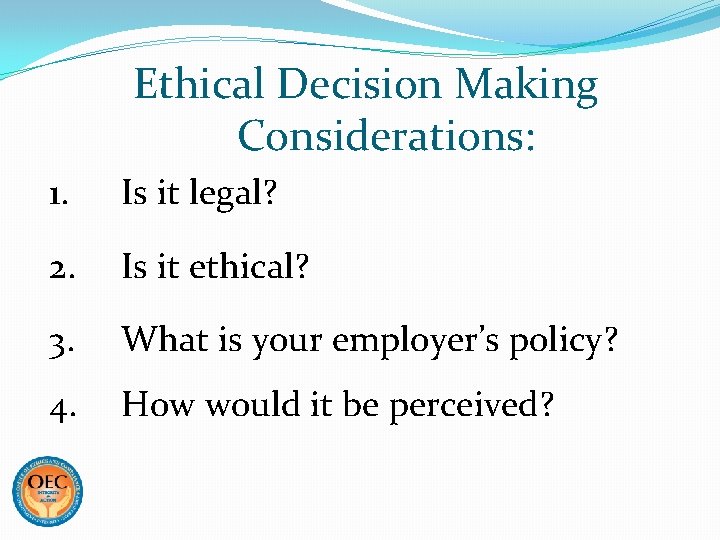
Ethical Decision Making Considerations: 1. Is it legal? 2. Is it ethical? 3. What is your employer’s policy? 4. How would it be perceived?
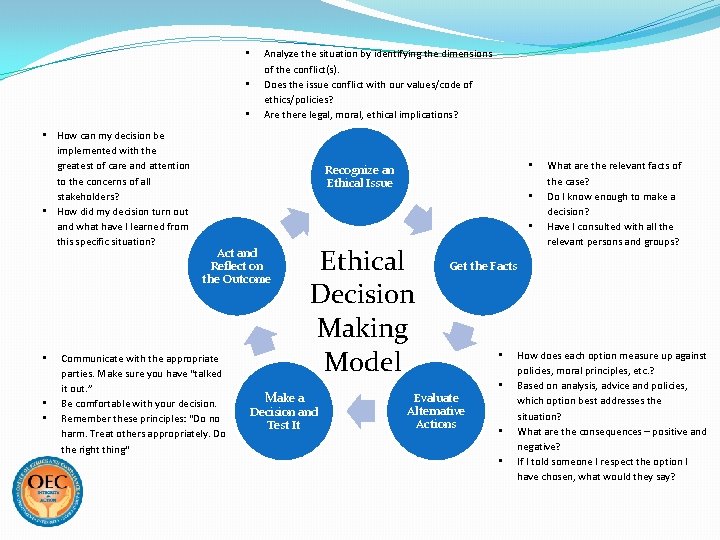
What is an Ethical Decision Making Model?
• • How can my decision be implemented with the greatest of care and attention to the concerns of all stakeholders? • How did my decision turn out and what have I learned from this specific situation? • • • Analyze the situation by identifying the dimensions of the conflict(s). Does the issue conflict with our values/code of ethics/policies? Are there legal, moral, ethical implications? • Recognize an Ethical Issue • • Act and Reflect on the Outcome Communicate with the appropriate parties. Make sure you have “talked it out. ” Be comfortable with your decision. Remember these principles: “Do no harm. Treat others appropriately. Do the right thing“ Make a Ethical Decision Making Model Decision and Test It What are the relevant facts of the case? Do I know enough to make a decision? Have I consulted with all the relevant persons and groups? Get the Facts Evaluate Alternative Actions • • How does each option measure up against policies, moral principles, etc. ? Based on analysis, advice and policies, which option best addresses the situation? What are the consequences – positive and negative? If I told someone I respect the option I have chosen, what would they say?
Scenarios What would you do?
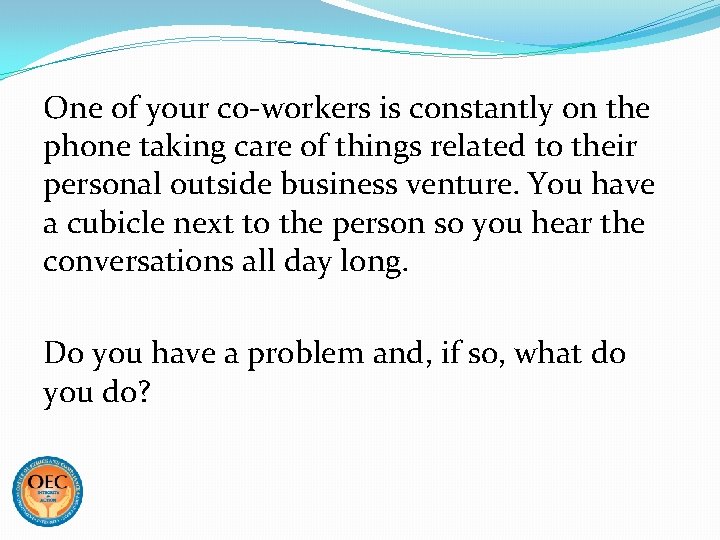
One of your co-workers is constantly on the phone taking care of things related to their personal outside business venture. You have a cubicle next to the person so you hear the conversations all day long. Do you have a problem and, if so, what do you do?
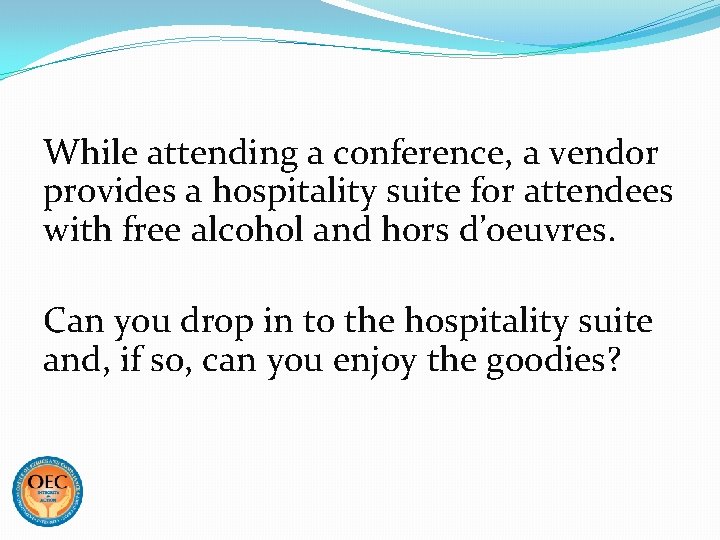
While attending a conference, a vendor provides a hospitality suite for attendees with free alcohol and hors d’oeuvres. Can you drop in to the hospitality suite and, if so, can you enjoy the goodies?
You notice a co-worker frequently goes to lunch with the same two vendors (and no other vendors). The co-worker says they each always pay their own way. Is there a problem and, if so, what do you do?
Integrity and Congruence “You’re looking for three things, generally, in a person – intelligence, energy, and integrity. And if they don’t have the last one, don’t even bother with the first two. ” -- Warren Buffet, CEO Berkshire Hathaway
Closing Thought “There are two reasons for doing the 'right' thing. One is because it is right. The second is because someone some day may be asking you in a deposition why you did it that way. ” – Jerry Fallin
QUESTIONS?
County of San Diego Office of Ethics and Compliance Joe Cordero Director joe. cordero@sdcounty. ca. gov (619) 531 -5174 Jennifer Baillie Chief Ethics Officer jennifer. baillie@sdcounty. ca. gov (619) 531 -5335 Bob Borntrager, CCEP-I Chief Compliance and Privacy Officer robert. borntrager@sdcounty. ca. gov (619) 531 -6263
Thank you for your time and attention!