
ETHICS Ethical Principles Honesty Integrity PromiseKeeping Trustworthiness Loyalty

- Slides: 11
ETHICS
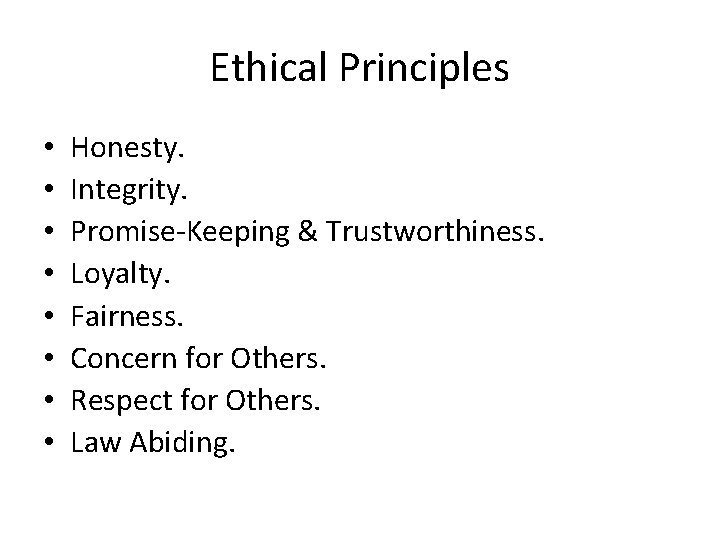
Ethical Principles • • Honesty. Integrity. Promise-Keeping & Trustworthiness. Loyalty. Fairness. Concern for Others. Respect for Others. Law Abiding.
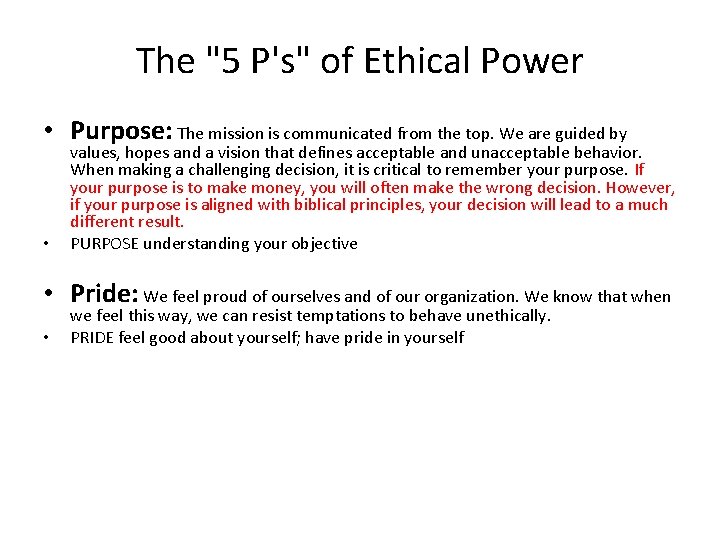
The "5 P's" of Ethical Power • Purpose: The mission is communicated from the top. We are guided by • values, hopes and a vision that defines acceptable and unacceptable behavior. When making a challenging decision, it is critical to remember your purpose. If your purpose is to make money, you will often make the wrong decision. However, if your purpose is aligned with biblical principles, your decision will lead to a much different result. PURPOSE understanding your objective • Pride: We feel proud of ourselves and of our organization. We know that when • we feel this way, we can resist temptations to behave unethically. PRIDE feel good about yourself; have pride in yourself
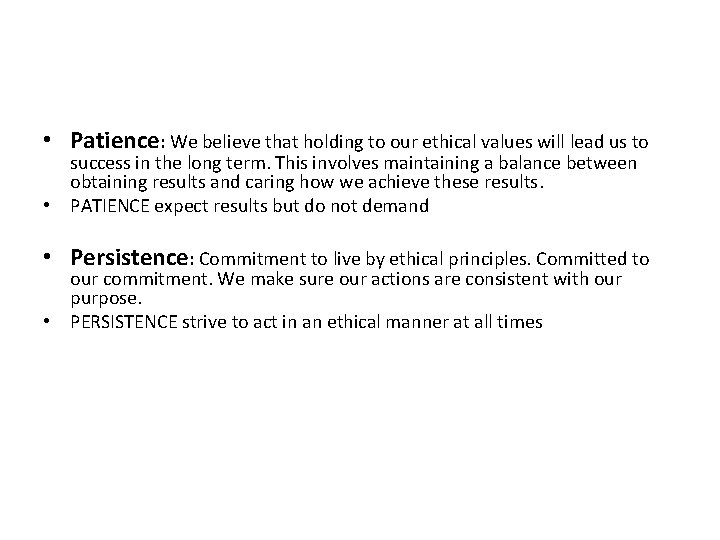
• Patience: We believe that holding to our ethical values will lead us to success in the long term. This involves maintaining a balance between obtaining results and caring how we achieve these results. • PATIENCE expect results but do not demand • Persistence: Commitment to live by ethical principles. Committed to our commitment. We make sure our actions are consistent with our purpose. • PERSISTENCE strive to act in an ethical manner at all times
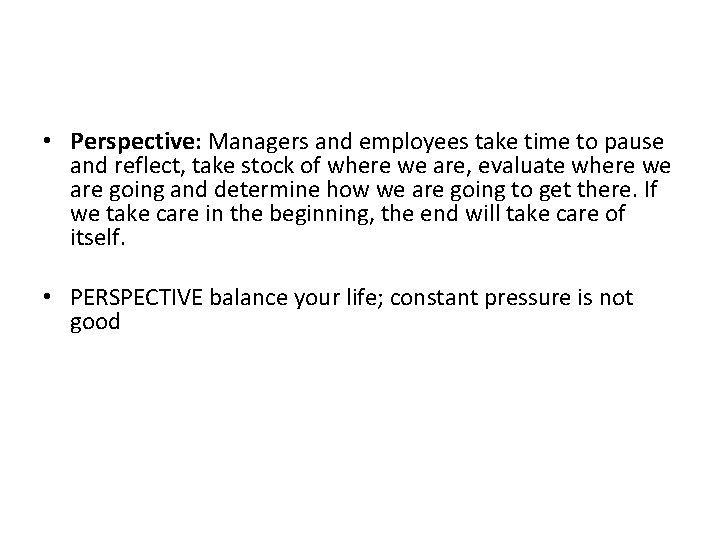
• Perspective: Managers and employees take time to pause and reflect, take stock of where we are, evaluate where we are going and determine how we are going to get there. If we take care in the beginning, the end will take care of itself. • PERSPECTIVE balance your life; constant pressure is not good
Types of Ethics • There are three types of ethics which include descriptive ethics, normative ethics and meta -ethics. Among the following three types of ethics every type has a place in the functionality of a society:
Descriptive Ethics: Descriptive ethics are the morals of a society. People use descriptive ethics as a way to judge particular actions as good or bad based on the social contract of a particular society. It is possible for people in one group to hold a different set of morals than people in another group. Descriptive ethics also change over time. For instance, the acceptability of racism changed in the United States over the course of generations.
Normative Ethics: Normative ethics imply what should be good or bad in a society. The view of what is an acceptable ethic requires subjectivity. Normative ethics conflict with descriptive ethics at times. An example of normative ethics is the debate concerning abortion.
Meta-ethics: Meta-ethics involves the examination of ethical terms, such as justice and morality, as broad concepts for a society. It also seeks to define a middle ground between terms such as good and evil. Emotivism, a part of meta -ethics, involves using a seemingly objective claim as an emotional response. An example of meta-ethics includes questioning the existence of free will in a society.
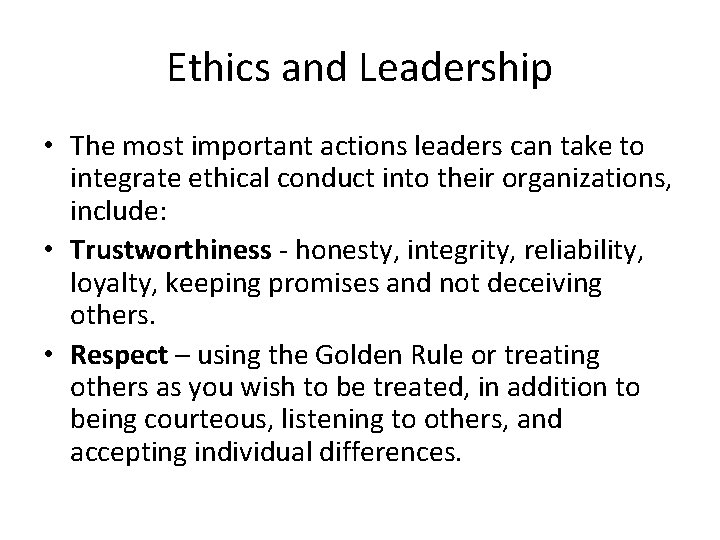
Ethics and Leadership • The most important actions leaders can take to integrate ethical conduct into their organizations, include: • Trustworthiness - honesty, integrity, reliability, loyalty, keeping promises and not deceiving others. • Respect – using the Golden Rule or treating others as you wish to be treated, in addition to being courteous, listening to others, and accepting individual differences.
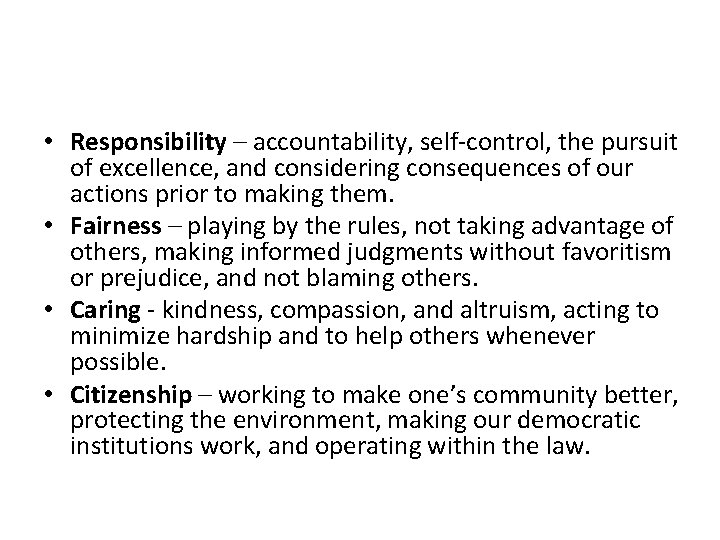
• Responsibility – accountability, self-control, the pursuit of excellence, and considering consequences of our actions prior to making them. • Fairness – playing by the rules, not taking advantage of others, making informed judgments without favoritism or prejudice, and not blaming others. • Caring - kindness, compassion, and altruism, acting to minimize hardship and to help others whenever possible. • Citizenship – working to make one’s community better, protecting the environment, making our democratic institutions work, and operating within the law.