
Ethical Decision Making in Special Care Dentistry Association
- Slides: 14
Ethical Decision Making in Special Care Dentistry Association 25 th Annual Meeting April 15 -21 New Orleans, Louisiana
Steven Krauss, DDS, MPH Nancy Dougherty, DMD, MPH Victor Badner, DMD, MPH Farah Alam, DDS
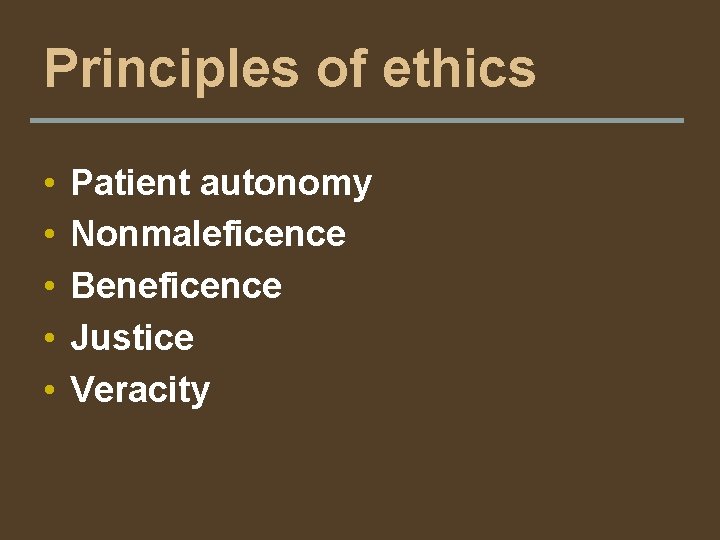
Principles of ethics • • • Patient autonomy Nonmaleficence Beneficence Justice Veracity
Patient Autonomy • The dentist has a duty to treat each patient according to that patient’s desires, within the accepted bounds of treatment. • The dentist must protect patient confidentiality • Treatment should be rendered with due consideration to the patient’s needs, desires and abilities
Autonomy- requirements • • • Pt. self determination Decision making capacity Informed consent Competence Freedom from coercion
Nonmaleficence • “Do no harm” • Doctor must act without malice • Unproven or ineffective treatments must be avoided • Harmful effects must be weighed against benefits of treatment
Nonmaleficence • The dentist has an obligation to protect patients from harm • Dental knowledge & skills should be kept current • The dentist must know when it is appropriate to refer • The dentist must know when it is appropriate to delegate patient care to auxiliaries.
Beneficience • Actions done for the benefit of others • Obligatory versus ideal actions • Interests of the patient must be put before those of the doctor or third parties (ie. caregivers or insurance providers)
Beneficence • The dentist’s primary obligation is service to the patient (obligatory) and the public at large (ideal). • Delivery of dental care must be competent and timely. • The dentist must be familiar with signs of abuse & neglect; is obliged to report suspected cases, consistent with state law.
Justice • Primary obligations of the dentist include dealing with people justly and delivering dental care without prejudice • Patients should not be denied care on the basis of race, creed, gender or national origin • Includes the concept that dentistry, as a profession, should engage in activities that will improve access to care for all
Justice • Benefits and burdens must be distributed equitably • Often difficult to achieve since humans are inherently unequal in requirements, health status, prognosis, etc.
Veracity • The dentist has a duty to be trustworthy in dealings with people • Treatment recommendations should not be presented in a false or misleading way • Dentists should not misrepresent fees for services (eg. fraudulent insurance billing practices)
References • American Dental Association. Principles of Ethics and code of Professional Conduct. April 2012 • American College of Dentists. Ethics Handbook for Dentists. 2012 • FDI. Dental Ethics Manual. www. fdiworldental. org