
Ethical Compliance Taking Responsibility for Equity in Disability
Ethical Compliance: Taking Responsibility for Equity in Disability Services • • • Jewls Harris Portland State University Jen Dugger Portland State University
1. Define the five tenets of Ethical Compliance. 2. Assess your current practices through the Ethical Compliance framework. 3. Use Ethical Compliance to provide more robust and responsive services.
• • • We acknowledge that this is an intermediate presentation, but we also know that everyone is starting at a different level. We acknowledge that we are not the “experts”. We acknowledge that this is hard work. We acknowledge that disability is complex and that balancing student support with independence is an intricate dance. We acknowledge that is not immediate; it takes time.
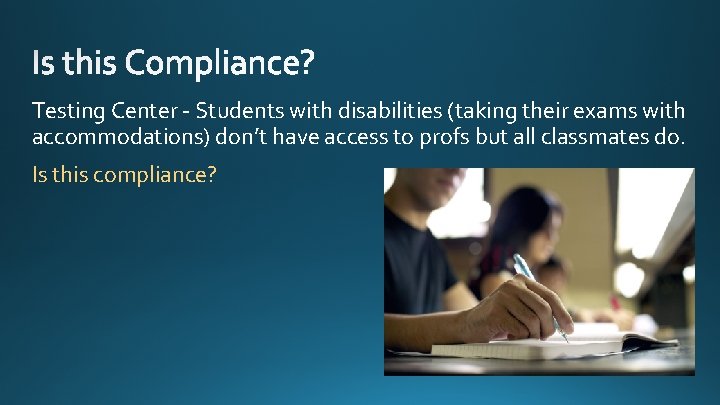
Testing Center - Students with disabilities (taking their exams with accommodations) don’t have access to profs but all classmates do. Is this compliance?
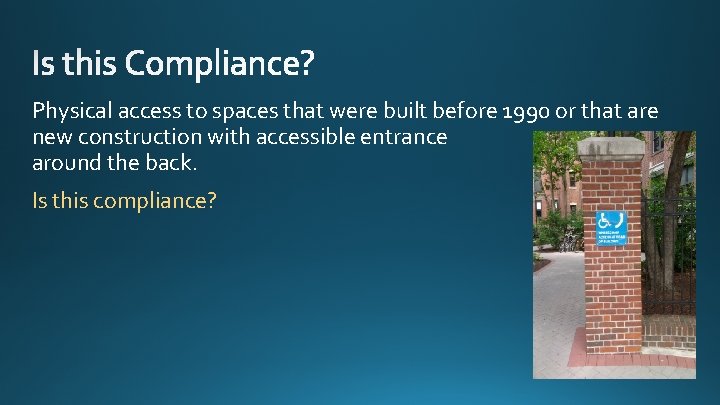
Physical access to spaces that were built before 1990 or that are new construction with accessible entrance around the back. Is this compliance?
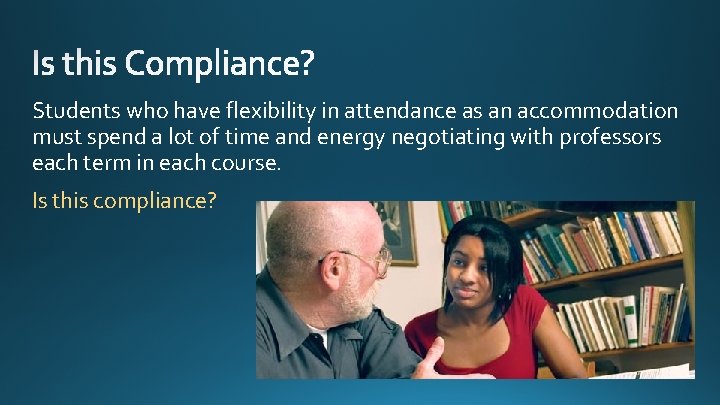
Students who have flexibility in attendance as an accommodation must spend a lot of time and energy negotiating with professors each term in each course. Is this compliance?
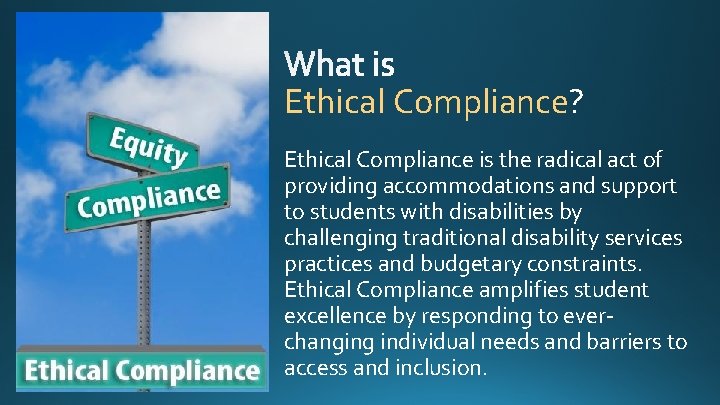
Ethical Compliance? Ethical Compliance is the radical act of providing accommodations and support to students with disabilities by challenging traditional disability services practices and budgetary constraints. Ethical Compliance amplifies student excellence by responding to everchanging individual needs and barriers to access and inclusion.
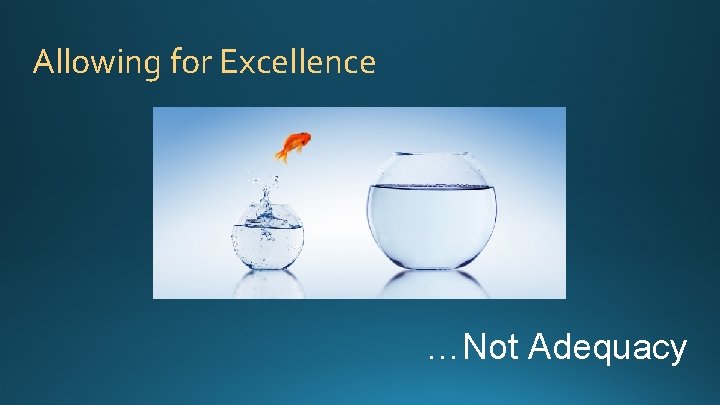
Allowing for Excellence …Not Adequacy
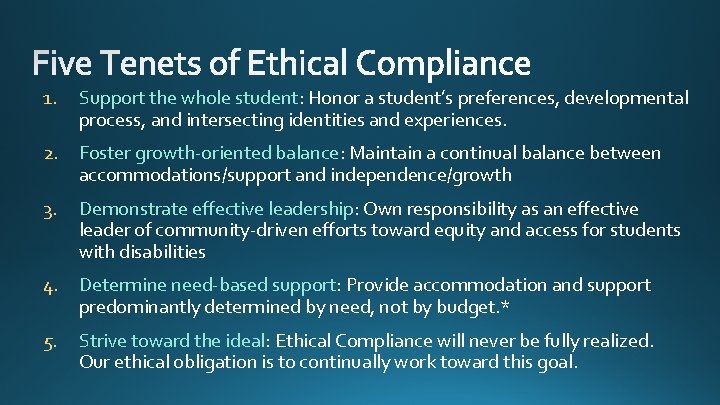
1. Support the whole student: Honor a student’s preferences, developmental process, and intersecting identities and experiences. 2. Foster growth-oriented balance: Maintain a continual balance between accommodations/support and independence/growth 3. Demonstrate effective leadership: Own responsibility as an effective leader of community-driven efforts toward equity and access for students with disabilities 4. Determine need-based support: Provide accommodation and support predominantly determined by need, not by budget. * 5. Strive toward the ideal: Ethical Compliance will never be fully realized. Our ethical obligation is to continually work toward this goal.
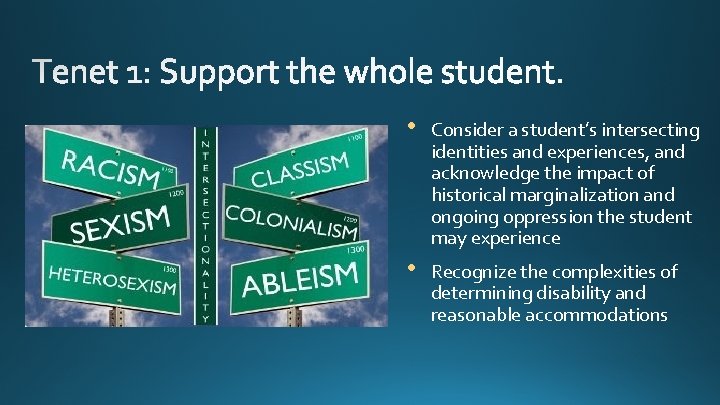
• Consider a student’s intersecting identities and experiences, and acknowledge the impact of historical marginalization and ongoing oppression the student may experience • Recognize the complexities of determining disability and reasonable accommodations
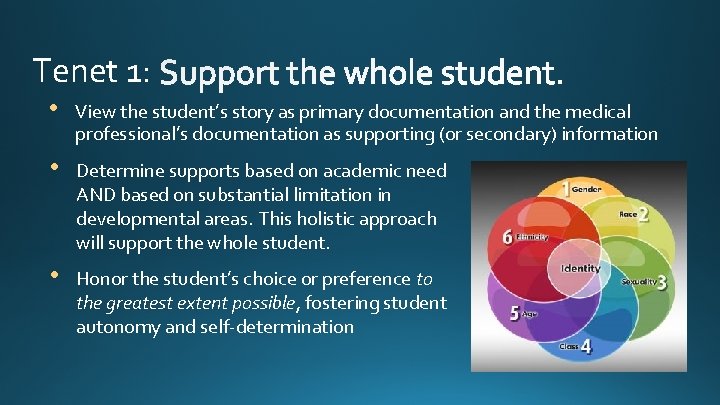
Tenet 1: • View the student’s story as primary documentation and the medical professional’s documentation as supporting (or secondary) information • Determine supports based on academic need AND based on substantial limitation in developmental areas. This holistic approach will support the whole student. • Honor the student’s choice or preference to the greatest extent possible, fostering student autonomy and self-determination
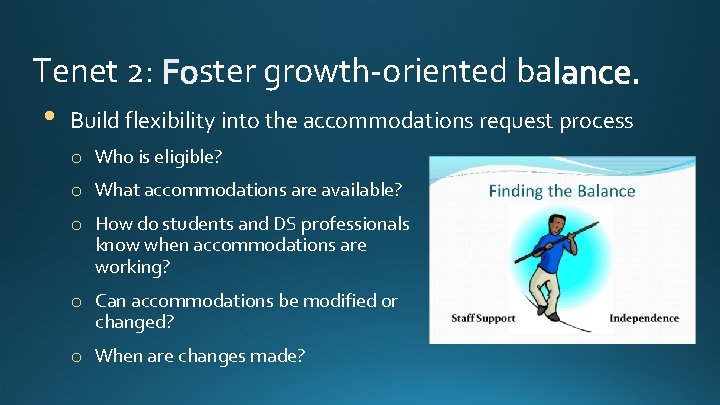
Tenet 2: ster growth-oriented ba • Build flexibility into the accommodations request process o Who is eligible? o What accommodations are available? o How do students and DS professionals know when accommodations are working? o Can accommodations be modified or changed? o When are changes made?
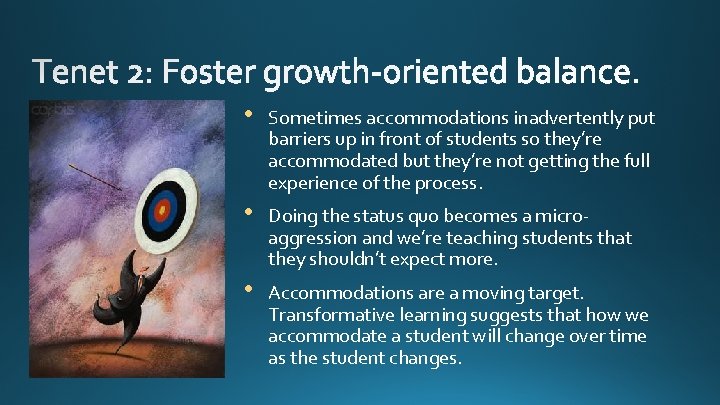
• Sometimes accommodations inadvertently put barriers up in front of students so they’re accommodated but they’re not getting the full experience of the process. • Doing the status quo becomes a microaggression and we’re teaching students that they shouldn’t expect more. • Accommodations are a moving target. Transformative learning suggests that how we accommodate a student will change over time as the student changes.
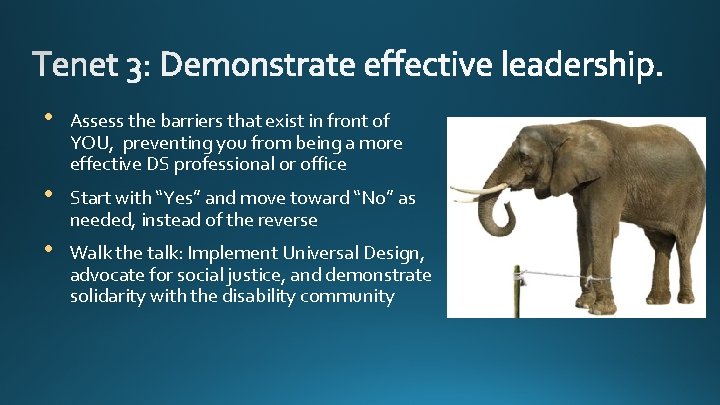
• Assess the barriers that exist in front of YOU, preventing you from being a more effective DS professional or office • Start with “Yes” and move toward “No” as needed, instead of the reverse • Walk the talk: Implement Universal Design, advocate for social justice, and demonstrate solidarity with the disability community
• Encouraging other offices to take responsibility for disability-specific programming. • Collaboration - Relinquishing power of DS in favor of partnership; community responsibility. • Re-examining programs, resources, and supports that have traditionally been seen as “extra” or “above and beyond of the scope of accommodations” with ethical compliance in mind. Are these programs really “extra” after all; should these programs be coordinated by DS or others?
Determine need-based support. • Determine what is needed, regardless of financial constraints. • First ask: What is needed to provide BOTH equity and compliance? • Determine what can be provided with available resources. • • Plan how to fill the remaining need. Remember to re-assess need on a consistent basis and adjust accordingly.
Tenet 5: Strive toward the ideal. • Set the tone - We don’t have to wait for legal precedent to take progressive action • • Have the courage to take risks and try new approaches to old problems Incremental steps result in major change over time • Use Ethical Compliance to inform strategic planning--What are 1, 5, 10, and 20 -year goals working toward Ethical Compliance? • Guard against complacency- This is going to be a long-distance relay race with no shortcuts allowed!
ine f e d do I in my w o H ith w s s e? e succ and offic role How am I perpetuating the marginalization of disabled students? Who am I pr whe n I sa otecting y “N o”?
• Perspective WHY • Provision WHAT • Process HOW
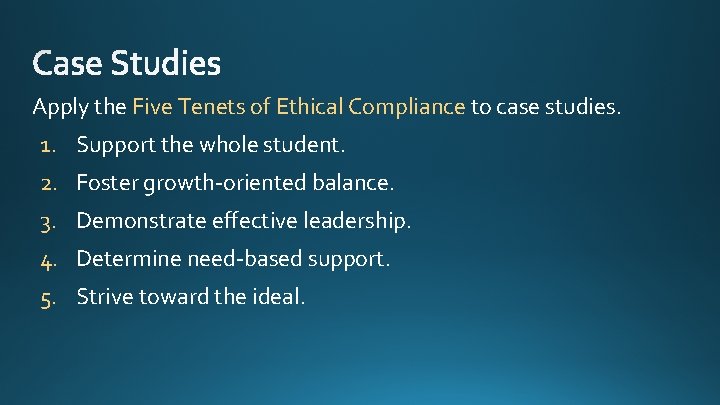
Apply the Five Tenets of Ethical Compliance to case studies. 1. Support the whole student. 2. Foster growth-oriented balance. 3. Demonstrate effective leadership. 4. Determine need-based support. 5. Strive toward the ideal.
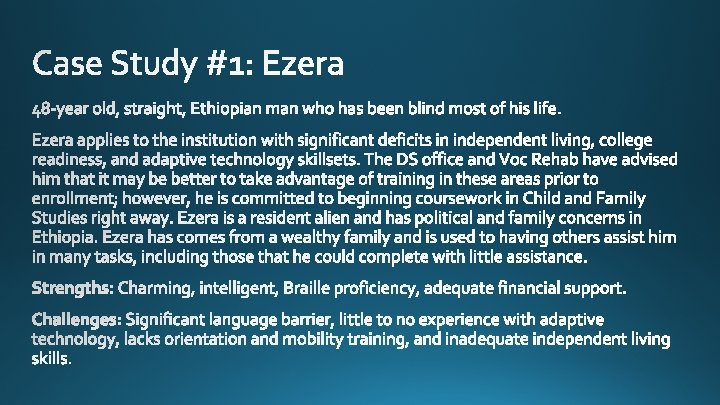
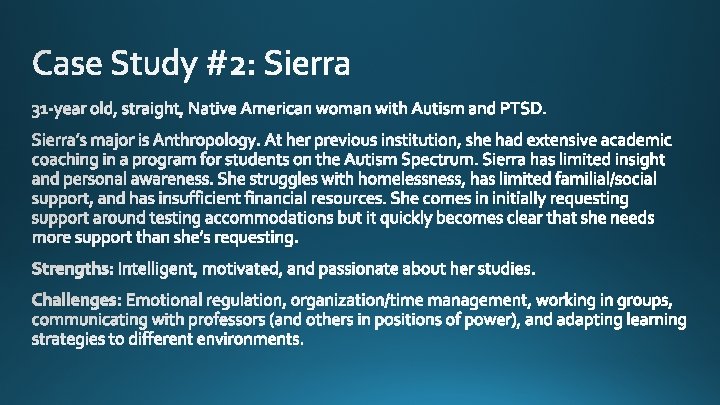
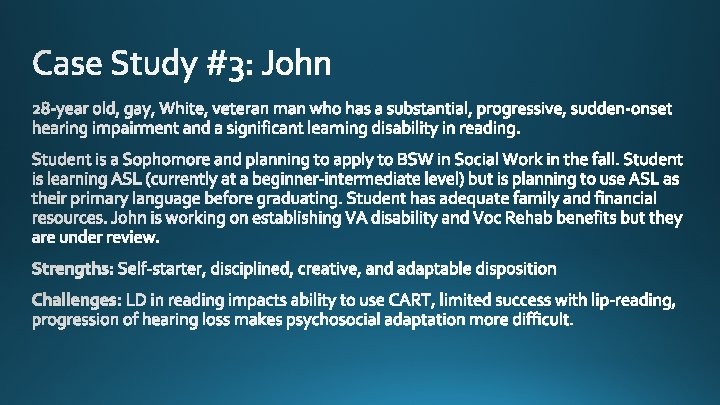
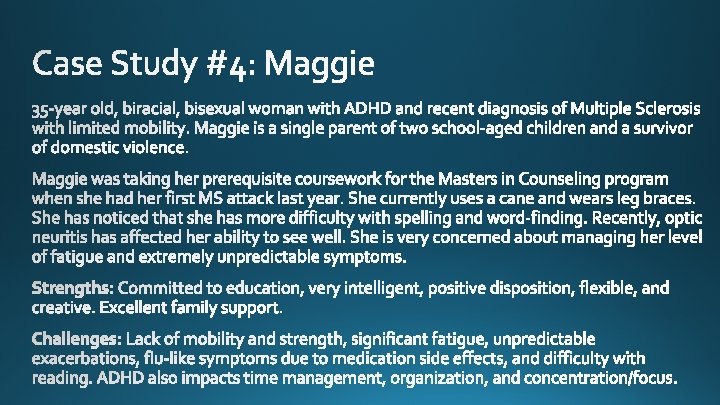
1. 2. 3. 4. 5.
![Dominguez, M. (2016). Intersectionality and assemblage: a real-life definition [Image: Intersecting Identity]. https: //goqnotes.](http://slidetodoc.com/presentation_image_h2/c8e105b71fc7d3513b1631f6bbf5f2f4/image-32.jpg "Dominguez, M. (2016). Intersectionality and assemblage: a real-life definition [Image: Intersecting Identity]. https: //goqnotes.")
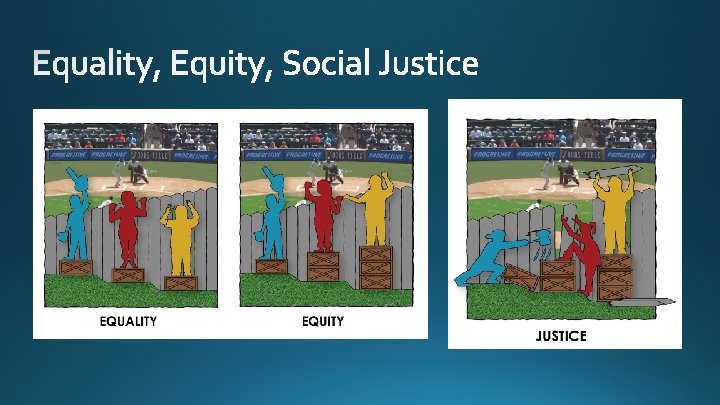
Dominguez, M. (2016). Intersectionality and assemblage: a real-life definition [Image: Intersecting Identity]. https: //goqnotes. com/48367/intersectionality-and-assemblage-a-real-life-definition/ Kuttner, P. (2016). The problem with that equity vs. equality graphic you’re using [Image: Equity, Equality, Justice]. Retrieved from June 26, 2017, from http: //culturalorganizing. org/the-problem-with-that-equity-vs-equality-graphic/ Mc. Allister, M. (2015). Marketo Summit 2015 – Bigger and better than ever! [Image: Fish Jumping into Bigger Bowl]. Retrieved June 26, 2017, from http: //demandspring. com/blog/marketo-summit-2015 -bigger-and-better-than-ever/ Seiderman, R. (2013). But _____ism doesn’t affect me: Why you should care about intersectionality [Image: Intersectionality]. Retrieved June 26, 2017, from http: //thebodyisnotanapology. tumblr. com/post/55427768903/but-ism-doesnt-affect-me-why-you-should Umstead, K. (2012). Promoting independence for individuals with disabilities [Image: Finding the Balance]. Retrieved June 26, 2017, from https: //www. slideshare. net/kayliz/promoting-independence-yai
Jen Dugger Director Disability Resource Center Portland State University jen. dugger@pdx. edu • (503) 725 -2035 Jewls Harris Access Counselor and Consultant Disability Resource Center Portland State University jewls. harris@pdx. edu • (503) 725 -4178
- Slides: 33