
Ethical and Human Rights Concerns in Global Health
Ethical and Human Rights Concerns in Global Health Chapter Four
The Importance of Ethical and Human Rights Issues in Global Health • Failure to respect human rights is often associated with harm to human health • Health research with human subjects puts people at risk for the sake of other people’s health • Health investments must be made in fair ways since resources are limited
The Foundations for Health and Human Rights • Universal Declaration of Human Rights and other legally binding multilateral treaties • Governments are obliged to respect, protect, and fulfill the rights they state
Selected Human Rights The Rights-Based Approach • Assess health policies, programs, and practices in terms of impact on human rights • Analyze and address the health impacts resulting from violations of human rights when considering ways to improve population health • Prioritize the fulfillment of human rights

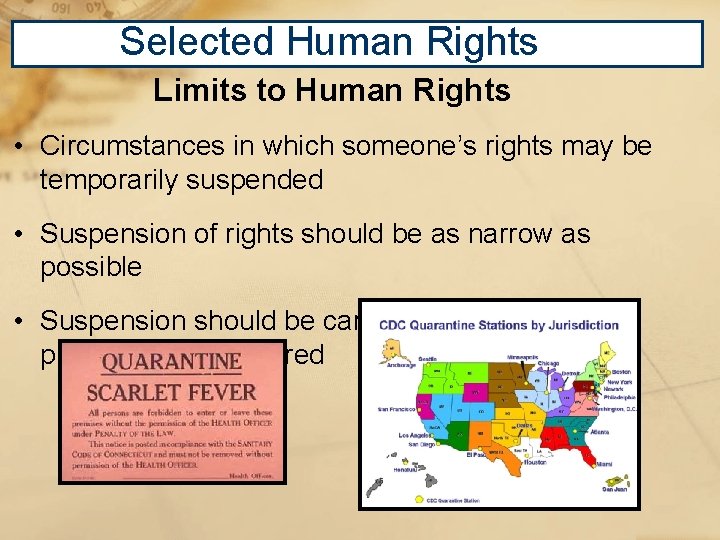
Selected Human Rights Limits to Human Rights • Circumstances in which someone’s rights may be temporarily suspended • Suspension of rights should be as narrow as possible • Suspension should be carried out with due process and monitored
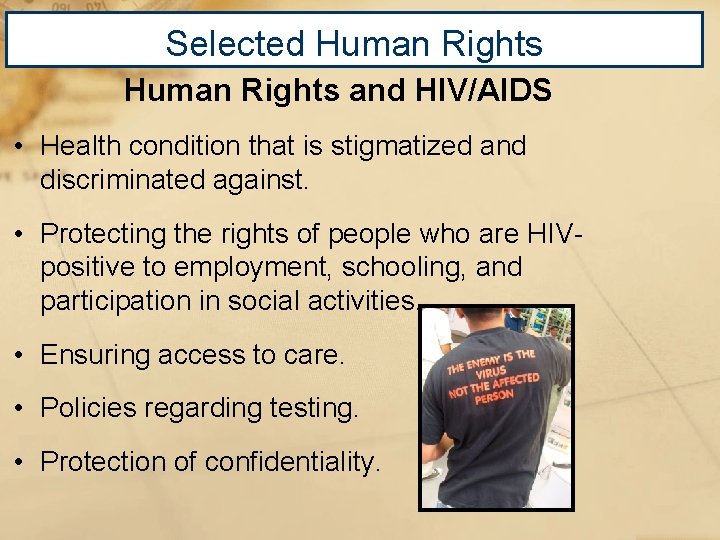
Selected Human Rights and HIV/AIDS • Health condition that is stigmatized and discriminated against. • Protecting the rights of people who are HIVpositive to employment, schooling, and participation in social activities. • Ensuring access to care. • Policies regarding testing. • Protection of confidentiality.
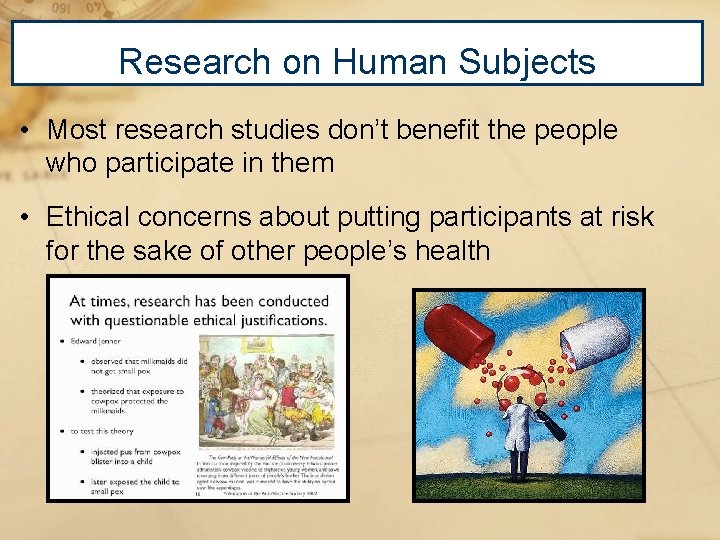
Research on Human Subjects • Most research studies don’t benefit the people who participate in them • Ethical concerns about putting participants at risk for the sake of other people’s health
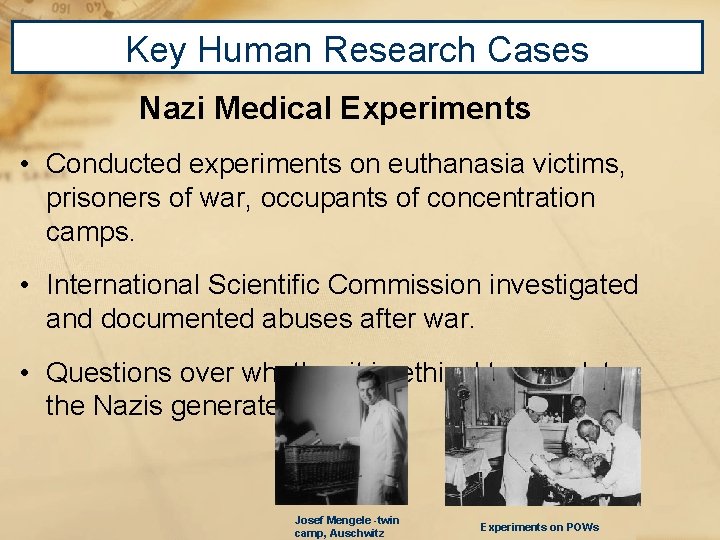
Key Human Research Cases Nazi Medical Experiments • Conducted experiments on euthanasia victims, prisoners of war, occupants of concentration camps. • International Scientific Commission investigated and documented abuses after war. • Questions over whether it is ethical to use data the Nazis generated. Josef Mengele -twin camp, Auschwitz Experiments on POWs
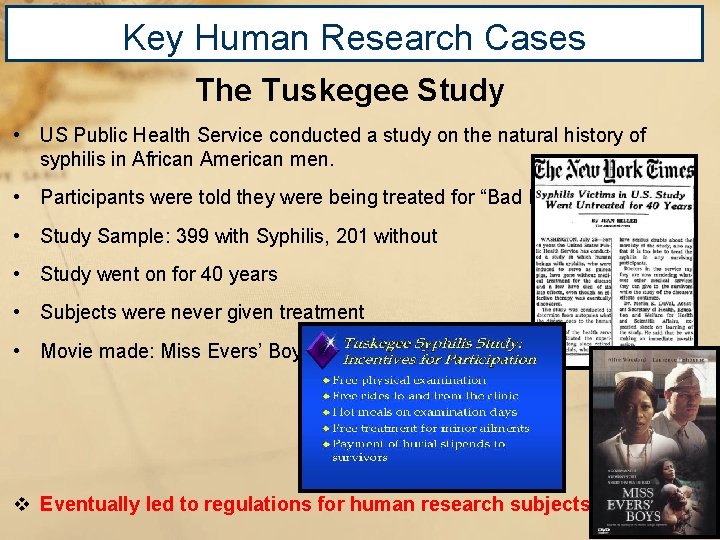
Key Human Research Cases The Tuskegee Study • US Public Health Service conducted a study on the natural history of syphilis in African American men. • Participants were told they were being treated for “Bad Blood” • Study Sample: 399 with Syphilis, 201 without • Study went on for 40 years • Subjects were never given treatment • Movie made: Miss Evers’ Boys v Eventually led to regulations for human research subjects.
Key Human Research Cases The “Short-Course” AZT Trials • Trials of a “short-course” AZT regimen to prevent mother-to-child transmission of HIV • Some people thought that poor people were being exploited since the trials were taking place in low-income countries • Studies remain controversial
Ethics Vs Life Video: http: //video. pbs. org/video/1990304722 Medical Cost-Benefit Ethics Expensive cancer-fighting drugs are sparking ethical debate about the tremendous costs and small benefits of some new treatments.

Research Ethics Guidelines The Nuremberg Code • First document to specify ethical principles that should guide physicians engaged in human research • “Voluntary consent of the human subject is absolutely essential”
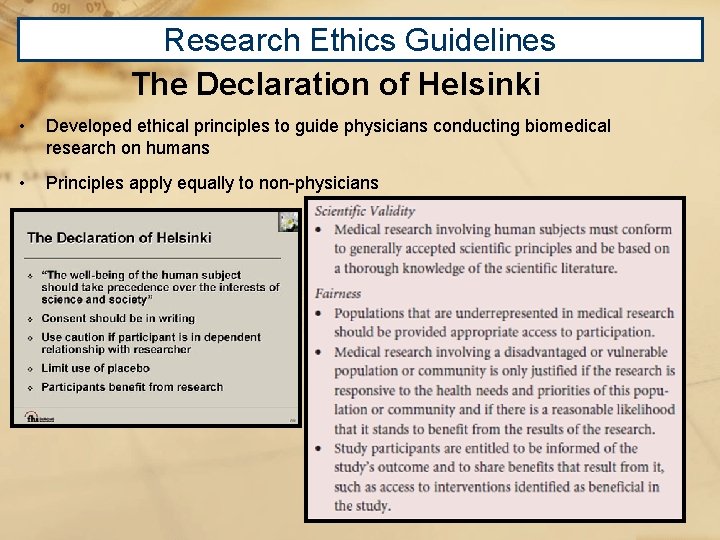
Research Ethics Guidelines The Declaration of Helsinki • Developed ethical principles to guide physicians conducting biomedical research on humans • Principles apply equally to non-physicians
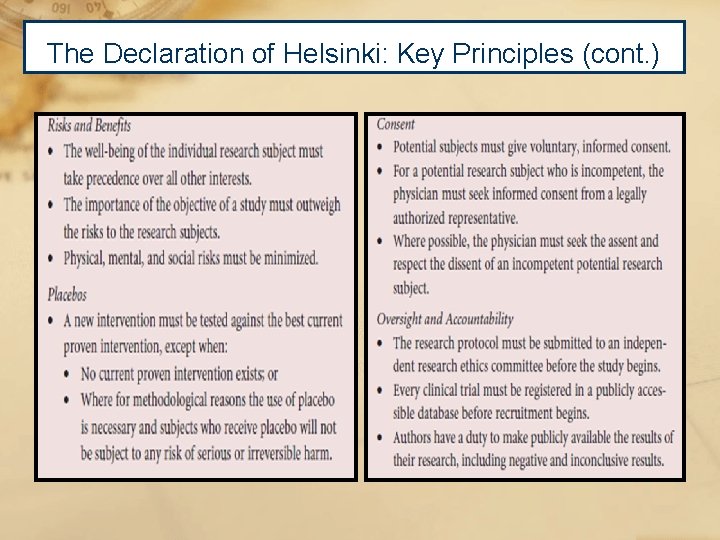
The Declaration of Helsinki: Key Principles (cont. )
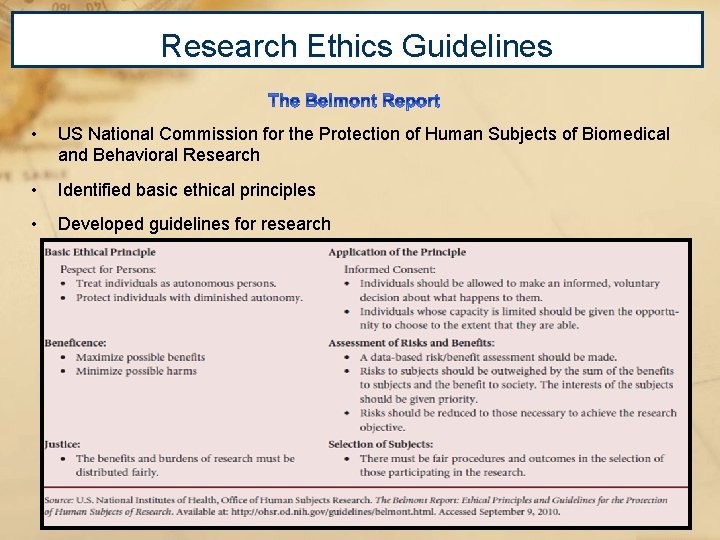
Research Ethics Guidelines • US National Commission for the Protection of Human Subjects of Biomedical and Behavioral Research • Identified basic ethical principles • Developed guidelines for research
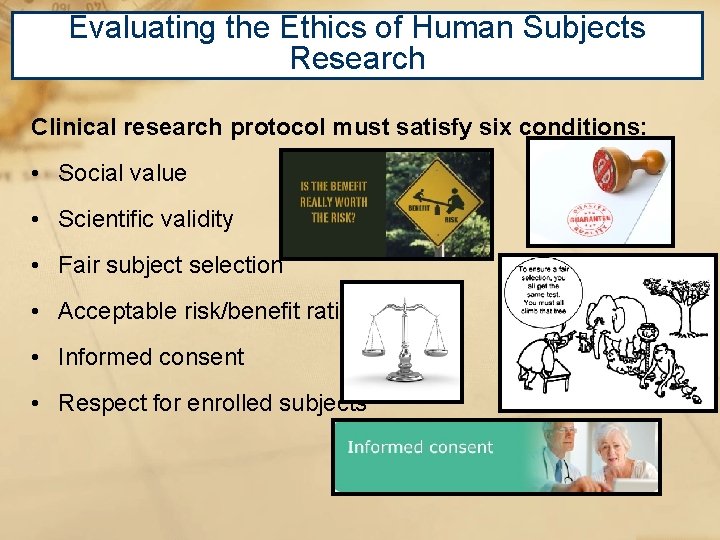
Evaluating the Ethics of Human Subjects Research Clinical research protocol must satisfy six conditions: • Social value • Scientific validity • Fair subject selection • Acceptable risk/benefit ratio • Informed consent • Respect for enrolled subjects
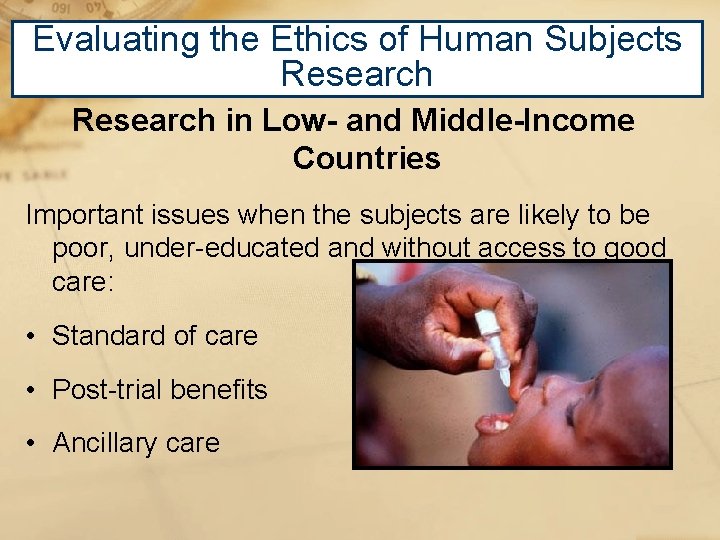
Evaluating the Ethics of Human Subjects Research in Low- and Middle-Income Countries Important issues when the subjects are likely to be poor, under-educated and without access to good care: • Standard of care • Post-trial benefits • Ancillary care
Evaluating the Ethics of Human Subjects Research Oversight Today • Ethical review by a research ethics committee(REC) • Safeguard against exploitation • Regulations vary from country to country
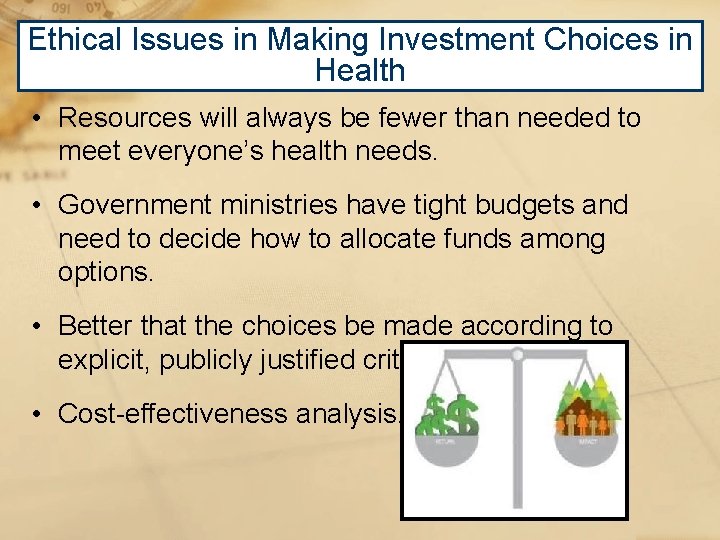
Ethical Issues in Making Investment Choices in Health • Resources will always be fewer than needed to meet everyone’s health needs. • Government ministries have tight budgets and need to decide how to allocate funds among options. • Better that the choices be made according to explicit, publicly justified criteria. • Cost-effectiveness analysis.
Ethical Issues in Making Investment Choices in Health Principles for Distributing Scarce Resources Most plausible allocation proposals is justified by at least one of these ethical principles: • Health maximization • Equality − Priority to the worst off • Personal responsibility
Ethical Issues in Making Investment Choices in Health Fair Processes • Transparency about how decisions are made. • Representation from stakeholders affected. • Appropriate use of scientific data.
Future Challenges • Students of global health get insufficient exposure in their training to ethical issues. • No mechanisms of enforcement of humans rights. • Shortage of trained personnel for reviewing research. • Lack of reviews of how investments are made. • Unsolved ethical problems.
- Slides: 23