
Ethernet Framing and Addressing 802 2 frame n
- Slides: 25
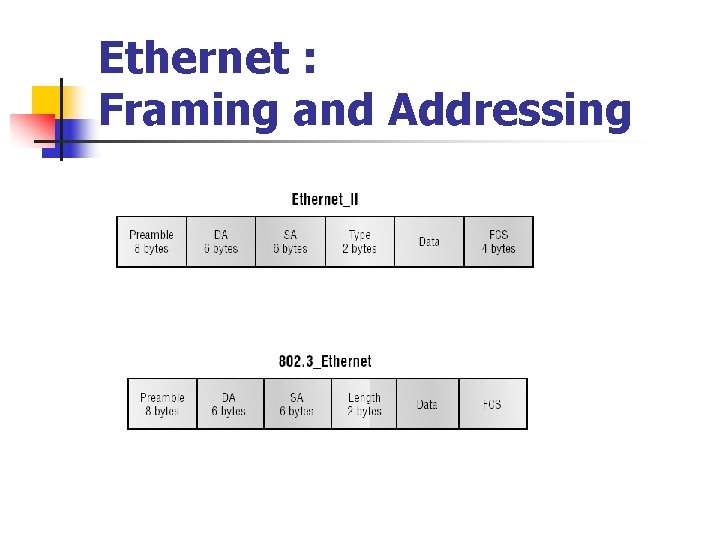
Ethernet : Framing and Addressing
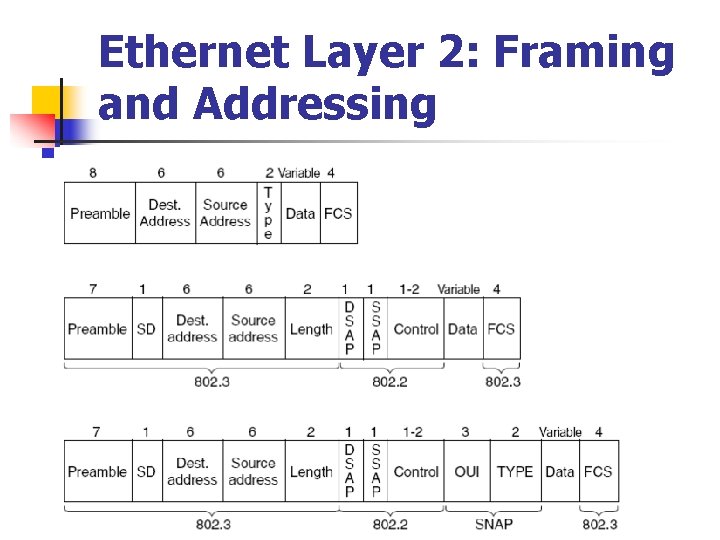
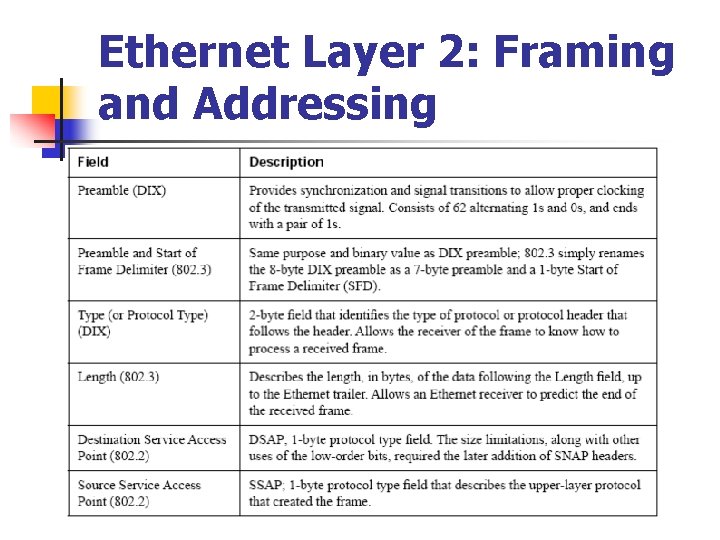
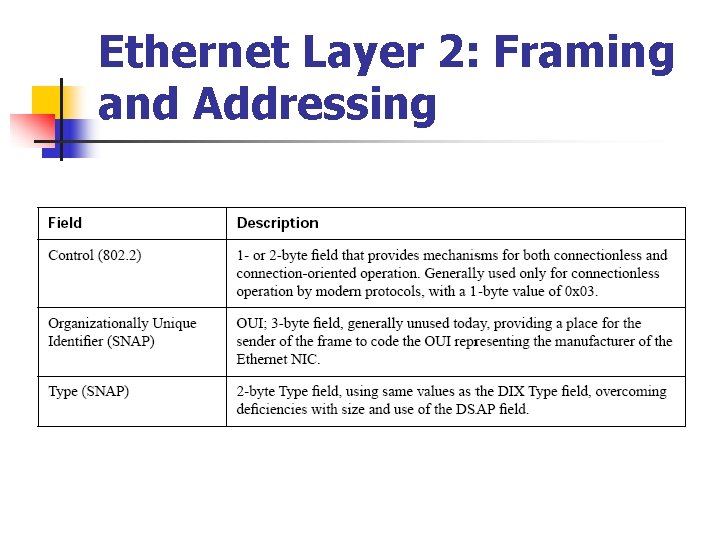
802. 2 frame n 802. 3 Ethernet frame cannot by itself identify the upper-layer (Network) protocol n The IEEE defined the 802. 2 LLC (Logical Link Control) specifications to provide this function and more. n An 802. 2 frame is an 802. 3 frame with the LLC information in the data field of the header so we know what the upper-layer protocol is.
SNAP (Sub. Network Access Protocol) frame n The SNAP frame has its own protocol field to identify the upper-layer protocol n This is really a way to allow an Ethernet_II Ether-Type field to be used in an 802. 3 frame n SNAP frame can be identified easily because the DSAP and SSAP fields are always AA, and the Command field is always 3.
Ethernet Layer 2: Framing and Addressing
Ethernet Layer 2: Framing and Addressing
Ethernet Layer 2: Framing and Addressing
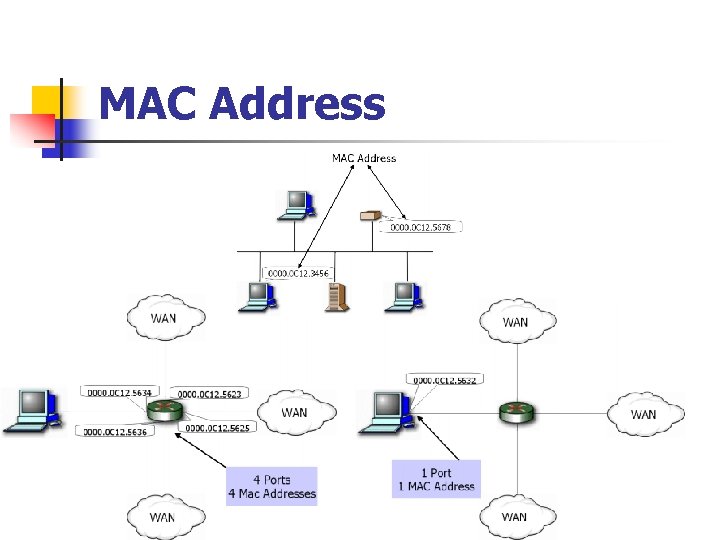
MAC Address
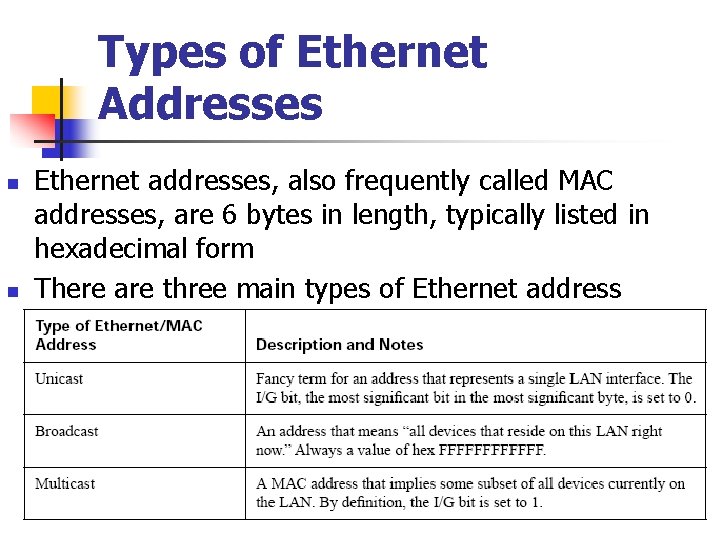
Types of Ethernet Addresses n n Ethernet addresses, also frequently called MAC addresses, are 6 bytes in length, typically listed in hexadecimal form There are three main types of Ethernet address
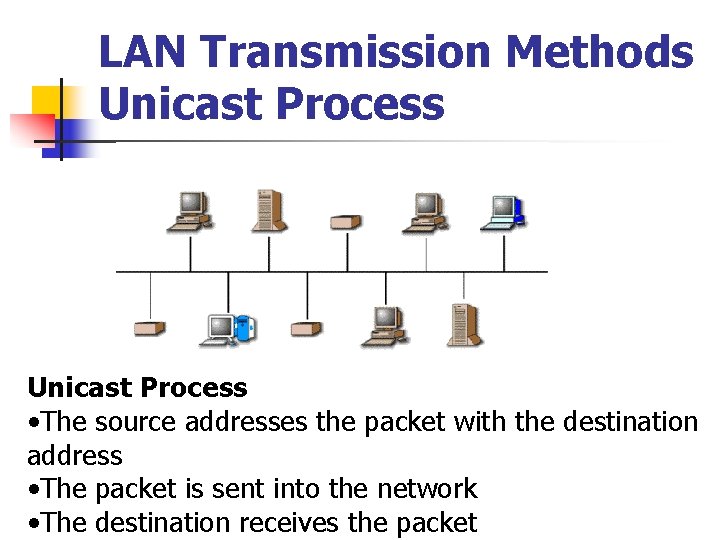
LAN Transmission Methods Unicast Process • The source addresses the packet with the destination address • The packet is sent into the network • The destination receives the packet
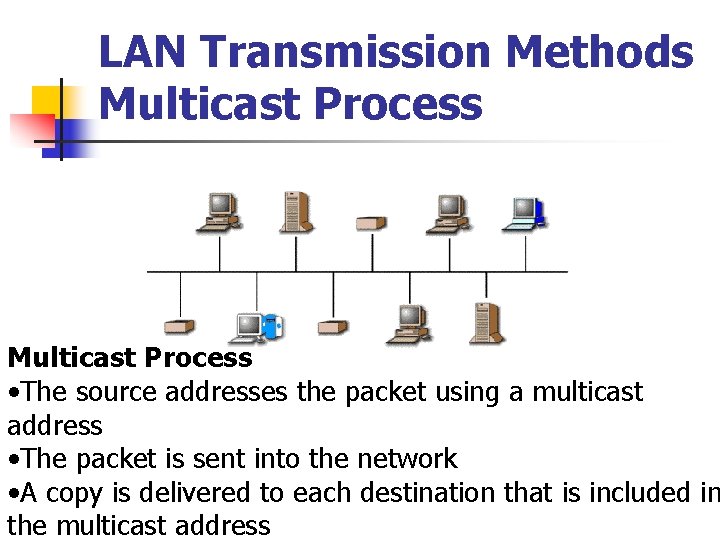
LAN Transmission Methods Multicast Process • The source addresses the packet using a multicast address • The packet is sent into the network • A copy is delivered to each destination that is included in the multicast address
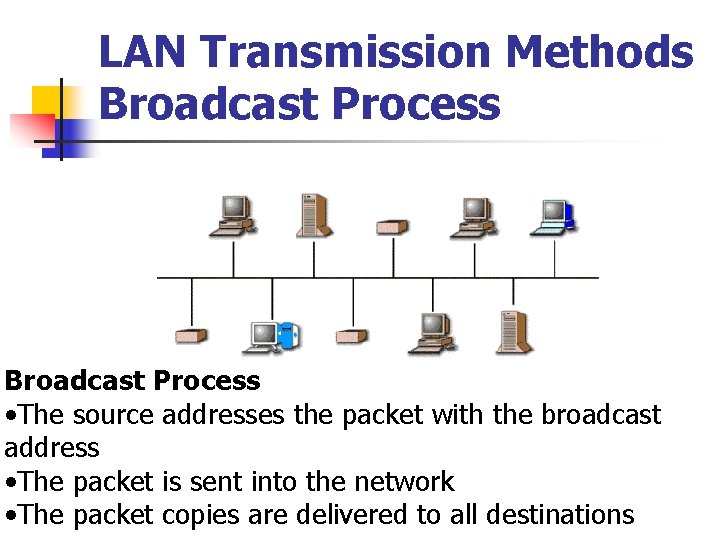
LAN Transmission Methods Broadcast Process • The source addresses the packet with the broadcast address • The packet is sent into the network • The packet copies are delivered to all destinations
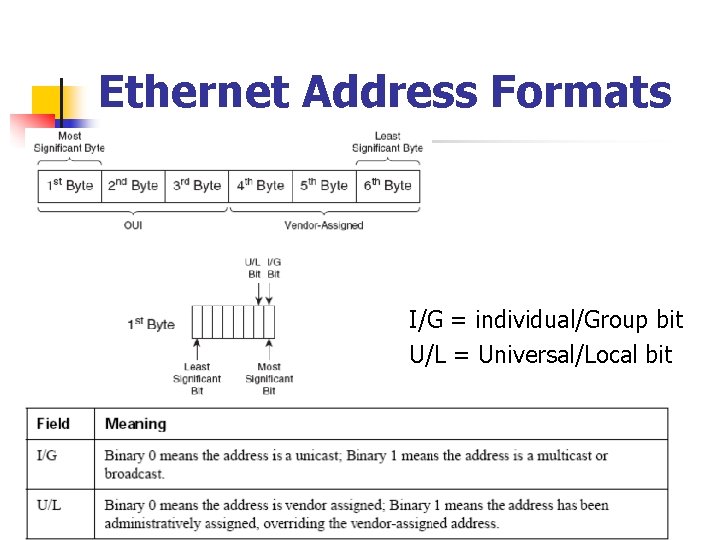
Ethernet Address Formats n n The IEEE intends for unicast addresses to be unique in the universe by administering the assignment of MAC addresses The IEEE assigns each vendor a code to use as the first 3 bytes of its MAC addresses; that first half of the addresses is called the Organizationally Unique Identifier (OUI) The IEEE expects each manufacturer to use its OUI for the first 3 bytes of the MAC assigned to any Ethernet product created by that vendor The vendor then assigns a unique value in the low-order 3 bytes for each Ethernet card that it manufactures—thereby ensuring global uniqueness of MAC addresses
Ethernet Address Formats I/G = individual/Group bit U/L = Universal/Local bit
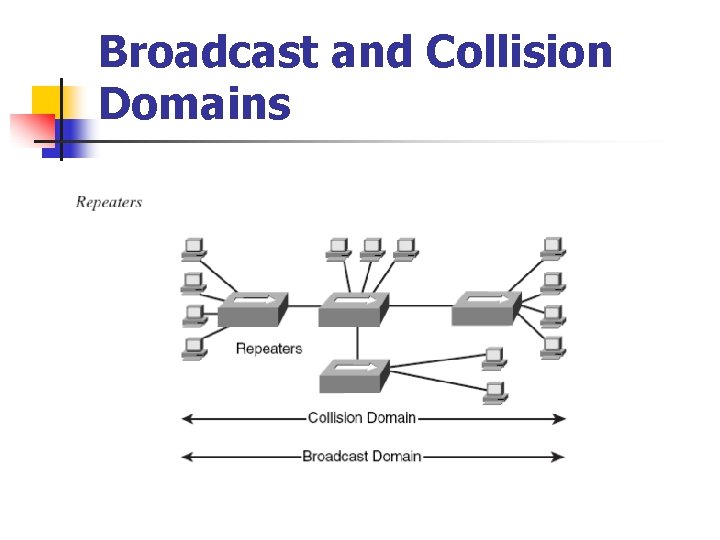
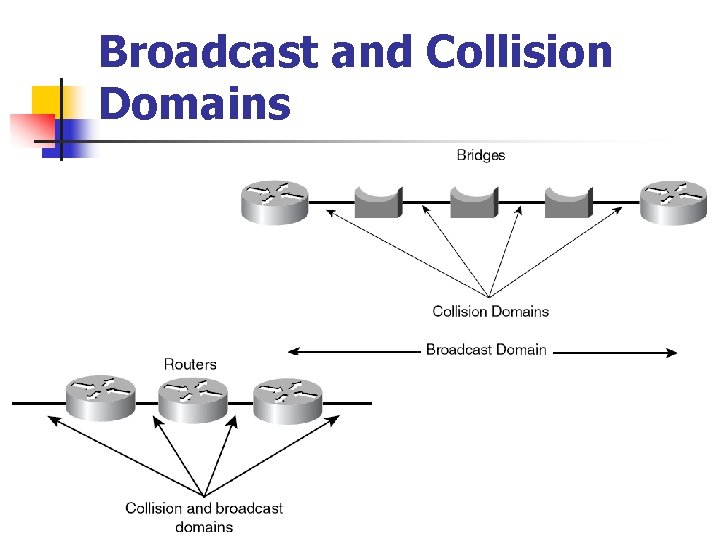
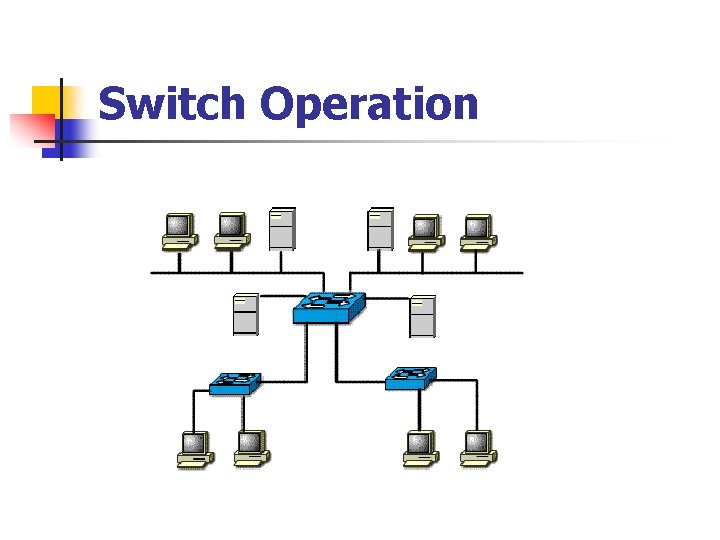
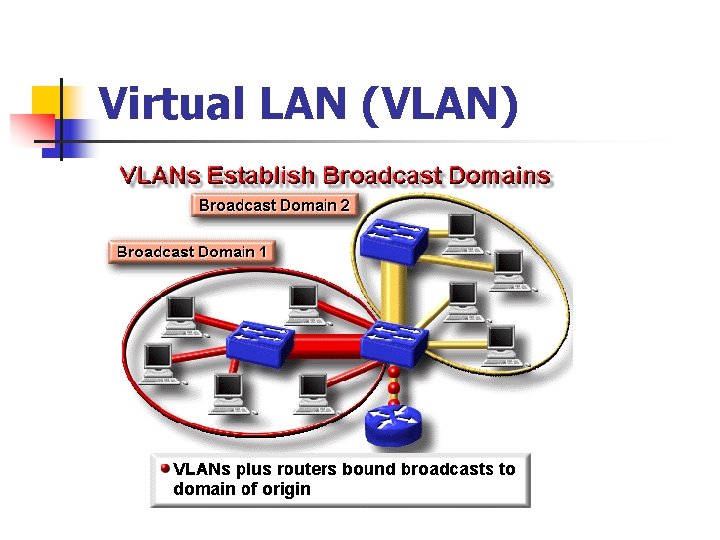
Broadcast Domains n n In an Ethernet LAN, a set of devices that receive a broadcast sent by any one of the devices in the same set is called a broadcast domain A switch simply forwards all broadcasts out all interfaces, except the interface on which it received the frame As a result, all the interfaces on an individual switch are in the same broadcast domain Also, if the switch connects to other switches and hubs, the interfaces on those switches and hubs are also in the same broadcast domain
Broadcast and Collision Domains
Broadcast and Collision Domains
Switch Operation
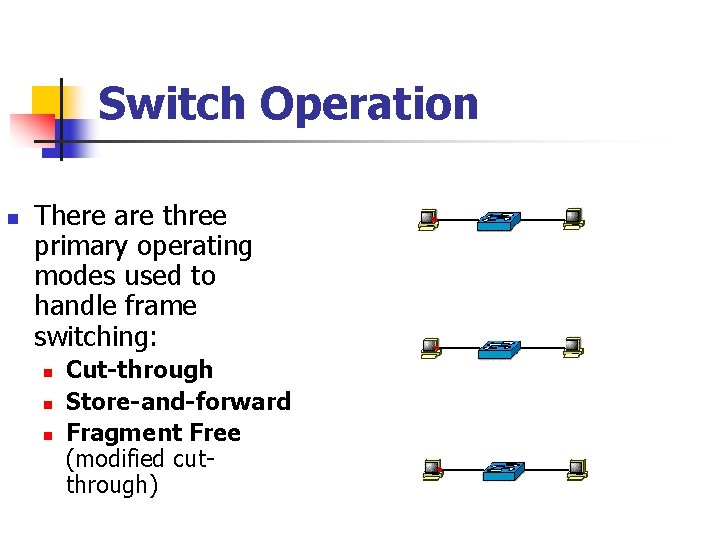
Switch Operation n There are three primary operating modes used to handle frame switching: n n n Cut-through Store-and-forward Fragment Free (modified cutthrough)
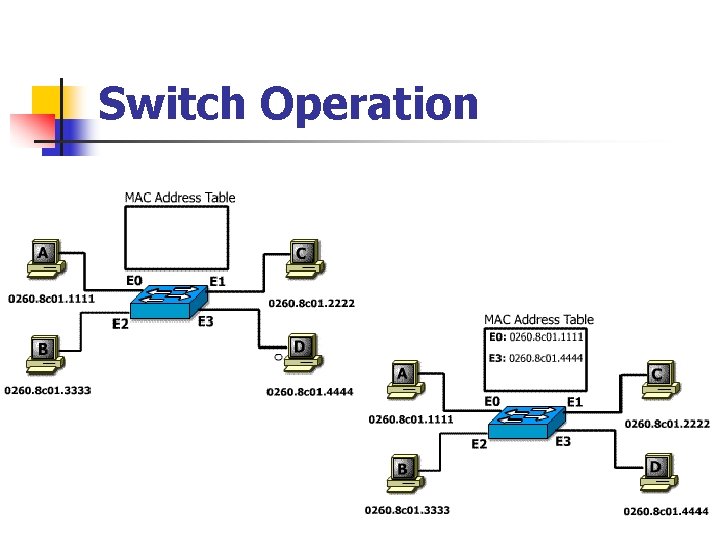
Switch Operation
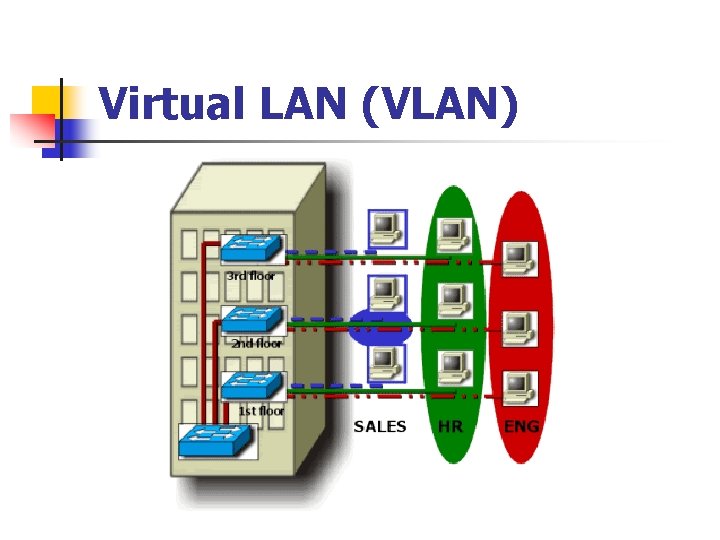
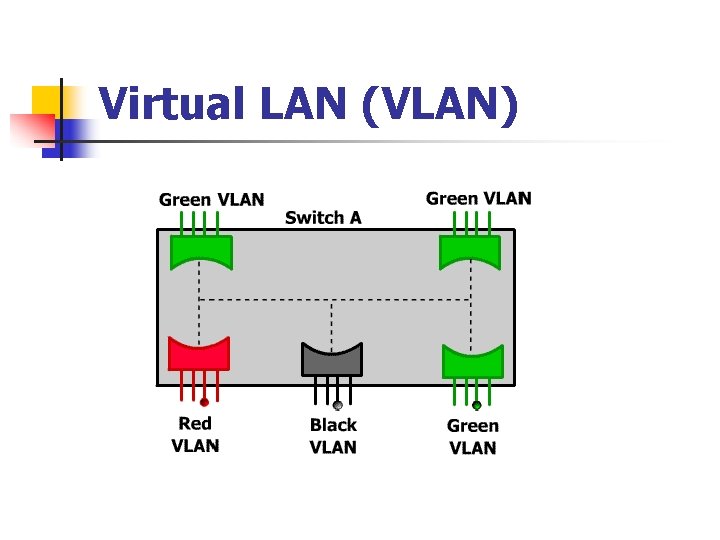
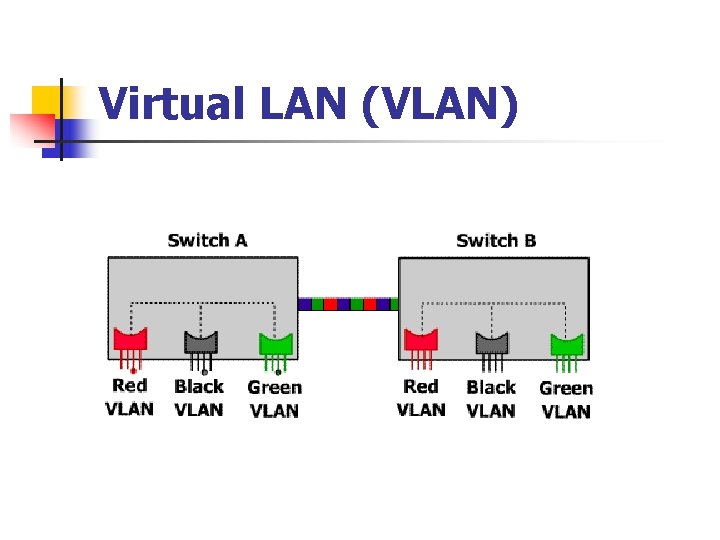
Virtual LAN (VLAN) n n n A VLAN is simply an administratively defined subset of switch ports that are in the same broadcast domain Ports can be grouped into different VLANs on a single switch, and on multiple interconnected switches as well By creating multiple VLANs, the switches create multiple broadcast domains By doing so, a broadcast sent by a device in one VLAN is forwarded to the other devices in that same VLAN; however, the broadcast is not forwarded to devices in the other VLANs Layer 2 switches forward frames between devices in the same VLAN, but they do not forward frames between two devices in different VLANs
Virtual LAN (VLAN)
Virtual LAN (VLAN)
Virtual LAN (VLAN)
Virtual LAN (VLAN)
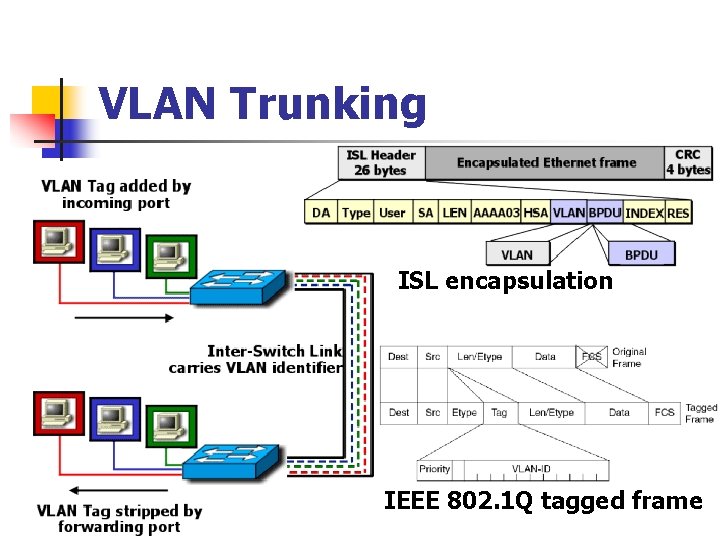
VLAN Trunking ISL encapsulation IEEE 802. 1 Q tagged frame