
ETF Short Interest and FailurestoDeliver Naked Shortselling or







- Slides: 22
ETF Short Interest and Failures-to-Deliver: Naked Short-selling or Operational Shorting? Richard Evans 1, Rabih Moussawi 2, Michael Pagano 2, John Sedunov 2 1 Darden School of Business 2 Villanova U.
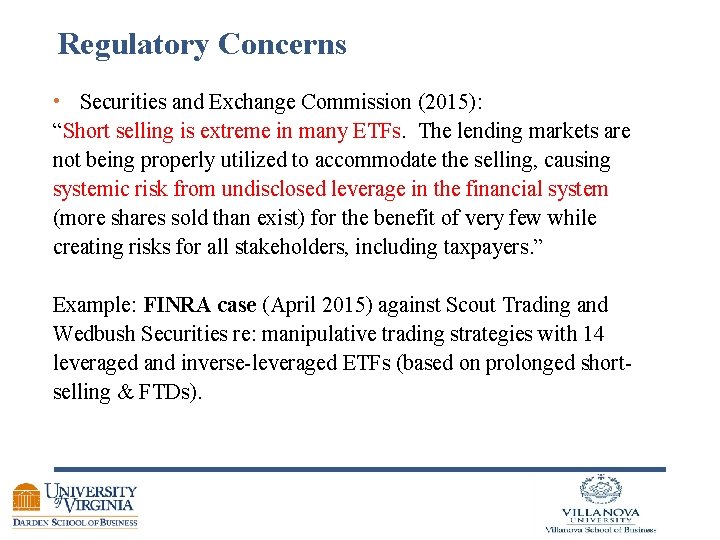
Regulatory Concerns • Securities and Exchange Commission (2015): “Short selling is extreme in many ETFs. The lending markets are not being properly utilized to accommodate the selling, causing systemic risk from undisclosed leverage in the financial system (more shares sold than exist) for the benefit of very few while creating risks for all stakeholders, including taxpayers. ” Example: FINRA case (April 2015) against Scout Trading and Wedbush Securities re: manipulative trading strategies with 14 leveraged and inverse-leveraged ETFs (based on prolonged shortselling & FTDs).
Regulatory Concerns (2) • Financial Stability Board (2011): “…the expectation of on-demand liquidity may create the conditions for acute redemption pressures on certain types of ETFs in situations of market stress. ” Example: Forbes headline – “What the E-T-F happened on August 24 th? ” Red = SPY (VW S&P 500) Blue = RSP (EW S&P 500)
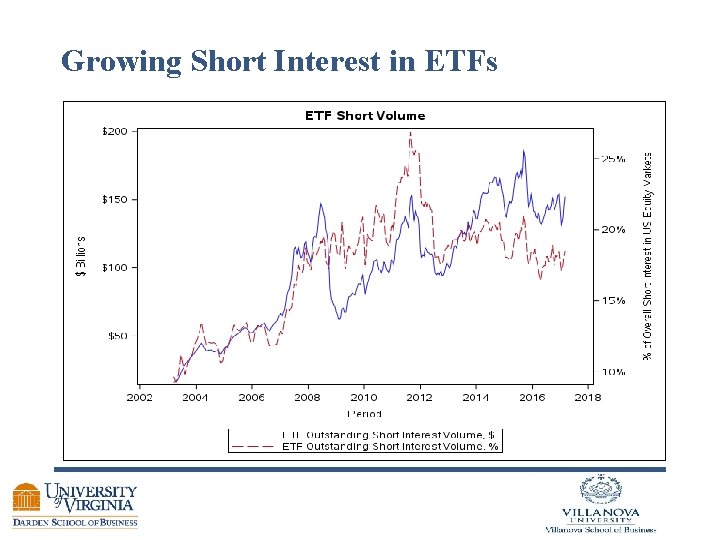
Growing Short Interest in ETFs
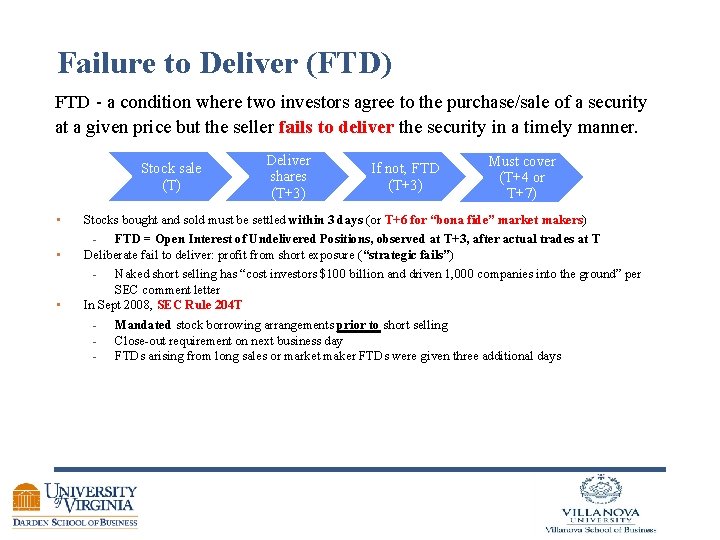
Failure to Deliver (FTD) FTD - a condition where two investors agree to the purchase/sale of a security at a given price but the seller fails to deliver the security in a timely manner. Stock sale (T) • • • Deliver shares (T+3) If not, FTD (T+3) Must cover (T+4 or T+7) Stocks bought and sold must be settled within 3 days (or T+6 for “bona fide” market makers) - FTD = Open Interest of Undelivered Positions, observed at T+3, after actual trades at T Deliberate fail to deliver: profit from short exposure (“strategic fails”) - Naked short selling has “cost investors $100 billion and driven 1, 000 companies into the ground” per SEC comment letter In Sept 2008, SEC Rule 204 T - Mandated stock borrowing arrangements prior to short selling - Close-out requirement on next business day - FTDs arising from long sales or market maker FTDs were given three additional days
FTD trends for Stocks and ETFs Sec Rule 204 T
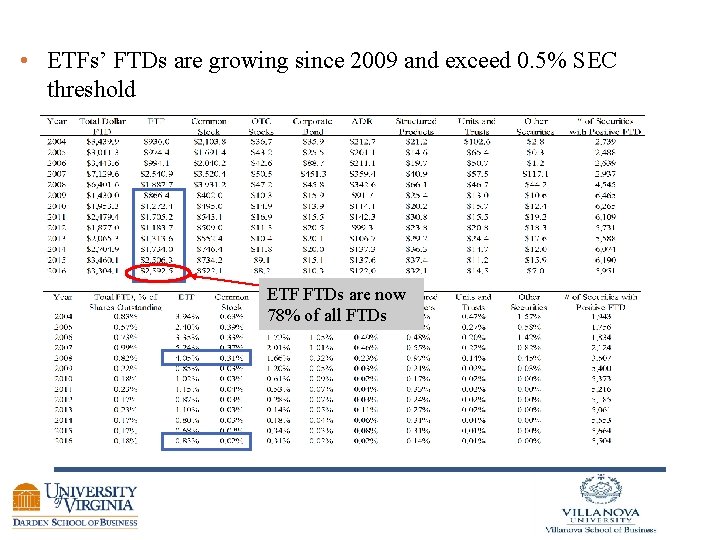
• ETFs’ FTDs are growing since 2009 and exceed 0. 5% SEC threshold ETF FTDs are now 78% of all FTDs
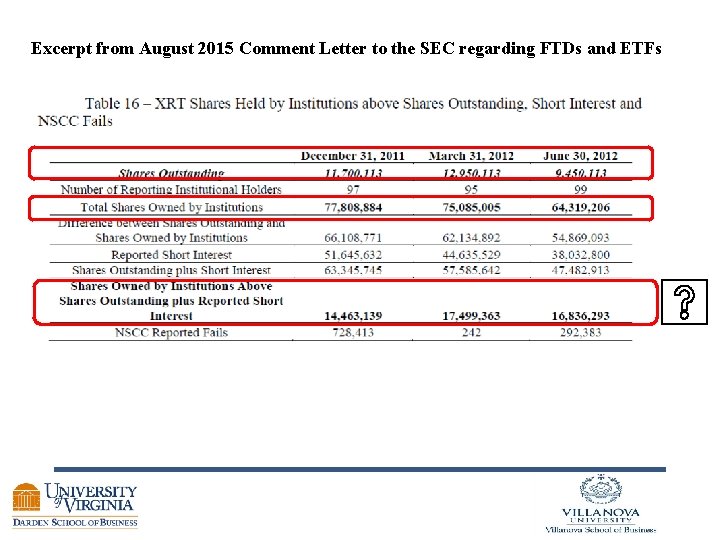
Excerpt from August 2015 Comment Letter to the SEC regarding FTDs and ETFs
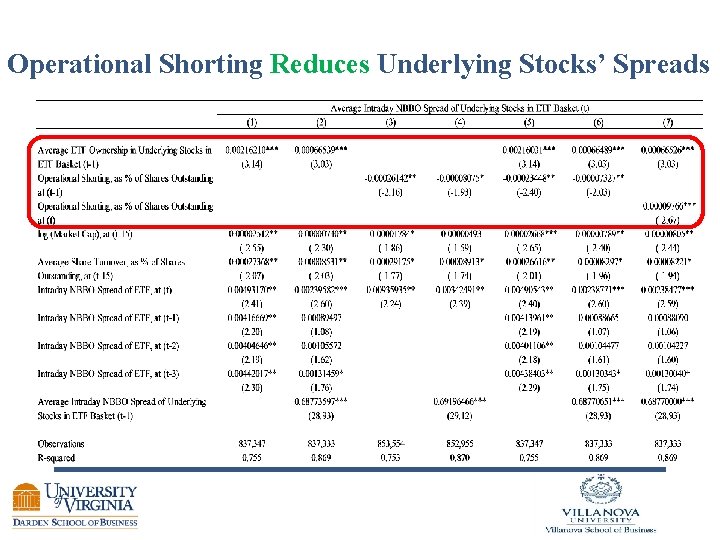
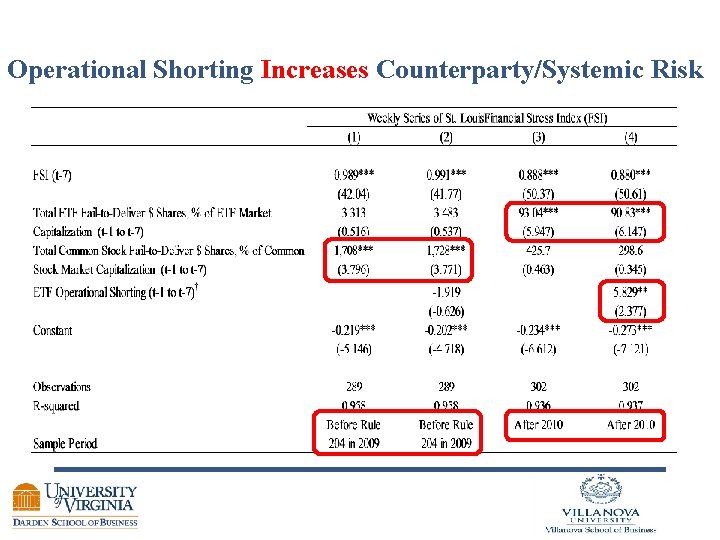
Research Questions and Results • What is driving ETF FTDs? Ø Prior research shows Stock FTDs driven by naked short selling Ø We identify an alternative reason for ETF FTDs: operational shorting • We propose a novel measure of “operational shorting” • Operational Shorting is related to increased ETF Short Interest and FTDs • What is the impact on the liquidity of an ETF’s underlying basket? Ø Operational Shorting acts as a “buffer” and improves the basket’s liquidity • “Spillovers” can occur between AP-level and market-wide operational shorting • We also examine the relationship of ETF FTDs and financial markets: Ø It doesn’t predict future risk-adjusted returns (consistent with liquidity provision rather than bearish bets) Ø It does predict the St. Louis FSI, a measure of counterparty/systemic risk, (post-2009)
Key Takeaways from our results • ETF shares are not created immediately: “option to delay” is valuable due to order imbalances • Option to delay ≈ Operational Shorting • ETF FTDs are due primarily to operational shorting • ETF short interest contains operational shorting and serves as a liquidity provision mechanism - The incentives for AP / MM are arbitrage profits • But… the aggregate operational shorting activity can adversely affect market-wide financial stability • Spillovers of FTDs between APs and Financial Leverage can lead to financial instability
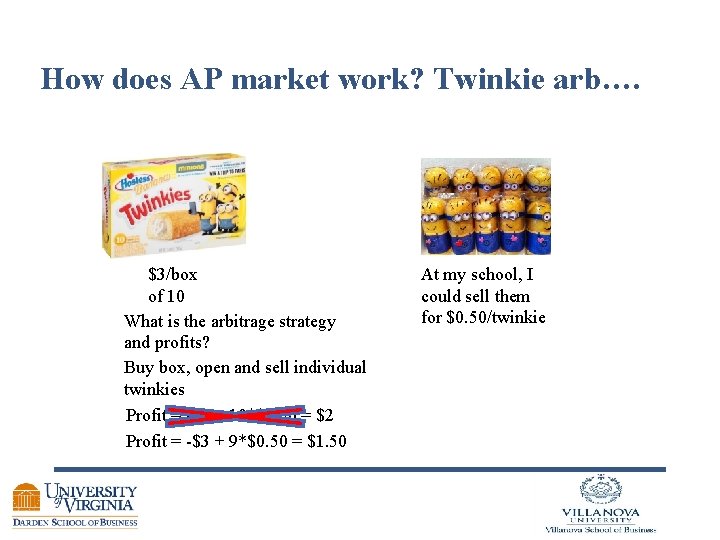
How does AP market work? Twinkie arb…. $3/box of 10 What is the arbitrage strategy and profits? Buy box, open and sell individual twinkies Profit = -$3 + 10*$0. 50 = $2 Profit = -$3 + 9*$0. 50 = $1. 50 At my school, I could sell them for $0. 50/twinkie
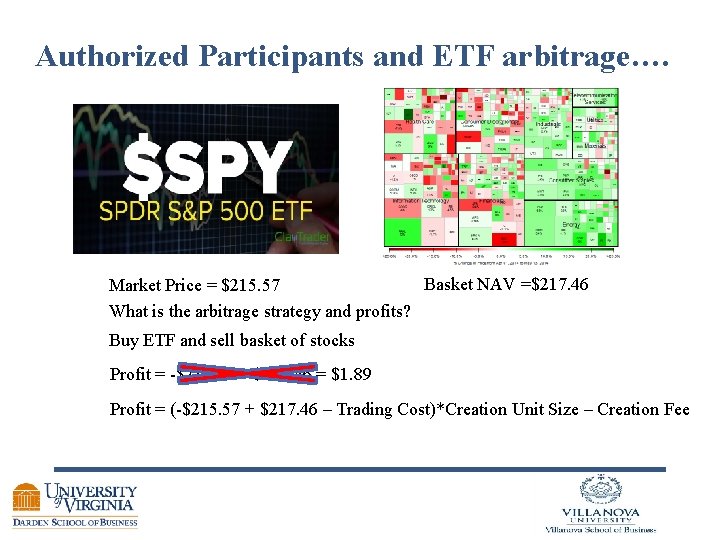
Authorized Participants and ETF arbitrage…. Basket NAV =$217. 46 Market Price = $215. 57 What is the arbitrage strategy and profits? Buy ETF and sell basket of stocks Profit = -$215. 57 + $217. 46 = $1. 89 Profit = (-$215. 57 + $217. 46 – Trading Cost)*Creation Unit Size – Creation Fee
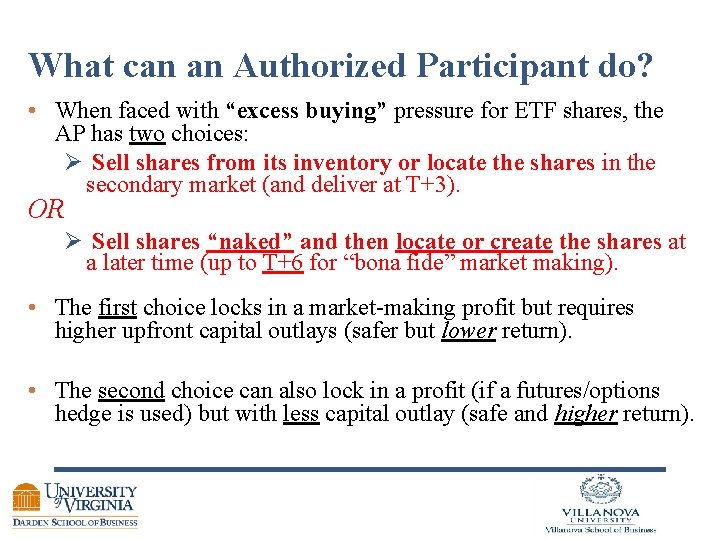
What can an Authorized Participant do? • When faced with “excess buying” pressure for ETF shares, the AP has two choices: Ø Sell shares from its inventory or locate the shares in the secondary market (and deliver at T+3). OR Ø Sell shares “naked” and then locate or create the shares at a later time (up to T+6 for “bona fide” market making). • The first choice locks in a market-making profit but requires higher upfront capital outlays (safer but lower return). • The second choice can also lock in a profit (if a futures/options hedge is used) but with less capital outlay (safe and higher return).
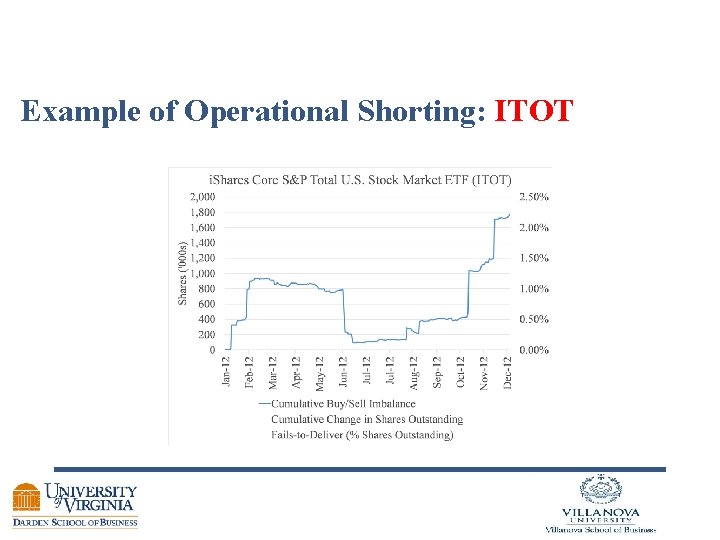
Example of Operational Shorting: ITOT
Example of Operational Shorting: ITOT
Example of Operational Shorting: ITOT Why doesn’t ETF share creation respond perfectly to excess buying/selling? • • Creation unit size Creation fee Trading costs Trading environment or market liquidity Persistent Oper. Shorting > 0 Increased FTDs
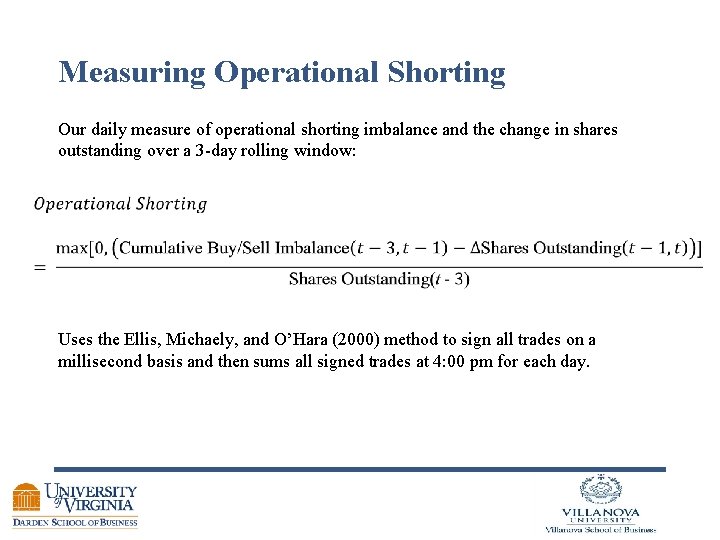
Measuring Operational Shorting Our daily measure of operational shorting imbalance and the change in shares outstanding over a 3 -day rolling window: Uses the Ellis, Michaely, and O’Hara (2000) method to sign all trades on a millisecond basis and then sums all signed trades at 4: 00 pm for each day.
Increased Operational Shorting and FTDs
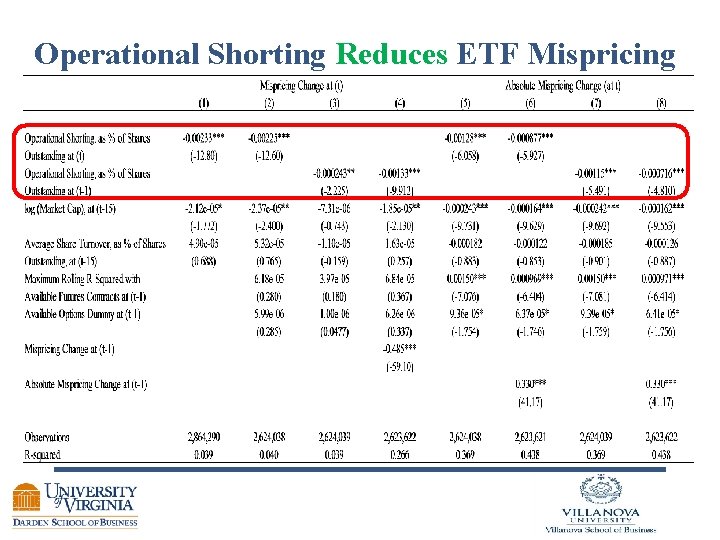
Operational Shorting Reduces ETF Mispricing
Operational Shorting Reduces Underlying Stocks’ Spreads
Operational Shorting Increases Counterparty/Systemic Risk
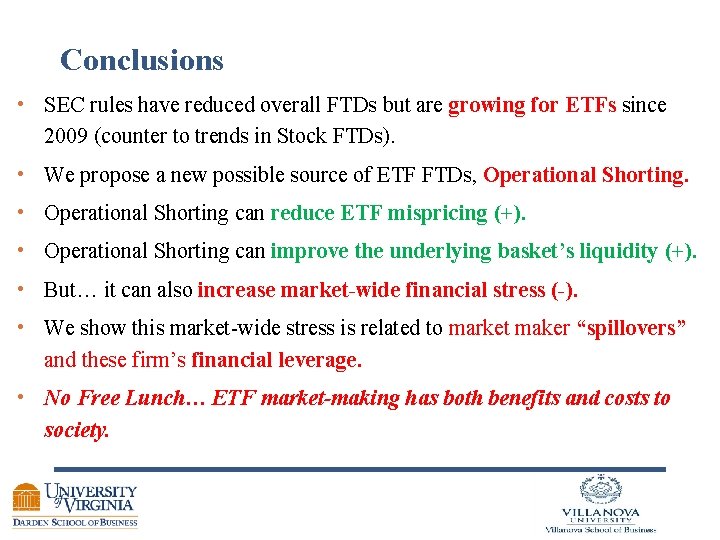
Conclusions • SEC rules have reduced overall FTDs but are growing for ETFs since 2009 (counter to trends in Stock FTDs). • We propose a new possible source of ETF FTDs, Operational Shorting. • Operational Shorting can reduce ETF mispricing (+). • Operational Shorting can improve the underlying basket’s liquidity (+). • But… it can also increase market-wide financial stress (-). • We show this market-wide stress is related to market maker “spillovers” and these firm’s financial leverage. • No Free Lunch… ETF market-making has both benefits and costs to society.