
Estvanico the Moor Estevanico pronounced estayvahn EEco DISCOVERER

- Slides: 11
Estévanico the Moor Estevanico (pronounced es-tay-vahn. EE-co),
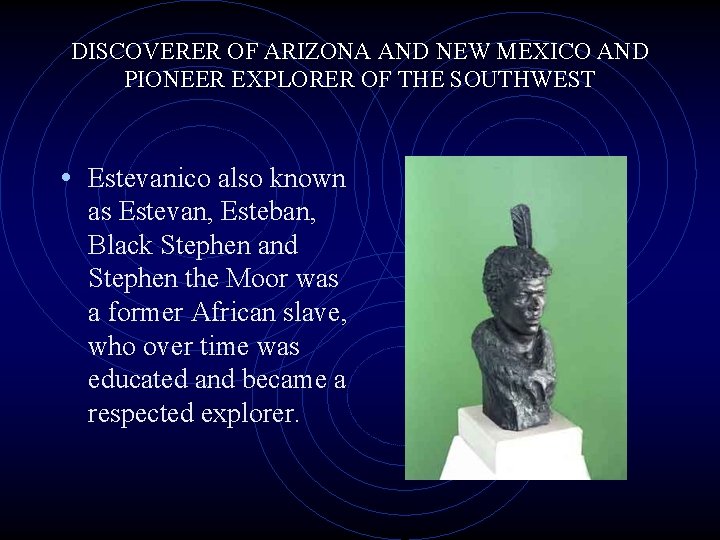
DISCOVERER OF ARIZONA AND NEW MEXICO AND PIONEER EXPLORER OF THE SOUTHWEST • Estevanico also known as Estevan, Esteban, Black Stephen and Stephen the Moor was a former African slave, who over time was educated and became a respected explorer.
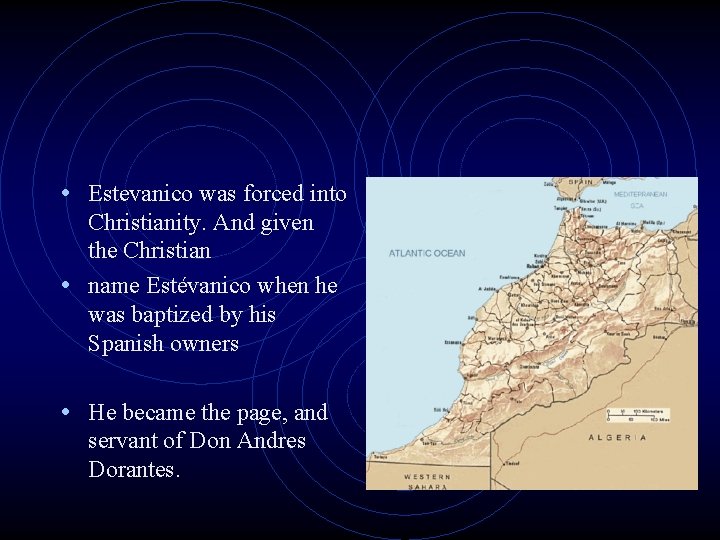
• His parents were from the Huasa tribe (Muslim population of Northern Nigeria) so they were large, strong, and hard workers. • In 1513 military forces from King Manuael the 1 st of Portugal invaded • Amaze, Morocco, where he lived, and regained control of it.
• Estevanico was forced into Christianity. And given the Christian • name Estévanico when he was baptized by his Spanish owners • He became the page, and servant of Don Andres Dorantes.
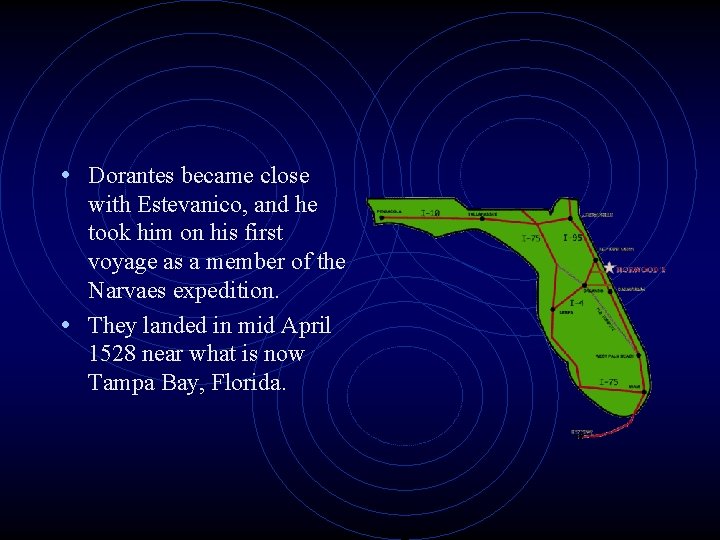
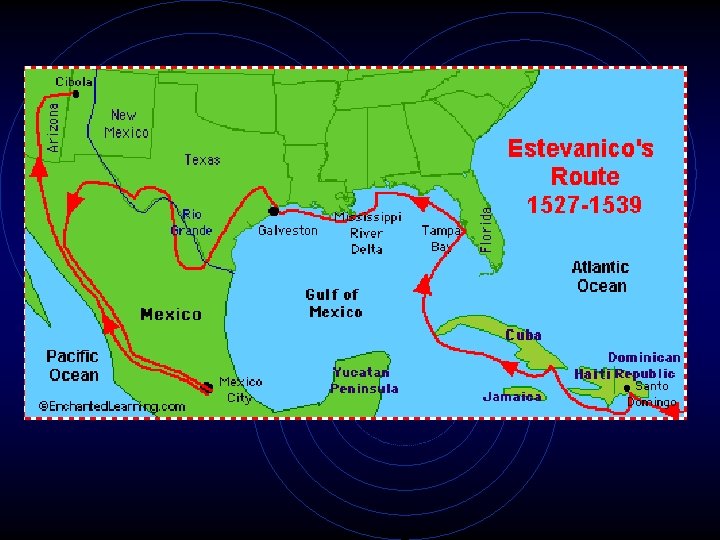
• Dorantes became close with Estevanico, and he took him on his first voyage as a member of the Narvaes expedition. • They landed in mid April 1528 near what is now Tampa Bay, Florida.
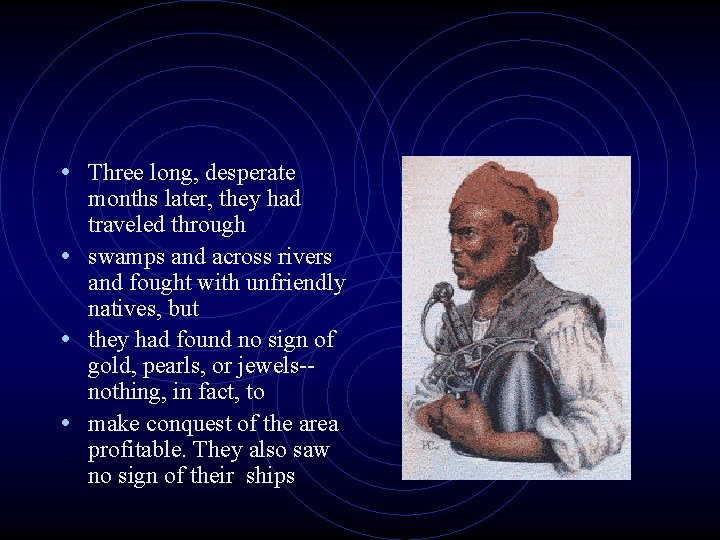
• Three long, desperate months later, they had traveled through • swamps and across rivers and fought with unfriendly natives, but • they had found no sign of gold, pearls, or jewels-nothing, in fact, to • make conquest of the area profitable. They also saw no sign of their ships
• By this time, more than forty members of the party had died--some due to hunger or disease, others the victims of accidental drownings or the arrows of the natives • For a period of six weeks they worked constructing five "barges“.
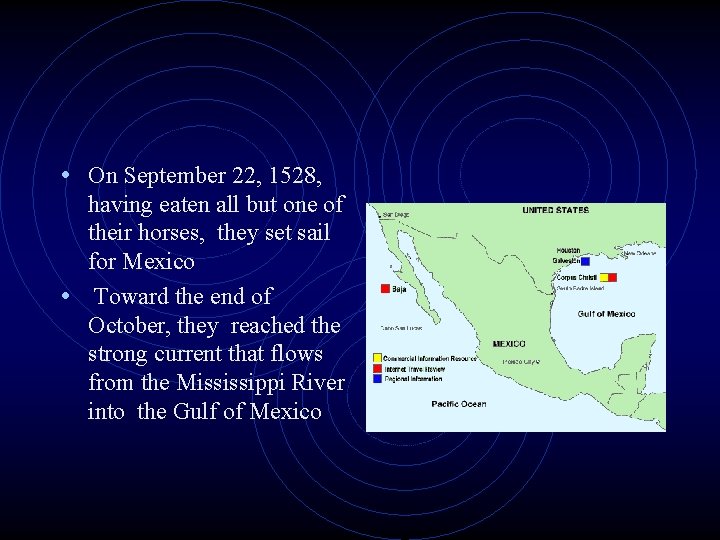
• On September 22, 1528, having eaten all but one of their horses, they set sail for Mexico • Toward the end of October, they reached the strong current that flows from the Mississippi River into the Gulf of Mexico
The craft containing Estévanico capsized, but all aboard made it safely to a nearby island. So pathetic were the strangers that the Indians sat down with them and began to weep out of compassion for their misfortune. Of the 80 men cast ashore, only 15 survived until spring. Some survived by eating the flesh of those who had died.
In April 1529, Dorantes gathered the survivors of his boat, including Estévanico and Castillo, and crossed to the mainland, There they were captured by natives, and spent the next six years in slavaery to the natives, doing heavy labor and enduring the taunts and blows of their captors. Five men who tried to escape were shot with arrows and killed; others died of cold and hunger, until only Estevanico, Dorantes, Cabeza de Vaca and Alonso Castillo