
Estuary Definition and Orientation What is an estuary
- Slides: 41
Estuary Definition and Orientation
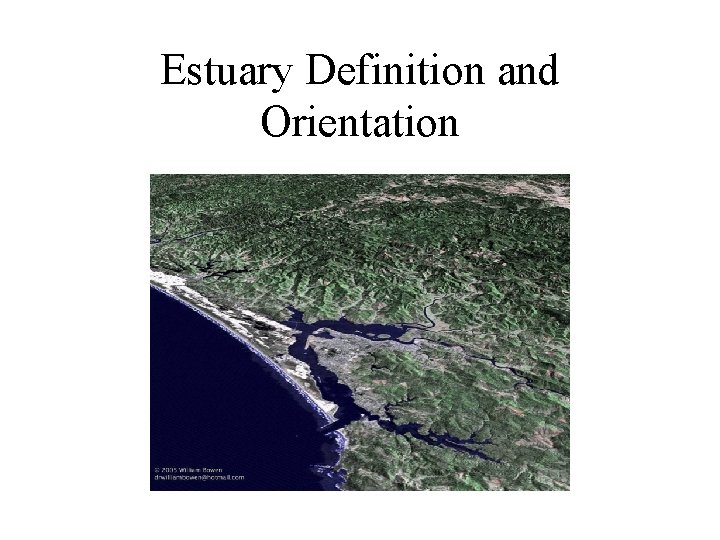
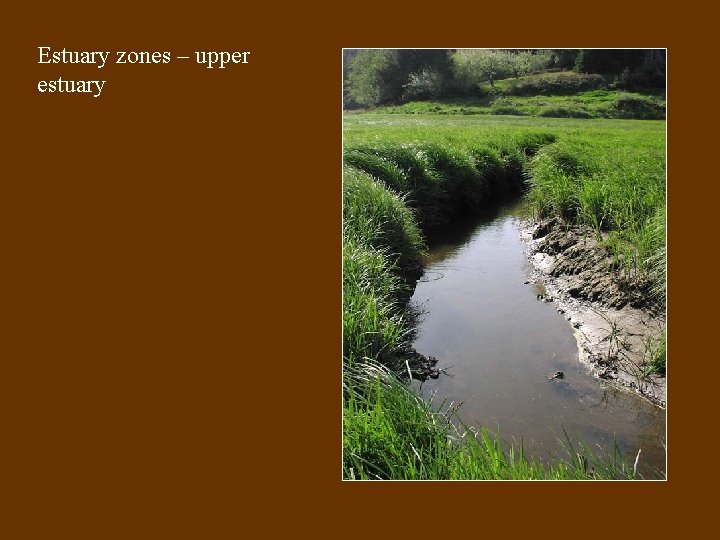
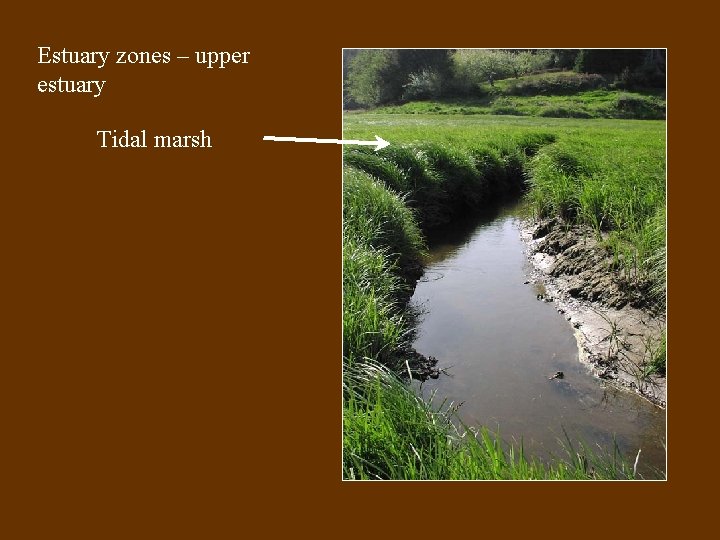
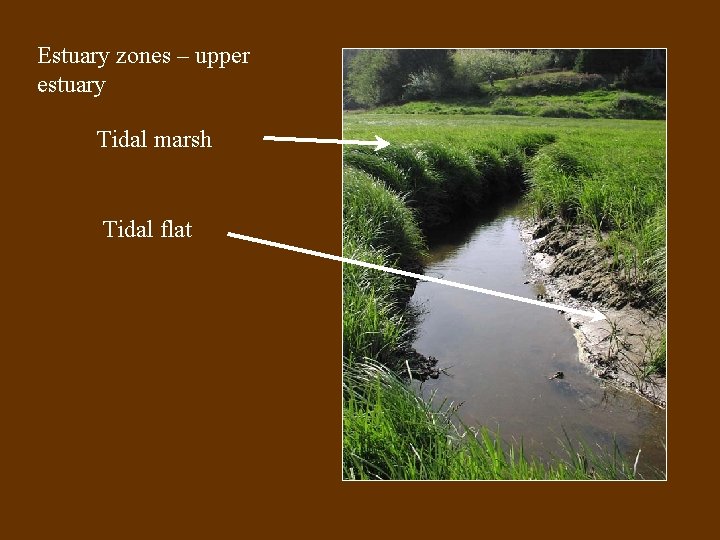
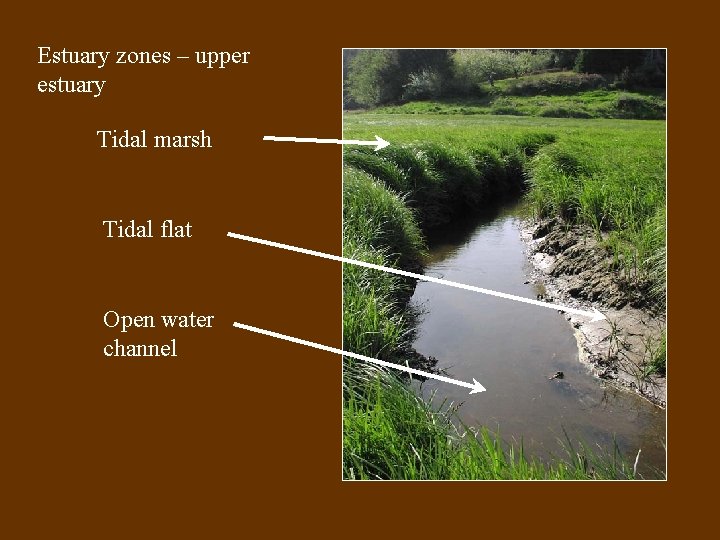
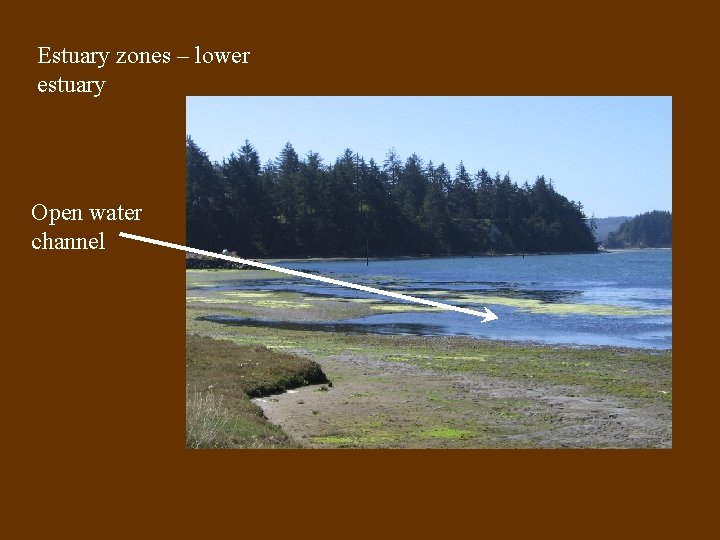
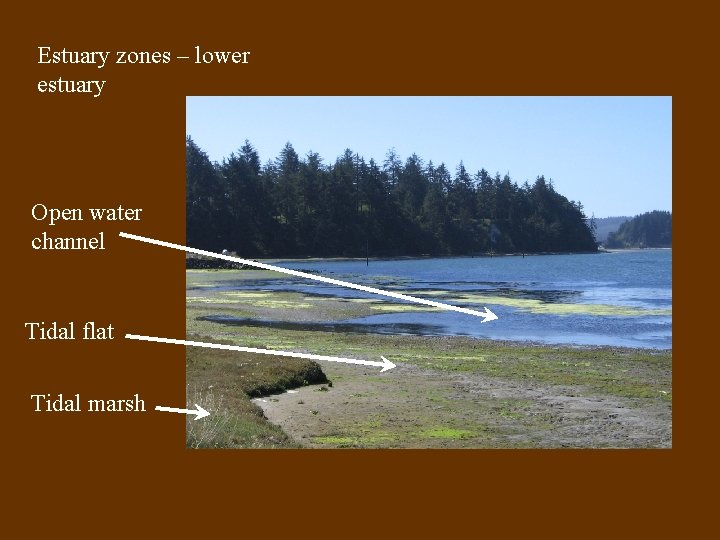
What is an estuary? • An estuary is formed where rivers meet the sea. • An estuary is a semi-enclosed river mouth or bay where salty seawater is diluted by freshwater from rivers and creeks. • An estuary is made up of tidal marshes, tidal flats, and open water channels. • An estuary is flooded by the tides.
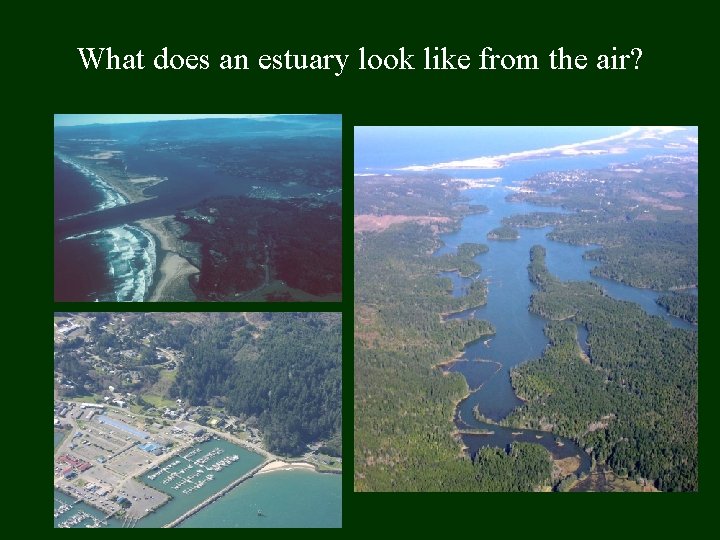
What does an estuary look like from the air?
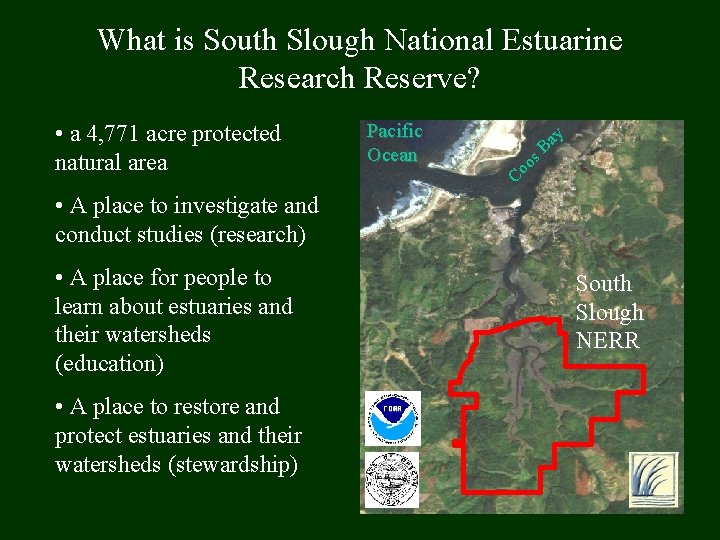
Ba os Pacific Ocean Co • a 4, 771 acre protected natural area y What is South Slough National Estuarine Research Reserve? • A place to investigate and conduct studies (research) • A place for people to learn about estuaries and their watersheds (education) • A place to restore and protect estuaries and their watersheds (stewardship) South Slough NERR
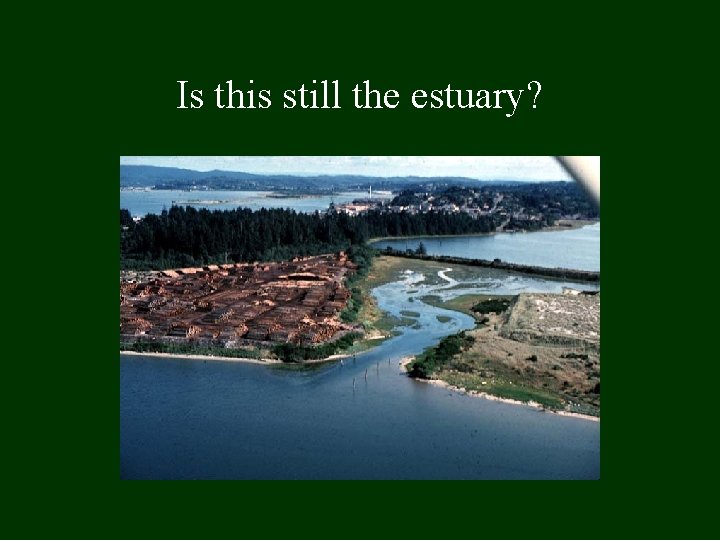
Is this still the estuary?
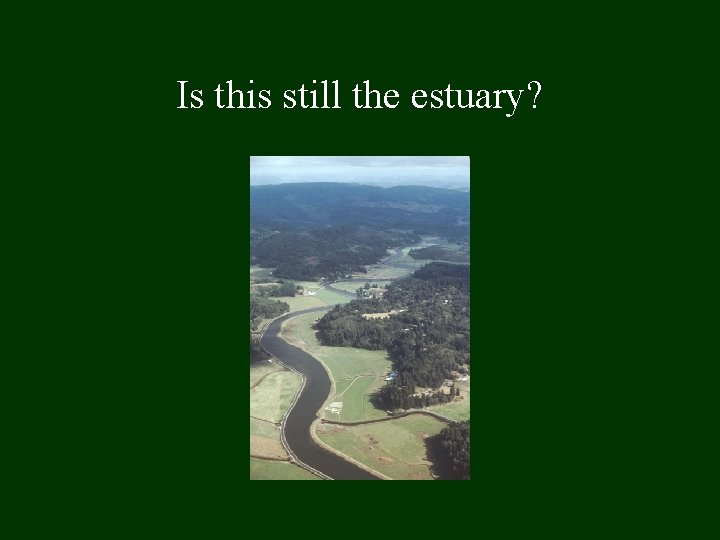
Is this still the estuary?
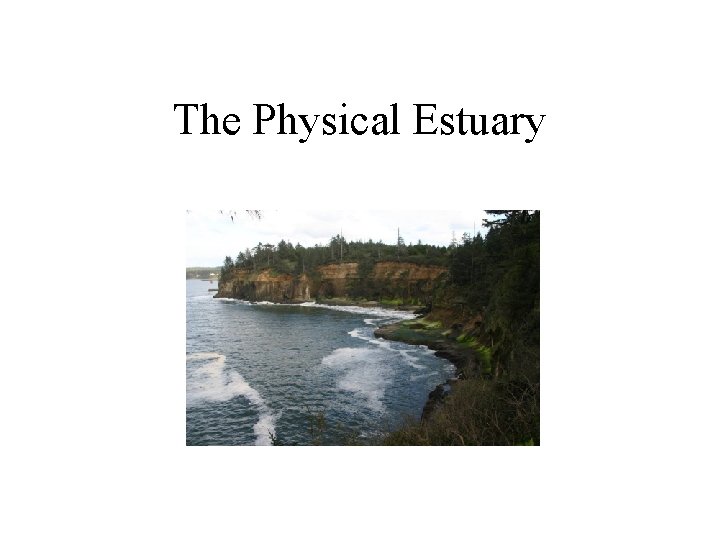
The Physical Estuary
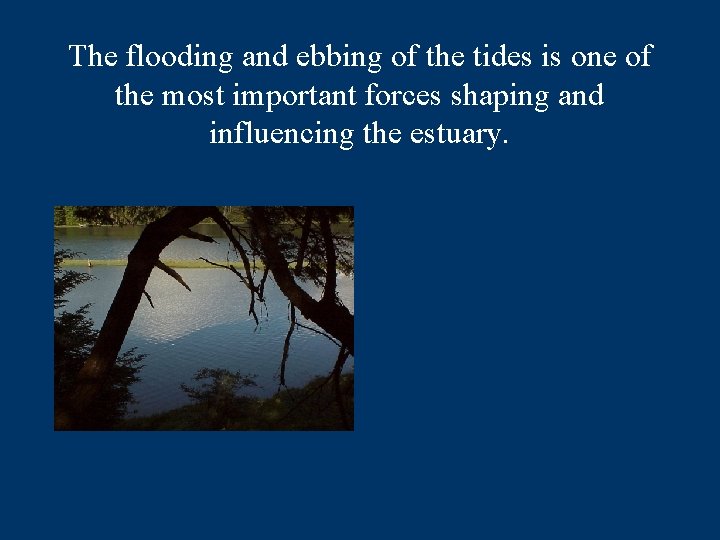
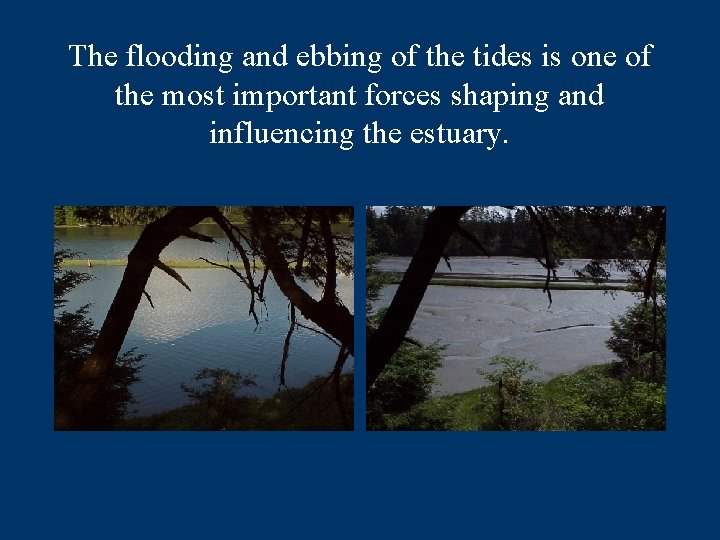
The flooding and ebbing of the tides is one of the most important forces shaping and influencing the estuary.
The flooding and ebbing of the tides is one of the most important forces shaping and influencing the estuary.
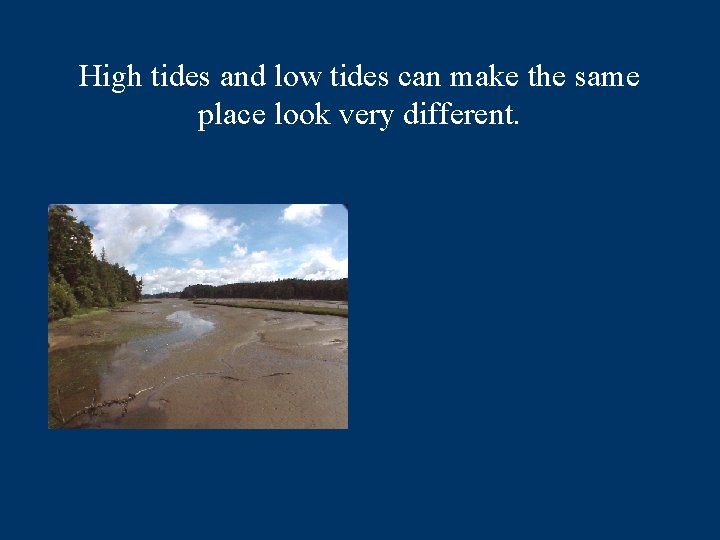
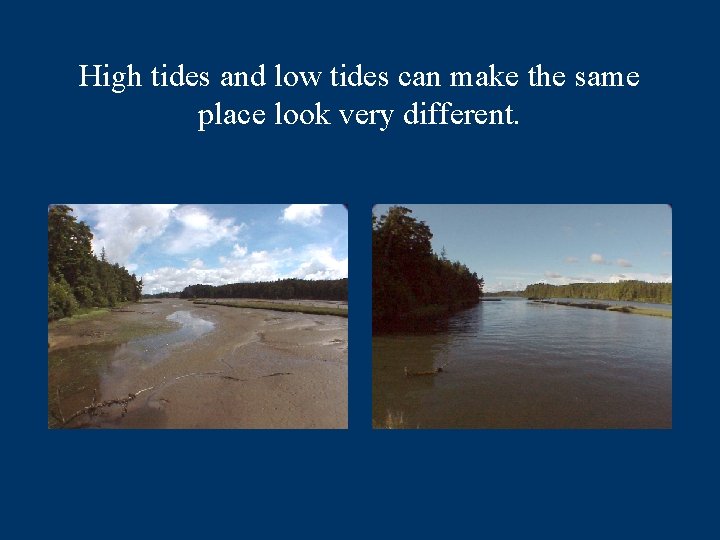
High tides and low tides can make the same place look very different.
High tides and low tides can make the same place look very different.
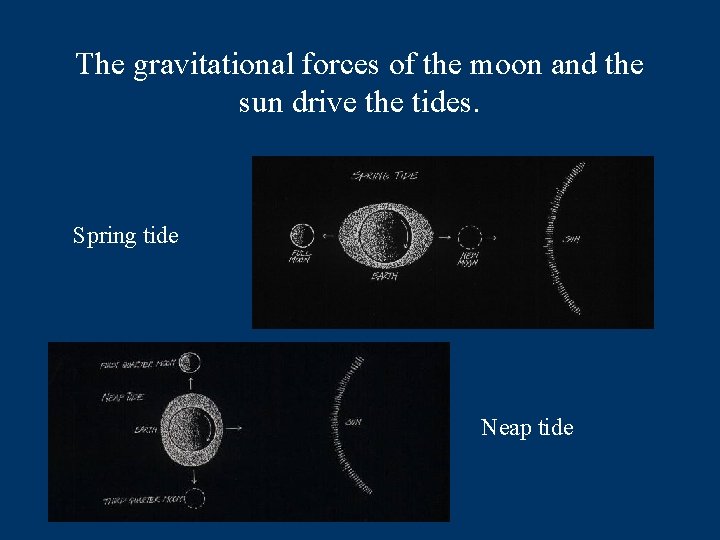
The gravitational forces of the moon and the sun drive the tides. Spring tide Neap tide
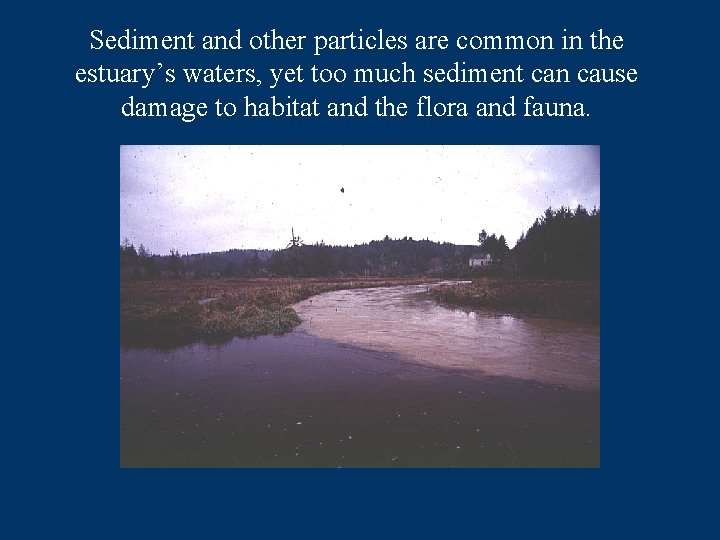
Sediment and other particles are common in the estuary’s waters, yet too much sediment can cause damage to habitat and the flora and fauna.
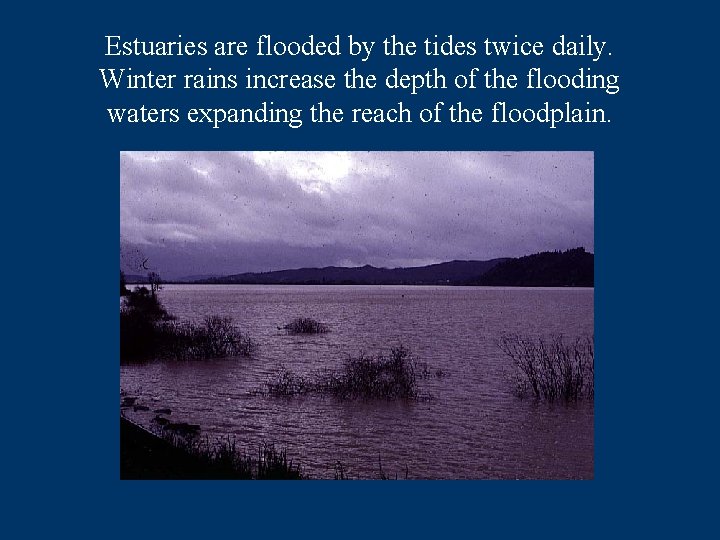
Estuaries are flooded by the tides twice daily. Winter rains increase the depth of the flooding waters expanding the reach of the floodplain.
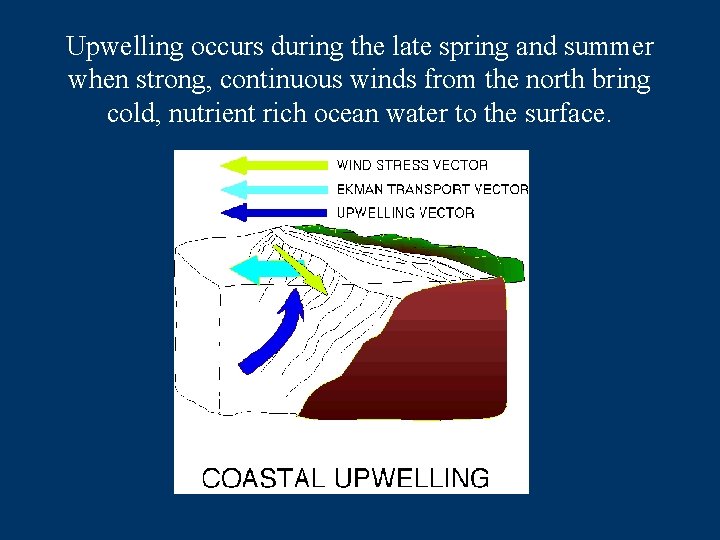
Upwelling occurs during the late spring and summer when strong, continuous winds from the north bring cold, nutrient rich ocean water to the surface.
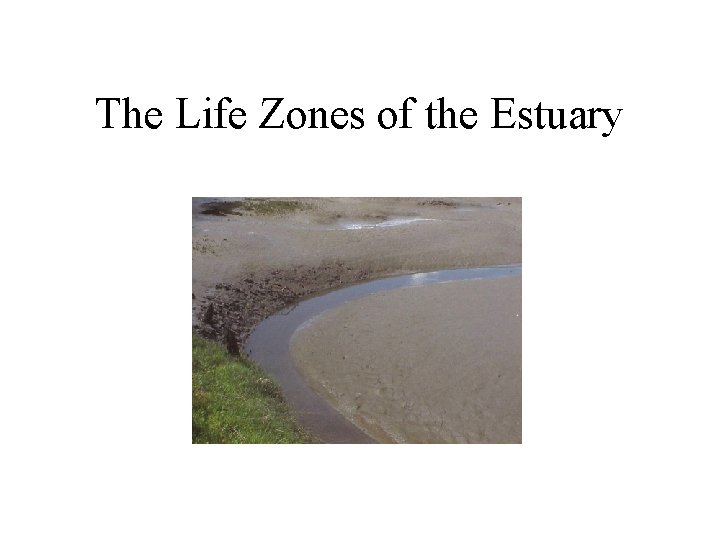
The Life Zones of the Estuary
Estuary zones – upper estuary
Estuary zones – upper estuary Tidal marsh
Estuary zones – upper estuary Tidal marsh Tidal flat
Estuary zones – upper estuary Tidal marsh Tidal flat Open water channel
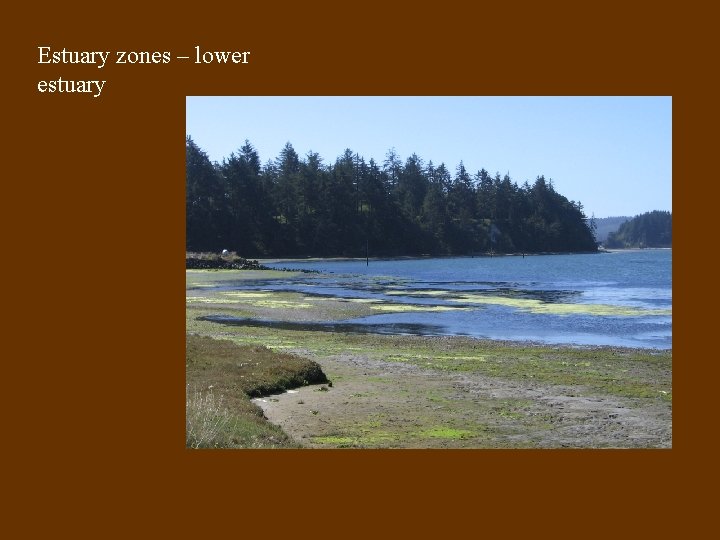
Estuary zones – lower estuary
Estuary zones – lower estuary Open water channel
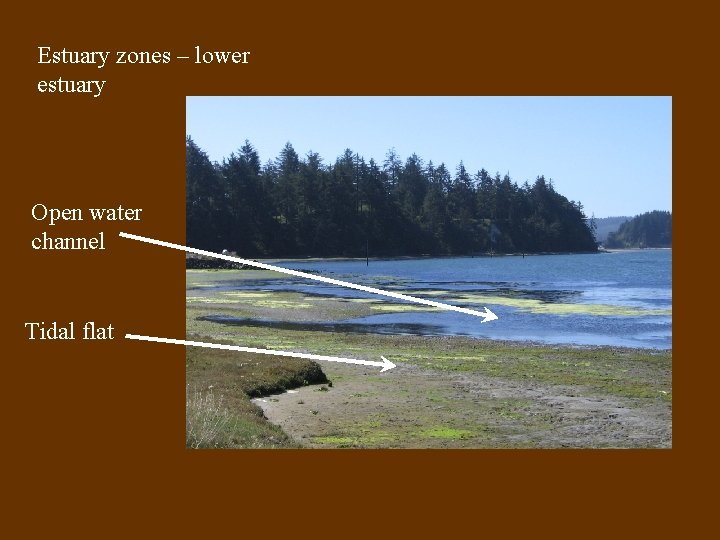
Estuary zones – lower estuary Open water channel Tidal flat
Estuary zones – lower estuary Open water channel Tidal flat Tidal marsh
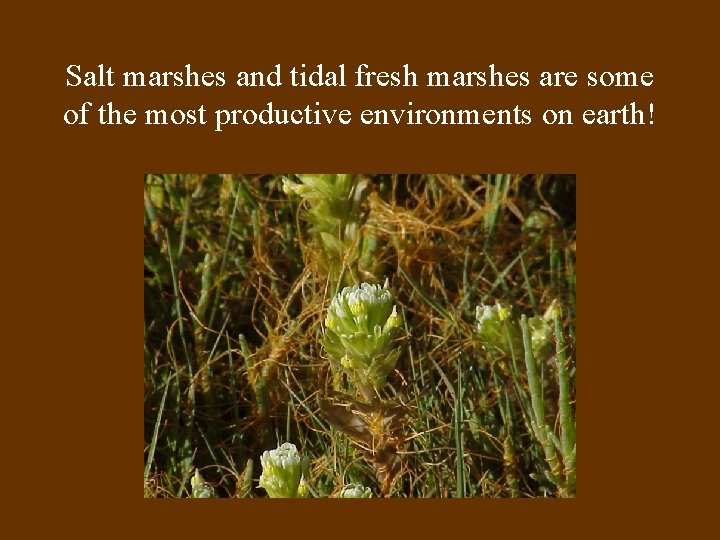
Salt marshes and tidal fresh marshes are some of the most productive environments on earth!
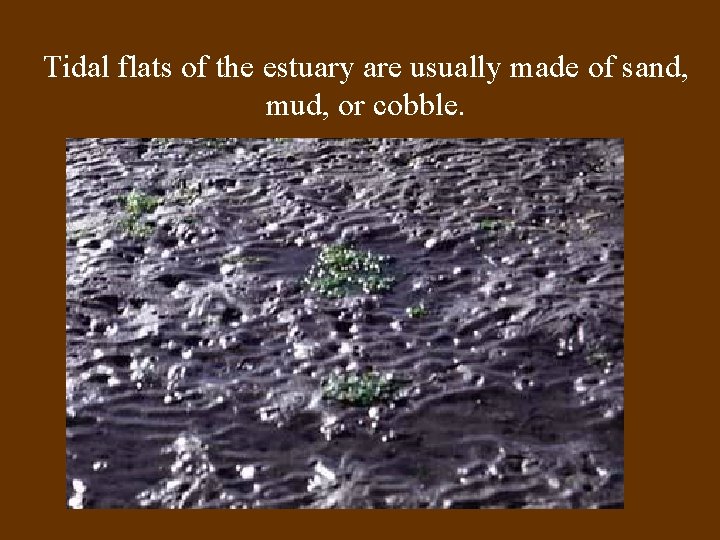
Tidal flats of the estuary are usually made of sand, mud, or cobble.
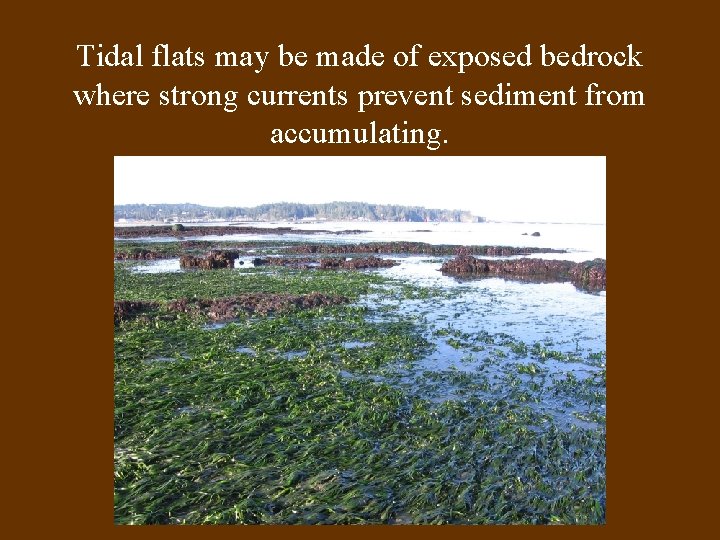
Tidal flats may be made of exposed bedrock where strong currents prevent sediment from accumulating.
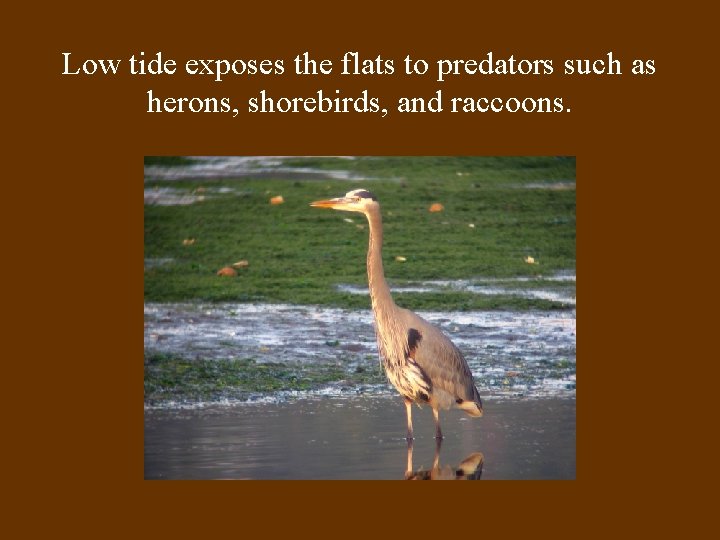
Low tide exposes the flats to predators such as herons, shorebirds, and raccoons.
Life of the Estuary
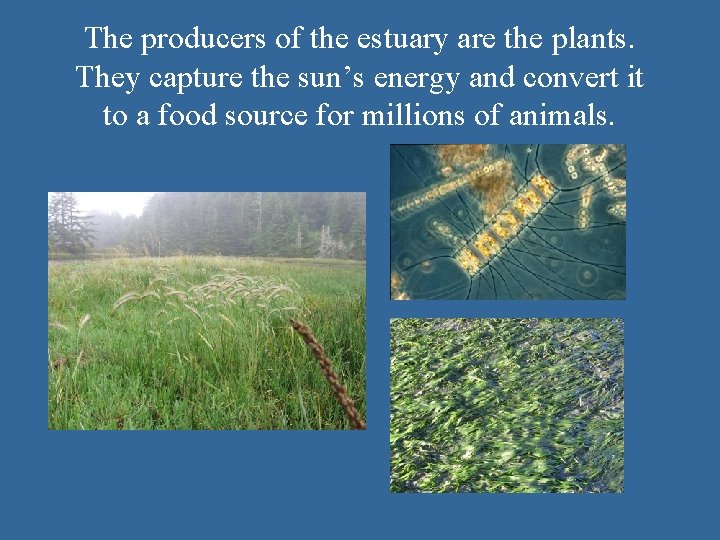
The producers of the estuary are the plants. They capture the sun’s energy and convert it to a food source for millions of animals.
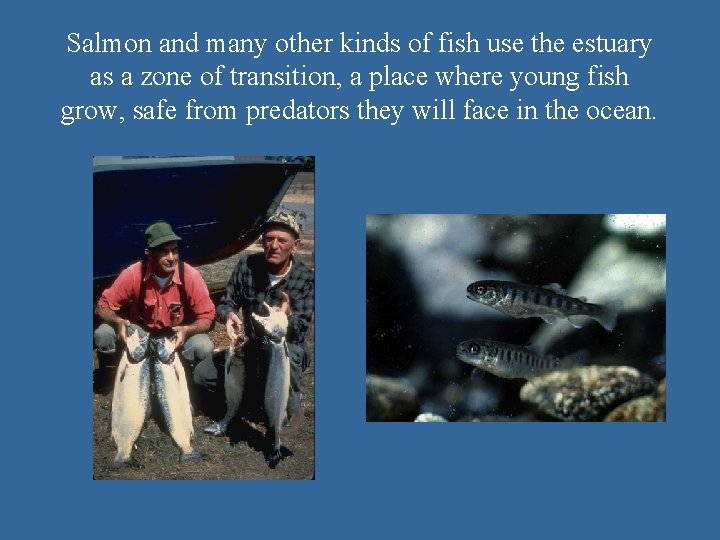
Salmon and many other kinds of fish use the estuary as a zone of transition, a place where young fish grow, safe from predators they will face in the ocean.
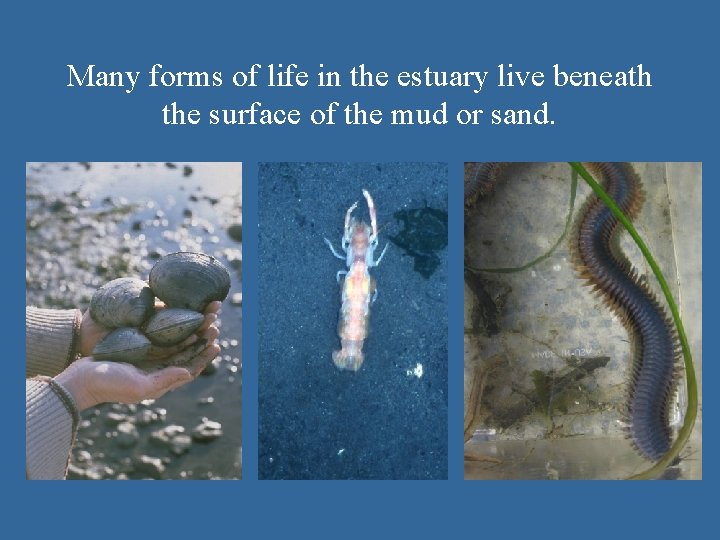
Many forms of life in the estuary live beneath the surface of the mud or sand.
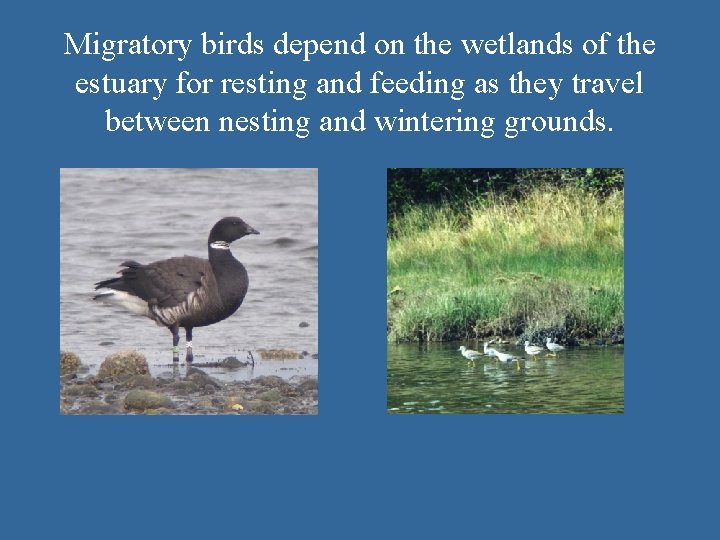
Migratory birds depend on the wetlands of the estuary for resting and feeding as they travel between nesting and wintering grounds.
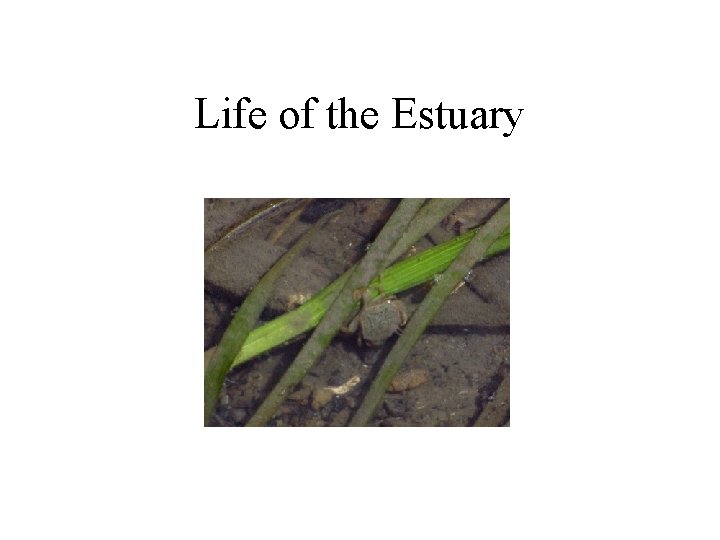
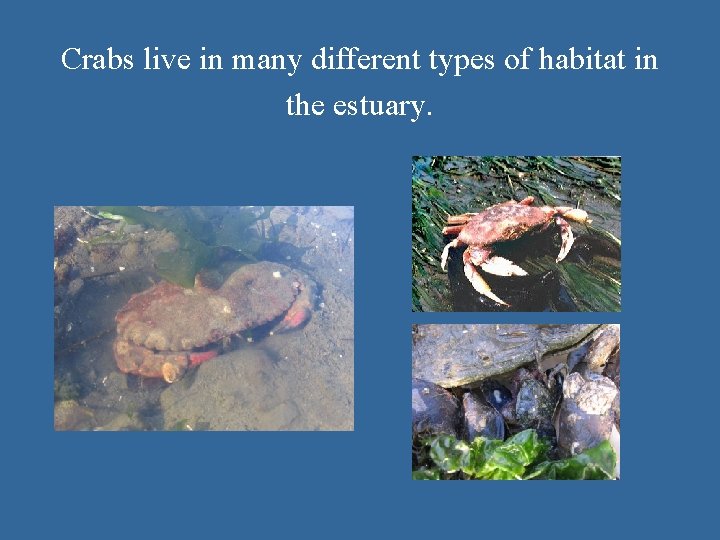
Crabs live in many different types of habitat in the estuary.
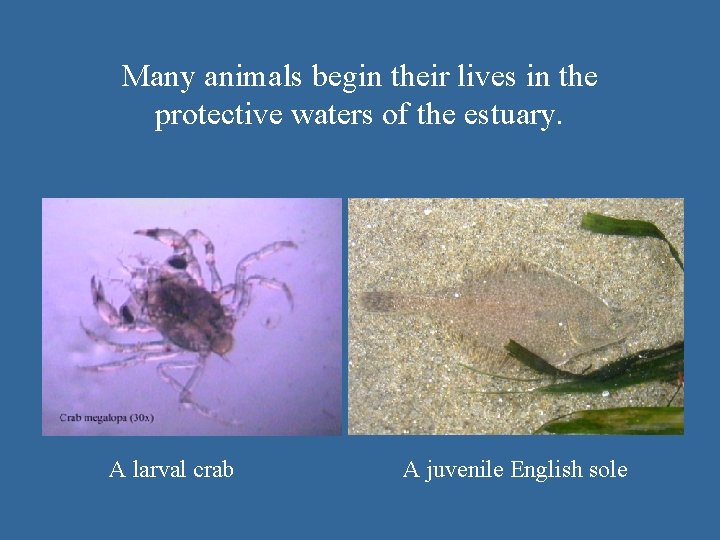
Many animals begin their lives in the protective waters of the estuary. A larval crab A juvenile English sole
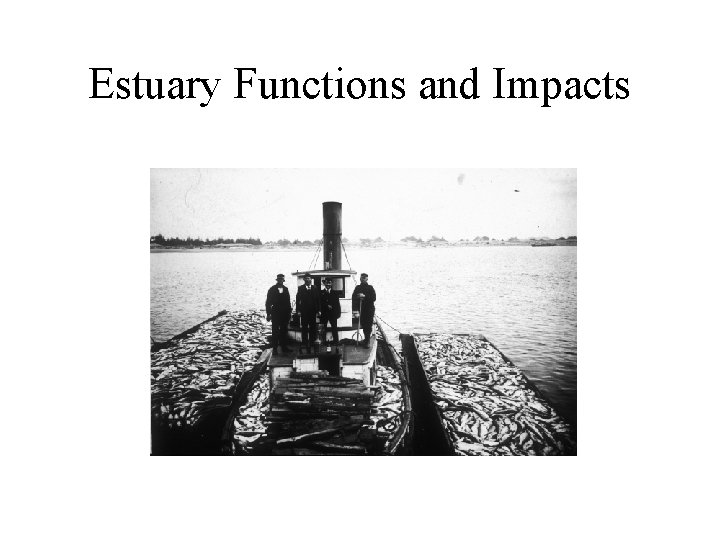
Estuary Functions and Impacts
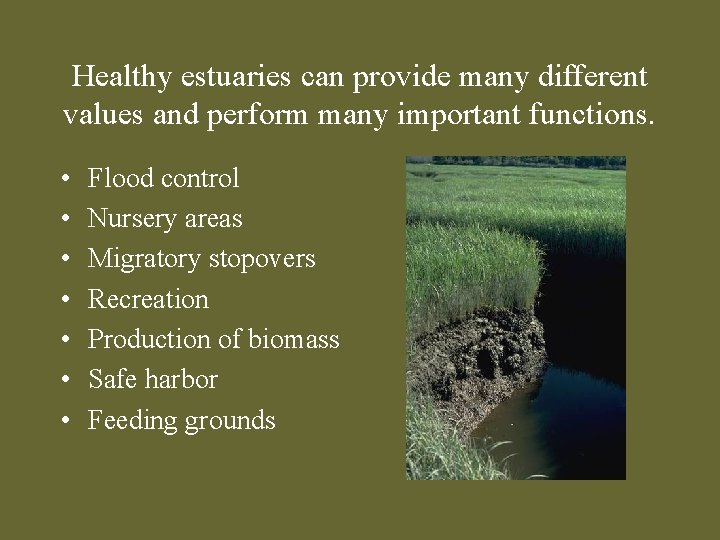
Healthy estuaries can provide many different values and perform many important functions. • • Flood control Nursery areas Migratory stopovers Recreation Production of biomass Safe harbor Feeding grounds
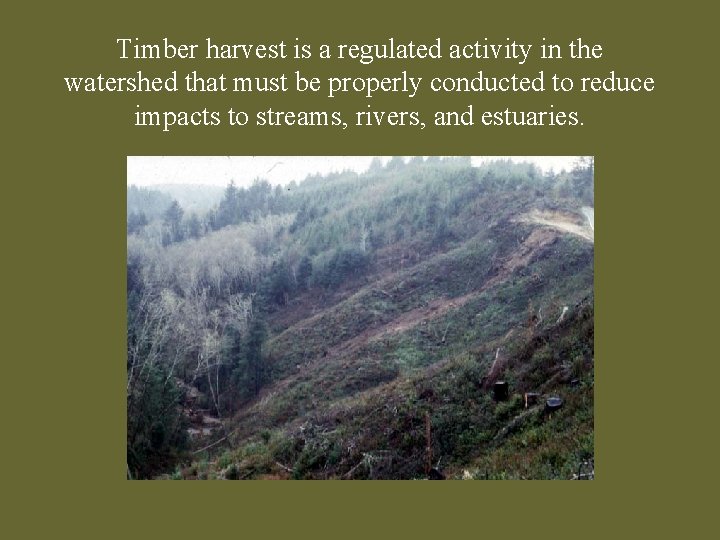
Timber harvest is a regulated activity in the watershed that must be properly conducted to reduce impacts to streams, rivers, and estuaries.
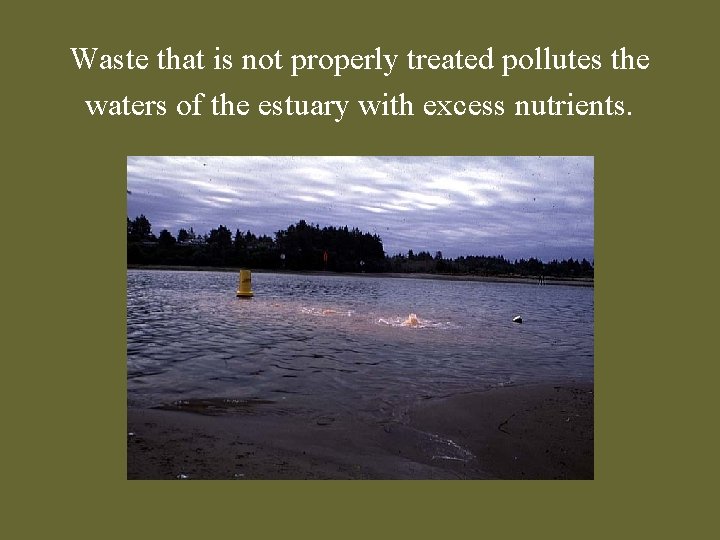
Waste that is not properly treated pollutes the waters of the estuary with excess nutrients.
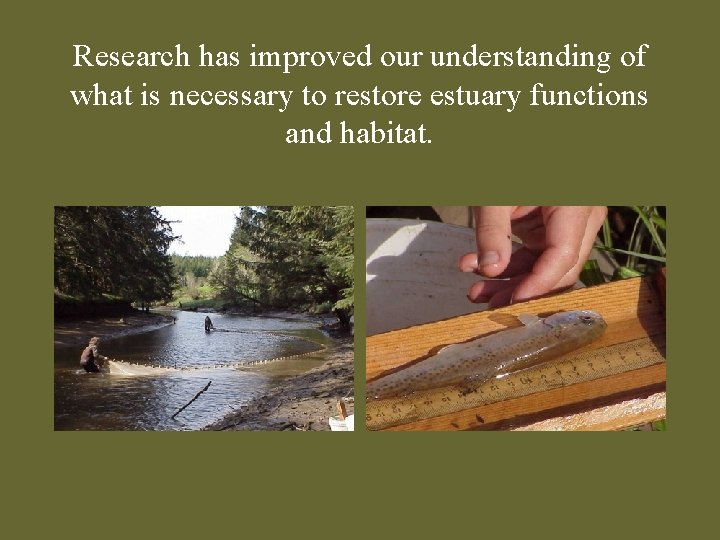
Research has improved our understanding of what is necessary to restore estuary functions and habitat.
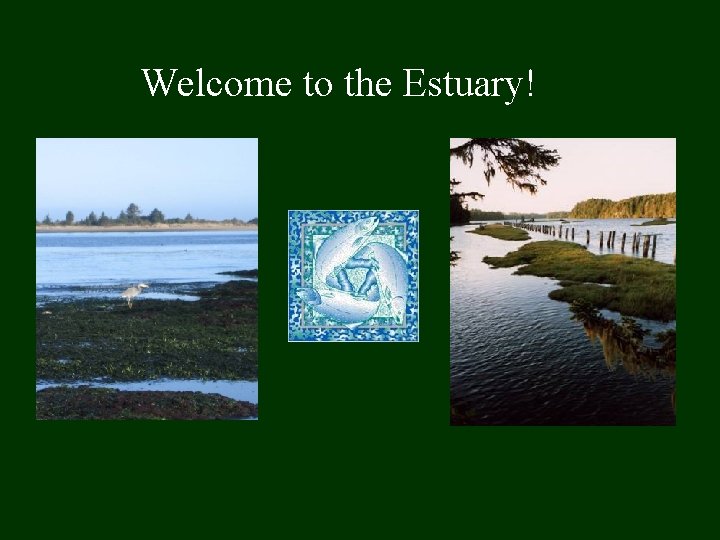
Welcome to the Estuary!