
Estuaries Where Rivers Meet the Sea Estuaries Definition
- Slides: 25
Estuaries Where Rivers Meet the Sea
Estuaries • Definition: Semi-enclosed areas where fresh water from rivers and seawater meet and mix – Fewer species than rocky shores, but among the MOST productive environments on Earth – Also known as: lagoons, sloughs, or bays
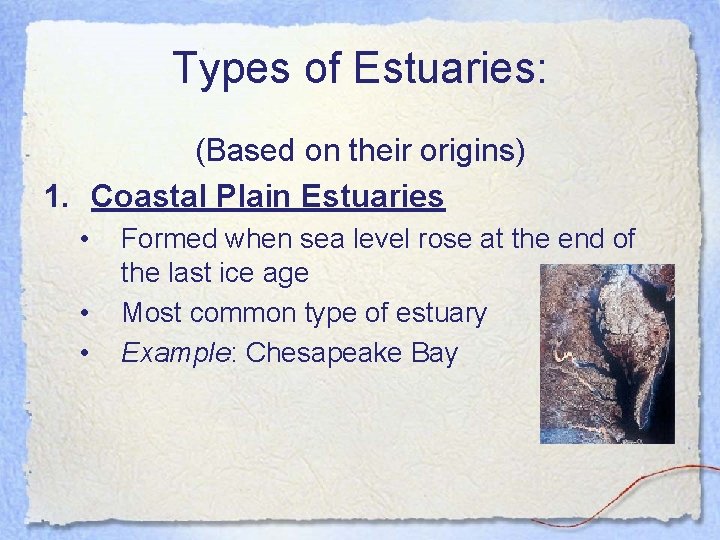
Types of Estuaries: (Based on their origins) 1. Coastal Plain Estuaries • • • Formed when sea level rose at the end of the last ice age Most common type of estuary Example: Chesapeake Bay
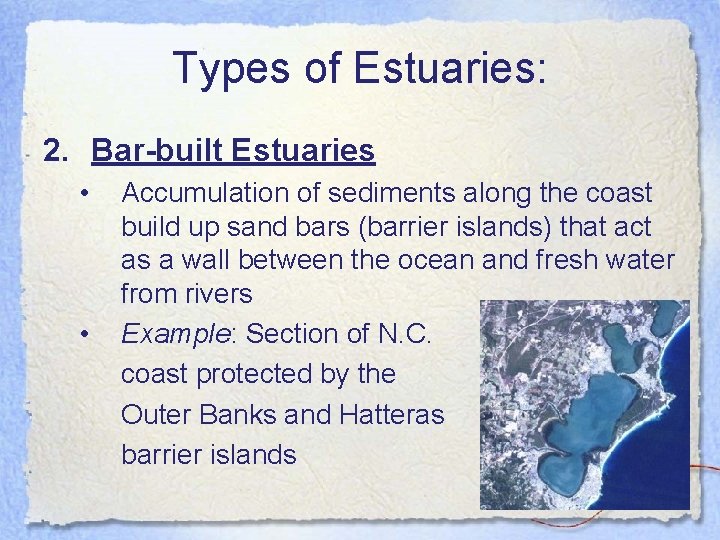
Types of Estuaries: 2. Bar-built Estuaries • • Accumulation of sediments along the coast build up sand bars (barrier islands) that act as a wall between the ocean and fresh water from rivers Example: Section of N. C. coast protected by the Outer Banks and Hatteras barrier islands
Types of Estuaries: 3. Tectonic Estuaries • • Created because the land sank as the result of movements of the crust Example: San Francisco Bay 4. Glacier-carved Estuaries (aka Fjords) • • Created by retreating glaciers Example: Southeastern Alaska
Estuary Fact • Estuaries are more common in regions with flat coastal plains and wide continental shelve • So…there are more estuaries on the east coast of the U. S. then the west.
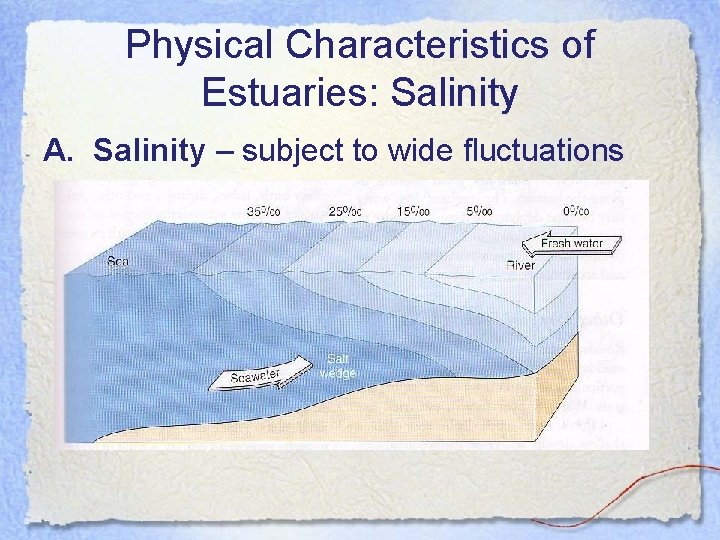
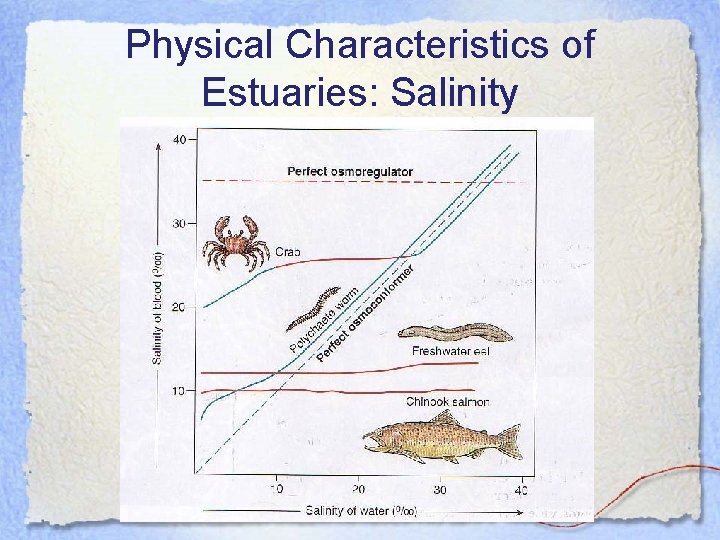
Physical Characteristics of Estuaries: Salinity A. Salinity – subject to wide fluctuations
Physical Characteristics of Estuaries: Salinity Coping with Salinity Fluctuations… • Most estuarine organisms are euryhaline (tolerate a wide range of salinities) – Osmoconformers – allow their body fluids to change with the salinity of the water • Example: soft-bodied animals (molluscs & polycheate worms) – Osmoregulators – keep the salt concentration of their body fluids constant regardless of the water salinity • Example: many fishes & crabs
Physical Characteristics of Estuaries: Salinity
Physical Characteristics of Estuaries: Substrate B. Substrate (type of bottom) – usually sand or soft mud – Mud = silt and clay • • Rich in organic material, low in oxygen (anoxic) Decomposing bacteria use up oxygen and it is hard for water to flow through the dense sediment, gives the sediment its black color and rotten egg smell!
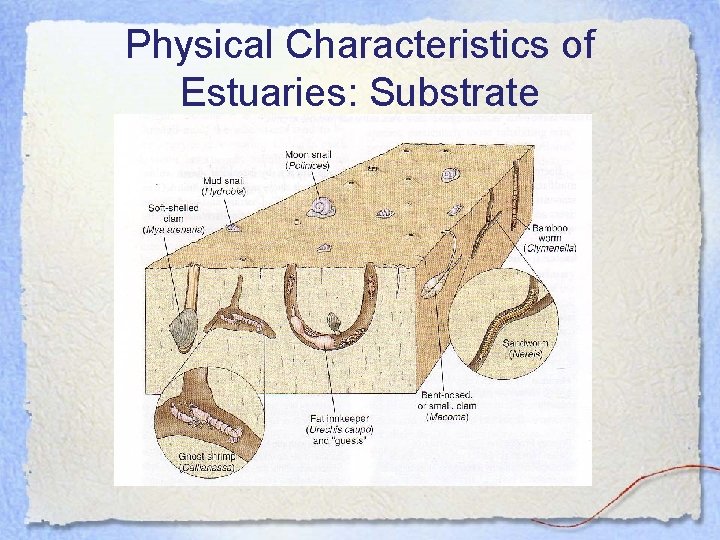
Physical Characteristics of Estuaries: Substrate Adapting to the Mud… • Nothing to hold on to, so most animals either burrow or live in permanent tubes beneath the sediment surface • Tend to be stationary or slow moving • Benefit of living in the mud = salinity fluctuations are less dramatic than in the water column!
Physical Characteristics of Estuaries: Substrate
Physical Characteristics of Estuaries: Other Physical Factors C. Other Physical Factors • Water temperature varies because of the shallow depths and large surface areas • Large amounts of suspended sediments – Reduces light penetration – “clogs” filter feeding apparatus
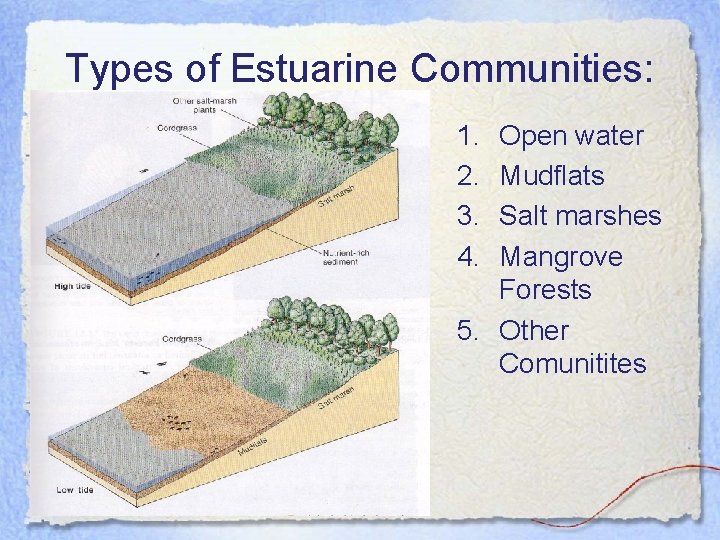
Types of Estuarine Communities: 1. 2. 3. 4. Open water Mudflats Salt marshes Mangrove Forests 5. Other Comunitites
Types of Estuarine Communities: 1. Open Water: • Type and abundance of plankton varies (murky water restricts light and limits primary productivity) • Rich supply of fish and shellfish (use estuaries as nurseries) • Shrimp and crabs are often common
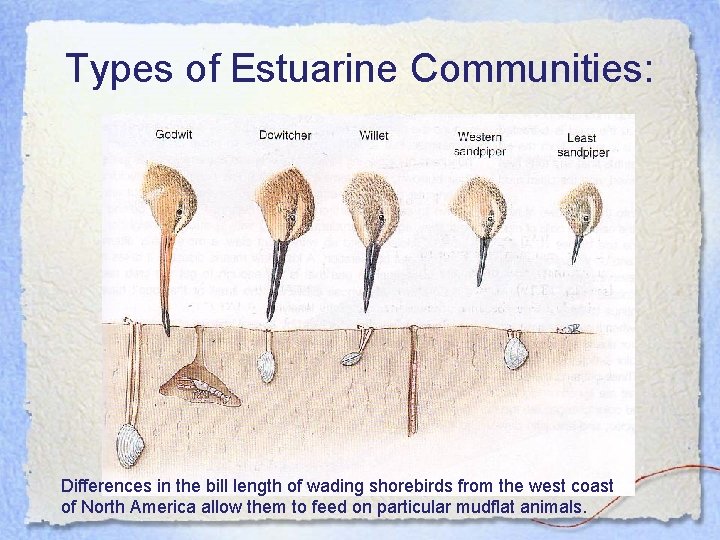
Types of Estuarine Communities: 2. Mudflats: • Bottoms of estuaries that become exposed at low tide • Mudflat communities in estuaries are similar to those on muddy shores • Bacteria are EXTREMEMLY abundant and are the dominant primary producers along with diatoms • Infuana = dominant animals that burrow IN the sediment • Most significant predators are wading shorebirds
Types of Estuarine Communities: Differences in the bill length of wading shorebirds from the west coast of North America allow them to feed on particular mudflat animals.
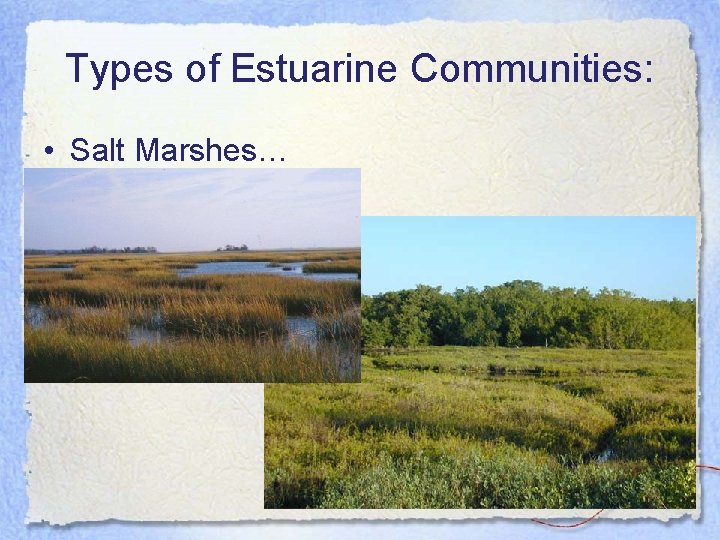
Types of Estuarine Communities: 3. Salt Marshes: • Grassy areas that border the estuary that extend inland from the mudflats; partially flooded at high tides • NOTE: sometimes they are grouped with coastal environments flooded at high tide AND with freshwater marshes and collectively called wetlands.
Types of Estuarine Communities: 3. Salt Marshes: • Held together by the roots of marsh plants making the ground more stable • Dominated by a few hardy grasses and salt-tolerant land plants • Bacteria in the mud decompose dead plant material and contribute a large portion of the detritus in the estuary
Types of Estuarine Communities: • Salt Marshes…
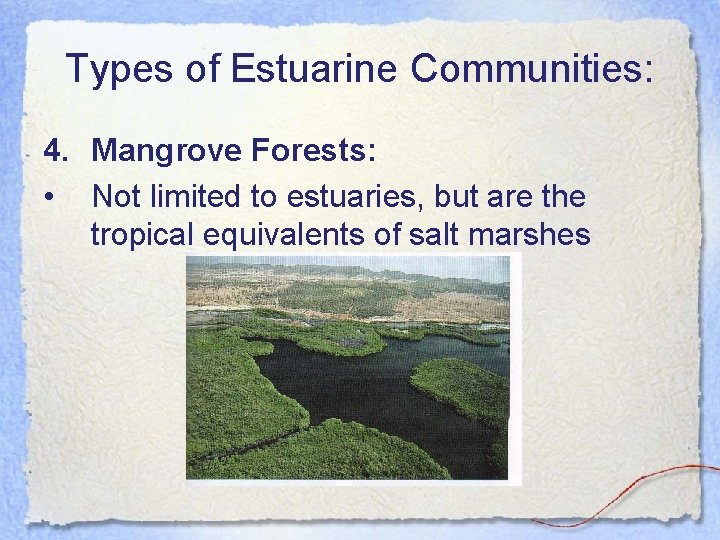
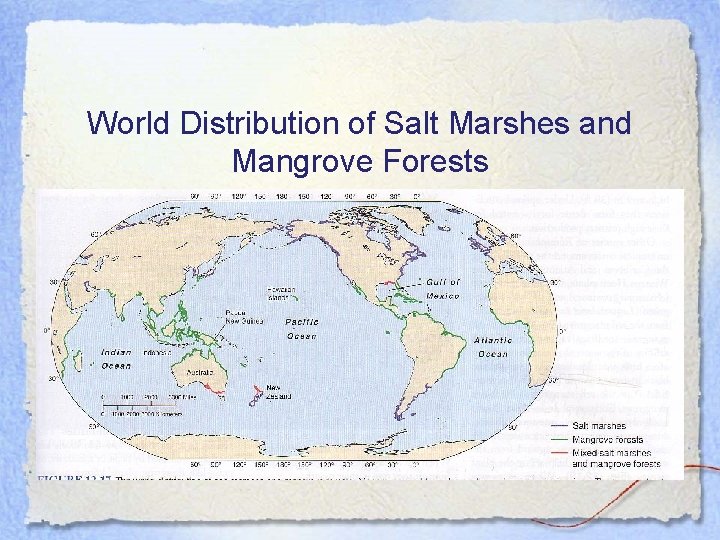
Types of Estuarine Communities: 4. Mangrove Forests: • Not limited to estuaries, but are the tropical equivalents of salt marshes
World Distribution of Salt Marshes and Mangrove Forests
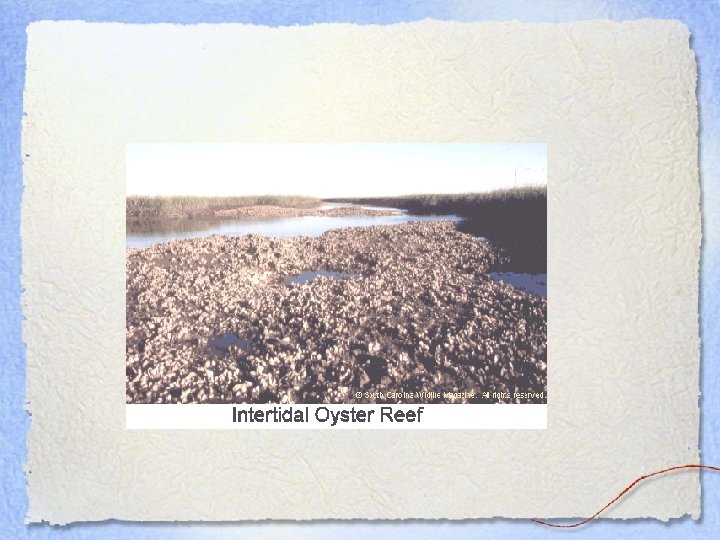
Types of Estuarine Communities: 5. Other Estuarine Communities • Seagrass Beds = cover muddy bottoms below low-tide levels, which help stabilize the sediment and provide shelter • Oyster Reefs = develop as successive generations of oysters grow on the shells of their predecessors; provide a large surface for other organisms
Why do estuaries have a high primary productivity? 1. Nutrients brought in by the tide and rivers are used by the primary producers. 2. Estuaries are often plant-dominated communities. Outwelling = surplus detritus is exported to the open ocean and neighboring ecoystems