
Estimation of the Barrel TOF Response A Galoyan
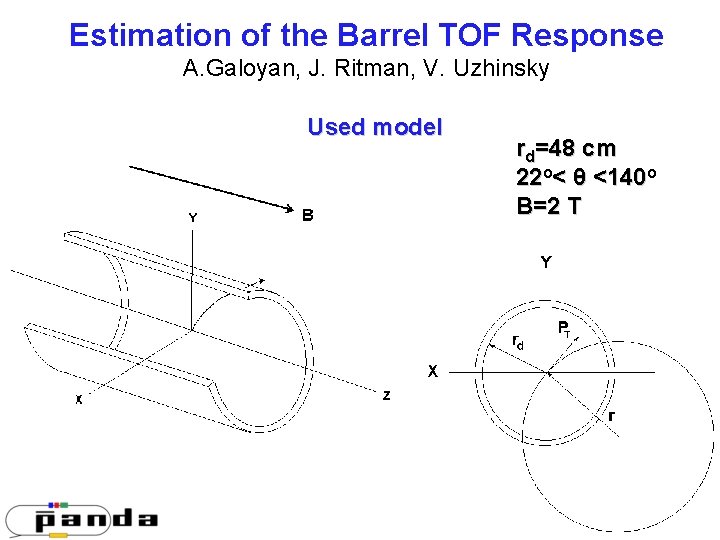
Estimation of the Barrel TOF Response A. Galoyan, J. Ritman, V. Uzhinsky Used model rd=48 cm 22 o< θ <140 o B=2 T
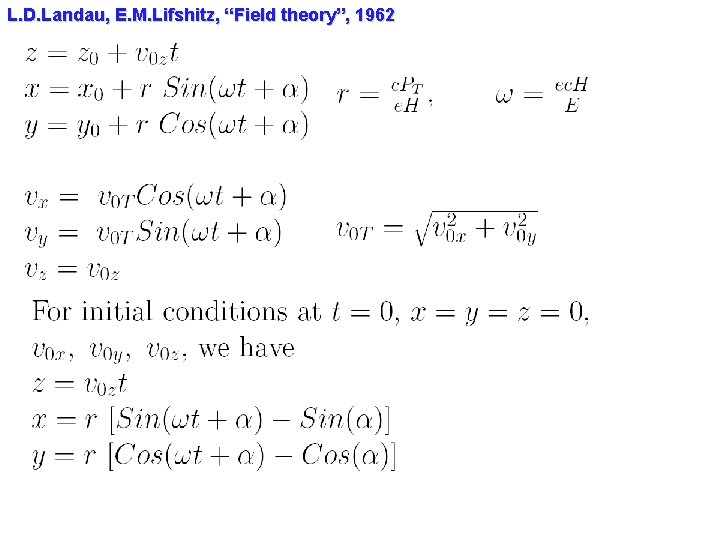
L. D. Landau, E. M. Lifshitz, “Field theory”, 1962
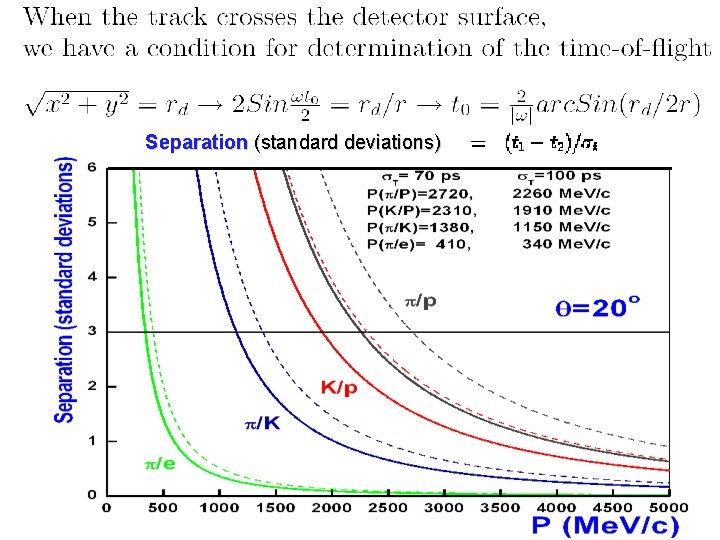
Separation (standard deviations)
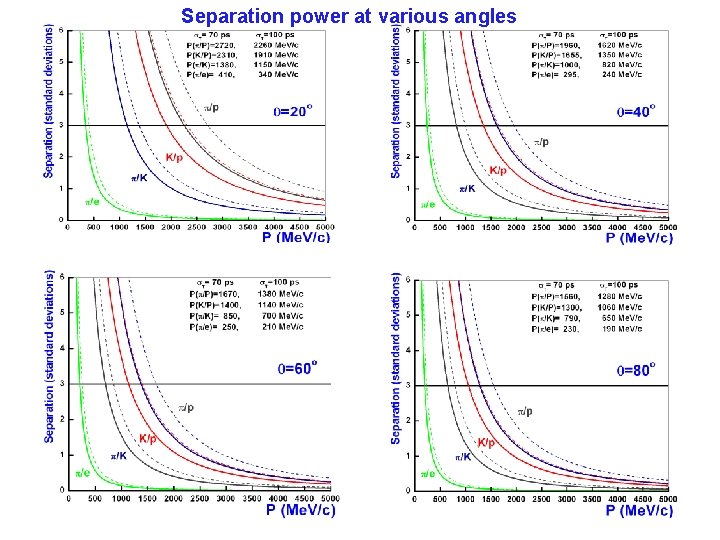
Separation power at various angles

Fast simulation of Tof response 3% Knowing time-of-flight, momentum and emission angle, we calculate the particle energy and squared mass. This algorithm is included in Fast. Sim. App of Babar-Panda framework.
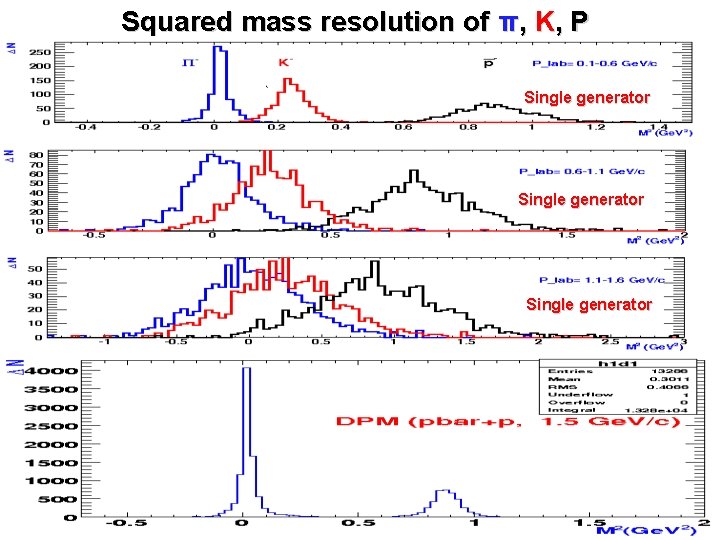
Squared mass resolution of π, K, P Single generator
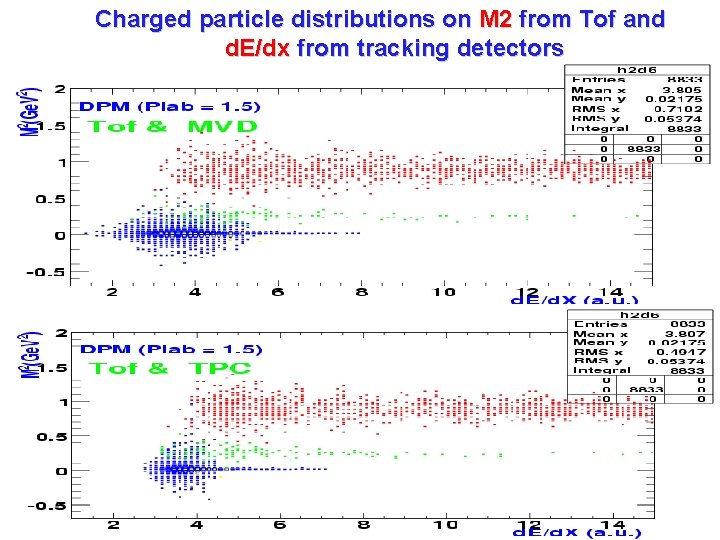
Charged particle distributions on M 2 from Tof and d. E/dx from tracking detectors
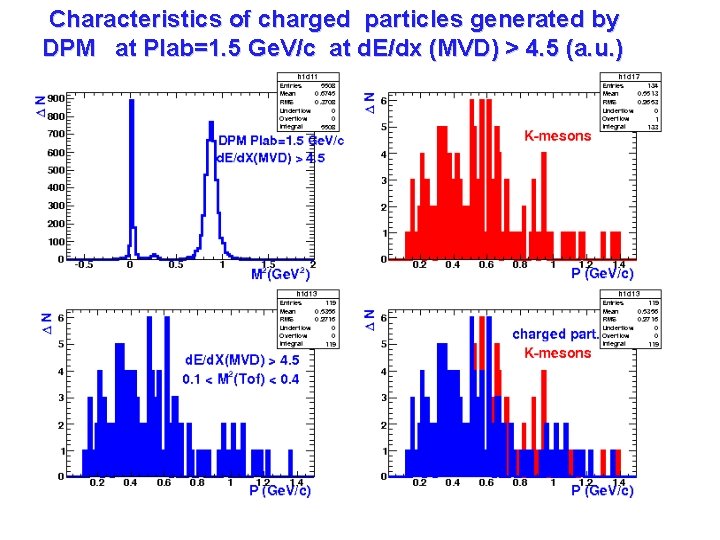
Characteristics of charged particles generated by DPM at Plab=1. 5 Ge. V/c at d. E/dx (MVD) > 4. 5 (a. u. )
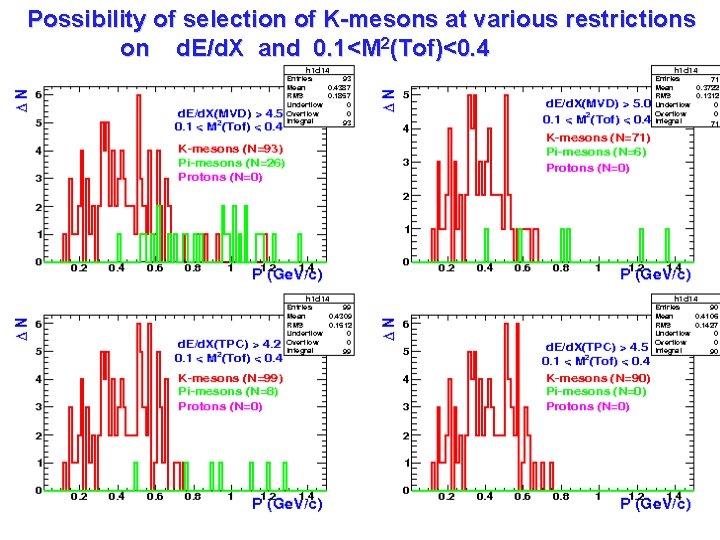
Possibility of selection of K-mesons at various restrictions on d. E/d. X and 0. 1<M 2(Tof)<0. 4
Conclusion 1. The formulas for time of light calculations have been obtained assuming barrel To. F geometry and constant magnetic field. 2. Separation power (s. p. ) of barrel To. F in dependence on momentum is calculated at various emission angles of particles. It is shown, maximal momentum for particle identification corresponding to s. p. >= 3 depends on emission angles. 3. Algorithm of simulation of To. F response is implemented in Fast. Sim package of Panda-Babar. Corresponding simulations using DPM model event generator showed that combined information of M 2 from barrel To. F and d. E/dx from tracking detector (TPC or STT) allow to reach good separation of slow protons, Π-, K- mesons.
- Slides: 10