
ESTIMATION OF PLACENTA FUNCTION USING T 2 MEASUREMENTS
- Slides: 12
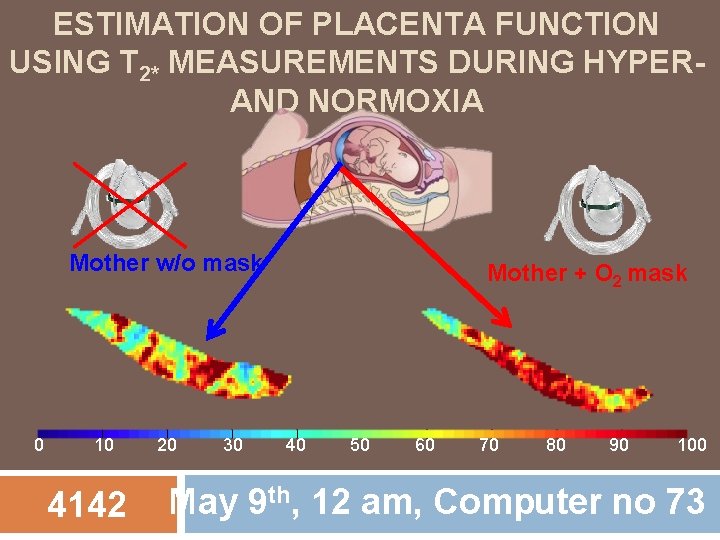
ESTIMATION OF PLACENTA FUNCTION USING T 2* MEASUREMENTS DURING HYPERAND NORMOXIA Mother w/o mask 0 10 4142 20 30 Mother + O 2 mask 40 50 60 70 80 90 100 May 9 th, 12 am, Computer no 73
ESTIMATION OF PLACENTA FUNCTION USING T 2* MEASUREMENTS DURING HYPERAND NORMOXIA • David Alberg Peters • • Department of Clinical Engineering, Central Denmark Region, Aarhus, Denmark David. Peters@stab. rm. dk • Anne Sørensen • Department of Obstetrics and Gynecology, Aarhus University, Aalborg Hospital, Denmark • Torben Fründ • Department of Radiology, Aarhus University, Aalborg Hospital, Denmark • Ole Bjarne Christiansen • Department of Obstetrics and Gynecology, Aarhus University, Aalborg Hospital, Denmark • Niels Uldbjerg th, 12 am, Computer no May 9 • Department of Obstetrics and Gynecology, Aarhus University Hospital, 4142 Denmark. 73
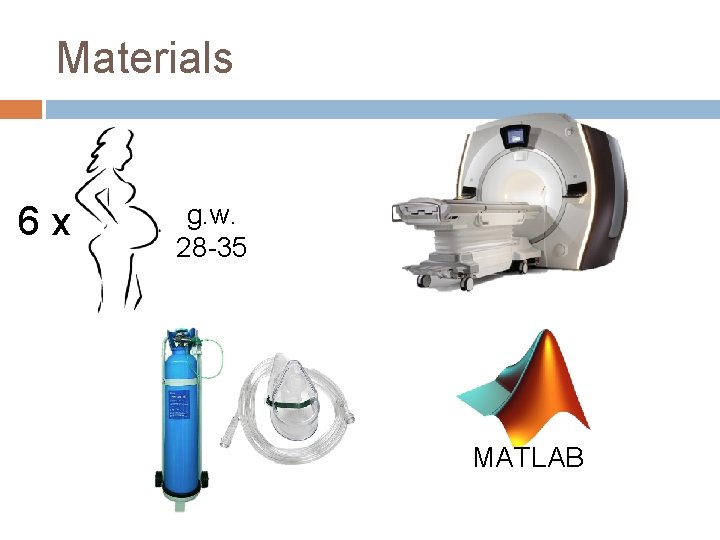
Materials 6 x g. w. 28 -35 MATLAB
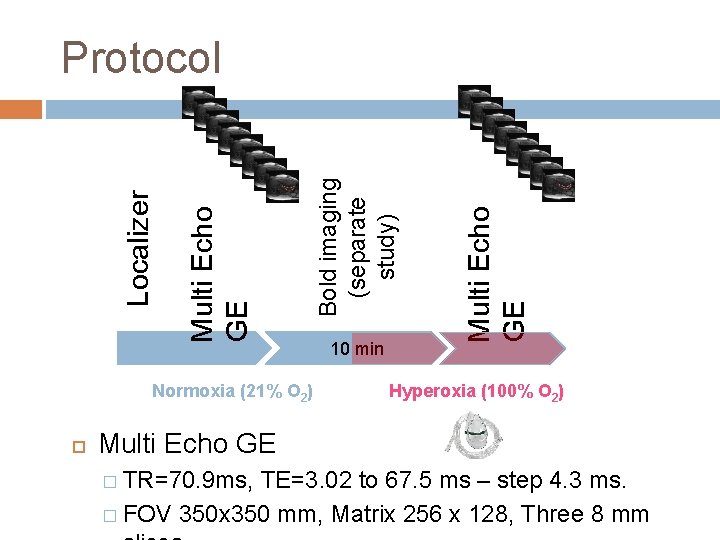
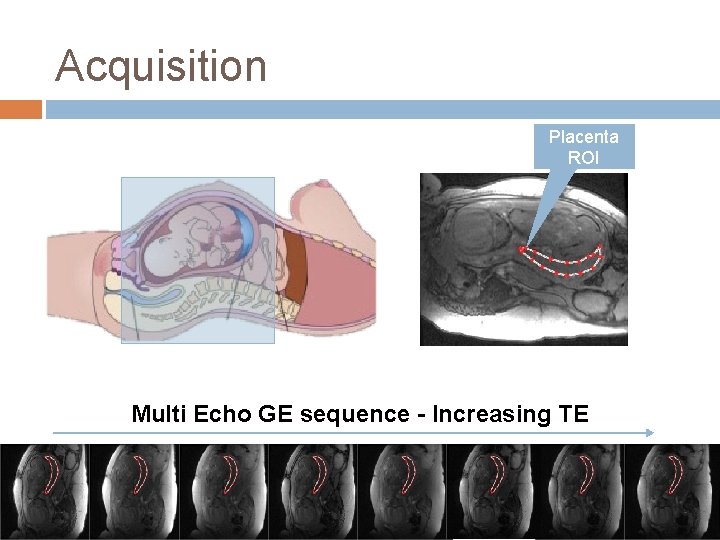
Normoxia (21% O 2) 10 min Multi Echo GE Bold imaging (separate study) Multi Echo GE Localizer Protocol Hyperoxia (100% O 2) Multi Echo GE � TR=70. 9 ms, TE=3. 02 to 67. 5 ms – step 4. 3 ms. � FOV 350 x 350 mm, Matrix 256 x 128, Three 8 mm
Acquisition Placenta ROI Multi Echo GE sequence - Increasing TE
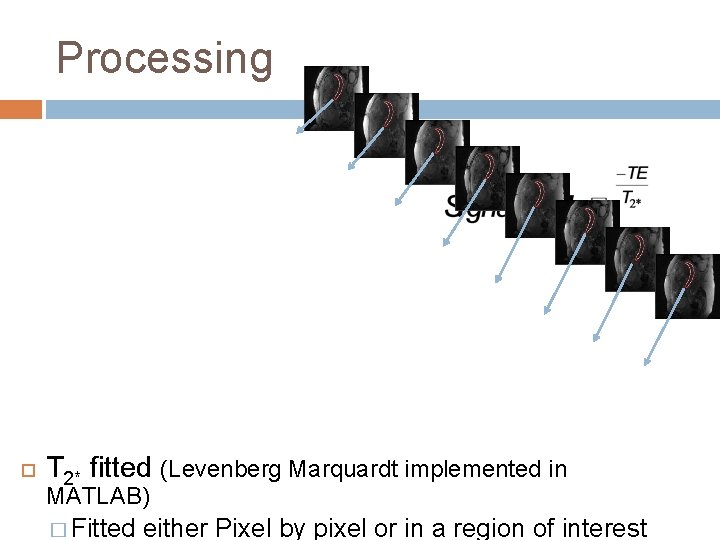
Processing T 2* fitted (Levenberg Marquardt implemented in MATLAB) � Fitted either Pixel by pixel or in a region of interest
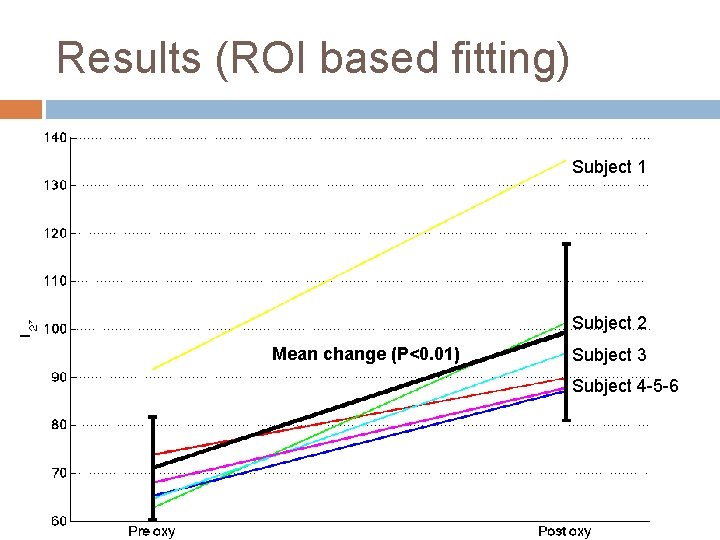
Results (ROI based fitting) Subject 1 Subject 2 Mean change (P<0. 01) Subject 3 Subject 4 -5 -6
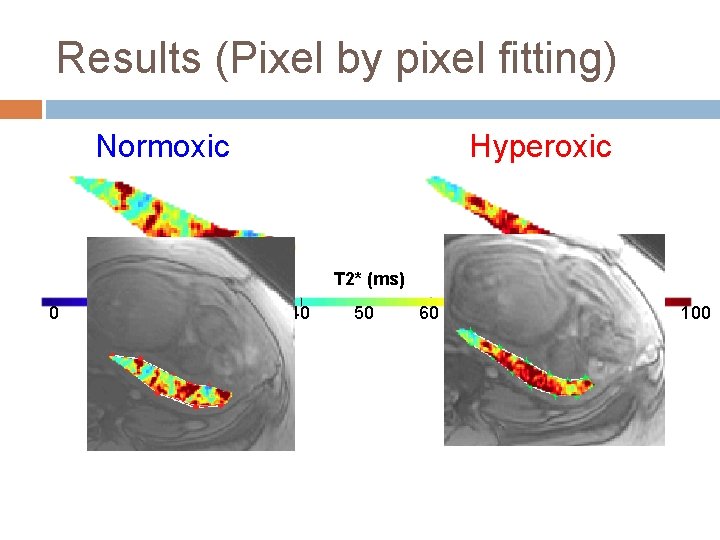
Results (Pixel by pixel fitting) Normoxic Hyperoxic T 2* (ms) 0 10 20 30 40 50 60 70 80 90 100
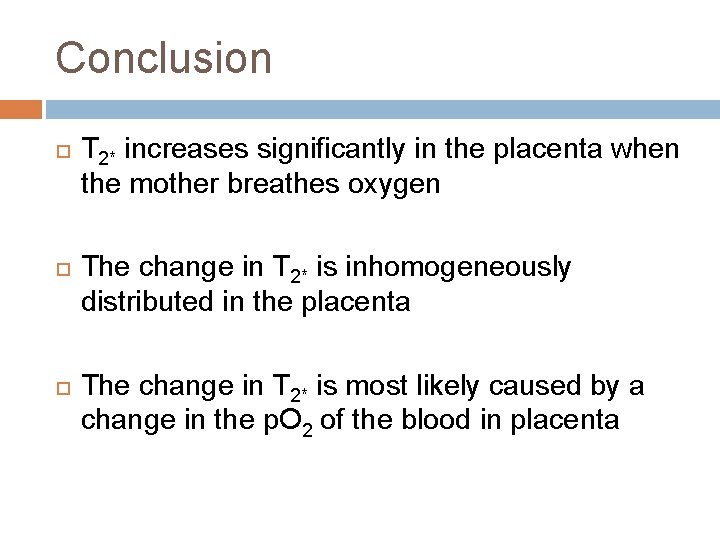
Conclusion T 2* increases significantly in the placenta when the mother breathes oxygen The change in T 2* is inhomogeneously distributed in the placenta The change in T 2* is most likely caused by a change in the p. O 2 of the blood in placenta
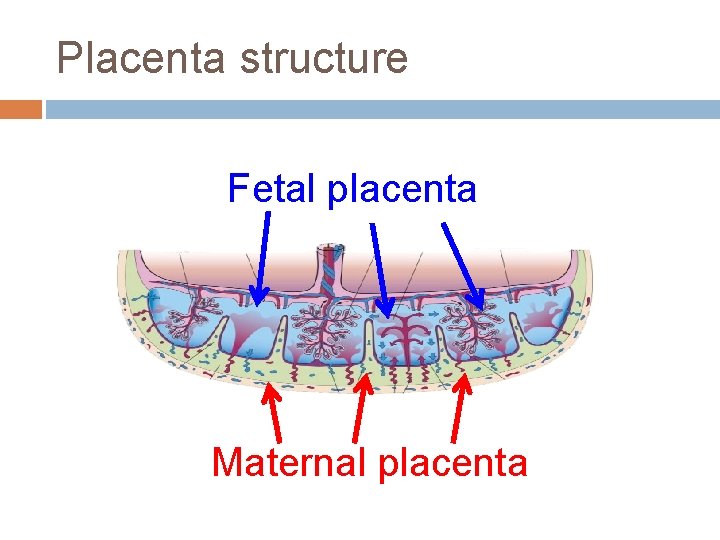
Placenta structure Fetal placenta Maternal placenta
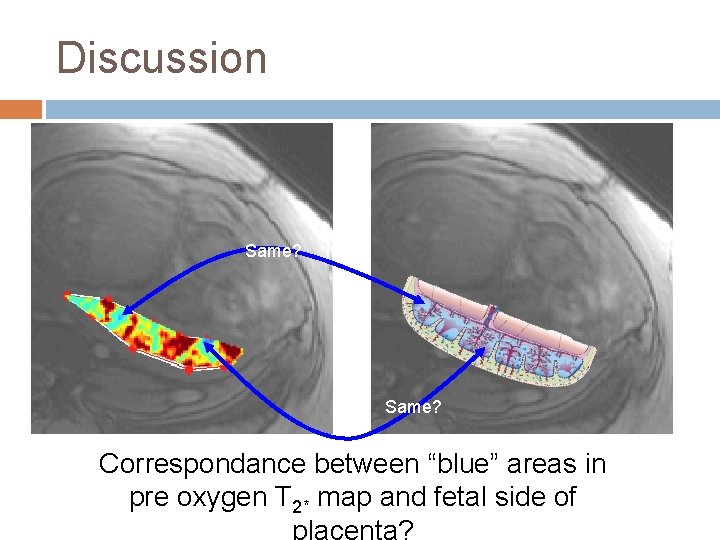
Discussion Same? Correspondance between “blue” areas in pre oxygen T 2* map and fetal side of placenta?
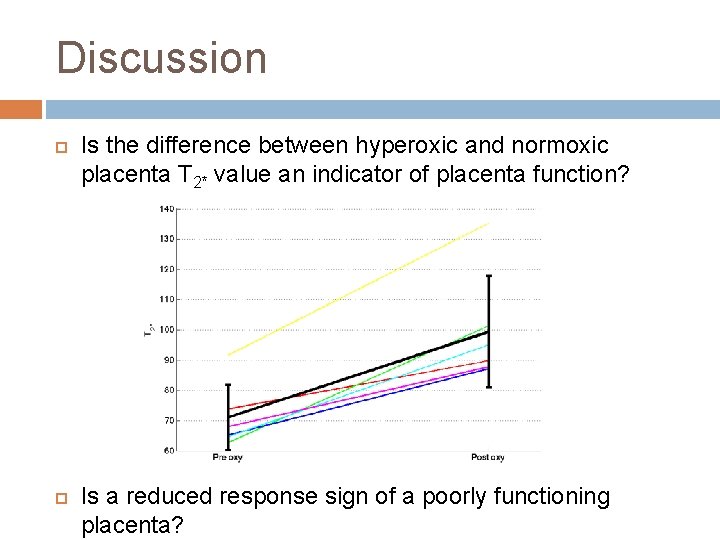
Discussion Is the difference between hyperoxic and normoxic placenta T 2* value an indicator of placenta function? Is a reduced response sign of a poorly functioning placenta?