
Estero Bay Aquatic Preserve Department of Environmental Protection
Estero Bay Aquatic Preserve Department of Environmental Protection Office of Coastal and Aquatic Managed Areas Heather Stafford heather. stafford@dep. state. fl. us Charlotte Harbor Aquatic Preserves 12301 Burnt Store Road Punta Gorda, Fl 33955 941 -575 -5861 ext 106 Estero Bay Aquatic Preserve 700 -1 Fisherman’s Wharf Fort Myers Beach, Fl 33931 239 -463 -3240
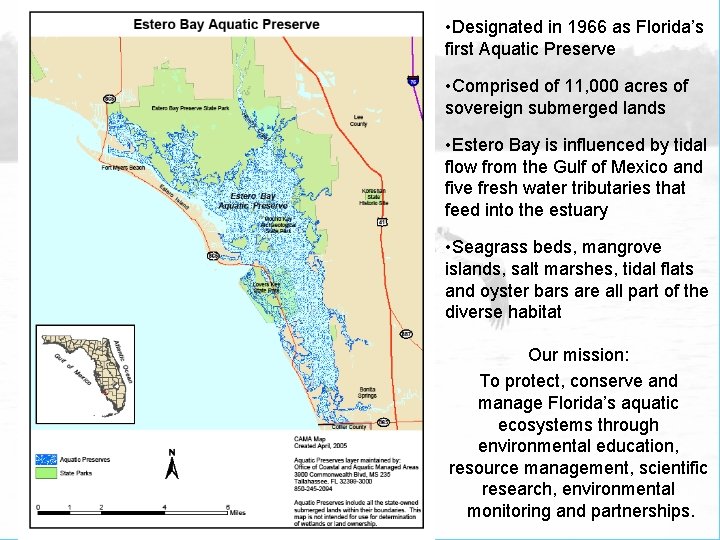
• Designated in 1966 as Florida’s first Aquatic Preserve • Comprised of 11, 000 acres of sovereign submerged lands • Estero Bay is influenced by tidal flow from the Gulf of Mexico and five fresh water tributaries that feed into the estuary • Seagrass beds, mangrove islands, salt marshes, tidal flats and oyster bars are all part of the diverse habitat Our mission: To protect, conserve and manage Florida’s aquatic ecosystems through environmental education, resource management, scientific research, environmental monitoring and partnerships.
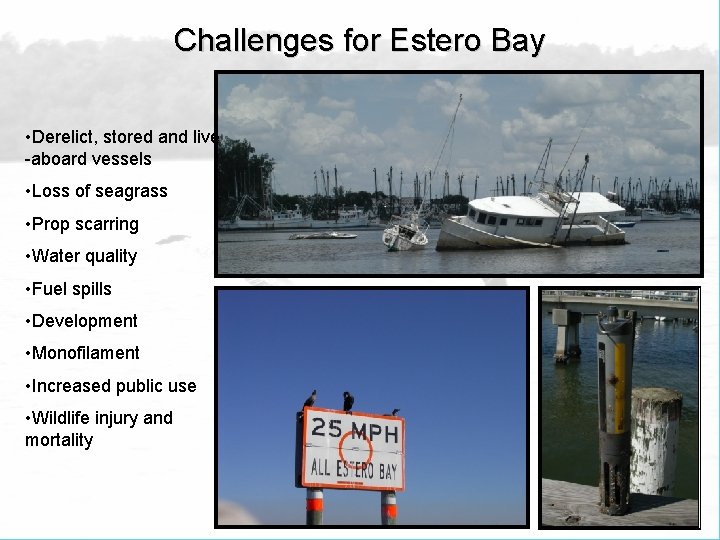
Challenges for Estero Bay • Derelict, stored and live -aboard vessels • Loss of seagrass • Prop scarring • Water quality • Fuel spills • Development • Monofilament • Increased public use • Wildlife injury and mortality
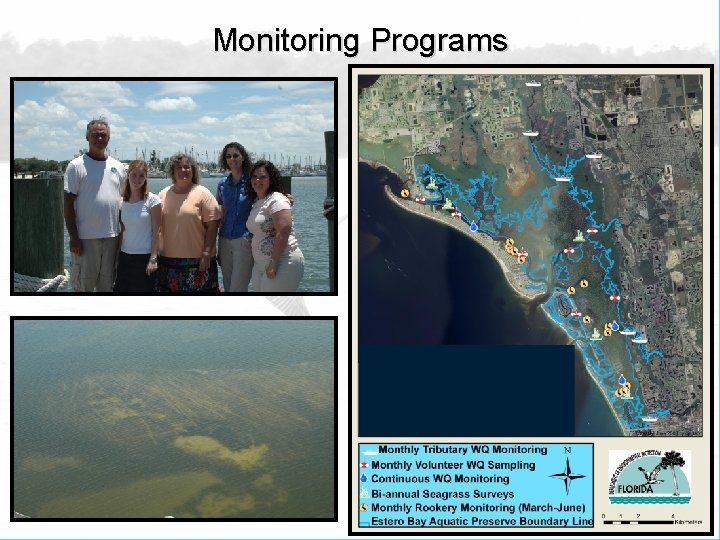
Monitoring Programs
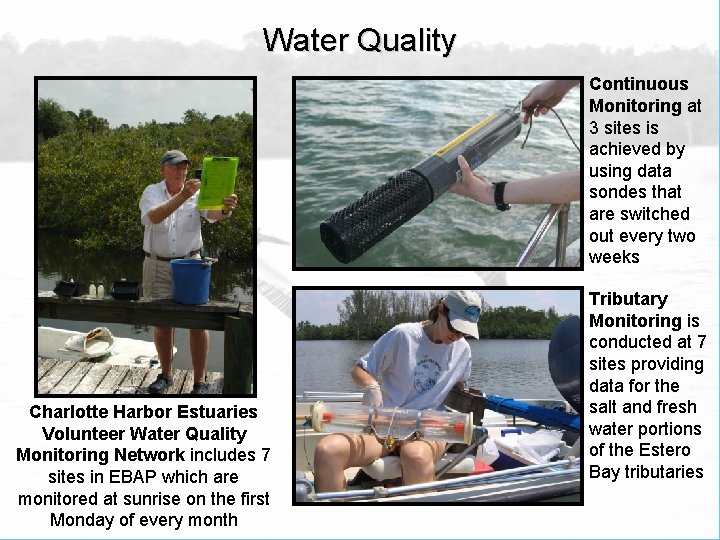
Water Quality Continuous Monitoring at 3 sites is achieved by using data sondes that are switched out every two weeks Charlotte Harbor Estuaries Volunteer Water Quality Monitoring Network includes 7 sites in EBAP which are monitored at sunrise on the first Monday of every month Tributary Monitoring is conducted at 7 sites providing data for the salt and fresh water portions of the Estero Bay tributaries
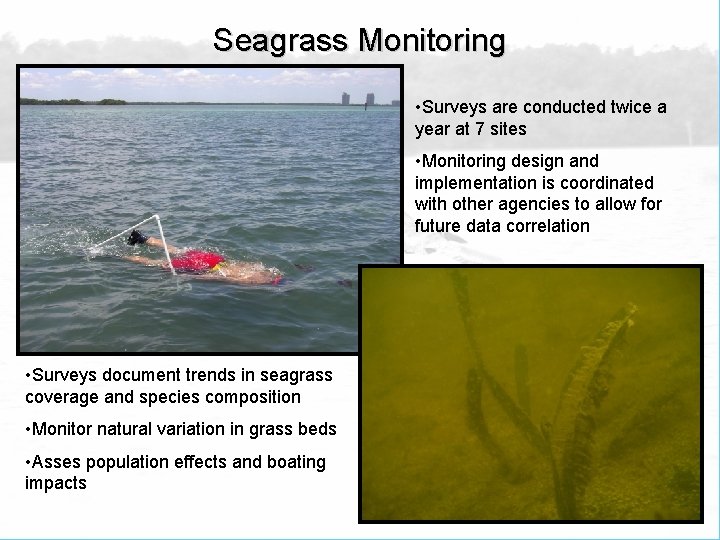
Seagrass Monitoring • Surveys are conducted twice a year at 7 sites • Monitoring design and implementation is coordinated with other agencies to allow for future data correlation • Surveys document trends in seagrass coverage and species composition • Monitor natural variation in grass beds • Asses population effects and boating impacts
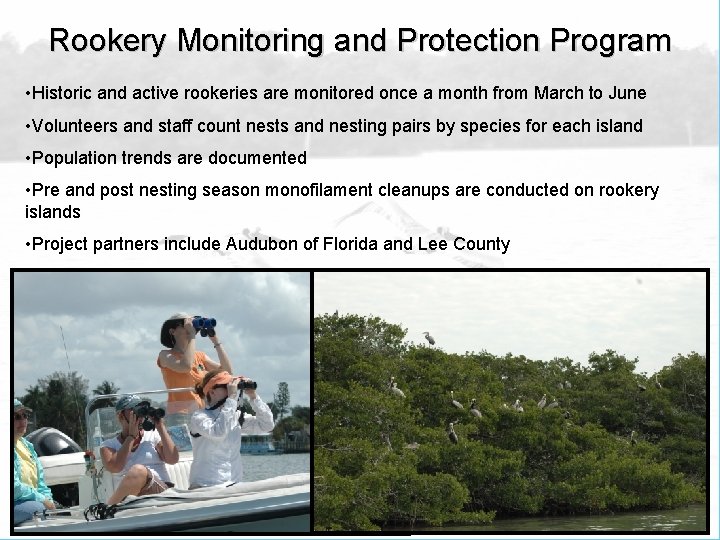
Rookery Monitoring and Protection Program • Historic and active rookeries are monitored once a month from March to June • Volunteers and staff count nests and nesting pairs by species for each island • Population trends are documented • Pre and post nesting season monofilament cleanups are conducted on rookery islands • Project partners include Audubon of Florida and Lee County

Listed Species Management • Respond to dolphin and manatee stranding in partnership with Marine Mammal Stranding Network • Assist sea turtles and wading birds in distress • Monitor wading bird populations
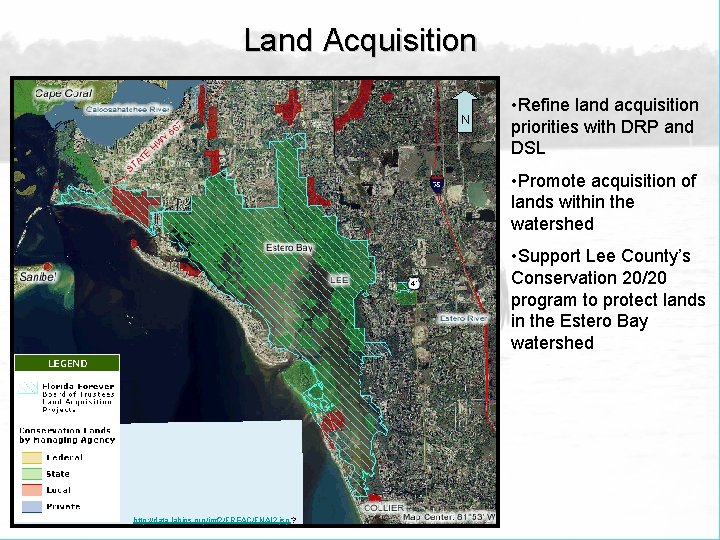
Land Acquisition N • Refine land acquisition priorities with DRP and DSL • Promote acquisition of lands within the watershed • Support Lee County’s Conservation 20/20 program to protect lands in the Estero Bay watershed http: //data. labins. org/imf 2/FREAC/FNAI 2. jsp ?
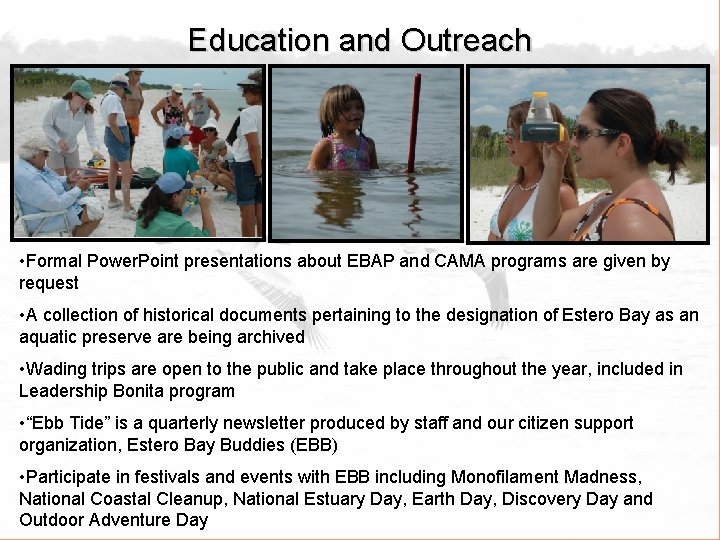
Education and Outreach • Formal Power. Point presentations about EBAP and CAMA programs are given by request • A collection of historical documents pertaining to the designation of Estero Bay as an aquatic preserve are being archived • Wading trips are open to the public and take place throughout the year, included in Leadership Bonita program • “Ebb Tide” is a quarterly newsletter produced by staff and our citizen support organization, Estero Bay Buddies (EBB) • Participate in festivals and events with EBB including Monofilament Madness, National Coastal Cleanup, National Estuary Day, Earth Day, Discovery Day and Outdoor Adventure Day
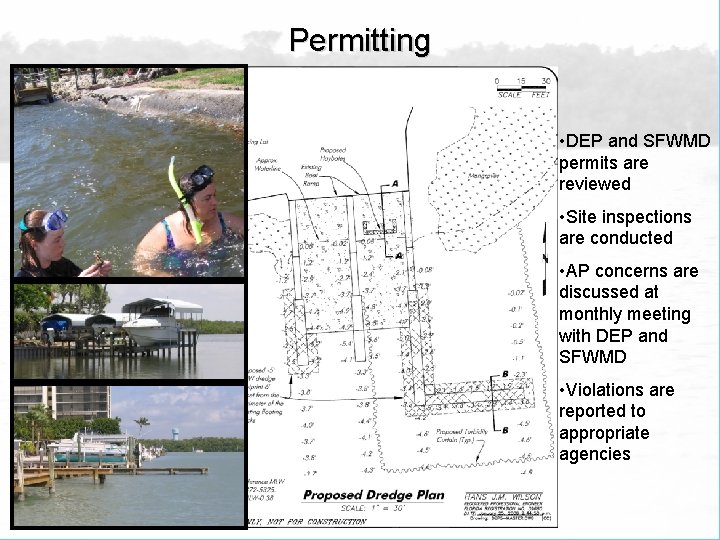
Permitting • DEP and SFWMD permits are reviewed • Site inspections are conducted • AP concerns are discussed at monthly meeting with DEP and SFWMD • Violations are reported to appropriate agencies
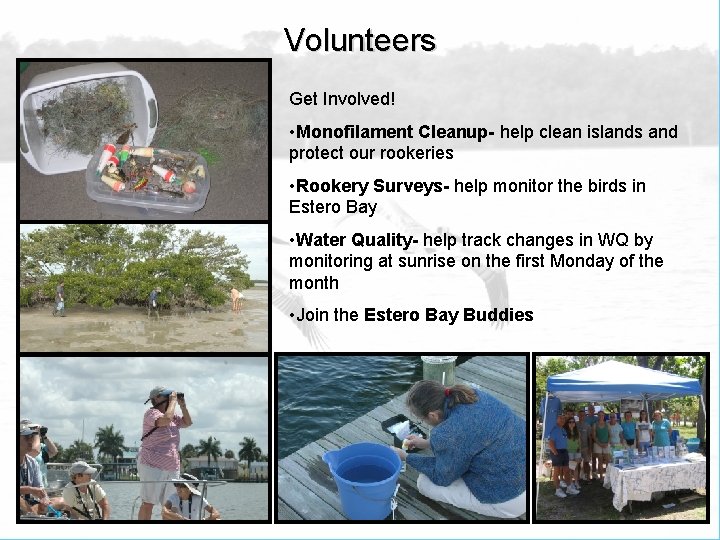
Volunteers Get Involved! • Monofilament Cleanup- help clean islands and protect our rookeries • Rookery Surveys- help monitor the birds in Estero Bay • Water Quality- help track changes in WQ by monitoring at sunrise on the first Monday of the month • Join the Estero Bay Buddies
Community Engagements and Partnerships • Rookery monitoring and protection is conducted in partnership with Audubon of Florida and Lee County • CHNEP provides support for wading trips and CHEVWQMN • EBAP works cooperatively on projects and management programs with Lovers Key and Estero Bay Preserve State Parks • Tributary monitoring is conducted through a partnership with Lee County • Staff work with the Marine Mammal Stranding Network and CROW to assist injured wildlife • Committee involvement includes ABM, CHNEP, LCMLETF, LCWAC, EBNMP and more • SFWMD, ACOE, FWC, USFWS, EPA, DEP, and local government attend monthly permitting meetings • Assist FGCU with oyster reef restoration and other research projects
- Slides: 14