
Establishment and impact of Lythrum salicaria on wetlands
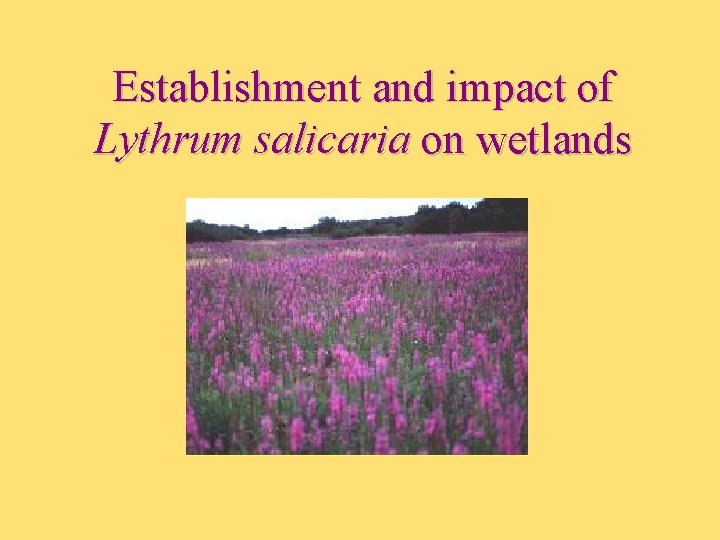
Establishment and impact of Lythrum salicaria on wetlands
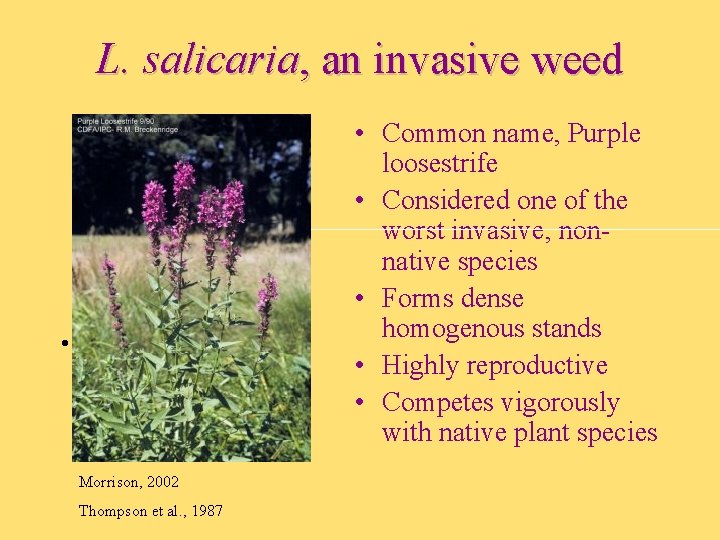
L. salicaria, an invasive weed • Common name, Purple loosestrife • Considered one of the worst invasive, nonnative species • Forms dense homogenous stands • Highly reproductive • Competes vigorously with native plant species • Morrison, 2002 Thompson et al. , 1987
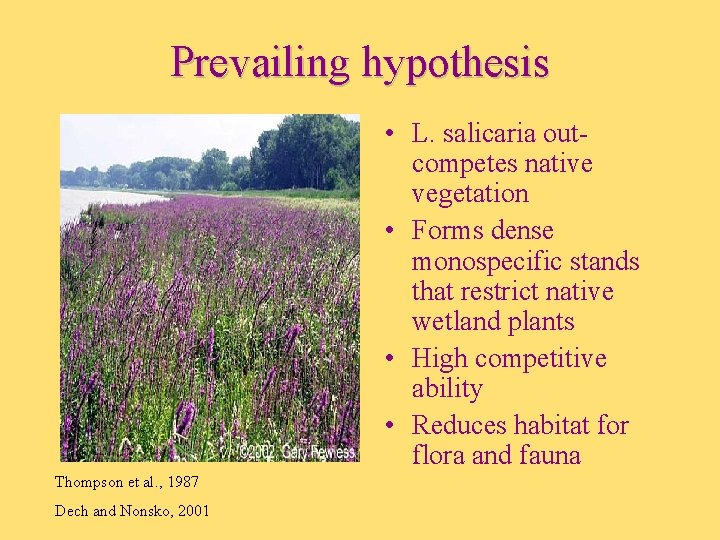
Prevailing hypothesis • L. salicaria outcompetes native vegetation • Forms dense monospecific stands that restrict native wetland plants • High competitive ability • Reduces habitat for flora and fauna Thompson et al. , 1987 Dech and Nonsko, 2001
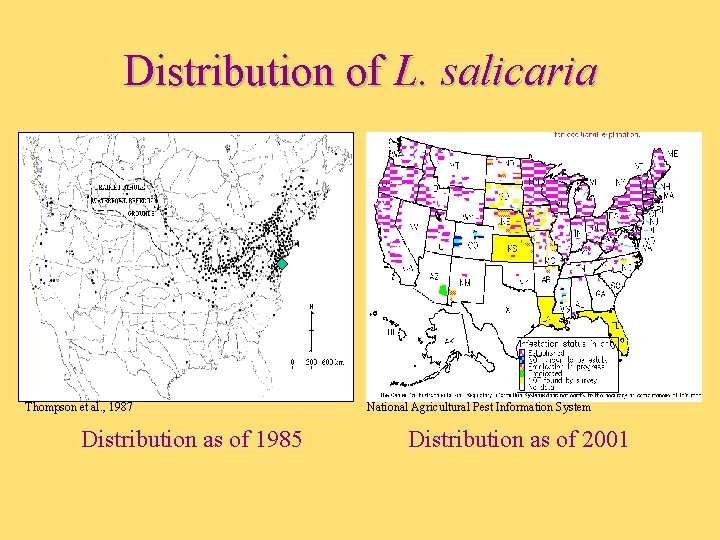
Distribution of L. salicaria Thompson et al. , 1987 Distribution as of 1985 National Agricultural Pest Information System Distribution as of 2001
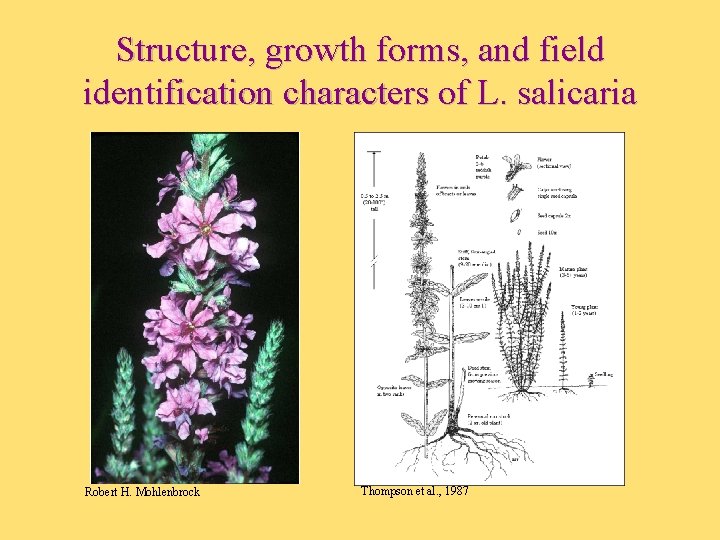
Structure, growth forms, and field identification characters of L. salicaria Robert H. Mohlenbrock Thompson et al. , 1987
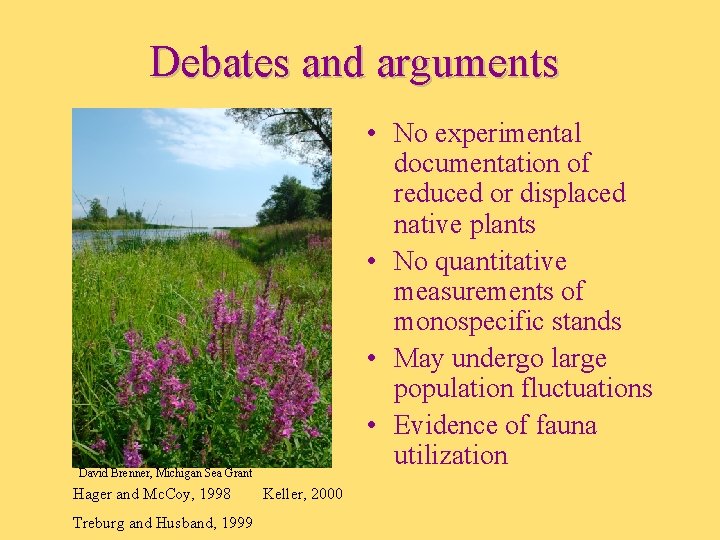
Debates and arguments • No experimental documentation of reduced or displaced native plants • No quantitative measurements of monospecific stands • May undergo large population fluctuations • Evidence of fauna utilization David Brenner, Michigan Sea Grant Hager and Mc. Coy, 1998 Treburg and Husband, 1999 Keller, 2000
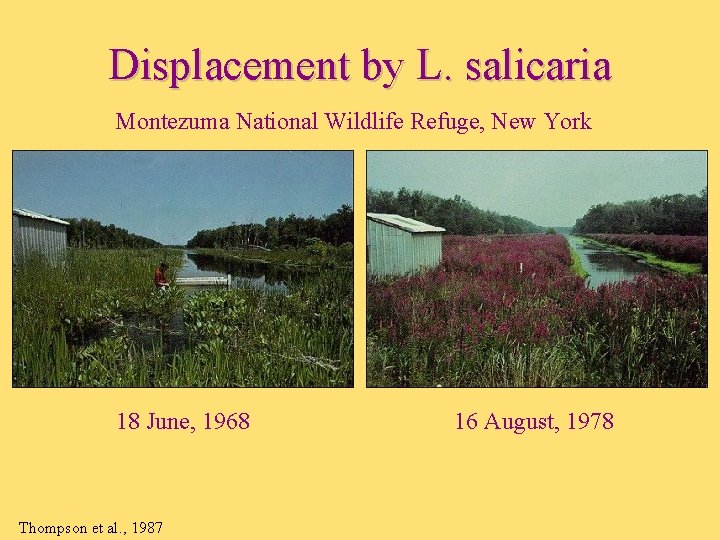
Displacement by L. salicaria Montezuma National Wildlife Refuge, New York • 18 June, 1968 Thompson et al. , 1987 16 August, 1978
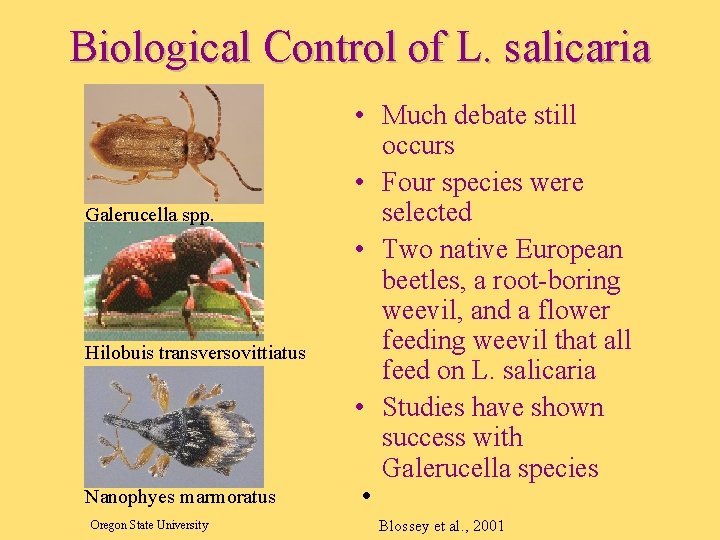
Biological Control of L. salicaria Galerucella spp. Hilobuis transversovittiatus Nanophyes marmoratus Oregon State University • Much debate still occurs • Four species were selected • Two native European beetles, a root-boring weevil, and a flower feeding weevil that all feed on L. salicaria • Studies have shown success with Galerucella species • Blossey et al. , 2001
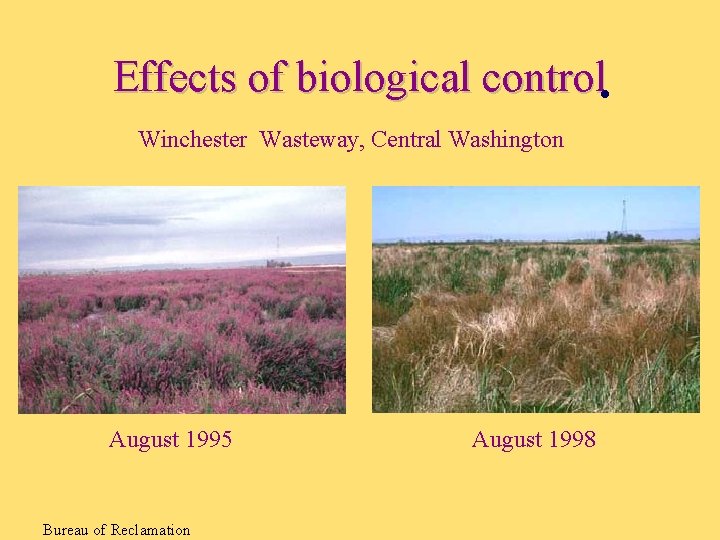
Effects of biological control • Winchester Wasteway, Central Washington August 1995 Bureau of Reclamation August 1998
- Slides: 9