
ESTABLISHING WILDLIFE MANAGEMENT AREAS Impacts of CBNRM on
ESTABLISHING WILDLIFE MANAGEMENT AREAS: Impacts of CBNRM on Biodiversity and Communities in Tanzania Dr. H. Sosovele WWF/Tanzania Programme Office
Presentation outline: • • Background Natural Resource Policies in Tanzania Wildlife Management Areas (WMAs): Definition The WMA Process WMAs: Impacts on Biodiversity in Tanzania WMAs: Impacts on Communities in Tanzania Challenges.
Background • The Problem: • Communities not benefiting from natural resources on land • Increased degradation of natural resources • Inadequate awareness of all stakeholders for sustainable utilization of these resources (local resource users, planners, private sector) • Inadequate participation of local communities in planning & management of natural resources • The Project: • Policy Change – beginning in 1998 • Facilitation of WMAs – beginning in 2001
Natural Resource Policies • A variety of natural resources policies and laws have been developed and are operational in Tanzania. • These include: • Wildlife Policy of Tanzania • Forestry Policy of Tanzania • Fisheries Policy • National Lands Policy • Water Policy • Almost all policies promote stakeholder participation and involvement of local resource users in management
CBNRM • • • CBNRM has its roots in the new polices and legislations that promote greater authority to local communities in the control and utilization of natural resources in their jurisdiction. These new policies and legislations represents a significant shift from the former centralized approach The Wildlife Policy of Tanzania (WPT) is promoting that kind of shift – promote conservation, community involvement and extend benefits

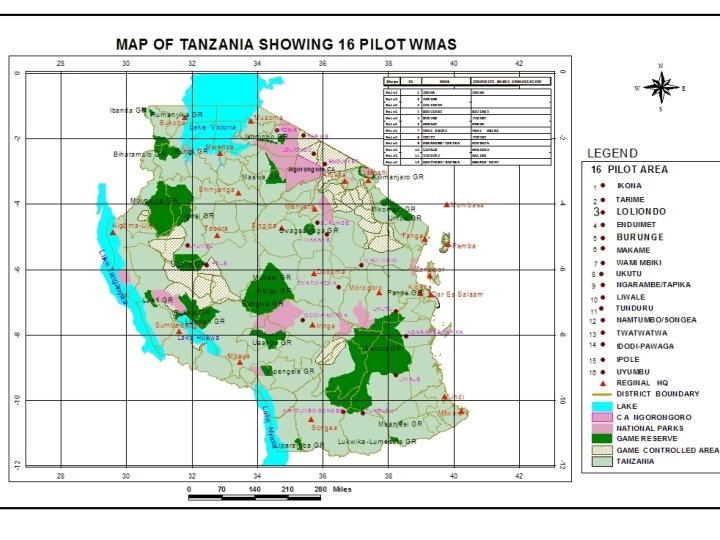
WMAs-definition • WMAs are Wildlife Management Areas • WMAs are one of the community conservation programmes • Set outside protected areas (NPs, GRs, GCAs) within village lands and used by communities for conservation, benefit sharing • Strategically established within corridors and migratory routes • WWF started implementing WMAs in Tanzania in 2002; currently implementing 6 WMAs and advising 10

Establishing WMAs: The Process • Consultations with all villagers • Sensitization meetings to get support • Setting aside area for WMA on village land. • Participatory land use planning, GMP development and approval process • Formation of CBO and registration • Application for Authorized association status • Application user rights • Functioning WMA – business venture.
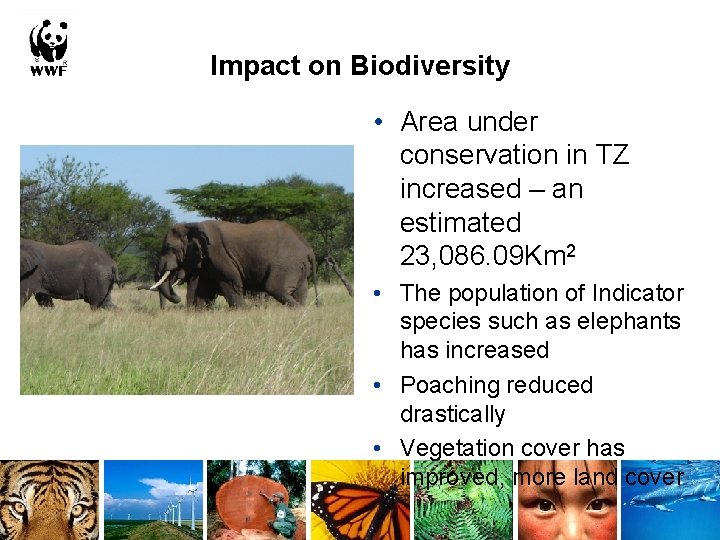
Impact on Biodiversity • Area under conservation in TZ increased – an estimated 23, 086. 09 Km 2 • The population of Indicator species such as elephants has increased • Poaching reduced drastically • Vegetation cover has improved, more land cover
Impact on Communities • Strengthening civil society: • Enhanced good governance in NRM through participation • Increased awareness on rights and obligations • Strengthen institutional arrangement and helped to form community based organization that represent villagers interest • Provide opportunity for increased revenue, employment and contribute to poverty reduction
Challenges These include how to: • Expand support for awareness raising, exchange visits • Ensure participation of all stakeholders • Provide empowerment and devolution of authority for resource monitoring, protection, policing • Guarantee government support to field level technical teams for CBNRM • Increase investment in training and capacity building • Increase access to economic benefits • Move away from single sector approach to CBNRM
- Slides: 11