
Establishing the Sacramento Regional Water Bank Background The
Establishing the Sacramento Regional Water Bank
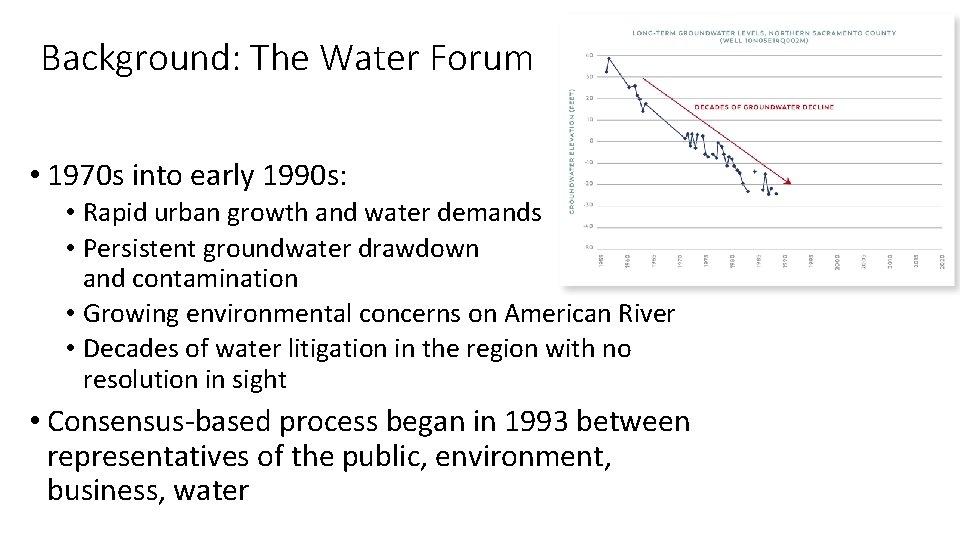
Background: The Water Forum • 1970 s into early 1990 s: • Rapid urban growth and water demands • Persistent groundwater drawdown and contamination • Growing environmental concerns on American River • Decades of water litigation in the region with no resolution in sight • Consensus-based process began in 1993 between representatives of the public, environment, business, water

Background: the Water Forum Agreement • MOU signed in April 2000 • 40 different stakeholder groups • Co-equal objectives • Provide safe reliable water supply for planned growth to the year 2030 • Preserve Lower American River • Seven major elements, including: • • Increased Surface Water Diversions in Wet and Normal Years Reduced Diversion in Dry Years Groundwater Management Water Efficiency
Resulting from the Water Forum • Formed Sacramento Groundwater Authority in 1998 to ensure basin in north Sacramento County managed to sustainable yield • Formed Regional Water Authority in 2001 to assist local water agencies in meeting their Water Forum commitments • Began expanding conjunctive use operations • Agencies reliant on groundwater built pipelines and secured surface water for wet years • Agencies reliant on surface water began building groundwater wells for dry years
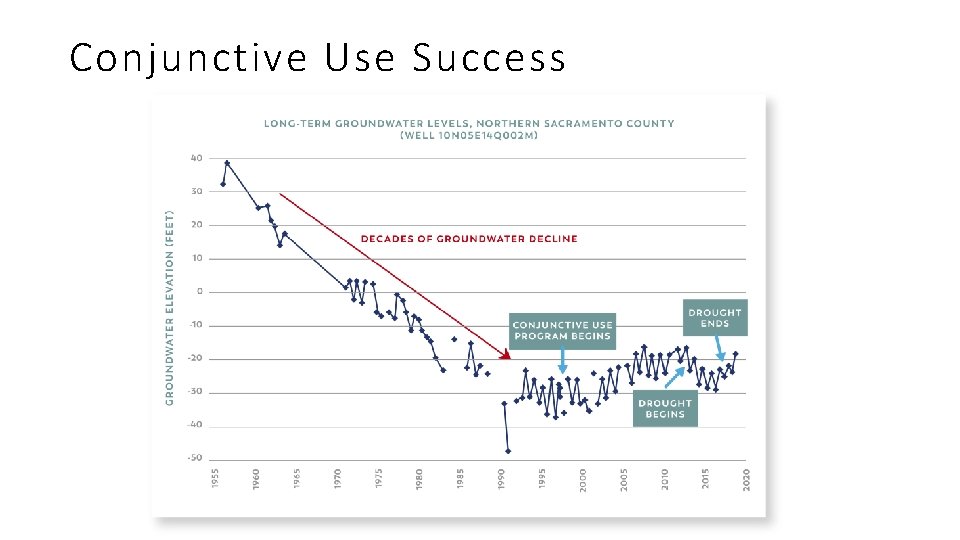
Conjunctive Use Success
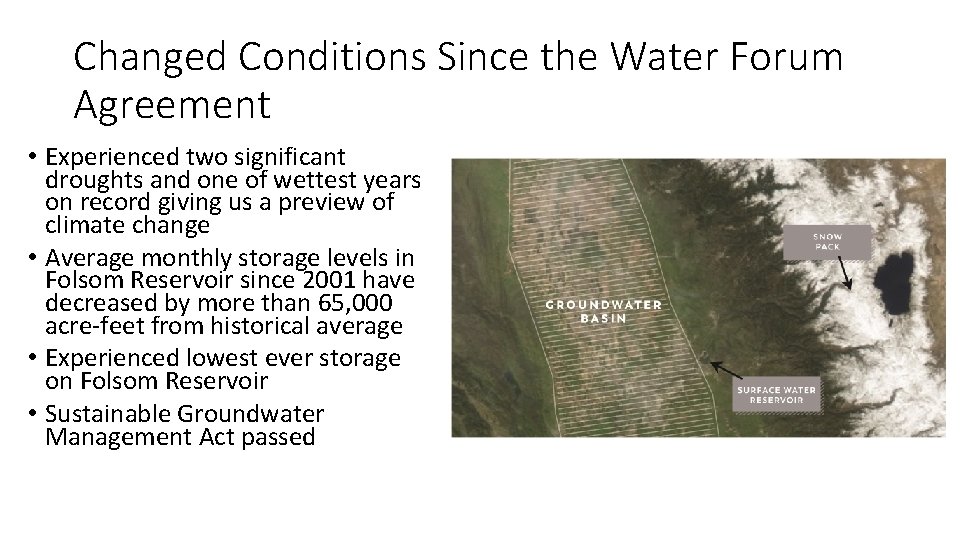
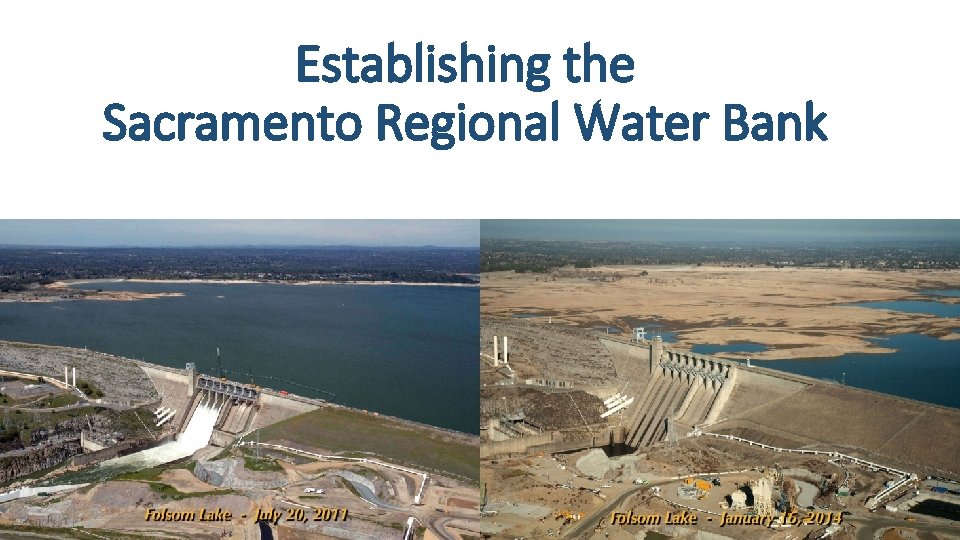
Changed Conditions Since the Water Forum Agreement • Experienced two significant droughts and one of wettest years on record giving us a preview of climate change • Average monthly storage levels in Folsom Reservoir since 2001 have decreased by more than 65, 000 acre-feet from historical average • Experienced lowest ever storage on Folsom Reservoir • Sustainable Groundwater Management Act passed
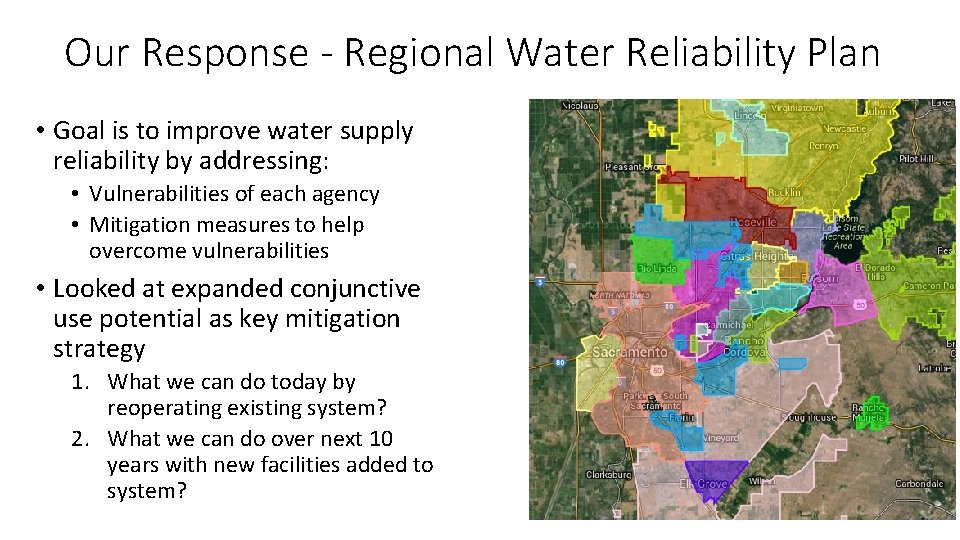
Our Response - Regional Water Reliability Plan • Goal is to improve water supply reliability by addressing: • Vulnerabilities of each agency • Mitigation measures to help overcome vulnerabilities • Looked at expanded conjunctive use potential as key mitigation strategy 1. What we can do today by reoperating existing system? 2. What we can do over next 10 years with new facilities added to system?
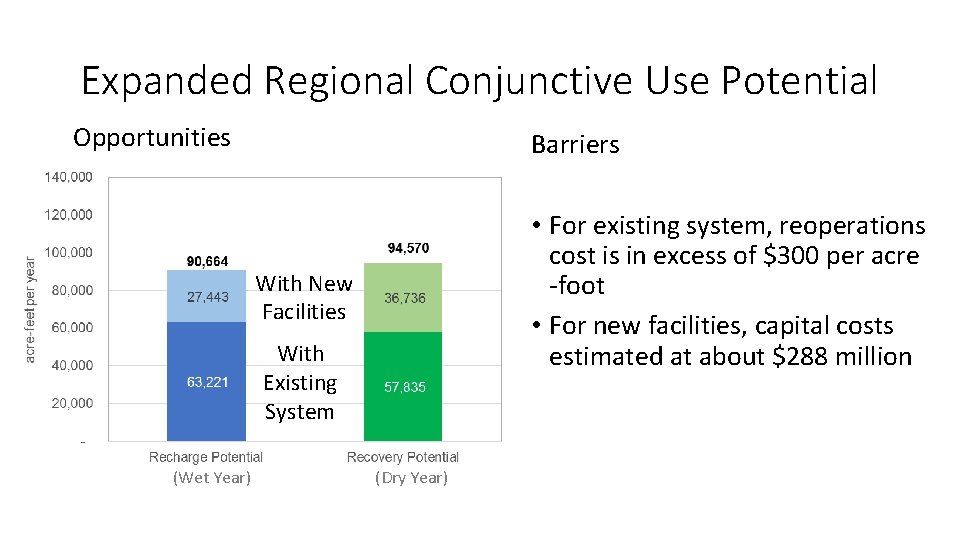
Expanded Regional Conjunctive Use Potential Opportunities Barriers • For existing system, reoperations cost is in excess of $300 per acre -foot • For new facilities, capital costs estimated at about $288 million With New Facilities With Existing System (Wet Year) (Dry Year)
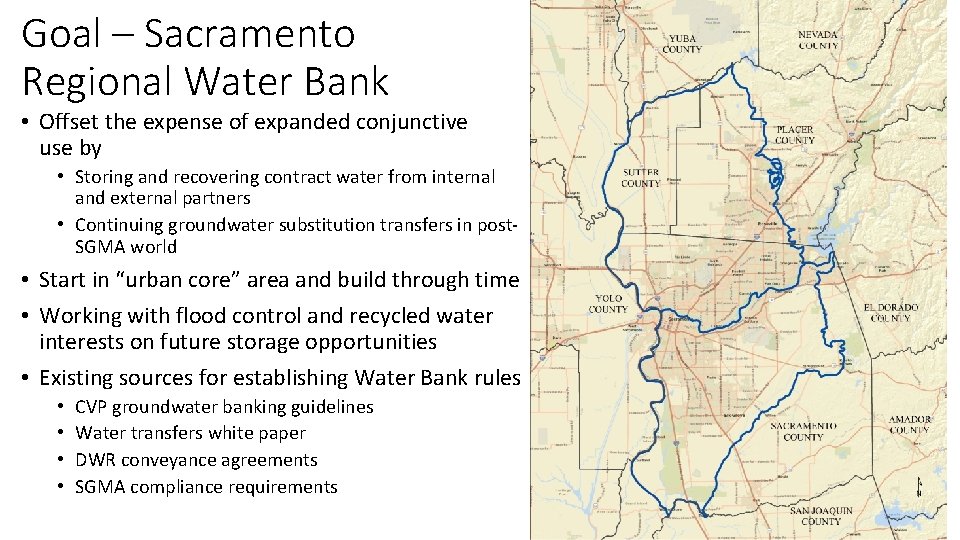
Goal – Sacramento Regional Water Bank • Offset the expense of expanded conjunctive use by • Storing and recovering contract water from internal and external partners • Continuing groundwater substitution transfers in post. SGMA world • Start in “urban core” area and build through time • Working with flood control and recycled water interests on future storage opportunities • Existing sources for establishing Water Bank rules • • CVP groundwater banking guidelines Water transfers white paper DWR conveyance agreements SGMA compliance requirements
For Water Bank Success Under SGMA • Manage groundwater levels sustainably • Manage groundwater storage sustainably • Avoid adverse impacts to surface water • Approach to ensuring SGMA compliance: • Require water be stored before it can be recovered • Include a “loss factor” to ensure a benefit to basin • Include accounting to ensure water recovered cannot exceed water stored • Establish regional monitoring and mitigation plan
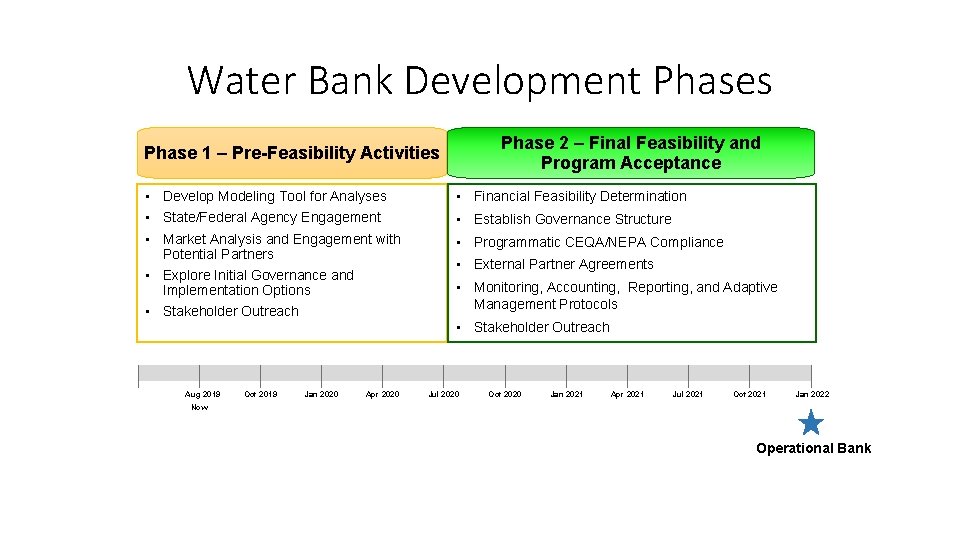
Water Bank Development Phases Phase 2 – Final Feasibility and Program Acceptance Phase 1 – Pre-Feasibility Activities • Develop Modeling Tool for Analyses • State/Federal Agency Engagement • Market Analysis and Engagement with Potential Partners • Explore Initial Governance and Implementation Options • Stakeholder Outreach Aug 2019 Oct 2019 Jan 2020 Apr 2020 • Financial Feasibility Determination • Establish Governance Structure • Programmatic CEQA/NEPA Compliance • External Partner Agreements • Monitoring, Accounting, Reporting, and Adaptive Management Protocols • Stakeholder Outreach Jul 2020 Oct 2020 Jan 2021 Apr 2021 Jul 2021 Oct 2021 Jan 2022 Now Operational Bank
Relation to WIIN Act • WIIN Act allows for planning funding in addition to implementation funding • In June 2019, RWA submitted a request seeking $840 K (or 25%) to support the total funding need of $3. 48 million to complete all planning work for an operational Water Bank • If WIIN Act (or some new version of it) is still available when Water Bank planning is complete, RWA may pursue additional funding for projects that will help expand the Water Bank
Consistency with Prop 1 • Improves regional supply reliability, water security, and selfreliance • Adapts to climate change • Increases agency collaboration • Provides multiple benefits and supports a Wild and Scenic River • Seeks to leverage local and federal funding
- Slides: 13