
Establishing a National Medical Physics Training Programme in
Establishing a National Medical Physics Training Programme in Zimbabwe Prof Godfrey Azangwe National University of Science and Technology, Mpilo Central Hospital
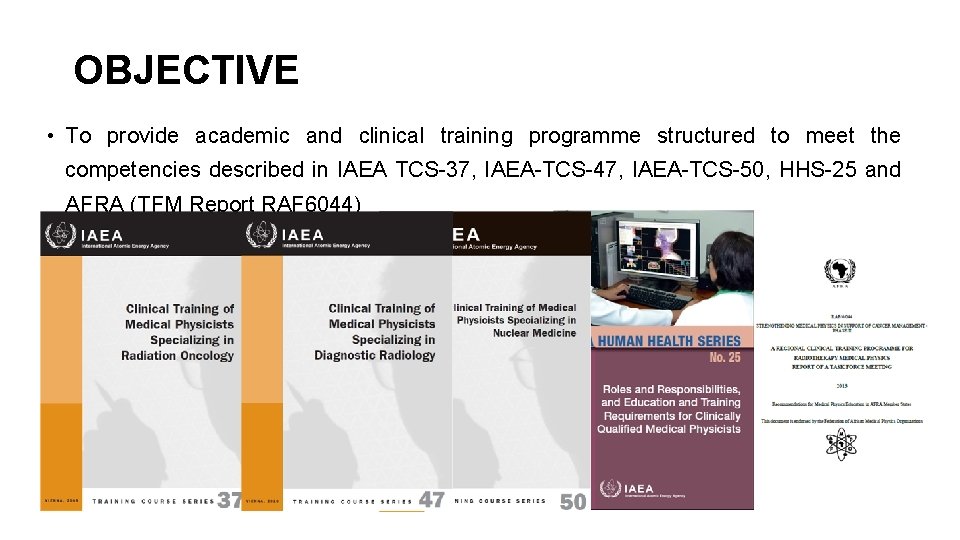
OBJECTIVE • To provide academic and clinical training programme structured to meet the competencies described in IAEA TCS-37, IAEA-TCS-47, IAEA-TCS-50, HHS-25 and AFRA (TFM Report RAF 6044)

Basic Hons Degree in Physics (4 yrs) (One year spent on attachment in Radiotherapy and Nuclear Med Dept. ) Basic Hons Degree in Physics (4 yrs) MSc Medical Physics (2 yrs. Full time) Part I Academic courses Employment as an intern (Radiotherapy and Nuclear Med Dept. ) On the Job Training IAEA Fellowships 3 years post qualification experience Part II Clinical Placement + Research Graduate Medical Physicist (Provisional Register AHPCZ) 2 yrs. Supervised Clinical Experience (AHPCZ intern) “Medical Physicist” (AHPCZ Registration)


EQUIPMENT
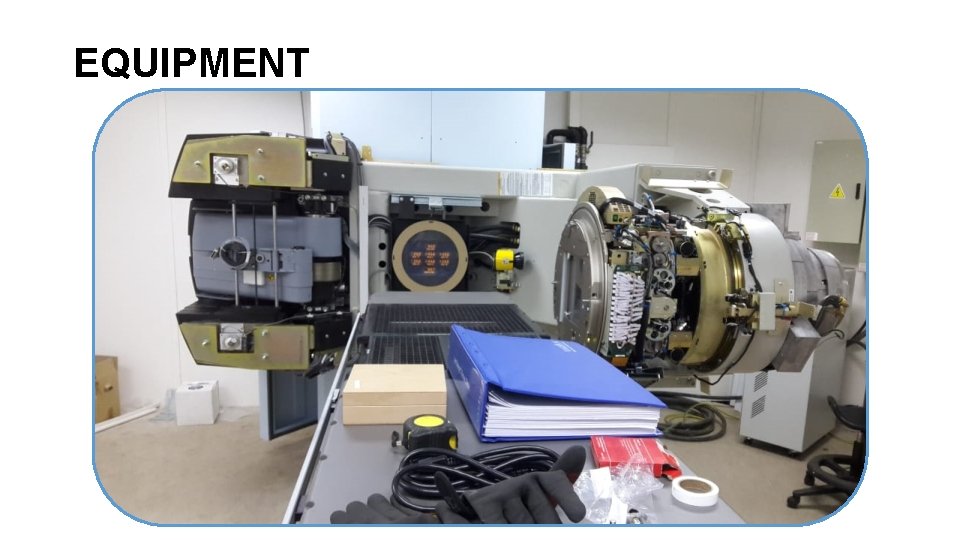
EQUIPMENT
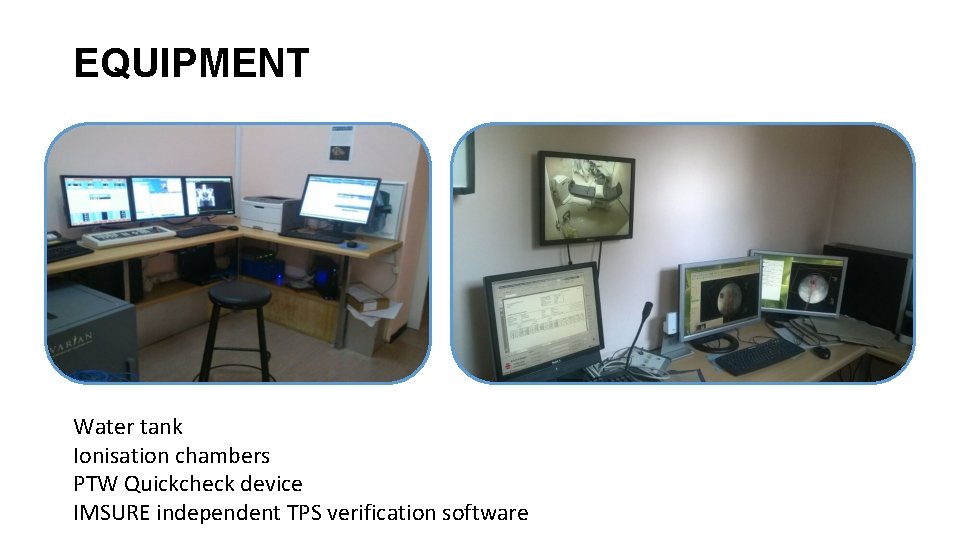
EQUIPMENT Water tank Ionisation chambers PTW Quickcheck device IMSURE independent TPS verification software
CLINICAL TRAINING PROCESS • Orientation § Aimed to familiarize the interns with procedures undertaken at different radiotherapy processes. § Observations of patient clinical workflow and radiotherapy activities • Orientation is performed at different stations that include; § Conventional Simulation § CT-Scanner § Treatment planning § External beam treatment beam delivery
TRAINING PROCESS (cont. . ) • Duties and activities ; § Interns/Fellows are assigned duties of periodical equipment checks such as daily machine output checks. § They will be simultaneously performing other activities to achieve the required competencies such as; ØEquipment QC (mechanical, safety and dosimetry) ØRelative and absolute dosimetry ØTreatment planning ØBrachytherapy ØRadiation Protection
TRAINING EVALUATIONS • Continuous evaluations are carried by supervisors to monitor the training progress. training • These are performed through; § Presentations of their training progress § Monthly reports § Practical demonstrations • They are also assigned specific tasks problem solving clinical case tasks as mini projects
TRAINING EVALUATIONS • Interns also participate in; § Journal club presentations, § Weekly physics meetings and § Departmental QA meetings • Interns will have portfolios at the end of the training programme
CHALLENGES • Machine downtime • Limited capacity • Low numbers of clinical supervisors • Few lecturers to teach the academic component • Poor renumeration (means we have been a training ground for others…USA, UK, Australia, New Zealand, Ireland, Botswana, Namibia, Caribbean Islands…) • Unreliable power supply
THE FUTURE • Become centre of excellence • Support region in academic and clinical training • Participate in more regional training courses • Establish a standardised formal national training scheme involving the three radiotherapy centres • Government had decided to fund radiotherapy services through a national levy (service contracts and equipment replacement scheme) • Advise colleagues wanting to start new training programmes
THANK YOU
- Slides: 14