
Establishing a Common Language for Comprehensive Medication Management
Establishing a Common Language for Comprehensive Medication Management JCPP 4 th Quarter Meeting November 29, 2018
Questions Framing Today’s Discussion • What does implementation science tell us about defining and measuring innovations/interventions? • How does the Pharmacist’s Patient Care Process relate to specific services delivered by pharmacists? • How can we accelerate the dissemination and adoption of pharmacist-delivered services with fidelity?
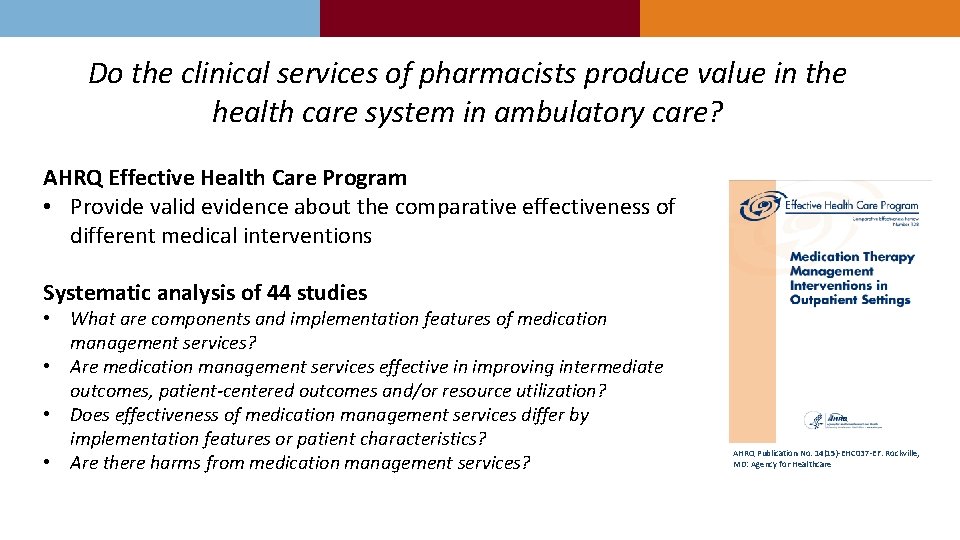
Do the clinical services of pharmacists produce value in the health care system in ambulatory care? AHRQ Effective Health Care Program • Provide valid evidence about the comparative effectiveness of different medical interventions Systematic analysis of 44 studies • What are components and implementation features of medication management services? • Are medication management services effective in improving intermediate outcomes, patient-centered outcomes and/or resource utilization? • Does effectiveness of medication management services differ by implementation features or patient characteristics? • Are there harms from medication management services? AHRQ Publication No. 14(15)-EHC 037 -EF. Rockville, MD: Agency for Healthcare Research and Quality; November 2014. www. effectivehealthcare. ahrq. gov/reports/final. cfm. AHRQ Publication No. 14(15)-EHC 037 -EF. Rockville, MD: Agency for Healthcare 2014.
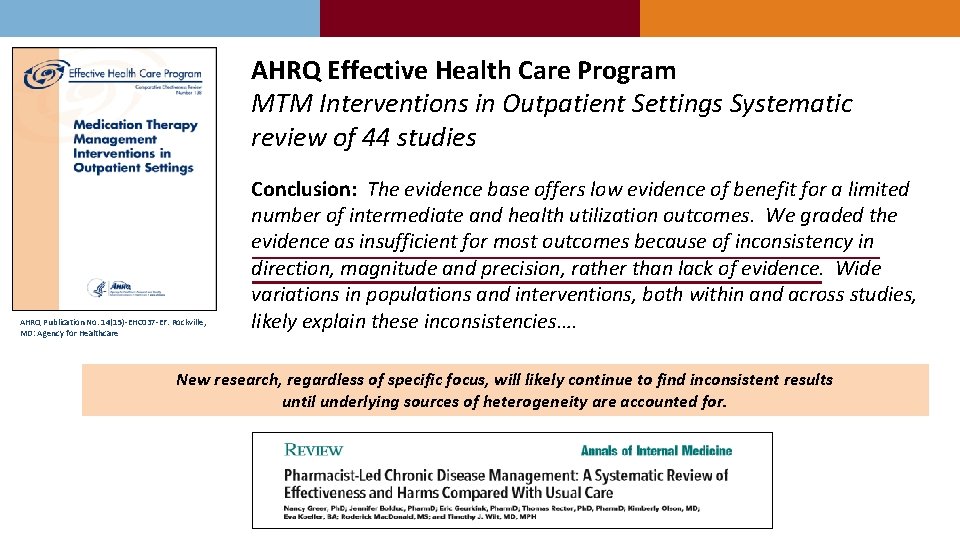
AHRQ Effective Health Care Program MTM Interventions in Outpatient Settings Systematic review of 44 studies AHRQ Publication No. 14(15)-EHC 037 -EF. Rockville, MD: Agency for Healthcare 2014. Conclusion: The evidence base offers low evidence of benefit for a limited number of intermediate and health utilization outcomes. We graded the evidence as insufficient for most outcomes because of inconsistency in direction, magnitude and precision, rather than lack of evidence. Wide variations in populations and interventions, both within and across studies, likely explain these inconsistencies…. New research, regardless of specific focus, will likely continue to find inconsistent results until underlying sources of heterogeneity are accounted for.
A Payer’s Perspective on Evidence Integrated health care provider and health insurance company Analyses: To determine if the medication therapy management (MTM) program has a positive effect on the total costs of care for fully insured members who have been identified as eligible for the program and have enrolled to participate Methods: matched case/control analysis approach • Matched members from the fully insured MTM enrolled case study group to members of a self insured control group based on demographics as well as preinvitation utilization information – Adjusted clinical groups, reimbursement amount, gender, age, CDC grouping sum – 374 matched members
A Payer’s Perspective on Evidence Results: Return on investment of 11: 1 when annualized savings were compared to fully loaded expenses (including indirect expenses at 60%). – Repeated analysis in 2016, same results Key Environmental Factors – – – Common patient care process (CMM) – fidelity of service Face-to-face assessments Competency of practitioners Service integrated with medical providers Integration with EMR Population management – targeting highest utilizing patients
Are these questions the same? Do the clinical services of pharmacists produce value to patients and payers? Versus Does a team-based medication management service defined and delivered consistently produce value to patients and payers?

Reasons for Mixed Results Ill-defined intervention and delivery context Lack of pharmacycentric implementation measures Implementation Variability Inconclusive Health Research Outcomes Lack of a systematic implementation strategy
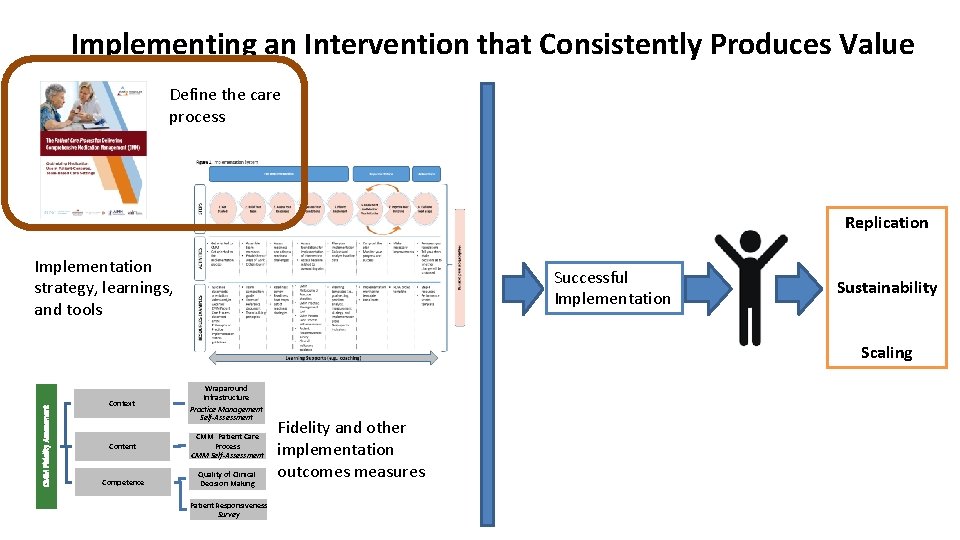
Implementing an Intervention that Consistently Produces Value Define the care process Replication Implementation strategy, learnings, and tools Successful Implementation Sustainability CMM Fidelity Assessment Scaling Context Wraparound Infrastructure Practice Management Self-Assessment Content CMM Patient Care Process CMM Self-Assessment Competence Quality of Clinical Decision Making Patient Responsiveness Survey Fidelity and other implementation outcomes measures
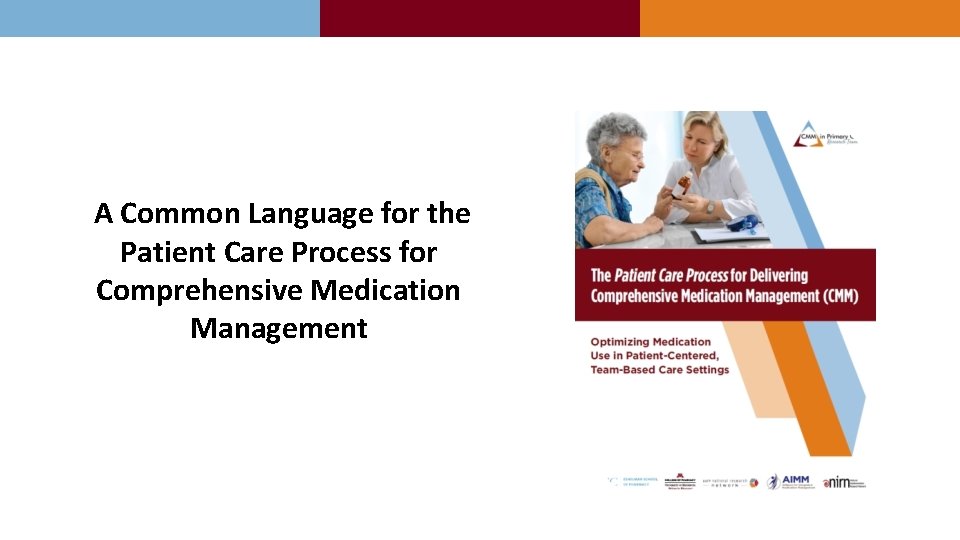
A Common Language for the Patient Care Process for Comprehensive Medication Management

JCPP Pharmacists’ Patient Care Process Nursing Patient Care Process

What is unique about the pharmacists’ patient care process?

Defining a Usable Innovation 1. Clear description of the program o Clear Philosophy, Values, and Principles o Clear inclusion and exclusion criteria that define the population for which the program is intended 2. Clear description of the essential functions that define the program o Clear description of the features that must be present to say that a program exists in a given location 3. Operational definitions of the essential functions o Profiles describe the core activities that allow a program to be teachable, learnable, and doable in practice; promote consistency across practitioners at the level of service delivery 4. A practical assessment of the performance of practitioners (and patients) who are using the program Michie and colleagues, 2005; 2009 Fixsen, Blase, Metz, & Van Dyke, 2013
Research Methods for Producing a “Common Language” for CMM 14
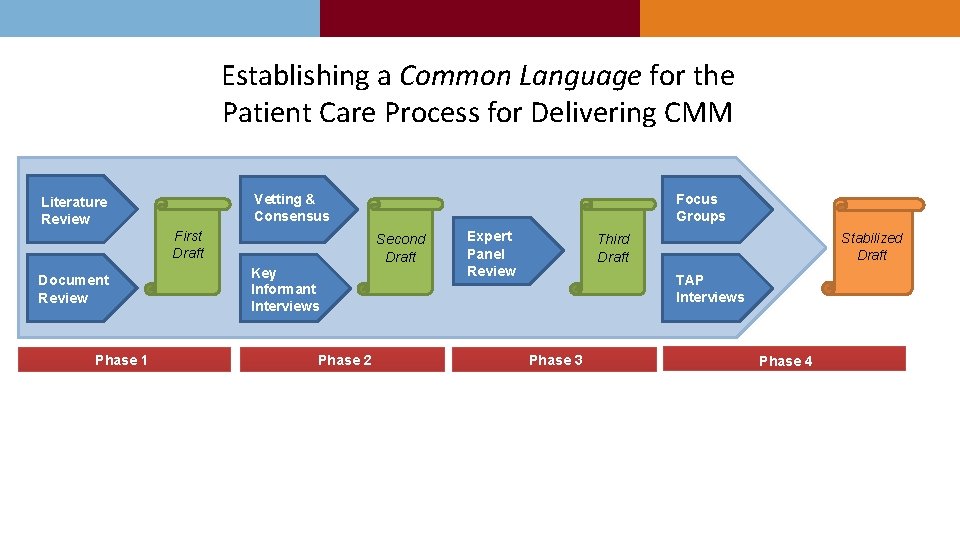
Establishing a Common Language for the Patient Care Process for Delivering CMM Vetting & Consensus Literature Review First Draft Document Review Phase 1 Focus Groups Second Draft Key Informant Interviews Phase 2 Expert Panel Review Stabilized Draft Third Draft TAP Interviews Phase 3 Phase 4
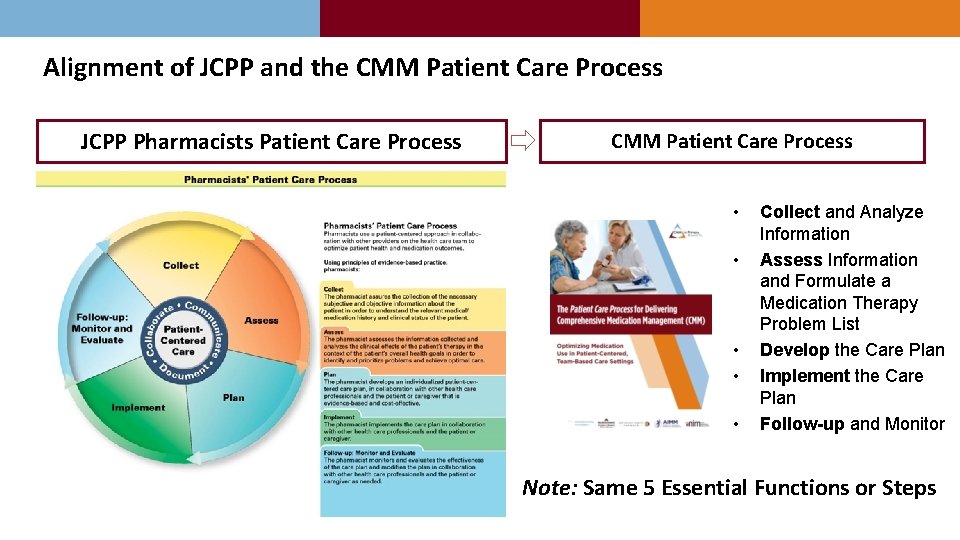
Alignment of JCPP and the CMM Patient Care Process JCPP Pharmacists Patient Care Process CMM Patient Care Process • • • Collect and Analyze Information Assess Information and Formulate a Medication Therapy Problem List Develop the Care Plan Implement the Care Plan Follow-up and Monitor Note: Same 5 Essential Functions or Steps
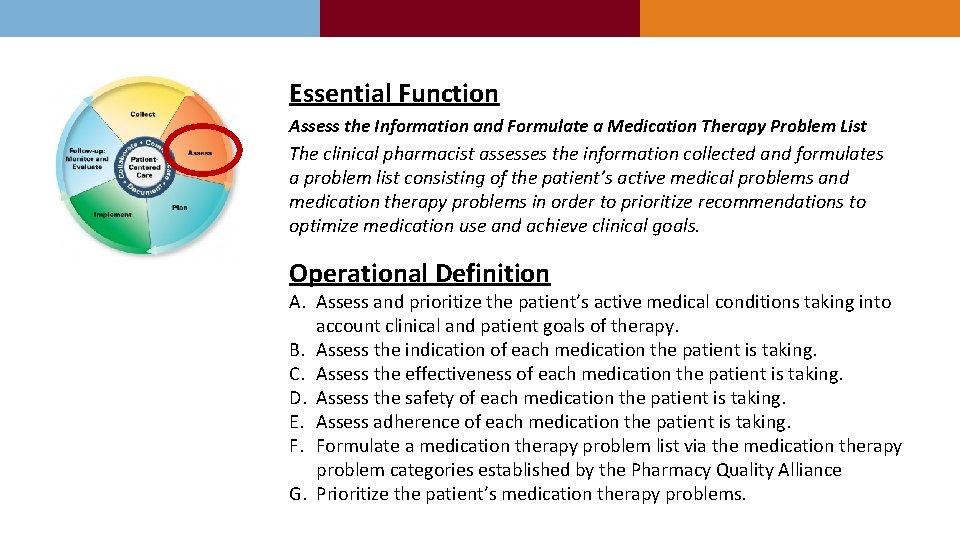
Essential Function Assess the Information and Formulate a Medication Therapy Problem List The clinical pharmacist assesses the information collected and formulates a problem list consisting of the patient’s active medical problems and medication therapy problems in order to prioritize recommendations to optimize medication use and achieve clinical goals. Operational Definition A. Assess and prioritize the patient’s active medical conditions taking into account clinical and patient goals of therapy. B. Assess the indication of each medication the patient is taking. C. Assess the effectiveness of each medication the patient is taking. D. Assess the safety of each medication the patient is taking. E. Assess adherence of each medication the patient is taking. F. Formulate a medication therapy problem list via the medication therapy problem categories established by the Pharmacy Quality Alliance G. Prioritize the patient’s medication therapy problems.
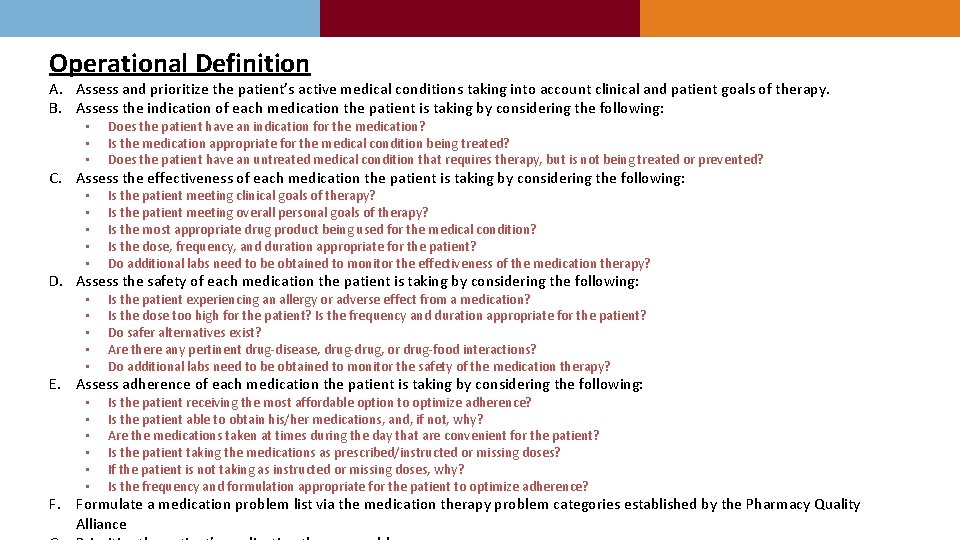
Operational Definition A. Assess and prioritize the patient’s active medical conditions taking into account clinical and patient goals of therapy. B. Assess the indication of each medication the patient is taking by considering the following: • • • Does the patient have an indication for the medication? Is the medication appropriate for the medical condition being treated? Does the patient have an untreated medical condition that requires therapy, but is not being treated or prevented? • • • Is the patient meeting clinical goals of therapy? Is the patient meeting overall personal goals of therapy? Is the most appropriate drug product being used for the medical condition? Is the dose, frequency, and duration appropriate for the patient? Do additional labs need to be obtained to monitor the effectiveness of the medication therapy? • • • Is the patient experiencing an allergy or adverse effect from a medication? Is the dose too high for the patient? Is the frequency and duration appropriate for the patient? Do safer alternatives exist? Are there any pertinent drug-disease, drug-drug, or drug-food interactions? Do additional labs need to be obtained to monitor the safety of the medication therapy? • • • Is the patient receiving the most affordable option to optimize adherence? Is the patient able to obtain his/her medications, and, if not, why? Are the medications taken at times during the day that are convenient for the patient? Is the patient taking the medications as prescribed/instructed or missing doses? If the patient is not taking as instructed or missing doses, why? Is the frequency and formulation appropriate for the patient to optimize adherence? C. Assess the effectiveness of each medication the patient is taking by considering the following: D. Assess the safety of each medication the patient is taking by considering the following: E. Assess adherence of each medication the patient is taking by considering the following: F. Formulate a medication problem list via the medication therapy problem categories established by the Pharmacy Quality Alliance
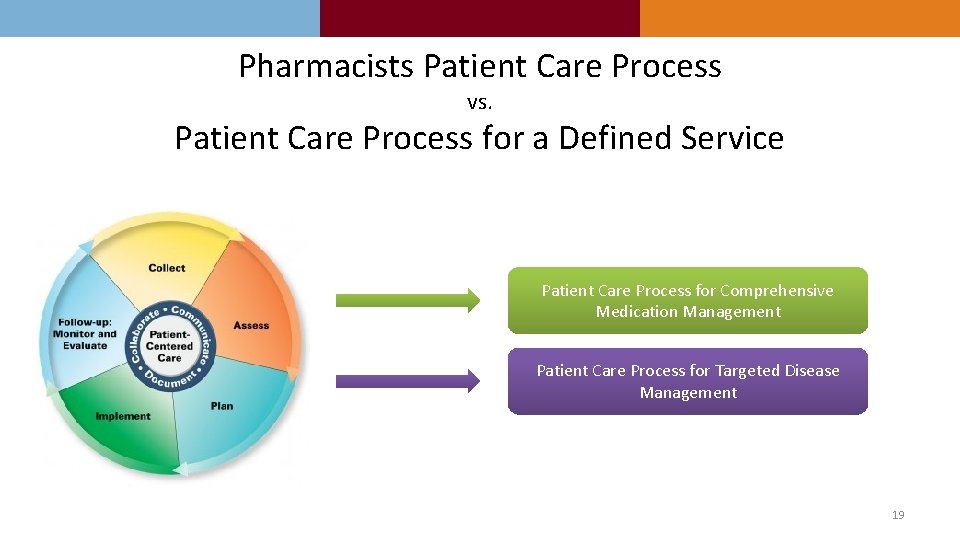
Pharmacists Patient Care Process vs. Patient Care Process for a Defined Service Patient Care Process for Comprehensive Medication Management Patient Care Process for Targeted Disease Management 19
As a physician leader, I know that team-based care is the most effective way to improve patient health and also manage costs. To function as the high performing team our patients need, it is essential that team members understand the role and care processes for each discipline on the team. This allows team members to share responsibilities effectively, efficiently and safely. Having confidence that the pharmacist on my team will consistently apply this standardized care process, regardless of who that pharmacist is, I am assured their work will align with our team goals. I can then give them the independence they need to do their job while I focus on the role I am expected to bring to the team. Mark Loafman, MD Chair, Family and Community Medicine Cook County Health and Hospital System 20

Relationship of CMM on Primary Care Provider Perception of Impact on Burnout and Joy in Practice
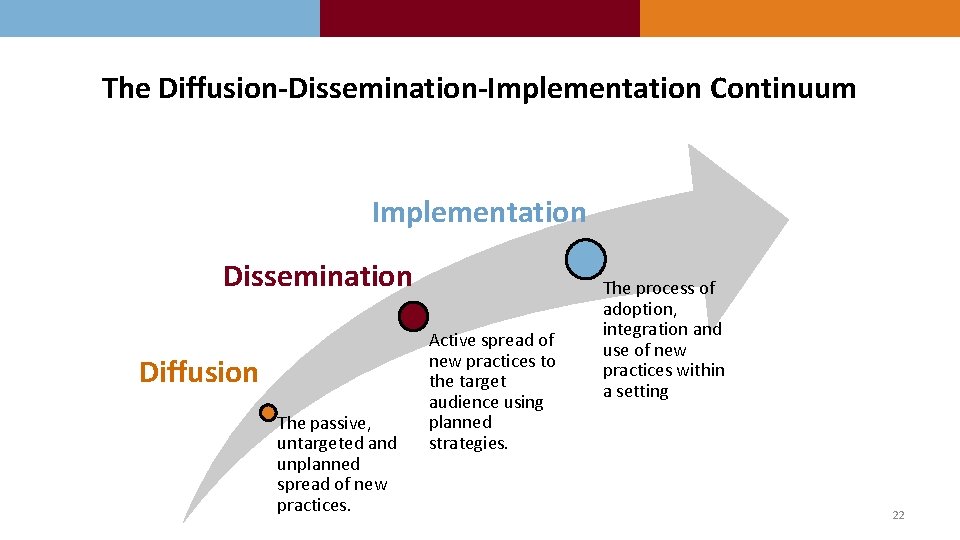
The Diffusion-Dissemination-Implementation Continuum Implementation Dissemination Diffusion The passive, untargeted and unplanned spread of new practices. Active spread of new practices to the target audience using planned strategies. The process of adoption, integration and use of new practices within a setting 22
How can we accelerate the dissemination and adoption of a consistent approach to the delivery of CMM in the context of the PPCP? Current Dissemination Strategies Additional Venues for Dissemination ACCP communications channels ACCP Team-Based Practice Forum “Pharmacy Forward” podcast Web-based CMM Implementation Platform hosted by UNC • “Intro to CMM” online course hosted by UMN • Foundational component of the A 3 Collaborative • JCPP organizations • • – Social media – Practitioner programs • Professional education – Students – Preceptors • Residency education • Other workforce development strategies 23
A special thank you to ACCP and the ACCP Foundation
- Slides: 24