
Establish Effective Animal Identification Medication Records and Withdrawal
Establish Effective Animal Identification, Medication Records, and Withdrawal Time Good Production Practice #6 Assuring Quality Care for Animals go. osu. edu/AQCA
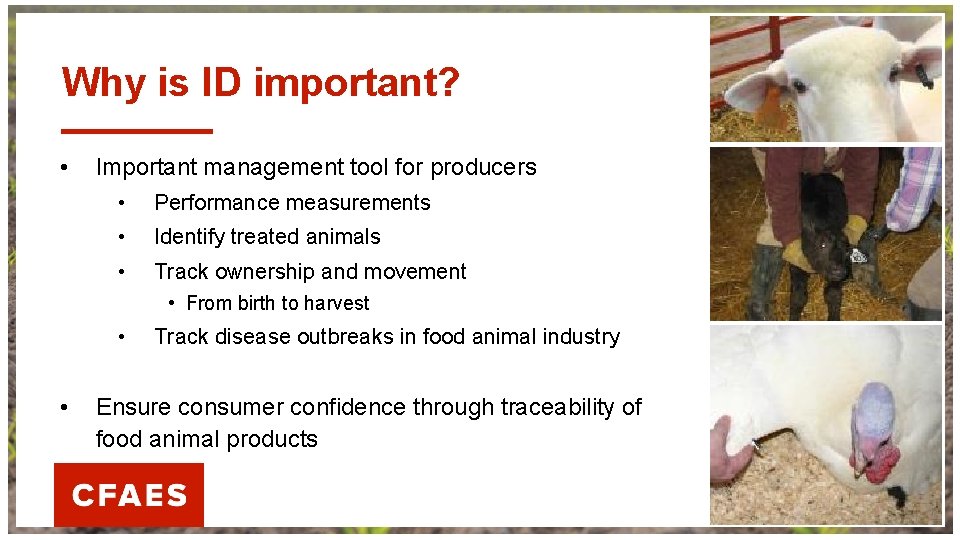
Why is ID important? • Important management tool for producers • Performance measurements • Identify treated animals • Track ownership and movement • From birth to harvest • • Track disease outbreaks in food animal industry Ensure consumer confidence through traceability of food animal products

Identification Methods • Freeze Branding • • Preferred method No damage to hide and less stress to animal • Hot Branding • • Typically used as a farm or group ID Damage to hide and decreases value
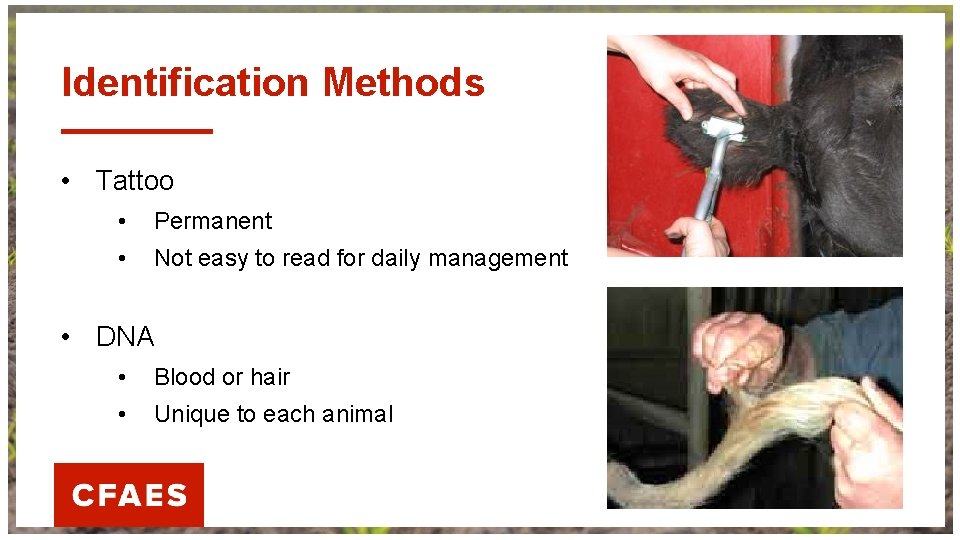
Identification Methods • Tattoo • Permanent • Not easy to read for daily management • DNA • Blood or hair • Unique to each animal
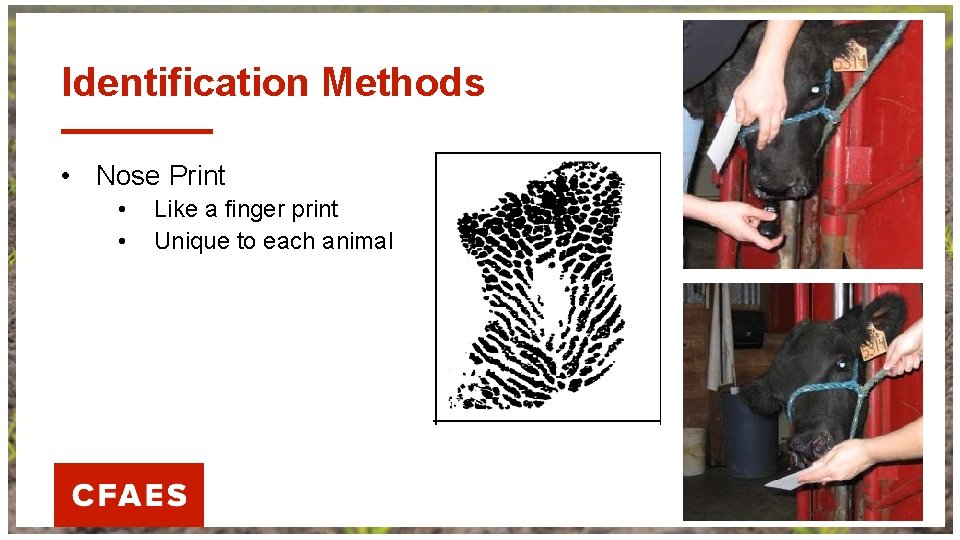
Identification Methods • Nose Print • • Like a finger print Unique to each animal
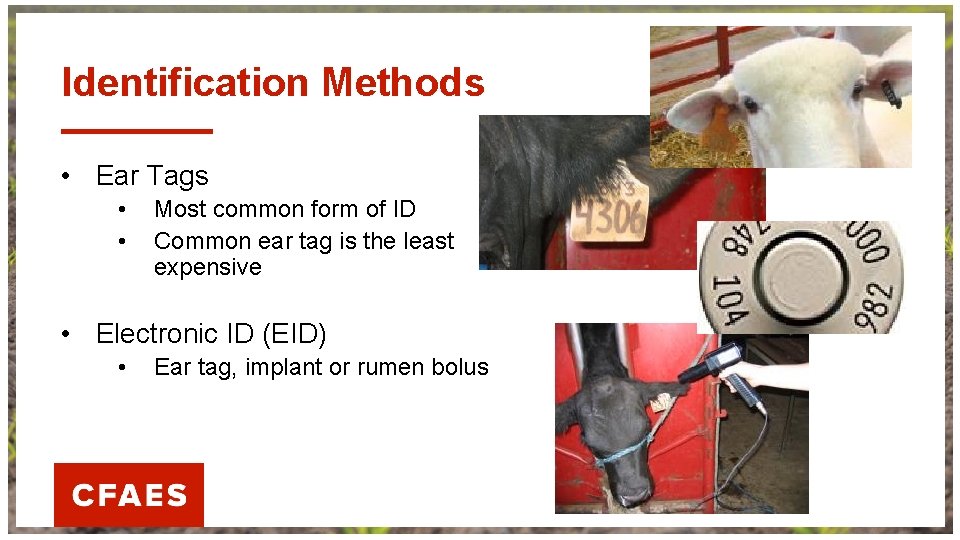
Identification Methods • Ear Tags • • Most common form of ID Common ear tag is the least expensive • Electronic ID (EID) • Ear tag, implant or rumen bolus
National ID Program • Not required at this time • Producers encouraged to register for a premise ID with state department of agriculture • www. ohioanimalid. com • Other Resources: • www. usaip. info • http: //animalid. aphis. usda. gov/nais
Premises ID Program • Process of registering a location where livestock are raised, housed or pass through during commerce.
Premises ID Program • During natural or animal disease disasters a PIN will support: • Faster trace back capabilities • Faster determination of the extent of the outbreak • Faster implementation of disease control measures • Business planning to diminish effects of outbreak • Better communication to producers in areas affected

Scrapie ID Program • What animals must have a scrapie ID tag? • • ALL intact sheep and goats ALL sheep and goats over 18 months (including wethers) • Purchased outside of Ohio • Enter Ohio and used for exhibition or breeding purposes • Records must be kept for 5 years including: • Name and address of breeder, and • Buyer
Scrapie Identification • What is an official USDA Scrapie ID? • USDA provided ear tags • USDA approved ear tags • USDA assigned tattoos • Registration tattoos/microchips when accompanied by a registration certificate • Scrapie Certification Program approved ID
Knowledge Check!
Why is animal ID important? (Select all that apply) • • • Performance measurements Identify treated animals Track ownership and movement Track disease outbreaks in food animal industry Ensure consumer confidence Answer: All of the above
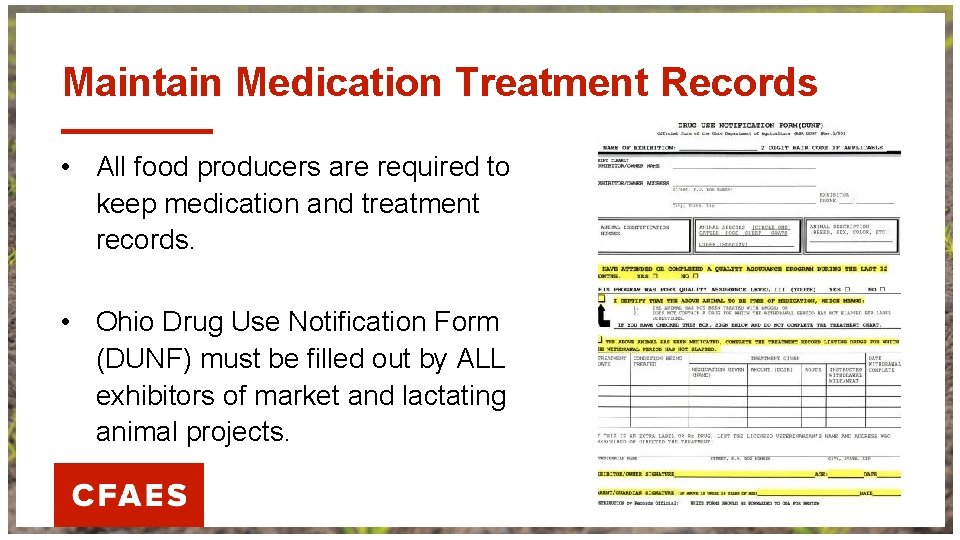
Maintain Medication Treatment Records • All food producers are required to keep medication and treatment records. • Ohio Drug Use Notification Form (DUNF) must be filled out by ALL exhibitors of market and lactating animal projects.
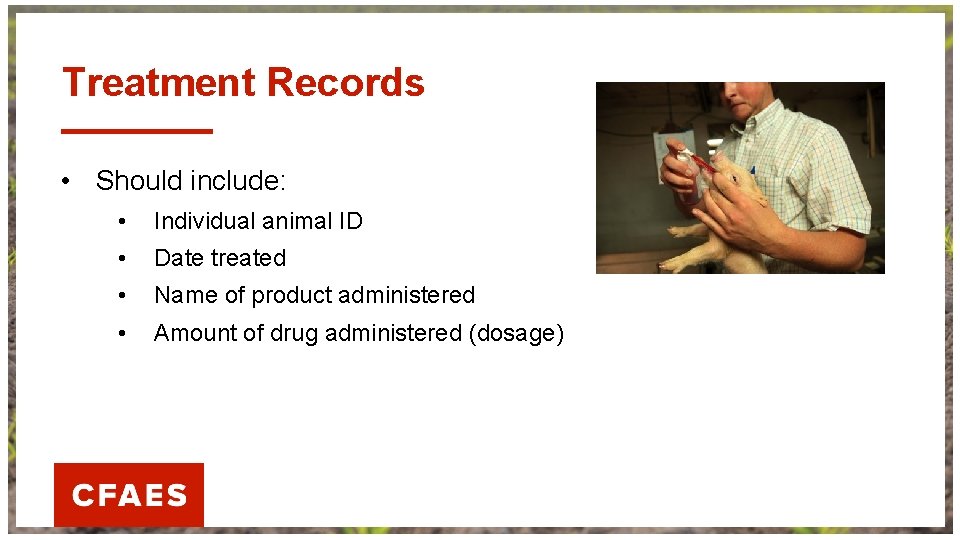
Treatment Records • Should include: • Individual animal ID • Date treated • Name of product administered • Amount of drug administered (dosage)
Treatment Records • Should include: • Route and location of administration • Withdrawal period • Earliest date animal(s) will have cleared the withdrawal period • Identity of the person who administered
Treatment Records • Can include other important information: • Condition being treated • Weight of animal • Product lot/serial number • Results, comments • Look at species record books and quality assurance programs for treatment record options
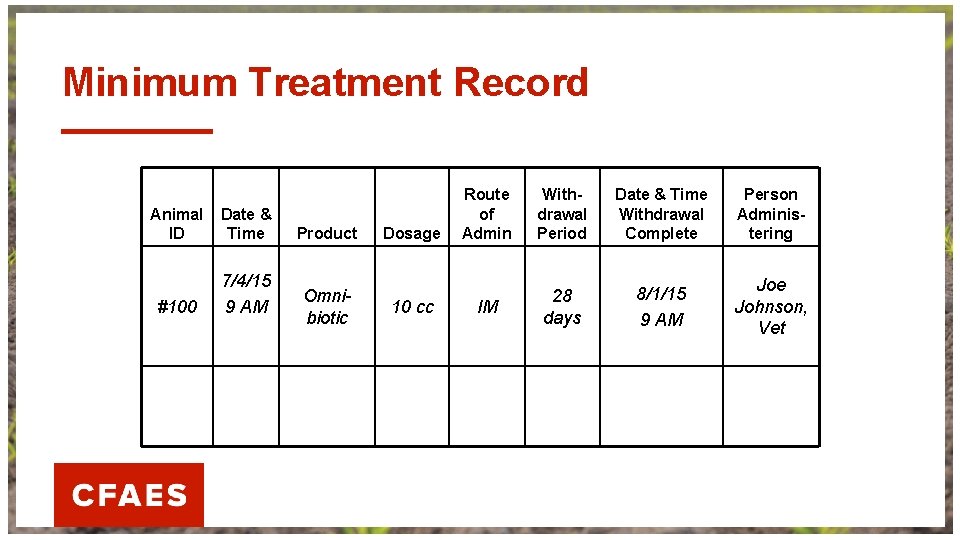
Minimum Treatment Record Animal ID Date & Time #100 7/4/15 9 AM Product Omnibiotic Dosage 10 cc Route of Admin Withdrawal Period Date & Time Withdrawal Complete Person Administering IM 28 days 8/1/15 9 AM Joe Johnson, Vet
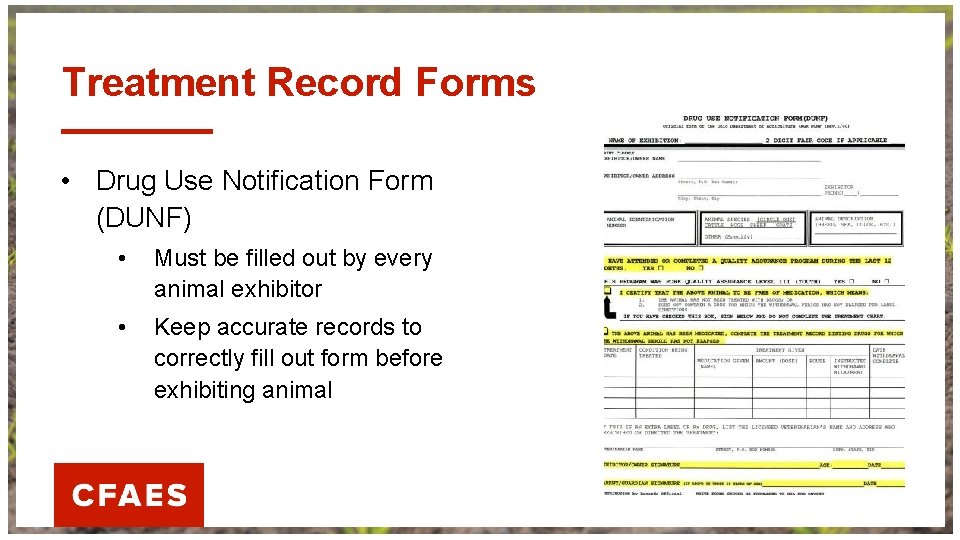
Treatment Record Forms • Drug Use Notification Form (DUNF) • Must be filled out by every animal exhibitor • Keep accurate records to correctly fill out form before exhibiting animal
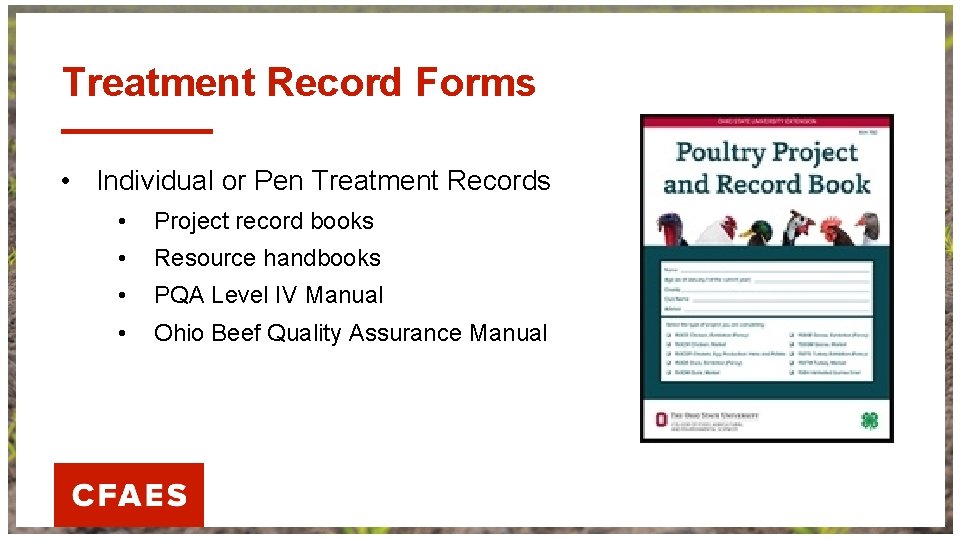
Treatment Record Forms • Individual or Pen Treatment Records • Project record books • Resource handbooks • PQA Level IV Manual • Ohio Beef Quality Assurance Manual
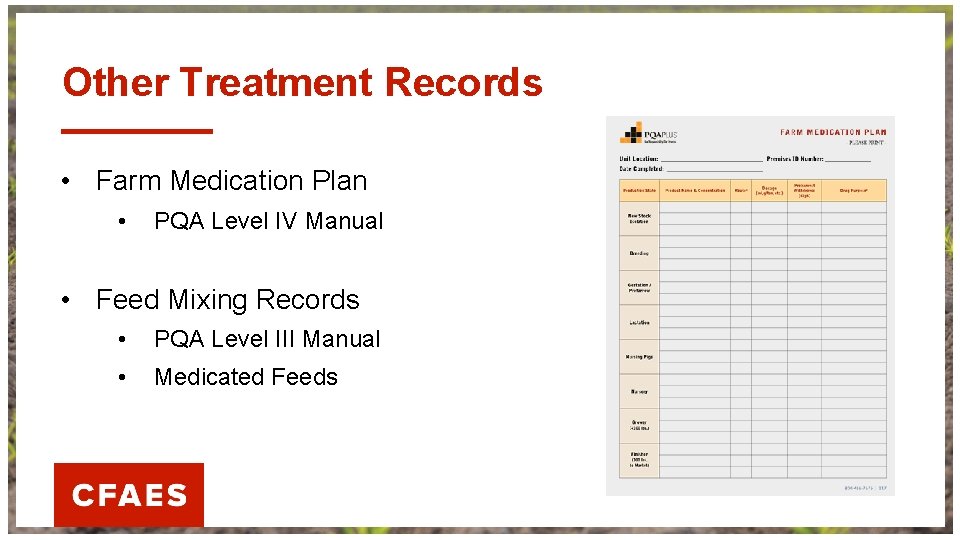
Other Treatment Records • Farm Medication Plan • PQA Level IV Manual • Feed Mixing Records • PQA Level III Manual • Medicated Feeds
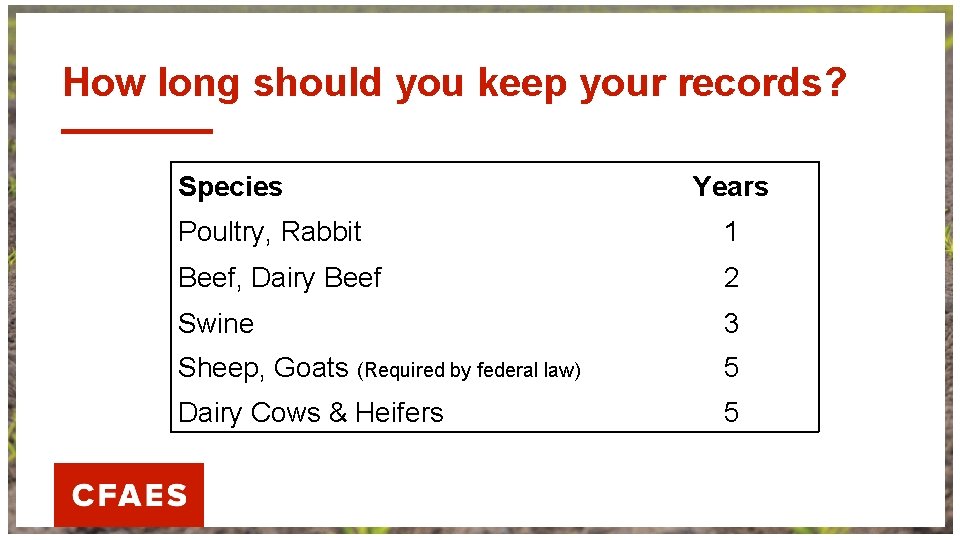
How long should you keep your records? Species Years Poultry, Rabbit 1 Beef, Dairy Beef 2 Swine 3 Sheep, Goats (Required by federal law) 5 Dairy Cows & Heifers 5
Knowledge Check!
True or False: Ohio Drug Use Notification Form (DUNF) must be filled out by ALL exhibitors of market but NOT lactating animal projects Answer: FALSE Why?
Animal Tracing • An animal tracing movement record includes: • • Animal’s or group’s identification number PIN of sending and receiving premises Date of movement Number of animals moved and reason for movement • Maintain records for recommended time depending on species and make available to animal health officials for inspection
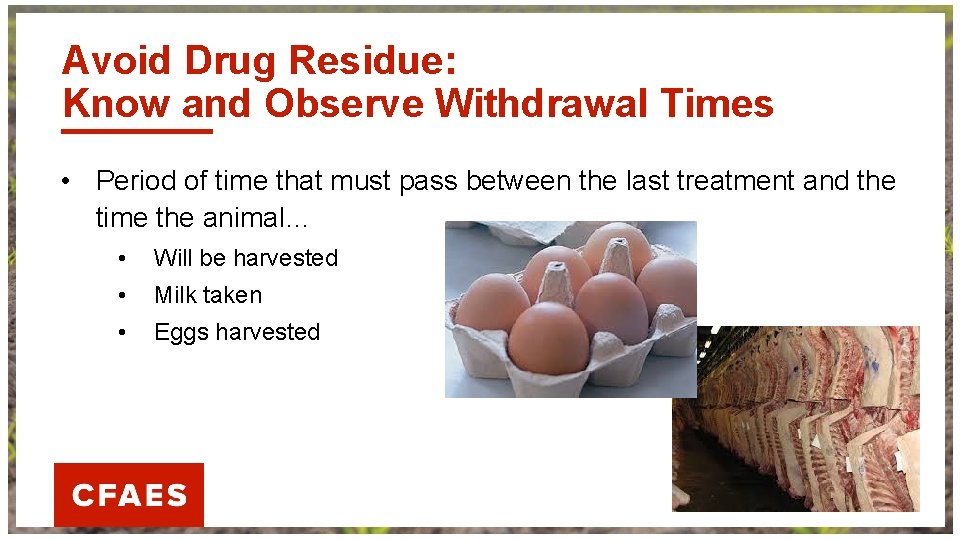
Avoid Drug Residue: Know and Observe Withdrawal Times • Period of time that must pass between the last treatment and the time the animal… • Will be harvested • Milk taken • Eggs harvested
Avoid Drug Residue Violations • Do NOT market animals for food until the withdrawal time is complete • Only use medication approved for the species being treated • Do exactly as the label directs or as prescribed by the veterinarian • Consult veterinarian with questions and concerns • If in doubt, conduct a drug residue test
Knowledge Check!
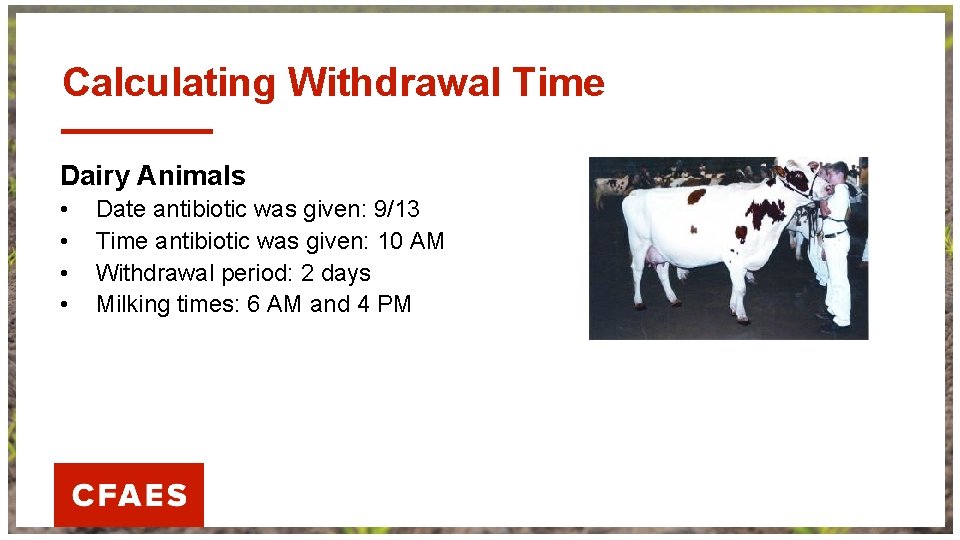
Calculating Withdrawal Time Dairy Animals • • Date antibiotic was given: 9/13 Time antibiotic was given: 10 AM Withdrawal period: 2 days Milking times: 6 AM and 4 PM

Calculating Withdrawal Time Dairy Animals • Date withdrawal is complete: • • 9/15 at 10 AM Date & time milk can be put in bulk tank: • 9/15 at 4 PM
Food Safety – Regulatory Agencies • United State Department of Agriculture (USDA) • Federal government agency that enforces regulations related to agriculture • • Food products and safety Delivery of products to consumer
Food Safety – Regulatory Agencies • Food and Drug Administration (FDA) • Responsible for regulating medicated animal feed and most animal health products • Approves health products • Sets tolerance levels of medications • Approves route of administration of product
Food Safety – Regulatory Agencies • Environmental Protection Agency (EPA) • Approves and regulates pesticides • Determines withdrawal time of pesticides for livestock • Regulations of physical and chemical impact of livestock production on the environment
Food Safety – Regulatory Agencies • Food Safety and Inspection Service (FSIS) • • • Division of USDA Inspects all food products from animals in federally inspected packing plants and food processing facilities Examines food processing facility sanitation (HACCP)
Food Safety – Regulatory Agencies • • HACCP – Hazard Analysis Critical Control Point plans are set in place to protect food animal products during processing from: • Chemical, • Biological, and • Physical Hazards Each food operation has a HACCP plan or something equivalent that helps to assure consumer protection
- Slides: 35