
ESSNet Pilot Web Scraping for Job Vacancy Statistics
ESSNet Pilot: Web Scraping for Job Vacancy Statistics
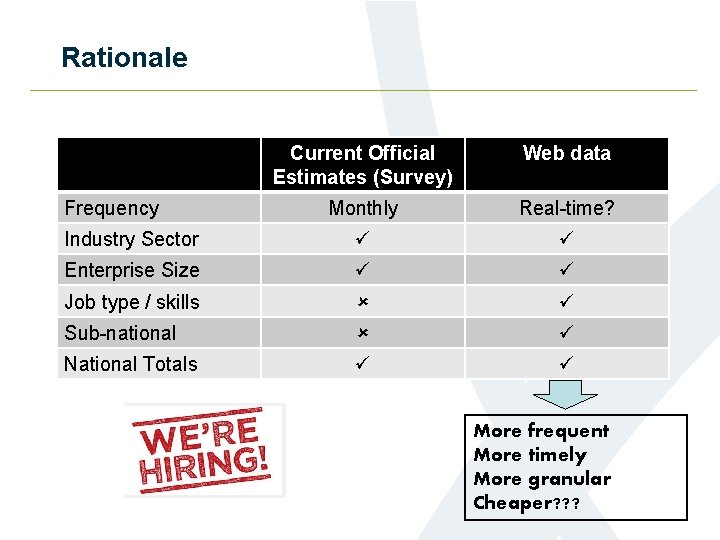
Rationale Current Official Estimates (Survey) Web data Monthly Real-time? Industry Sector Enterprise Size Job type / skills Sub-national National Totals Frequency More frequent More timely More granular Cheaper? ? ?
Participants (SGA-1) • • • United Kingdom (lead) Germany Sweden Slovenia Italy Greece
Broad Approach • Understand the landscape of web-based job vacancy data in each country • Focus first on job portals, later explore enterprise websites • Try to replicate existing outputs, then investigate opportunities to produce new types of output. • Develop specific approaches that are appropriate to the circumstances in each country • Develop common approaches where possible
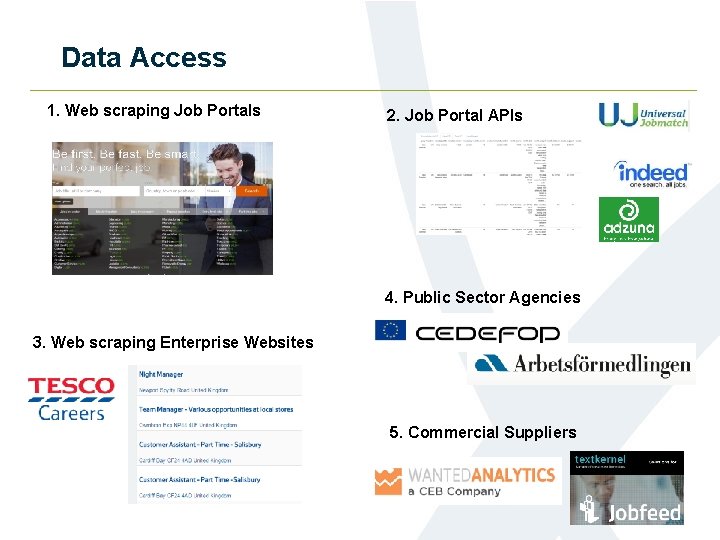
Data Access 1. Web scraping Job Portals 2. Job Portal APIs 4. Public Sector Agencies 3. Web scraping Enterprise Websites 5. Commercial Suppliers
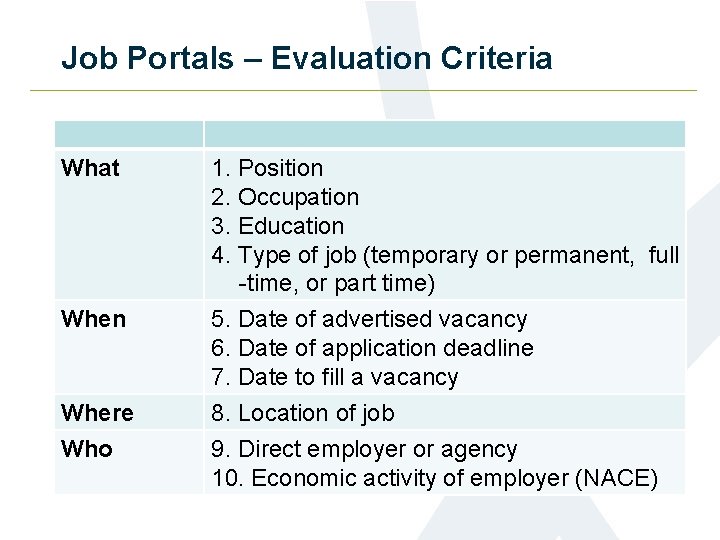
Job Portals – Evaluation Criteria What 1. Position 2. Occupation 3. Education 4. Type of job (temporary or permanent, full -time, or part time) When 5. Date of advertised vacancy 6. Date of application deadline 7. Date to fill a vacancy Where Who 8. Location of job 9. Direct employer or agency 10. Economic activity of employer (NACE)
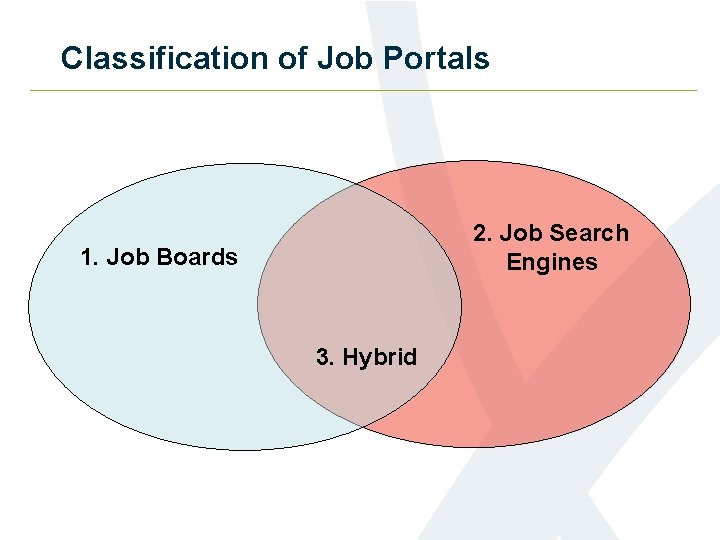
Classification of Job Portals 2. Job Search Engines 1. Job Boards 3. Hybrid
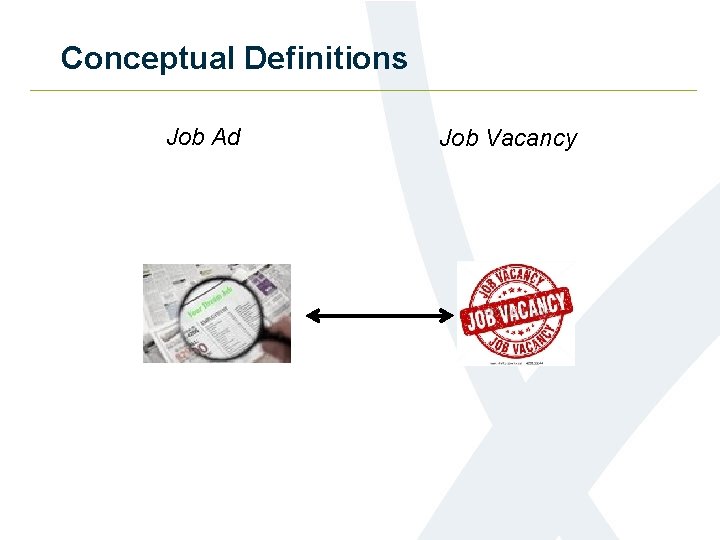
Conceptual Definitions Job Ad Job Vacancy
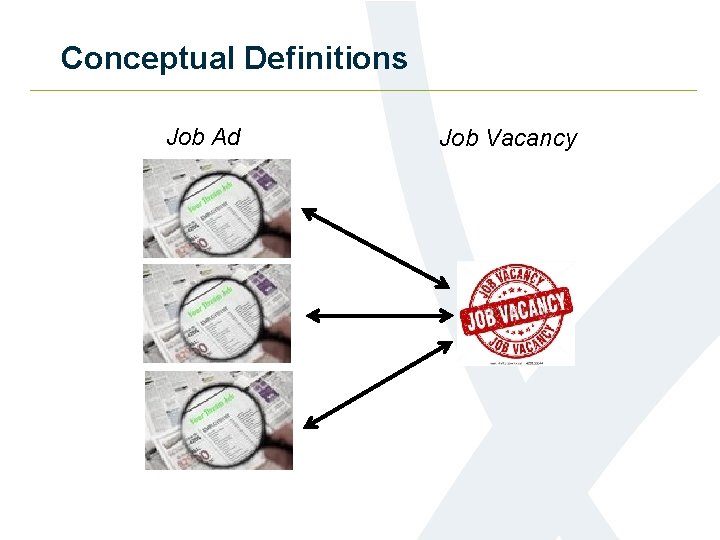
Conceptual Definitions Job Ad Job Vacancy
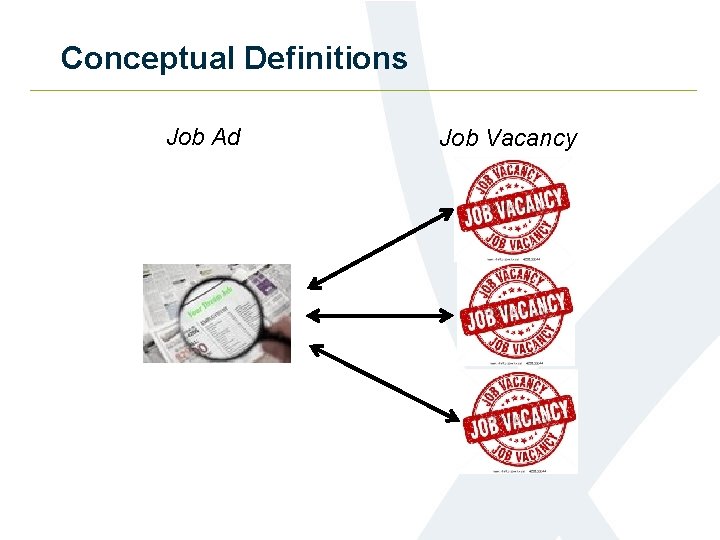
Conceptual Definitions Job Ad Job Vacancy
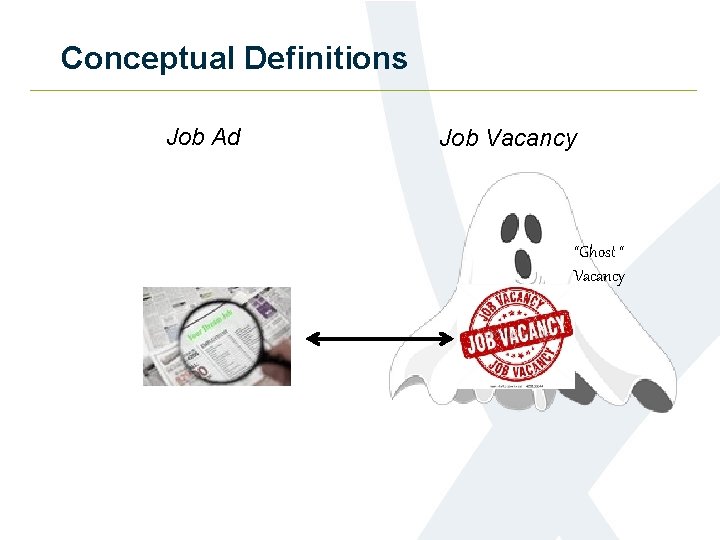
Conceptual Definitions Job Ad Job Vacancy “Ghost “ Vacancy
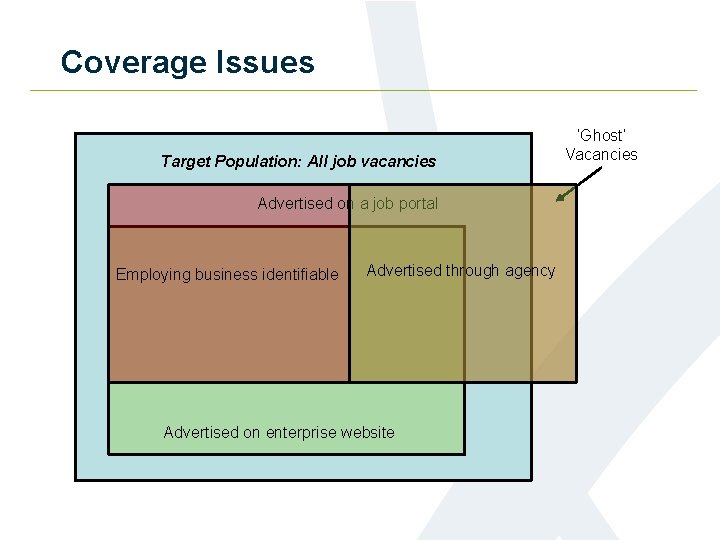
Coverage Issues Target Population: All job vacancies Advertised on a job portal Employing business identifiable Advertised through agency Advertised on enterprise website ‘Ghost’ Vacancies
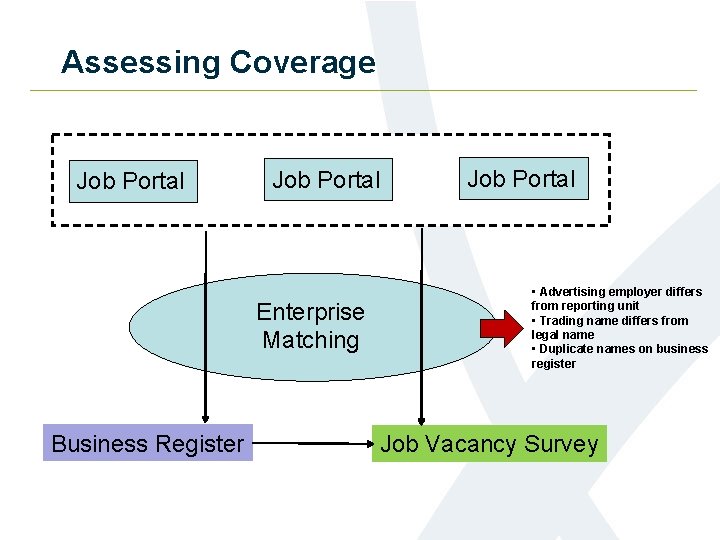
Assessing Coverage Job Portal Enterprise Matching Business Register Job Portal • Advertising employer differs from reporting unit • Trading name differs from legal name • Duplicate names on business register Job Vacancy Survey
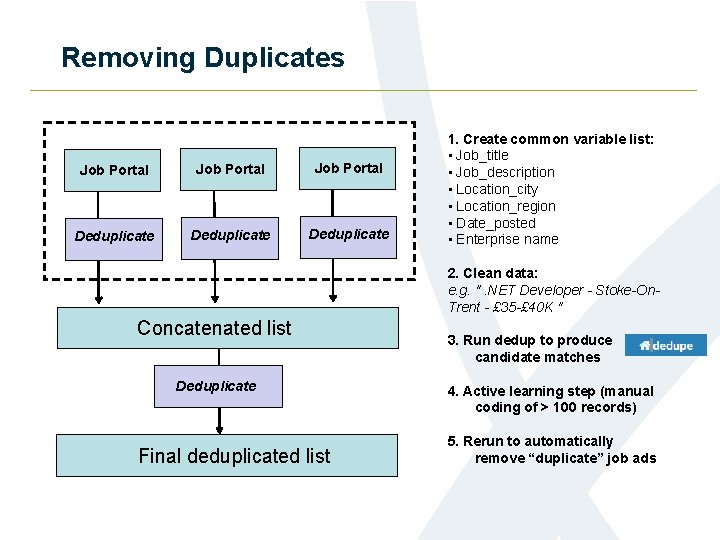
Removing Duplicates Job Portal Deduplicate 1. Create common variable list: • Job_title • Job_description • Location_city • Location_region • Date_posted • Enterprise name 2. Clean data: e. g. ". NET Developer - Stoke-On. Trent - £ 35 -£ 40 K " Concatenated list Deduplicate Final deduplicated list 3. Run dedup to produce candidate matches 4. Active learning step (manual coding of > 100 records) 5. Rerun to automatically remove “duplicate” job ads
Conclusion • Job portal data is very rich, but complex and messy • Difficult to align to established statistical concepts • Need to understand coverage issues and how to tackle them • Making progress but a long way to go.
Future Steps • Produce measures of job portal coverage • Explore approaches for enhancing coverage (including web scraping enterprise websites) • Develop methods for combining vacancy survey and job ads from the web • Develop methods for feature extraction and coding/classifying textual data (to enrich existing survey data) • Explore other uses of on-line job vacancy data
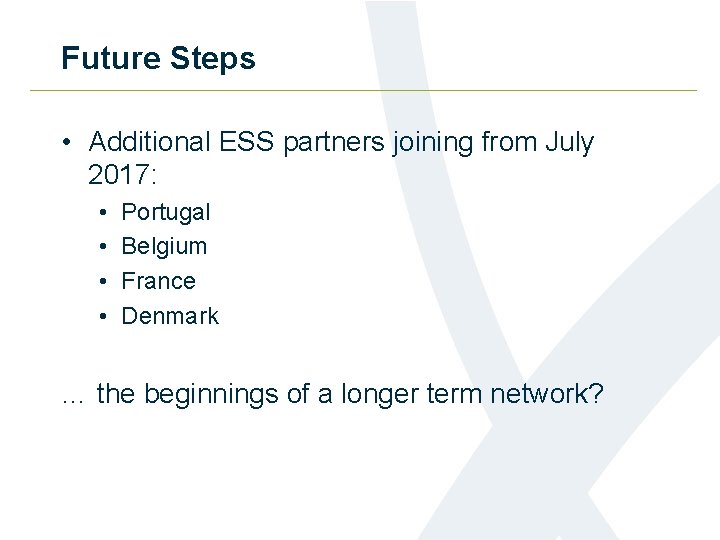
Future Steps • Additional ESS partners joining from July 2017: • • Portugal Belgium France Denmark … the beginnings of a longer term network?

Thank you for your attention!
- Slides: 18