
Essentials of Human Anatomy Special Senses Dr Fadel
- Slides: 11
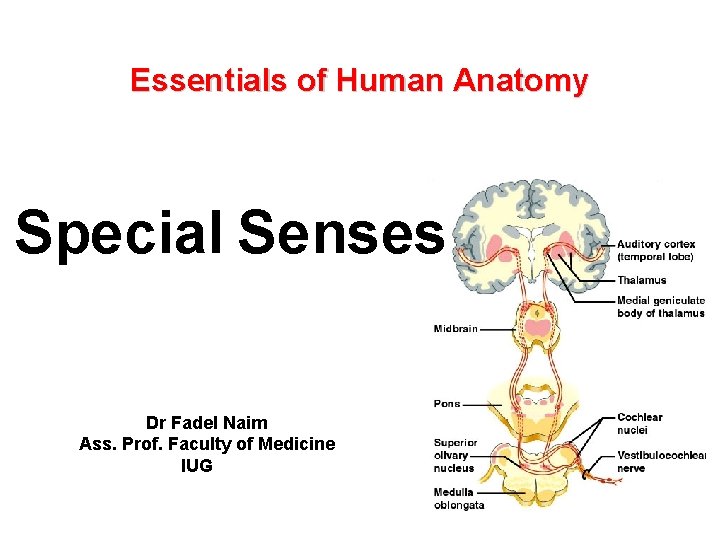
Essentials of Human Anatomy Special Senses Dr Fadel Naim Ass. Prof. Faculty of Medicine IUG
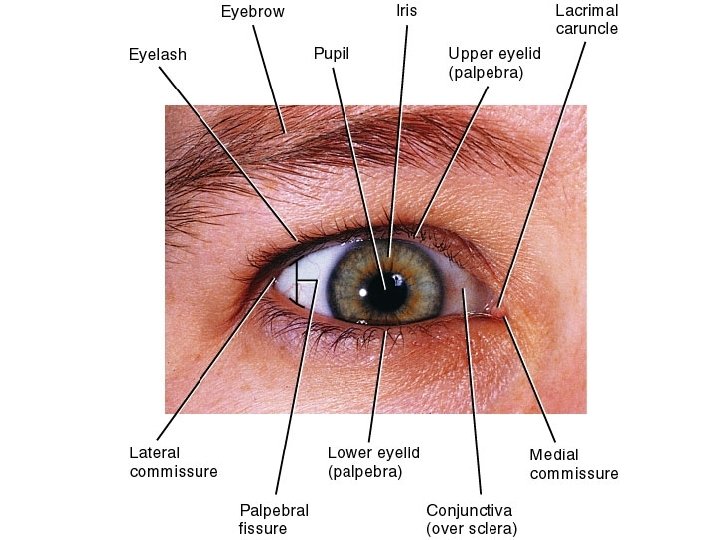
The Sense of Vision • Visual receptors (photoreceptors) in the eyes to detect light, color, and movement. • Accessory structures of the eye. – provide a superficial covering over its anterior exposed surface (conjunctiva) – prevent foreign objects from coming into contact with the eye (eyebrows, eyelashes, and eyelids) – keep the exposed surface moist, clean, and lubricated (lacrimal glands)
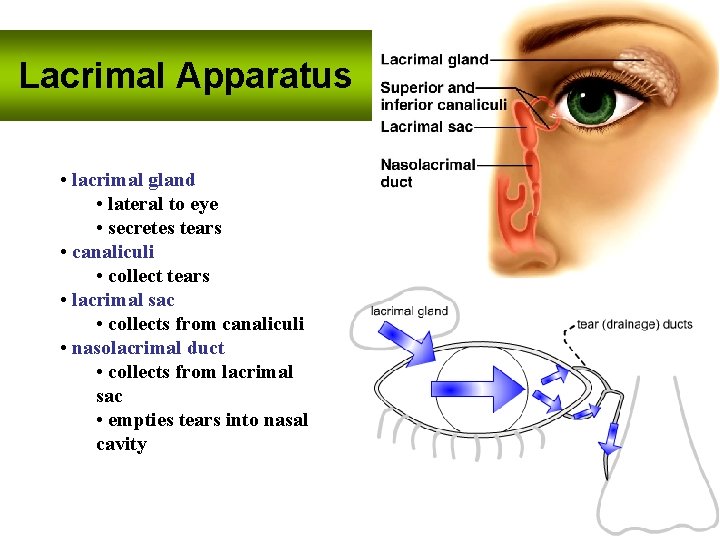
Lacrimal Apparatus • lacrimal gland • lateral to eye • secretes tears • canaliculi • collect tears • lacrimal sac • collects from canaliculi • nasolacrimal duct • collects from lacrimal sac • empties tears into nasal cavity
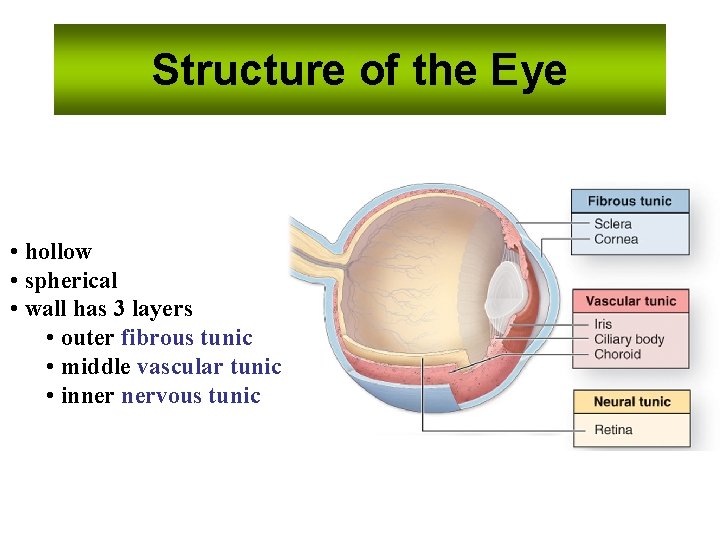
Structure of the Eye • hollow • spherical • wall has 3 layers • outer fibrous tunic • middle vascular tunic • inner nervous tunic
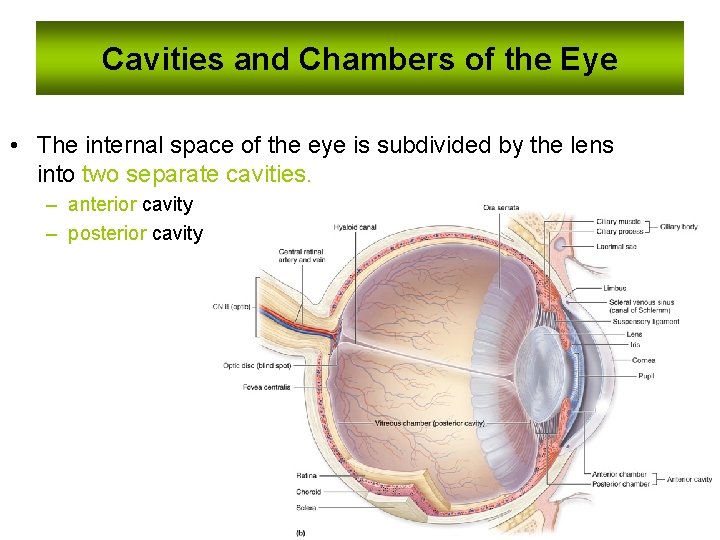
Cavities and Chambers of the Eye • The internal space of the eye is subdivided by the lens into two separate cavities. – anterior cavity – posterior cavity
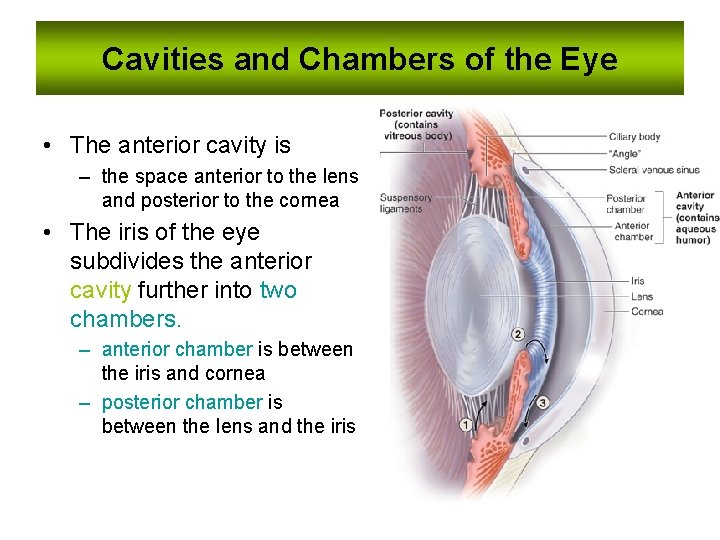
Cavities and Chambers of the Eye • The anterior cavity is – the space anterior to the lens and posterior to the cornea • The iris of the eye subdivides the anterior cavity further into two chambers. – anterior chamber is between the iris and cornea – posterior chamber is between the lens and the iris
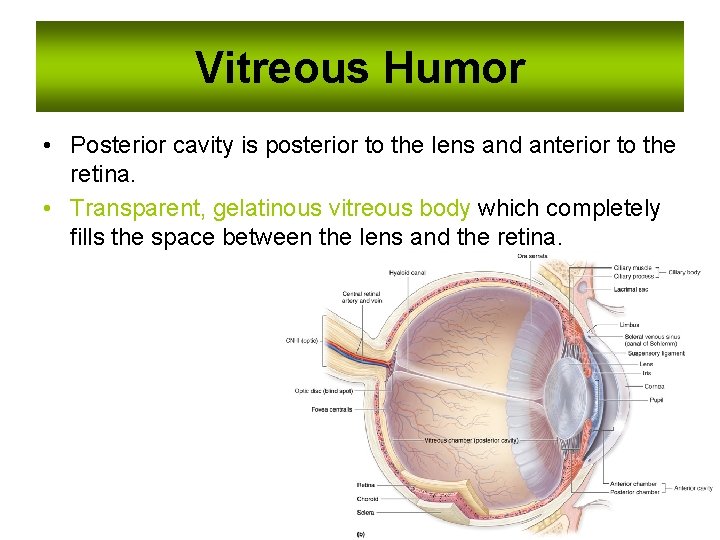
Vitreous Humor • Posterior cavity is posterior to the lens and anterior to the retina. • Transparent, gelatinous vitreous body which completely fills the space between the lens and the retina.
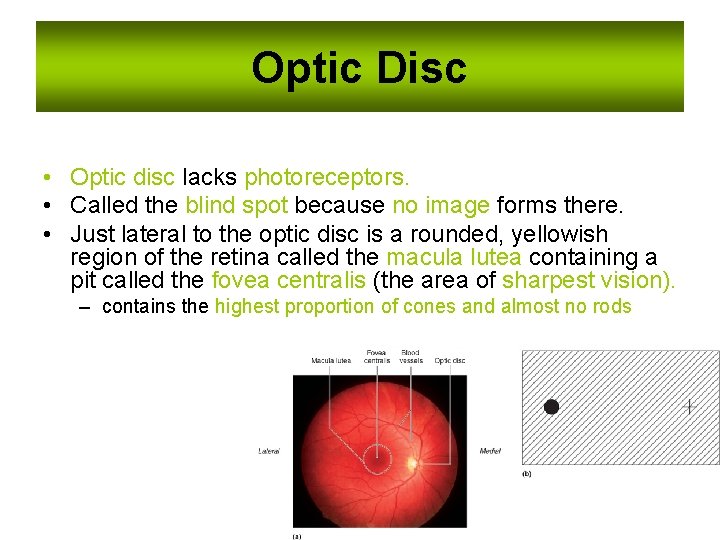
Optic Disc • Optic disc lacks photoreceptors. • Called the blind spot because no image forms there. • Just lateral to the optic disc is a rounded, yellowish region of the retina called the macula lutea containing a pit called the fovea centralis (the area of sharpest vision). – contains the highest proportion of cones and almost no rods
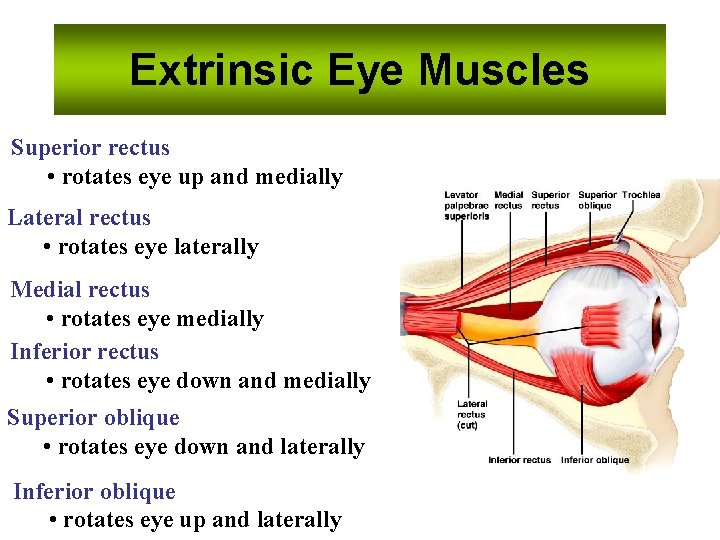
Extrinsic Eye Muscles Superior rectus • rotates eye up and medially Lateral rectus • rotates eye laterally Medial rectus • rotates eye medially Inferior rectus • rotates eye down and medially Superior oblique • rotates eye down and laterally Inferior oblique • rotates eye up and laterally
THE END