
Essentials Of Fire Fighting Seventh Edition Chapter 2













- Slides: 54
Essentials Of Fire Fighting Seventh Edition Chapter 2 Communications
Learning Objective 1 Explain the procedures for receiving nonemergency calls. 2– 1
Examples Of Nonemergency Calls Inquiries Requests for assistance Personal calls 2– 2
Answering Nonemergency Calls Answer calls promptly Be pleasant Identify department, station, unit, yourself Be prepared to record messages accurately • • • Time Date Name and telephone number of the caller Message Your name 2– 3 (Cont. )
Answering Nonemergency Calls Never leave line open or caller on hold for extended period of time Post message or deliver it promptly If you cannot answer caller’s question • Refer them to someone who can • Follow up End calls courteously 2– 4
Angry Or Upset Caller Remain calm and courteous Never become confrontational Be pleasant Take necessary information Refer caller to appropriate officer or division 2– 5
REVIEW QUESTION What guidelines should be followed when receiving nonemergency calls? 2– 6
DISCUSSION QUESTION You receive a call from an upset citizen. The citizen is yelling and using foul language because the individual believes that the response time for a recent emergency was slow. How should you respond to the call? 2– 7
Learning Objective 2 Describe the types of communications systems and equipment used to receive and process emergency calls. 2– 8
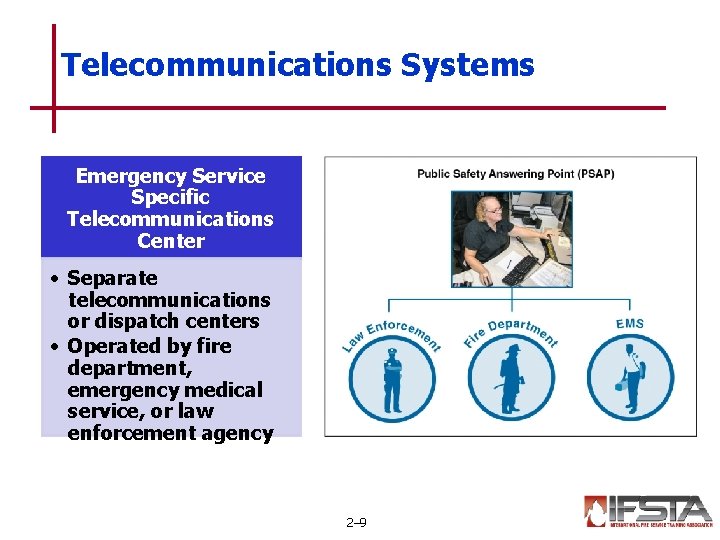
Telecommunications Systems Emergency Service Specific Telecommunications Center • Separate telecommunications or dispatch centers • Operated by fire department, emergency medical service, or law enforcement agency 2– 9
Enhanced 9 -1 -1 (E-9 -1 -1) Systems Combine telephone and computer equipment including computer-aided dispatch Provides dispatcher with information about the caller, location, and address Modern 9 -1 -1 capabilities include text messaging and smartphone apps 2– 10
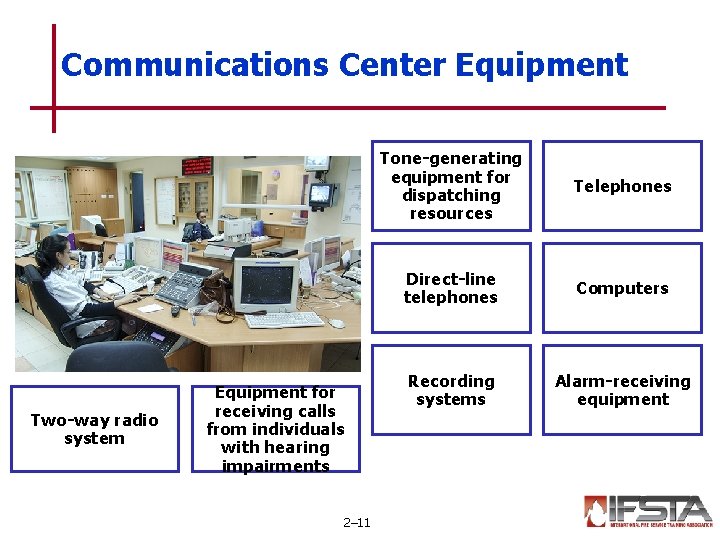
Communications Center Equipment Two-way radio system Equipment for receiving calls from individuals with hearing impairments 2– 11 Tone-generating equipment for dispatching resources Telephones Direct-line telephones Computers Recording systems Alarm-receiving equipment
REVIEW QUESTION What types of communications systems and equipment are used to receive and process emergency calls? 2– 12
Learning Objective 3 Explain the procedures for receiving and dispatching emergency calls. 2– 13
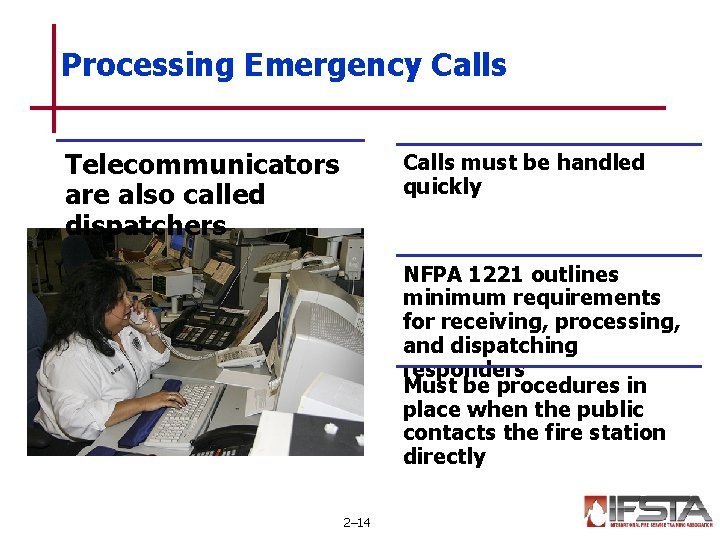
Processing Emergency Calls Telecommunicators are also called dispatchers Calls must be handled quickly NFPA 1221 outlines minimum requirements for receiving, processing, and dispatching responders Must be procedures in place when the public contacts the fire station directly 2– 14
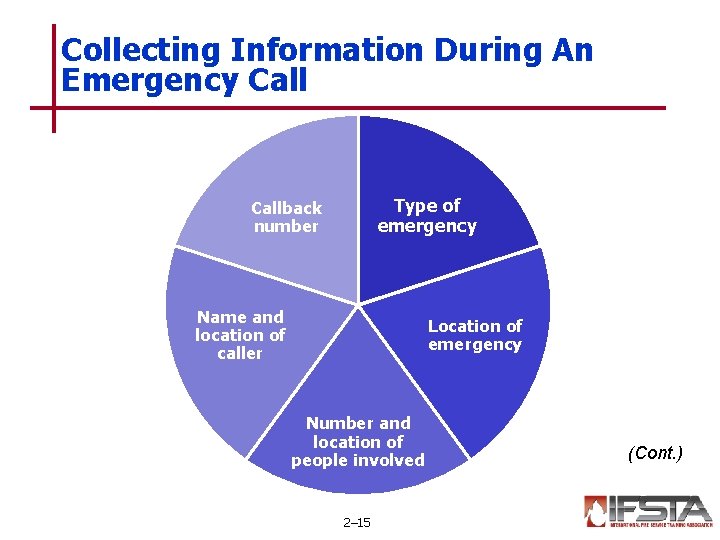
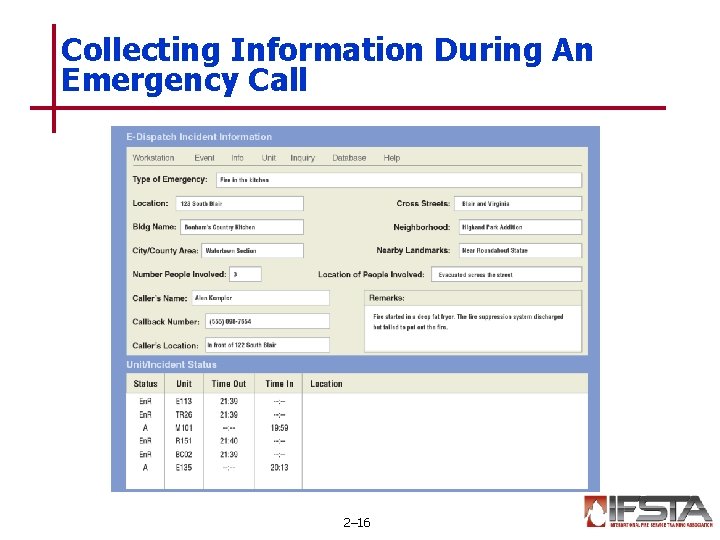
Collecting Information During An Emergency Call Type of emergency Callback number Name and location of caller Location of emergency Number and location of people involved 2– 15 (Cont. )
Collecting Information During An Emergency Call 2– 16
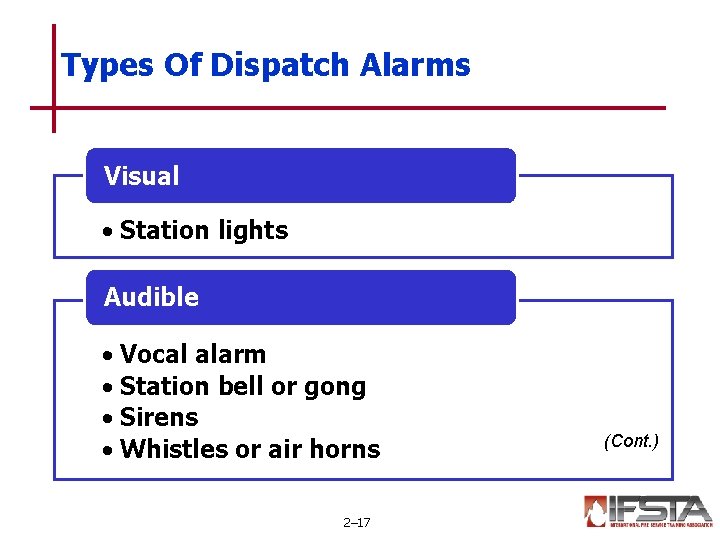
Types Of Dispatch Alarms Visual • Station lights Audible • Vocal alarm • Station bell or gong • Sirens • Whistles or air horns 2– 17 (Cont. )
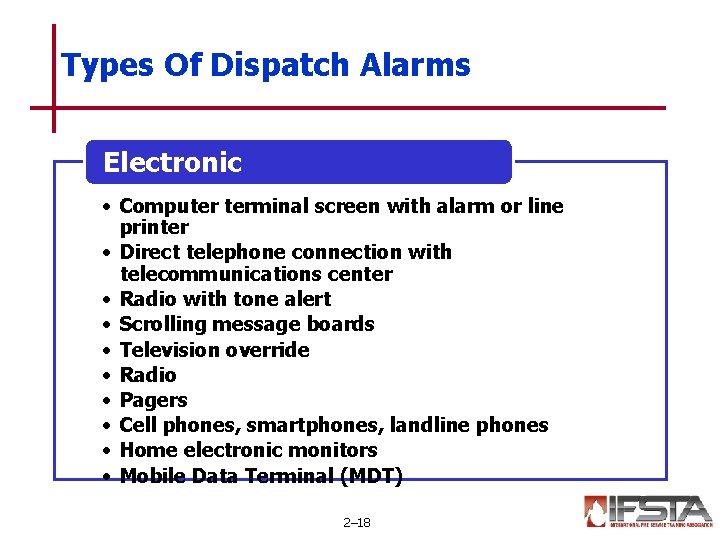
Types Of Dispatch Alarms Electronic • Computer terminal screen with alarm or line printer • Direct telephone connection with telecommunications center • Radio with tone alert • Scrolling message boards • Television override • Radio • Pagers • Cell phones, smartphones, landline phones • Home electronic monitors • Mobile Data Terminal (MDT) 2– 18
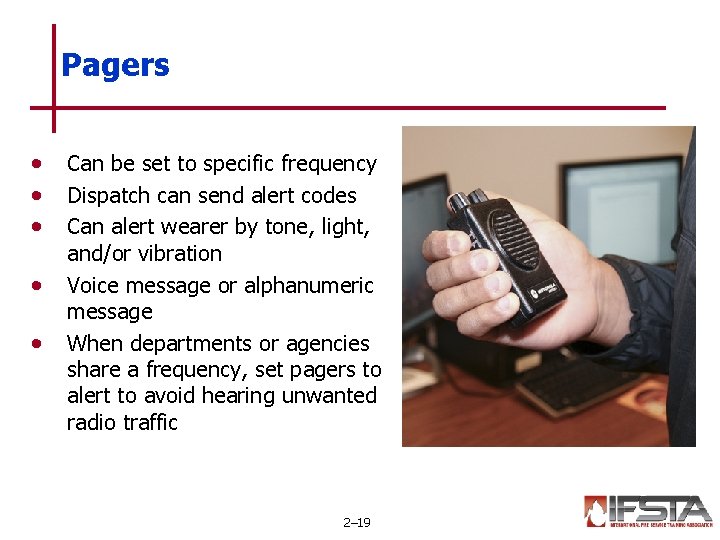
Pagers • • • Can be set to specific frequency Dispatch can send alert codes Can alert wearer by tone, light, and/or vibration Voice message or alphanumeric message When departments or agencies share a frequency, set pagers to alert to avoid hearing unwanted radio traffic 2– 19
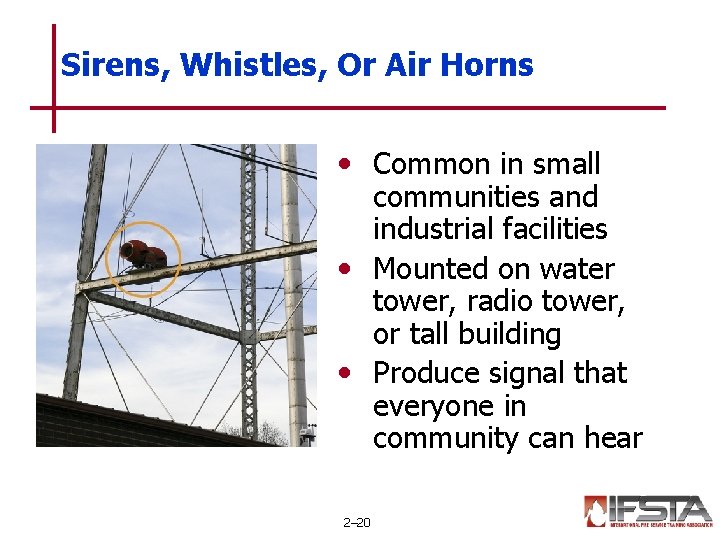
Sirens, Whistles, Or Air Horns • Common in small communities and industrial facilities • Mounted on water tower, radio tower, or tall building • Produce signal that everyone in community can hear 2– 20
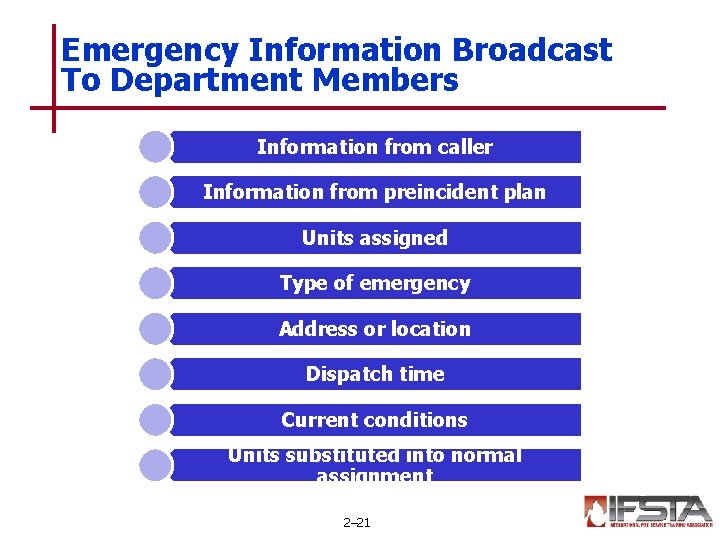
Emergency Information Broadcast To Department Members Information from caller Information from preincident plan Units assigned Type of emergency Address or location Dispatch time Current conditions Units substituted into normal assignment 2– 21
NOTE Firefighters may be able to review preincident information in the apparatus during response. 2– 22
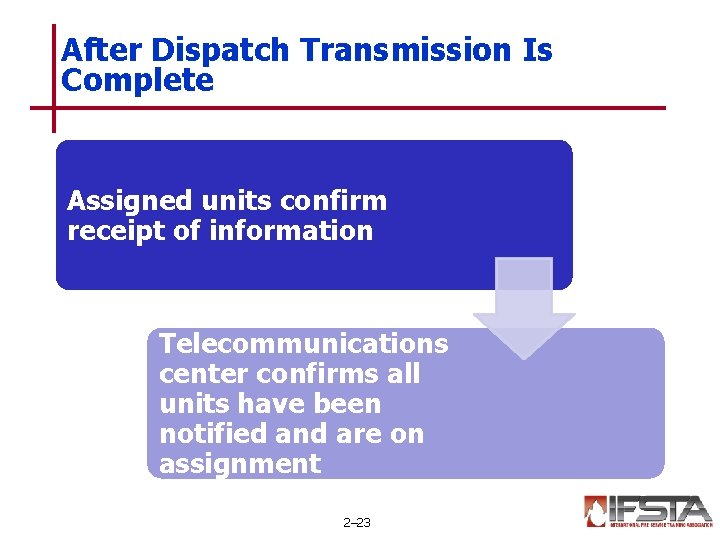
After Dispatch Transmission Is Complete Assigned units confirm receipt of information Telecommunications center confirms all units have been notified and are on assignment 2– 23
REVIEW QUESTION How should emergency calls be received and dispatched? 2– 24
DISCUSSION QUESTION You answer an emergency call about a car accident. The caller is obviously distressed. What information should you focus on obtaining? Why? 2– 25
Learning Objective 4 Describe radio equipment and procedures used for internal fire department communications. 2– 26
Federal Communications Commission (FCC) Regulates all communications in U. S. Issues radio licenses to fire departments that operate radio equipment It is a federal offense to send personal or unauthorized messages over a designated fire department radio channel 2– 27
NOTE In Canada, the Canadian Radio. Television and Telecommunications Commission regulates radio communications. 2– 28
Clear Text Used by most departments Plain English, rather than agency specific codes Standardized emergencyspecific words and phrases 2– 29
Fire Department Radio System Uses Assigned to • Alert units of emergency • Coordinate tactics • Request additional resources • Monitor activities of units and individuals • Facilities • Apparatus • Official vehicles • Personnel must know and be trained in • • • Periodic tests Emergency and nonemergency operations How radio systems work Limitations of radio communications Fixed, mobile, and portable radios 2– 30
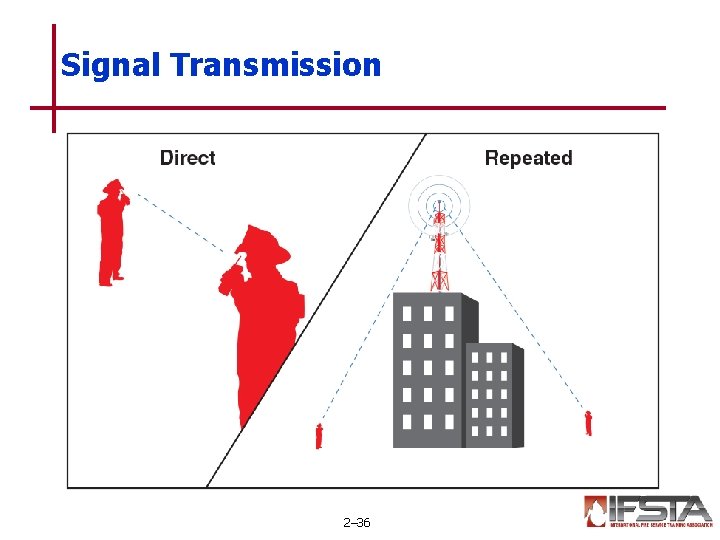
Radio Systems Classified according to location and size Various signal transmission options All feature a number of transmission channels that can be assigned to emergency or nonemergency traffic 2– 31
Base Station Radios In fixed locations Stable, powerful transmitters Interference-resistant receivers Powered by building’s electrical system Usually connected to emergency generator May be connected to alarm notification system 2– 32
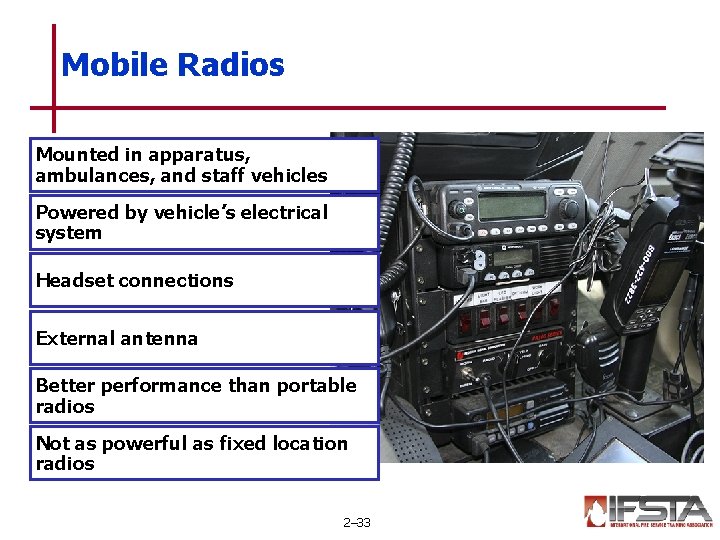
Mobile Radios Mounted in apparatus, ambulances, and staff vehicles Powered by vehicle’s electrical system Headset connections External antenna Better performance than portable radios Not as powerful as fixed location radios 2– 33
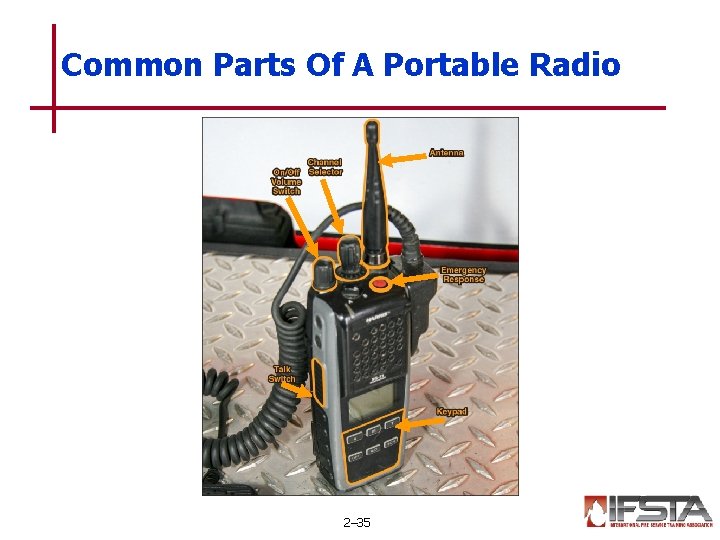
Portable Radios Handheld Less powerful than fixed or mobile radios Powered by rechargeable or replaceable battery packs External antenna Distribution depends on SOPs May fail under typical fireground conditions Must be intrinsically safe for hazardous atmospheres 2– 34
Common Parts Of A Portable Radio 2– 35
Signal Transmission 2– 36
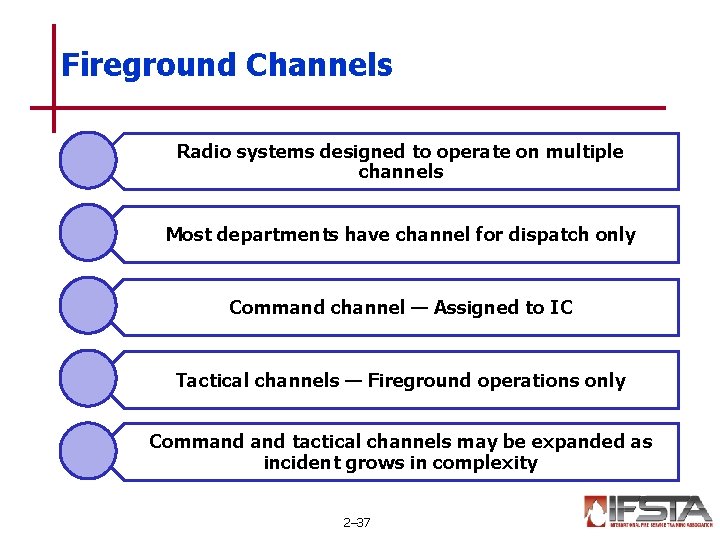
Fireground Channels Radio systems designed to operate on multiple channels Most departments have channel for dispatch only Command channel — Assigned to IC Tactical channels — Fireground operations only Command tactical channels may be expanded as incident grows in complexity 2– 37
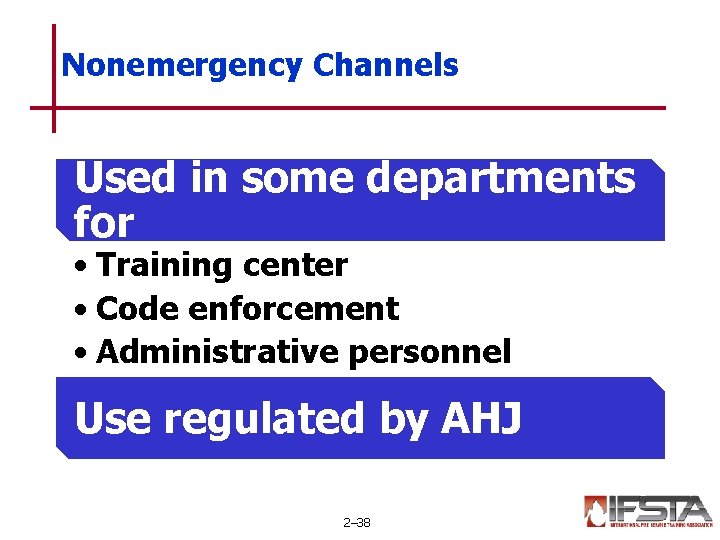
Nonemergency Channels Used in some departments for • Training center • Code enforcement • Administrative personnel Use regulated by AHJ 2– 38
REVIEW QUESTION What types of radio systems are used for internal communications? 2– 39
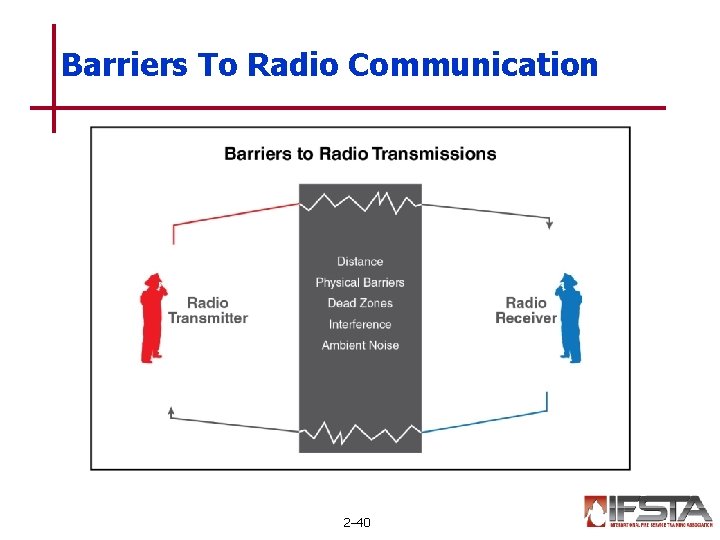
Barriers To Radio Communication 2– 40
REVIEW QUESTION What are some limitations that may impact internal communications? 2– 41
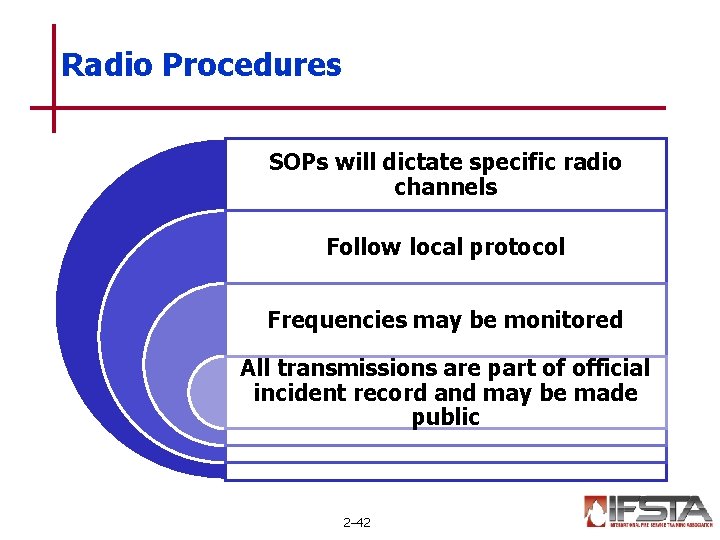
Radio Procedures SOPs will dictate specific radio channels Follow local protocol Frequencies may be monitored All transmissions are part of official incident record and may be made public 2– 42
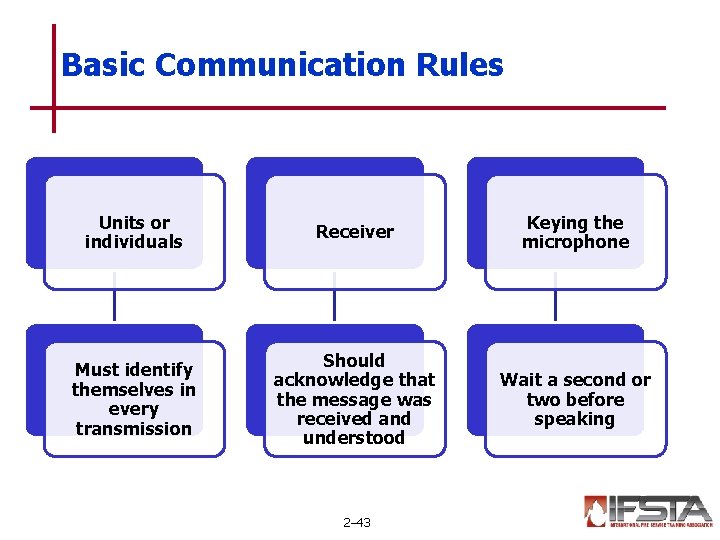
Basic Communication Rules Units or individuals Receiver Keying the microphone Must identify themselves in every transmission Should acknowledge that the message was received and understood Wait a second or two before speaking 2– 43
Radio Communications Best Practices (Cont. ) 2– 44
Radio Communications Best Practices Know what you are going to say before you open the microphone Use moderate of speaking Do not use pauses or verbal fillers (“ah” or “um”) Use moderate expression Avoid excitement or shouting Attempt to pronounce words correctly Use vocal quality that is not too strong or weak (Cont. ) 2– 45
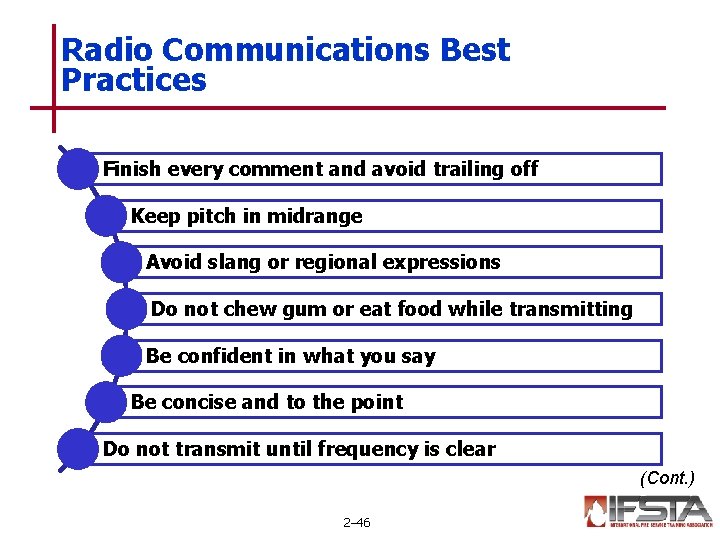
Radio Communications Best Practices Finish every comment and avoid trailing off Keep pitch in midrange Avoid slang or regional expressions Do not chew gum or eat food while transmitting Be confident in what you say Be concise and to the point Do not transmit until frequency is clear (Cont. ) 2– 46
Radio Communications Best Practices Emergency transmissions have priority over routine transmissions Do not use profane or obscene language on air Hold radio 1 to 2 inches from mouth or SCBA voice port Speak directly into microphone, not across it Position or hold microphone according to manufacturer’s recommendations (Cont. ) 2– 47
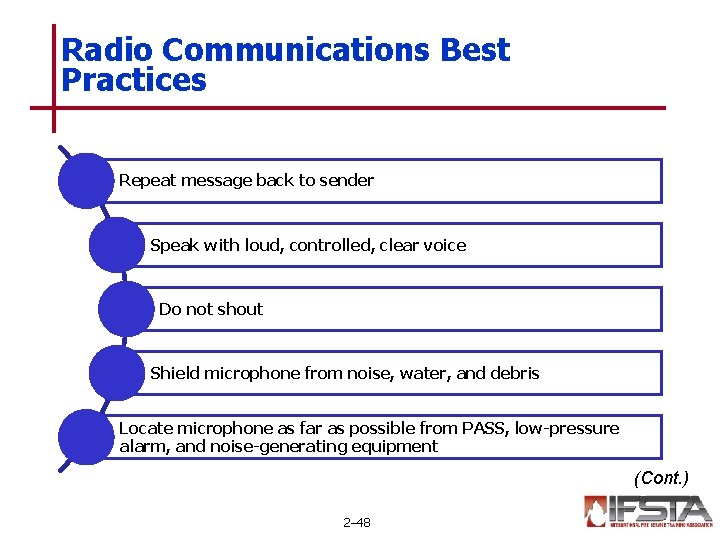
Radio Communications Best Practices Repeat message back to sender Speak with loud, controlled, clear voice Do not shout Shield microphone from noise, water, and debris Locate microphone as far as possible from PASS, low-pressure alarm, and noise-generating equipment (Cont. ) 2– 48
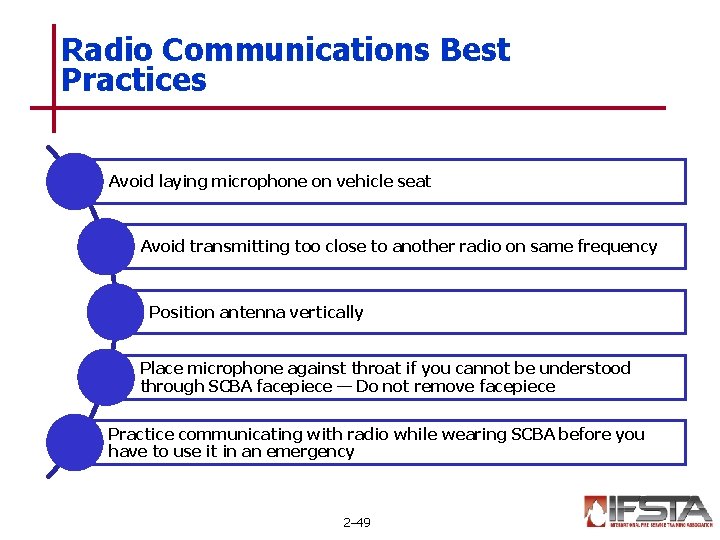
Radio Communications Best Practices Avoid laying microphone on vehicle seat Avoid transmitting too close to another radio on same frequency Position antenna vertically Place microphone against throat if you cannot be understood through SCBA facepiece — Do not remove facepiece Practice communicating with radio while wearing SCBA before you have to use it in an emergency 2– 49
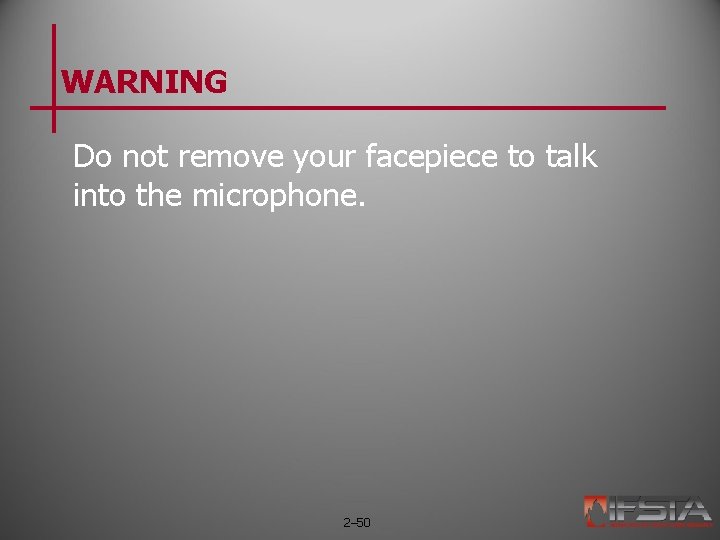
WARNING Do not remove your facepiece to talk into the microphone. 2– 50
REVIEW QUESTION What guidelines should be followed when using fire department radios? 2– 51
DISCUSSION QUESTION As technology continues to evolve, how do you think the changes might affect the fire service? 2– 52
QUESTIONS Are there any questions about this content? 2– 53