
Essentials of Fire Fighting 6 th Edition Firefighter

- Slides: 53
Essentials of Fire Fighting 6 th Edition Firefighter II Chapter 16 — Fire Streams
Learning Objective 1 Describe the methods by which fire fighting foam prevents or controls a hazard. 16– 2
Learning Objective 2 Identify foam concentrates. 16– 3
Learning Objective 3 Explain the factors that impact foam expansion and selection. 16– 4
Learning Objective 4 Describe methods by which foam may be proportioned. 16– 5
DISCUSSION QUESTION Why is foam used in conjunction with water as an extinguishing agent? 16– 6
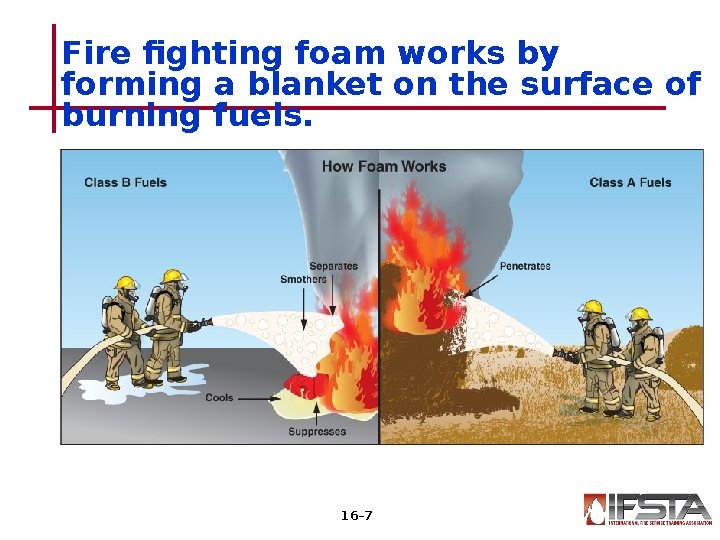
Fire fighting foam works by forming a blanket on the surface of burning fuels. 16– 7
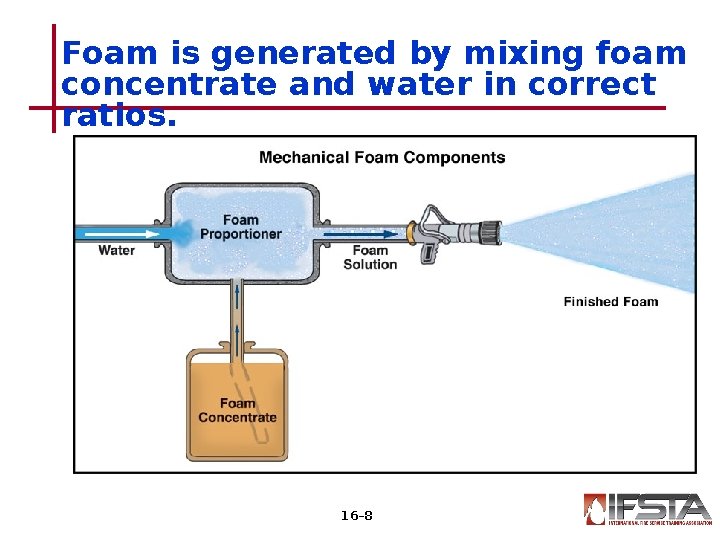
Foam is generated by mixing foam concentrate and water in correct ratios. 16– 8
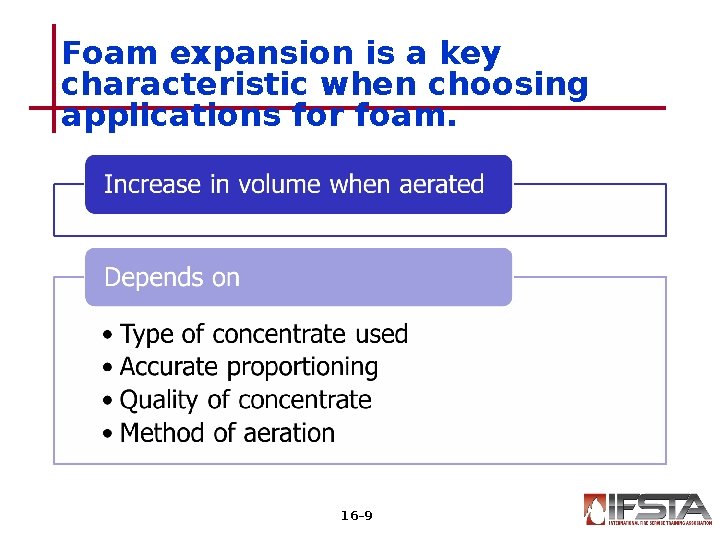
Foam expansion is a key characteristic when choosing applications for foam. 16– 9
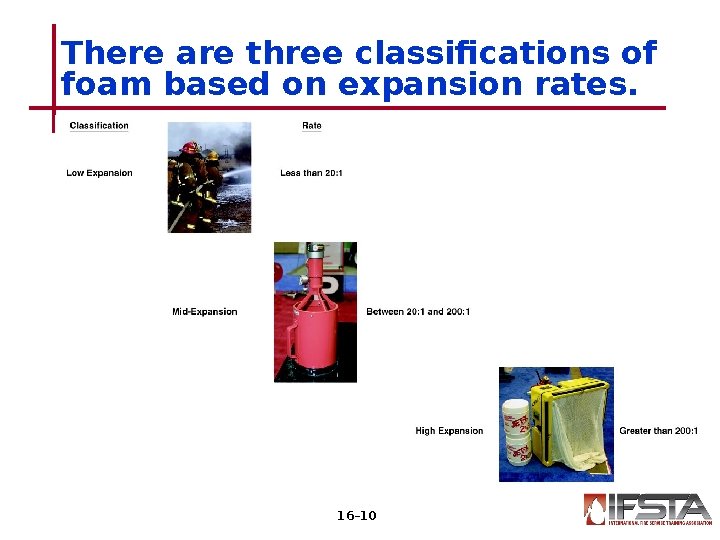
There are three classifications of foam based on expansion rates. 16– 10
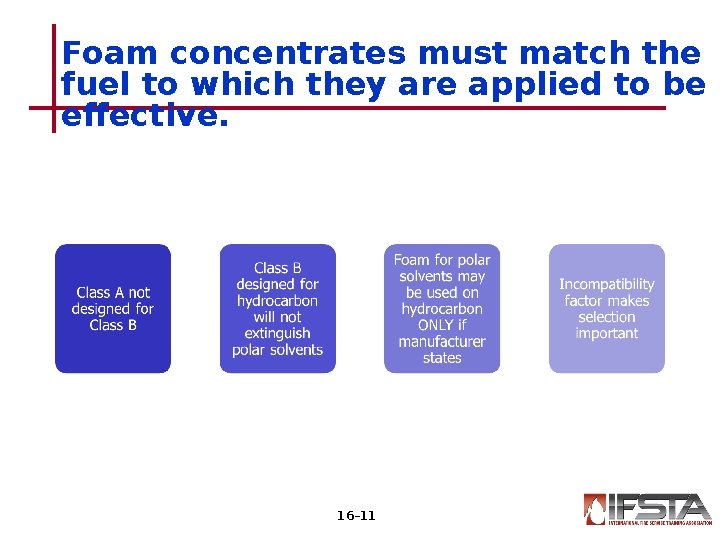
Foam concentrates must match the fuel to which they are applied to be effective. 16– 11
CAUTION Failing to match the proper foam concentrate to the burning fuel will result in an unsuccessful extinguishing attempt and could endanger firefighters. Likewise, mixing different types of foam together can result in substandard quality foam. 16– 12
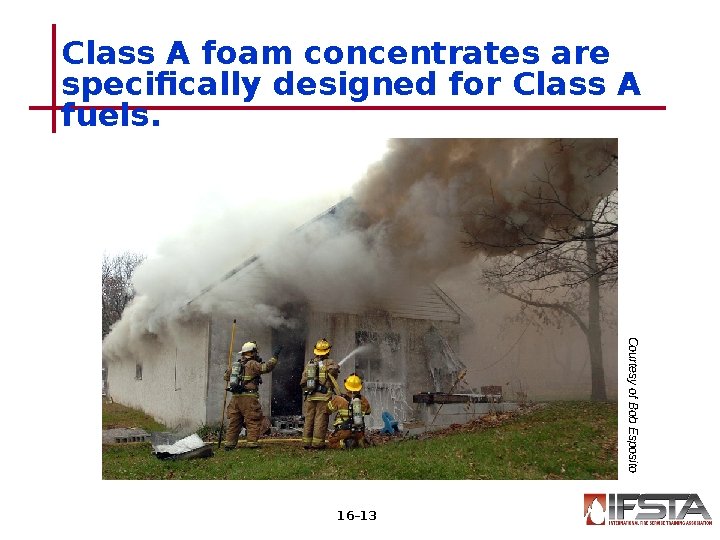
Class A foam concentrates are specifically designed for Class A fuels. Courtesy of Bob Esposito 16– 13
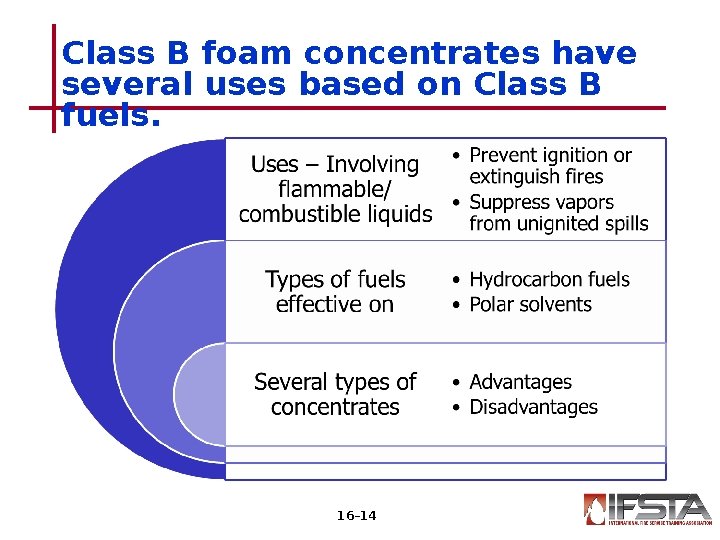
Class B foam concentrates have several uses based on Class B fuels. 16– 14
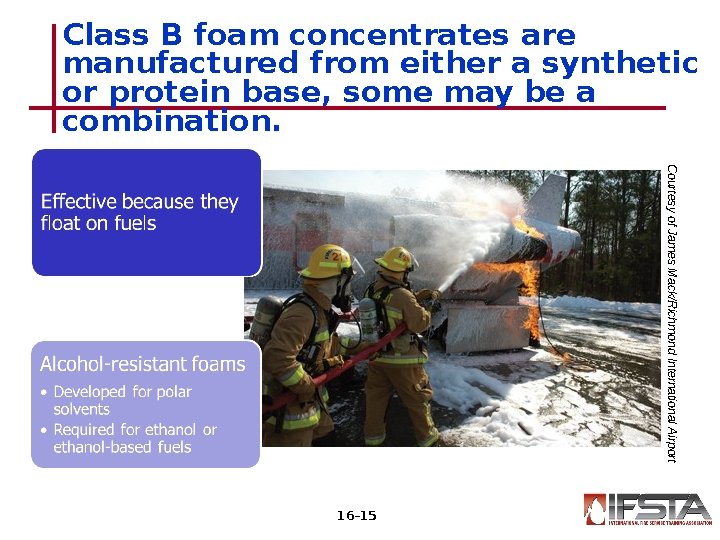
Class B foam concentrates are manufactured from either a synthetic or protein base, some may be a combination. Courtesy of James Mack/Richmond International Airport 16– 15
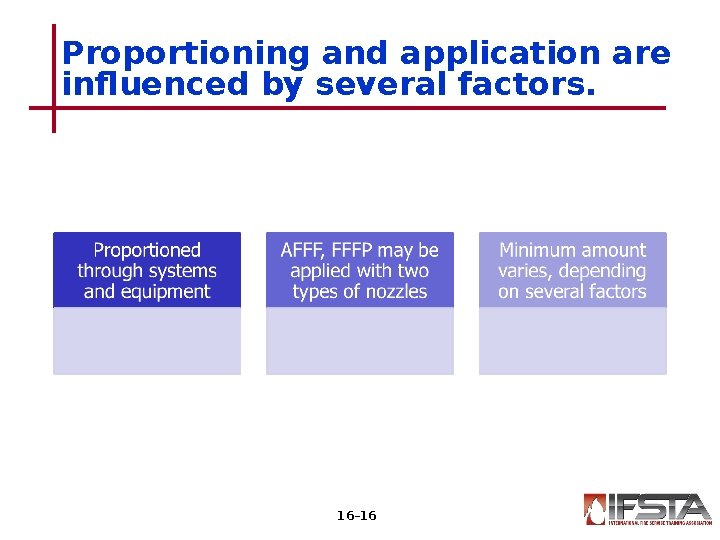
Proportioning and application are influenced by several factors. 16– 16
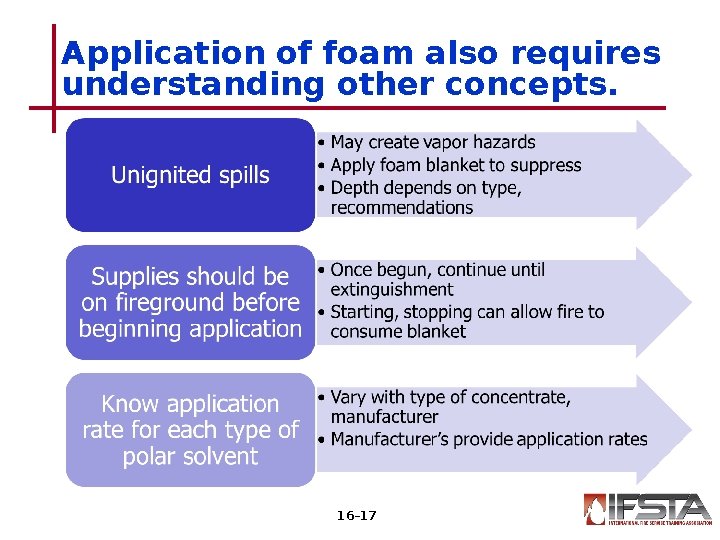
Application of foam also requires understanding other concepts. 16– 17
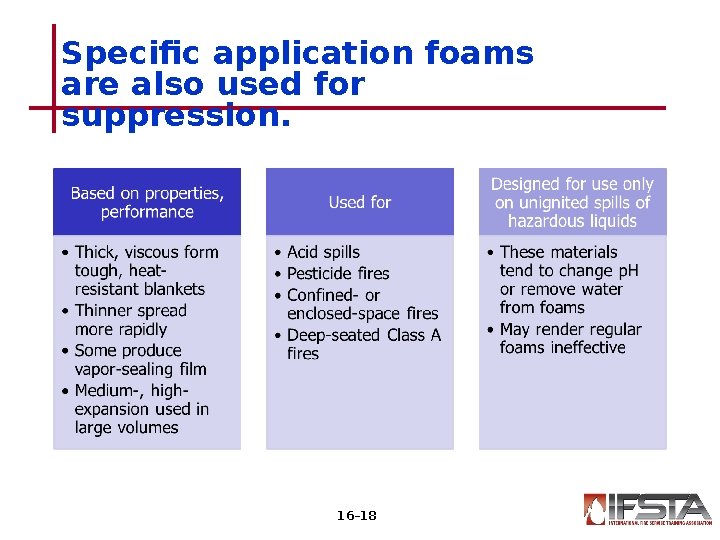
Specific application foams are also used for suppression. 16– 18
REVIEW QUESTIONS How does fire fighting foam prevent or control a hazard? What are the types of foam concentrates used in the fire service? 16– 19
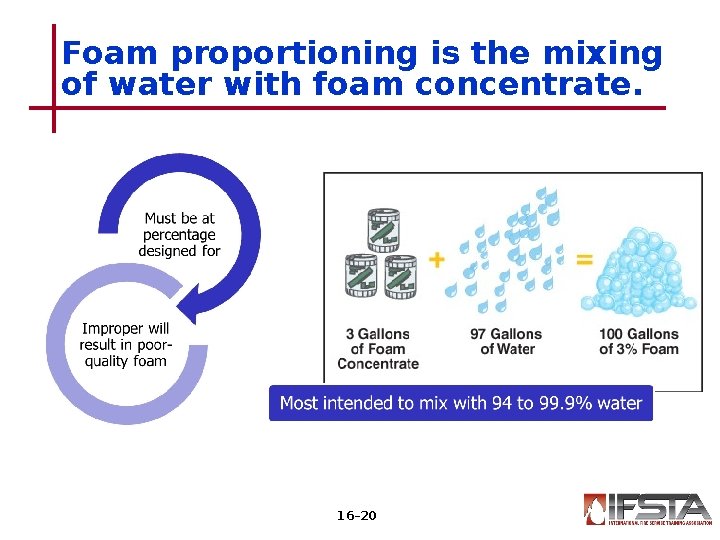
Foam proportioning is the mixing of water with foam concentrate. 16– 20
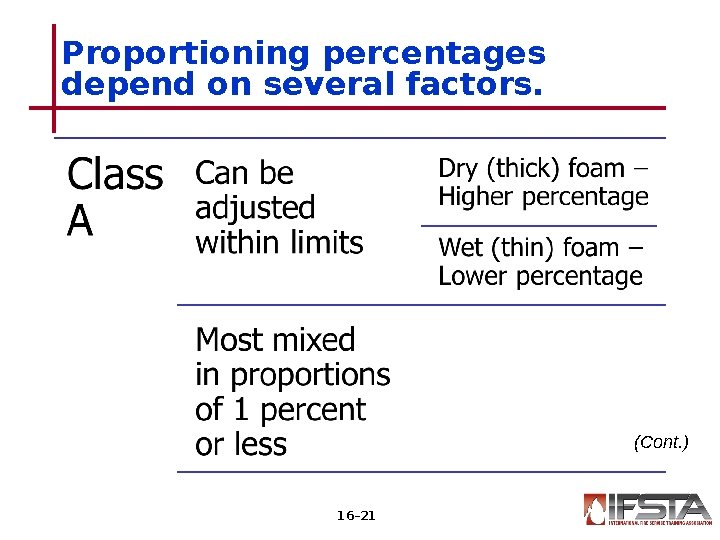
Proportioning percentages depend on several factors. (Cont. ) 16– 21
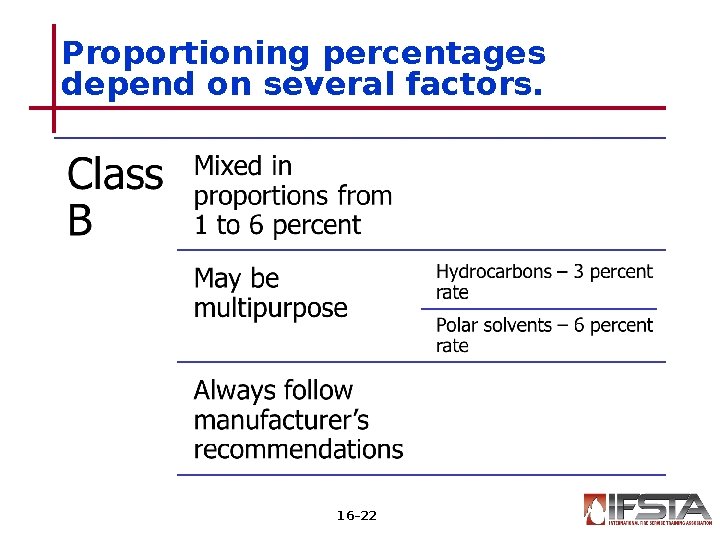
Proportioning percentages depend on several factors. 16– 22
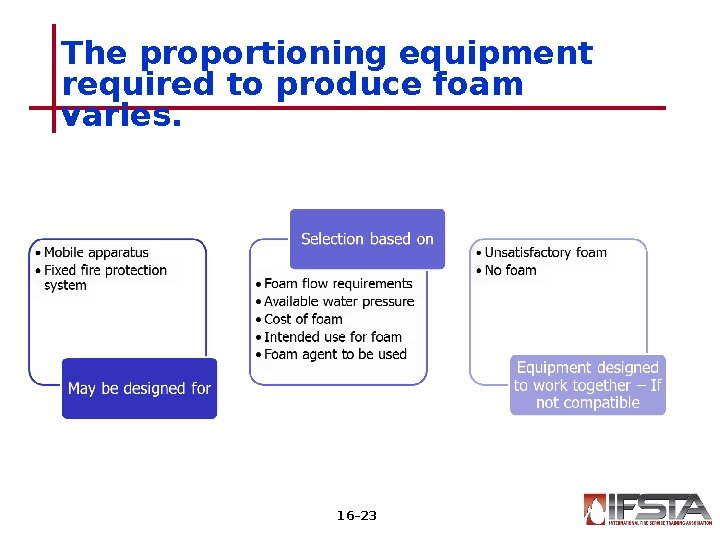
The proportioning equipment required to produce foam varies. 16– 23
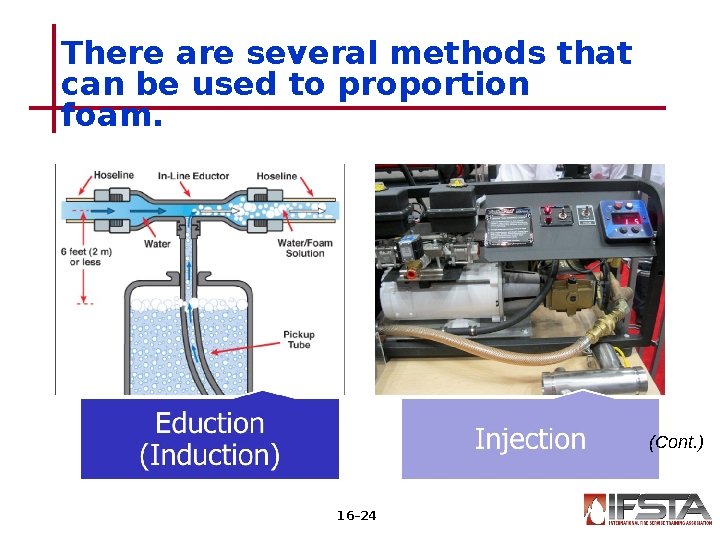
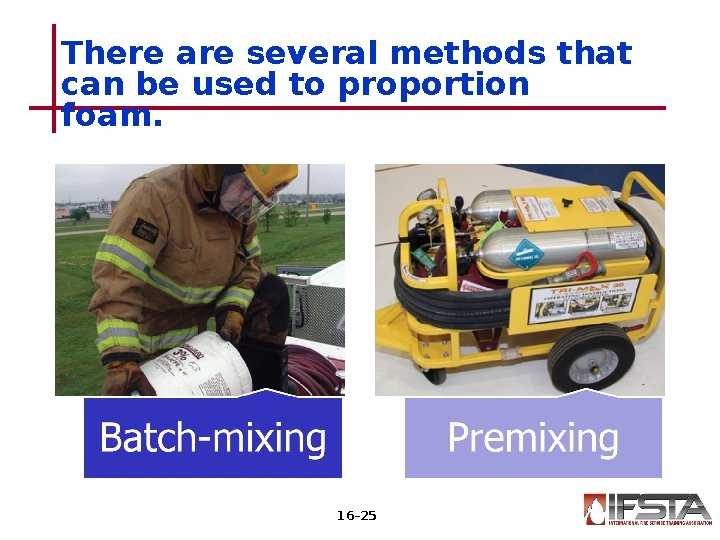
There are several methods that can be used to proportion foam. (Cont. ) 16– 24
There are several methods that can be used to proportion foam. 16– 25
REVIEW QUESTION Which methods can be used to proportion foam? 16– 26
Learning Objective 5 Explain the advantages and disadvantages of various foam proportioners, delivery devices, and generating systems. 16– 27
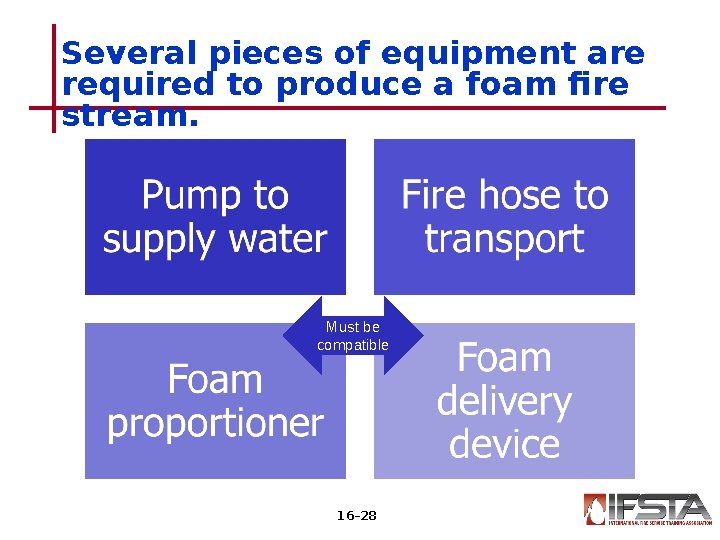
Several pieces of equipment are required to produce a foam fire stream. Must be compatible 16– 28
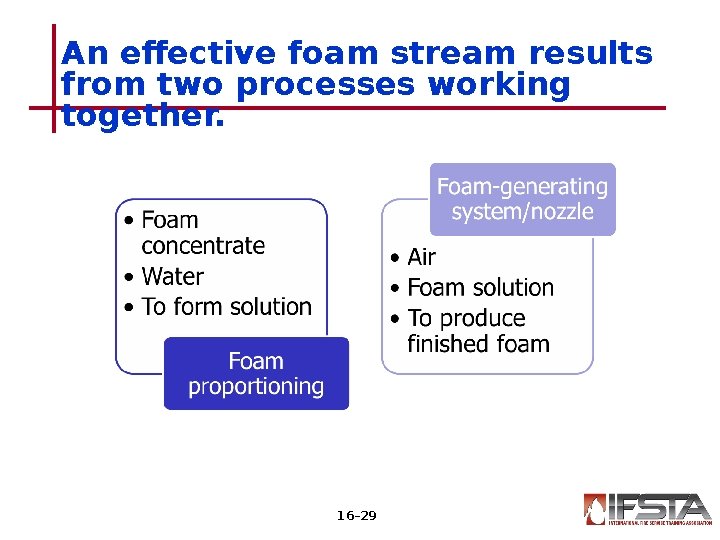
An effective foam stream results from two processes working together. 16– 29
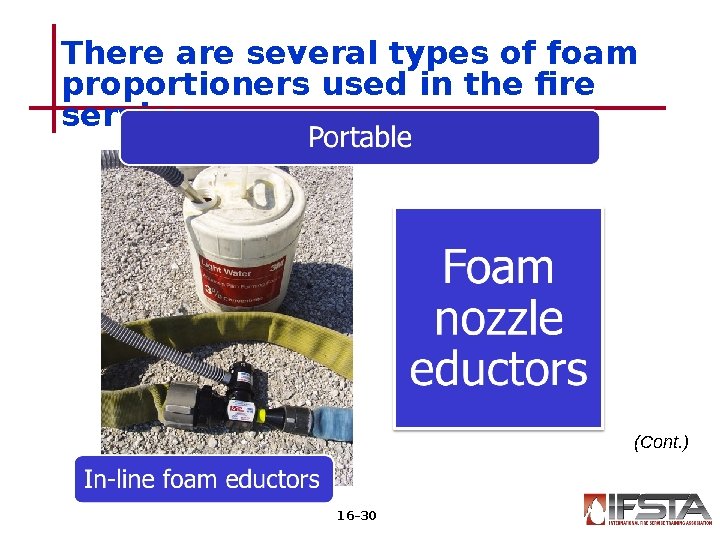
There are several types of foam proportioners used in the fire service. (Cont. ) 16– 30
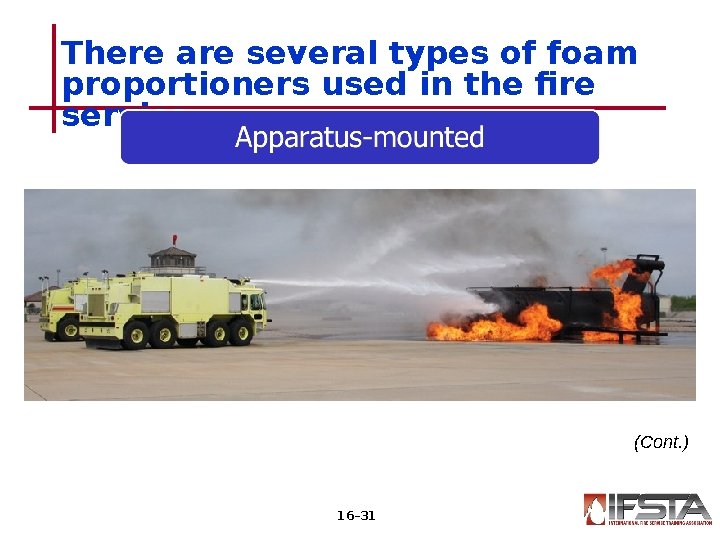
There are several types of foam proportioners used in the fire service. (Cont. ) 16– 31
DISCUSSION QUESTION Which types of apparatus-mounted foam proportioning systems are used in your jurisdiction(s)? 16– 32
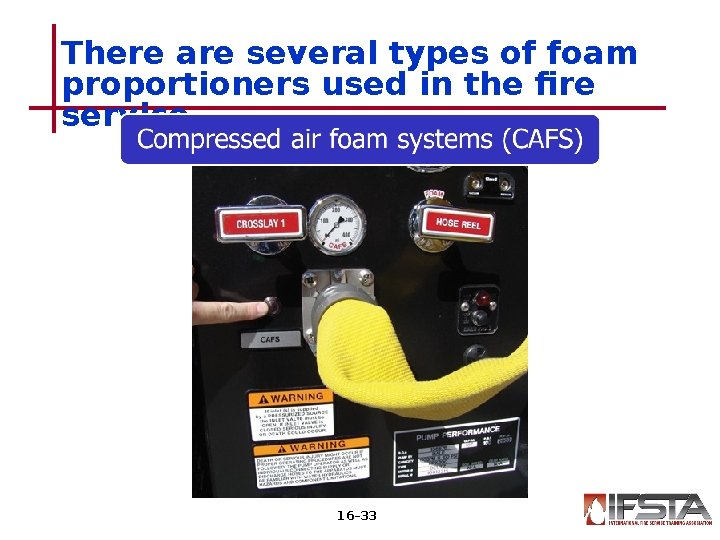
There are several types of foam proportioners used in the fire service. 16– 33
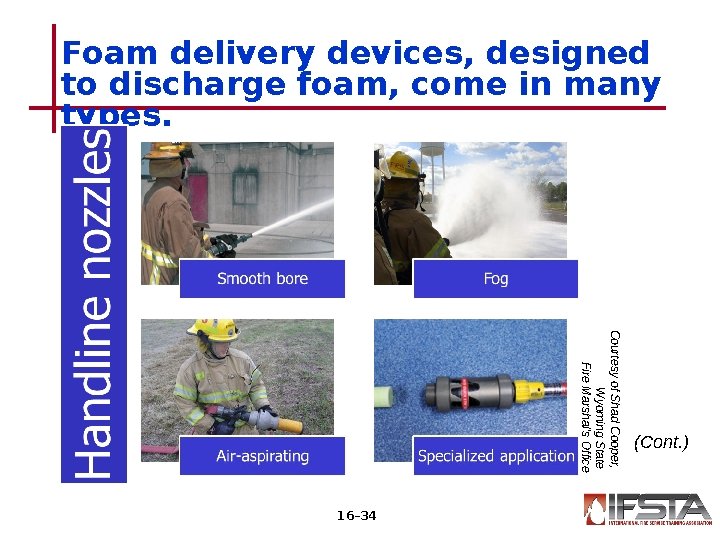
Foam delivery devices, designed to discharge foam, come in many types. Courtesy of Shad Cooper, Wyoming State Fire Marshal’s Office 16– 34 (Cont. )
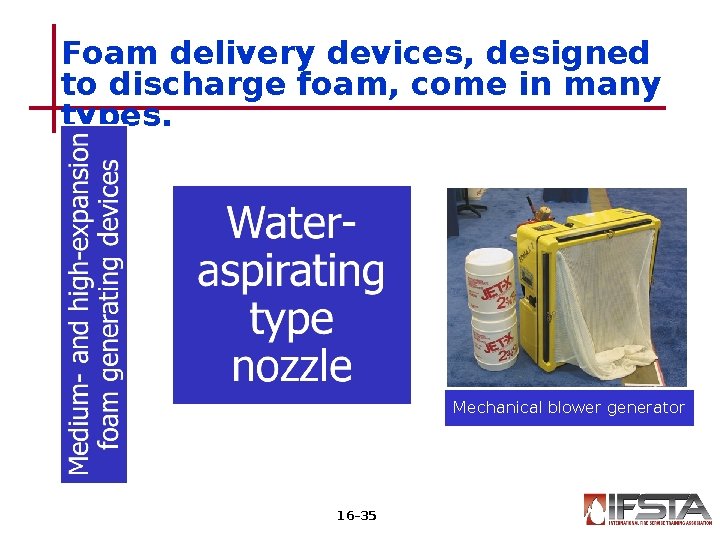
Foam delivery devices, designed to discharge foam, come in many types. Mechanical blower generator 16– 35
REVIEW QUESTION What are the advantages of each type of foam delivery device? 16– 36
Learning Objective 6 Identify causes of poor foam production. 16– 37
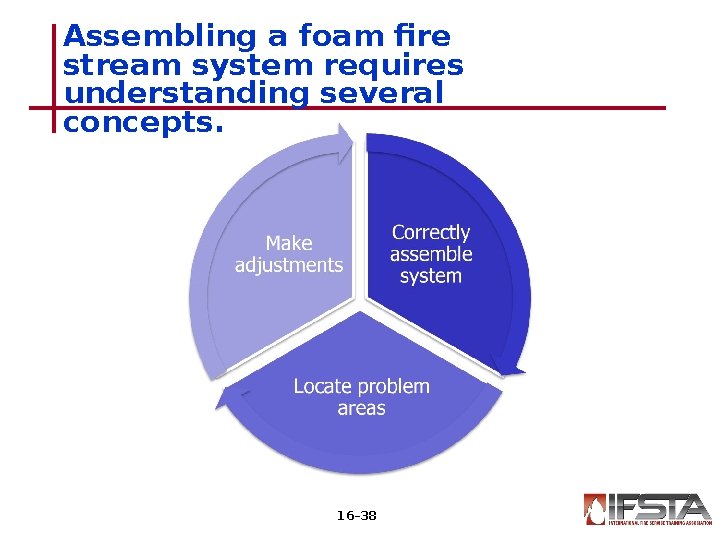
Assembling a foam fire stream system requires understanding several concepts. 16– 38
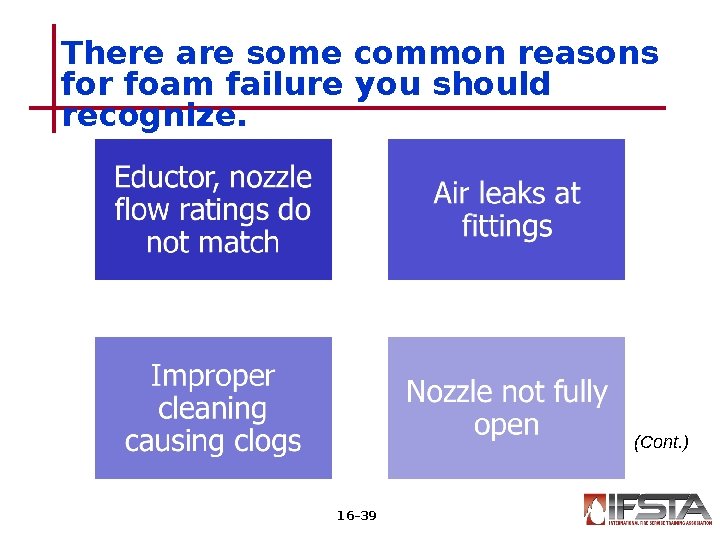
There are some common reasons for foam failure you should recognize. (Cont. ) 16– 39
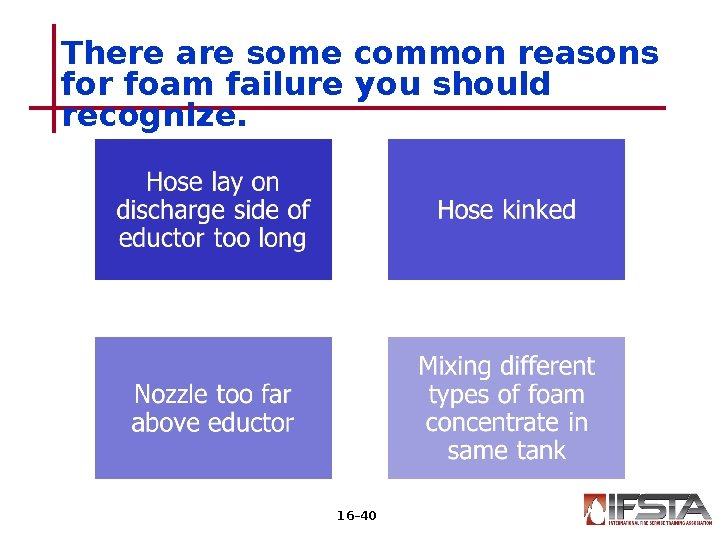
There are some common reasons for foam failure you should recognize. 16– 40
REVIEW QUESTION of What are some possible causes poor foam production? 16– 41
Learning Objective 7 Distinguish among various foam application techniques. 16– 42
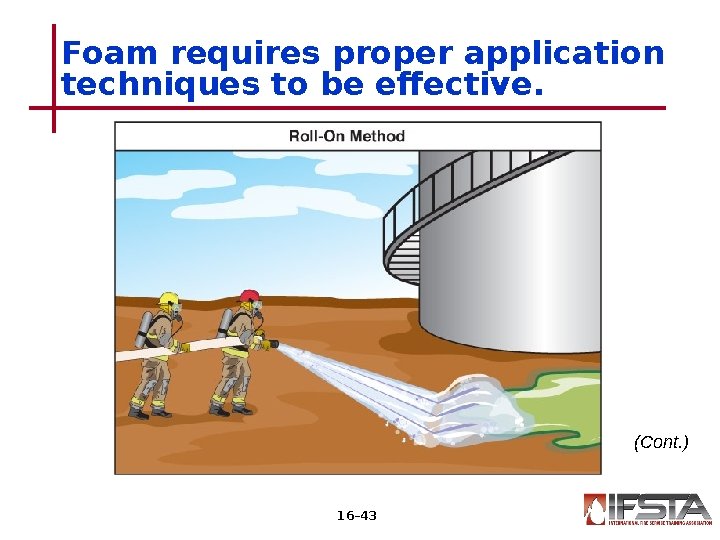
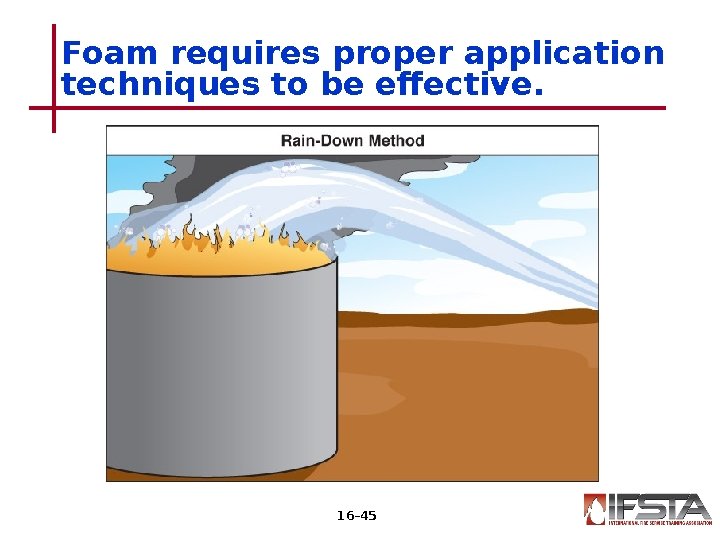
Foam requires proper application techniques to be effective. (Cont. ) 16– 43
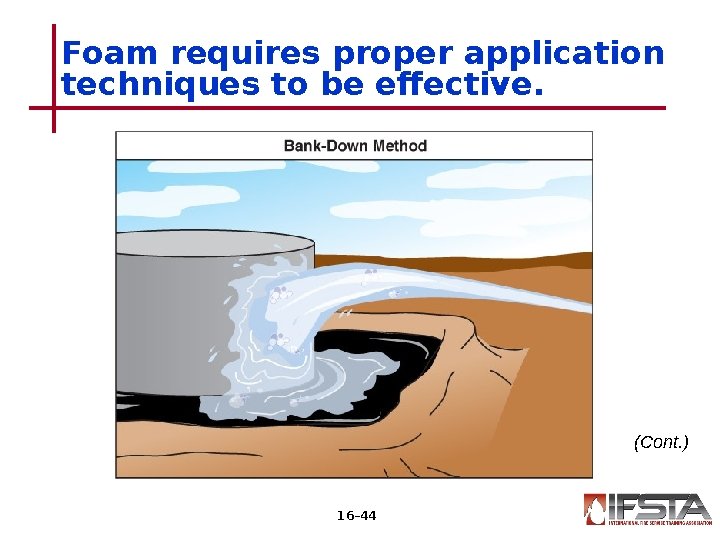
Foam requires proper application techniques to be effective. (Cont. ) 16– 44
Foam requires proper application techniques to be effective. 16– 45
REVIEW QUESTION of What are three main types foam application techniques and how do they work? 16– 46
Learning Objective 8 to Identify foam hazards and ways control them. 16– 47
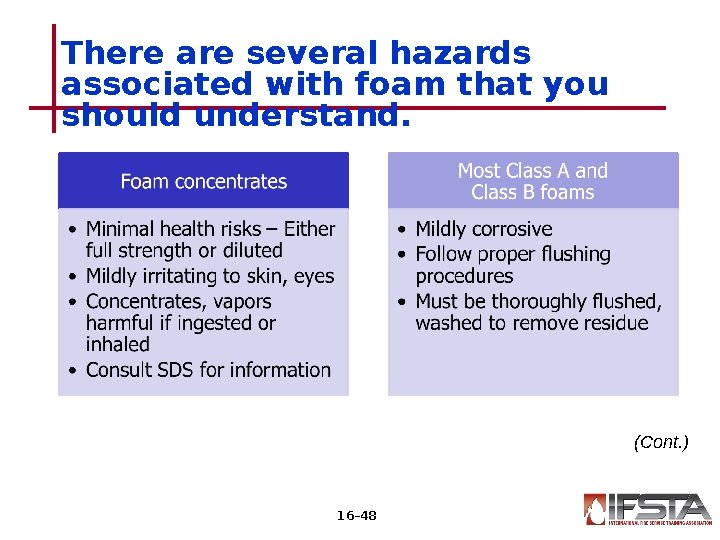
There are several hazards associated with foam that you should understand. (Cont. ) 16– 48
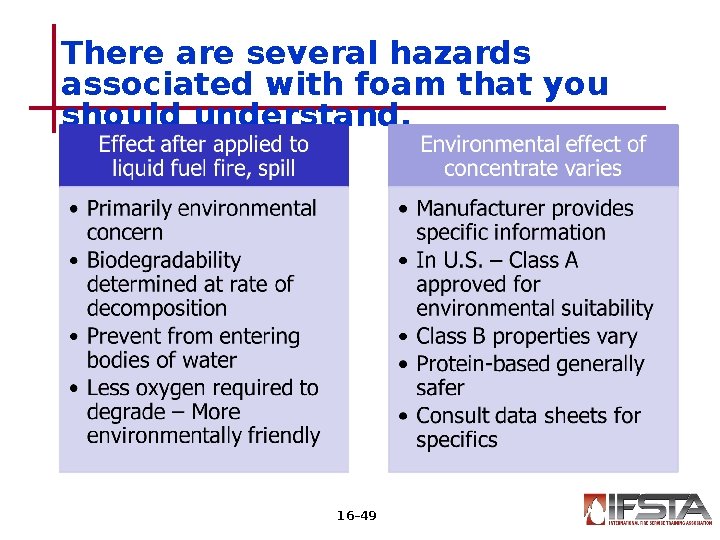
There are several hazards associated with foam that you should understand. 16– 49
REVIEW QUESTION How can firefighters work to mitigate foam hazards? 16– 50
Summary • Firefighters must know the differences between the types of foam used by their departments. • They must know how to generate foam. • They must know how to apply foam most effectively. 16– 51
Learning Objective 9 Place a foam line in service using an in-line eductor. This objective is measured in Skill Sheet 16 -II-1. 16– 52
Learning Objective 10 Extinguish an ignitable liquid fire. This objective is measured in Skill Sheet 16 -II-2. 16– 53