
Essentials of Fire Fighting 6 th Edition Firefighter




- Slides: 41
Essentials of Fire Fighting 6 th Edition Firefighter I Chapter 7 — Portable Fire Extinguishers
Learning Objective 1 Explain portable fire extinguisher 7– 3 classifications.
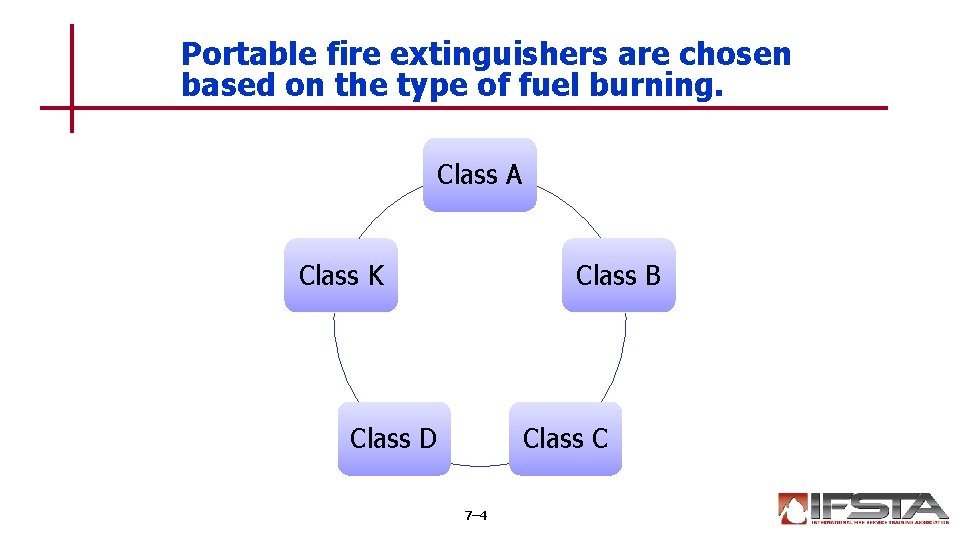
Portable fire extinguishers are chosen based on the type of fuel burning. Class A Class K Class B Class D Class C 7– 4
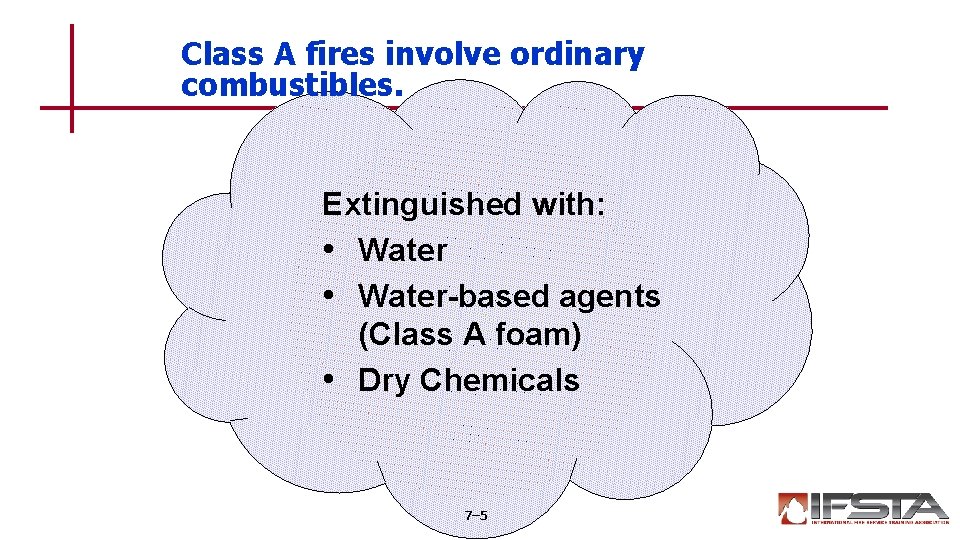
Class A fires involve ordinary combustibles. Fuel with: Extinguished • Textiles • Water • Paper agents • Water-based (Class A foam) • Plastics • Dry Chemicals • Rubber • Wood 7– 5
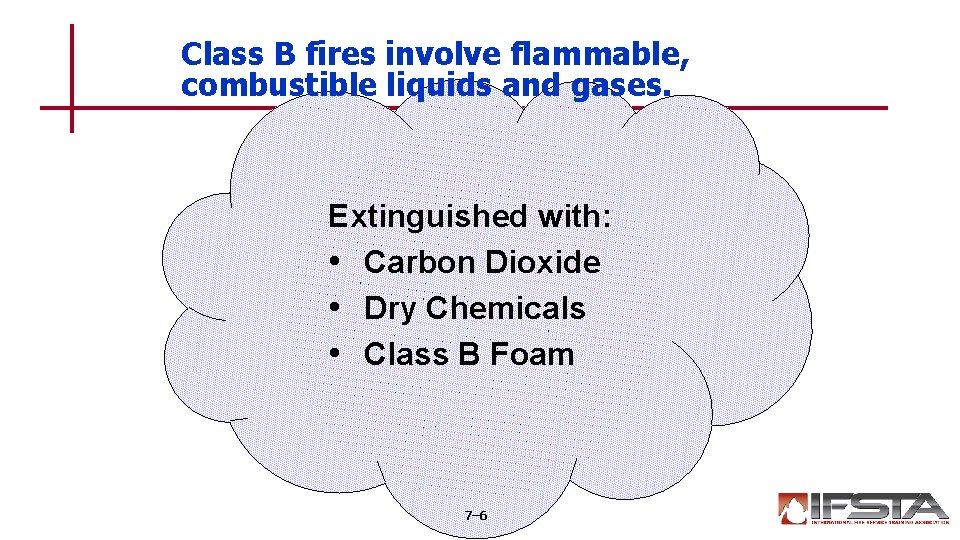
Class B fires involve flammable, combustible liquids and gases. Fuel Extinguished with: • • Alcohol Carbon Dioxide • • Gasoline Dry Chemicals • • Lubricating Oils Class B Foam • Liquefied petroleum gas (LPG) 7– 6
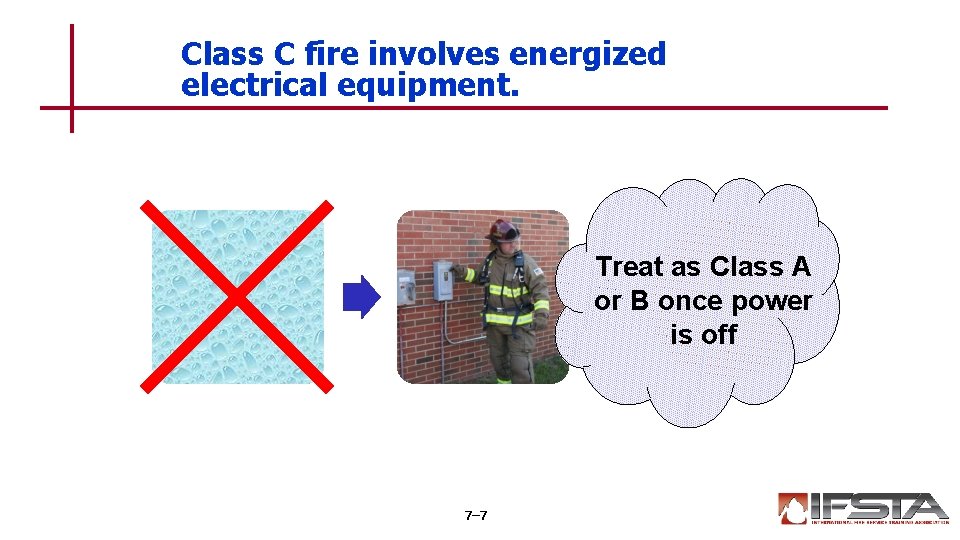
Class C fire involves energized electrical equipment. Treat as Class A or B once power is off 7– 7
Class D fires involve combustible metals and alloys. Lithium Magnesium Potassium Sodium 7– 8
CAUTION! The use of water or water-based agents on Class D fires will cause the fire to react violently, emit bits of molten metal, and possibly injure firefighters close by. 7– 9
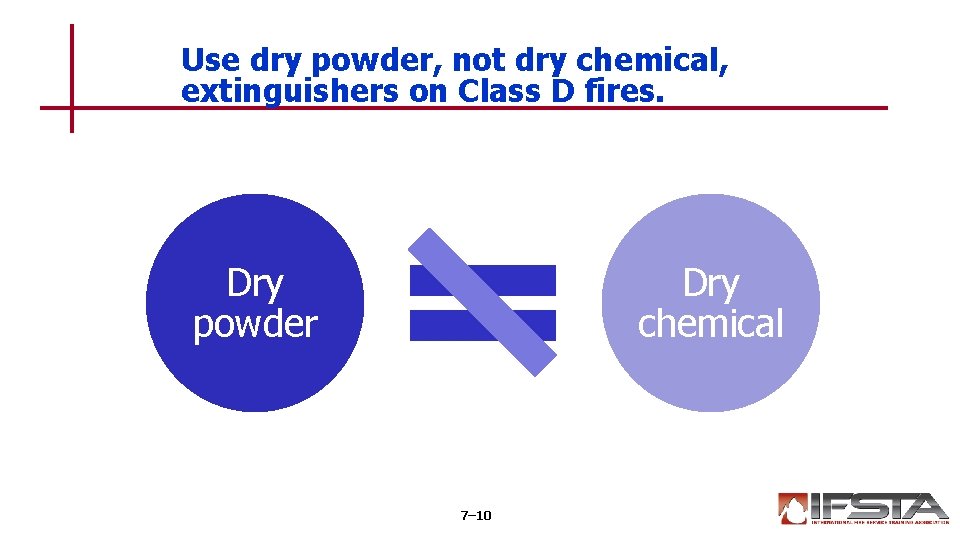
Use dry powder, not dry chemical, extinguishers on Class D fires. Dry powder Dry chemical 7– 10
CAUTION! Do not use a dry chemical extinguisher on Class D fire. The dry chemical often reacts violently with burning metals. 7– 11
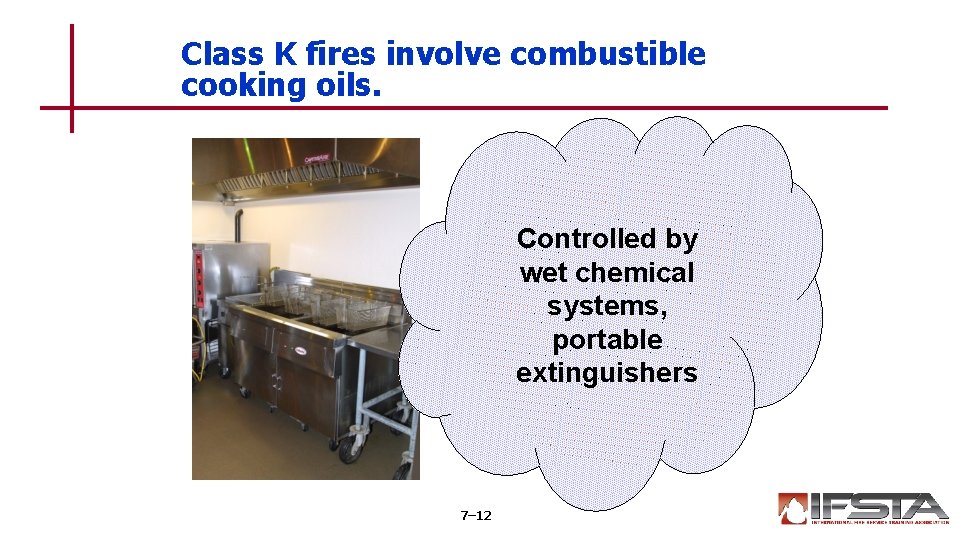
Class K fires involve combustible cooking oils. • Vegetable or animal Controlled by fats chemical • wet Burn at extreme systems, temperatures portable • Found at commercial, extinguishers institutional, industrial, home 7– 12
REVIEW QUESTION How are the classifications for extinguishers divided? 7– 13 portable fire
Learning Objective 2 Describe types of portable fire 7– 14 extinguishers.
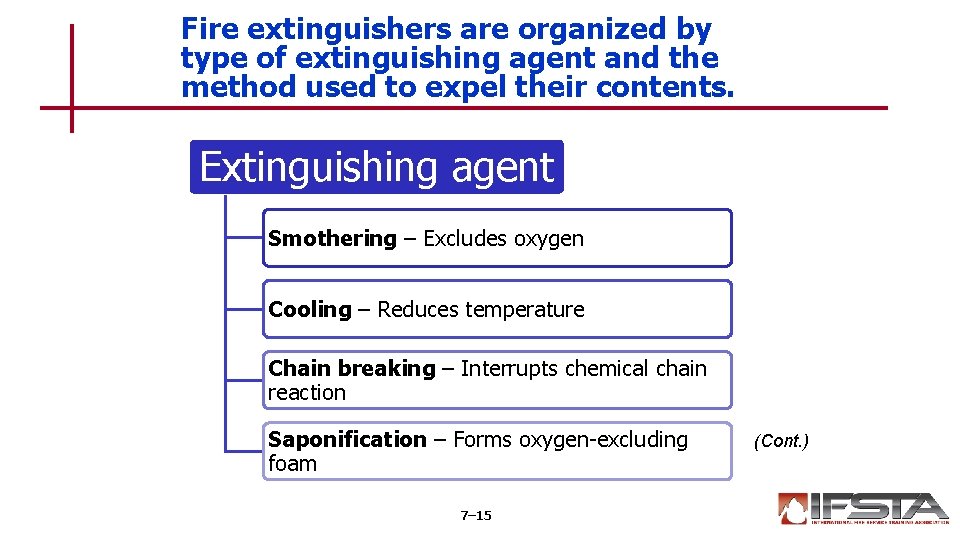
Fire extinguishers are organized by type of extinguishing agent and the method used to expel their contents. Extinguishing agent Smothering – Excludes oxygen Cooling – Reduces temperature Chain breaking – Interrupts chemical chain reaction Saponification – Forms oxygen-excluding foam 7– 15 (Cont. )
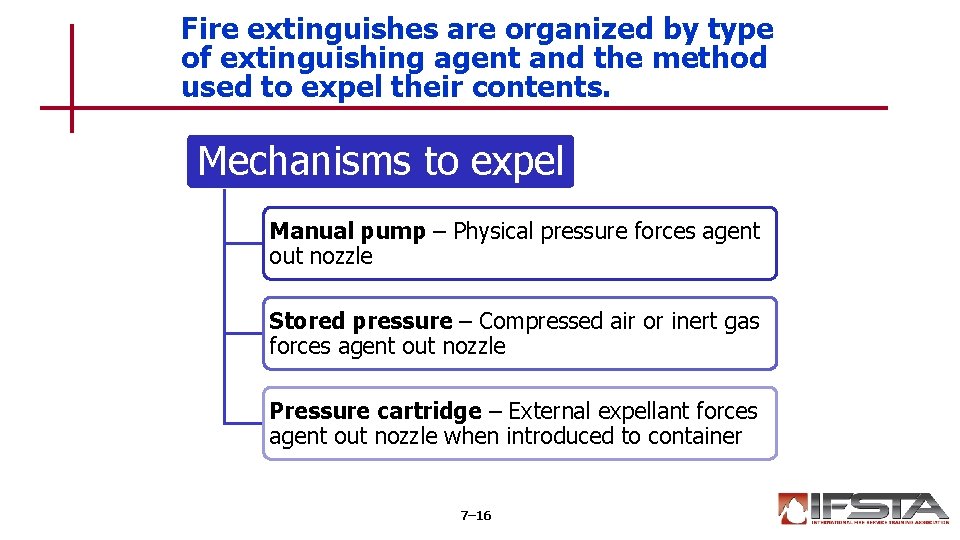
Fire extinguishes are organized by type of extinguishing agent and the method used to expel their contents. Mechanisms to expel Manual pump – Physical pressure forces agent out nozzle Stored pressure – Compressed air or inert gas forces agent out nozzle Pressure cartridge – External expellant forces agent out nozzle when introduced to container 7– 16
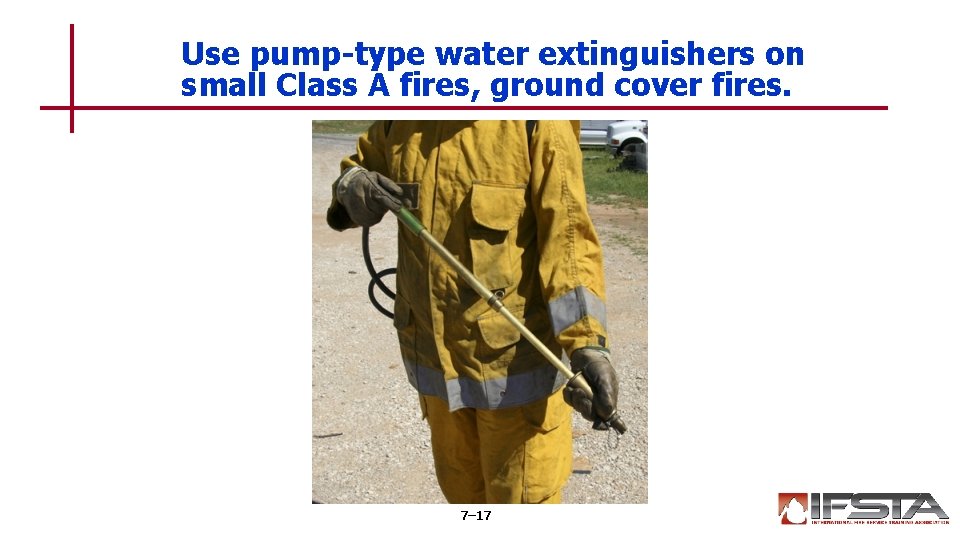
Use pump-type water extinguishers on small Class A fires, ground cover fires. 7– 17
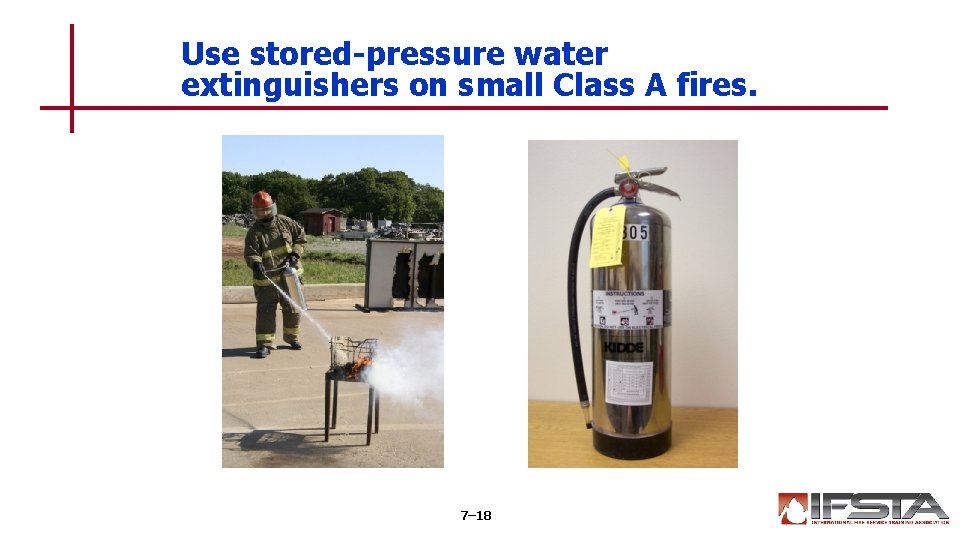
Use stored-pressure water extinguishers on small Class A fires. 7– 18
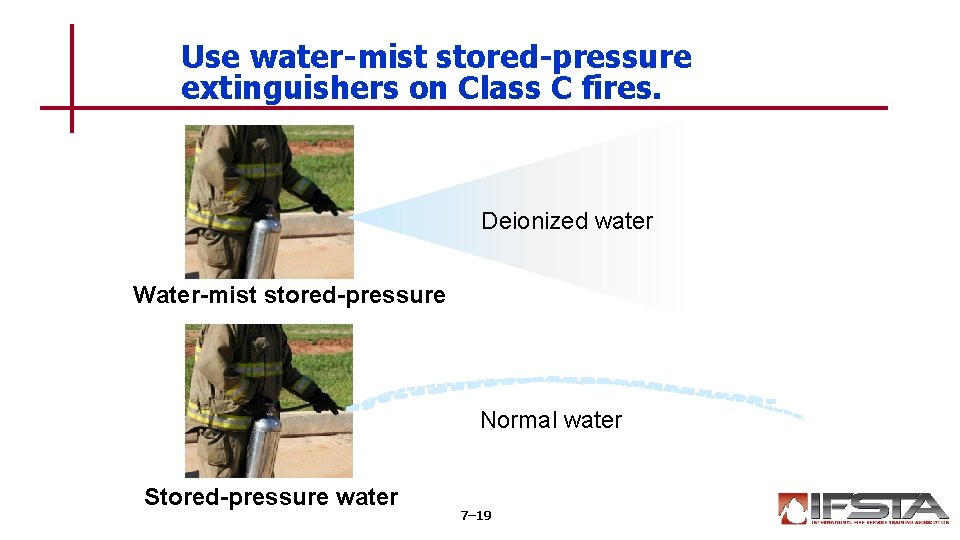
Use water-mist stored-pressure extinguishers on Class C fires. Deionized water Water-mist stored-pressure Normal water Stored-pressure water 7– 19
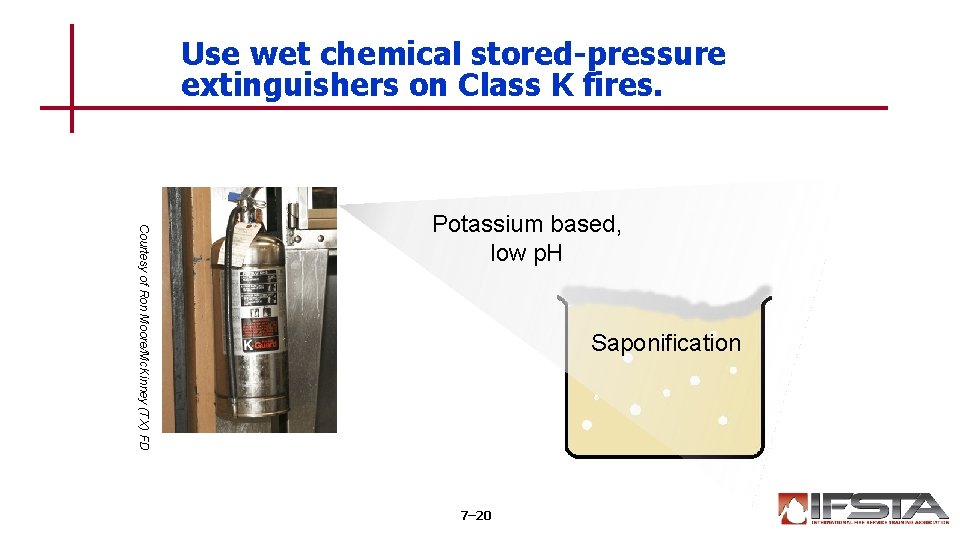
Use wet chemical stored-pressure extinguishers on Class K fires. Courtesy of Ron Moore/Mc. Kinney (TX) FD Potassium based, low p. H Saponification 7– 20
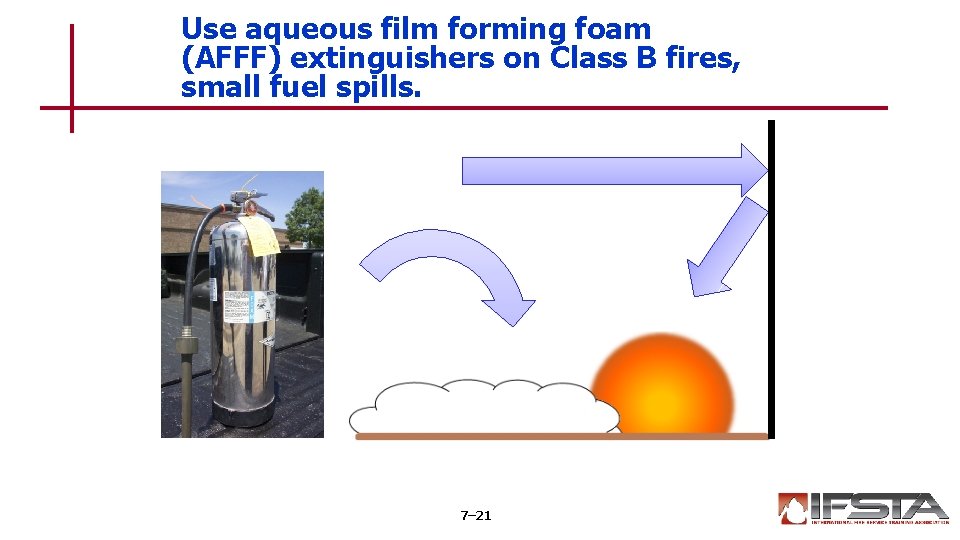
Use aqueous film forming foam (AFFF) extinguishers on Class B fires, small fuel spills. 7– 21
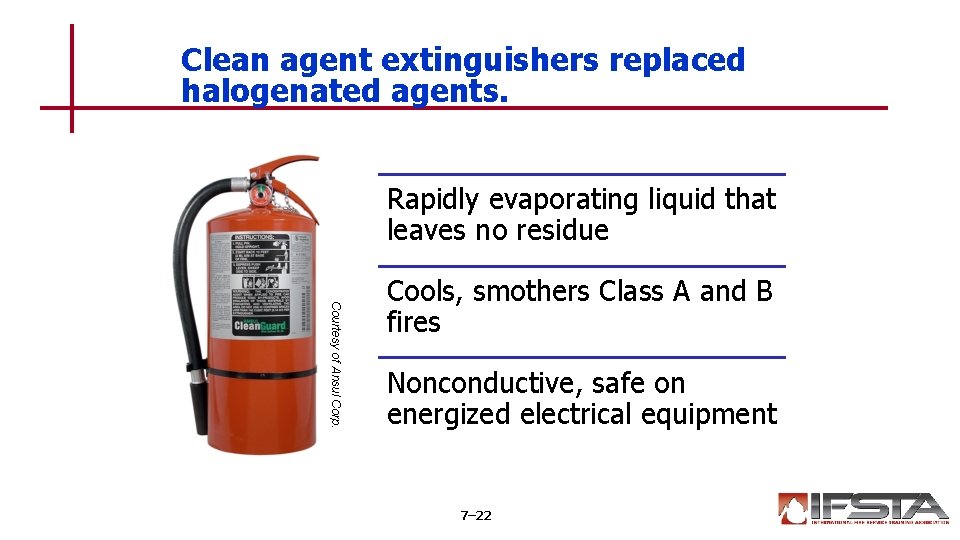
Clean agent extinguishers replaced halogenated agents. Rapidly evaporating liquid that leaves no residue Courtesy of Ansul Corp. Cools, smothers Class A and B fires Nonconductive, safe on energized electrical equipment 7– 22
REVIEW QUESTION What are the differences between wet chemical stored-pressure, aqueous film forming foam (AFFF), and clean agent extinguishers? 7– 23
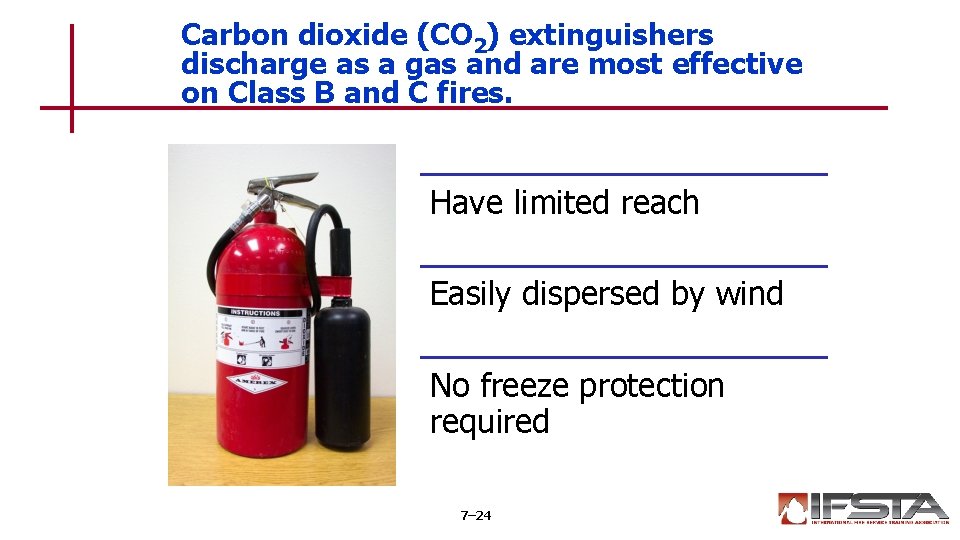
Carbon dioxide (CO 2) extinguishers discharge as a gas and are most effective on Class B and C fires. Have limited reach Easily dispersed by wind No freeze protection required 7– 24
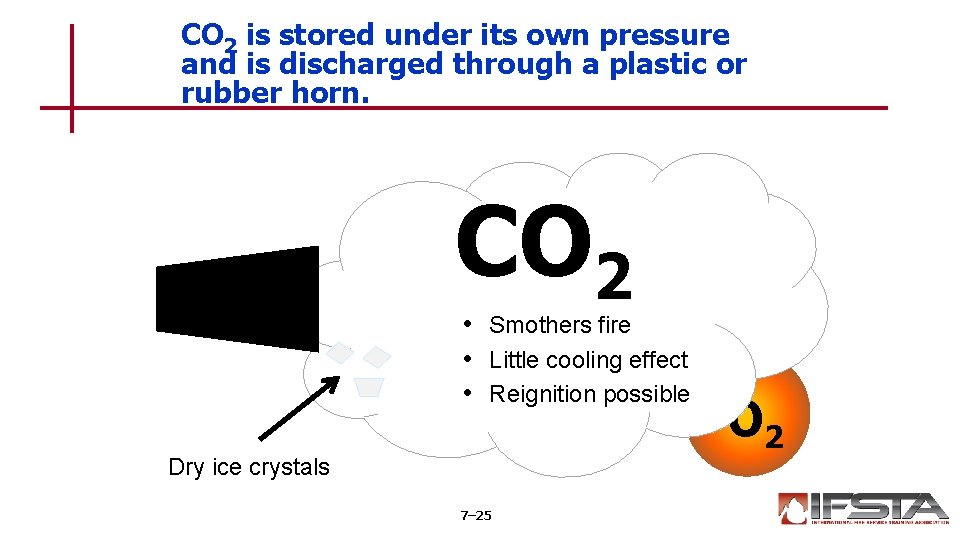
CO 2 is stored under its own pressure and is discharged through a plastic or rubber horn. CO 2 • Smothers fire • Little cooling effect • Reignition possible Dry ice crystals 7– 25 O 2
CAUTION! When carbon dioxide is discharged, a static electrical charge builds up on the discharge horn. Touching the horn before the charge has dissipated can result in a shock. 7– 26
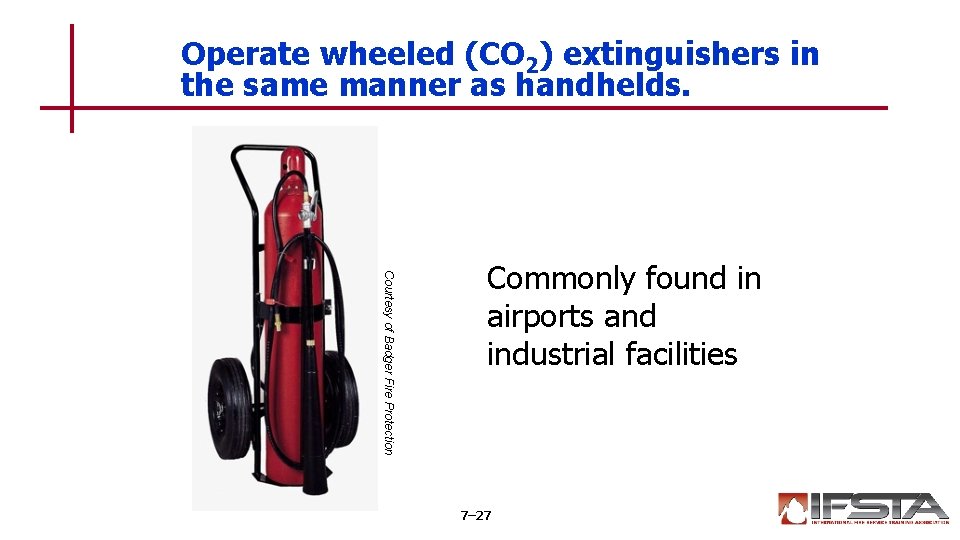
Operate wheeled (CO 2) extinguishers in the same manner as handhelds. Courtesy of Badger Fire Protection Commonly found in airports and industrial facilities 7– 27
Dry chemical extinguishers use additives to keep extinguishing agents ready for use, even after long storage periods. Regular Multipurpose B: C rated A: B: C rated 7– 28
Dry chemical extinguishers may react chemically with other types of extinguishing agents. Dry chemical Other agents 7– 29
WARNING! Never mix or contaminate dry chemicals with any other type of agent. 7– 30
Dry chemical agents are considered nontoxic and safe for use. • May reduce visibility • May create respiratory problems • May not be compatible with foam 7– 31
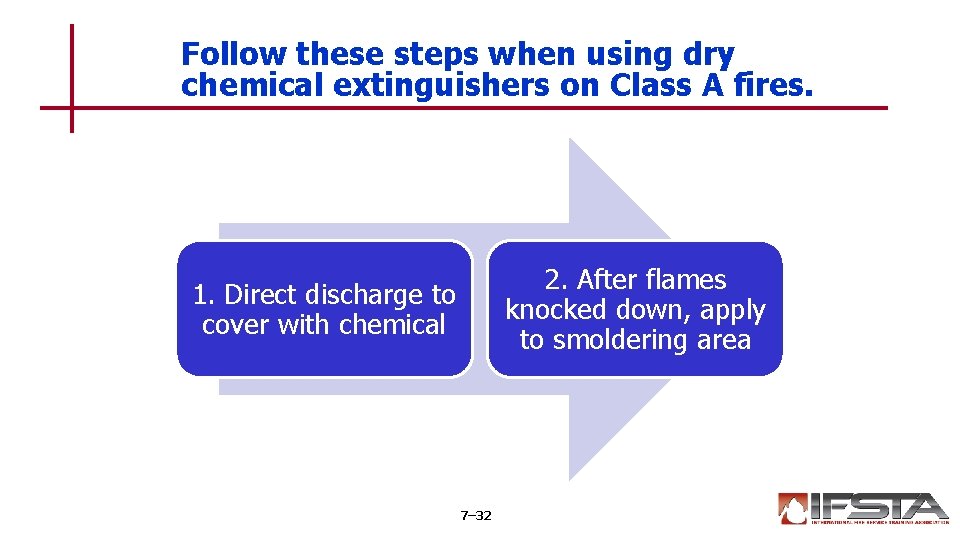
Follow these steps when using dry chemical extinguishers on Class A fires. 2. After flames knocked down, apply to smoldering area 1. Direct discharge to cover with chemical 7– 32
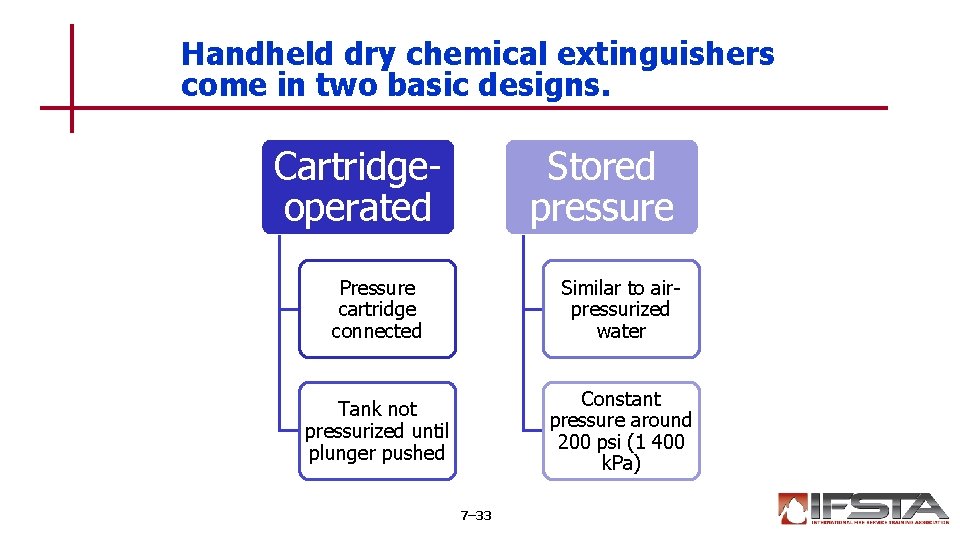
Handheld dry chemical extinguishers come in two basic designs. Cartridgeoperated Stored pressure Pressure cartridge connected Similar to airpressurized water Tank not pressurized until plunger pushed Constant pressure around 200 psi (1 400 k. Pa) 7– 33
CAUTION! When pressurizing a cartridge-type extinguisher, do not place your head or any other part of your body above the top of the extinguisher. If the fill cap was not properly screwed back on, the cap and/or a cloud of agent can be forcibly discharged. 7– 34
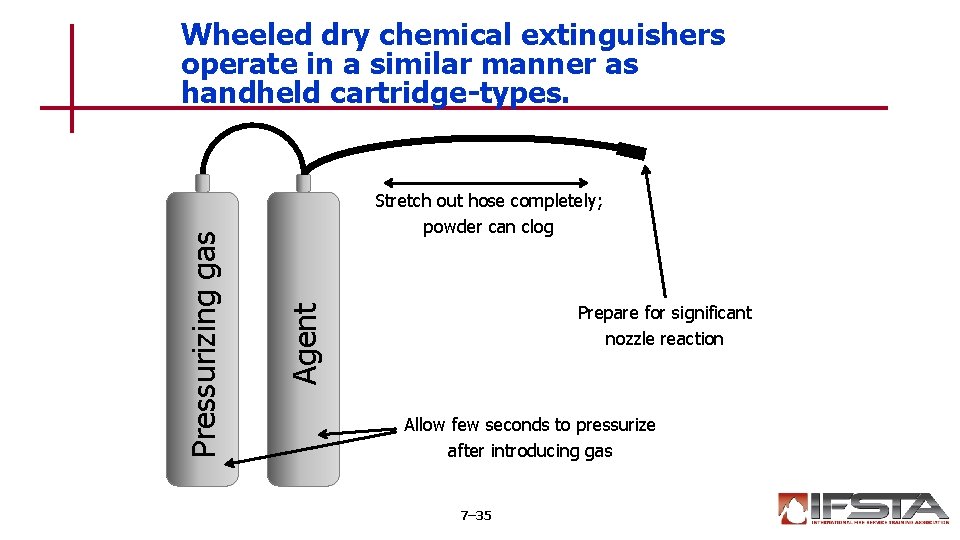
Stretch out hose completely; powder can clog Prepare for significant nozzle reaction Agent Pressurizing gas Wheeled dry chemical extinguishers operate in a similar manner as handheld cartridge-types. Allow few seconds to pressurize after introducing gas 7– 35
CAUTION! The top of the extinguisher should be pointed away from the operator and any other nearby personnel when pressurizing the unit. 7– 36
Use dry powder extinguishers on fires for Class D metals. No single agent works on all metals Comes in several models Apply with extinguisher or scoop Consult manufacturer’s guide 7– 37
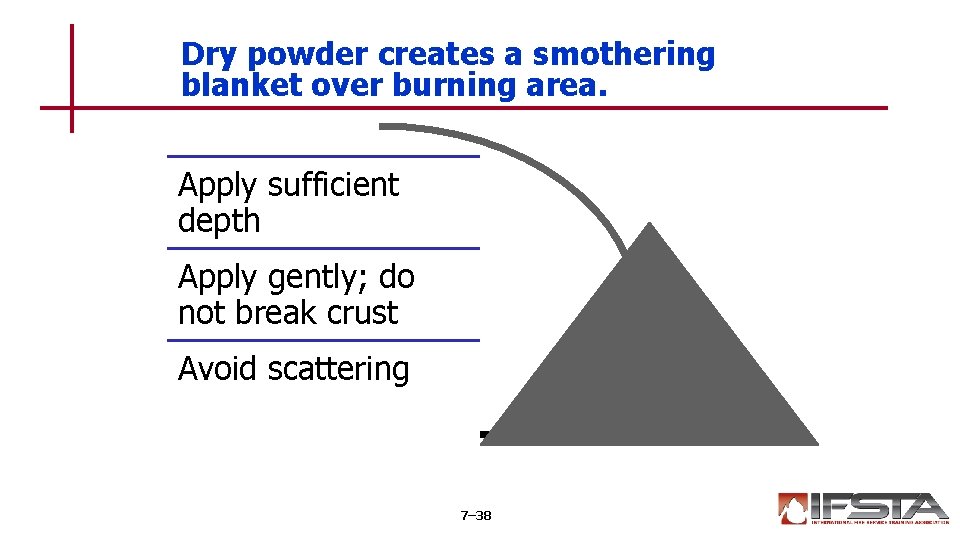
Dry powder creates a smothering blanket over burning area. Apply sufficient depth Apply gently; do not break crust Avoid scattering 7– 38
CAUTION! Water applied to a combustible metal fire results in a violent reaction that intensifies the combustion and causes bits of molten material to spatter in every direction. 7– 39
Follow these steps if burning metal is on a combustible surface. 1. Cover fire with powder 2. Create layer of powder nearby, 1 -2 inches (25 -50 mm) deep 3. Spread nearby – Add more as needed 4. Leave undisturbed until completely cool 7– 40
REVIEW QUESTION How do carbon dioxide (CO 2), dry chemical, and dry powder extinguishers differ? 7– 41