
Essentials of Effective 9 1 1 Training Programs

- Slides: 27
Essentials of Effective 9 -1 -1 Training Programs Cheryl J. Greathouse, MPA, RPL Director, Instructional Services Georgia Public Safety Training Center
Enabling Objectives • Discuss the reasons for providing training and its impact on 9 -1 -1 operations. • Discuss the phases of the development process known as ADDIE. • Discuss how to build and maintain a comprehensive training plan in addition to individual training records. • Discuss the importance of written examinations and skills assessment performance examinations.
Purpose of 9 -1 -1 Training • Orient new employees • Develop basic job skill sets • Develop advanced job skill sets • Remediate problematic areas of skill sets • Transition to a new job category
Purpose of 9 -1 -1 Training • Present new information • Meet legal mandates for training • Motivate employees • Change behavior
What is the impact of improper training or failure to train in 9 -1 -1?
Negative Impacts • • Danger/loss of life for responders Danger/loss of life/property for citizens Criminal penalties Civil lawsuits for negligence Loss of confidence by responders/public Low morale Staff turnover
Benefits of Effective Training • Better prepared call takers/dispatchers • Better prepared supervisors, trainers, technicians • Improved services to responders/public • Reduction of criminal and civil actions • Improved morale/team work • Staff retention
Elements of Effective 9 -1 -1 Training Programs • Highly qualified and trained personnel who serve as trainers (coordinators, classroom instructors, CTOs) • Well documented and based on valid training needs assessment • Based on industry standards, if applicable • Based on contemporary instructional development principles
Elements of Effective 9 -1 -1 Training Programs • Focused on learner-centered instruction designed to develop of critical thinking skills • Standardized lesson plans • Versioning system • Individual training records • Tools to track trainee progress
Elements of Effective 9 -1 -1 Training Programs • Test instruments must be valid and reliable • Test items must relate to specific learning objectives • Performance-based with specific criteria and standardized evaluation methods
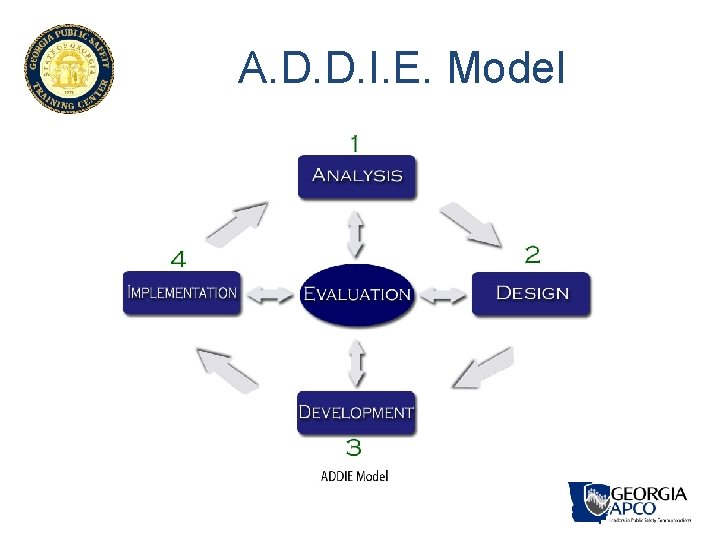
What does A. D. D. I. E. mean?
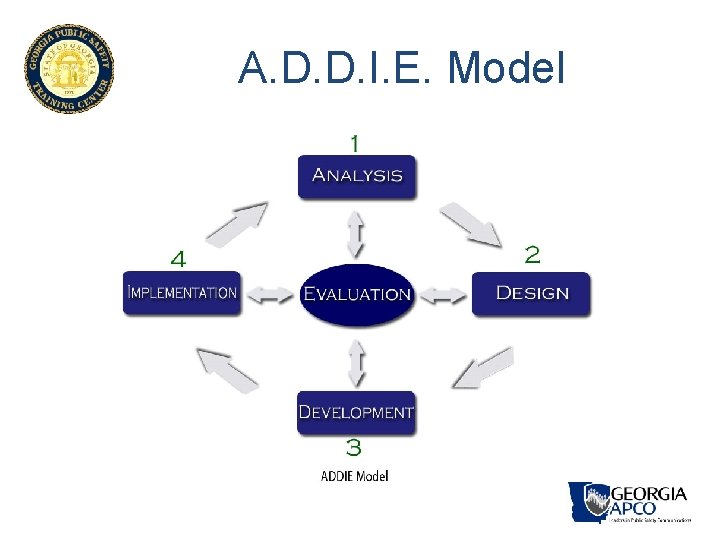
A. D. D. I. E. Model
Analysis • A mandate • An organizational problem • A new initiative • Training Needs Assessment • Job Task Analysis • Occupational Analysis • Surveys • Job Descriptions
Design • What is specific training need? • What are you trying to accomplish? • To what degree of learning are we trying to reach? • Who is our audience? • Is it cognitive and/or psychomotor based? • What is our measure of success/failure?
Design • • • Establish training goal Develop terminal performance objective Develop enabling objectives Determine testing methodologies Determine instructional methodologies Determine course development resources
Development • Describe performance expectations as a result of training • Focus on learner-centered objectives • Base content on these objectives • Develop training materials • Develop testing materials
Implementation • • Delivery of the training Effective instructional techniques Learner-centered activities Involve hands-on demonstrations and performance activities • Focus on scenario or problem-based training
Evaluation • Formal written and/or performance exams covering content • Under the same or simulated job conditions • Grading rubric or standardized evaluation criteria • Trained evaluators • Established cut score for pass/fail • Remediate & re-evaluate
A. D. D. I. E. Model
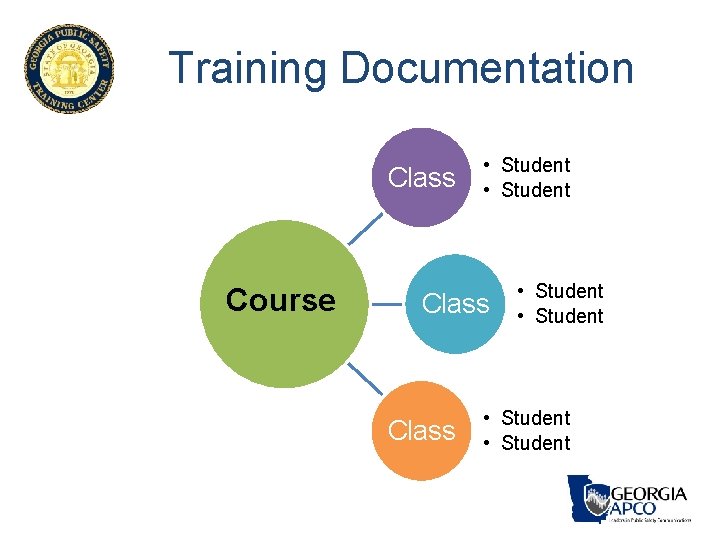
Training Documentation Class Course • Student Class • Student
Training Courses • • Narrative Lesson Plans & Handouts Data Slides & Other Audio/Visual Aids Practical Exercises Course Schedule Written Examination Plan Performance Examination Plan Course Evaluation Plan Approval(s) for content
Training Classes • • Course Topic/Description Dates of Class Delivery Instructor(s) name Course content and performance objectives Testing (scores, types) Remedial training, if provided Training schedules Student names (attendance sheets/rosters)
Student Records • • • Individual employee records Courses completed Scores/completion status Documentation of performance Documentation of remedial training Career long record
Written Examinations • Well written test items • Related to specific training objectives • Clearly written test taking instructions – Answer sheet – Time limit – % score to pass • Maintained in a secure file • Test scores (item analysis)
Performance Examinations • Directly related to training objectives • Under the same or simulated job conditions • Grading rubric or standardized evaluation criteria • Trained evaluators • Established cut score for pass/fail
Thank You! Cheryl J. Greathouse, MPA, RPL Director, Instructional Services Georgia Public Safety Training Center 478 -993 -4637 cgreathouse@gpstc. org