
Essentials of Antimicrobial Mouthwashes An educational course for
Essentials of Antimicrobial Mouthwashes An educational course for dental and hygiene professionals The third-party trademarks used herein are the property of their respective owners. Mc. NEIL-PPC, Inc. 2010. All rights reserved.
COURSE OUTCOMES This course will provide the participant with an understanding of: 1 2 3 Dental plaque biofilm and its relationship to oral health Safety and efficacy of antimicrobial mouthrinses in an oral health regimen Methods for encouraging patients to include antimicrobial mouthrinses in their oral hygiene regimen 2 Mc. NEIL-PPC, Inc. 2010. All rights reserved.
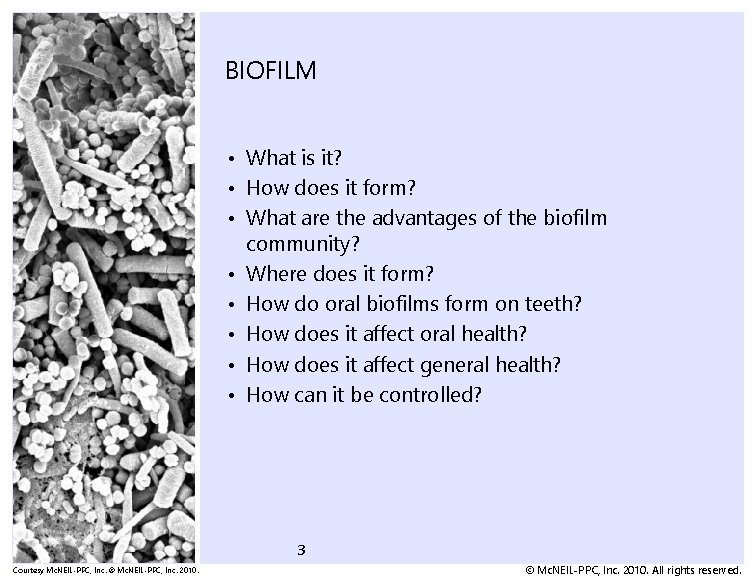
BIOFILM • What is it? • How does it form? • What are the advantages of the biofilm community? • Where does it form? • How do oral biofilms form on teeth? • How does it affect oral health? • How does it affect general health? • How can it be controlled? 3 Courtesy Mc. NEIL-PPC, Inc. 2010. All rights reserved.
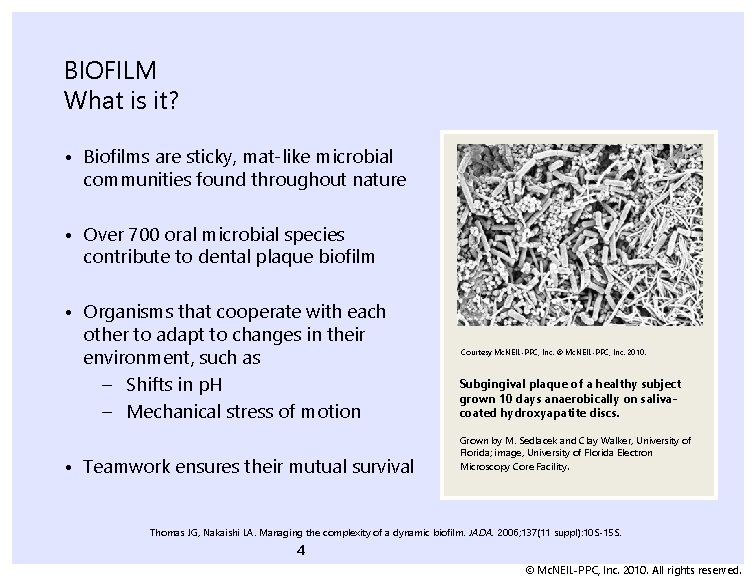
BIOFILM What is it? • Biofilms are sticky, mat-like microbial communities found throughout nature • Over 700 oral microbial species contribute to dental plaque biofilm • Organisms that cooperate with each other to adapt to changes in their environment, such as – Shifts in p. H – Mechanical stress of motion • Teamwork ensures their mutual survival Courtesy Mc. NEIL-PPC, Inc. 2010. Subgingival plaque of a healthy subject grown 10 days anaerobically on salivacoated hydroxyapatite discs. Grown by M. Sedlacek and Clay Walker, University of Florida; image, University of Florida Electron Microscopy Core Facility. Thomas JG, Nakaishi LA. Managing the complexity of a dynamic biofilm. JADA. 2006; 137(11 suppl): 10 S-15 S. 4 Mc. NEIL-PPC, Inc. 2010. All rights reserved.
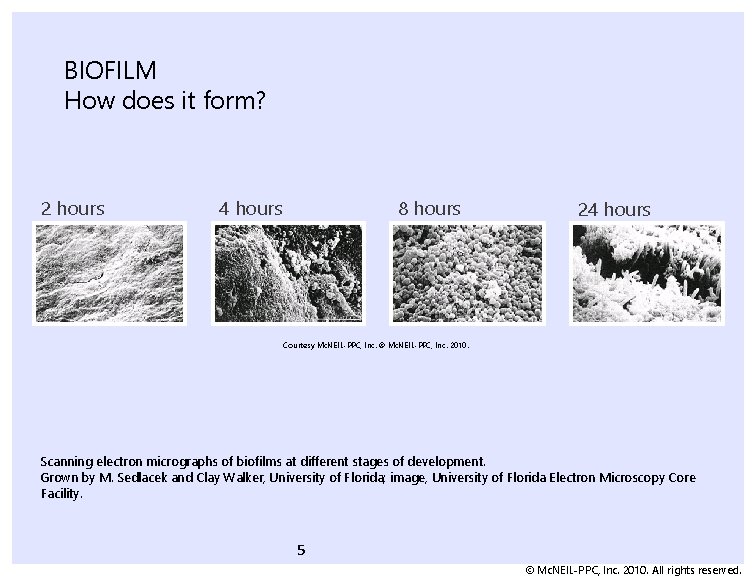
BIOFILM How does it form? 2 hours 4 hours 8 hours 24 hours Courtesy Mc. NEIL-PPC, Inc. 2010. Scanning electron micrographs of biofilms at different stages of development. Grown by M. Sedlacek and Clay Walker, University of Florida; image, University of Florida Electron Microscopy Core Facility. 5 Mc. NEIL-PPC, Inc. 2010. All rights reserved.
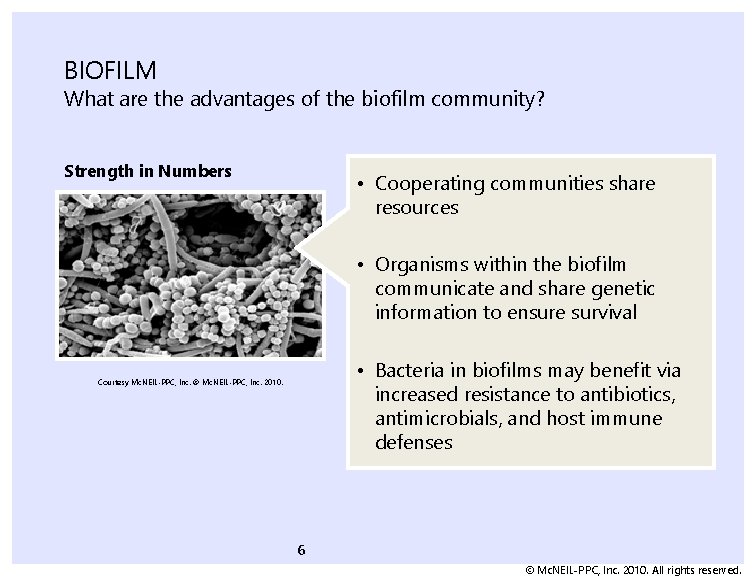
BIOFILM What are the advantages of the biofilm community? Strength in Numbers • Cooperating communities share resources • Organisms within the biofilm communicate and share genetic information to ensure survival • Bacteria in biofilms may benefit via increased resistance to antibiotics, antimicrobials, and host immune defenses Courtesy Mc. NEIL-PPC, Inc. 2010. 6 Mc. NEIL-PPC, Inc. 2010. All rights reserved.
BIOFILM Where does it form? Examples Biofilms can form on any surface exposed to bacteria and water. In the world In Medicine In Dentistry – Drinking water reservoirs – Ship hulls – Medical implants – Stents – Dental unit water lines – Form on the teeth and other surfaces and reservoirs in the mouth 7 Mc. NEIL-PPC, Inc. 2010. All rights reserved.
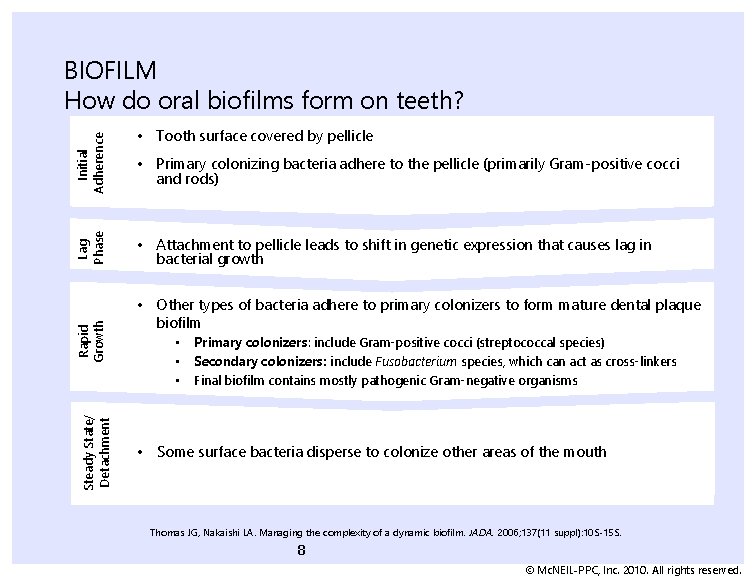
Steady State/ Detachment Rapid Growth Lag Phase Initial Adherence BIOFILM How do oral biofilms form on teeth? • Tooth surface covered by pellicle • Primary colonizing bacteria adhere to the pellicle (primarily Gram-positive cocci and rods) • Attachment to pellicle leads to shift in genetic expression that causes lag in bacterial growth • Other types of bacteria adhere to primary colonizers to form mature dental plaque biofilm • • • Primary colonizers: include Gram-positive cocci (streptococcal species) Secondary colonizers: include Fusobacterium species, which can act as cross-linkers Final biofilm contains mostly pathogenic Gram-negative organisms • Some surface bacteria disperse to colonize other areas of the mouth Thomas JG, Nakaishi LA. Managing the complexity of a dynamic biofilm. JADA. 2006; 137(11 suppl): 10 S-15 S. 8 Mc. NEIL-PPC, Inc. 2010. All rights reserved.
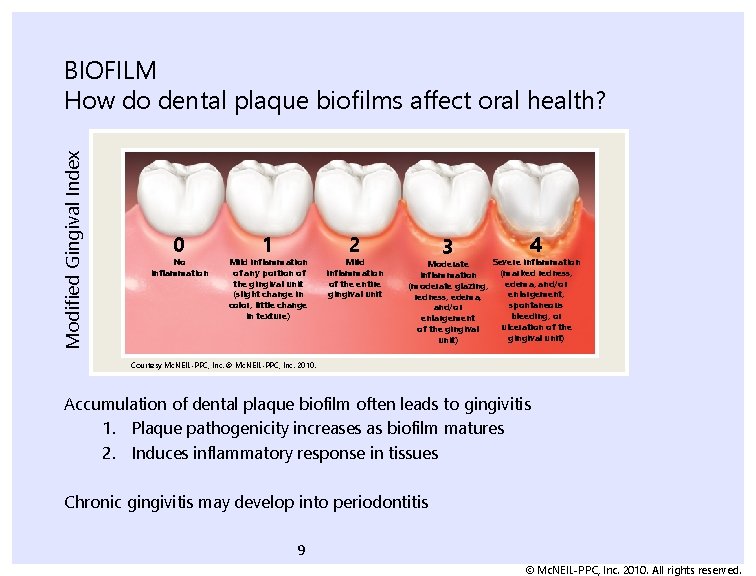
Modified Gingival Index BIOFILM How do dental plaque biofilms affect oral health? 0 No inflammation 1 Mild inflammation of any portion of the gingival unit (slight change in color, little change in texture) 2 Mild inflammation of the entire gingival unit 3 4 Severe inflammation Moderate (marked redness, inflammation edema, and/or (moderate glazing, enlargement, redness, edema, spontaneous and/or bleeding, or enlargement ulceration of the gingival unit) Courtesy Mc. NEIL-PPC, Inc. 2010. Accumulation of dental plaque biofilm often leads to gingivitis 1. Plaque pathogenicity increases as biofilm matures 2. Induces inflammatory response in tissues Chronic gingivitis may develop into periodontitis 9 Mc. NEIL-PPC, Inc. 2010. All rights reserved.
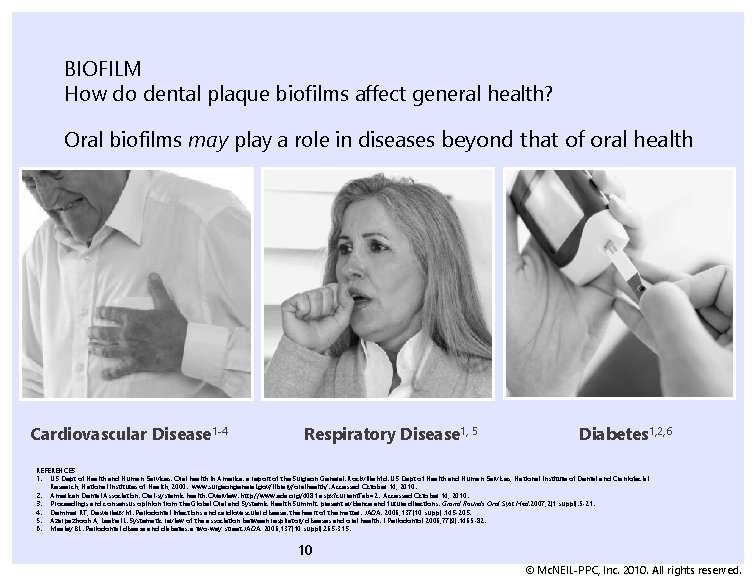
BIOFILM How do dental plaque biofilms affect general health? Oral biofilms may play a role in diseases beyond that of oral health Cardiovascular Disease 1 -4 Respiratory Disease 1, 5 Diabetes 1, 2, 6 REFERENCES 1. US Dept of Health and Human Services. Oral health in America: a report of the Surgeon General. Rockville Md: US Dept of Health and Human Services, National Institute of Dental and Craniofacial Research, National Institutes of Health, 2000. www. surgeongeneral. gov/library/oralhealth/. Accessed October 14, 2010. 2. American Dental Association. Oral-systemic health. Overview. http: //www. ada. org/4081. aspx? current. Tab=2. Accessed October 14, 2010. 3. Proceedings and consensus opinion from the Global Oral and Systemic Health Summit: present evidence and future directions. Grand Rounds Oral Syst Med. 2007; 2(1 suppl): 5 -21. 4. Demmer RT, Desvarieux M. Periodontal infections and cardiovascular disease: the heart of the matter. JADA. 2006; 137(10 suppl): 14 S-20 S. 5. Azarpazhooh A, Leake JL. Systematic review of the association between respiratory diseases and oral health. J Periodontol 2006; 77(9): 1465 -82. 6. Mealey BL. Periodontal disease and diabetes: a two-way street. JADA. 2006; 137(10 suppl): 26 S-31 S. 10 Mc. NEIL-PPC, Inc. 2010. All rights reserved.
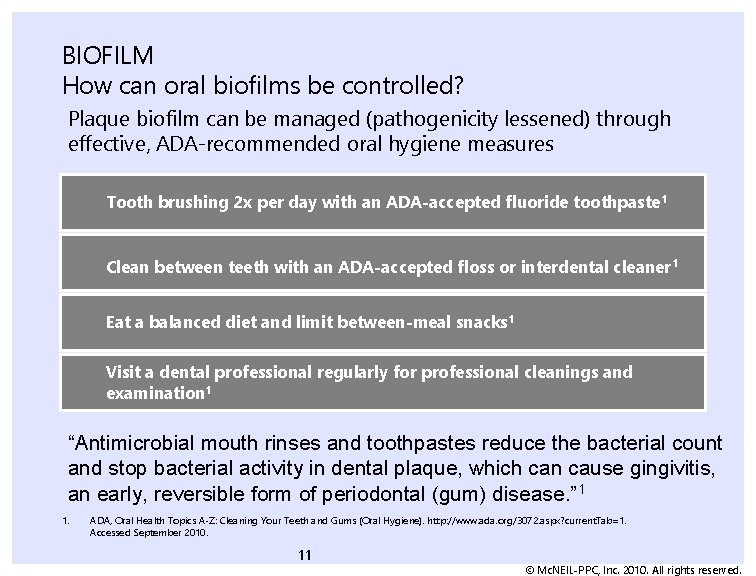
BIOFILM How can oral biofilms be controlled? Plaque biofilm can be managed (pathogenicity lessened) through effective, ADA-recommended oral hygiene measures Tooth brushing 2 x per day with an ADA-accepted fluoride toothpaste 1 Clean between teeth with an ADA-accepted floss or interdental cleaner 1 Eat a balanced diet and limit between-meal snacks 1 Visit a dental professional regularly for professional cleanings and examination 1 “Antimicrobial mouth rinses and toothpastes reduce the bacterial count and stop bacterial activity in dental plaque, which can cause gingivitis, an early, reversible form of periodontal (gum) disease. ” 1 1. ADA, Oral Health Topics A-Z: Cleaning Your Teeth and Gums (Oral Hygiene). http: //www. ada. org/3072. aspx? current. Tab=1. Accessed September 2010. 11 Mc. NEIL-PPC, Inc. 2010. All rights reserved.
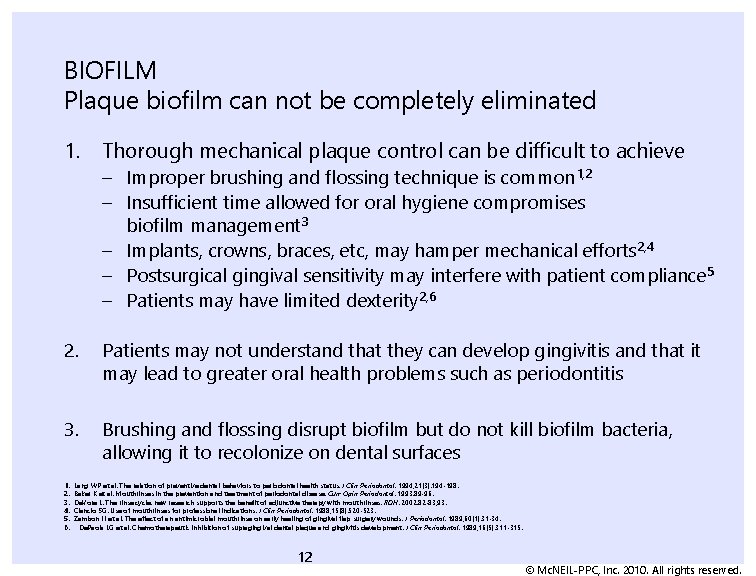
BIOFILM Plaque biofilm can not be completely eliminated 1. Thorough mechanical plaque control can be difficult to achieve 2. Patients may not understand that they can develop gingivitis and that it may lead to greater oral health problems such as periodontitis 3. Brushing and flossing disrupt biofilm but do not kill biofilm bacteria, allowing it to recolonize on dental surfaces – Improper brushing and flossing technique is common 1, 2 – Insufficient time allowed for oral hygiene compromises biofilm management 3 – Implants, crowns, braces, etc, may hamper mechanical efforts 2, 4 – Postsurgical gingival sensitivity may interfere with patient compliance 5 – Patients may have limited dexterity 2, 6 1. 2. 3. 4. 5. Lang WP et al. The relation of preventive dental behaviors to periodontal health status. J Clin Periodontol. 1994; 21(3): 194 -198. Baker K et al. Mouthrinses in the prevention and treatment of periodontal disease. Curr Opin Periodontol. 1993: 89 -96. De. Vore L. The rinse cycle: new research supports the benefit of adjunctive therapy with mouthrinses. RDH. 2002: 82 -83, 93. Ciancio SG. Use of mouthrinses for professional indications. J Clin Periodontol. 1988; 15(8): 520 -523. Zambon JJ et al. The effect of an antimicrobial mouthrinse on early healing of gingival flap surgery wounds. J Periodontol. 1989; 60(1): 31 -34. 6. De. Paola LG et al. Chemotherapeutic inhibition of supragingival dental plaque and gingivitis development. J Clin Periodontol. 1989; 16(5): 311 -315. 12 Mc. NEIL-PPC, Inc. 2010. All rights reserved.
BIOFILM How can oral biofilms be controlled? The American Dental Association has highlighted that “antimicrobial mouthrinses. . . reduce the bacterial count and stop bacterial activity in dental plaque, which can cause gingivitis. . . ” 1 Antimicrobial mouthrinses play an important role in managing biofilm for your patients. 1. ADA, Oral Health Topics A-Z: Cleaning Your Teeth and Gums (Oral Hygiene). http: //www. ada. org/3072. aspx? current. Tab=1. Accessed March 2010. 13 Mc. NEIL-PPC, Inc. 2010. All rights reserved.
Antimicrobial Mouthrinses 14 Mc. NEIL-PPC, Inc. 2010. All rights reserved.
ANTIMICROBIAL MOUTHRINSES • • • Why rinse? Who can benefit from rinsing? What are the active ingredients of antimicrobial rinses? How do they work? How do we know they are safe? What does the ADA advise about antimicrobial rinses? 15 Mc. NEIL-PPC, Inc. 2010. All rights reserved.
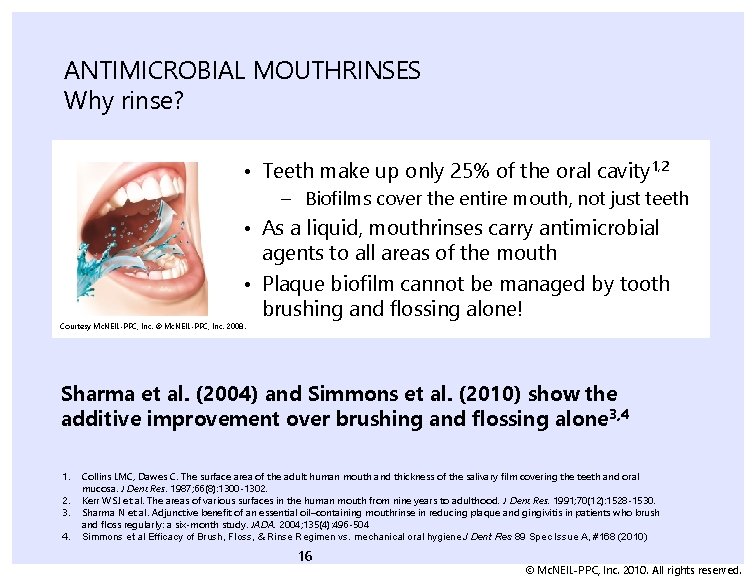
ANTIMICROBIAL MOUTHRINSES Why rinse? • Teeth make up only 25% of the oral cavity 1, 2 – Biofilms cover the entire mouth, not just teeth • As a liquid, mouthrinses carry antimicrobial agents to all areas of the mouth • Plaque biofilm cannot be managed by tooth brushing and flossing alone! Courtesy Mc. NEIL-PPC, Inc. 2008. Sharma et al. (2004) and Simmons et al. (2010) show the additive improvement over brushing and flossing alone 3, 4 1. 2. 3. 4. Collins LMC, Dawes C. The surface area of the adult human mouth and thickness of the salivary film covering the teeth and oral mucosa. J Dent Res. 1987; 66(8): 1300 -1302. Kerr WSJ et al. The areas of various surfaces in the human mouth from nine years to adulthood. J Dent Res. 1991; 70(12): 1528 -1530. Sharma N et al. Adjunctive benefit of an essential oil–containing mouthrinse in reducing plaque and gingivitis in patients who brush and floss regularly: a six-month study. JADA. 2004; 135(4): 496 -504 Simmons et al Efficacy of Brush, Floss, & Rinse Regimen vs. mechanical oral hygiene J Dent Res 89 Spec Issue A, #168 (2010) 16 Mc. NEIL-PPC, Inc. 2010. All rights reserved.
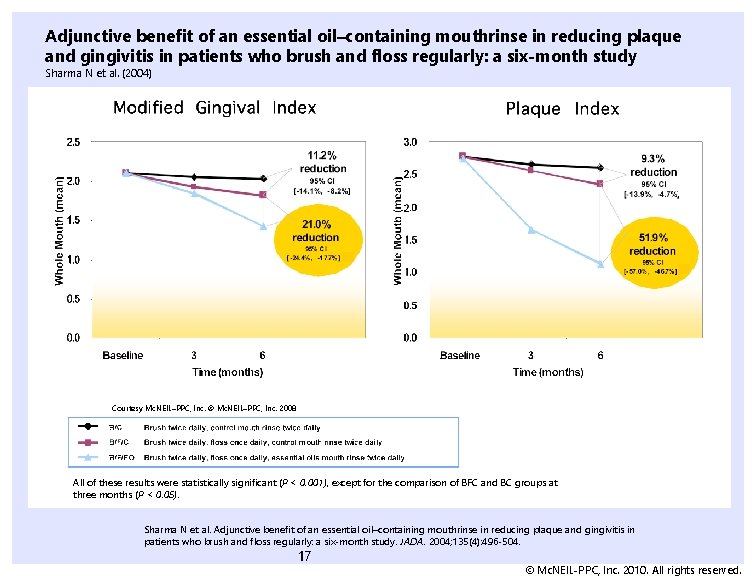
Adjunctive benefit of an essential oil–containing mouthrinse in reducing plaque and gingivitis in patients who brush and floss regularly: a six-month study Sharma N et al. (2004) Courtesy Mc. NEIL–PPC, Inc. 2008 All of these results were statistically significant (P < 0. 001), except for the comparison of BFC and BC groups at three months (P < 0. 05). Sharma N et al. Adjunctive benefit of an essential oil–containing mouthrinse in reducing plaque and gingivitis in patients who brush and floss regularly: a six-month study. JADA. 2004; 135(4): 496 -504. 17 Mc. NEIL-PPC, Inc. 2010. All rights reserved.
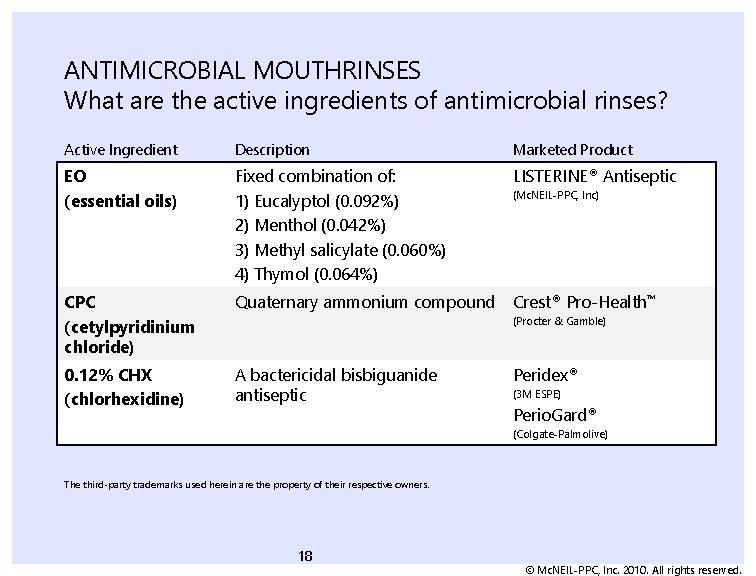
ANTIMICROBIAL MOUTHRINSES What are the active ingredients of antimicrobial rinses? Active Ingredient Description Marketed Product EO (essential oils) Fixed combination of: 1) Eucalyptol (0. 092%) 2) Menthol (0. 042%) 3) Methyl salicylate (0. 060%) 4) Thymol (0. 064%) LISTERINE® Antiseptic CPC (cetylpyridinium chloride) Quaternary ammonium compound Crest® Pro-Health™ 0. 12% CHX (chlorhexidine) A bactericidal bisbiguanide antiseptic (Mc. NEIL-PPC, Inc) (Procter & Gamble) Peridex® (3 M ESPE) Perio. Gard® (Colgate-Palmolive) The third-party trademarks used herein are the property of their respective owners. 18 Mc. NEIL-PPC, Inc. 2010. All rights reserved.
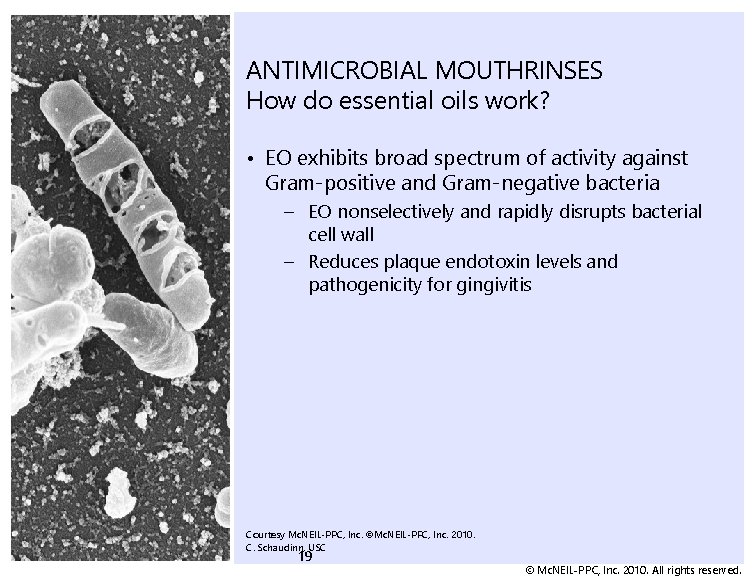
ANTIMICROBIAL MOUTHRINSES How do essential oils work? • EO exhibits broad spectrum of activity against Gram-positive and Gram-negative bacteria – EO nonselectively and rapidly disrupts bacterial cell wall – Reduces plaque endotoxin levels and pathogenicity for gingivitis Courtesy Mc. NEIL-PPC, Inc. 2010. C. Schaudinn, USC 19 Mc. NEIL-PPC, Inc. 2010. All rights reserved.
ANTIMICROBIAL MOUTHRINSES How do essential oil-containing mouthrinses help control biofilm? • Essential oils help control biofilm by 1, 2, 3 – – Damaging the bacterial cell surface Interfering with biofilm growth and vitality Increasing bacteria regeneration time Extracting bacterial endotoxins • This mechanism of action ensures a deeper clean when using mouthrinses with essential oils. 1. 2. 3. Fine DH, Furgang D, Lieb R, et al. Effects of sublethal exposure to an antiseptic mouthrinse on representative plaque bacteria. J Clin Periodontol. 1996; 23(5): 444 -451. Kubert D, Rubin M, Barnett ML, Vincent JW. Antiseptic mouthrinse-induced microbial cell surface alterations. Am J Dent. 1993; 6(6): 277 -279. Pan PC et al. In vitro evidence for efficacy of antimicrobial mouthrinses. J. Dent 38 S 1; S 16 -S 20, 2010 20 Mc. NEIL-PPC, Inc. 2010. All rights reserved.
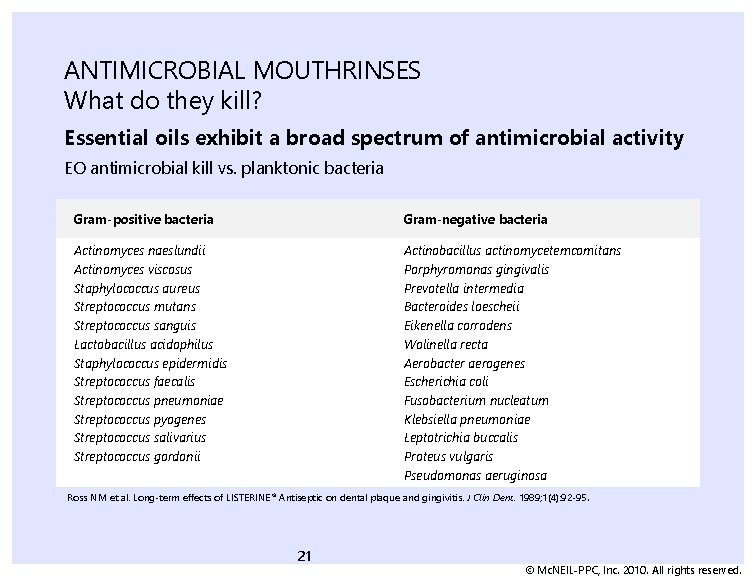
ANTIMICROBIAL MOUTHRINSES What do they kill? Essential oils exhibit a broad spectrum of antimicrobial activity EO antimicrobial kill vs. planktonic bacteria Gram-positive bacteria Gram-negative bacteria Actinomyces naeslundii Actinomyces viscosus Staphylococcus aureus Streptococcus mutans Streptococcus sanguis Lactobacillus acidophilus Staphylococcus epidermidis Streptococcus faecalis Streptococcus pneumoniae Streptococcus pyogenes Streptococcus salivarius Streptococcus gordonii Actinobacillus actinomycetemcomitans Porphyromonas gingivalis Prevotella intermedia Bacteroides loescheii Eikenella corrodens Wolinella recta Aerobacter aerogenes Escherichia coli Fusobacterium nucleatum Klebsiella pneumoniae Leptotrichia buccalis Proteus vulgaris Pseudomonas aeruginosa Ross NM et al. Long-term effects of LISTERINE ® Antiseptic on dental plaque and gingivitis. J Clin Dent. 1989; 1(4): 92 -95. 21 Mc. NEIL-PPC, Inc. 2010. All rights reserved.
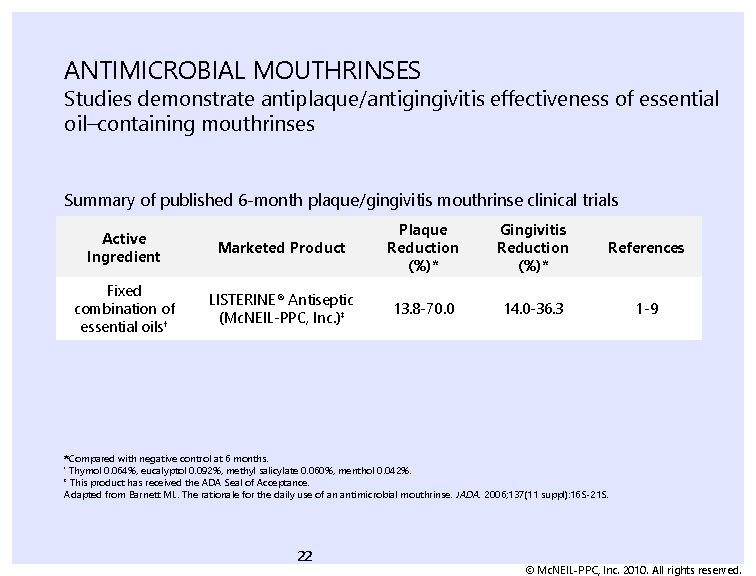
ANTIMICROBIAL MOUTHRINSES Studies demonstrate antiplaque/antigingivitis effectiveness of essential oil–containing mouthrinses Summary of published 6 -month plaque/gingivitis mouthrinse clinical trials Active Ingredient Fixed combination of essential oils† Marketed Product Plaque Reduction (%)* Gingivitis Reduction (%)* References LISTERINE® Antiseptic (Mc. NEIL-PPC, Inc. )‡ 13. 8 -70. 0 14. 0 -36. 3 1 -9 *Compared with negative control at 6 months. † Thymol 0. 064%, eucalyptol 0. 092%, methyl salicylate 0. 060%, menthol 0. 042%. ‡ This product has received the ADA Seal of Acceptance. Adapted from Barnett ML. The rationale for the daily use of an antimicrobial mouthrinse. JADA. 2006; 137(11 suppl): 16 S-21 S. 22 Mc. NEIL-PPC, Inc. 2010. All rights reserved.
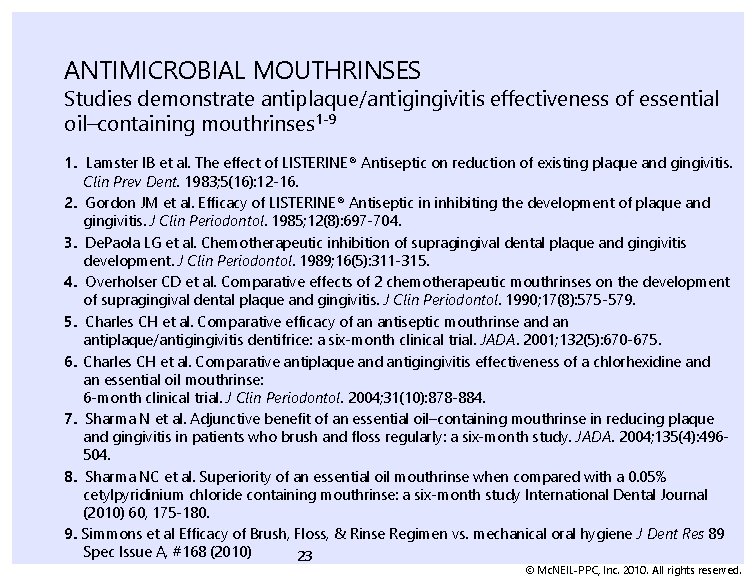
ANTIMICROBIAL MOUTHRINSES Studies demonstrate antiplaque/antigingivitis effectiveness of essential oil–containing mouthrinses 1 -9 1. Lamster IB et al. The effect of LISTERINE® Antiseptic on reduction of existing plaque and gingivitis. Clin Prev Dent. 1983; 5(16): 12 -16. 2. Gordon JM et al. Efficacy of LISTERINE® Antiseptic in inhibiting the development of plaque and gingivitis. J Clin Periodontol. 1985; 12(8): 697 -704. 3. De. Paola LG et al. Chemotherapeutic inhibition of supragingival dental plaque and gingivitis development. J Clin Periodontol. 1989; 16(5): 311 -315. 4. Overholser CD et al. Comparative effects of 2 chemotherapeutic mouthrinses on the development of supragingival dental plaque and gingivitis. J Clin Periodontol. 1990; 17(8): 575 -579. 5. Charles CH et al. Comparative efficacy of an antiseptic mouthrinse and an antiplaque/antigingivitis dentifrice: a six-month clinical trial. JADA. 2001; 132(5): 670 -675. 6. Charles CH et al. Comparative antiplaque and antigingivitis effectiveness of a chlorhexidine and an essential oil mouthrinse: 6 -month clinical trial. J Clin Periodontol. 2004; 31(10): 878 -884. 7. Sharma N et al. Adjunctive benefit of an essential oil–containing mouthrinse in reducing plaque and gingivitis in patients who brush and floss regularly: a six-month study. JADA. 2004; 135(4): 496504. 8. Sharma NC et al. Superiority of an essential oil mouthrinse when compared with a 0. 05% cetylpyridinium chloride containing mouthrinse: a six-month study International Dental Journal (2010) 60, 175 -180. 9. Simmons et al Efficacy of Brush, Floss, & Rinse Regimen vs. mechanical oral hygiene J Dent Res 89 Spec Issue A, #168 (2010) Mc. NEIL-PPC, Inc. 2010. All rights reserved. 23 Mc. NEIL-PPC, Inc. 2010. All rights reserved.
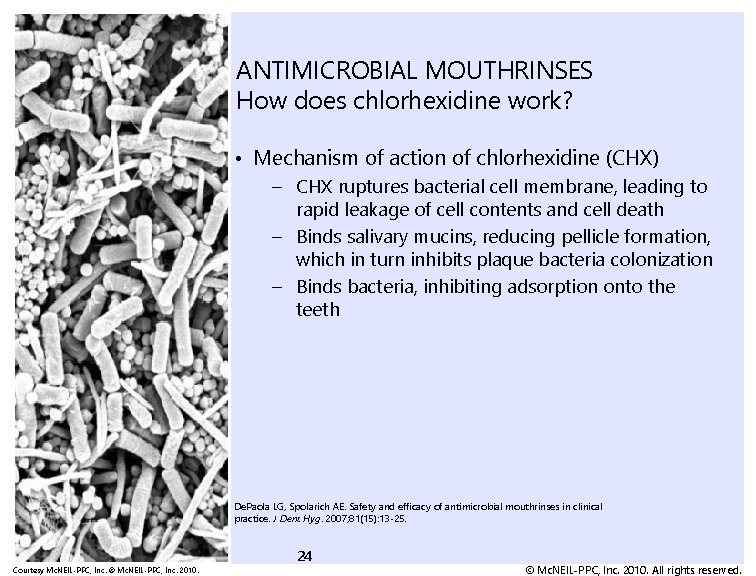
ANTIMICROBIAL MOUTHRINSES How does chlorhexidine work? • Mechanism of action of chlorhexidine (CHX) – CHX ruptures bacterial cell membrane, leading to rapid leakage of cell contents and cell death – Binds salivary mucins, reducing pellicle formation, which in turn inhibits plaque bacteria colonization – Binds bacteria, inhibiting adsorption onto the teeth De. Paola LG, Spolarich AE. Safety and efficacy of antimicrobial mouthrinses in clinical practice. J Dent Hyg. 2007; 81(15): 13 -25. Courtesy Mc. NEIL-PPC, Inc. 2010. 24 Mc. NEIL-PPC, Inc. 2010. All rights reserved.
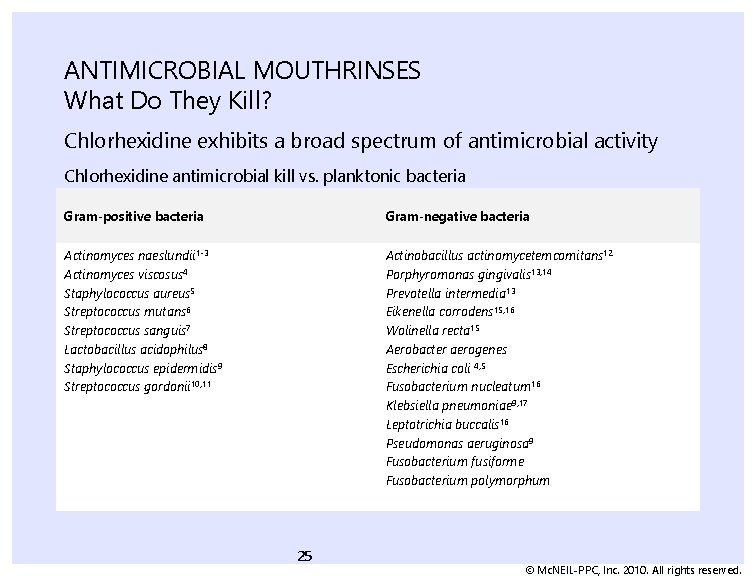
ANTIMICROBIAL MOUTHRINSES What Do They Kill? Chlorhexidine exhibits a broad spectrum of antimicrobial activity Chlorhexidine antimicrobial kill vs. planktonic bacteria Gram-positive bacteria Gram-negative bacteria Actinomyces naeslundii 1 -3 Actinomyces viscosus 4 Staphylococcus aureus 5 Streptococcus mutans 6 Streptococcus sanguis 7 Lactobacillus acidophilus 8 Staphylococcus epidermidis 9 Streptococcus gordonii 10, 11 Actinobacillus actinomycetemcomitans 12 Porphyromonas gingivalis 13, 14 Prevotella intermedia 13 Eikenella corrodens 15, 16 Wolinella recta 15 Aerobacter aerogenes Escherichia coli 4, 5 Fusobacterium nucleatum 16 Klebsiella pneumoniae 9, 17 Leptotrichia buccalis 16 Pseudomonas aeruginosa 9 Fusobacterium fusiforme Fusobacterium polymorphum 25 Mc. NEIL-PPC, Inc. 2010. All rights reserved.
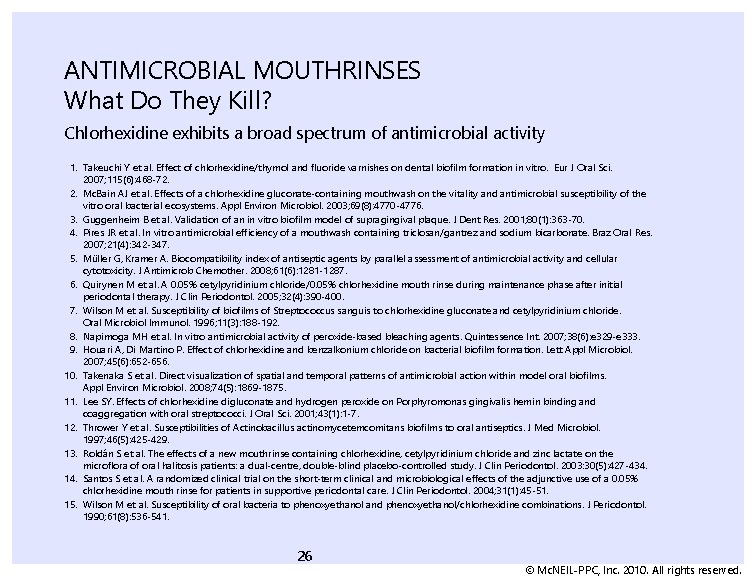
ANTIMICROBIAL MOUTHRINSES What Do They Kill? Chlorhexidine exhibits a broad spectrum of antimicrobial activity 1. Takeuchi Y et al. Effect of chlorhexidine/thymol and fluoride varnishes on dental biofilm formation in vitro. Eur J Oral Sci. 2007; 115(6): 468 -72. 2. Mc. Bain AJ et al. Effects of a chlorhexidine gluconate-containing mouthwash on the vitality and antimicrobial susceptibility of the vitro oral bacterial ecosystems. Appl Environ Microbiol. 2003; 69(8): 4770 -4776. 3. Guggenheim B et al. Validation of an in vitro biofilm model of supragingival plaque. J Dent Res. 2001; 80(1): 363 -70. 4. Pires JR et al. In vitro antimicrobial efficiency of a mouthwash containing triclosan/gantrez and sodium bicarbonate. Braz Oral Res. 2007; 21(4): 342 -347. 5. Müller G, Kramer A. Biocompatibility index of antiseptic agents by parallel assessment of antimicrobial activity and cellular cytotoxicity. J Antimicrob Chemother. 2008; 61(6): 1281 -1287. 6. Quirynen M et al. A 0. 05% cetylpyridinium chloride/0. 05% chlorhexidine mouth rinse during maintenance phase after initial periodontal therapy. J Clin Periodontol. 2005; 32(4): 390 -400. 7. Wilson M et al. Susceptibility of biofilms of Streptococcus sanguis to chlorhexidine gluconate and cetylpyridinium chloride. Oral Microbiol Immunol. 1996; 11(3): 188 -192. 8. Napimoga MH et al. In vitro antimicrobial activity of peroxide-based bleaching agents. Quintessence Int. 2007; 38(6): e 329 -e 333. 9. Houari A, Di Martino P. Effect of chlorhexidine and benzalkonium chloride on bacterial biofilm formation. Lett Appl Microbiol. 2007; 45(6): 652 -656. 10. Takenaka S et al. Direct visualization of spatial and temporal patterns of antimicrobial action within model oral biofilms. Appl Environ Microbiol. 2008; 74(5): 1869 -1875. 11. Lee SY. Effects of chlorhexidine digluconate and hydrogen peroxide on Porphyromonas gingivalis hemin binding and coaggregation with oral streptococci. J Oral Sci. 2001; 43(1): 1 -7. 12. Thrower Y et al. Susceptibilities of Actinobacillus actinomycetemcomitans biofilms to oral antiseptics. J Med Microbiol. 1997; 46(5): 425 -429. 13. Roldán S et al. The effects of a new mouthrinse containing chlorhexidine, cetylpyridinium chloride and zinc lactate on the microflora of oral halitosis patients: a dual-centre, double-blind placebo-controlled study. J Clin Periodontol. 2003: 30(5): 427 -434. 14. Santos S et al. A randomized clinical trial on the short-term clinical and microbiological effects of the adjunctive use of a 0. 05% chlorhexidine mouth rinse for patients in supportive periodontal care. J Clin Periodontol. 2004; 31(1): 45 -51. 15. Wilson M et al. Susceptibility of oral bacteria to phenoxyethanol and phenoxyethanol/chlorhexidine combinations. J Periodontol. 1990; 61(8): 536 -541. 26 Mc. NEIL-PPC, Inc. 2010. All rights reserved.
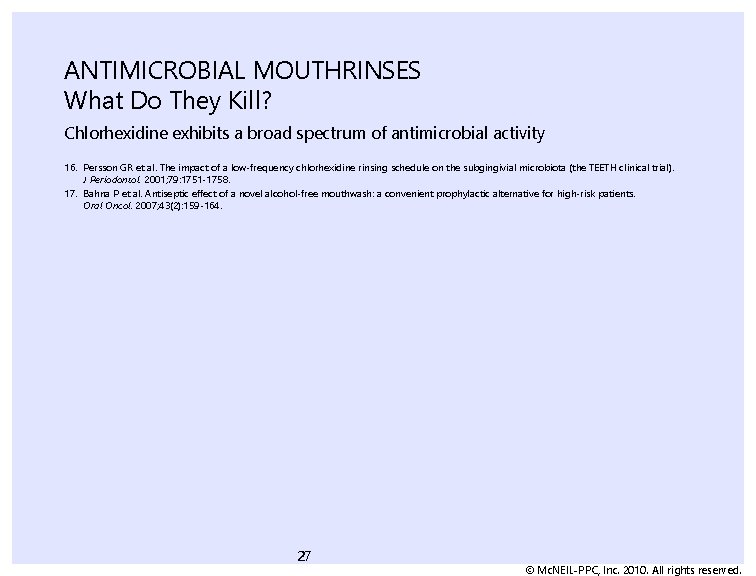
ANTIMICROBIAL MOUTHRINSES What Do They Kill? Chlorhexidine exhibits a broad spectrum of antimicrobial activity 16. Persson GR et al. The impact of a low-frequency chlorhexidine rinsing schedule on the subgingivial microbiota (the TEETH clinical trial). J Periodontol. 2001; 79: 1751 -1758. 17. Bahna P et al. Antiseptic effect of a novel alcohol-free mouthwash: a convenient prophylactic alternative for high-risk patients. Oral Oncol. 2007; 43(2): 159 -164. 27 Mc. NEIL-PPC, Inc. 2010. All rights reserved.
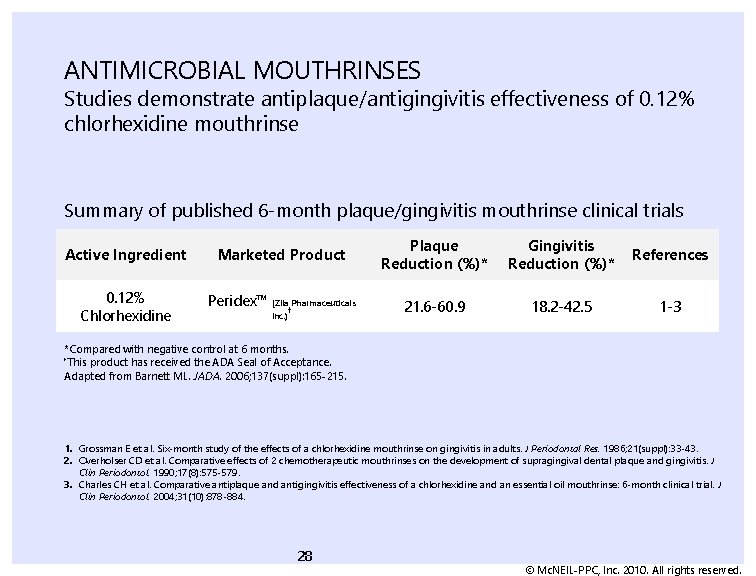
ANTIMICROBIAL MOUTHRINSES Studies demonstrate antiplaque/antigingivitis effectiveness of 0. 12% chlorhexidine mouthrinse Summary of published 6 -month plaque/gingivitis mouthrinse clinical trials Active Ingredient Marketed Product Plaque Reduction (%)* Gingivitis Reduction (%)* References 0. 12% Chlorhexidine Peridex™ (Zila Pharmaceuticals 21. 6 -60. 9 18. 2 -42. 5 1 -3 Inc. )† *Compared with negative control at 6 months. †This product has received the ADA Seal of Acceptance. Adapted from Barnett ML. JADA. 2006; 137(suppl): 165 -215. 1. Grossman E et al. Six-month study of the effects of a chlorhexidine mouthrinse on gingivitis in adults. J Periodontal Res. 1986; 21(suppl): 33 -43. 2. Overholser CD et al. Comparative effects of 2 chemotherapeutic mouthrinses on the development of supragingival dental plaque and gingivitis. J Clin Periodontol. 1990; 17(8): 575 -579. 3. Charles CH et al. Comparative antiplaque and antigingivitis effectiveness of a chlorhexidine and an essential oil mouthrinse: 6 -month clinical trial. J Clin Periodontol. 2004; 31(10): 878 -884. 28 Mc. NEIL-PPC, Inc. 2010. All rights reserved.
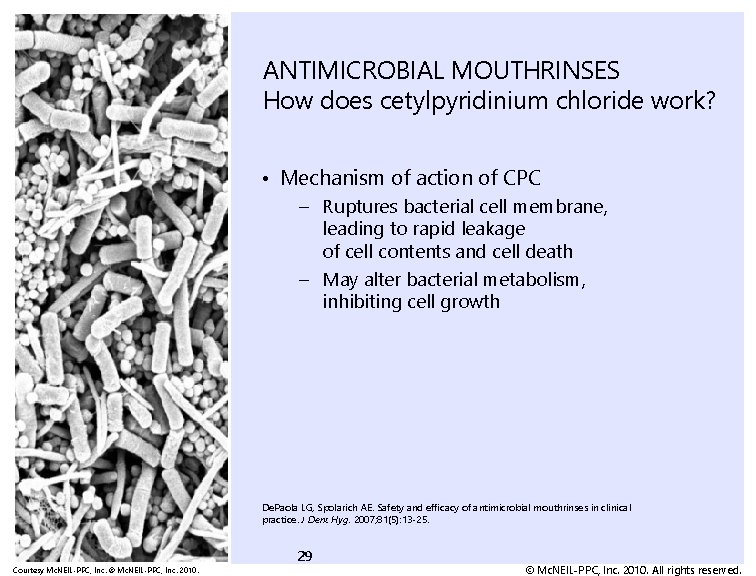
ANTIMICROBIAL MOUTHRINSES How does cetylpyridinium chloride work? • Mechanism of action of CPC – Ruptures bacterial cell membrane, leading to rapid leakage of cell contents and cell death – May alter bacterial metabolism, inhibiting cell growth De. Paola LG, Spolarich AE. Safety and efficacy of antimicrobial mouthrinses in clinical practice. J Dent Hyg. 2007; 81(5): 13 -25. Courtesy Mc. NEIL-PPC, Inc. 2010. 29 Mc. NEIL-PPC, Inc. 2010. All rights reserved.
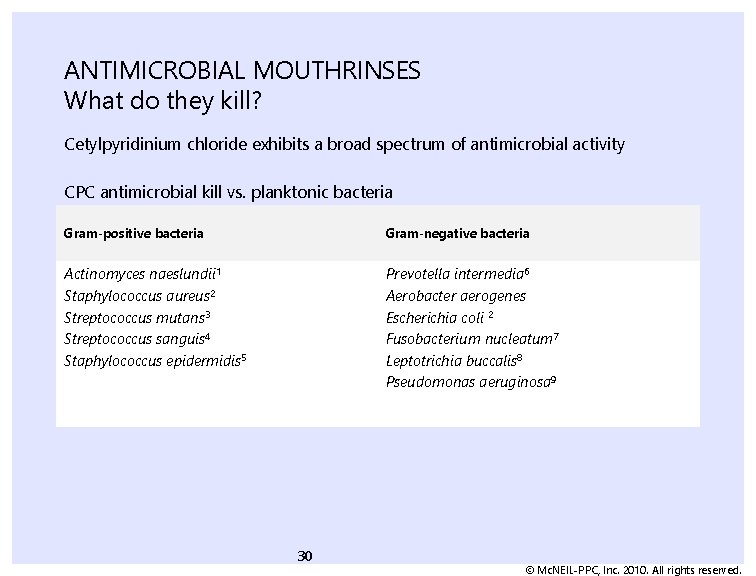
ANTIMICROBIAL MOUTHRINSES What do they kill? Cetylpyridinium chloride exhibits a broad spectrum of antimicrobial activity CPC antimicrobial kill vs. planktonic bacteria Gram-positive bacteria Gram-negative bacteria Actinomyces naeslundii 1 Staphylococcus aureus 2 Streptococcus mutans 3 Streptococcus sanguis 4 Staphylococcus epidermidis 5 Prevotella intermedia 6 Aerobacter aerogenes Escherichia coli 2 Fusobacterium nucleatum 7 Leptotrichia buccalis 8 Pseudomonas aeruginosa 9 30 Mc. NEIL-PPC, Inc. 2010. All rights reserved.
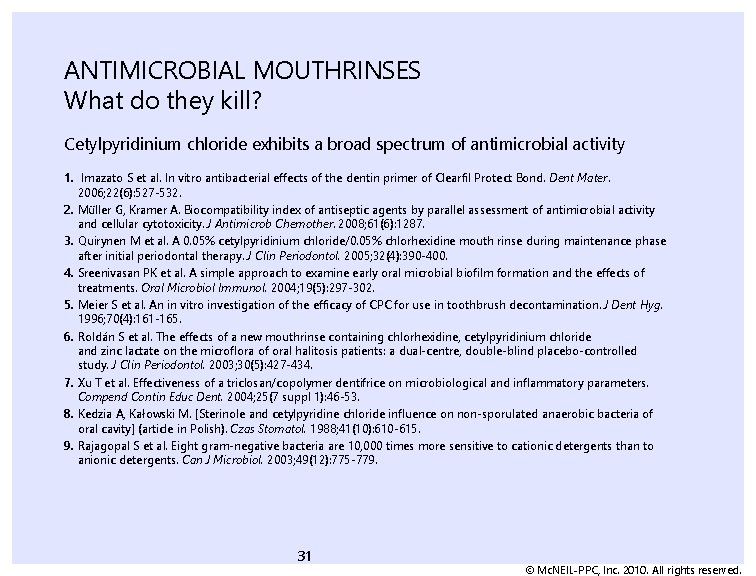
ANTIMICROBIAL MOUTHRINSES What do they kill? Cetylpyridinium chloride exhibits a broad spectrum of antimicrobial activity 1. Imazato S et al. In vitro antibacterial effects of the dentin primer of Clearfil Protect Bond. Dent Mater. 2006; 22(6): 527 -532. 2. Müller G, Kramer A. Biocompatibility index of antiseptic agents by parallel assessment of antimicrobial activity and cellular cytotoxicity. J Antimicrob Chemother. 2008; 61(6): 1287. 3. Quirynen M et al. A 0. 05% cetylpyridinium chloride/0. 05% chlorhexidine mouth rinse during maintenance phase after initial periodontal therapy. J Clin Periodontol. 2005; 32(4): 390 -400. 4. Sreenivasan PK et al. A simple approach to examine early oral microbial biofilm formation and the effects of treatments. Oral Microbiol Immunol. 2004; 19(5): 297 -302. 5. Meier S et al. An in vitro investigation of the efficacy of CPC for use in toothbrush decontamination. J Dent Hyg. 1996; 70(4): 161 -165. 6. Roldán S et al. The effects of a new mouthrinse containing chlorhexidine, cetylpyridinium chloride and zinc lactate on the microflora of oral halitosis patients: a dual-centre, double-blind placebo-controlled study. J Clin Periodontol. 2003; 30(5): 427 -434. 7. Xu T et al. Effectiveness of a triclosan/copolymer dentifrice on microbiological and inflammatory parameters. Compend Contin Educ Dent. 2004; 25(7 suppl 1): 46 -53. 8. Kedzia A, Kałowski M. [Sterinole and cetylpyridine chloride influence on non-sporulated anaerobic bacteria of oral cavity] (article in Polish). Czas Stomatol. 1988; 41(10): 610 -615. 9. Rajagopal S et al. Eight gram-negative bacteria are 10, 000 times more sensitive to cationic detergents than to anionic detergents. Can J Microbiol. 2003; 49(12): 775 -779. 31 Mc. NEIL-PPC, Inc. 2010. All rights reserved.

ANTIMICROBIAL MOUTHRINSES Studies demonstrate antiplaque/antigingivitis effectiveness of cetylpyridinium chloride mouthrinses Summary of published 6 -month plaque/gingivitis mouthrinse clinical trials Active Ingredient Cetylpyridinium chloride 0. 05% 0. 07% Plaque Reduction (%)* Gingivitis Reduction (%)* References Viadent® (Colgate-Palmolive, New York, NY) 28. 2 24. 0 1 Crest® Pro-Health Rinse (Procter & Gamble, Cincinnati, OH) 15. 8 15. 4 2 Marketed Product *Compared with negative control at 6 months. Adapted from Barnett ML. JADA. 2006; 137(suppl): 165 -215. 1. Allen DR et al. Efficacy of a mouthrinse containing 0. 05% cetylpyridinium chloride for the control of plaque and gingivitis: a 6 -month clinical study in adults. Compend Contin Educ Dent. 1998; 19(2 suppl): 20 -26. 2. Mankodi S et al. A 6 -month clinical trial to study the effects of a cetylpyridinium chloride mouthrinse on gingivitis and plaque. Am J Dent. 2005; 18: 9 A-14 A. 32 Mc. NEIL-PPC, Inc. 2010. All rights reserved.
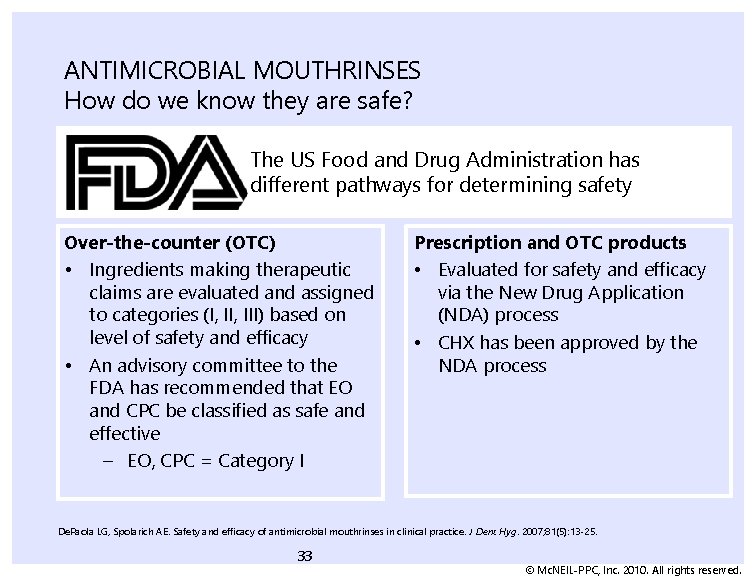
ANTIMICROBIAL MOUTHRINSES How do we know they are safe? The US Food and Drug Administration has different pathways for determining safety Over-the-counter (OTC) • Ingredients making therapeutic claims are evaluated and assigned to categories (I, III) based on level of safety and efficacy • An advisory committee to the FDA has recommended that EO and CPC be classified as safe and effective – EO, CPC = Category I Prescription and OTC products • Evaluated for safety and efficacy via the New Drug Application (NDA) process • CHX has been approved by the NDA process De. Paola LG, Spolarich AE. Safety and efficacy of antimicrobial mouthrinses in clinical practice. J Dent Hyg. 2007; 81(5): 13 -25. 33 Mc. NEIL-PPC, Inc. 2010. All rights reserved.
ANTIMICROBIAL MOUTHRINSES Do not adversely affect oral microbial flora • Studies show that long-term daily use of CHX or EO does not adversely affect the natural balance of oral microbial flora, including – No microbial overgrowth – No opportunistic infection – No development of microbial resistance De. Paola LG, Spolarich AE. Safety and efficacy of antimicrobial mouthrinses in clinical practice. J Dent Hyg. 2007; 81(5): 13 -25. 34 Mc. NEIL-PPC, Inc. 2010. All rights reserved.
ANTIMICROBIAL MOUTHRINSES Role and safety of alcohol • The majority of therapeutic mouthrinses contain pharmaceuticalgrade denatured alcohol (ethanol) to solubilize ingredients – Unlike alcoholic beverages, the pharmaceutical-grade alcohol in commercial mouthrinses is free from contaminating carcinogens 1 • Mouthrinses are expectorated and are not meant for ingestion • Recommend the use of all products as directed by the manufacturer 1. Ciancio SG. Alcohol in mouthrinse: lack of association with cancer. Biol Ther Dent. 1993; 9: 1 -2. 35 Mc. NEIL-PPC, Inc. 2010. All rights reserved.
ANTIMICROBIAL MOUTHRINSES Leading experts agree: Available evidence does not support a causal association between mouthrinse use and oral cancer risk “Based on the studies reviewed, the Subcommittee concludes that the available data do not support a causal relationship between the use of alcohol-containing mouthrinses and oral cancer. ” 1 “We conclude that a rigorous methodological review and analysis of the available evidence do not support a causal association between mouthwash use and risk of oral cancer. “ 2 “…the weight of the evidence strongly suggests that use of ACM does not increase the risk of OPC. Practicing dentists may recommend to their patients that they use the mouthwashes of their choice, including those that contain alcohol. ” 3 “The pattern of risk is not different with reference to alcoholcontaining mouthwashes, and other types of mixed use of mouthwashes. This, again, weighs against any relevant association between alcohol-containing mouthwashes and oral cancer risk. ” 4 1. Food and Drug Administration Fed Regist. 2003; 68(103): 32232 -32287. Codified at 21 CFR Part 356. 2. Elmore, J et al, Otolaryngol Head Neck Surg Vol 113, Issue 3. September 1995. Pages 253 -261. 3. Cole, P. et al, Alcohol-containing mouthwash and oropharyngeal cancer: a review of the epidemiology. JADA. 2003; 134(8): 1079 -1087. 4. Vecchia CL, Mouthwash and oral cancer risk: An update, Oral Oncol (2008), doi: 10. 1016/j. oraloncology. 2008. 012 36 Mc. NEIL-PPC, Inc. 2010. All rights reserved.
ANTIMICROBIAL MOUTHRINSES Alcohol-containing mouthrinses are safe for patients with xerostomia Fischman SL et al. (2004) Use of essential oil–containing mouthrinses by xerostomic Individuals • Oral irritation potential of EO-containing mouthrinse was minimal • Salivary flow rates were higher post-rinse vs. pre-rinse • Salivary flow rates were 28. 2% higher with EO-containing mouthrinse vs. control (not significant) • At day 7, two subjects in the EO-containing mouthrinse group had mucosal abnormalities. In both cases, subjects had a whitish slough that wiped off readily, leaving behind a normal mucosa. In both subjects, mucosa were normal at day 14 Fischman SL et al. Use of essential oil–containing mouthrinses by xerostomic individuals: determination of potential for oral mucosal irritation. Am J Dent. 2004; 17: 23 -26. 37 Mc. NEIL-PPC, Inc. 2010. All rights reserved.
ANTIMICROBIAL MOUTHRINSES The ADA advises use of ADA-accepted antimicrobial mouthrinses ADA-Accepted Antimicrobial mouthrinses 1– Reduce the bacterial count and inhibit bacterial activity in dental plaque, which can cause gingivitis 1 2– Have substantiated claims demonstrating significant reductions in plaque and gingivitis 1 1. ADA, Oral Health Topics A-Z: Cleaning Your Teeth and Gums (Oral Hygiene). http: //www. ada. org/2624. aspx? current. Tab=2. Accessed October 2010. 38 Mc. NEIL-PPC, Inc. 2010. All rights reserved.
ANTIMICROBIAL MOUTHRINSES The American Dental Association (ADA) Seal of Acceptance Is Awarded Based on Strict Criteria • Product claims that appear in conjunction with the ADA Seal must be supported by rigorous clinical studies and scientific data • Among other requirements, the ADA requires that the mouthrinse achieve an average of 20% gingivitis reduction across two 6 -month studies and a minimum 15% gingivitis reduction for any single study • Products awarded the ADA Seal must present a true and accurate portrayal of intended use and efficacy on the label Acceptance Program Guidelines: Chemotherapeutic Products for Control of Gingivitis. ADA Council on Scientific Affairs, July 2008. 39 Mc. NEIL-PPC, Inc. 2010. All rights reserved.
ANTIMICROBIAL MOUTHRINSES ADA Clinical Trial Guidelines For Chemotherapeutic Antiplaque & Antigingivitis Agents Design – Randomized, crossover, or parallel group, well controlled – Active product must be used in normal regimen vs. placebo – At least 2 studies conducted by independent investigators required Population – Must represent typical product users Methods – Study duration should be 6 months minimum – Scoring and sampling must be performed at baseline, an intermediate point, and 6 months – Qualitative microbiologic plaque sampling must be done – Quantitative plaque measurements must be taken – Safety must be demonstrated Acceptance Program Guidelines: Chemotherapeutic Products for Control of Gingivitis. ADA Council on Scientific Affairs, July 2008. 40 Mc. NEIL-PPC, Inc. 2010. All rights reserved.

ANTIMICROBIAL MOUTHRINSES Antimicrobial rinses that have earned the ADA Seal • Peridex™ • LISTERINE® Antiseptic • Private-label EO rinses • No rinse containing CPC has earned the ADA Seal of Acceptance Note: Prescription products are no longer included in the ADA Seal program 41 Mc. NEIL-PPC, Inc. 2010. All rights reserved.
Behavior Change Strategies for encouraging patients to include an antimicrobial rinse in their daily oral hygiene regimen 42 Mc. NEIL-PPC, Inc. 2010. All rights reserved.
BEHAVIOR CHANGE • • • What are the patient’s barriers to change? What are the dental professional’s barriers to promoting change? Transtheoretical stages of change and suggested intervention Practical tips for behavior change Example 43 Mc. NEIL-PPC, Inc. 2010. All rights reserved.
BEHAVIOR CHANGE What are the patient’s barriers to change? • Patients do not view chronic gingivitis/periodontitis as threatening • Patients feel oral health care instructions are time consuming and difficult to follow • Patients may suffer from dental treatment anxiety • Lack of economic resources may be a factor As healthcare professionals we have an opportunity to help our patients improve their oral health with good oral hygiene habits. Silverman S Jr, Wilder R. Antimicrobial mouthrinse as part of a comprehensive oral care regimen: safety and compliance factors. JADA. 2006; 137(11 suppl): 22 S-26 S. 44 Mc. NEIL-PPC, Inc. 2010. All rights reserved.
BEHAVIOR CHANGE What are the dental professional’s barriers to encouraging change? • Knowing the incremental benefits of adding an alternative oral hygiene measure (e. g. antimicrobial mouthrinse for biofilm control), professionals have the habit of only recommending traditional oral hygiene measures (brushing, flossing) • Lack of confidence in using motivational techniques • Lowered expectations that patients will listen to their advice and make a change • Lack of time for oral hygiene instruction Understanding behavior change can help dental professionals be more successful in encouraging patient compliance. The transtheoretical stages of change model is useful. Asadoorian J. Strategies for incorporating antimicrobial mouthrinses into daily oral care. J Dent Hyg. 2007; 81(5): 118. 45 Mc. NEIL-PPC, Inc. 2010. All rights reserved.
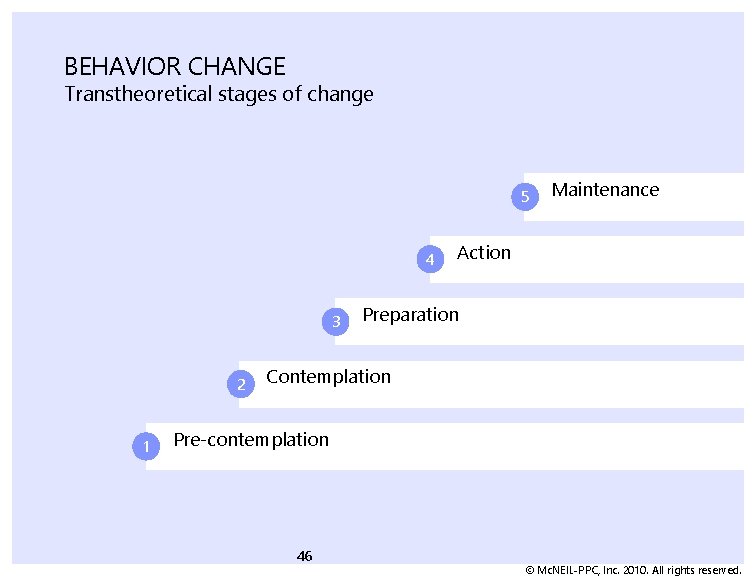
BEHAVIOR CHANGE Transtheoretical stages of change 5 4 3 2 1 Maintenance Action Preparation Contemplation Pre-contemplation 46 Mc. NEIL-PPC, Inc. 2010. All rights reserved.
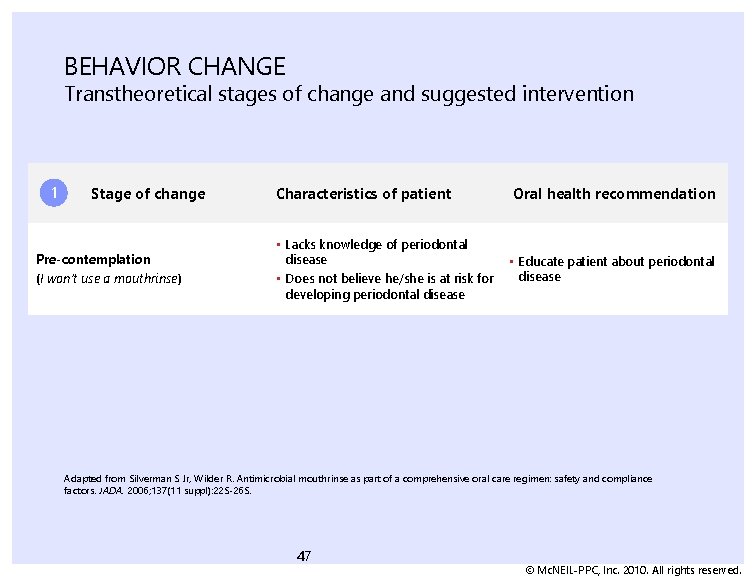
BEHAVIOR CHANGE Transtheoretical stages of change and suggested intervention 1 Stage of change Pre-contemplation (I won’t use a mouthrinse) Characteristics of patient • Lacks knowledge of periodontal disease • Does not believe he/she is at risk for developing periodontal disease Oral health recommendation • Educate patient about periodontal disease Adapted from Silverman S Jr, Wilder R. Antimicrobial mouthrinse as part of a comprehensive oral care regimen: safety and compliance factors. JADA. 2006; 137(11 suppl): 22 S-26 S. 47 Mc. NEIL-PPC, Inc. 2010. All rights reserved.
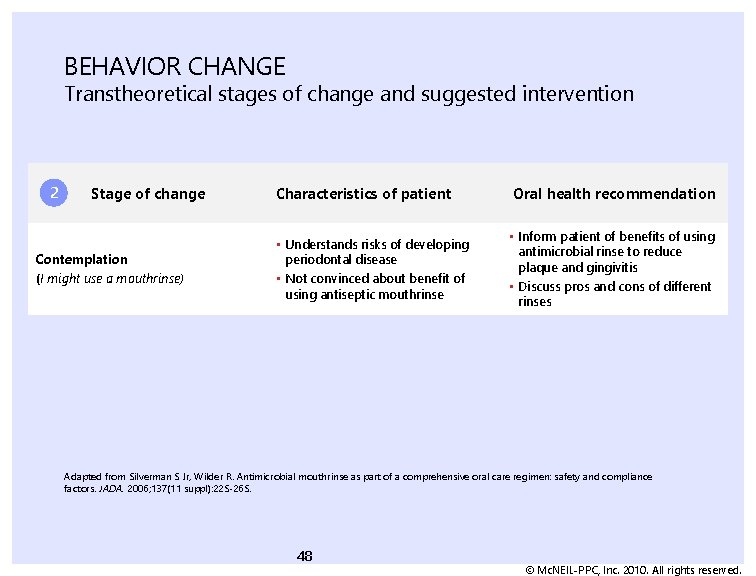
BEHAVIOR CHANGE Transtheoretical stages of change and suggested intervention 2 Stage of change Contemplation (I might use a mouthrinse) Characteristics of patient • Understands risks of developing periodontal disease • Not convinced about benefit of using antiseptic mouthrinse Oral health recommendation • Inform patient of benefits of using antimicrobial rinse to reduce plaque and gingivitis • Discuss pros and cons of different rinses Adapted from Silverman S Jr, Wilder R. Antimicrobial mouthrinse as part of a comprehensive oral care regimen: safety and compliance factors. JADA. 2006; 137(11 suppl): 22 S-26 S. 48 Mc. NEIL-PPC, Inc. 2010. All rights reserved.
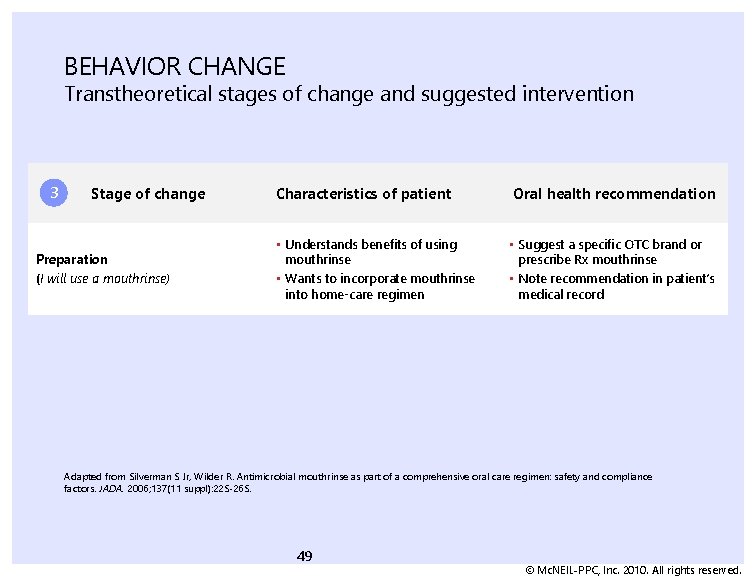
BEHAVIOR CHANGE Transtheoretical stages of change and suggested intervention 3 Stage of change Preparation (I will use a mouthrinse) Characteristics of patient • Understands benefits of using mouthrinse • Wants to incorporate mouthrinse into home-care regimen Oral health recommendation • Suggest a specific OTC brand or prescribe Rx mouthrinse • Note recommendation in patient’s medical record Adapted from Silverman S Jr, Wilder R. Antimicrobial mouthrinse as part of a comprehensive oral care regimen: safety and compliance factors. JADA. 2006; 137(11 suppl): 22 S-26 S. 49 Mc. NEIL-PPC, Inc. 2010. All rights reserved.
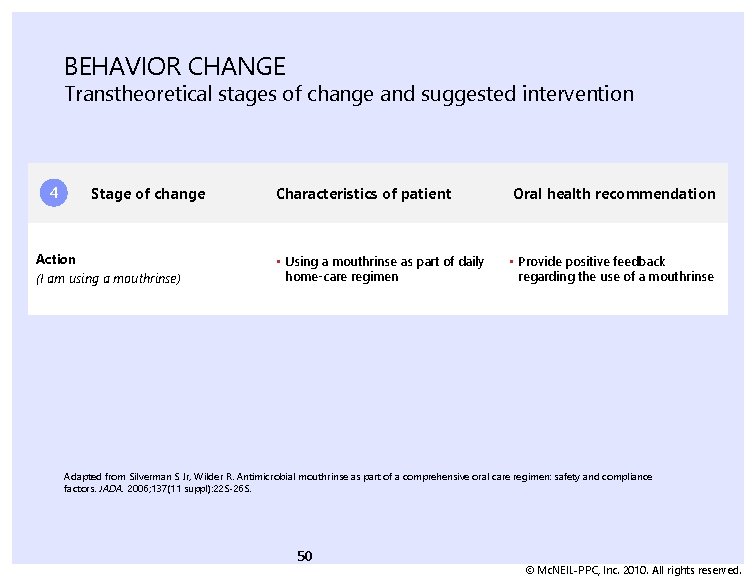
BEHAVIOR CHANGE Transtheoretical stages of change and suggested intervention 4 Stage of change Action (I am using a mouthrinse) Characteristics of patient • Using a mouthrinse as part of daily home-care regimen Oral health recommendation • Provide positive feedback regarding the use of a mouthrinse Adapted from Silverman S Jr, Wilder R. Antimicrobial mouthrinse as part of a comprehensive oral care regimen: safety and compliance factors. JADA. 2006; 137(11 suppl): 22 S-26 S. 50 Mc. NEIL-PPC, Inc. 2010. All rights reserved.
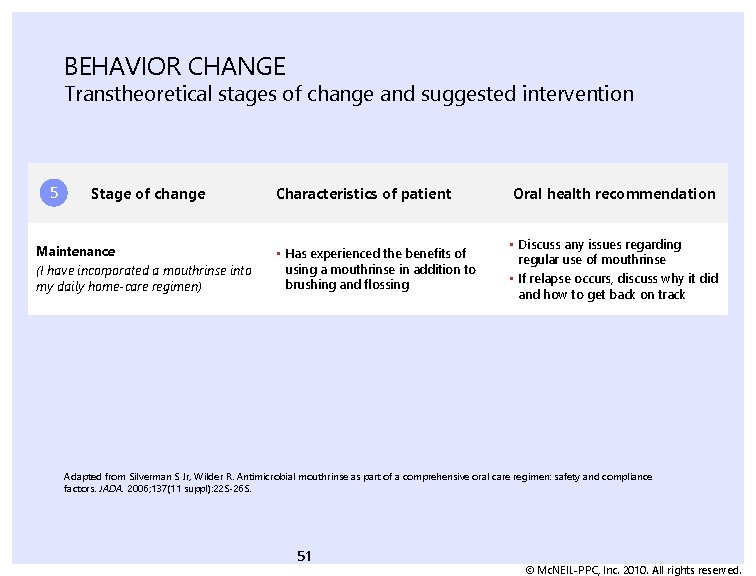
BEHAVIOR CHANGE Transtheoretical stages of change and suggested intervention 5 Stage of change Maintenance (I have incorporated a mouthrinse into my daily home-care regimen) Characteristics of patient • Has experienced the benefits of using a mouthrinse in addition to brushing and flossing Oral health recommendation • Discuss any issues regarding regular use of mouthrinse • If relapse occurs, discuss why it did and how to get back on track Adapted from Silverman S Jr, Wilder R. Antimicrobial mouthrinse as part of a comprehensive oral care regimen: safety and compliance factors. JADA. 2006; 137(11 suppl): 22 S-26 S. 51 Mc. NEIL-PPC, Inc. 2010. All rights reserved.
BEHAVIOR CHANGE Practical tips for behavior change • Become comfortable asking questions and listening – Ask about current health practices – Determine the patient’s motive for wanting to change and use that as the point of discussion – Example: What do you do on a daily basis to take care of your mouth? Asadoorian J. Strategies for incorporating antimicrobial mouthrinses into daily oral care. J Dent Hyg. 2007; 81(5): 118. 52 Mc. NEIL-PPC, Inc. 2010. All rights reserved.
BEHAVIOR CHANGE Practical tips for behavior change • Assess patient willingness to change – If not ready, provide interventions over multiple visits – If ready, supervise practice and provide a plan • Explain that lapses do happen – Example: Would you be willing to try using an antimicrobial mouthrinse twice daily? Asadoorian J. Strategies for incorporating antimicrobial mouthrinses into daily oral care. J Dent Hyg. 2007; 81(5): 118. 53 Mc. NEIL-PPC, Inc. 2010. All rights reserved.
BEHAVIOR CHANGE Practical tips for behavior change • Anticipate obstacles – Stressful life experiences can disrupt formation of positive habits – Encourage patient to incorporate external memory triggers to maintain or resume positive oral health habits during stressful periods – Example: It can be hard sometimes to remember new healthy habits when we’re busy, sick, traveling, or stressed out. What are some ways that help you remember to do things when life is stressful? What are some obstacles that may keep you from using an antimicrobial mouthrinse twice daily? Asadoorian J. Strategies for incorporating antimicrobial mouthrinses into daily oral care. J Dent Hyg. 2007; 81(5): 118. 54 Mc. NEIL-PPC, Inc. 2010. All rights reserved.
BEHAVIOR CHANGE Practical tips for behavior change • Follow up with the patient – Specific follow-up demonstrates care for the patient and is appreciated – Example: Were you able to find a product you really liked? Could you easily access the product? Was it hard to be consistent? What was your biggest challenge? – Praise progress! – Example: Even though you weren’t able to use the rinse every day twice daily, I’m glad that you were able to use it before bed most nights. You have made a great start! Do you think you can use it more often? Asadoorian J. Strategies for incorporating antimicrobial mouthrinses into daily oral care. J Dent Hyg. 2007; 81(5): 118. 55 Mc. NEIL-PPC, Inc. 2010. All rights reserved.
SUMMARY Biofilm • Dental plaque is a biofilm • Accumulation of dental plaque biofilm can lead to gingivitis, which can progress to periodontitis • Plaque biofilm can be managed through effective oral hygiene measures, including twice-daily antimicrobial rinsing 56 Mc. NEIL-PPC, Inc. 2010. All rights reserved.
SUMMARY Antimicrobial Mouthrinses • Antimicrobial mouthrinses treat all accessible surfaces of the oral cavity and reduce the number of bacteria in accumulations on mucosal surfaces • The leading OTC antimicrobial mouthrinses use active ingredients that have been found to be safe and effective by an FDA advisory committee. CHX mouthrinses have been approved by the FDA • The ADA recognizes the value of rinsing with an ADA-accepted antimicrobial mouthrinse to help reduce and prevent plaque and gingivitis 57 Mc. NEIL-PPC, Inc. 2010. All rights reserved.
SUMMARY Behavior Change • Dental professionals can encourage patients to adopt antimicrobial rinsing by targeting interventions to the individual patient’s values, stage of readiness to change, and skill set 58 Mc. NEIL-PPC, Inc. 2010. All rights reserved.
FORMULA FOR SUCCESS • A thorough oral hygiene program—and your recommendation — can help your patients successfully manage biofilm to reduce and prevent plaque and gingivitis – Provide patient education – Promote patient compliance – Recommend use of an ADA-accepted antimicrobial mouthrinse in conjunction with tooth-brushing and daily flossing Mc. NEIL-PPC, Inc. 2010. All rights reserved. This presentation, and the images used throughout, are subject to copyright protection. No portion of this presentation may be used without written permission from Mc. NEIL-PPC, Inc. To request permission, please contact your school’s Johnson & Johnson Dental Account Manager. 59 Mc. NEIL-PPC, Inc. 2010. All rights reserved.
EXAM 1. Thorough mechanical plaque control can be difficult to achieve due to a) patients using improper brushing and flossing technique b) insufficient time allowed for oral hygiene c) limited dexterity d) all of the above 2. Biofilms can form on any surface exposed to _______ and ____. a) bacteria and polysaccharides b) bacteria and slime c) bacteria and water d) bacteria and fungi 60 Mc. NEIL-PPC, Inc. 2010. All rights reserved.
EXAM 3. Antimicrobial mouthrinses are particularly well suited for managing plaque biofilm because a) liquid carries antimicrobial agents to all areas of the mouth b) biofilms cover the entire mouth, not just teeth c) plaque biofilm cannot be completely removed by brushing and flossing alone d) all of the above 4. A common OTC antimicrobial agent used in mouthrinse formulations is a) a fixed combination of 4 essential oils b) cetylpyridinium chloride (CPC) c) chlorhexidine (CHX) d) a and b e) b and c 61 Mc. NEIL-PPC, Inc. 2010. All rights reserved.
EXAM 5. According to an advisory committee to the FDA and other leading experts, the evidence does not support a causal relationship between alcohol-containing mouthrinses and oral cancer. a) True b) False 6. Which antimicrobial agents exhibit a broad spectrum of antimicrobial activity? a) essential oils b) CPC c) CHX d) CHX and CPC e) essential oils, CPC, and CHX 62 Mc. NEIL-PPC, Inc. 2010. All rights reserved.
EXAM 7. Among other requirements, the ADA guidelines require a ___% reduction in gingivitis averaged over two 6 -month clinical studies to be awarded the Seal of Acceptance for chemotherapeutic antiplaque and antigingivitis agents. a) 50% b) 20% c) 25% d) 30% 8. The fact that patients do not view chronic gingivitis/periodontitis to be a threatening condition is a common barrier to patient compliance with their dental professional’s oral hygiene recommendations. a) True b) False 63 Mc. NEIL-PPC, Inc. 2010. All rights reserved.
EXAM 9. A lack of time for oral hygiene instruction during an office visit is a common barrier to a dental professional’s ability to promote change in their patients’ oral care habits. a) True b) False 10. During the process of behavior change, lapses to old behaviors are not common. a) True b) False 64 Mc. NEIL-PPC, Inc. 2010. All rights reserved.

ANSWERS 1. 2. 3. 4. 5. 6. 7. 8. 9. 10. D C D D A E B A A B Design by Philosophy IB, LLP 65 Mc. NEIL-PPC, Inc. 2010. All rights reserved.
- Slides: 65