
ESSENTIAL SCIENCE INDICATORS ESI James Cook University Celebrating

ESSENTIAL SCIENCE INDICATORS (ESI) James Cook University Celebrating Research 9 OCTOBER 2009 Steven Werkheiser Manager, Customer Education & Training ANZ Thomson Reuters Healthcare & Science
AGENDA Learn the basics about ESI • Who uses it • What does it do • What questions does it answer Search ESI to answer some common questions asked by end users
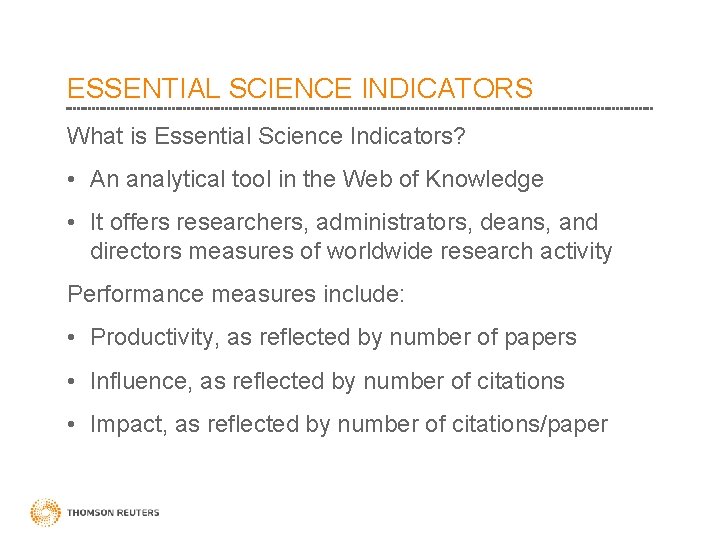
ESSENTIAL SCIENCE INDICATORS What is Essential Science Indicators? • An analytical tool in the Web of Knowledge • It offers researchers, administrators, deans, and directors measures of worldwide research activity Performance measures include: • Productivity, as reflected by number of papers • Influence, as reflected by number of citations • Impact, as reflected by number of citations/paper
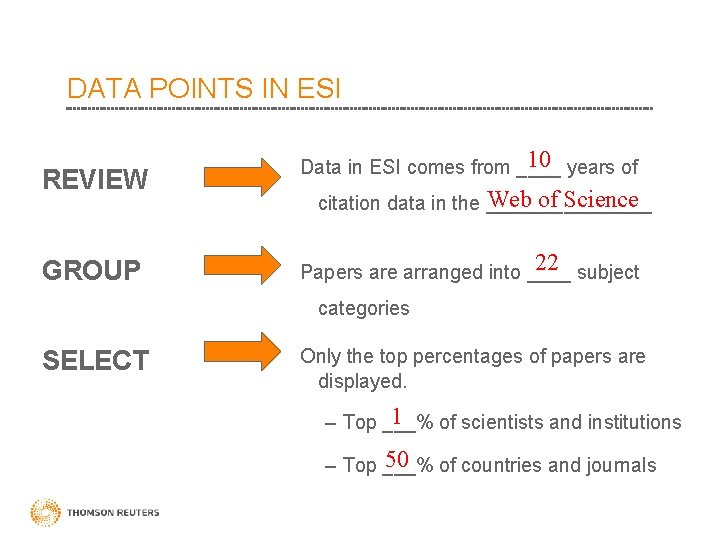
DATA POINTS IN ESI REVIEW GROUP 10 years of Data in ESI comes from ____ Web of Science citation data in the ________ 22 subject Papers are arranged into ____ categories SELECT Only the top percentages of papers are displayed. 1 of scientists and institutions – Top ___% 50 of countries and journals – Top ___%
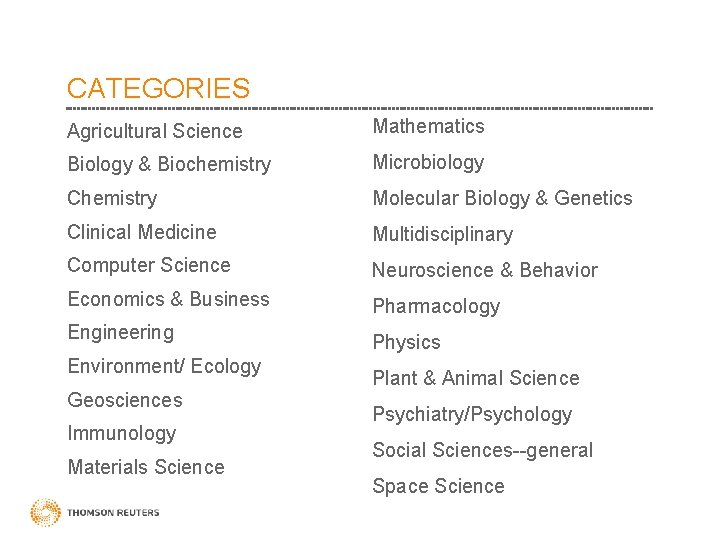
CATEGORIES Agricultural Science Mathematics Biology & Biochemistry Microbiology Chemistry Molecular Biology & Genetics Clinical Medicine Multidisciplinary Computer Science Neuroscience & Behavior Economics & Business Pharmacology Engineering Physics Environment/ Ecology Geosciences Immunology Materials Science Plant & Animal Science Psychiatry/Psychology Social Sciences--general Space Science
MULTIDISCIPLINARY JOURNALS

4 PARTS OF ESI 1. Citation rankings § Institution, Scientist, Country, Journal 2. Most cited papers: long-term vs. “hot” § Highly Cited Papers (top 1% per research field) § Hot Papers (top cited in 2 month period) 3. Citation Analysis § Baselines against which to measure your performance § “Research Fronts” to track new trends 4. Editorial commentary § Science Watch
WHAT KINDS OF QUESTIONS CAN ESI HELP ME ANSWER? Which institutions produce the most highly-cited chemistry research? – Is my organization one of them? – If so, what is our ranking?
QUESTIONS FROM RESEARCHERS – Which researchers have published the most influential work in immunology over the past 10 years? – One of my researchers published a paper in 1999 in the field of microbiology. It has been cited 45 times to date; how does this compare to other papers published in this discipline? – I have just received a grant request and need to evaluate the applicant: Is this researcher highlycited? Does he/she currently have any “hot” papers?
QUESTIONS FROM PUBLISHERS – Which countries are interested in particular topics? – How is a particular paper in our journal doing compared to others? – Do we have any top cited papers in our journals? – Will this institution be interested in our journals? – What is a good citation rate for a paper in a particular topic? – Which journals are competing with us? – Which are the top papers in journals? – What are the hottest topics of research? – Are citation trends going up or down
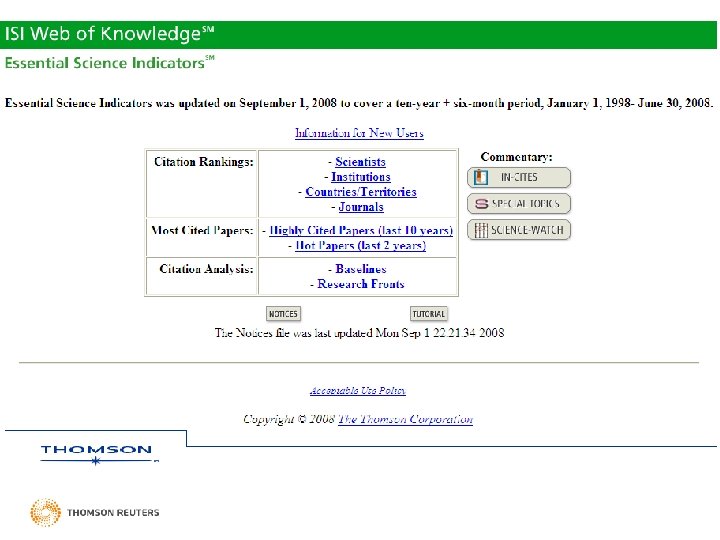
ESI FRONT PAGE
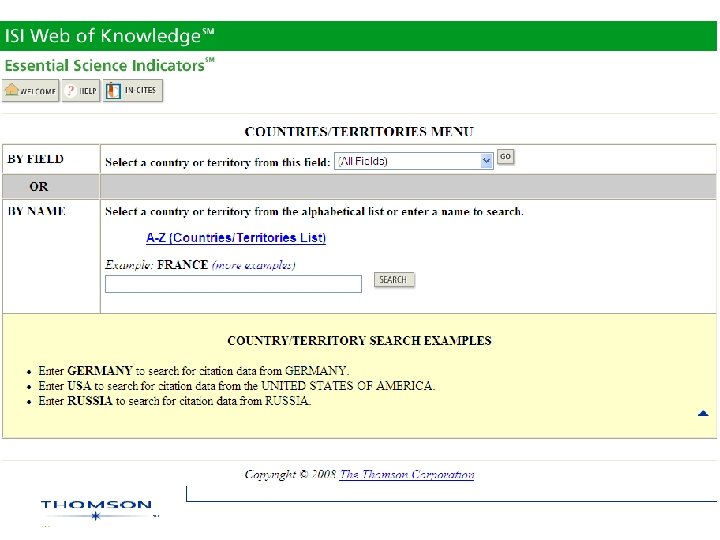
COUNTRIES TERRITORIES
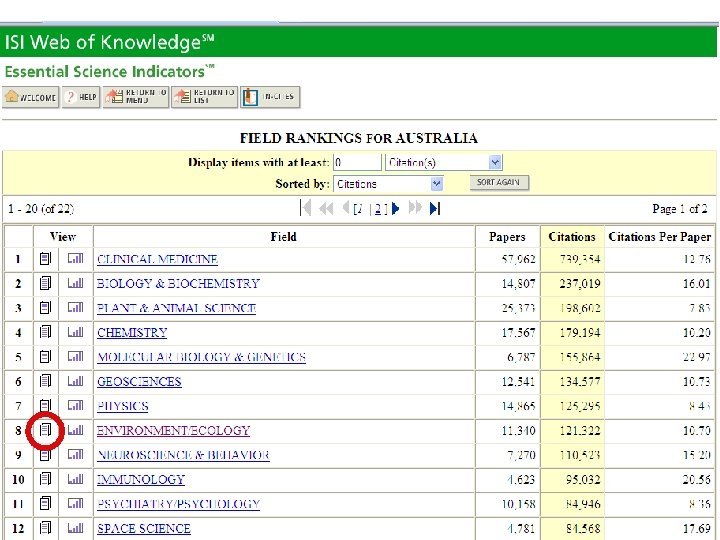
FIELD RANKINGS
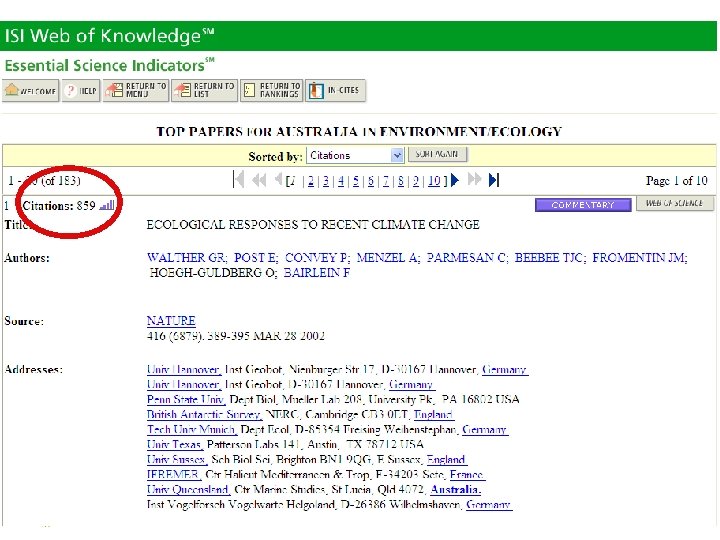
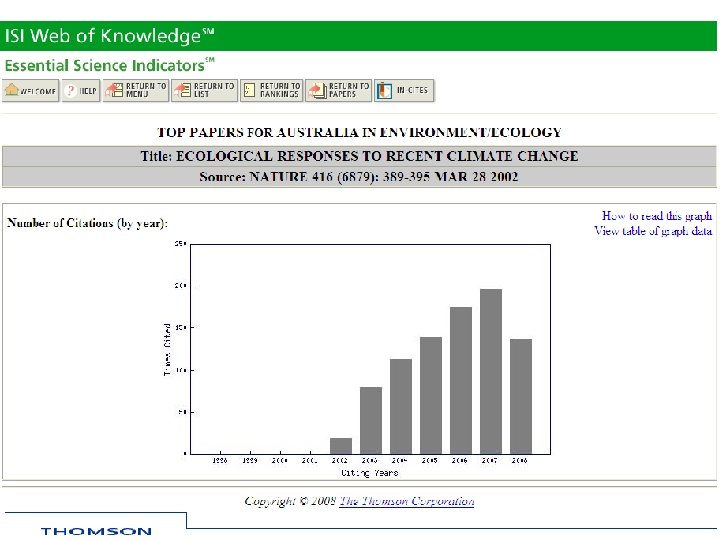
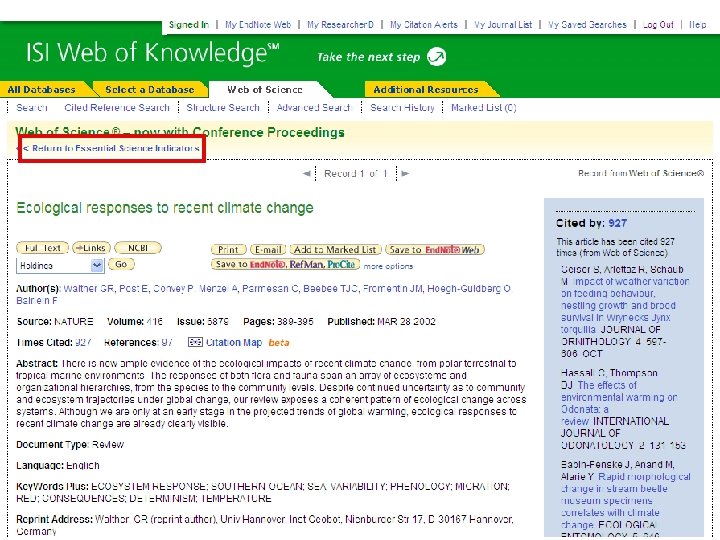
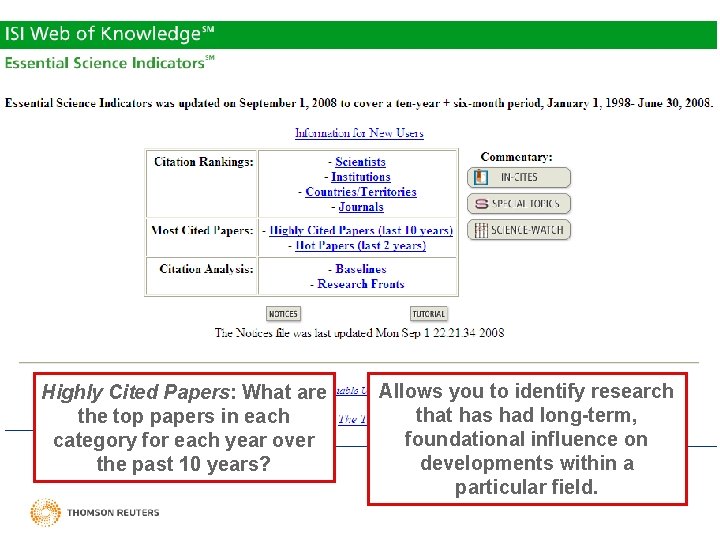
HIGHLY CITED PAPERS Highly Cited Papers: What are the top papers in each category for each year over the past 10 years? Allows you to identify research that has had long-term, foundational influence on developments within a particular field.
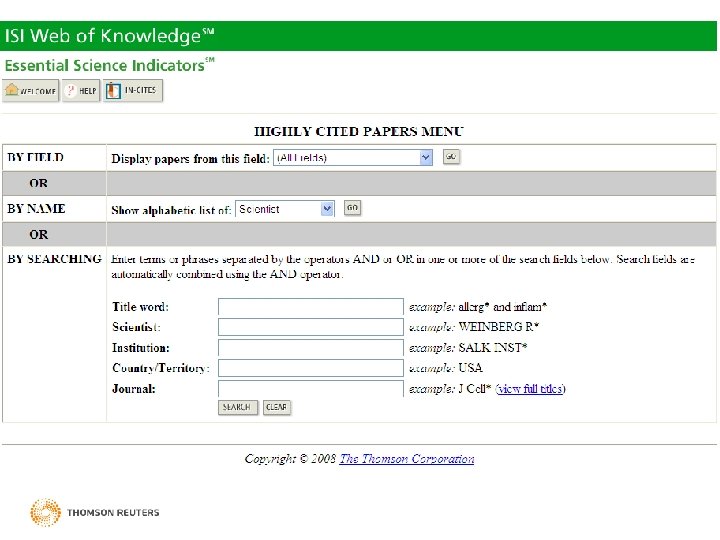
HIGHLY CITED PAPERS
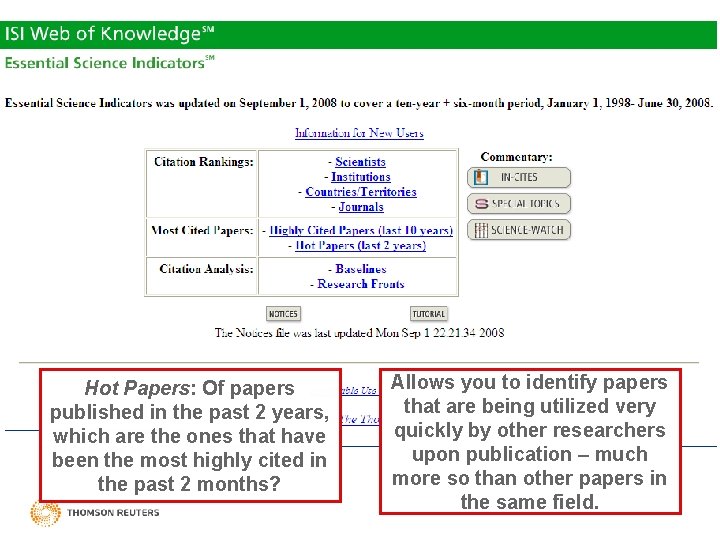
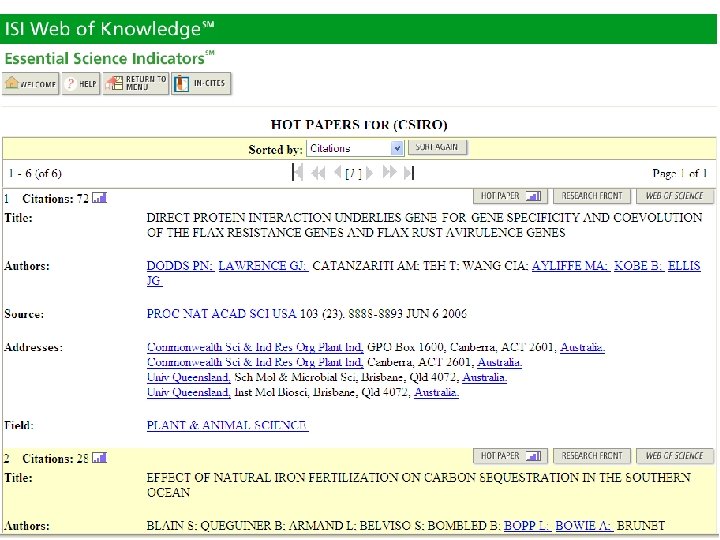
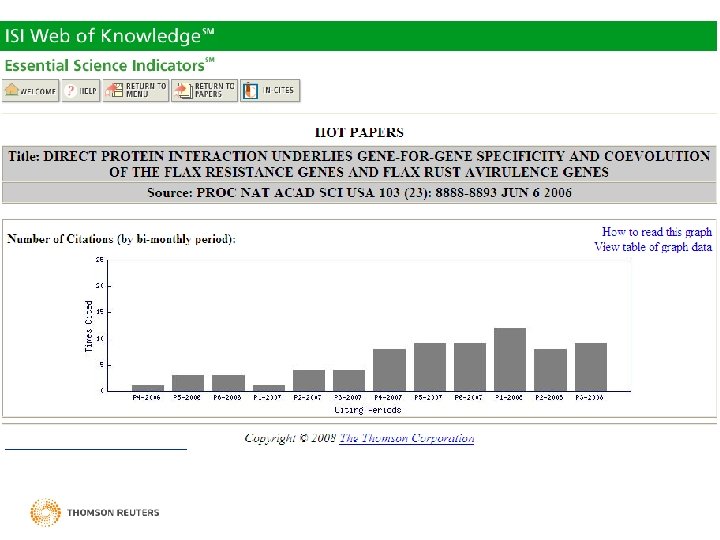
HIGHLY CITED PAPERS Hot Papers: Of papers published in the past 2 years, which are the ones that have been the most highly cited in the past 2 months? Allows you to identify papers that are being utilized very quickly by other researchers upon publication – much more so than other papers in the same field.
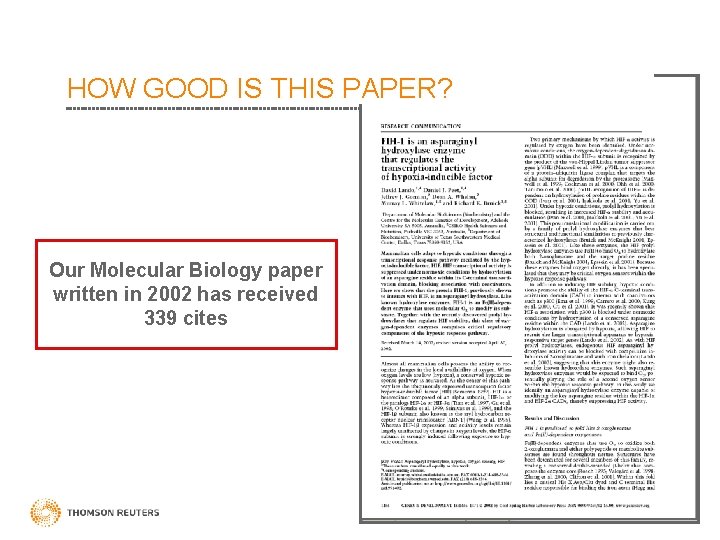
HOW GOOD IS THIS PAPER? Our Molecular Biology paper written in 2002 has received 339 cites
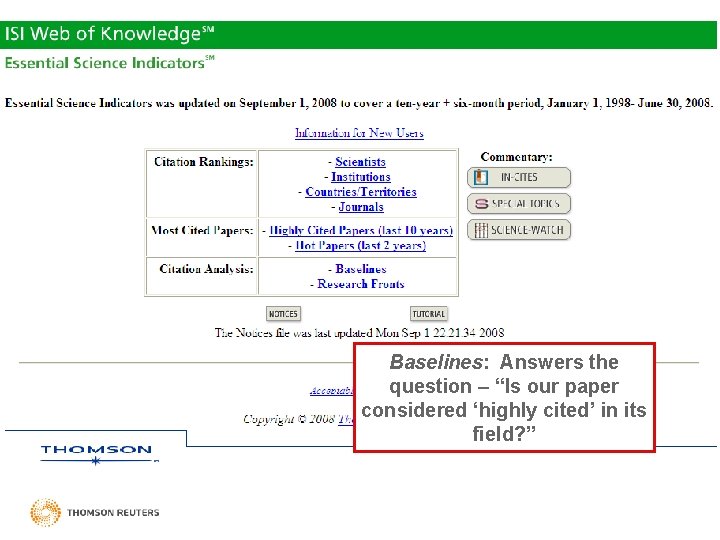
HIGHLY CITED PAPERS Baselines: Answers the question – “Is our paper considered ‘highly cited’ in its field? ”
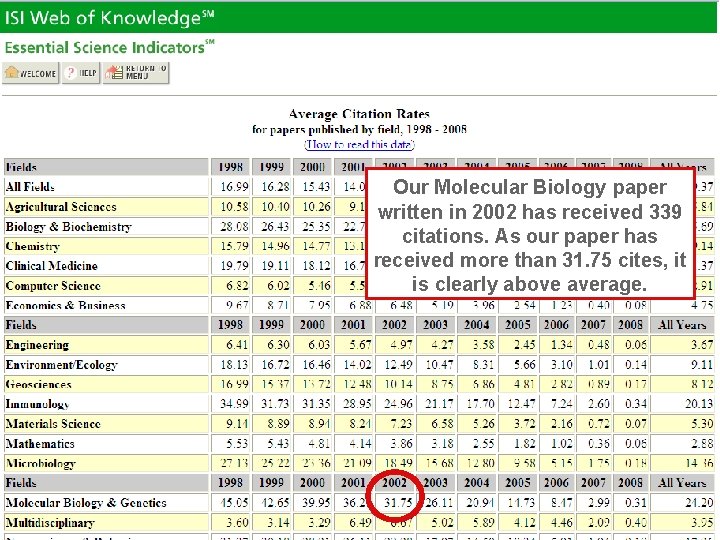
Our Molecular Biology paper written in 2002 has received 339 citations. As our paper has received more than 31. 75 cites, it is clearly above average.
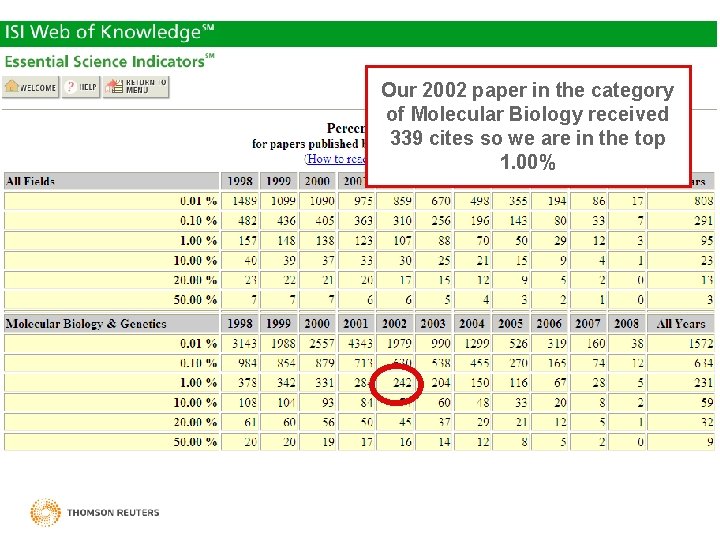
Our 2002 paper in the category of Molecular Biology received 339 cites so we are in the top 1. 00%
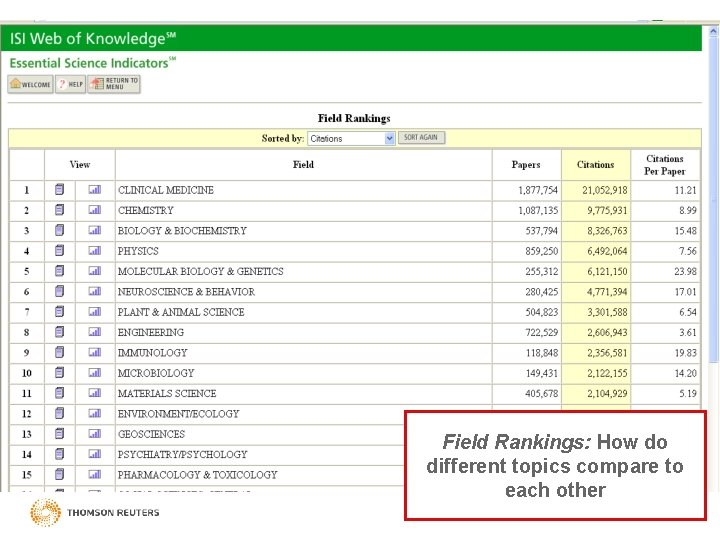
Field Rankings: How do different topics compare to each other
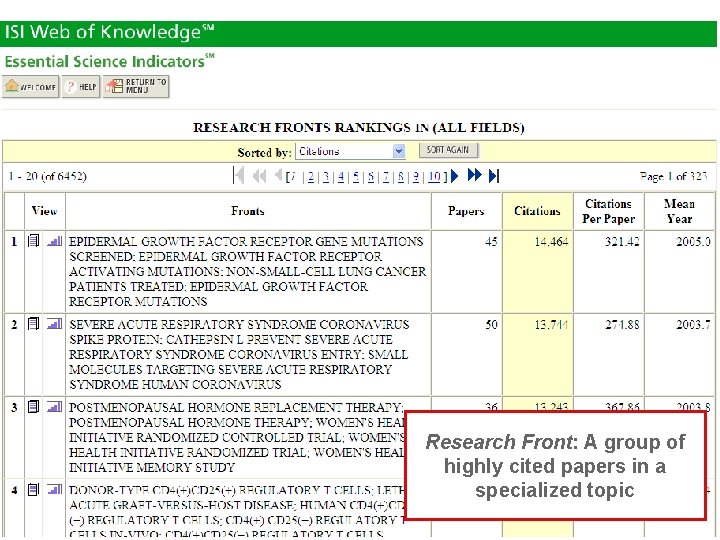
RESEARCH FRONTS Research Front: A group of highly cited papers in a specialized topic
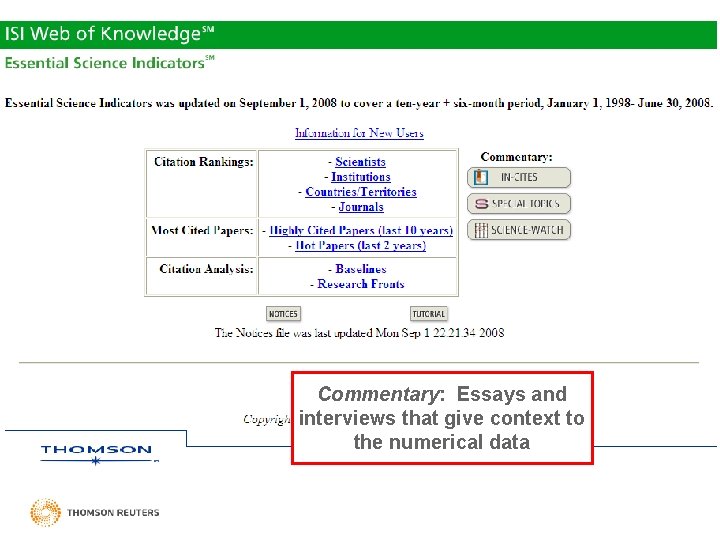
HIGHLY CITED PAPERS Commentary: Essays and interviews that give context to the numerical data
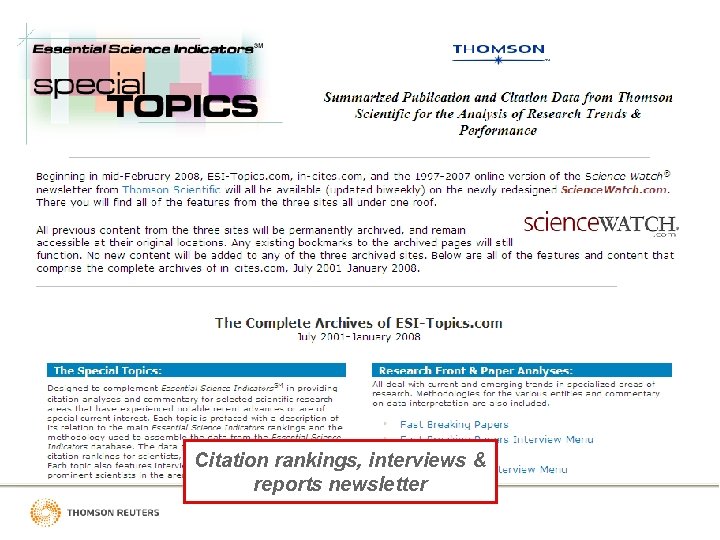
SCIENCE WATCH Citation rankings, interviews & reports newsletter
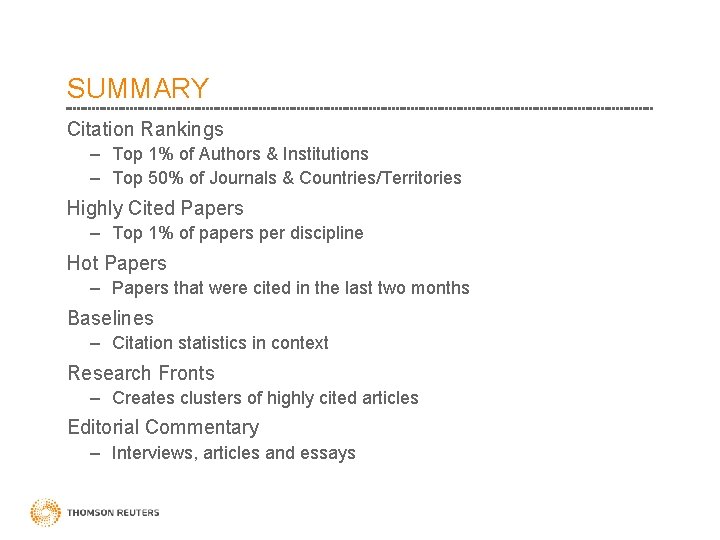
SUMMARY Citation Rankings – Top 1% of Authors & Institutions – Top 50% of Journals & Countries/Territories Highly Cited Papers – Top 1% of papers per discipline Hot Papers – Papers that were cited in the last two months Baselines – Citation statistics in context Research Fronts – Creates clusters of highly cited articles Editorial Commentary – Interviews, articles and essays
SUMMARY OF BENEFITS Rankings – Use researchers’ acknowledgements (citations) to quantify top research and rank a scientist, institution, country, or journal by influence and impact – Find the productivity of an institution (number of papers) as well as its influence (number of citations) Benchmark analysis – Use citation averages to measure the relative influence of your research against others in the same field Editorial commentary – Gain a view of the scientific landscape through essays and articles; offering context and background, not just numbers
Any Questions?
- Slides: 32