
ESSENTIAL QUESTIONS What is history Why do we
- Slides: 41
ESSENTIAL QUESTIONS What is history? Why do we study it?
OBJECTIVES The students will be able to (TSWBAT): §identify an appropriate definition of history §develop an understanding of why we study history §Know the difference between primary and secondary sources.
HISTORY… WHAT/WHY? EQ: WHAT IS HISTORY, AND WHY DO WE STUDY IT? Ms. Douglass, Introduction to 8 t h Grade Social Studies
THINK-PAIR-SHARE On your notes sheet), work with a partner sitting next to you to come up with answers to the following questions: § In your own words, WHAT is the definition of history? (Answer on front) § WHY do we study history? (Answer on back) § WHO do we/should we study in history? (Answer on back) § Is history unchanging? Once something is written, does it or can it change? (Answer on back)
WHAT IS HISTORY? § A chronological record of significant events (as affecting a nation or institution) often including an explanation of their causes § A study of the events of the past, how and why they happened, as well as what happened as a result § A branch of knowledge that records and explains past events Which definition is your favorite? Which one do you think is the most accurate?
WHY STUDY HISTORY? Why do you think we should study history? “Those who are ignorant of the mistakes of the past are doomed to repeat them. ” Why not study the SUCCESSES of the past and learn from them? Do we need to know where we are from to help us figure out where we are going? And, it’s FUN!
THINK-PAIR-SHARE The Historical Record §With the same partner you had earlier, work together to answer this Essential Question (on the back of your notes): § How do we know what we know about history/the past when we were not there?
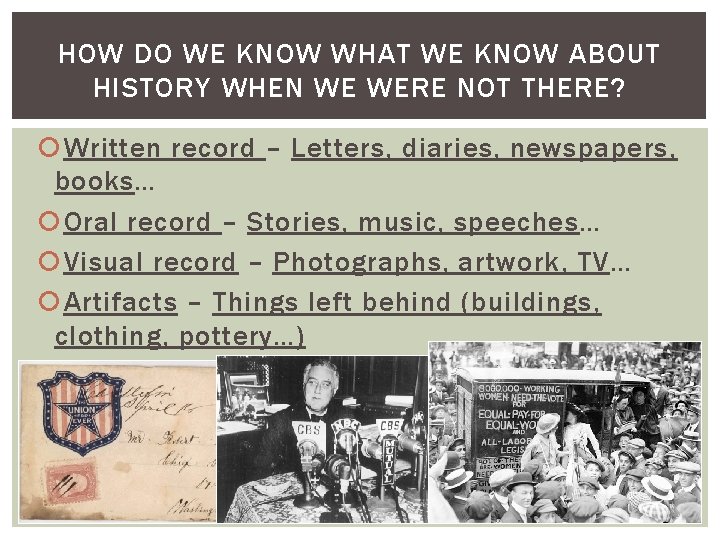
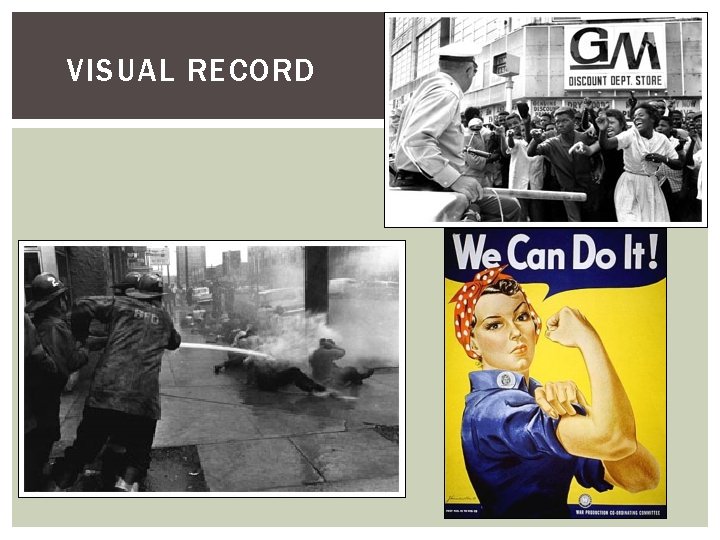
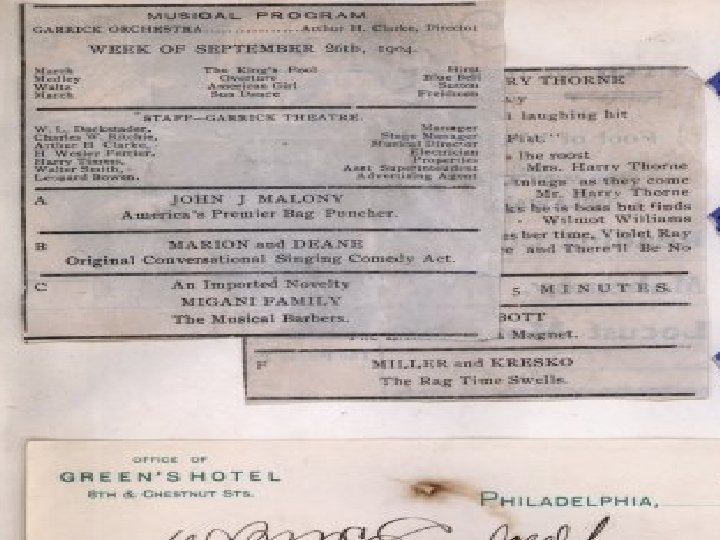
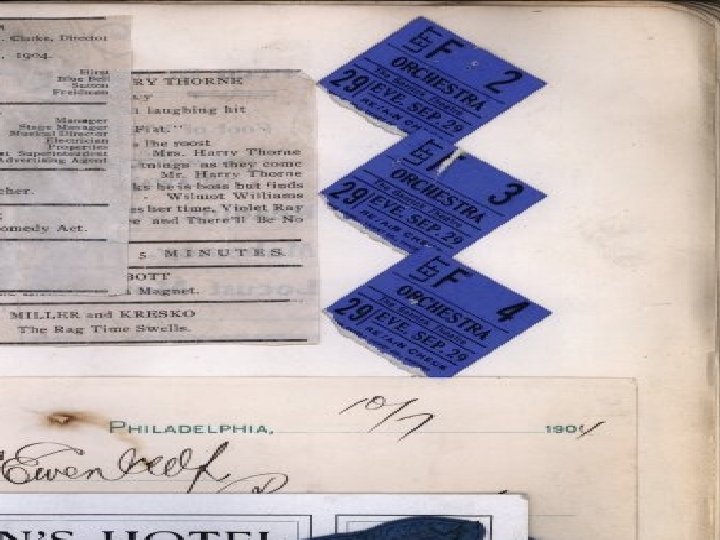
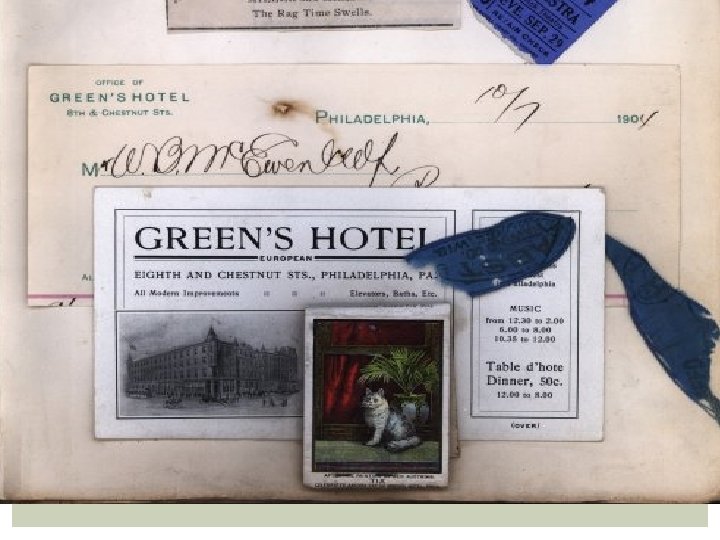
HOW DO WE KNOW WHAT WE KNOW ABOUT HISTORY WHEN WE WERE NOT THERE? Written record – Letters, diaries, newspapers, books… Oral record – Stories, music, speeches… Visual record – Photographs, artwork, TV… Artifacts – Things left behind (buildings, clothing, pottery…)
THE WRITTEN RECORD
THE WRITTEN RECORD When studying history, we use PRIMARY SOURCES and SECONDARY SOURCES. So… what are they? What do you think they are? § What is a source? § Why do we use sources?
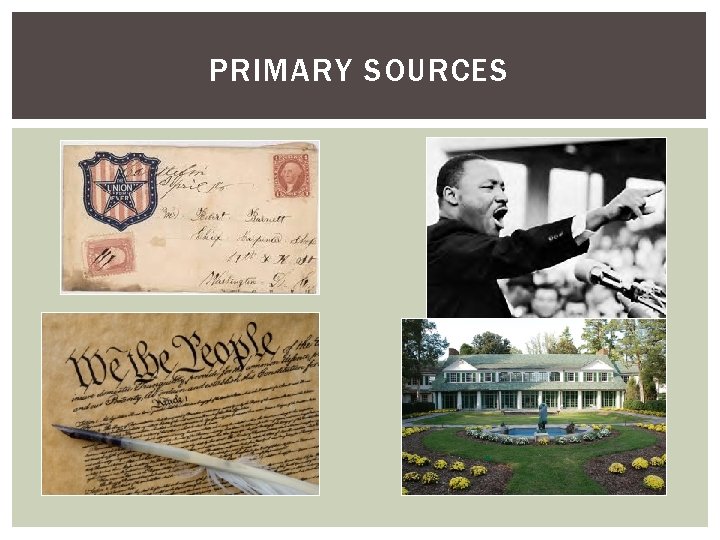
PRIMARY SOURCES A primary source is a document or physical object which was written or created during the time under study. These sources were present during an experience or time period and offer an inside view of a particular event. Information from http: //www. princeton. edu/~refdesk/primary 2. html
TYPES OF PRIMARY SOURCES Some types of primary sources include: § ORIGINAL DOCUMENTS (excerpts or translations acceptable): Diaries, speeches, manuscripts, letters, interviews, news film footage, autobiographies, official records § CREATIVE WORKS: Poetry, drama, novels, music, art § RELICS OR ARTIFACTS: Pottery, furniture, clothing, buildings
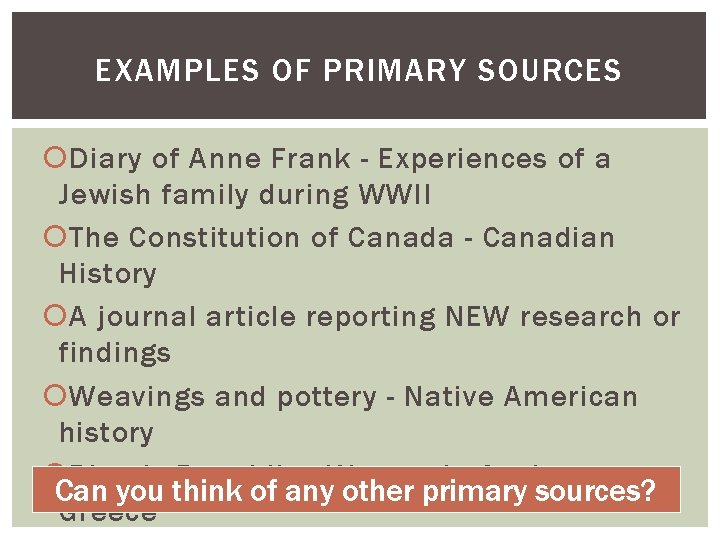
EXAMPLES OF PRIMARY SOURCES Diary of Anne Frank - Experiences of a Jewish family during WWII The Constitution of Canada - Canadian History A journal article reporting NEW research or findings Weavings and pottery - Native American history Plato's Republic - Women in Ancient Can you think of any other primary sources? Greece
PRIMARY SOURCES
SECONDARY SOURCES A secondary source interprets and analyzes primary sources. These sources are one or more steps removed from the event. Secondary sources may have pictures, quotes or graphics of primary sources in them. Some types of secondary sources include: § PUBLICATIONS: Textbooks, magazine articles, histories, criticisms, commentaries, encyclopedias Information from http: //www. princeton. edu/~refdesk/primary 2. html
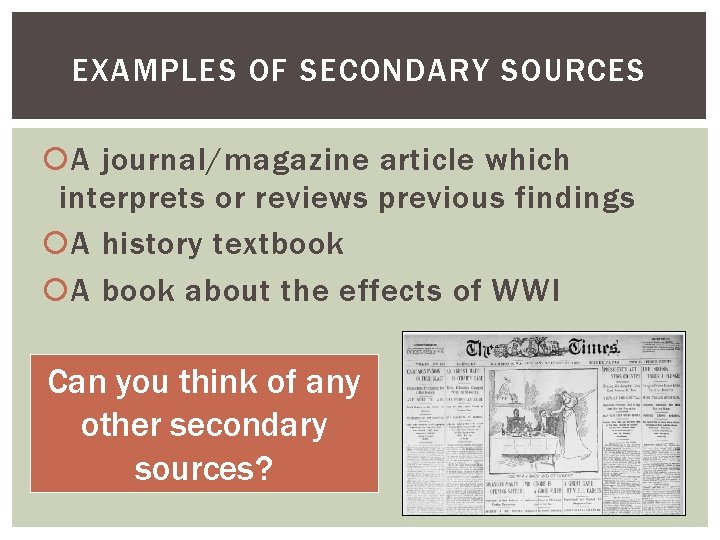
EXAMPLES OF SECONDARY SOURCES A journal/magazine article which interprets or reviews previous findings A history textbook A book about the effects of WWI Can you think of any other secondary sources?
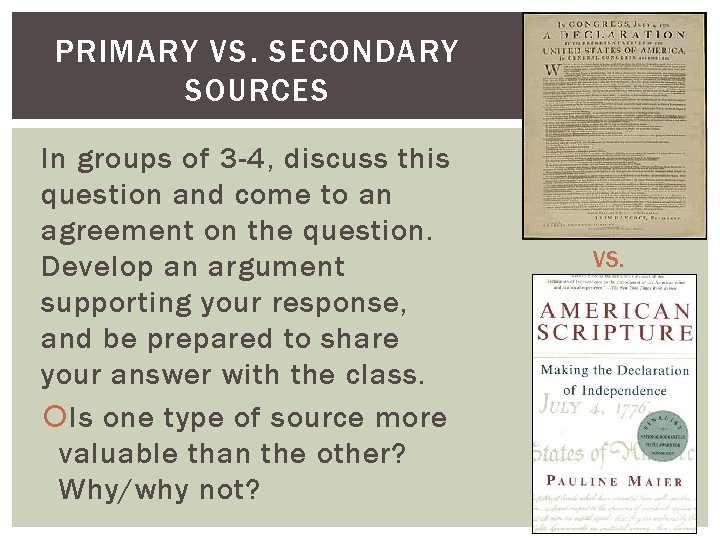
PRIMARY VS. SECONDARY SOURCES In groups of 3 -4, discuss this question and come to an agreement on the question. Develop an argument supporting your response, and be prepared to share your answer with the class. Is one type of source more valuable than the other? Why/why not? VS.
THE ORAL RECORD
ORAL RECORD The American Indians did not have a written record until the 1800 s. How do we know about their lives and history before then? How did THEY know? Are oral histories reliable? Why or why not?
ORAL HISTORY TODAY Oral history very popular today, and many people are working to record people’s stories to preserve them for future generations. § Ellis Island Oral History http: //teacher. scholastic. com/activities/immi gration/tour/stop 2. htm § Story. Corps – A project from NPR designed to capture the stories of everyday Americans (not just politicians and other famous figures). http: //storycorps. org/listen/
THE VISUAL RECORD
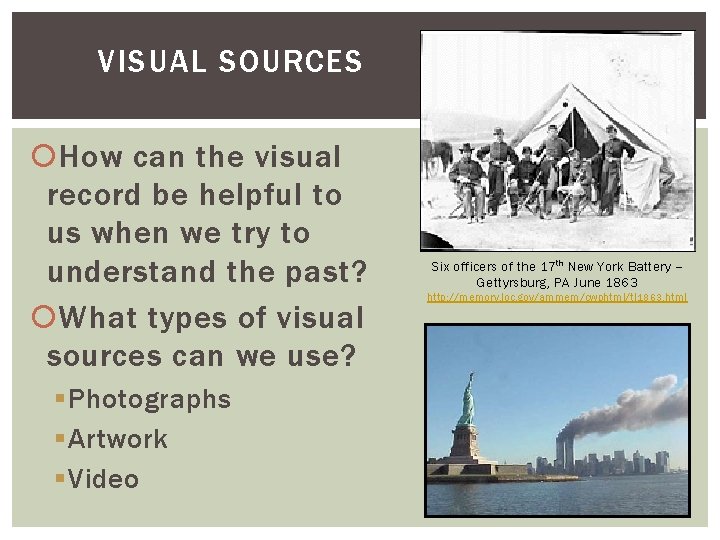
VISUAL SOURCES How can the visual record be helpful to us when we try to understand the past? What types of visual sources can we use? § Photographs § Artwork § Video Six officers of the 17 th New York Battery – Gettyrsburg, PA June 1863 http: //memory. loc. gov/ammem/cwphtml/tl 1863. html
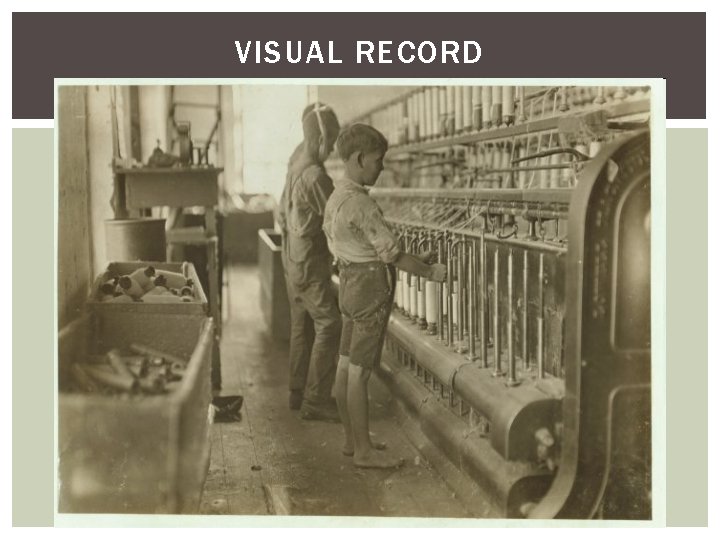
VISUAL RECORD
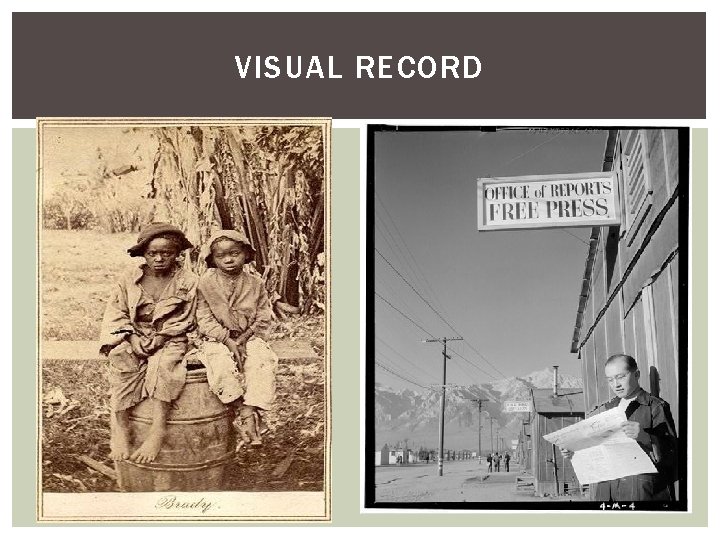
VISUAL RECORD
VISUAL RECORD
THE ARTIFACT RECORD
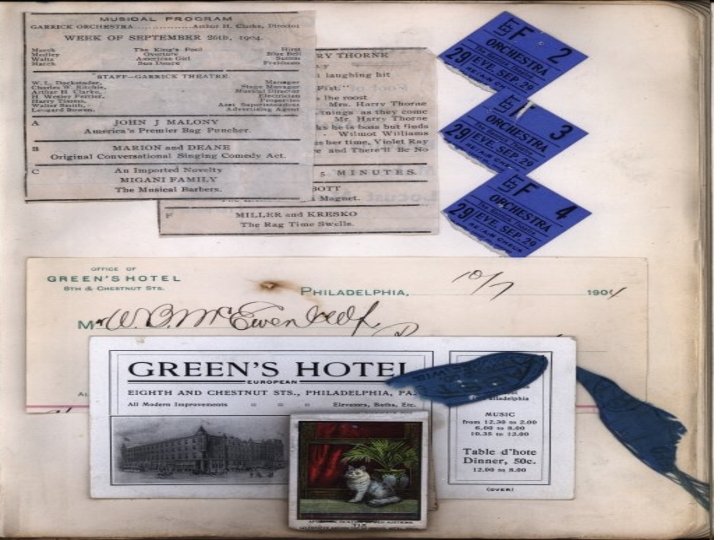
ARTIFACT RECORD What is an artifact? Put it in your own words. For each of the following pictures, tell what you can conclude about the time in the past that is shown.
ARTIFACT RECORD
ARTIFACT RECORD
ARTIFACT RECORD
THINK/WRITE A LIST OF 5 THINGS YOU DID YESTERDAY 1. 2. 3. 4. 5.
5 THINGS YOU DID YESTERDAY Did you leave a record of any of these? § Written, oral, visual, and/or artifact How would future HISTORIANS know what you did?
3, 2, 1 What do you think are the 3 most important things to use in studying the past? What are 2 warnings you need to give someone who is trying to “figure out” the past? Answer the 1 EQ: How do we know what we know about the past when we were not there?
DISCUSS THE VALIDITY OF THIS STATEMENT: History is what we choose to remember about the past. What about these questions… What is bias? Does it exist in history? Can we be sure that we actually KNOW what happened in the past? How can we make sure that we are studying history as it actually happened, and not just how someone chose to write it?
THERE ARE DIFFERENT TYPES OF HISTORY What kinds of history can you think of? World US NC WS Hanes Family Social Military AND MANY MORE!
IMPORTANCE OF HISTORICAL EVENTS So, at some point you/historians have to JUDGE an event’s RELATIVE IMPORTANCE. Let’s break it down. § What does relative mean? § What does importance mean?
WHAT IF WE THINK OF THE EVENTS OF 2012 SO FAR? What are some events that you think occurred are historically significant and have RELATIVE IMPORTANCE? What about a non-important event? Often, the importance of an event is not immediately known.
POINT OF VIEW A group of five people go for a walk: an artist, an engineer, a biologist, an athlete, and a real estate developer. They are out in the woods when they come upon a crystal-clear, flowing river. How do you think each of these people would view the river? How does the previous scenario relate to our study of history and historians?
VOCABULARY REVIEW HISTORY / HISTORIANS ARTIFACT WRITTEN RECORD § PRIMARY SOURCE § SECONDARY SOURCE ORAL RECORD VISUAL RECORD RELATIVE IMPORTANCE BIAS
TICKET OUT THE DOOR WRITE A SENTENCE (OR A FEW SENTENCES) USING AT LEAST 3 OF THE FOLLOWING WORDS ON A SCRAP PIECE OF PAPER: Artifacts Written Record Bias Historians Relative Importance Don’t forget to write your NAME, the DATE, and the CLASS PERIOD!