
Essential Questions How did democracy develop in the
- Slides: 20
Essential Questions • How did democracy develop in the United States? • LO: Students will explain how historical documents impacted the development of democracy. • DOL: Given multiple online sources and a discussion, students will rank historical documents and generate a one sentence description of each document.
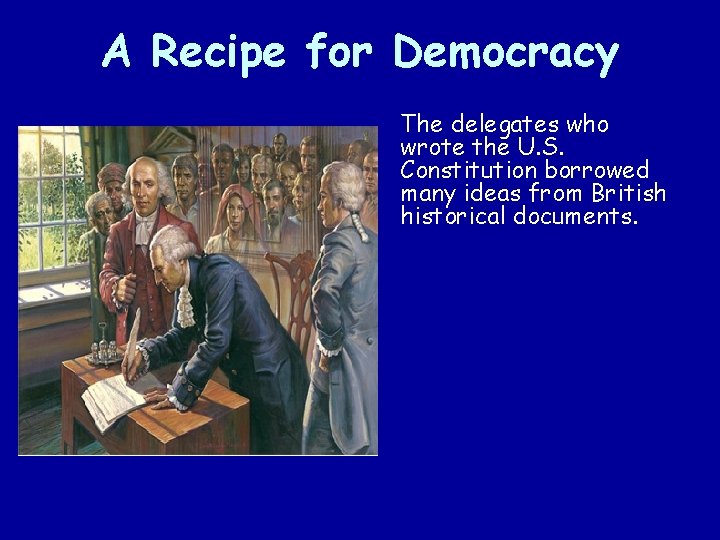
A Recipe for Democracy The delegates who wrote the U. S. Constitution borrowed many ideas from British historical documents.
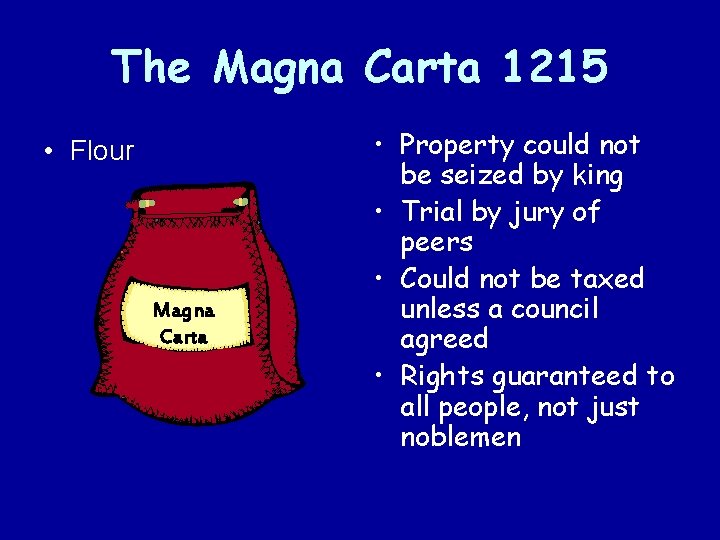
The Magna Carta 1215 • Flour Magna Carta • Property could not be seized by king • Trial by jury of peers • Could not be taxed unless a council agreed • Rights guaranteed to all people, not just noblemen
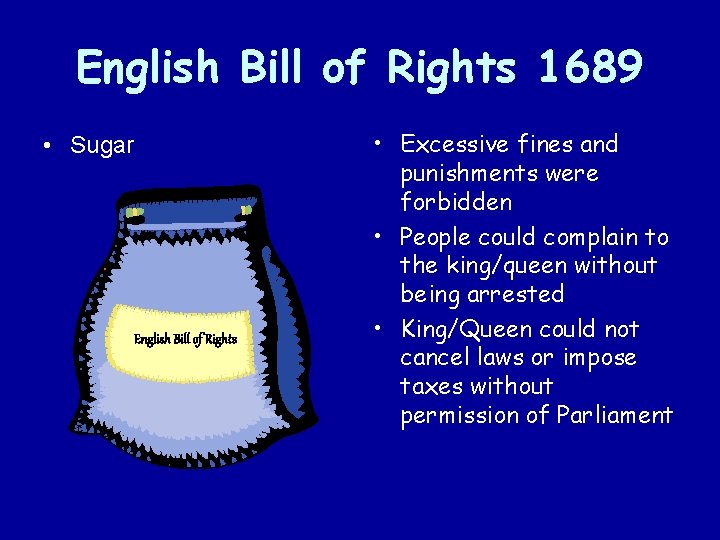
English Bill of Rights 1689 • Sugar English Bill of Rights • Excessive fines and punishments were forbidden • People could complain to the king/queen without being arrested • King/Queen could not cancel laws or impose taxes without permission of Parliament
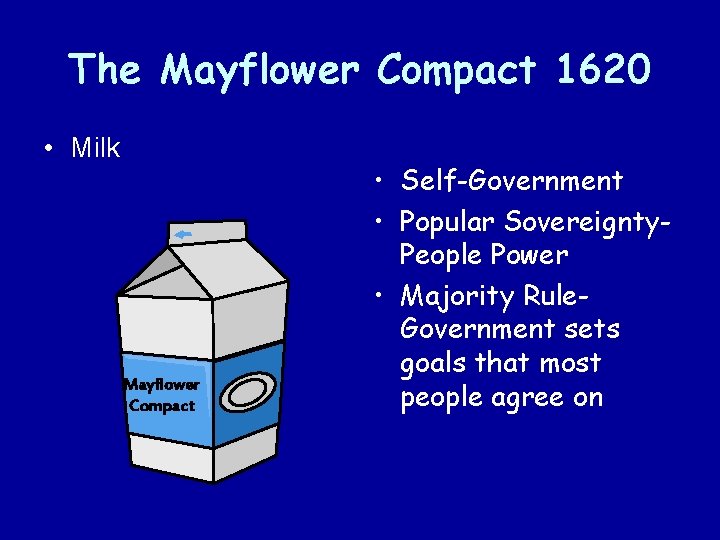
The Mayflower Compact 1620 • Milk Mayflower Compact • Self-Government • Popular Sovereignty. People Power • Majority Rule. Government sets goals that most people agree on
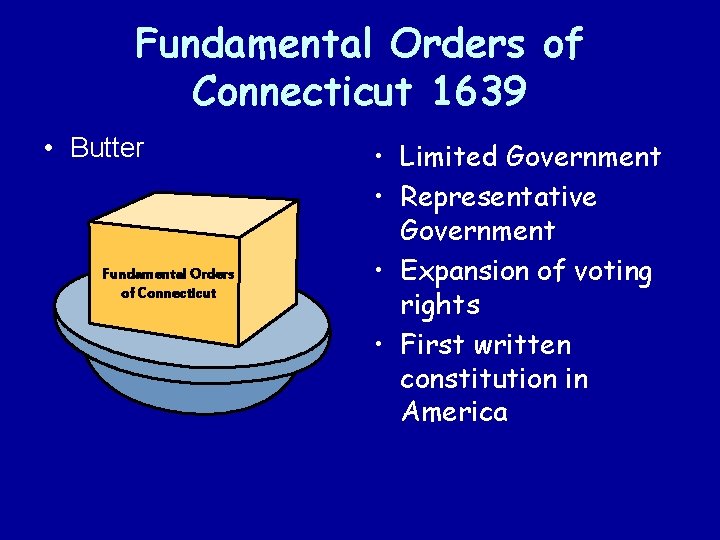
Fundamental Orders of Connecticut 1639 • Butter Fundamental Orders of Connecticut • Limited Government • Representative Government • Expansion of voting rights • First written constitution in America
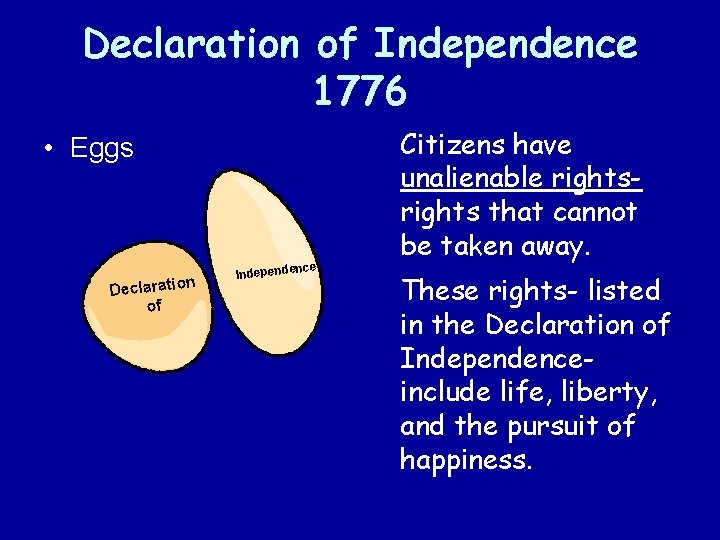
Declaration of Independence 1776 • Eggs Declaratio of n nce Independe Citizens have unalienable rights that cannot be taken away. These rights- listed in the Declaration of Independenceinclude life, liberty, and the pursuit of happiness.
MRS • Think-pair-share: Find a partner next to you and discuss the recipe for democracy using the historical documents.
Essential Question 2 • How are the 7 principles reflected in the U. S. Constitution? • LO: Students will identify and apply principles of the U. S. Constitution. • DOL: Given a Power. Point presentation and example situations, students will identify which principle is reflected in each example.
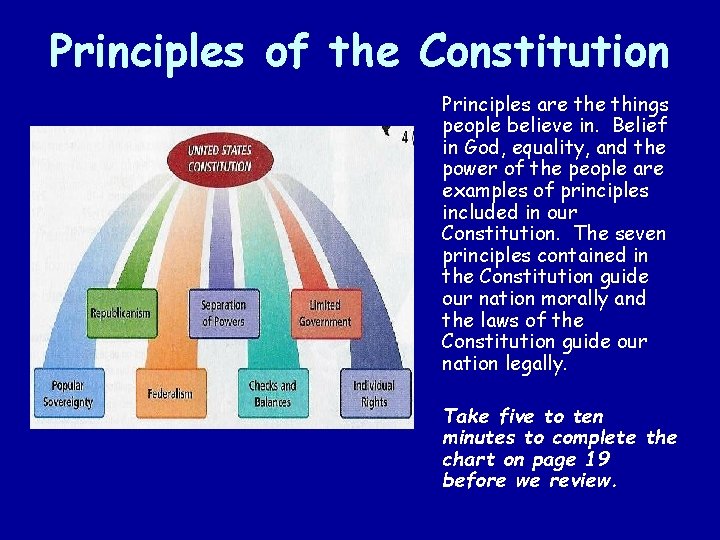
Principles of the Constitution Principles are things people believe in. Belief in God, equality, and the power of the people are examples of principles included in our Constitution. The seven principles contained in the Constitution guide our nation morally and the laws of the Constitution guide our nation legally. Take five to ten minutes to complete the chart on page 19 before we review.
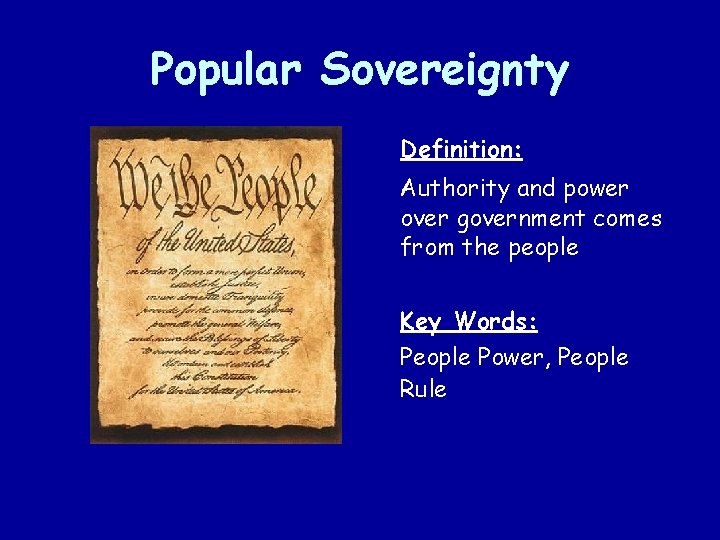
Popular Sovereignty Definition: Authority and power over government comes from the people Key Words: People Power, People Rule
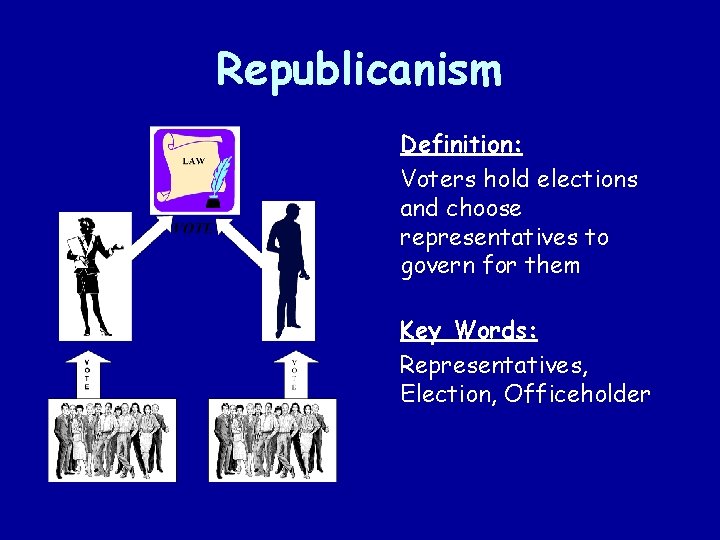
Republicanism Definition: Voters hold elections and choose representatives to govern for them Key Words: Representatives, Election, Officeholder
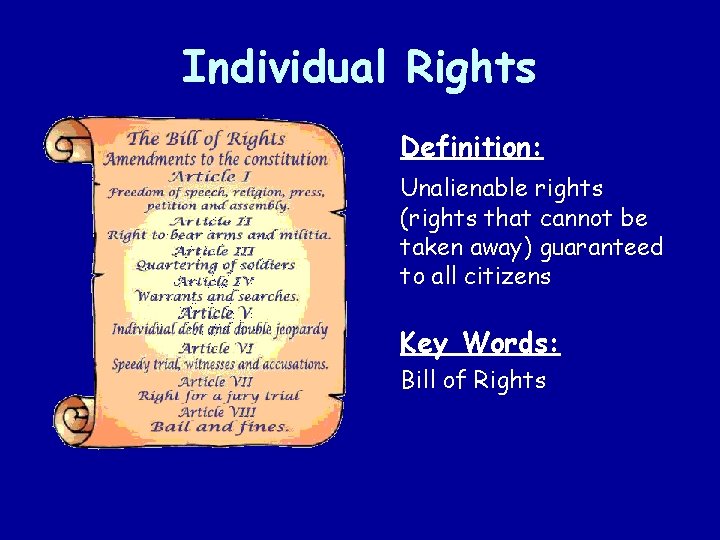
Individual Rights Definition: Unalienable rights (rights that cannot be taken away) guaranteed to all citizens Key Words: Bill of Rights
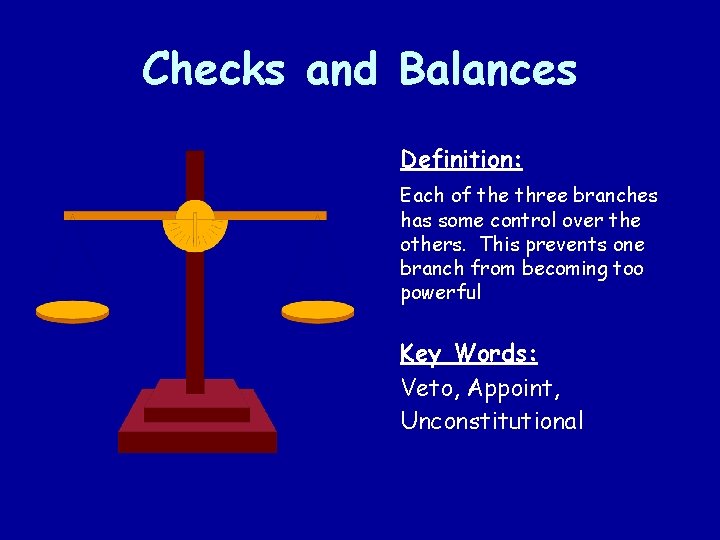
Checks and Balances Definition: Each of the three branches has some control over the others. This prevents one branch from becoming too powerful Key Words: Veto, Appoint, Unconstitutional
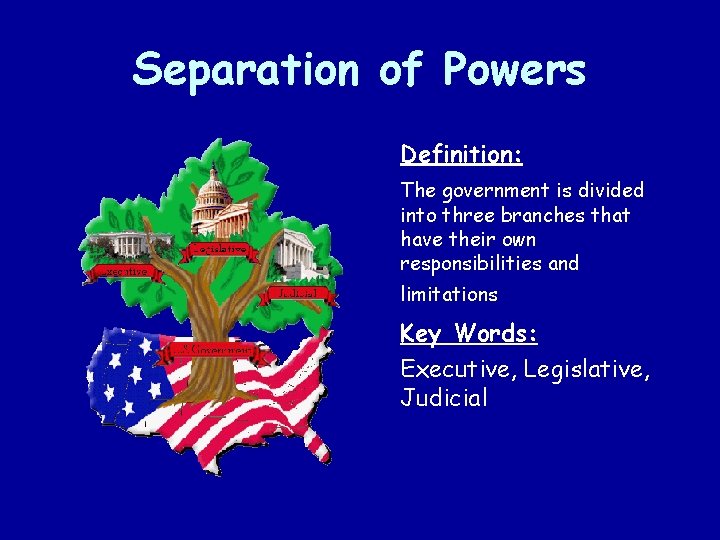
Separation of Powers Definition: The government is divided into three branches that have their own responsibilities and limitations Key Words: Executive, Legislative, Judicial
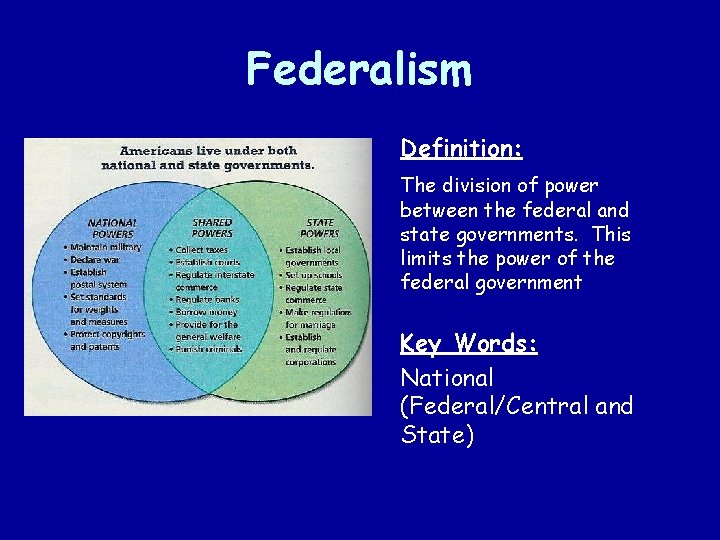
Federalism Definition: The division of power between the federal and state governments. This limits the power of the federal government Key Words: National (Federal/Central and State)
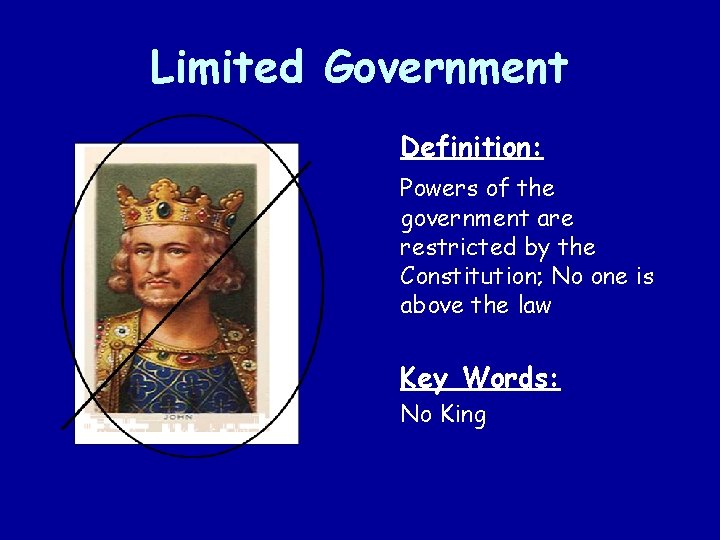
Limited Government Definition: Powers of the government are restricted by the Constitution; No one is above the law Key Words: No King
The Bill of Rights The purpose of the Bill of Rights is to protect the rights of individual rights of citizens. The Bill of Rights, the first ten amendments of the U. S. Constitution, limits the amount of control the government has over our lives. The Bill of Rights is the shield that protects us from government abuses and grants us the freedoms and liberties that we enjoy in a democracy. Take ten minutes to complete page 21 before we review as a class.
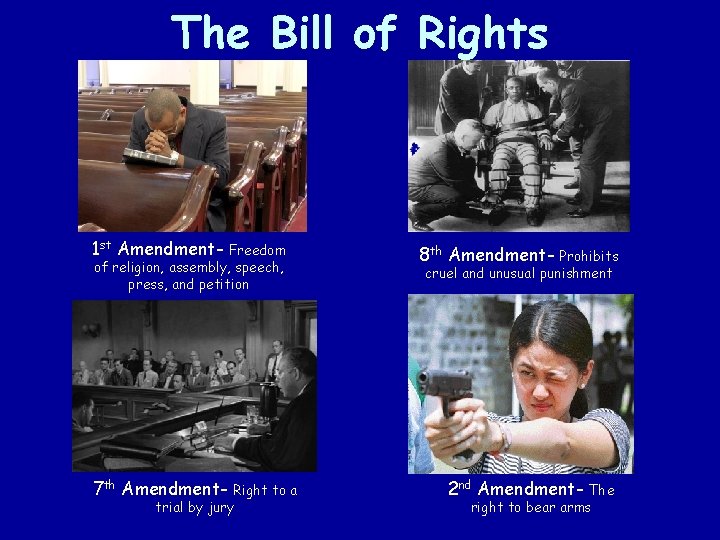
The Bill of Rights 1 st Amendment- Freedom of religion, assembly, speech, press, and petition 7 th Amendment- Right to a trial by jury 8 th Amendment- Prohibits cruel and unusual punishment 2 nd Amendment- The right to bear arms
Short Answer Questions Q: What amendments are known as the Bill of Rights? Q: What is the purpose of the Bill of Rights? Q: What are the five freedoms guaranteed by the 1 st amendment?