
Essential Question What is the function of the
- Slides: 23
Essential Question: What is the function of the Endocrine system? Do Now: From the video, name some of the parts, and the function of the endocrine system HW: workbook page 525 and 526 Binder check Wednesday
Endocrine System and Homeostasis n n n Gland – cell or group of cells that releases a substance called secretions Endocrine glands – release their secretions directly into the blood The chemical secretions of endocrine glands are called hormones.
Other Glands n n n Exocrine glands - release their secretions through tube-like structures called ducts directly into the organs that use them. Examples of such secretions: sweat, tears, digestive juices Prostaglandins- modified fatty acids that are produced by a wide range of cells- generally only affect nearby cells/ tissues
Classification of Hormones 1. 2. Steroids – lipids Nonsteroids – proteins & modified amino acids
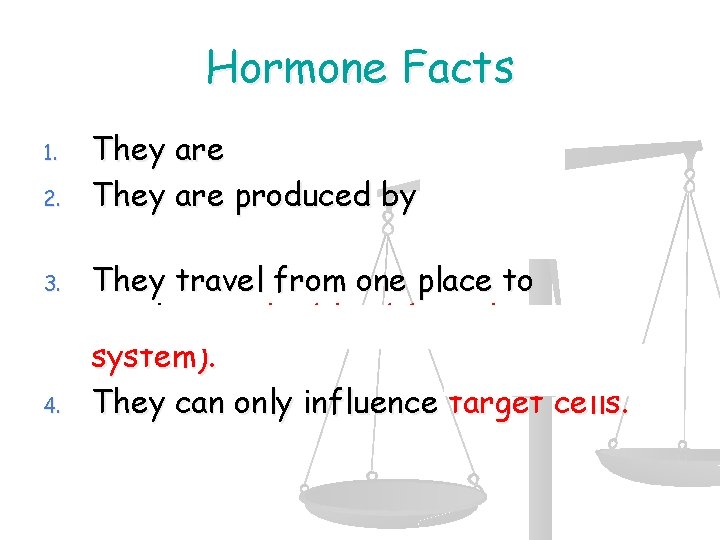
Hormone Facts 1. 2. 3. 4. They are chemical messengers. They are produced by endocrine system They travel from one place to another in the blood (circulatory system). They can only influence target cells.
n Target cell – cell that has a specific receptor site to which a chemical messenger can attach.
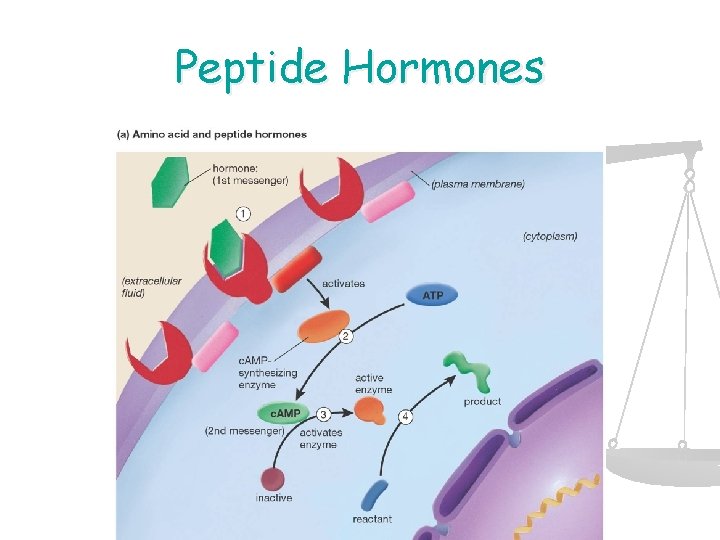
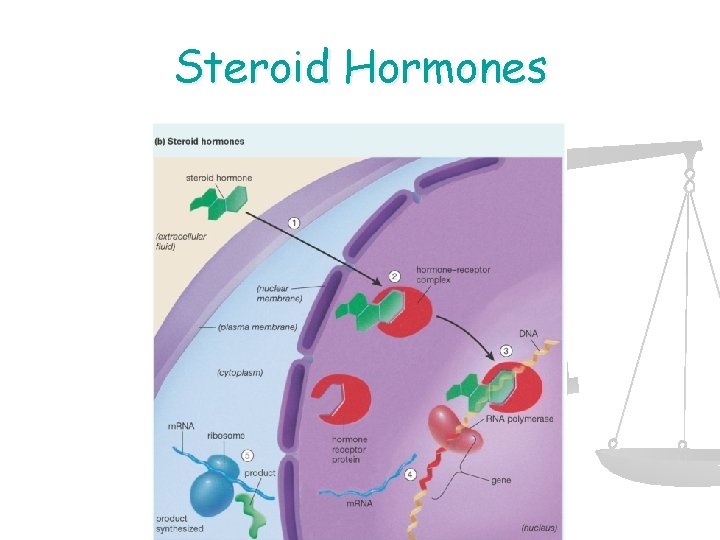
Where are the receptor sites on target cells located? n n For nonsteroid hormones – cell membranes For steroid hormones – inside the cell
Peptide Hormones
Steroid Hormones
6. They regulate: growth n cellular metabolism n blood pressure n heart rate n muscle tone calcium and glucose levels in blood n salt and water balance in body n n
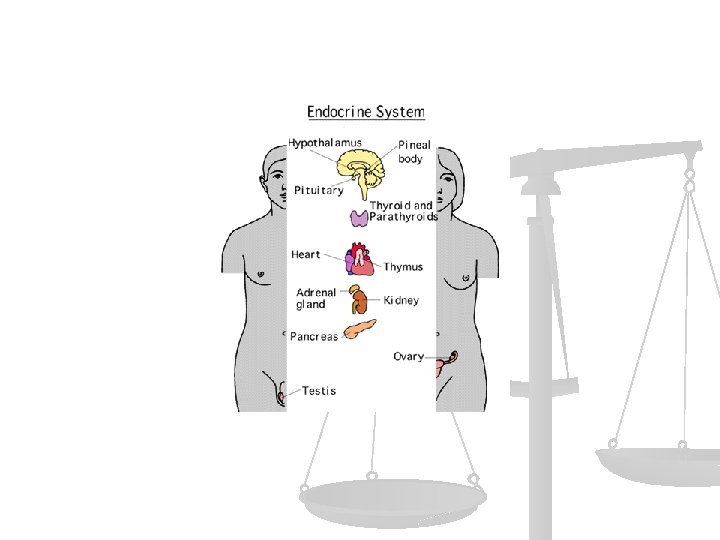
Parts of the endocrine system n n n n n Hypothalamus Pituitary gland Parathyroid gland Thymus Adrenal gland Pineal gland Thyroid Pancreas Ovaries Testes
Essential Question: How do the endocrine glands work? Do Now: What is the difference between steroid and nonsteroidal hormones HW: workbook page 528 Binder check Wednesday
Role of the Pituitary n n n The pituitary is the “master gland” that signals other glands to produce their hormones when needed. The anterior lobe of the pituitary receives signals from the hypothalamus, and responds by sending out the appropriate hormone to other endocrine glands. The posterior pituitary receives oxytocin or antidiuretic hormone (ADH) from the hypothalamus, relays them to the body as necessary.
Role of the Hypothalamus n n n The thalamus receives sensory information, relays some to the hypothalamus. Hypothalamus monitors the body for temperature, p. H, other conditions. Hypothalamus signals pituitary gland if conditions need to be corrected, if there is an emergency to respond to, or other conditions.
Adrenal Glands n n n Sit on top of the kidneys. Made up of 2 layers - adrenal cortex and adrenal medulla Corticosteroids- a steroid produced by the adrenal cortex. Adrenal medulla produces epinephrine and norepinephrine Epinephrine- produces adrenaline for fight or flight Norepinephrine- increases blood pressure and prepares body for intense physical activity
Pancreas n n 1. 2. It is both an exocrine & an endocrine gland As an exocrine gland It is attached to the small intestine by a tube or duct. It secretes digestive enzymes.
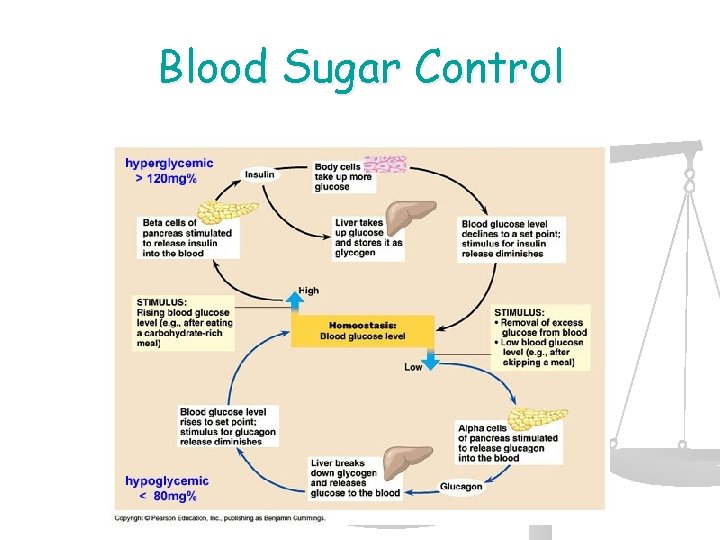
Blood Sugar Control
Diabeetes Mellitus n n Occurs when the body fails to produce or properly respond to insulin -causes high blood glucose levels which can damage body systems and cells. Type 1 - autoimmune disorder that destroys beta cells Type 2 - produce insulin but it doesn’t bind properly
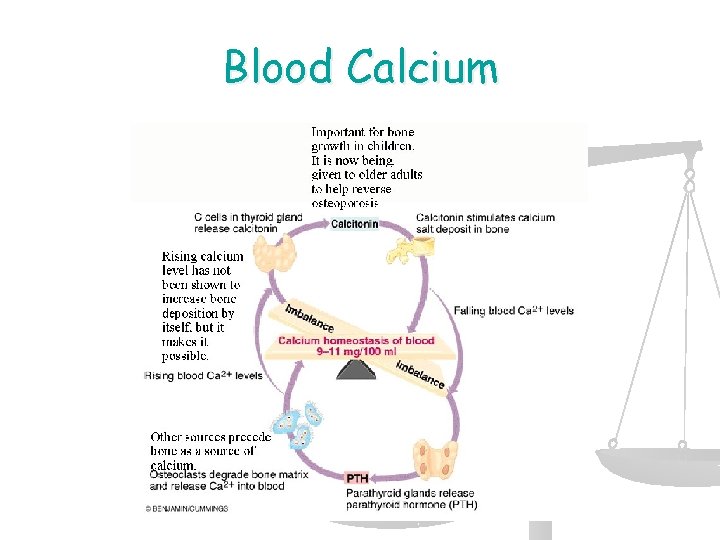
Thyroid and parathyroid gland n n n In the neck and wraps around the upper part of the trachea Thyroxine-hormone that stimulates cells to become active, produce energy and heat. Calcitonin- reduces calcium levels
Blood Calcium
Reproductive Glands n n Ovaries and testies Produce gametes and secrete sex hormones
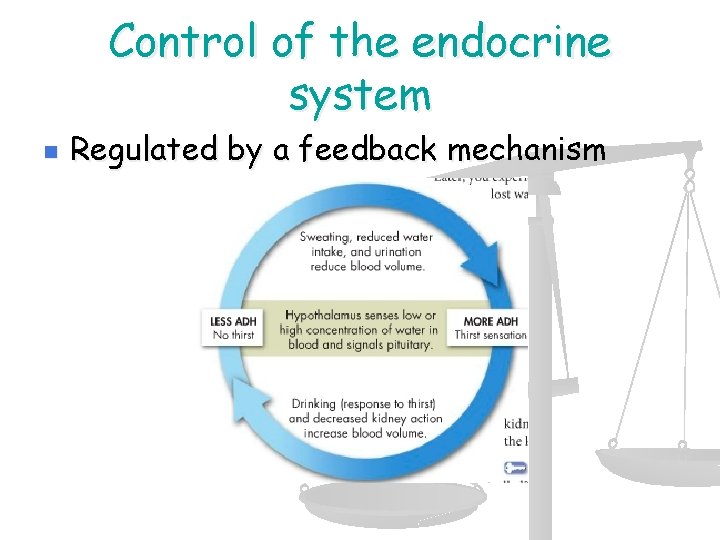
Control of the endocrine system n Regulated by a feedback mechanism