
Essential Question What are the characteristics of Absolutism
Essential Question: What are the characteristics of Absolutism? n This Lecture could be found under Units-> Period Two-> Absolutism & Constitutionalism-> Power Points
Read Aloud n Go to website and open Background to Absolutism Reading
Absolutism A form of government, usually within a monarchy, in which the ruler exercised absolute power over virtually all facets of his or her kingdom. Sovereignty was in the hands of one ruler. King usually ruled by Divine Right. n

n 1. 2. 3. 4. 5. 6. Absolute monarchs controlled: Government and law; Make laws Religion Economic policy; collect taxes Military justice system the state’s administrative system
n 1. 2. 3. In order to be an absolutist, the monarch needed to eliminate all competition within the country: No courts to overrule his or her decision No armies to threaten stability No nobles powerful enough to successfully scheme against the crown

n Absolutism streamlined the governing of a nation and reduced the time it took to make and act on decisions. n For the monarch, absolutism was ideal in times of crisis, war, or revolution.
Why Absolutism? A response to the crisis to the 16 th & 17 th centuries n A search for order-Monarchy was seen as a stabilizing force n As revolts, wars and rebellions died down, the privileged classes of society remained in control of political systems n
n When was the Age of Absolutism? Seventeenth century. n Which countries had absolute monarchs? France Austria Russia Prussia Spain (decline of monarchy) England (constitutionalism)
Richelieu, Political Will and Testament First, open Political Will and Testament, which is on the website. Read the document, in which Richelieu makes the early arguments for absolutism. Second, answer the corresponding questions as a group. 1 -3 Only not the short response. Turn in one sheet for all members. We will discuss.

th th 16 -17 EQ: How did Century thinkers justify absolutism? n TPS: What are the characteristics of absolutism? n Challenge time!!!
Hello my name is______. I would like to share parts of our previous lesson. One topic was in regards to absolutism. One characteristic of absolutism was______. n Thank your for your attention. At this point I would like to ask _____ to share his/her knowledge with the class. n

The Theory of Absolutism Jean Bodin n Six Books of the Commonwealth n Absolute supremacy of the state based on divine will & natural law (1577) Bishop Bossuet n Politics Drawn from the Very Words of Holy Scripture n Defended divine right (1679) n Drew a distinction between absolute & arbitrary government
Assignment n Read the text excerpts actively (highlight/annotate) answer the questions that follow on a separate sheet of paper. Be prepared to share your responses.
Reminder n Tomorrow is picture day. Practice your best smile.
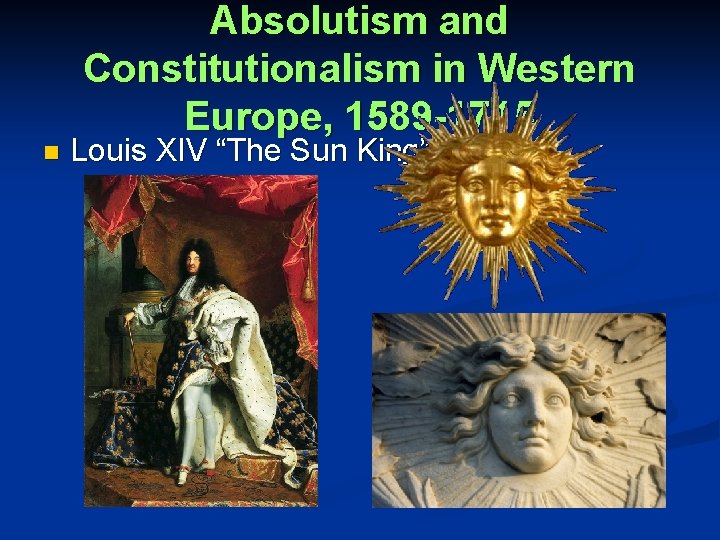
Absolutism and Constitutionalism in Western Europe, 1589 -1715 n Louis XIV “The Sun King”

France
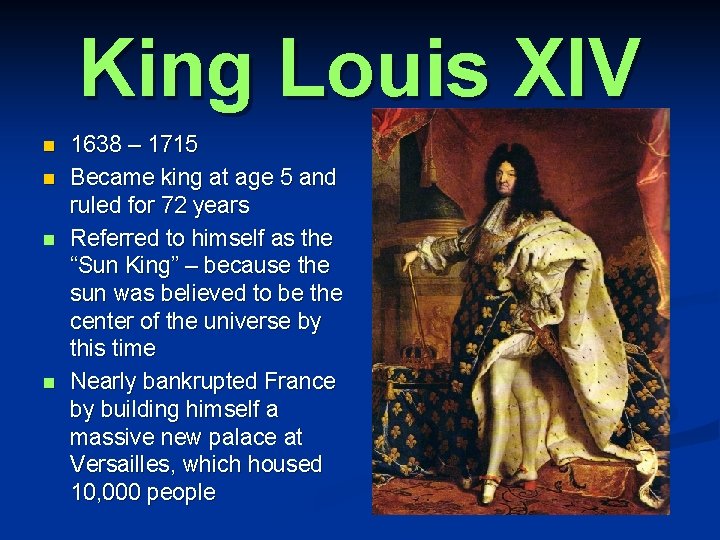
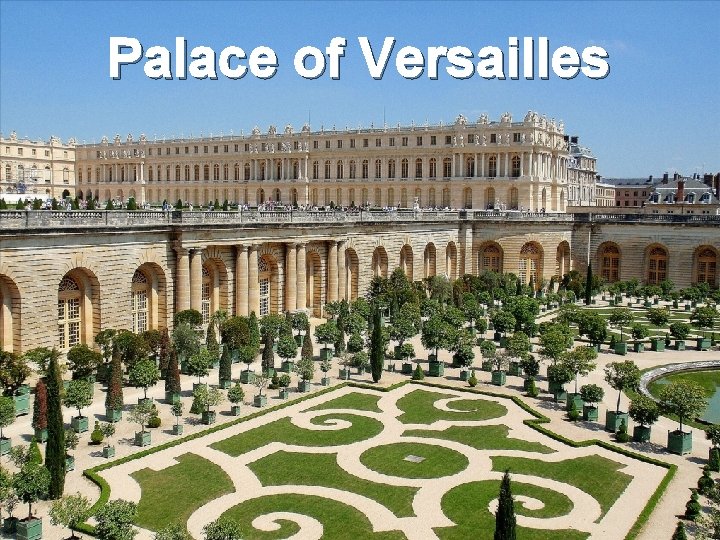
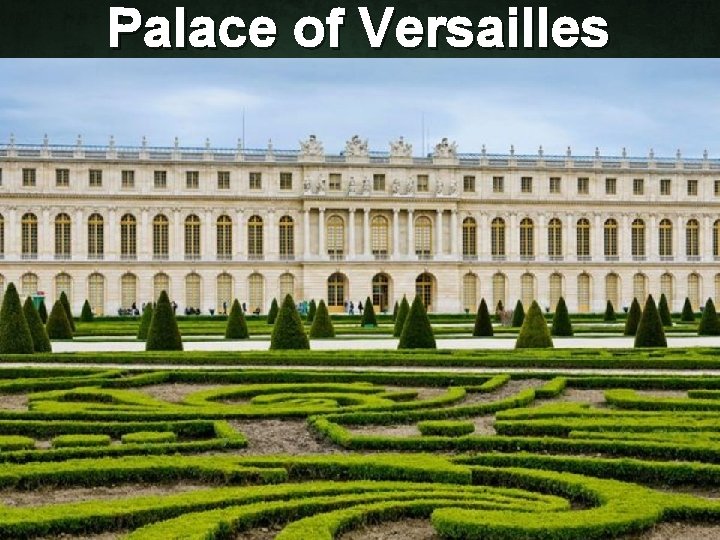
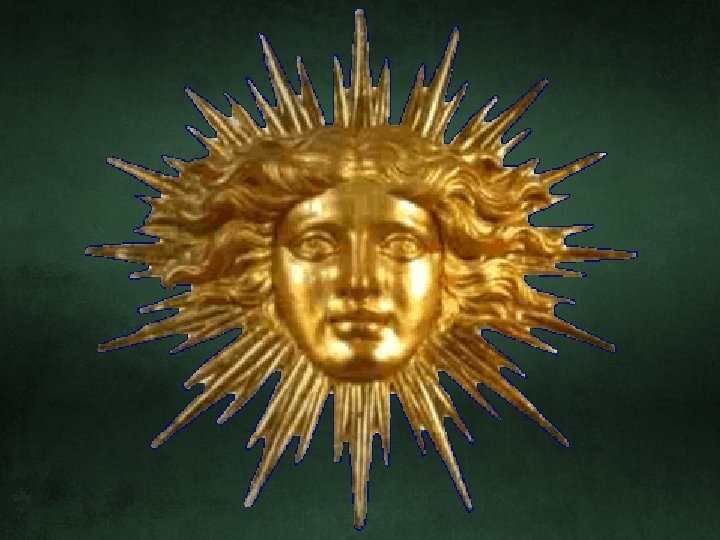
King Louis XIV n n 1638 – 1715 Became king at age 5 and ruled for 72 years Referred to himself as the “Sun King” – because the sun was believed to be the center of the universe by this time Nearly bankrupted France by building himself a massive new palace at Versailles, which housed 10, 000 people
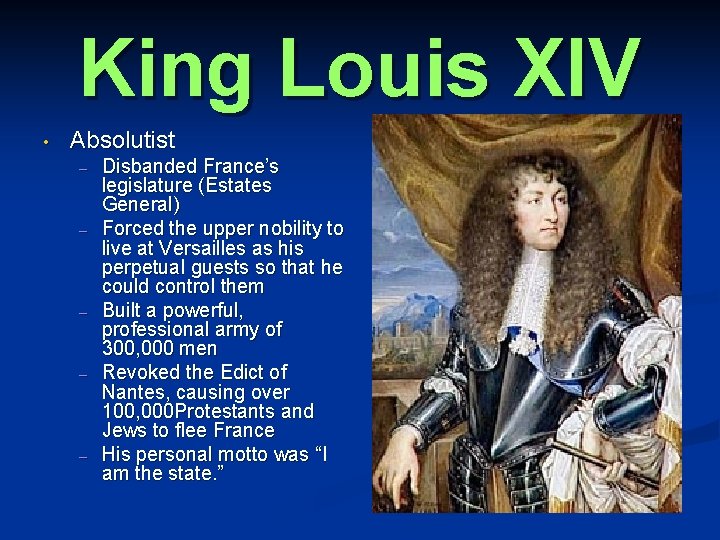
King Louis XIV • Absolutist – – – Disbanded France’s legislature (Estates General) Forced the upper nobility to live at Versailles as his perpetual guests so that he could control them Built a powerful, professional army of 300, 000 men Revoked the Edict of Nantes, causing over 100, 000 Protestants and Jews to flee France His personal motto was “I am the state. ”

More detailed information on the following slides…please view on your own
Absolutism in France The Monarchs of France were the epitome of the absolute monarchs n French Absolutism began to develop under Henry IV as an attempt to secure ascendancy into the court. n It was greatly developed under Richelieu and Louis XIII n

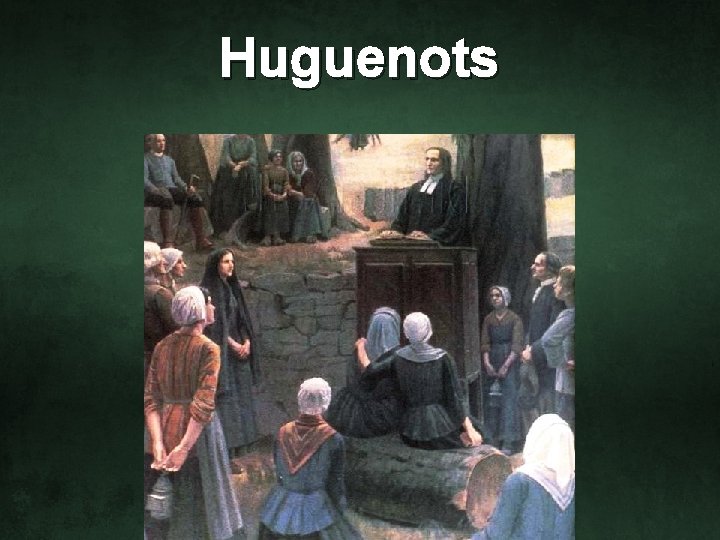
Absolutism Under Louis XIV Controlled taxation: Intendants n Hired large professional armies to increase their control and conquer new territory. n Crushed resistance of nobles when they rebelled. n Crushed resistance of Protestant Huguenots – Edict of Nantes revoked. n Palace of Versailles – isolate nobles. n Used secret police n
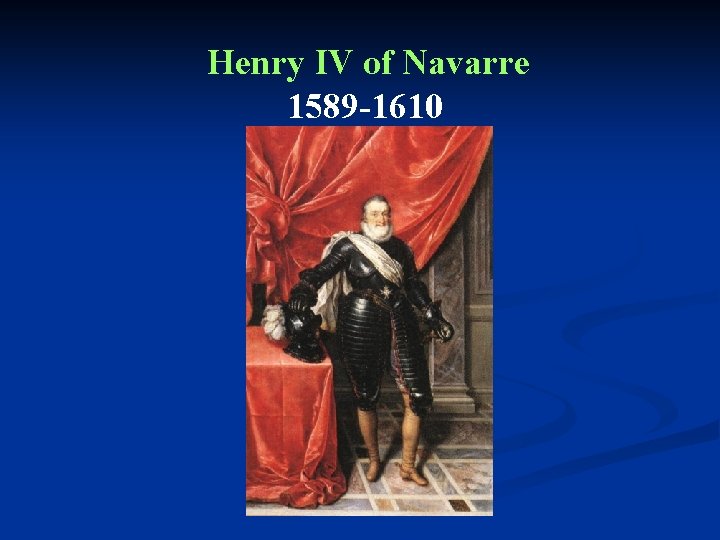
Henry IV of Navarre 1589 -1610
n n n Enacted the Edict of Nantes, guaranteeing religious liberties to the Huguenots and ending the civil war. To suppress opposing nobles, Henry had them paid off in order to prevent wars. He adopted policies and undertook projects to improve the lives of all subjects, especially workers and peasants.
n Appointed the Duke of Sully as his chief minister. 1. 2. 3. 4. 5. 6. Lowered the taxes for French peasants Regularize state finance Promote agriculture Drain swamps to create crop lands Undertake many public works Encourage education and create colleges
n n Henry IV renewed Paris as a great city. Promoted the arts by all classes of people. Financed expeditions to North America that saw France claim Canada. Henry IV was assassinated in Paris by Francois Ravaillac who stabbed the king to death while he rode in his coach
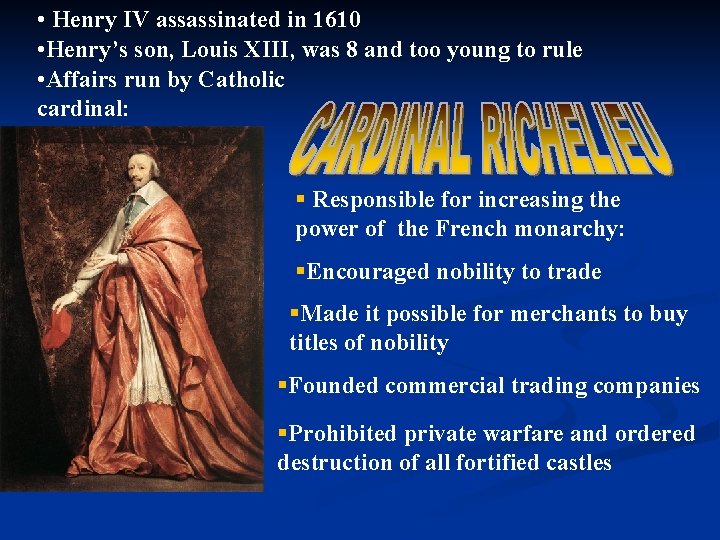
• Henry IV assassinated in 1610 • Henry’s son, Louis XIII, was 8 and too young to rule • Affairs run by Catholic cardinal: § Responsible for increasing the power of the French monarchy: §Encouraged nobility to trade §Made it possible for merchants to buy titles of nobility §Founded commercial trading companies §Prohibited private warfare and ordered destruction of all fortified castles
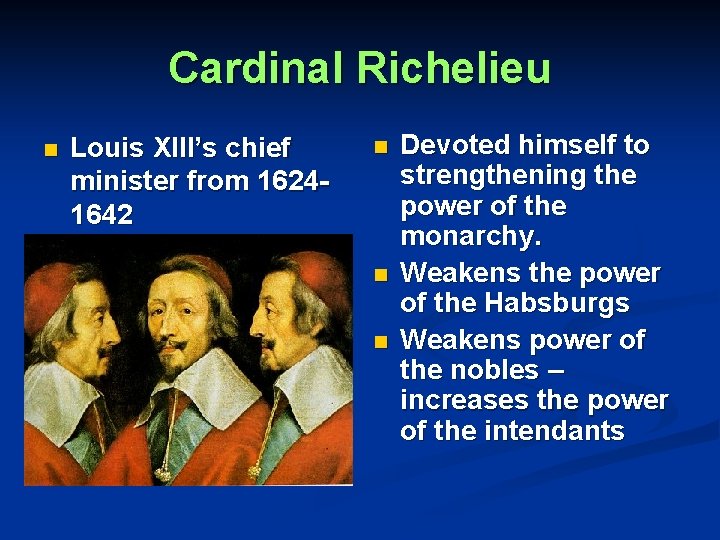
Cardinal Richelieu n Louis XIII’s chief minister from 16241642 n n n Devoted himself to strengthening the power of the monarchy. Weakens the power of the Habsburgs Weakens power of the nobles – increases the power of the intendants
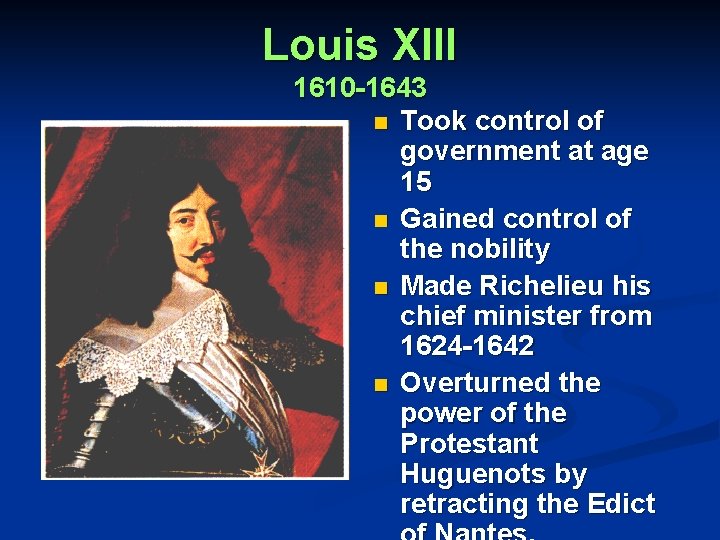
Louis XIII 1610 -1643 n Took control of government at age 15 n Gained control of the nobility n Made Richelieu his chief minister from 1624 -1642 n Overturned the power of the Protestant Huguenots by retracting the Edict
n n n Strengthened royal authority and centralized government control. Began building a powerful army capable of dominating Europe. Promoted the arts. Organized the development and westward expansion of New France in North America to Montreal. Was married to a Habsburg princess, Anne of Austria, daughter of King Philip III of Spain
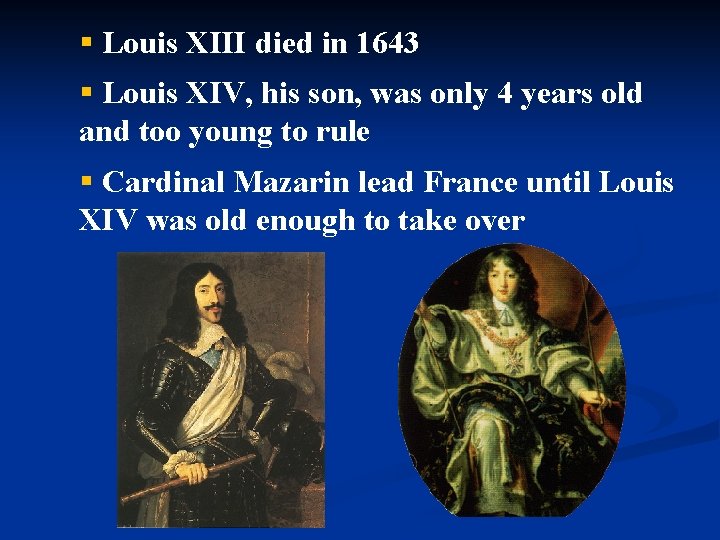
§ Louis XIII died in 1643 § Louis XIV, his son, was only 4 years old and too young to rule § Cardinal Mazarin lead France until Louis XIV was old enough to take over
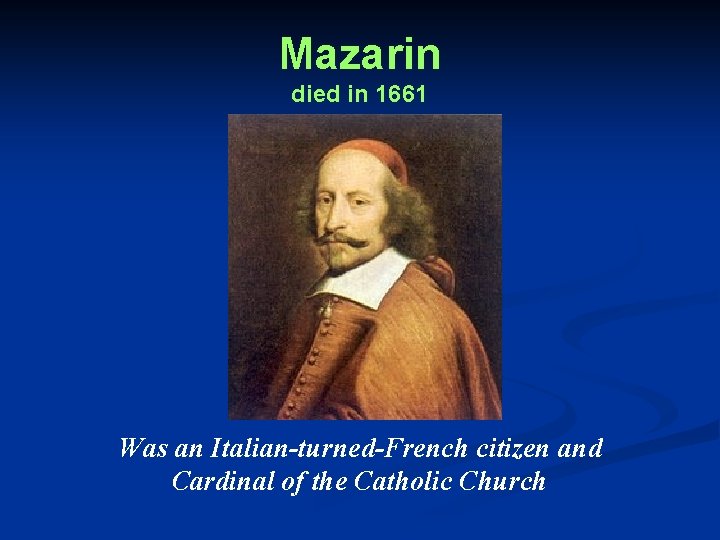
Mazarin died in 1661 Was an Italian-turned-French citizen and Cardinal of the Catholic Church
n n n Was chosen as chief minister by Louis XIII to follow Richelieu and learned his political philosophy With the death of Richelieu and Louis XIII, Mazarin became the “ruler”. He continued Richelieu’s anti-Habsburg policy and strengthening of the central government. Was successful in foreign policy- added territory to France in the Treaty of Westphalia
n n n Was a failure in domestic policy n Failed to control the nobility n Faced backlash over rising taxes and a failing economy n French rebelled in civil wars known as the Fronde Mazarin was chased from France twice, but eventually prevailed and helped pave the way for the reign of Louis XIV Died in 1661, Louis XIV became the ruling monarch
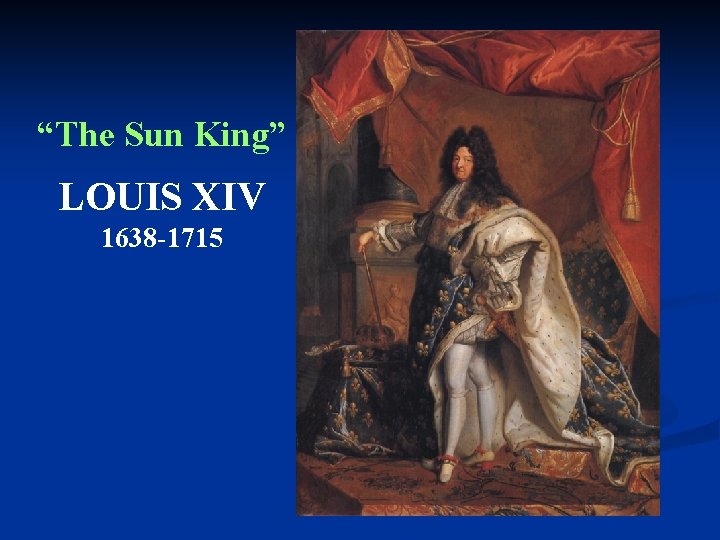
“The Sun King” LOUIS XIV 1638 -1715
n n Ruled France from 1643 -1715, longest reign in European history. As a youth, he read diplomatic papers, learned geography, and watched those around him conduct state affairs. He grew to believe that the nobility could not and should not be trusted. He learned from Mazarin (who learned from Richelieu) the importance of being a grand powerful monarch
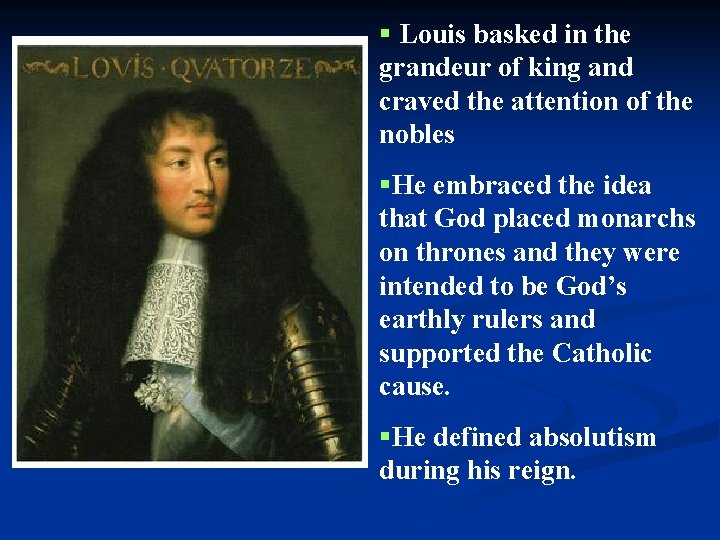
§ Louis basked in the grandeur of king and craved the attention of the nobles §He embraced the idea that God placed monarchs on thrones and they were intended to be God’s earthly rulers and supported the Catholic cause. §He defined absolutism during his reign.
n n n A strong central government was the #1 goal of Louis’ reign. He decided to convince the nobility to work with him rather than confronting and subduing them. He planned to control the nobility without them realizing it. He convinced the wealthy nobles to support measures that benefited themselves and the monarchy. He eventually convinced the nobility of his grandeur and nobles would do anything to be in his presence. He used the palace at Versailles to
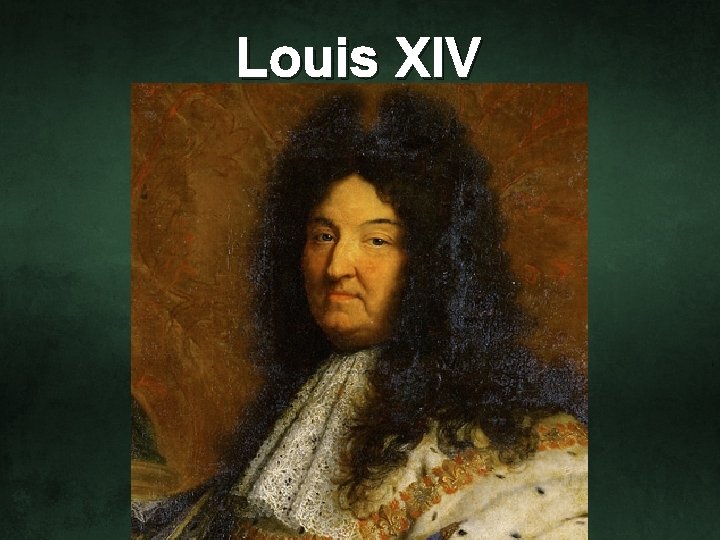
Louis XIV
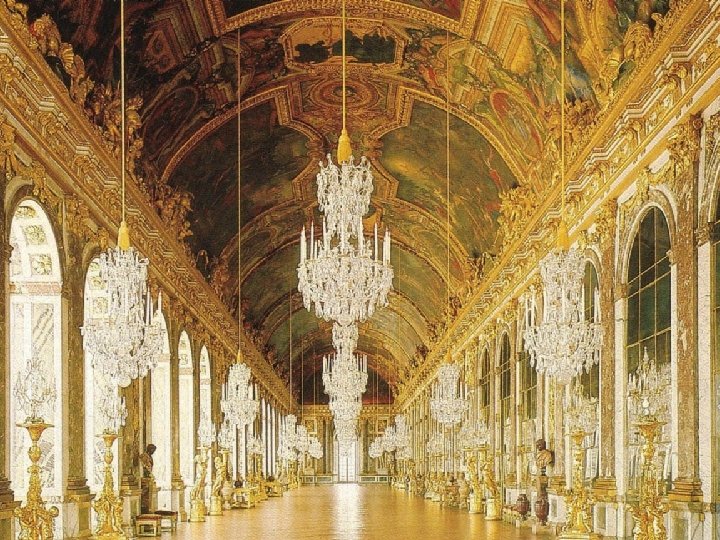
Palace of Versailles
Palace of Versailles
Huguenots
- Slides: 43