
Essential Question How did the development of regional

- Slides: 38
■ Essential Question: – How did the development of regional economies & Clay’s American System led to a national market economy? ■ CPUSH Agenda for Unit 4. 4: – Clickers Questions – Market Revolution inquiry activity & notes – Today’s HW: 8. 1 – CPUSH Midterm: Friday, September 28 – County Interim: Monday, October 1
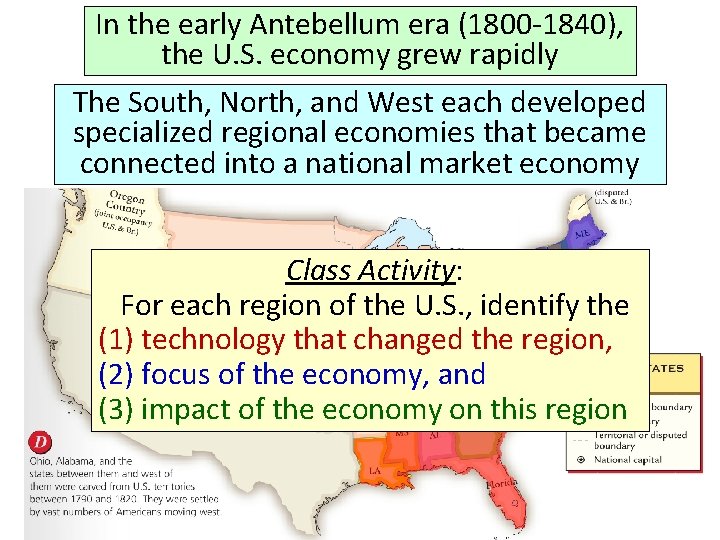
In the early Antebellum era (1800 -1840), the U. S. economy grew rapidly The South, North, and West each developed specialized regional economies that became connected into a national market economy Class Activity: For each region of the U. S. , identify the (1) technology that changed the region, (2) focus of the economy, and (3) impact of the economy on this region
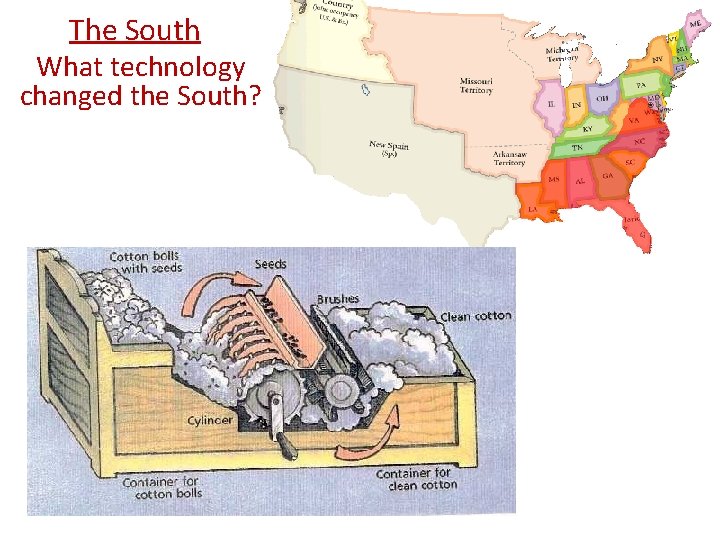
The South What technology changed the South?
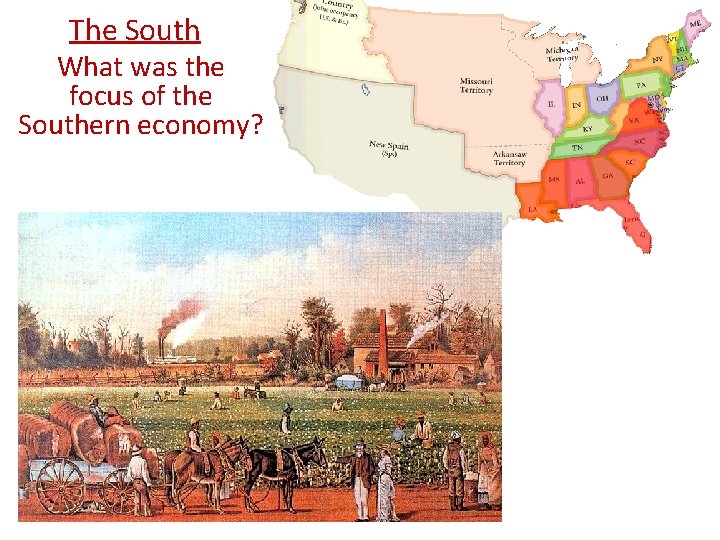
The South What was the focus of the Southern economy?
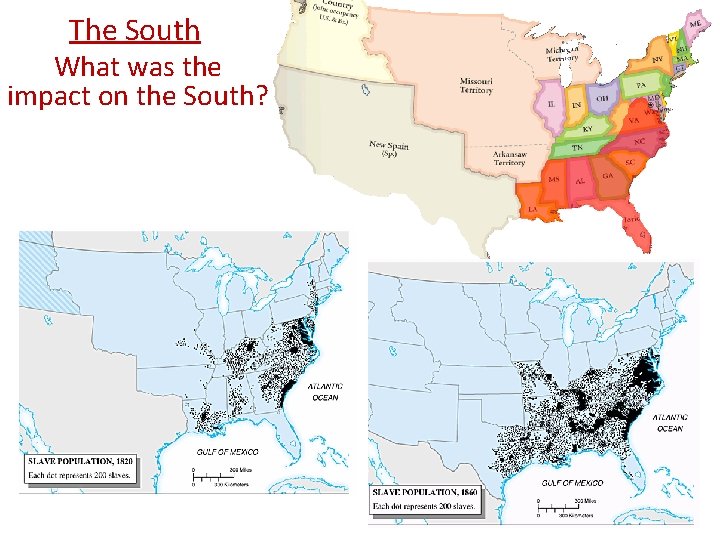
The South What was the impact on the South?
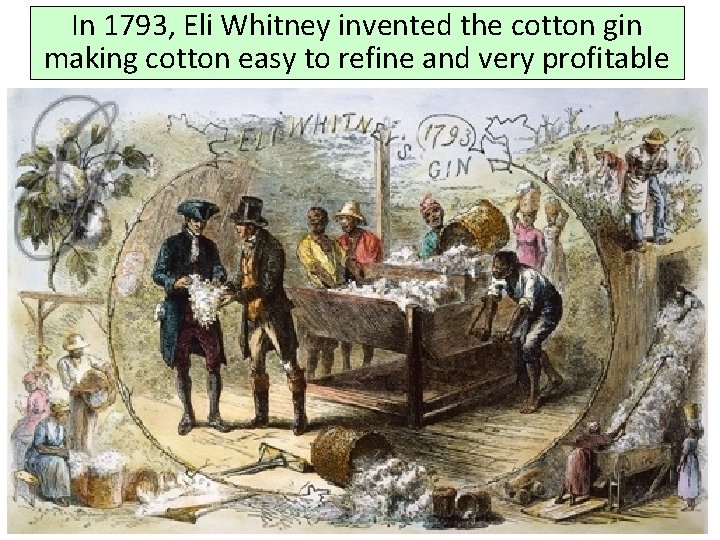
In 1793, Eli Whitney invented the cotton gin making cotton easy to refine and very profitable
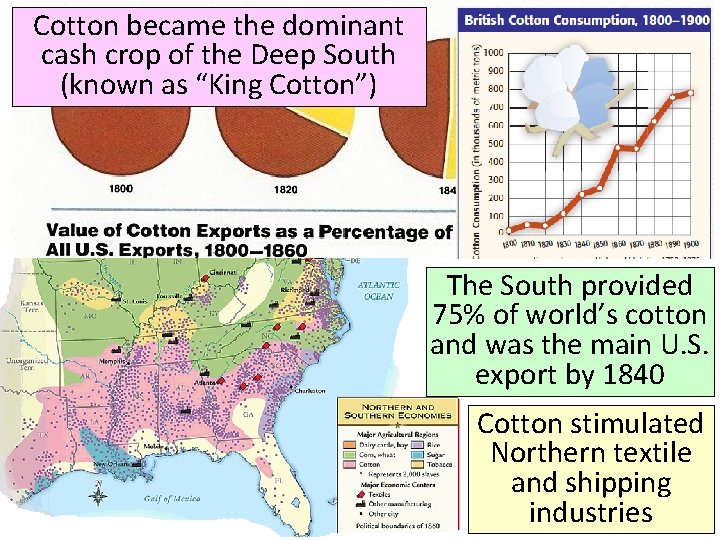
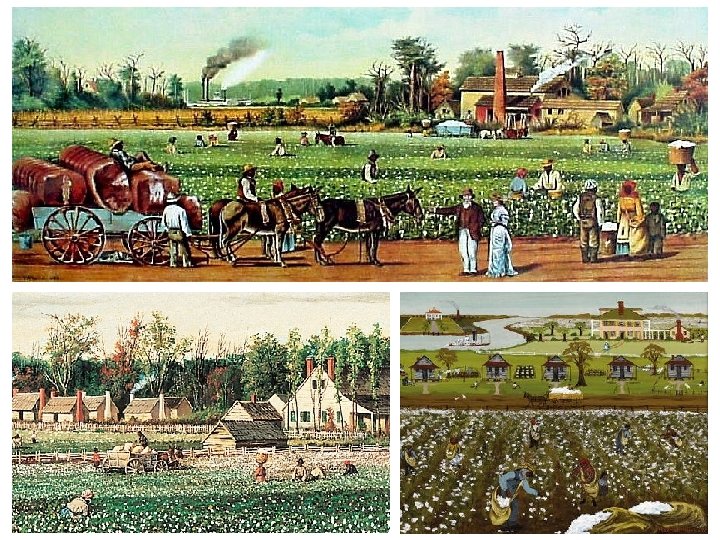
Cotton became the dominant cash crop of the Deep South (known as “King Cotton”) The South provided 75% of world’s cotton and was the main U. S. export by 1840 Cotton stimulated Northern textile and shipping industries
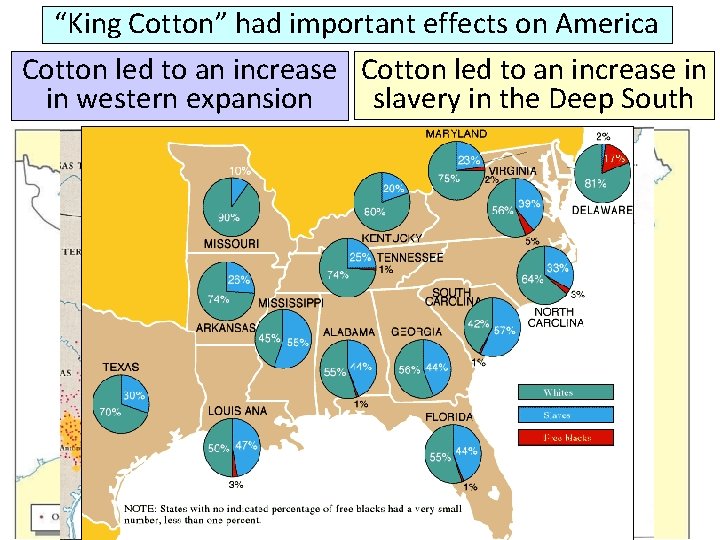
“King Cotton” had important effects on America Cotton led to an increase in in western expansion slavery in the Deep South The Black Belt
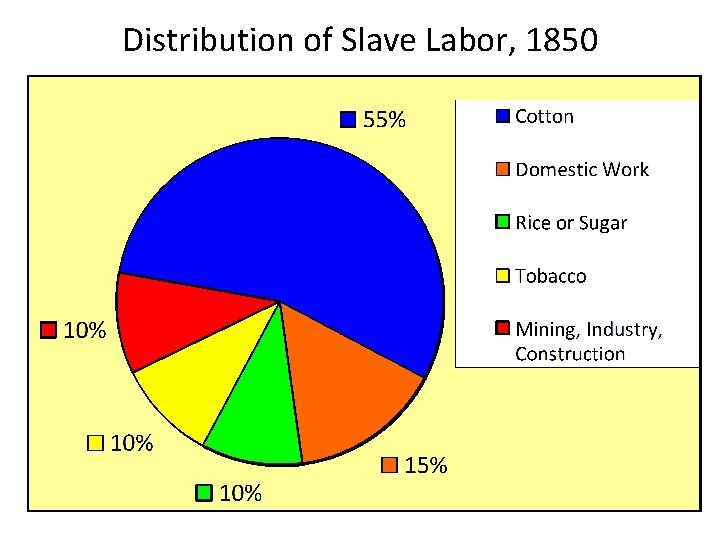
Distribution of Slave Labor, 1850
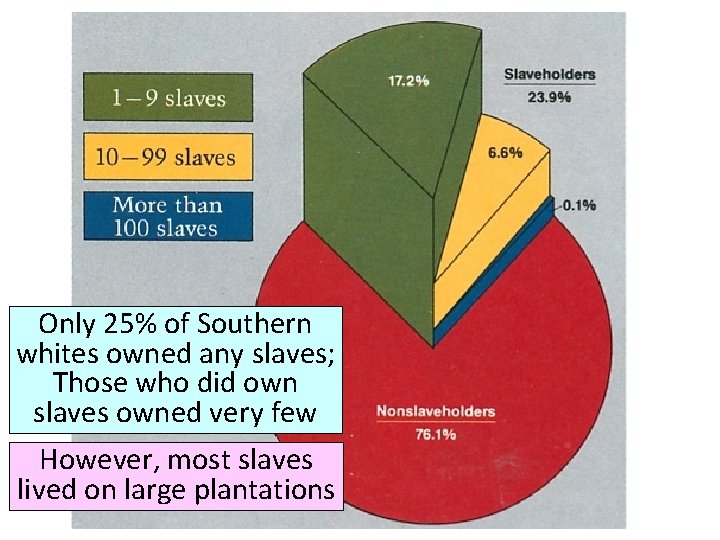
Only 25% of Southern whites owned any slaves; Those who did own slaves owned very few However, most slaves lived on large plantations
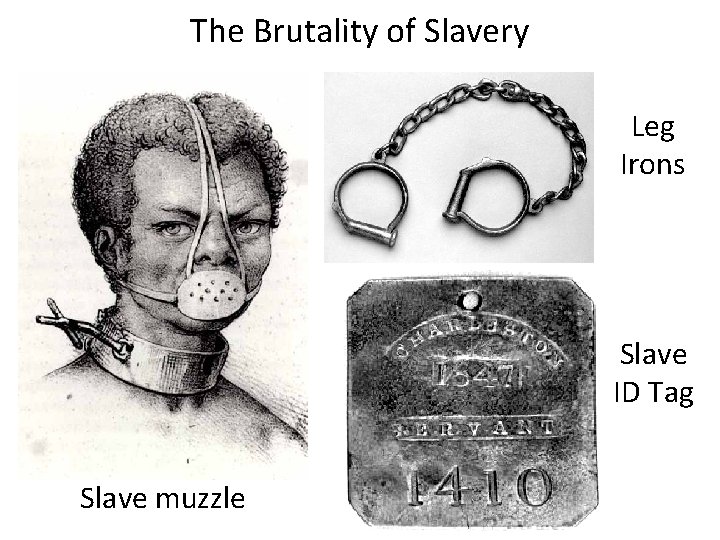
The Brutality of Slavery Leg Irons Slave ID Tag Slave muzzle
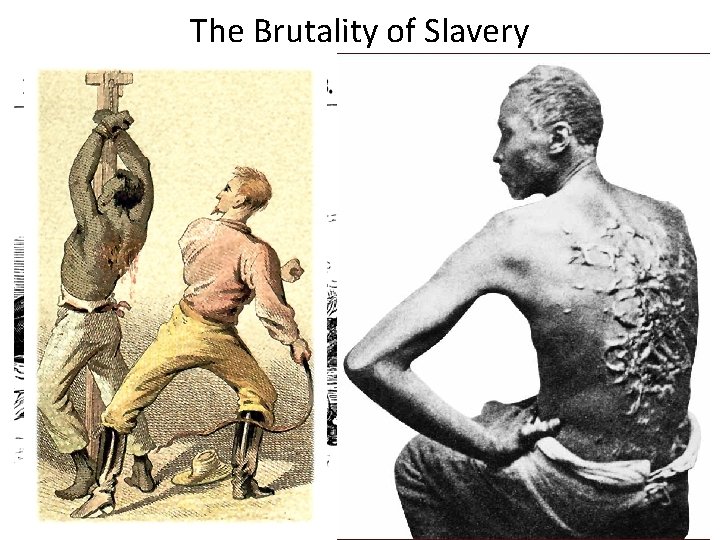
The Brutality of Slavery Leg Irons Branding irons
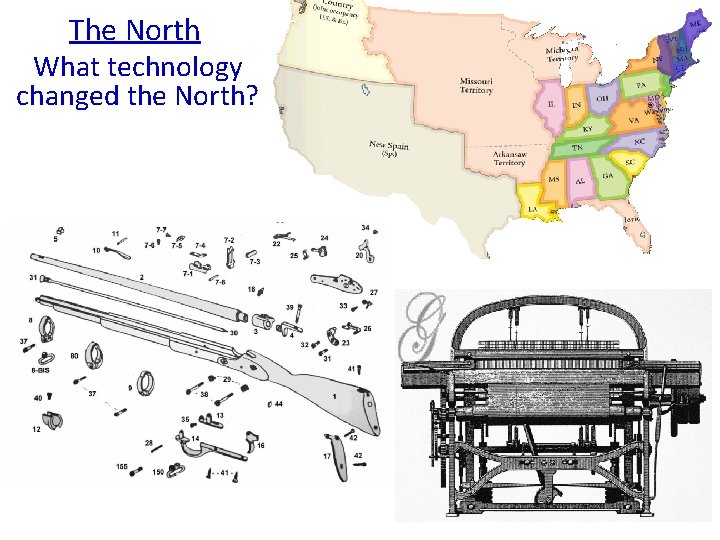
The North What technology changed the North?
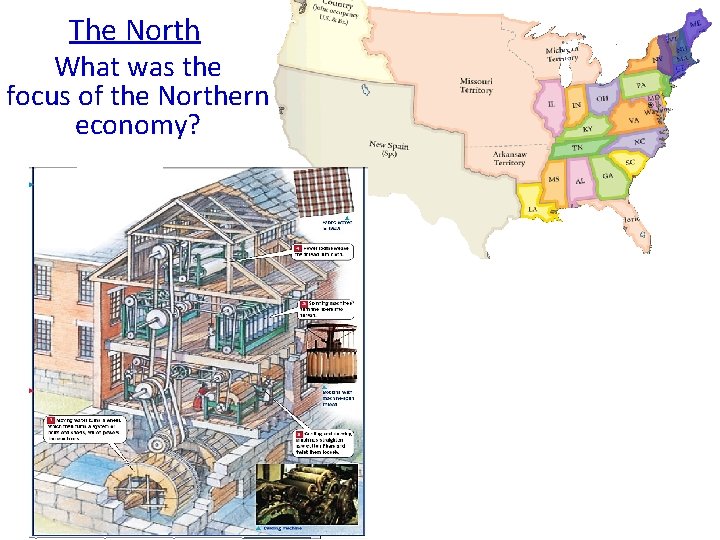
The North What was the focus of the Northern economy?
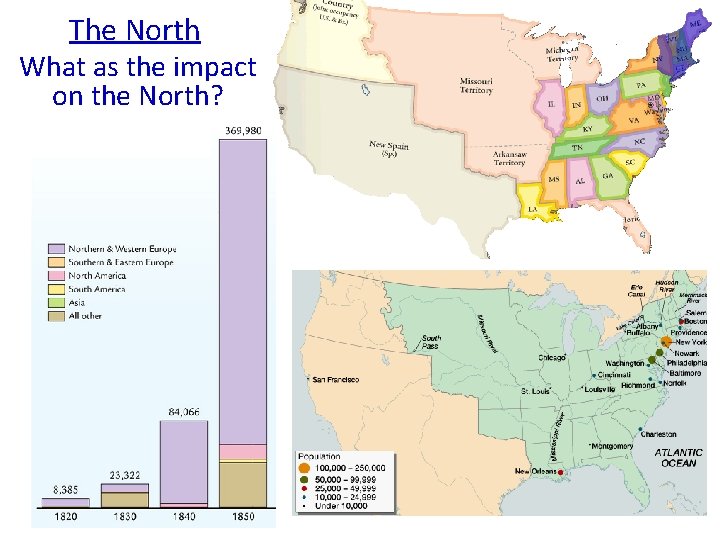
The North What as the impact on the North?
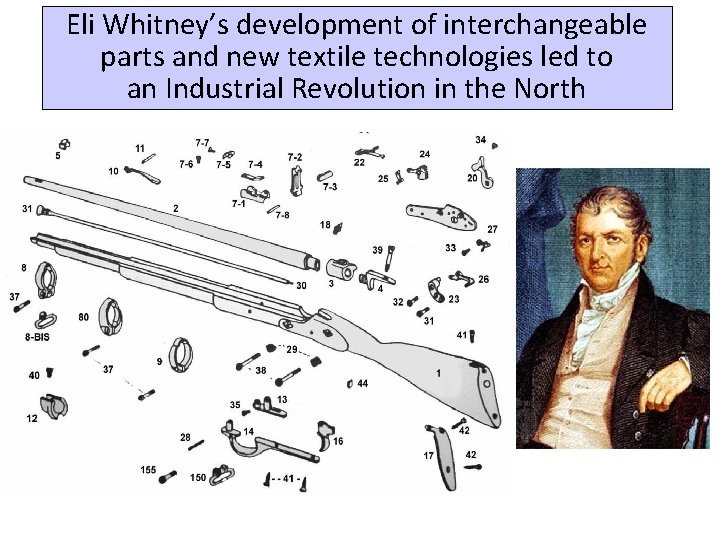
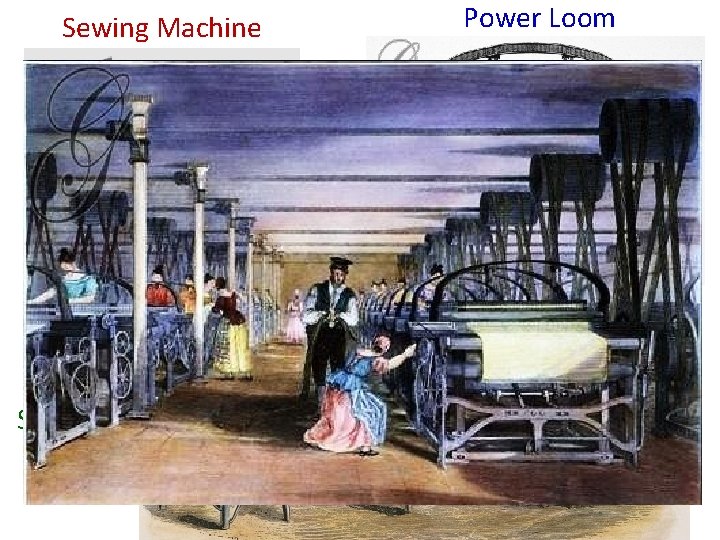
Eli Whitney’s development of interchangeable parts and new textile technologies led to an Industrial Revolution in the North
Sewing Machine Spinning Mule Power Loom
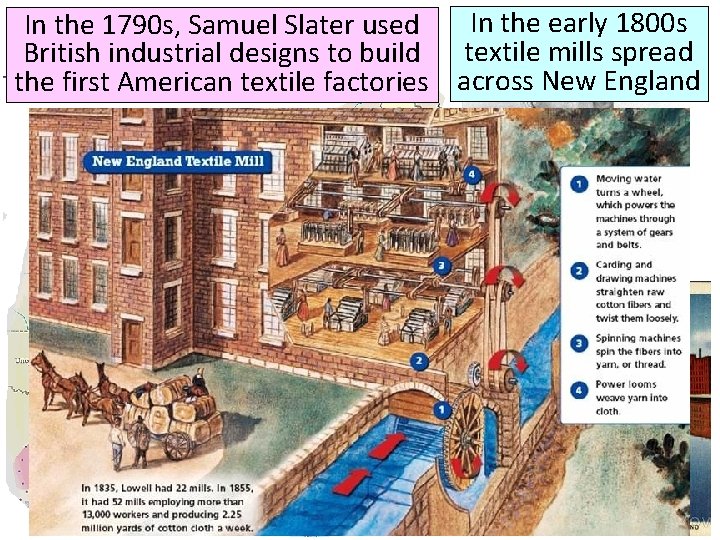
In the early 1800 s In the 1790 s, Samuel Slater used British industrial designs to build textile mills spread the first American textile factories across New England
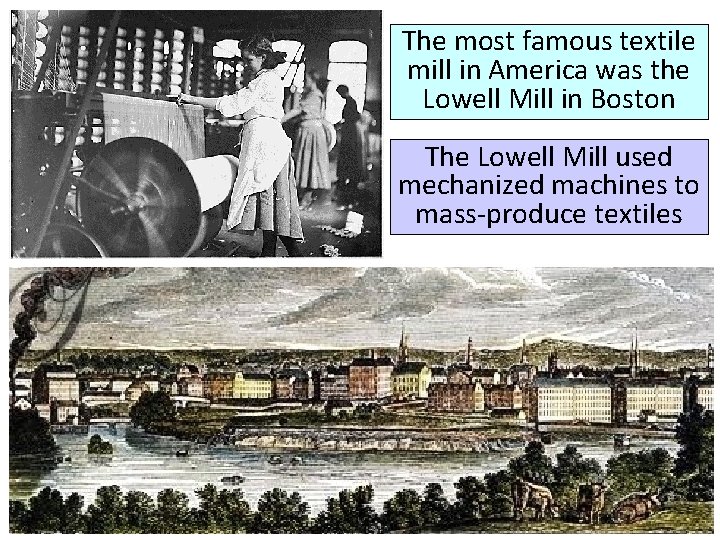
The most famous textile mill in America was the Lowell Mill in Boston The Lowell Mill used mechanized machines to mass-produce textiles
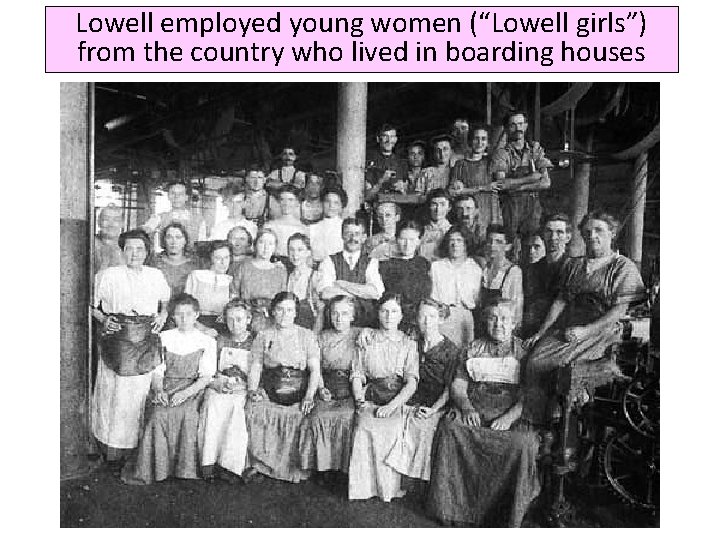
Lowell employed young women (“Lowell girls”) from the country who lived in boarding houses
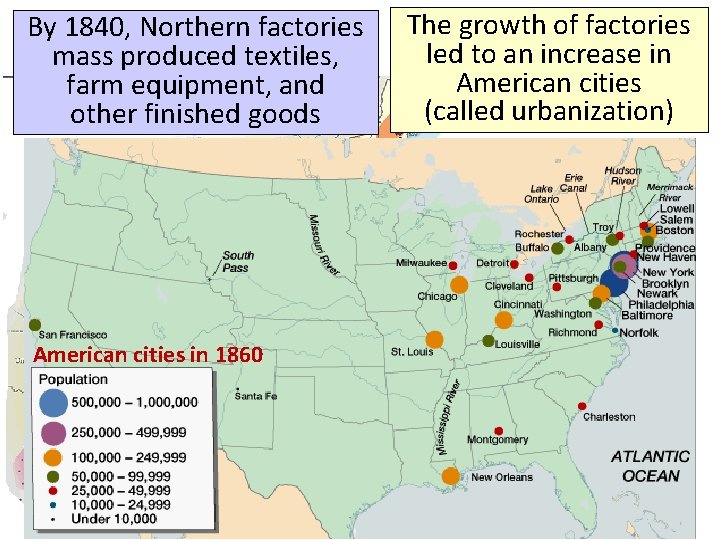
By 1840, Northern factories mass produced textiles, farm equipment, and other finished goods American cities in 1860 American cities in 1820 The growth of factories led to an increase in American cities (called urbanization)
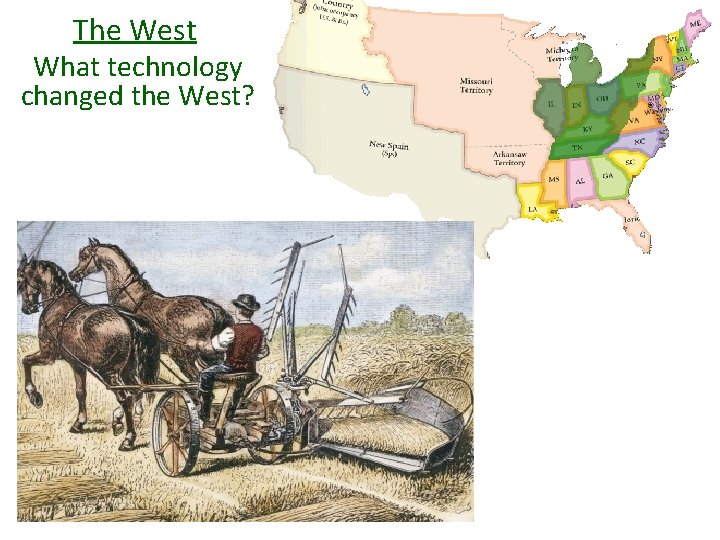
The West What technology changed the West?
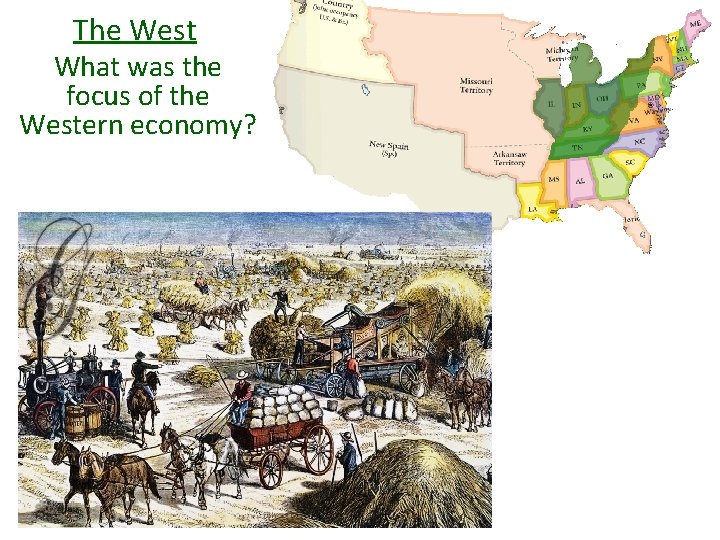
The West What was the focus of the Western economy?
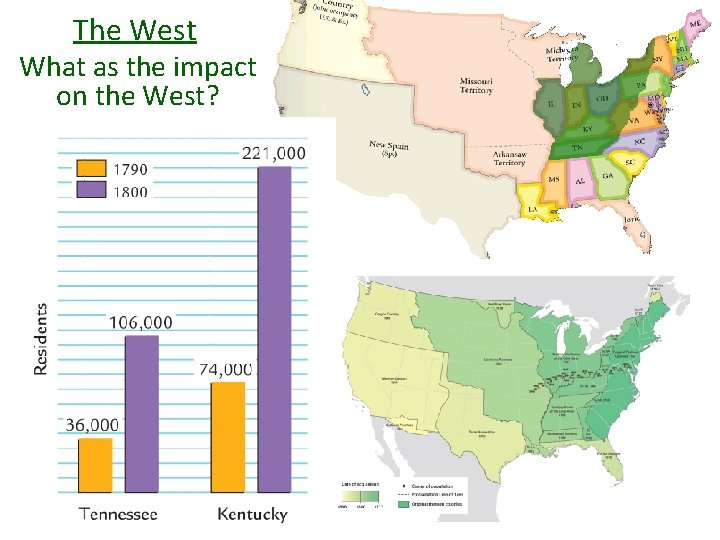
The West What as the impact on the West?
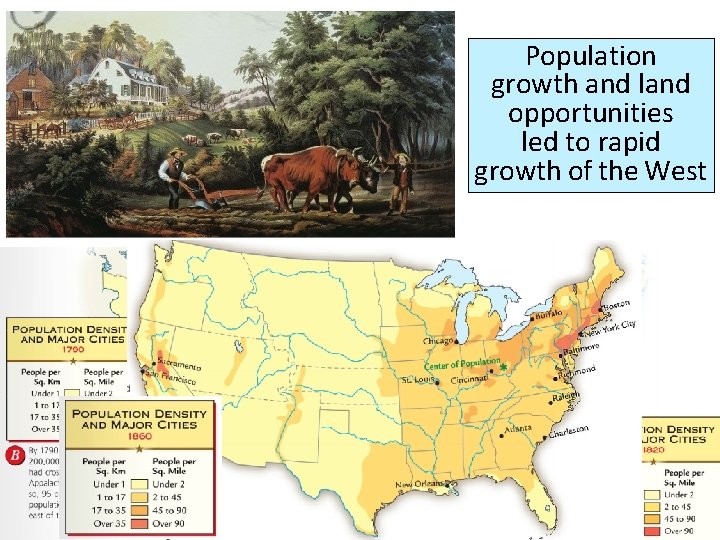
Population growth and land opportunities led to rapid growth of the West
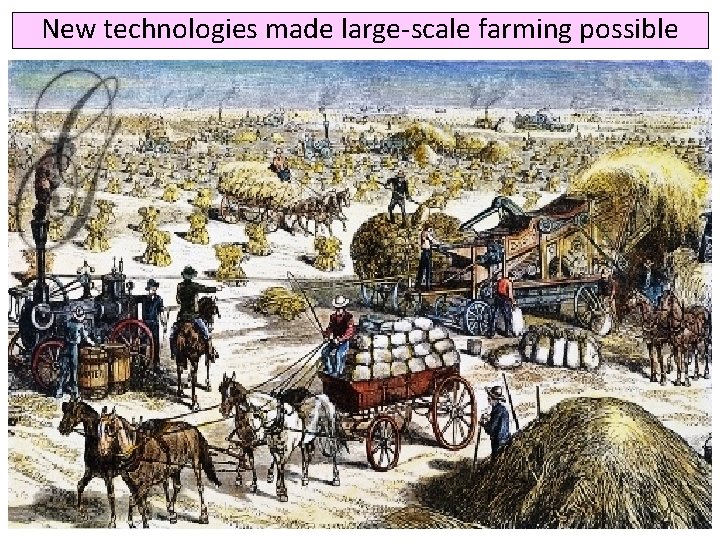
New technologies made large-scale farming possible John Deere’s steel plow Cyrus Mc. Cormick’s mechanical reaper
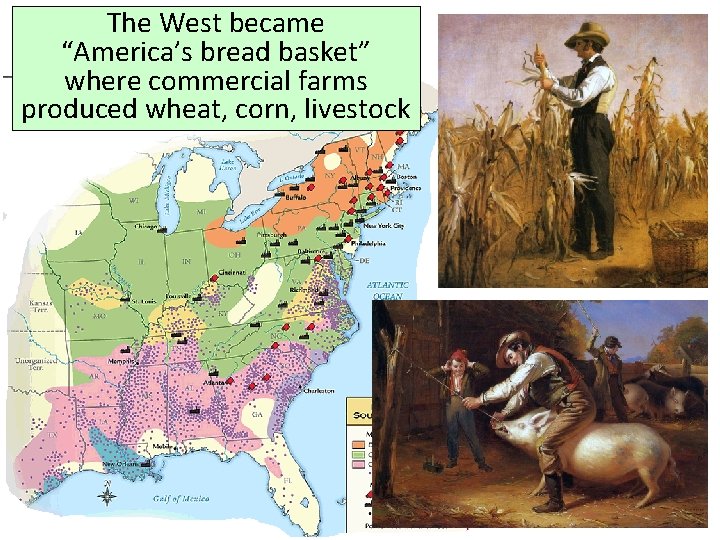
The West became “America’s bread basket” where commercial farms produced wheat, corn, livestock
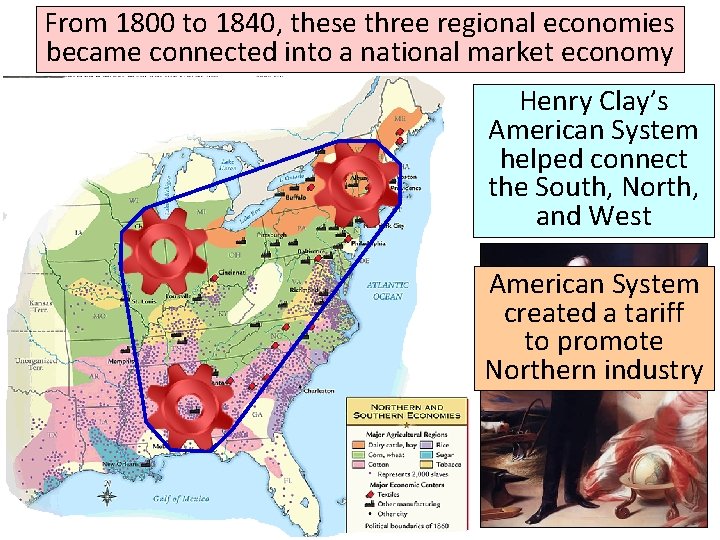
From 1800 to 1840, these three regional economies became connected into a national market economy Henry Clay’s American System helped connect the South, North, and West American System created a tariff to promote Northern industry
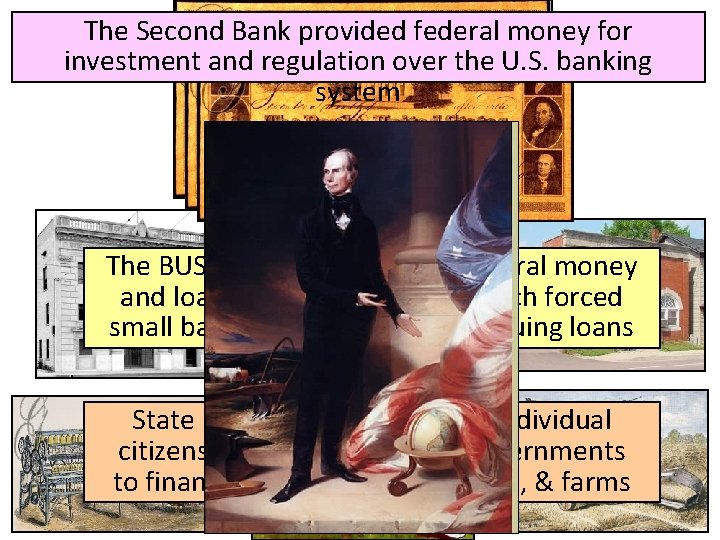
The Second Bank provided federal money for investment and regulation over the U. S. banking system The BUS held ~$10 million in federal money and loaned it to state banks which forced small banks to be smart when issuing loans State banks loaned money to individual citizens, businesses, or local governments to finance roads, canals, factories, & farms
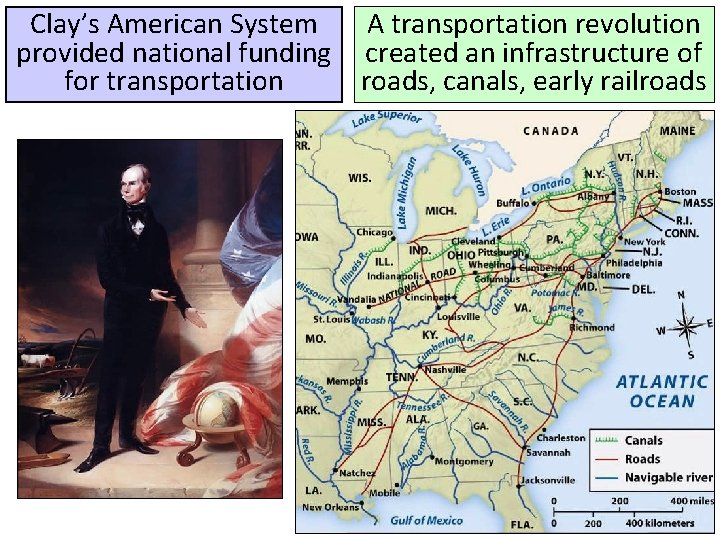
Clay’s American System A transportation revolution provided national funding created an infrastructure of for transportation roads, canals, early railroads
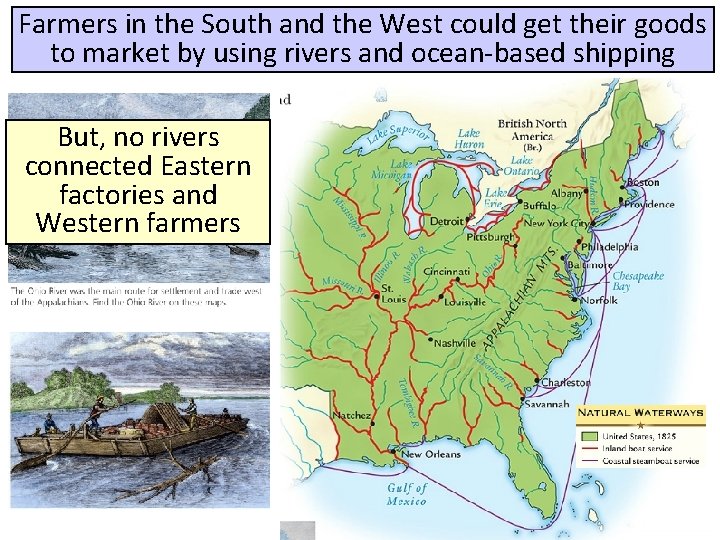
Farmers in the South and the West could get their goods to market by using rivers and ocean-based shipping But, no rivers connected Eastern factories and Western farmers
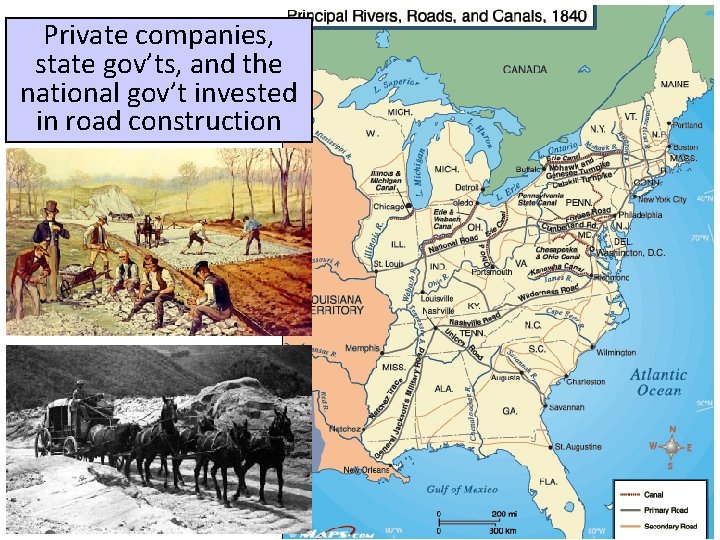
Private companies, state gov’ts, and the national gov’t invested in road construction
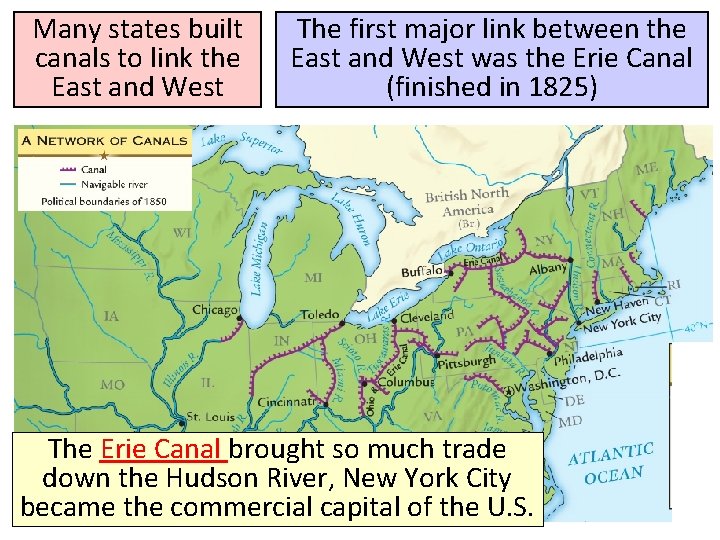
Many states built canals to link the East and West The first major link between the East and West was the Erie Canal (finished in 1825) The Erie Canal brought so much trade down the Hudson River, New York City became the commercial capital of the U. S.
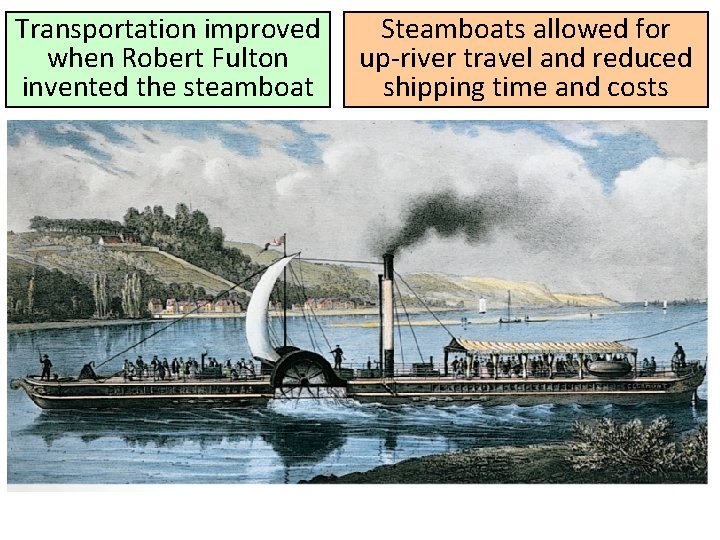
Transportation improved when Robert Fulton invented the steamboat Steamboats allowed for up-river travel and reduced shipping time and costs
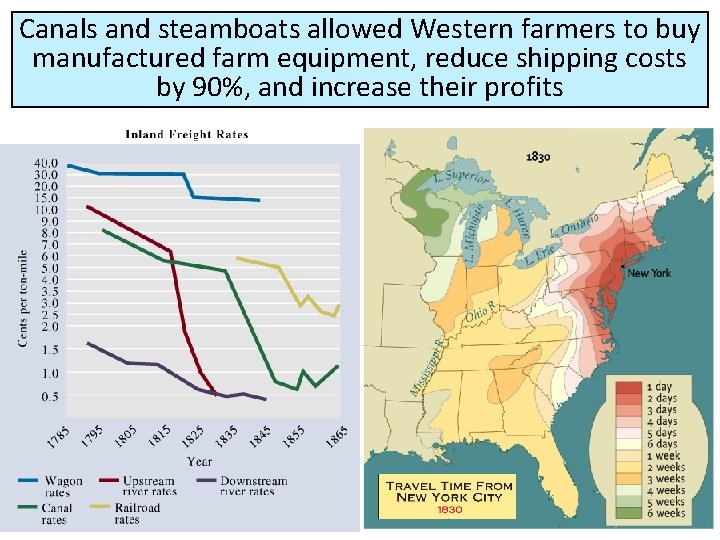
Canals and steamboats allowed Western farmers to buy manufactured farm equipment, reduce shipping costs by 90%, and increase their profits
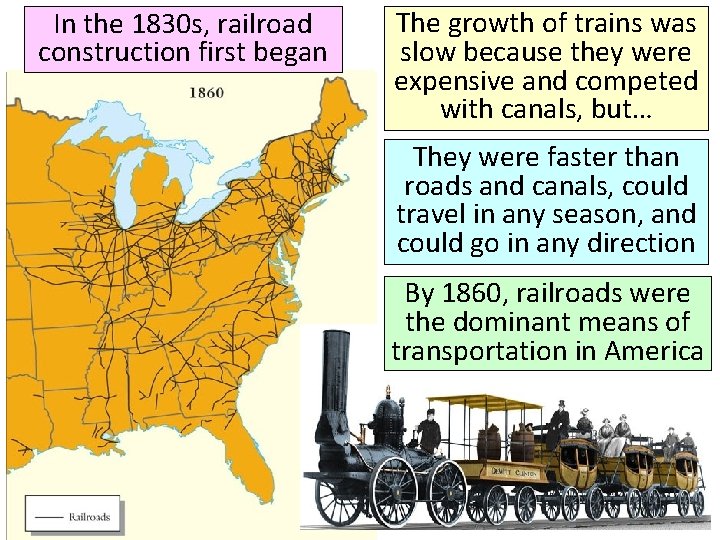
In the 1830 s, railroad construction first began The growth of trains was slow because they were expensive and competed with canals, but… They were faster than roads and canals, could travel in any season, and could go in any direction By 1860, railroads were the dominant means of transportation in America