
Essential knowledge 2 B 2 Growth and dynamic
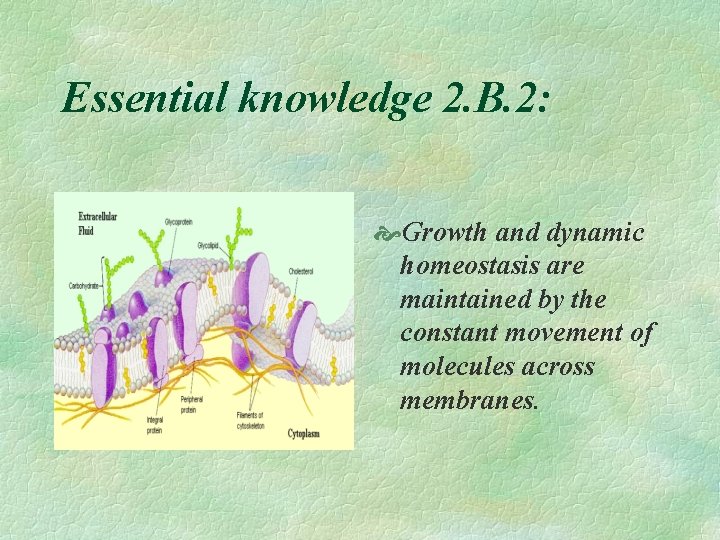
Essential knowledge 2. B. 2: Growth and dynamic homeostasis are maintained by the constant movement of molecules across membranes.
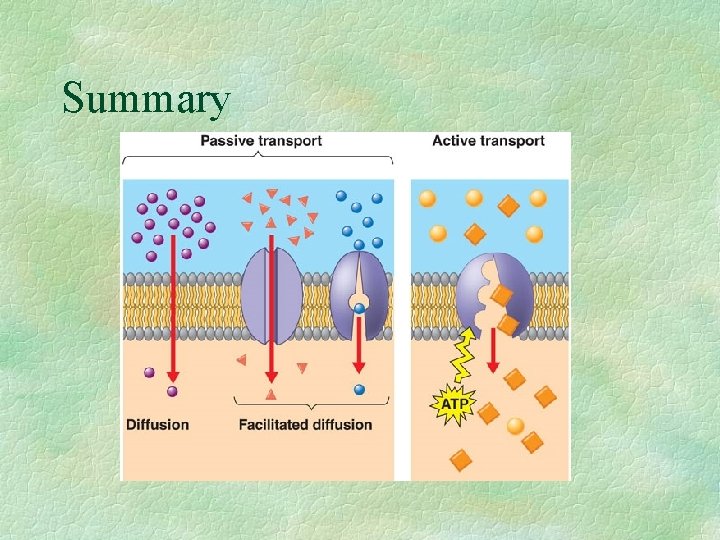
Passive transport does not require the input of metabolic energy the net movement of molecules is from high concentration to low concentration.
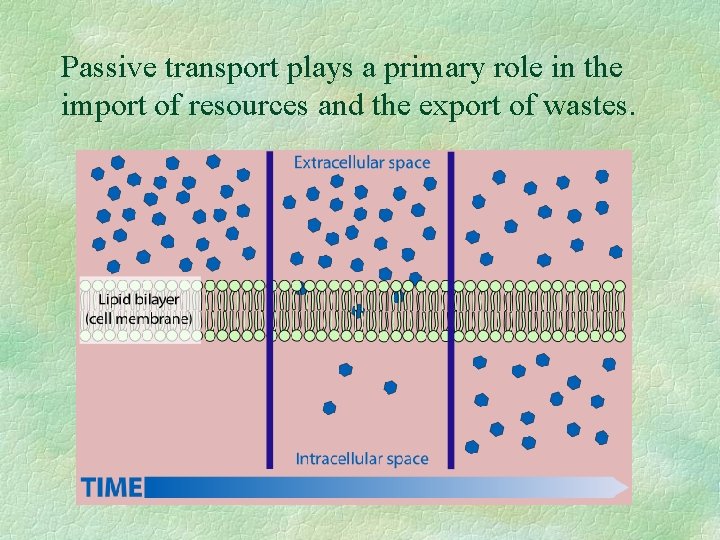
Passive transport plays a primary role in the import of resources and the export of wastes.
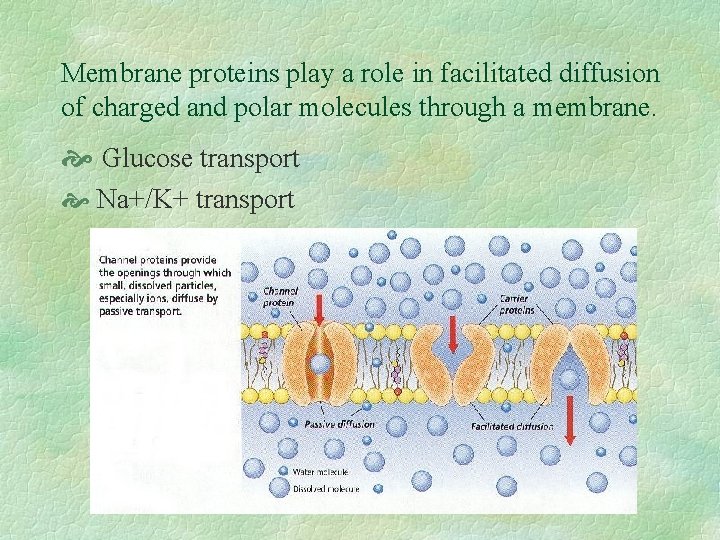
Membrane proteins play a role in facilitated diffusion of charged and polar molecules through a membrane. Glucose transport Na+/K+ transport

External environments can be hypotonic, hypertonic or isotonic to internal environments of cells
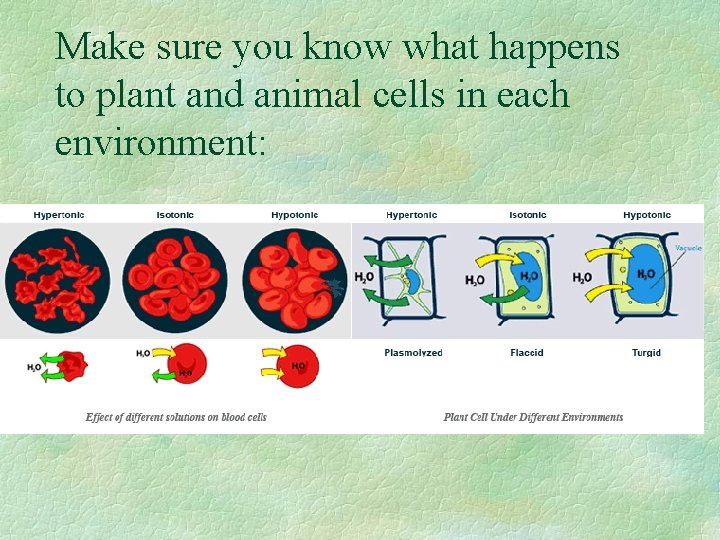
Make sure you know what happens to plant and animal cells in each environment:
Active Transport Requires Energy 1. Active transport is a process where free energy (often provided by ATP) is used by proteins embedded in the membrane to “move” molecules and/or ions across the membrane and to establish and maintain concentration gradients. 2. Membrane proteins are necessary for active transport.
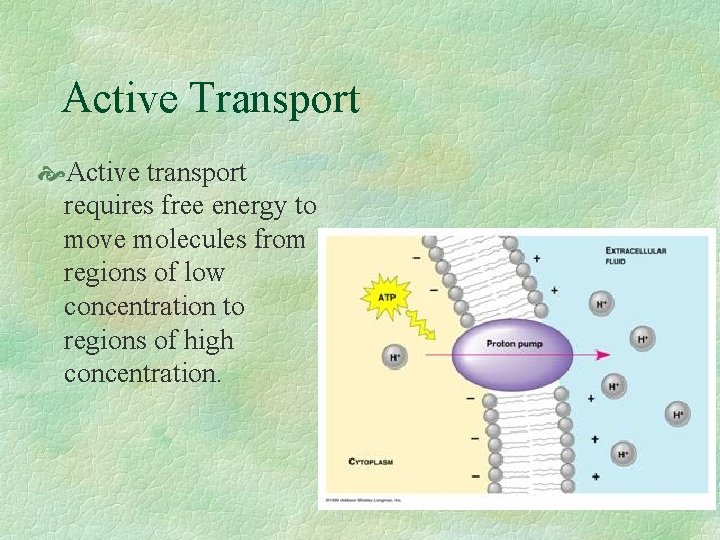
Active Transport Active transport requires free energy to move molecules from regions of low concentration to regions of high concentration.
Endocytosis and Ectocytosis The processes of endocytosis and exocytosis move large molecules from the external environment to the internal environment and vice versa, respectively. Bulk Transport
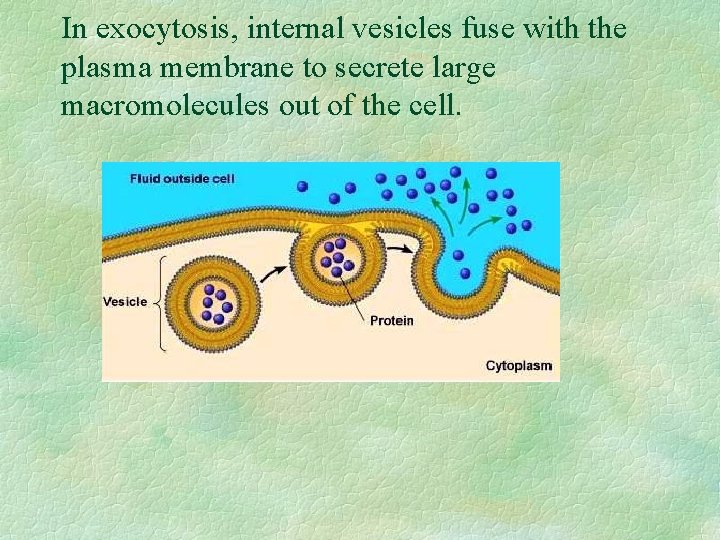
In exocytosis, internal vesicles fuse with the plasma membrane to secrete large macromolecules out of the cell.
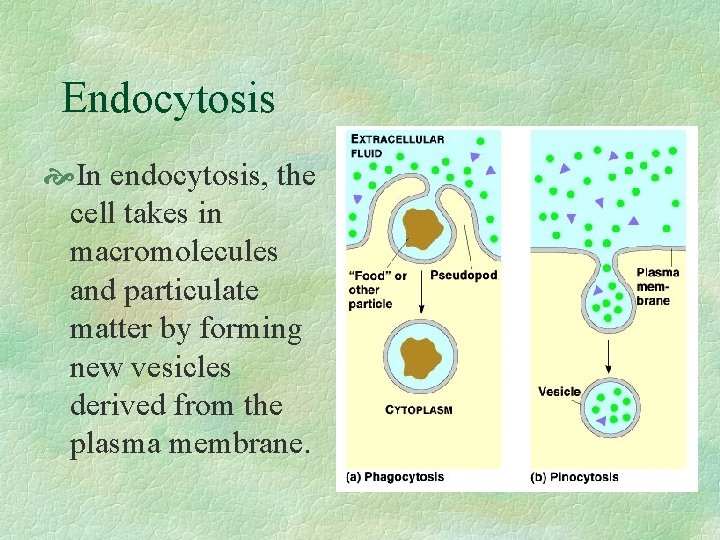
Endocytosis In endocytosis, the cell takes in macromolecules and particulate matter by forming new vesicles derived from the plasma membrane.
Summary
- Slides: 12