
Essential Elements of the Story Structure of the
- Slides: 17
Essential Elements of the Story Structure of the Story Rhetorical Elements Meaning of the Story
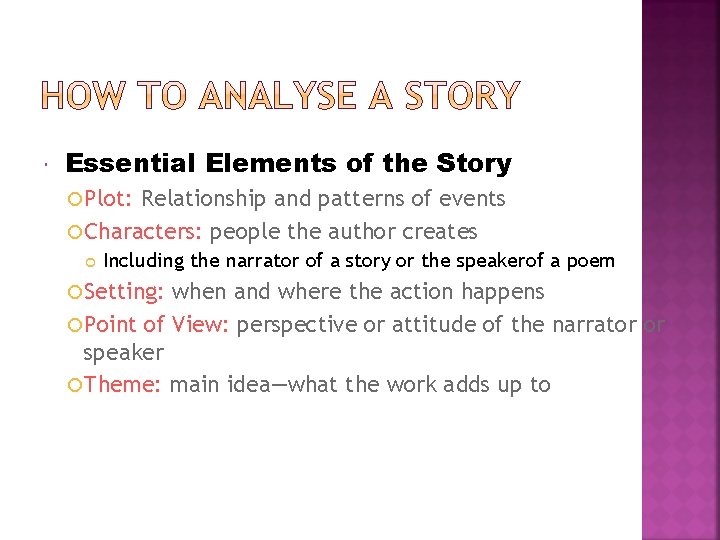
Essential Elements of the Story Plot: Relationship and patterns of events Characters: people the author creates Including the narrator of a story or the speakerof a poem Setting: when and where the action happens Point of View: perspective or attitude of the narrator or speaker Theme: main idea—what the work adds up to
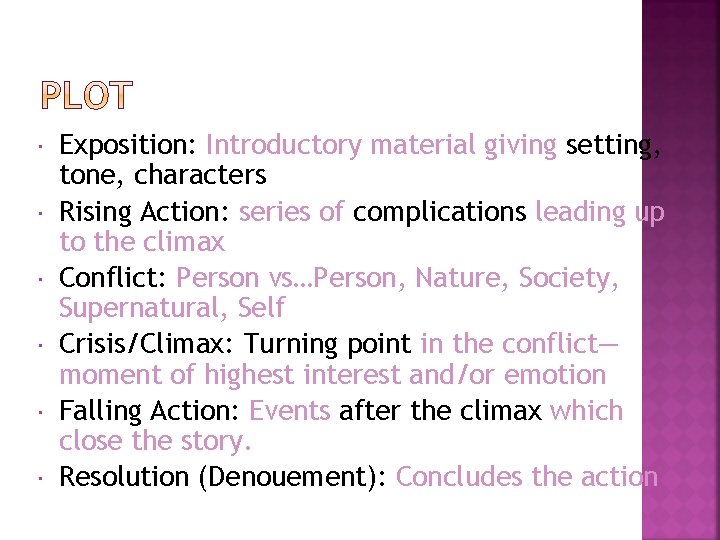
Exposition: Introductory material giving setting, tone, characters Rising Action: series of complications leading up to the climax Conflict: Person vs…Person, Nature, Society, Supernatural, Self Crisis/Climax: Turning point in the conflict— moment of highest interest and/or emotion Falling Action: Events after the climax which close the story. Resolution (Denouement): Concludes the action
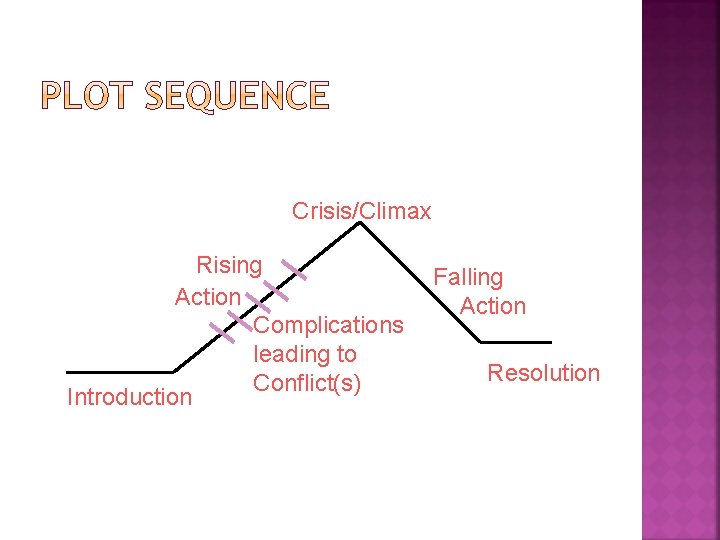
Crisis/Climax Rising Action Complications leading to Conflict(s) Introduction Falling Action Resolution
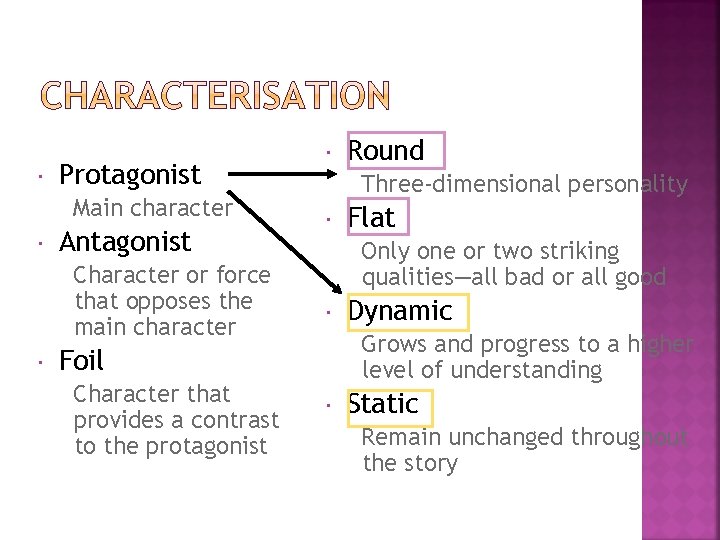
Protagonist Main character Antagonist Character or force that opposes the main character Three-dimensional personality Flat Only one or two striking qualities—all bad or all good Dynamic Grows and progress to a higher level of understanding Foil Character that provides a contrast to the protagonist Round Static Remain unchanged throughout the story
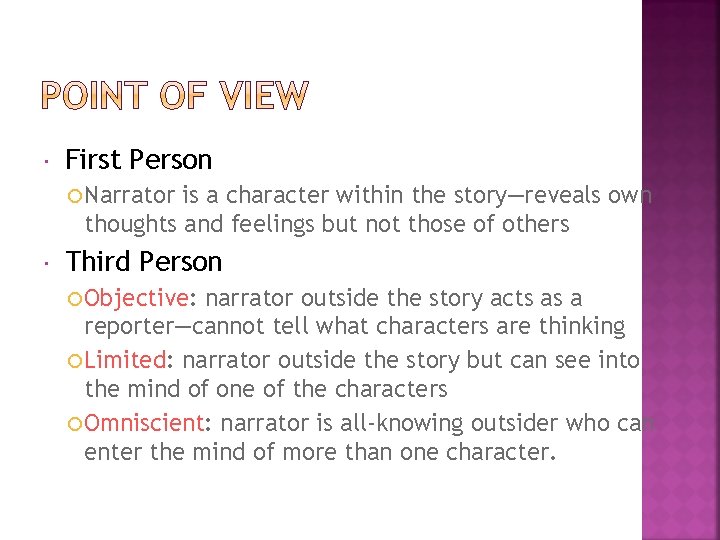
First Person Narrator is a character within the story—reveals own thoughts and feelings but not those of others Third Person Objective: narrator outside the story acts as a reporter—cannot tell what characters are thinking Limited: narrator outside the story but can see into the mind of one of the characters Omniscient: narrator is all-knowing outsider who can enter the mind of more than one character.
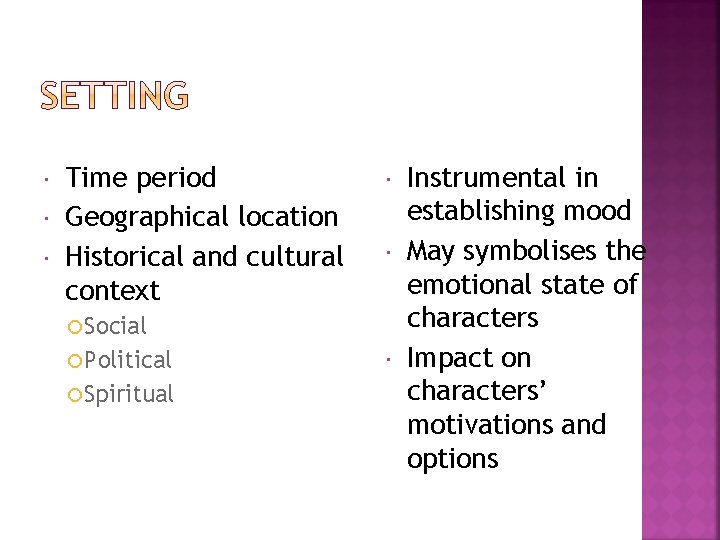
Time period Geographical location Historical and cultural context Social Political Spiritual Instrumental in establishing mood May symbolises the emotional state of characters Impact on characters’ motivations and options
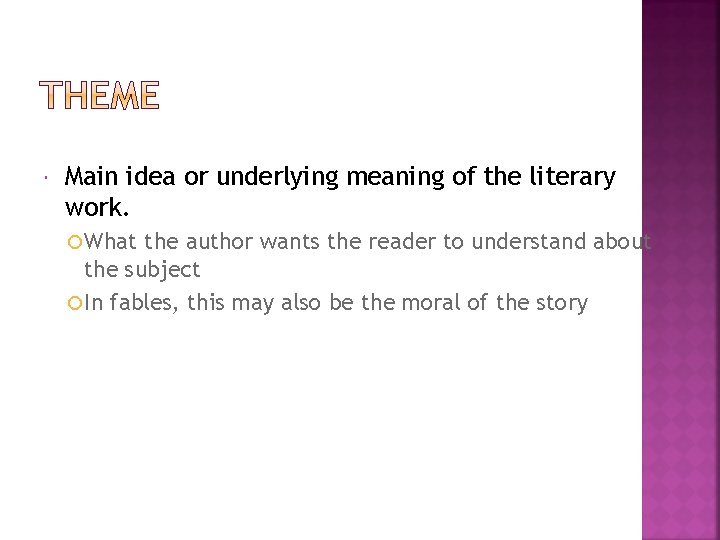
Main idea or underlying meaning of the literary work. What the author wants the reader to understand about the subject In fables, this may also be the moral of the story
Questions, issues or problems: what is right or wrong; good or bad; worthwhile or unimportant Abstract ideas: love, death, honor Conflicts: freedom vs. restraint, poverty vs. wealth Common topics: selfrealization, mortality, fall from innocence, search for the meaning of life.
Structure of the Story: design or form of the completed action May philosophically mirror the author’s intentions How the author uses the elements of the story to reveal his/her theme Look for repeated elements in action, gestures, dialogue, description as well as shifts in direction, focus, time, place, etc.
Rhetorical Elements: Identify the author’s use and explain their importance Foreshadowing Use of hints or clues to suggest event that will occur later in the story Builds suspense—means of making the narrative more believable Tone Author’s attitude—stated or implied—toward the subject Revealed through word choice and details
Mood Climate of feeling in a literary work Choice of setting, objects, details, images, words Symbolism Person, place, object which stand for larger and more abstract ideas American flag = freedom Dove = peace
Irony: contrast between what is expected or what appears to be and what actually is Verbal Irony—contrast between what is said and what is actually meant Irony of Situation—an event that is the opposite of what is expected or intended Dramatic Irony—Audience or reader knows more than the characters know
Figurative Language: language that goes beyond the literal meaning of words Simile Metaphor Personification Oxymoron Hyperbole
Meaning of the Story (Interpretation) Identify theme(s) and how the author announces it. Explain how the story elements contribute to theme. Identify contextual elements (allusions, symbols, other devices) that point beyond the story to the author’s life/experience, history or to other writings.
Examples from the text Direct quotations Summaries of scenes/action Paraphrases Other critics’ opinions Historical and social context
The Text (Primary Source) As you write, consistently refer to the text to support your purpose. Use the author’s own words—quotes. No right or wrong interpretation as long as you can support it from the text. Secondary Sources Literary Criticism