
Essential elements of a defensereview of DNA testing

- Slides: 56
Essential elements of a defense-review of DNA testing results Dan E. Krane, Wright State University, Dayton, OH Forensic Bioinformatics (www. bioforensics. com)
The science of DNA profiling is sound. But, not all of DNA profiling is science.
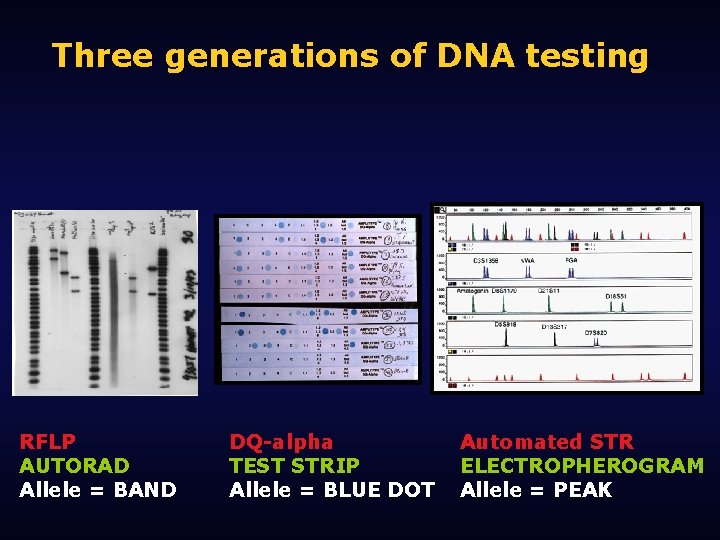
Three generations of DNA testing RFLP AUTORAD Allele = BAND DQ-alpha TEST STRIP Allele = BLUE DOT Automated STR ELECTROPHEROGRAM Allele = PEAK
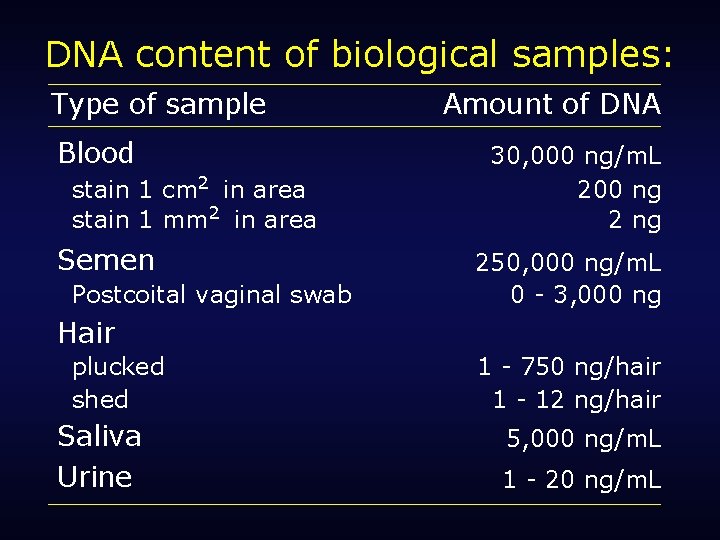
DNA content of biological samples: Type of sample Blood stain 1 cm 2 in area stain 1 mm 2 in area Semen Postcoital vaginal swab Amount of DNA 30, 000 ng/m. L 200 ng 250, 000 ng/m. L 0 - 3, 000 ng Hair plucked shed Saliva Urine 1 - 750 ng/hair 1 - 12 ng/hair 5, 000 ng/m. L 1 - 20 ng/m. L
Automated STR Test
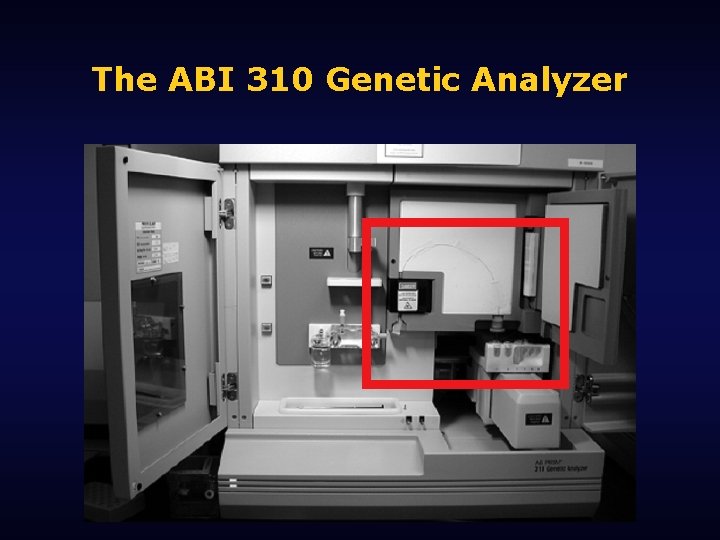
The ABI 310 Genetic Analyzer
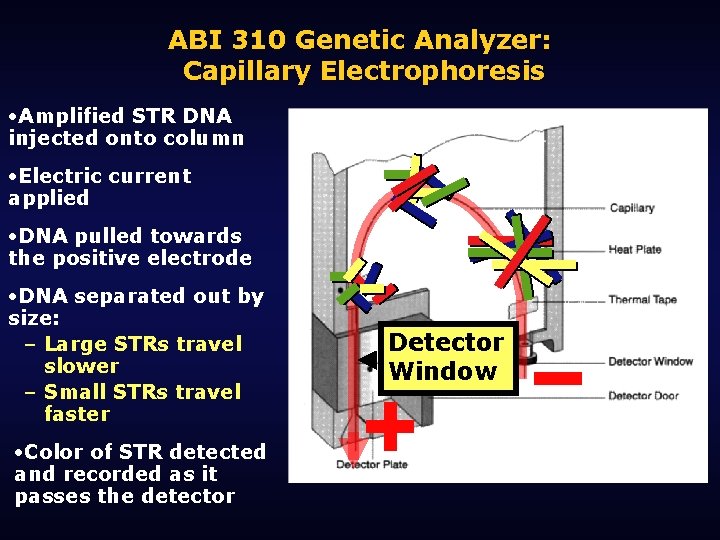
ABI 310 Genetic Analyzer: Capillary Electrophoresis • Amplified STR DNA injected onto column • Electric current applied • DNA pulled towards the positive electrode • DNA separated out by size: – Large STRs travel slower – Small STRs travel faster • Color of STR detected and recorded as it passes the detector Detector Window
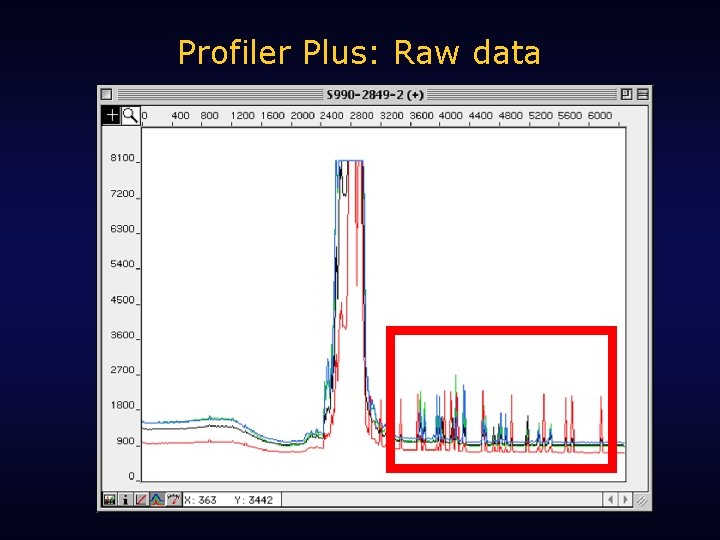
Profiler Plus: Raw data
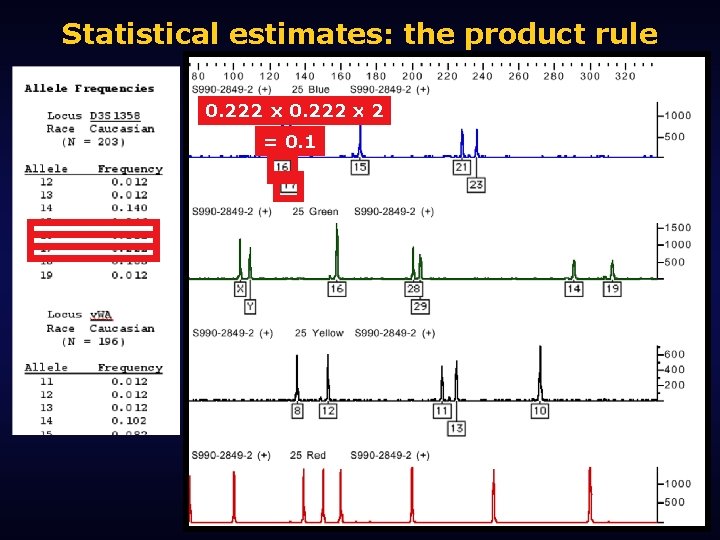
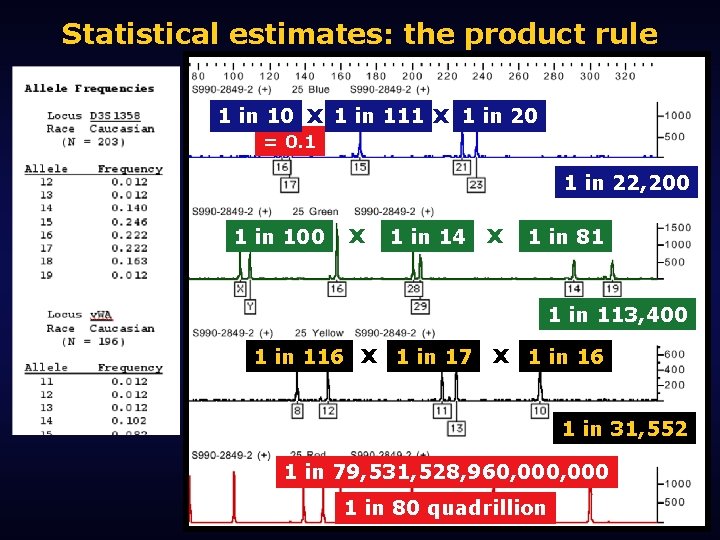
Statistical estimates: the product rule 0. 222 x 2 = 0. 1
Statistical estimates: the product rule 1 in 10 x 1 in 111 x 1 in 20 = 0. 1 1 in 22, 200 x 1 in 14 x 1 in 81 1 in 100 1 in 113, 400 1 in 116 x 1 in 17 x 1 in 16 1 in 31, 552 1 in 79, 531, 528, 960, 000 1 in 80 quadrillion
What more is there to say after you have said: “The chance of a coincidental match is one in 80 quadrillion? ”
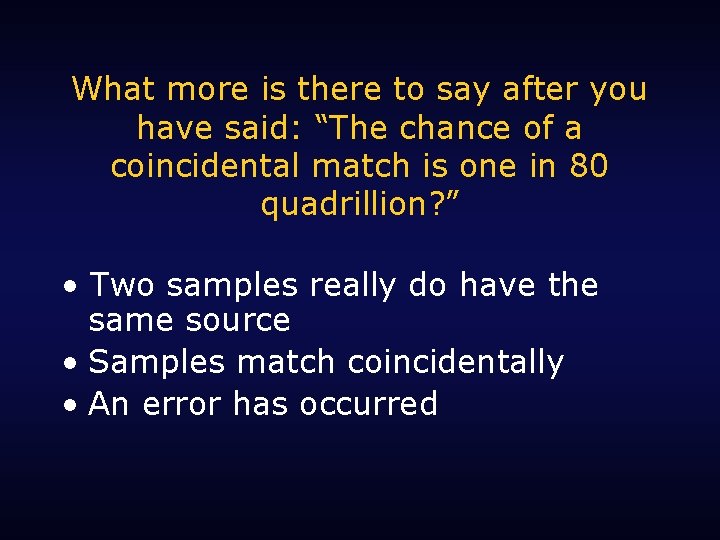
What more is there to say after you have said: “The chance of a coincidental match is one in 80 quadrillion? ” • Two samples really do have the same source • Samples match coincidentally • An error has occurred
The science of DNA profiling is sound. But, not all of DNA profiling is science.
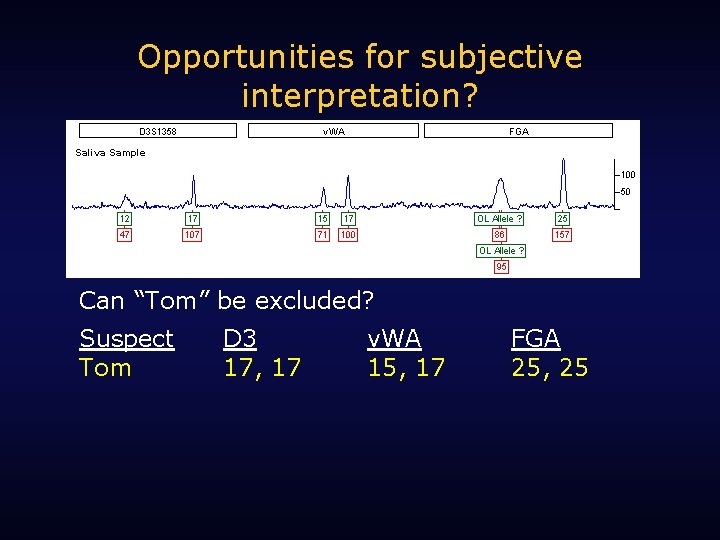
Opportunities for subjective interpretation? Can “Tom” be excluded? Suspect Tom D 3 17, 17 v. WA 15, 17 FGA 25, 25
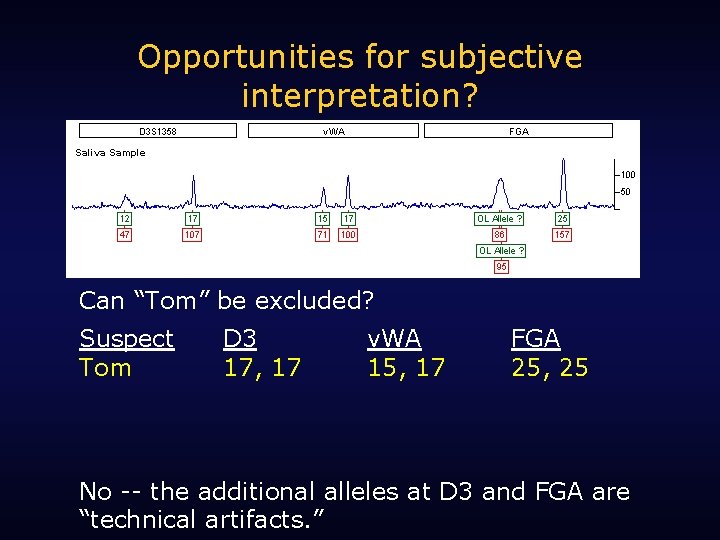
Opportunities for subjective interpretation? Can “Tom” be excluded? Suspect Tom D 3 17, 17 v. WA 15, 17 FGA 25, 25 No -- the additional alleles at D 3 and FGA are “technical artifacts. ”
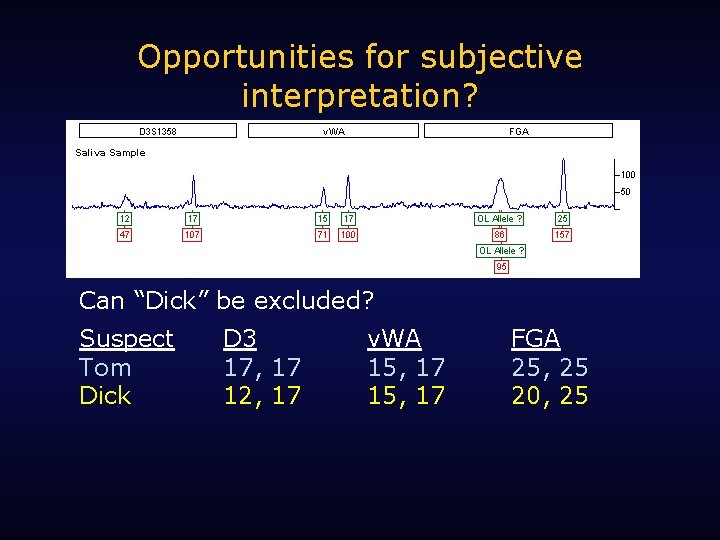
Opportunities for subjective interpretation? Can “Dick” be excluded? Suspect Tom Dick D 3 17, 17 12, 17 v. WA 15, 17 FGA 25, 25 20, 25
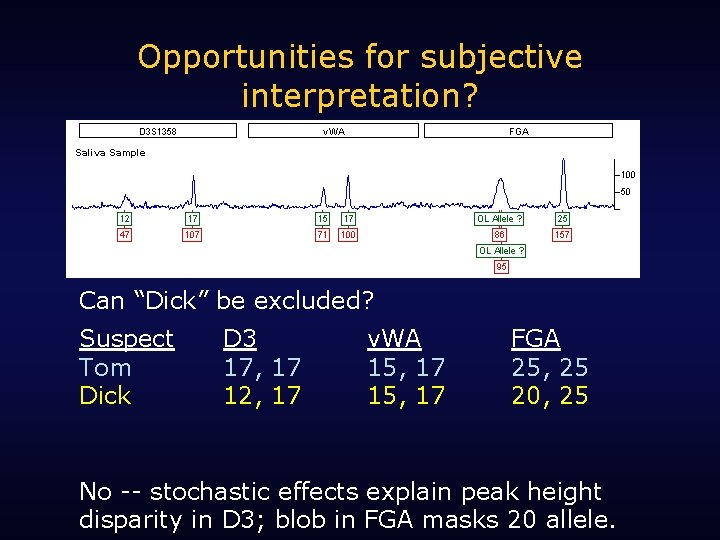
Opportunities for subjective interpretation? Can “Dick” be excluded? Suspect Tom Dick D 3 17, 17 12, 17 v. WA 15, 17 FGA 25, 25 20, 25 No -- stochastic effects explain peak height disparity in D 3; blob in FGA masks 20 allele.
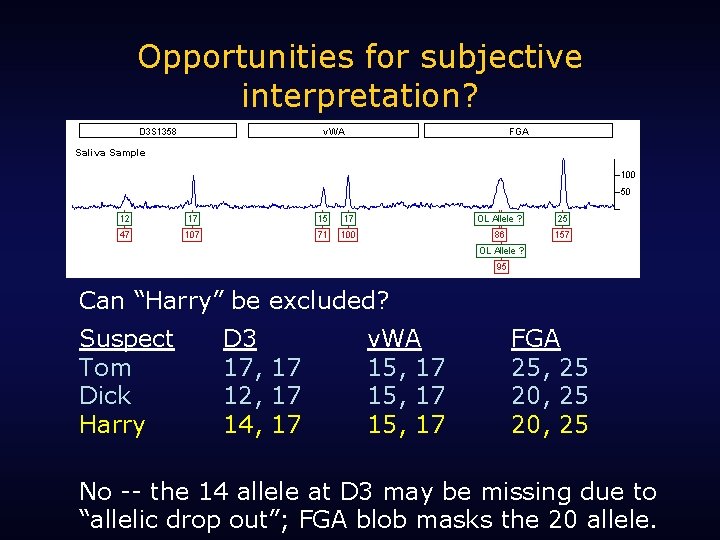
Opportunities for subjective interpretation? Can “Harry” be excluded? Suspect Tom Dick Harry D 3 17, 17 12, 17 14, 17 v. WA 15, 17 FGA 25, 25 20, 25 No -- the 14 allele at D 3 may be missing due to “allelic drop out”; FGA blob masks the 20 allele.
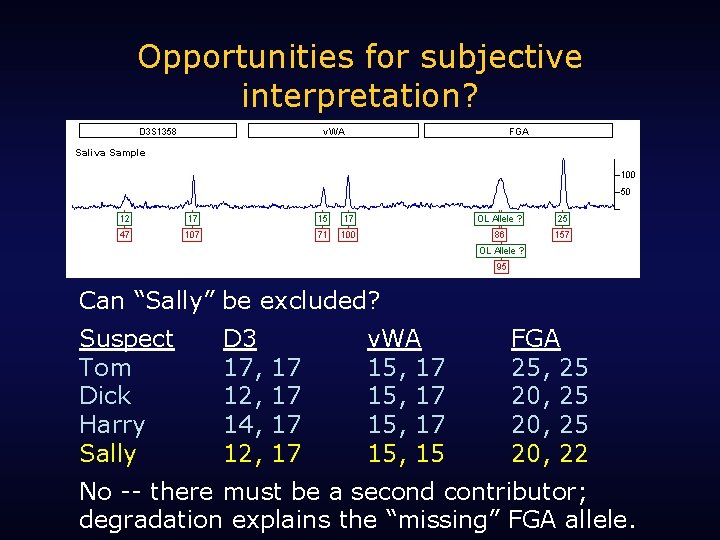
Opportunities for subjective interpretation? Can “Sally” be excluded? Suspect Tom Dick Harry Sally D 3 17, 12, 14, 12, 17 17 v. WA 15, 17 15, 15 FGA 25, 25 20, 22 No -- there must be a second contributor; degradation explains the “missing” FGA allele.
What can be done to make DNA testing more objective? • Distinguishing between signal and noise • Deducing the number of contributors to mixtures • Accounting for relatives • Be mindful of the potential for human error
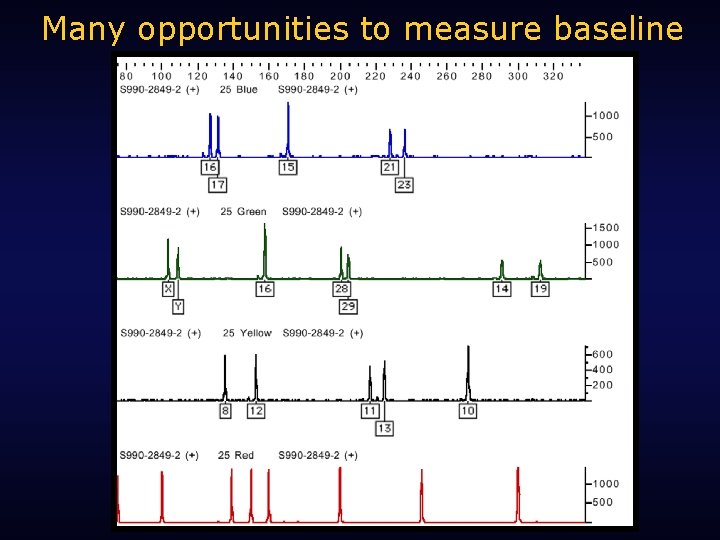
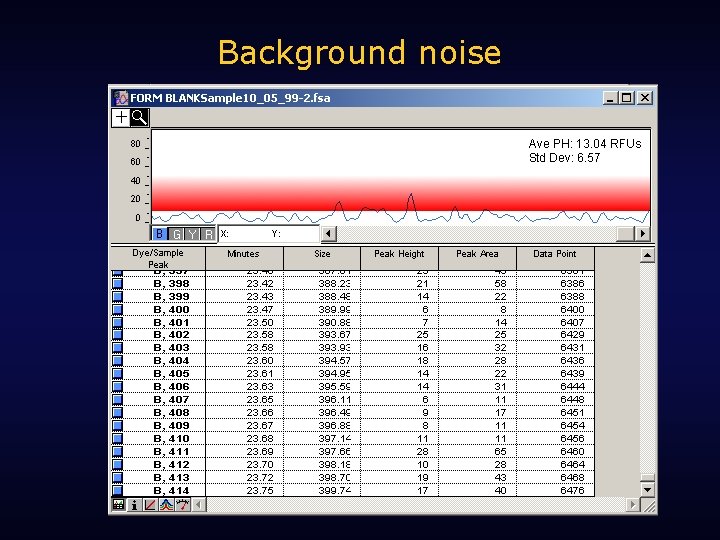
Many opportunities to measure baseline
Background noise
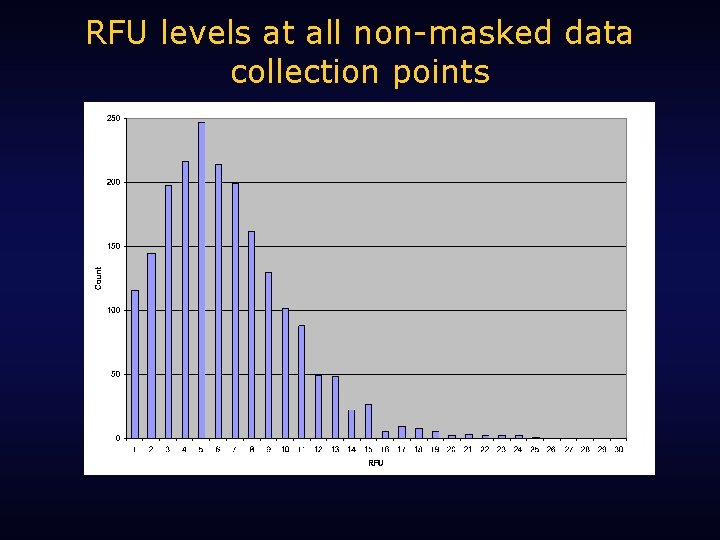
RFU levels at all non-masked data collection points
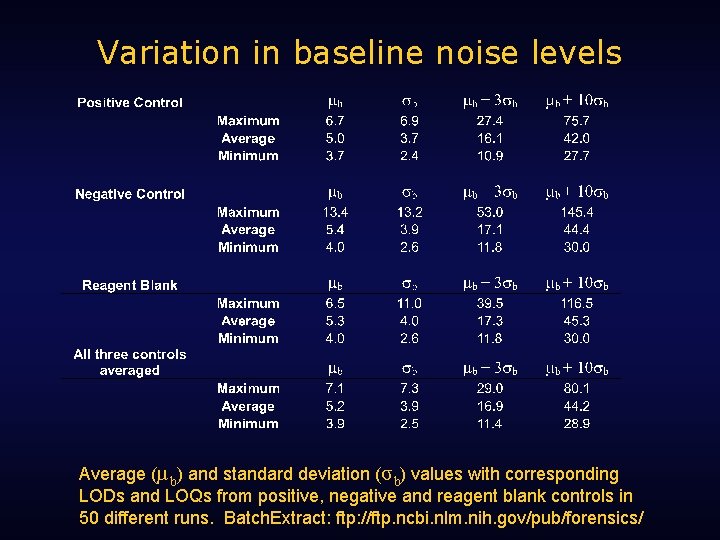
Variation in baseline noise levels Average (μ b) and standard deviation (σ b) values with corresponding LODs and LOQs from positive, negative and reagent blank controls in 50 different runs. Batch. Extract: ftp: //ftp. ncbi. nlm. nih. gov/pub/forensics/
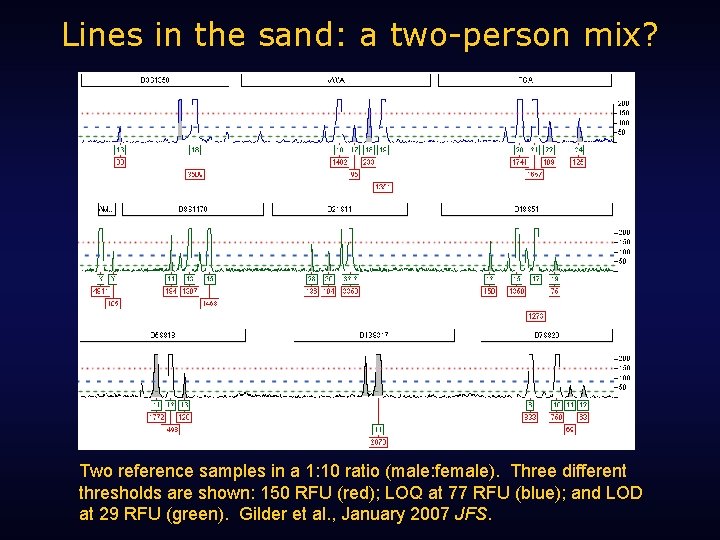
Lines in the sand: a two-person mix? Two reference samples in a 1: 10 ratio (male: female). Three different thresholds are shown: 150 RFU (red); LOQ at 77 RFU (blue); and LOD at 29 RFU (green). Gilder et al. , January 2007 JFS.
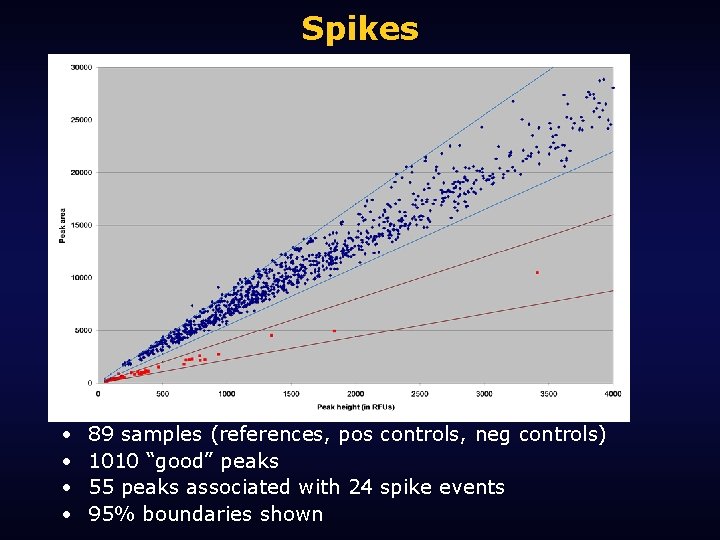
Not all signal comes from DNA associated with an evidence sample • Stutter peaks • Pull-up (bleed through) • Spikes and blobs
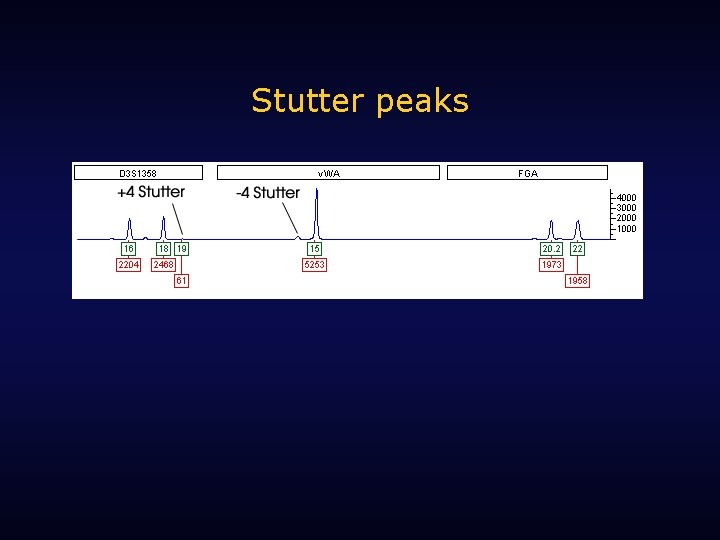
Stutter peaks
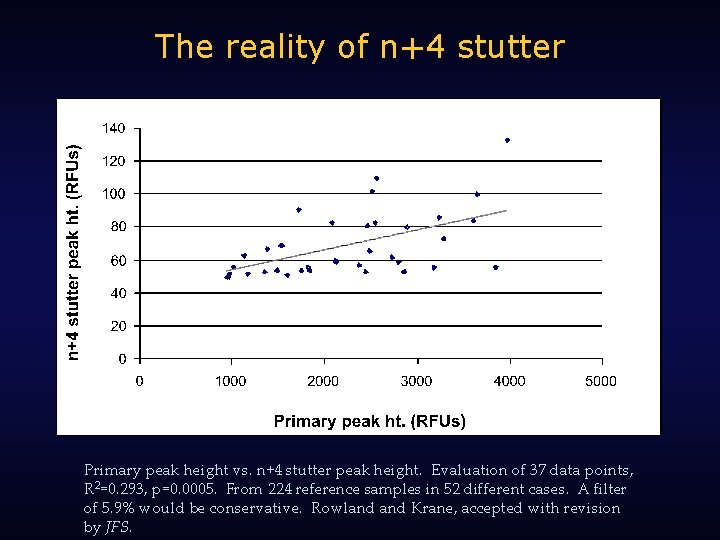
The reality of n+4 stutter Primary peak height vs. n+4 stutter peak height. Evaluation of 37 data points, R 2=0. 293, p=0. 0005. From 224 reference samples in 52 different cases. A filter of 5. 9% would be conservative. Rowland Krane, accepted with revision by JFS.
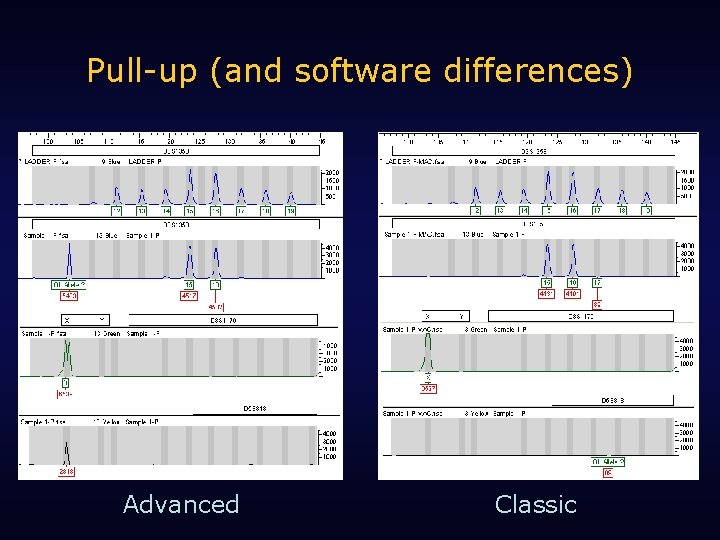
Pull-up (and software differences) Advanced Classic
Spikes • • 89 samples (references, pos controls, neg controls) 1010 “good” peaks 55 peaks associated with 24 spike events 95% boundaries shown
What can be done to make DNA testing more objective? • Distinguishing between signal and noise • Deducing the number of contributors to mixtures • Accounting for relatives • Be mindful of the potential for human error
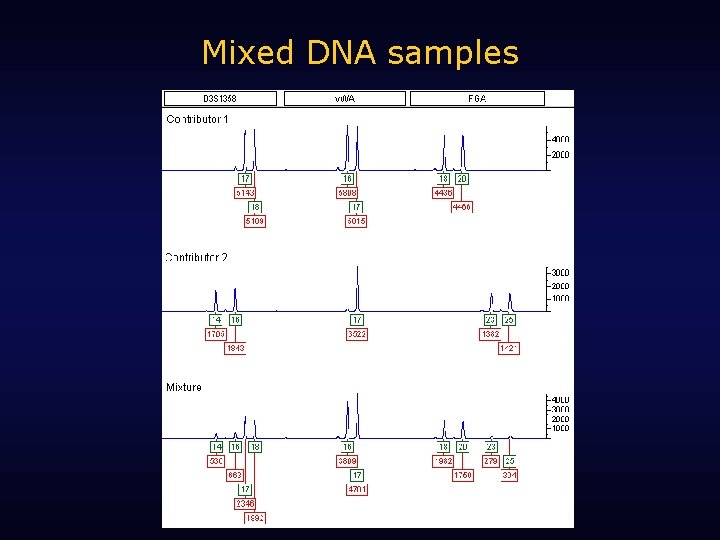
Mixed DNA samples
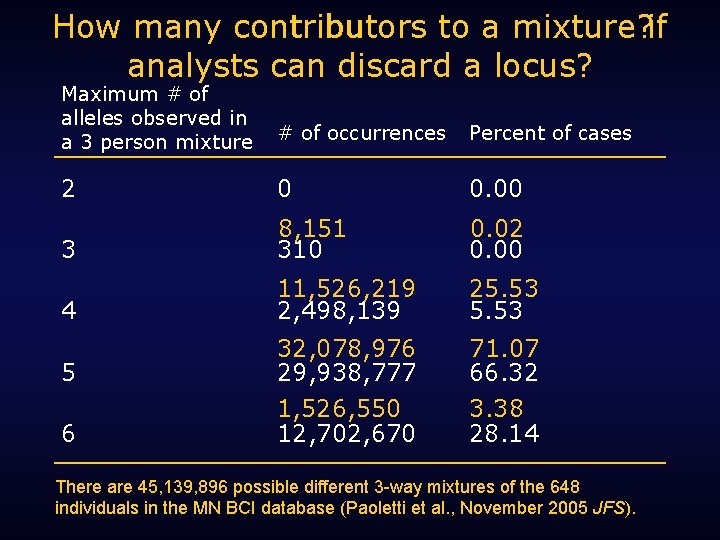
How many contributors to a mixture? mixture if analysts can discard a locus? Maximum # of alleles observed in a 3 person mixture # of occurrences Percent of cases 2 0 0. 00 3 8, 151 310 0. 02 0. 00 4 11, 526, 219 2, 498, 139 25. 53 5 32, 078, 976 29, 938, 777 71. 07 66. 32 6 1, 526, 550 12, 702, 670 3. 38 28. 14 There are 45, 139, 896 possible different 3 -way mixtures of the 648 individuals in the MN BCI database (Paoletti et al. , November 2005 JFS).
What can be done to make DNA testing more objective? • Distinguishing between signal and noise • Deducing the number of contributors to mixtures • Accounting for relatives • Be mindful of the potential for human error
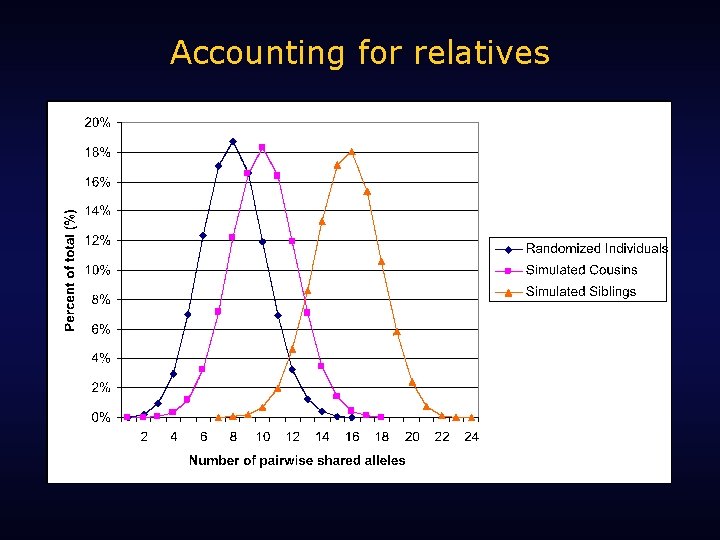
Accounting for relatives
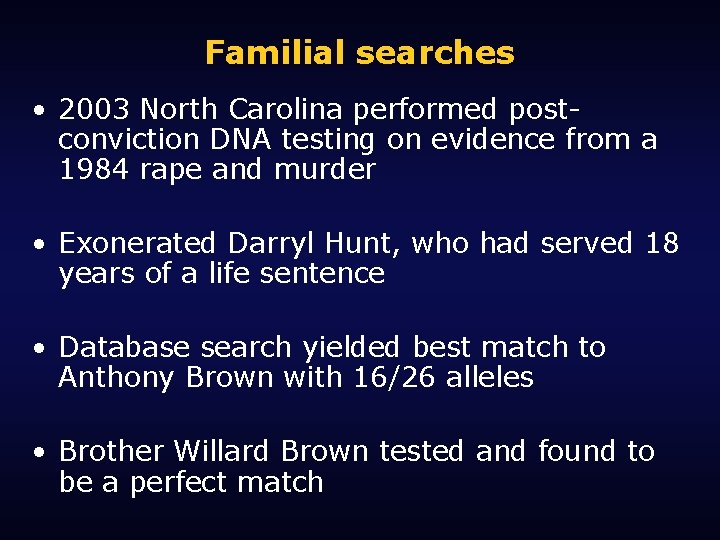
Familial searches • 2003 North Carolina performed postconviction DNA testing on evidence from a 1984 rape and murder • Exonerated Darryl Hunt, who had served 18 years of a life sentence • Database search yielded best match to Anthony Brown with 16/26 alleles • Brother Willard Brown tested and found to be a perfect match
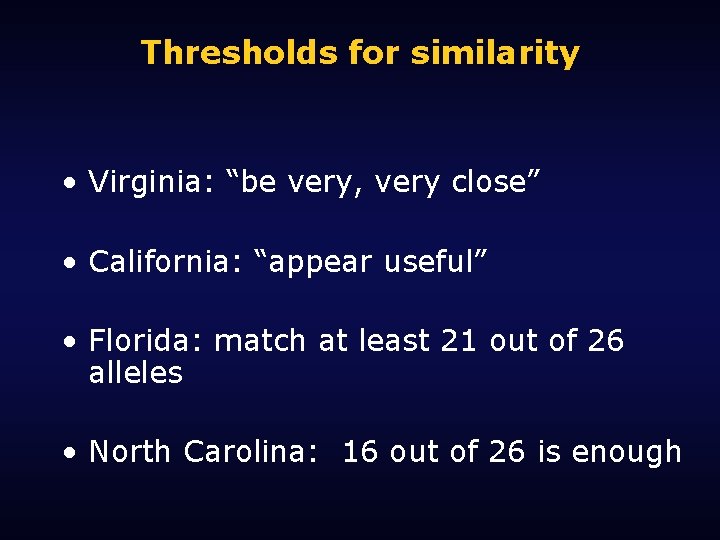
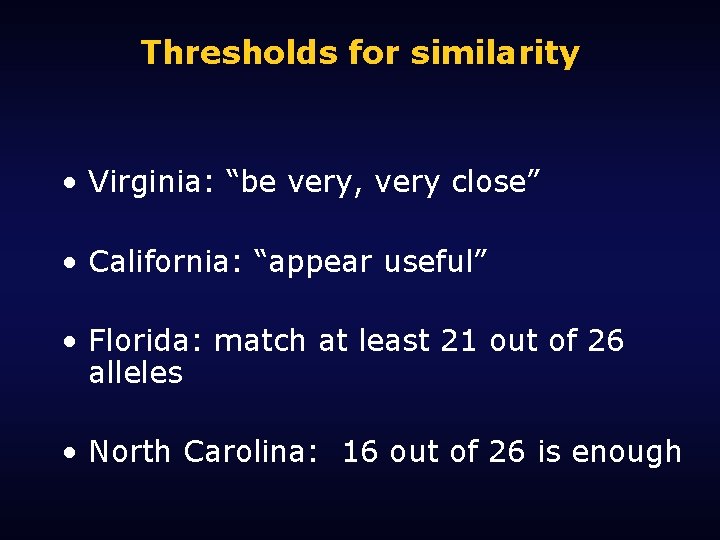
Thresholds for similarity • Virginia: “be very, very close” • California: “appear useful” • Florida: match at least 21 out of 26 alleles • North Carolina: 16 out of 26 is enough
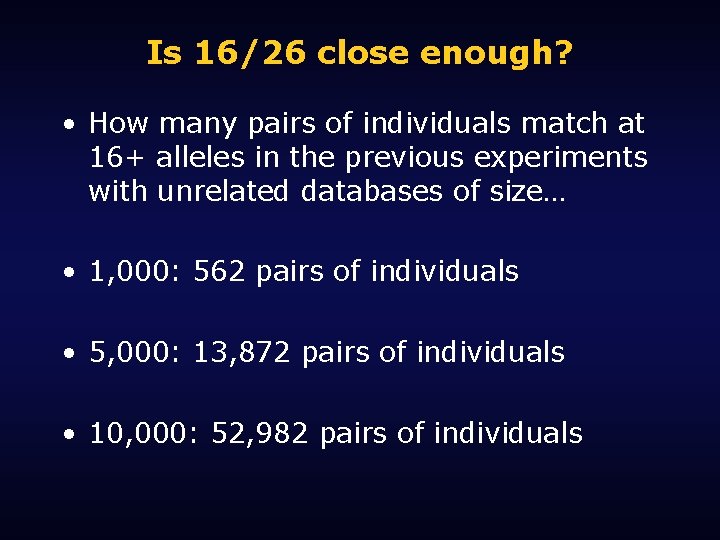
Is 16/26 close enough? • How many pairs of individuals match at 16+ alleles in the previous experiments with unrelated databases of size… • 1, 000: 562 pairs of individuals • 5, 000: 13, 872 pairs of individuals • 10, 000: 52, 982 pairs of individuals
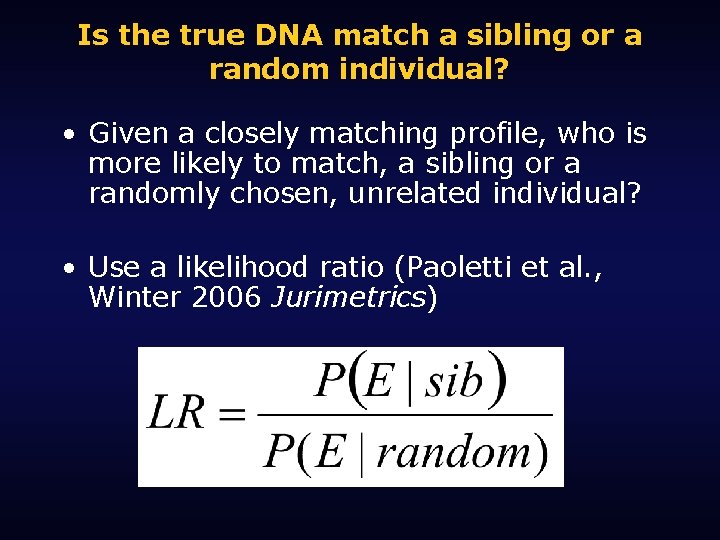
Is the true DNA match a sibling or a random individual? • Given a closely matching profile, who is more likely to match, a sibling or a randomly chosen, unrelated individual? • Use a likelihood ratio (Paoletti et al. , Winter 2006 Jurimetrics)
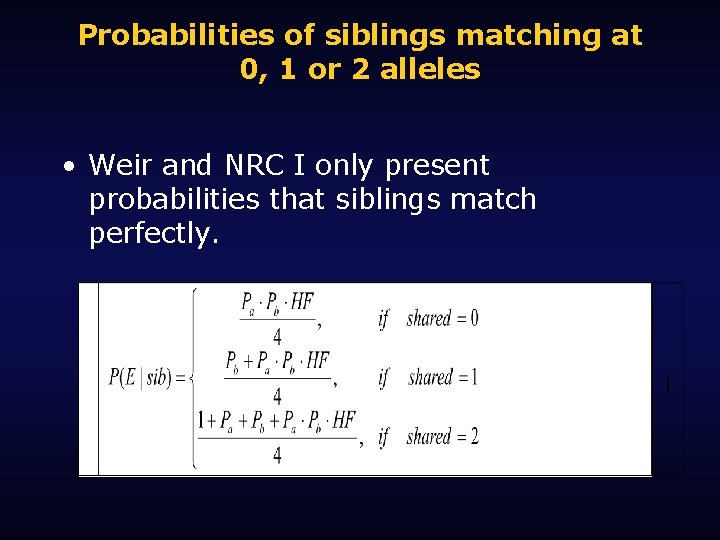
Probabilities of siblings matching at 0, 1 or 2 alleles • Weir and NRC I only present probabilities that siblings match perfectly.
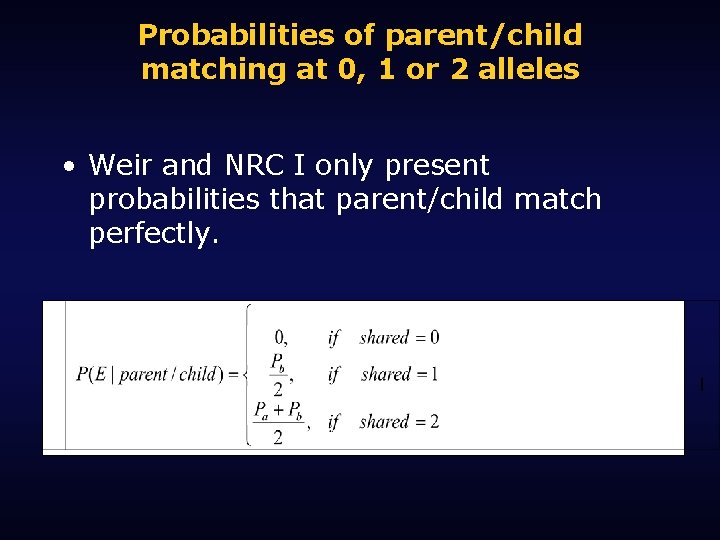
Probabilities of parent/child matching at 0, 1 or 2 alleles • Weir and NRC I only present probabilities that parent/child match perfectly.
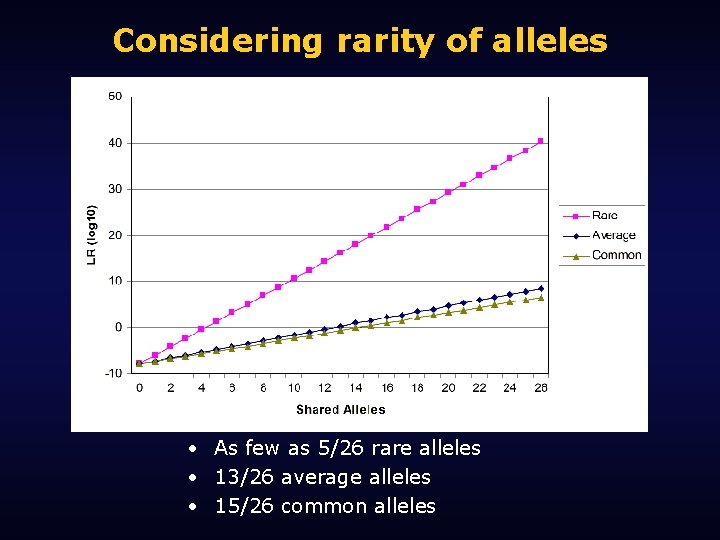
Considering rarity of alleles • As few as 5/26 rare alleles • 13/26 average alleles • 15/26 common alleles
Thresholds for similarity • Virginia: “be very, very close” • California: “appear useful” • Florida: match at least 21 out of 26 alleles • North Carolina: 16 out of 26 is enough
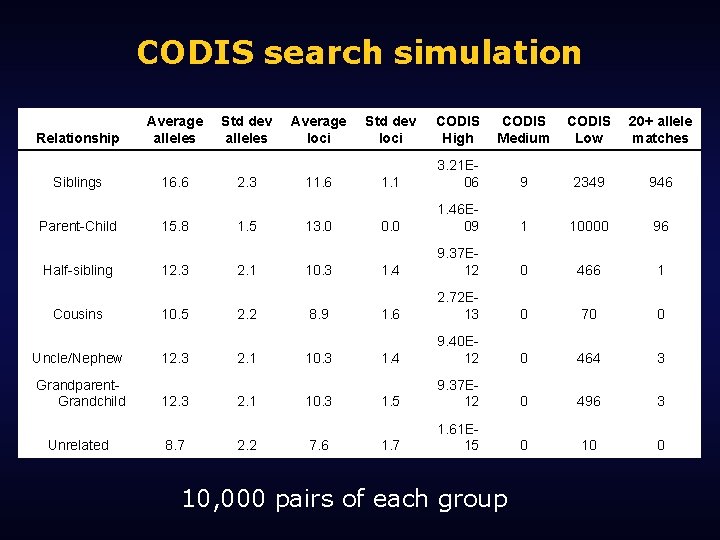
CODIS search simulation Relationship Siblings Parent-Child Half-sibling Cousins Uncle/Nephew Grandparent. Grandchild Unrelated Average alleles 16. 6 15. 8 12. 3 10. 5 12. 3 8. 7 Std dev alleles 2. 3 1. 5 2. 1 2. 2 Average loci 11. 6 13. 0 10. 3 8. 9 10. 3 7. 6 Std dev loci CODIS High CODIS Medium CODIS Low 20+ allele matches 1. 1 3. 21 E 06 9 2349 946 0. 0 1. 46 E 09 1 10000 96 1. 4 9. 37 E 12 0 466 1 1. 6 2. 72 E 13 0 70 0 1. 4 9. 40 E 12 0 464 3 1. 5 9. 37 E 12 0 496 3 1. 7 1. 61 E 15 0 10, 000 pairs of each group
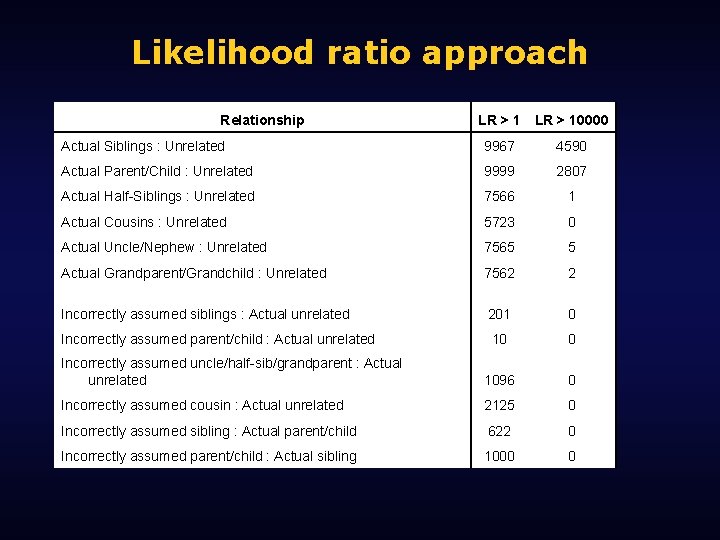
Likelihood ratio approach Relationship LR > 10000 Actual Siblings : Unrelated 9967 4590 Actual Parent/Child : Unrelated 9999 2807 Actual Half-Siblings : Unrelated 7566 1 Actual Cousins : Unrelated 5723 0 Actual Uncle/Nephew : Unrelated 7565 5 Actual Grandparent/Grandchild : Unrelated 7562 2 Incorrectly assumed siblings : Actual unrelated 201 0 Incorrectly assumed parent/child : Actual unrelated 10 0 Incorrectly assumed uncle/half-sib/grandparent : Actual unrelated 1096 0 Incorrectly assumed cousin : Actual unrelated 2125 0 Incorrectly assumed sibling : Actual parent/child 622 0 Incorrectly assumed parent/child : Actual sibling 1000 0
What can be done to make DNA testing more objective? • Distinguishing between signal and noise • Deducing the number of contributors to mixtures • Accounting for relatives • Be mindful of the potential for human error
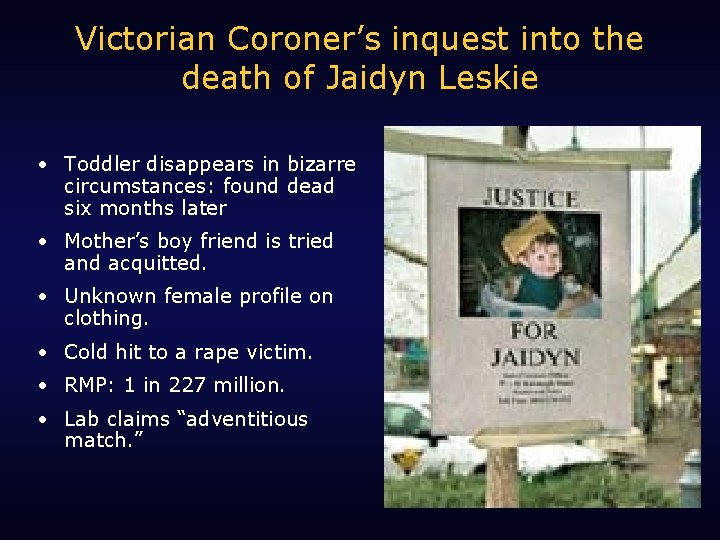
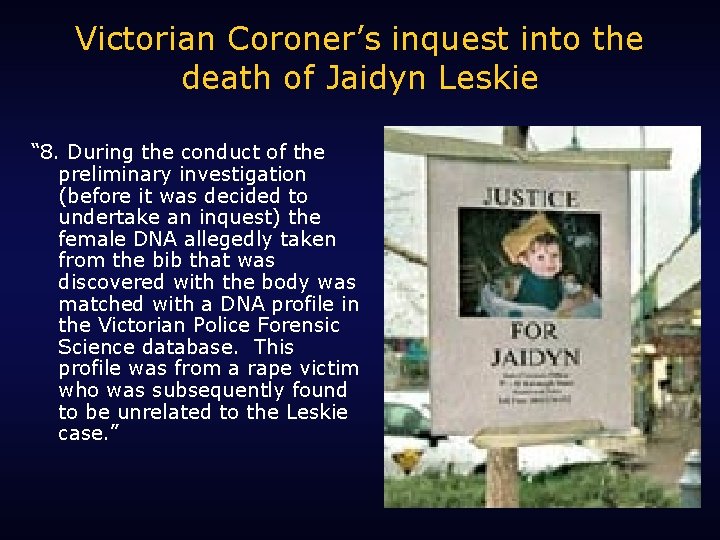
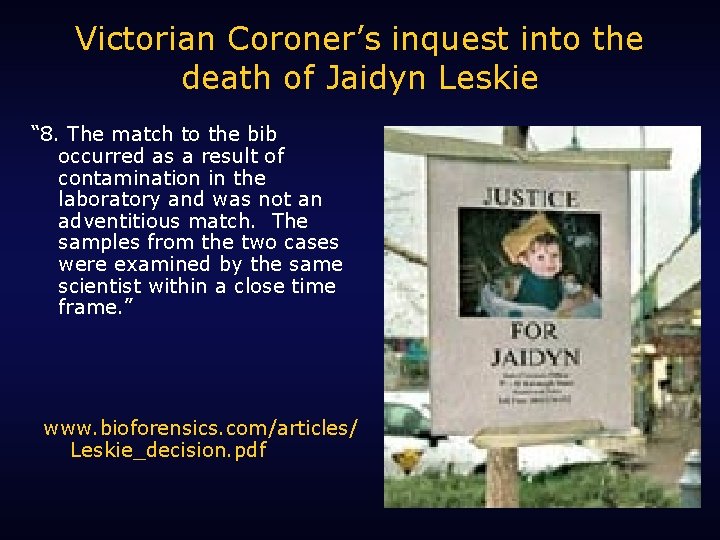
Victorian Coroner’s inquest into the death of Jaidyn Leskie • Toddler disappears in bizarre circumstances: found dead six months later • Mother’s boy friend is tried and acquitted. • Unknown female profile on clothing. • Cold hit to a rape victim. • RMP: 1 in 227 million. • Lab claims “adventitious match. ”
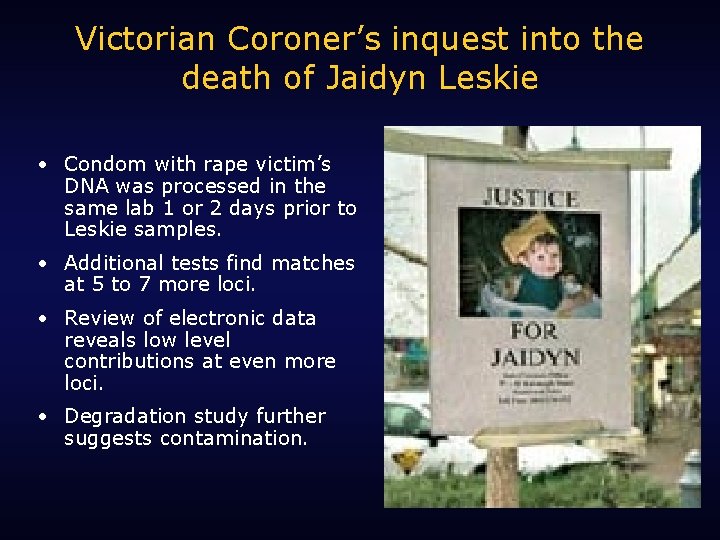
Victorian Coroner’s inquest into the death of Jaidyn Leskie • Condom with rape victim’s DNA was processed in the same lab 1 or 2 days prior to Leskie samples. • Additional tests find matches at 5 to 7 more loci. • Review of electronic data reveals low level contributions at even more loci. • Degradation study further suggests contamination.
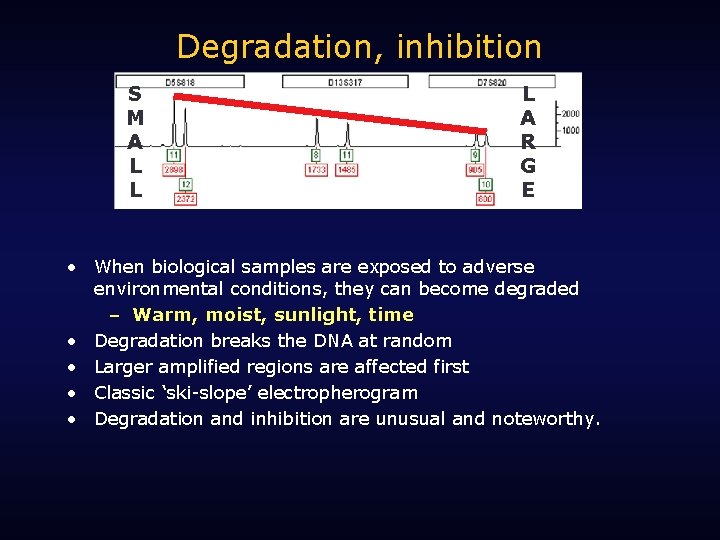
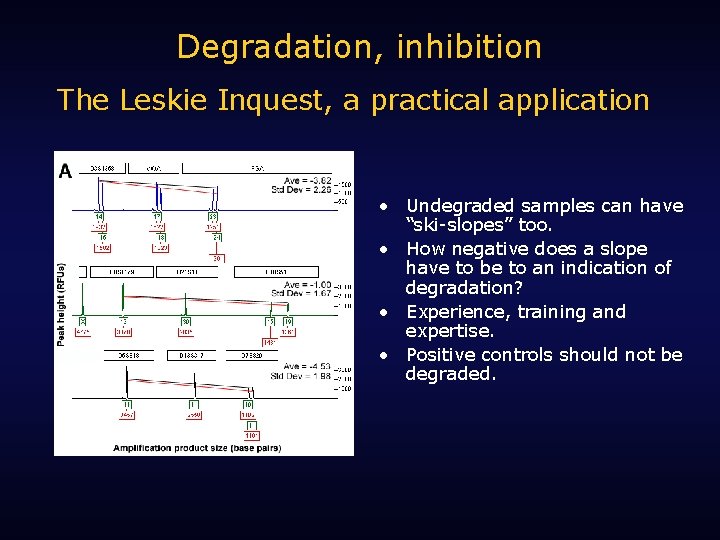
Degradation, inhibition S M A L L L A R G E • When biological samples are exposed to adverse environmental conditions, they can become degraded – Warm, moist, sunlight, time • Degradation breaks the DNA at random • Larger amplified regions are affected first • Classic ‘ski-slope’ electropherogram • Degradation and inhibition are unusual and noteworthy.
Degradation, inhibition The Leskie Inquest, a practical application • Undegraded samples can have “ski-slopes” too. • How negative does a slope have to be to an indication of degradation? • Experience, training and expertise. • Positive controls should not be degraded.
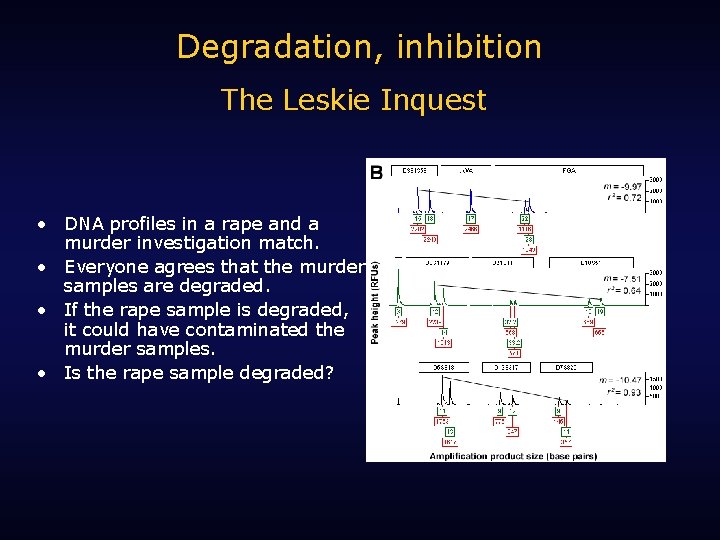
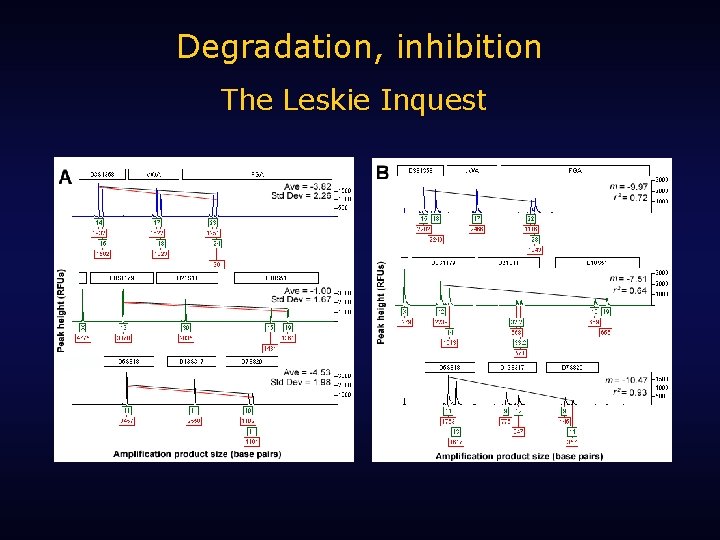
Degradation, inhibition The Leskie Inquest • DNA profiles in a rape and a murder investigation match. • Everyone agrees that the murder samples are degraded. • If the rape sample is degraded, it could have contaminated the murder samples. • Is the rape sample degraded?
Degradation, inhibition The Leskie Inquest
Victorian Coroner’s inquest into the death of Jaidyn Leskie “ 8. During the conduct of the preliminary investigation (before it was decided to undertake an inquest) the female DNA allegedly taken from the bib that was discovered with the body was matched with a DNA profile in the Victorian Police Forensic Science database. This profile was from a rape victim who was subsequently found to be unrelated to the Leskie case. ”
Victorian Coroner’s inquest into the death of Jaidyn Leskie “ 8. The match to the bib occurred as a result of contamination in the laboratory and was not an adventitious match. The samples from the two cases were examined by the same scientist within a close time frame. ” www. bioforensics. com/articles/ Leskie_decision. pdf
The science of DNA profiling is sound. But, not all of DNA profiling is science. This is especially true in situations involving: small amounts of starting material, mixtures, relatives, and analyst judgment calls.
Resources • • • Internet – Forensic Bioinformatics Website: http: //www. bioforensics. com/ – Applied Biosystems Website: http: //www. appliedbiosystems. com/ (see human identity and forensics) – STR base: http: //www. cstl. nist. gov/biotech/strbase/ (very useful) Books – ‘Forensic DNA Typing’ by John M. Butler (Academic Press) Scientists – Larry Mueller (UC Irvine) – Simon Ford (Lexigen, Inc. San Francisco, CA) – William Shields (SUNY, Syracuse, NY) – Mike Raymer and Travis Doom (Wright State, Dayton, OH) Marc Taylor (Technical Associates, Ventura, CA) – Keith Inman (Forensic Analytical, Haywood, CA) Testing laboratories – Technical Associates (Ventura, CA) – Forensic Analytical (Haywood, CA) Other resources – Forensic Bioinformatics (Dayton, OH)