
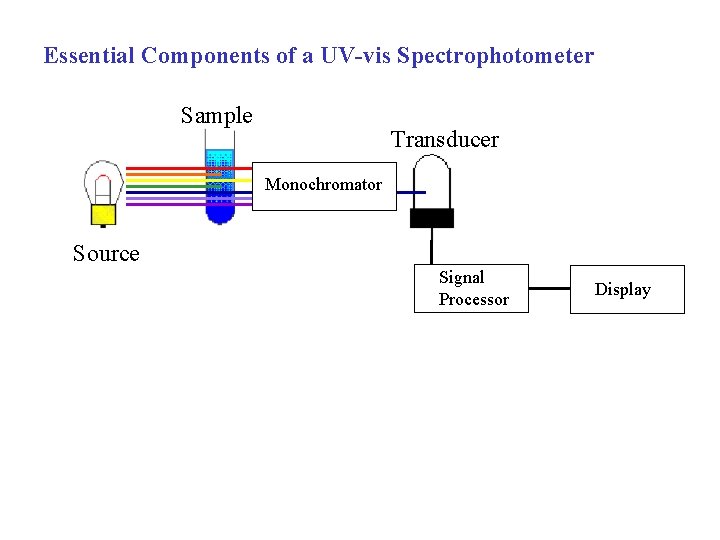
Essential Components of a UVvis Spectrophotometer Sample Transducer


- Slides: 23
Essential Components of a UV-vis Spectrophotometer Sample Transducer Monochromator Source Signal Processor Display
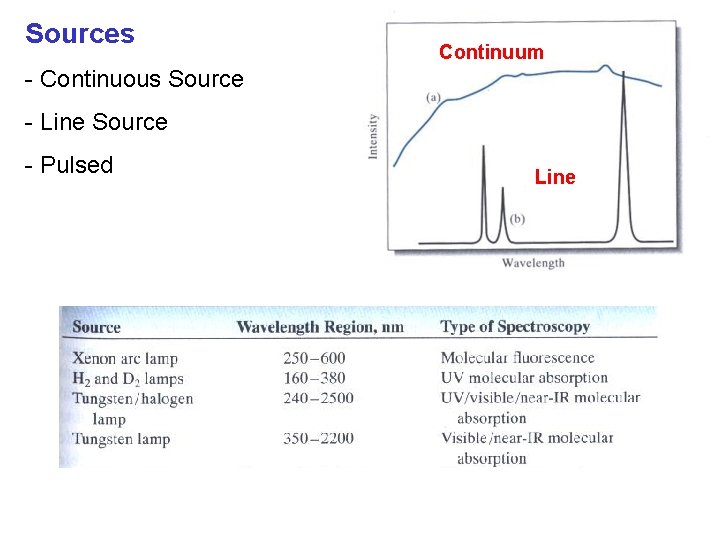
Sources Continuum - Continuous Source - Line Source - Pulsed Line
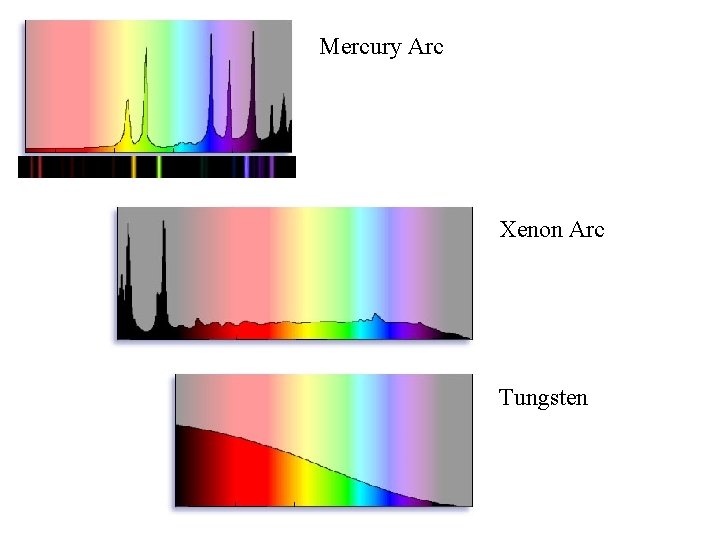
Mercury Arc Xenon Arc Tungsten
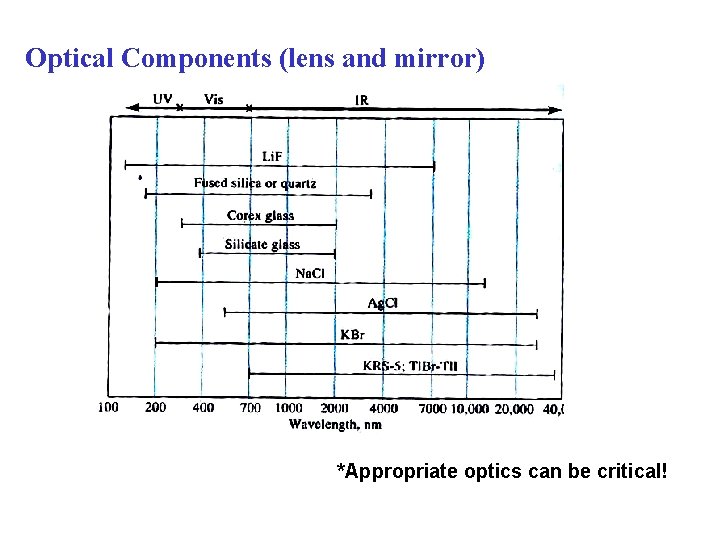
Optical Components (lens and mirror) *Appropriate optics can be critical!
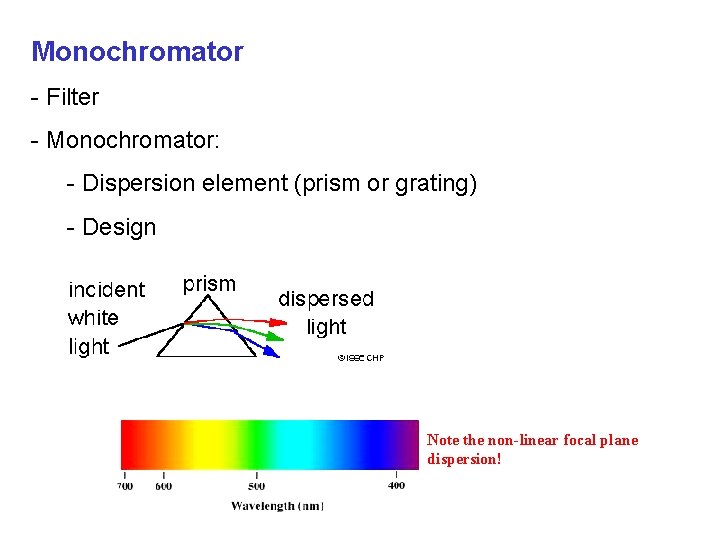
Monochromator - Filter - Monochromator: - Dispersion element (prism or grating) - Design Note the non-linear focal plane dispersion!
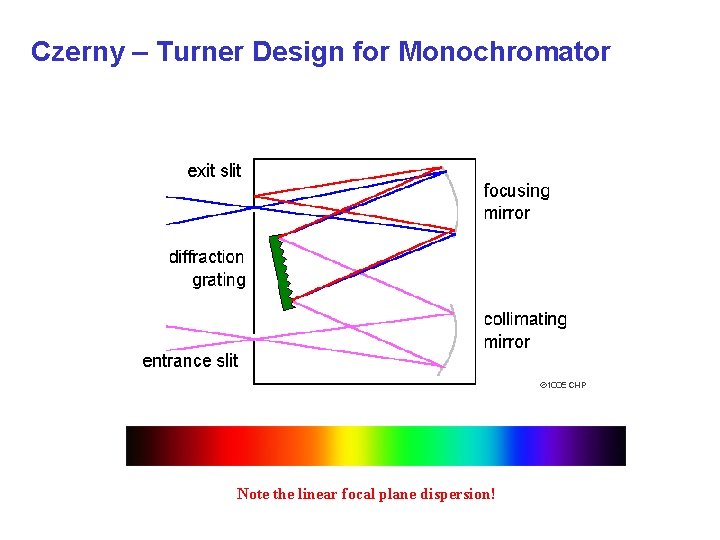
Czerny – Turner Design for Monochromator Note the linear focal plane dispersion!
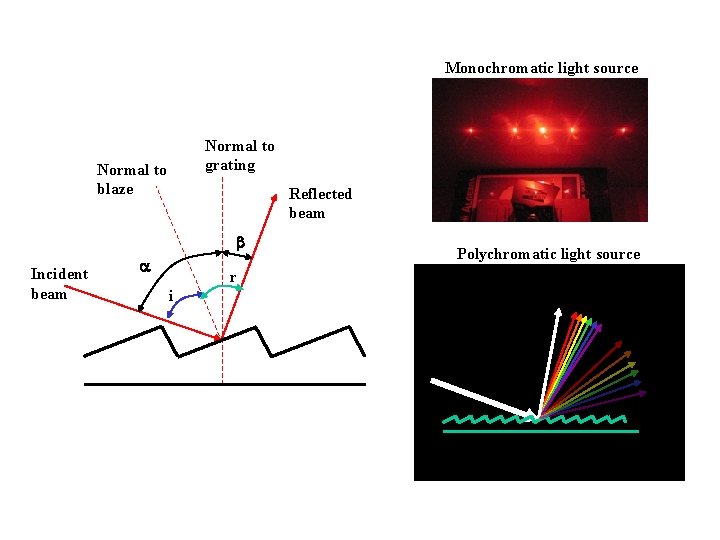
Monochromatic light source Normal to grating Normal to blaze Reflected beam Incident beam r i Polychromatic light source
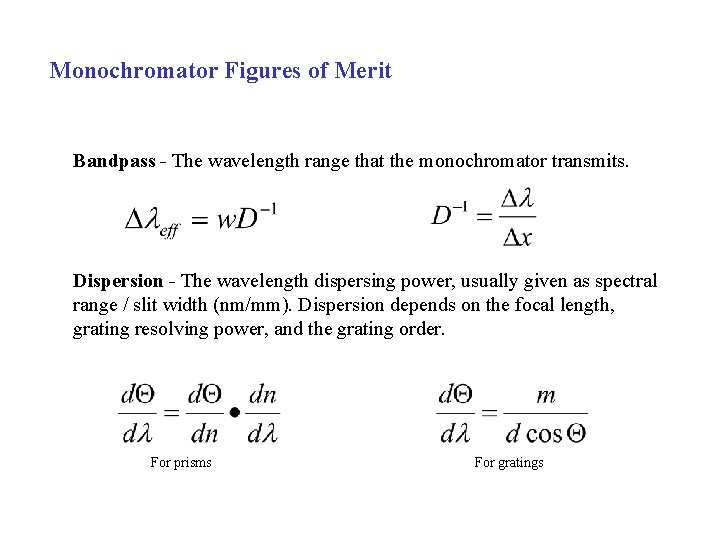
Monochromator Figures of Merit Bandpass - The wavelength range that the monochromator transmits. Dispersion - The wavelength dispersing power, usually given as spectral range / slit width (nm/mm). Dispersion depends on the focal length, grating resolving power, and the grating order. For prisms For gratings
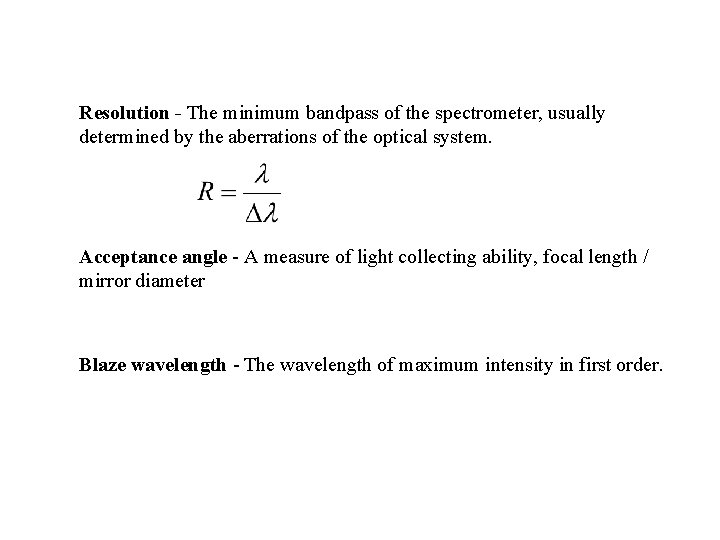
Resolution - The minimum bandpass of the spectrometer, usually determined by the aberrations of the optical system. Acceptance angle - A measure of light collecting ability, focal length / mirror diameter Blaze wavelength - The wavelength of maximum intensity in first order.
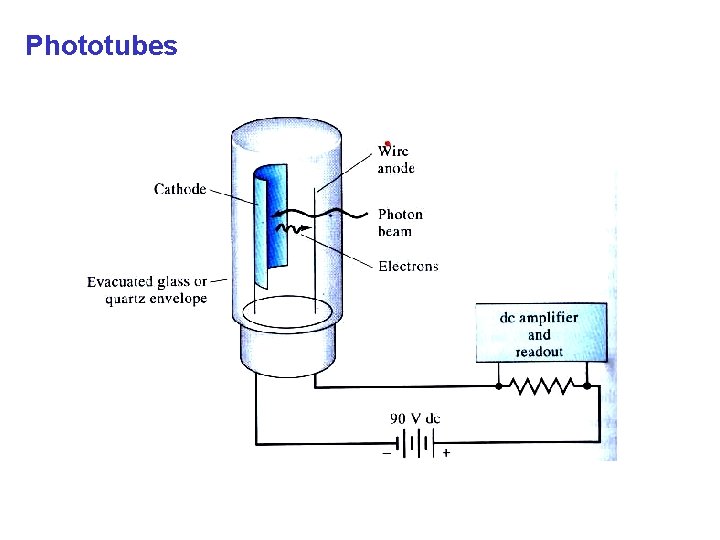
Phototubes
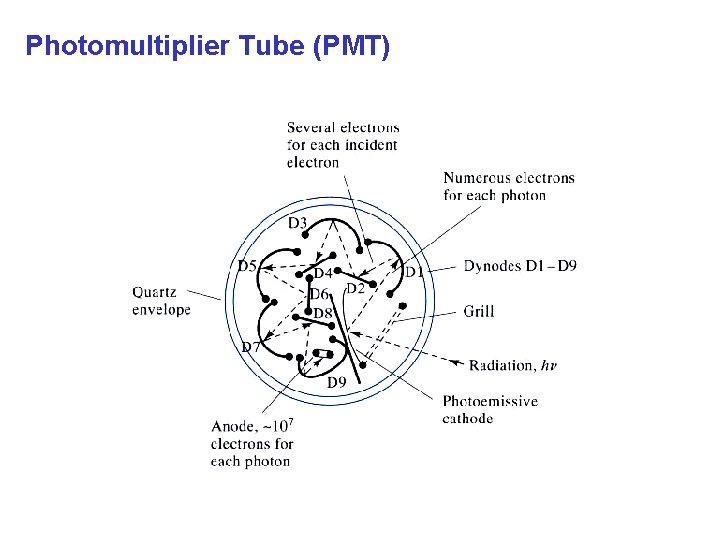
Photomultiplier Tube (PMT)
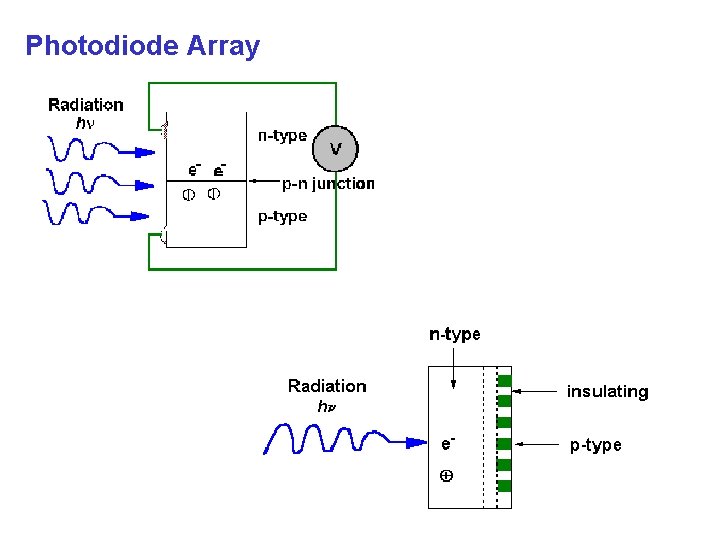
Photodiode Array
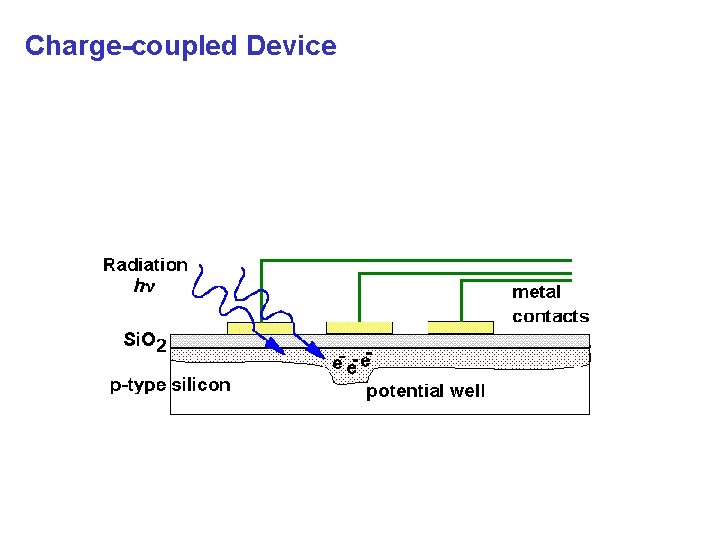
Charge-coupled Device
Sample Compartment (Cuvettes)
Single Beam
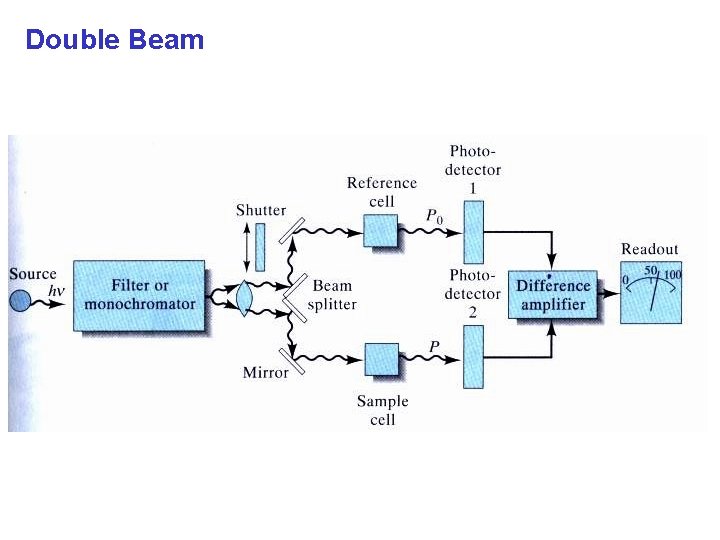
Double Beam
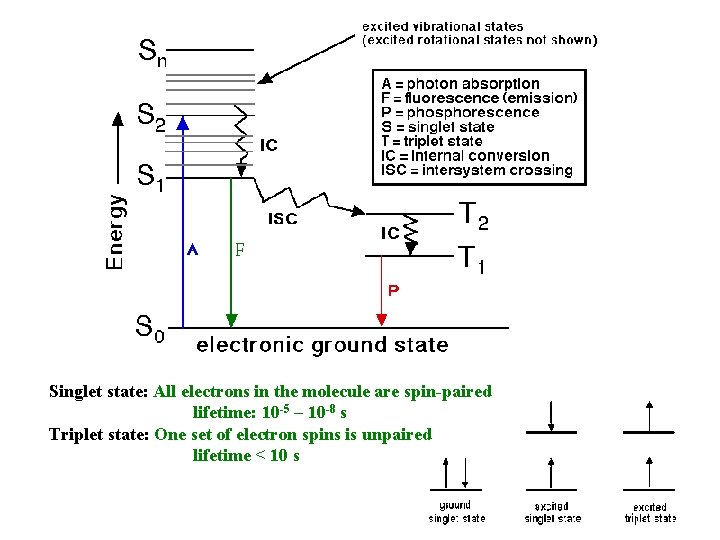
Singlet state: All electrons in the molecule are spin-paired lifetime: 10 -5 – 10 -8 s Triplet state: One set of electron spins is unpaired lifetime < 10 s
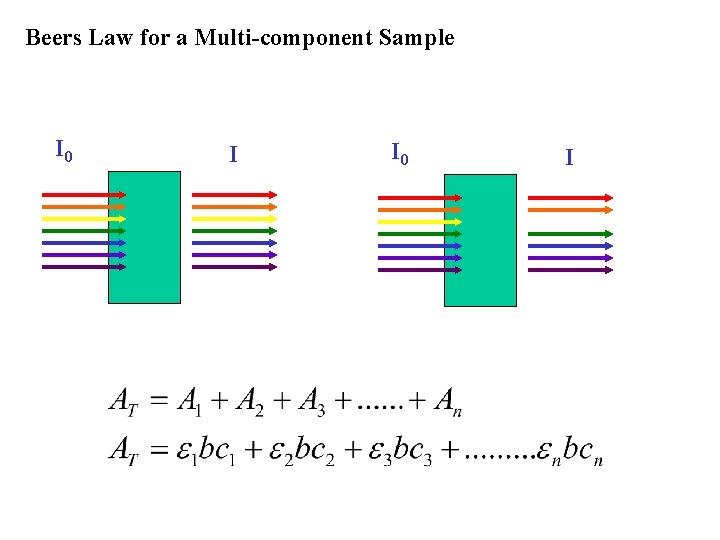
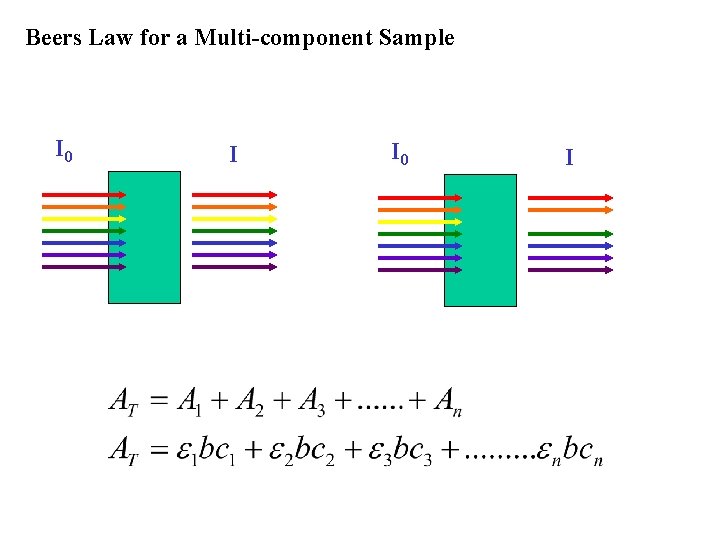
Beers Law for a Multi-component Sample I 0 I
Beers Law for a Multi-component Sample I 0 I
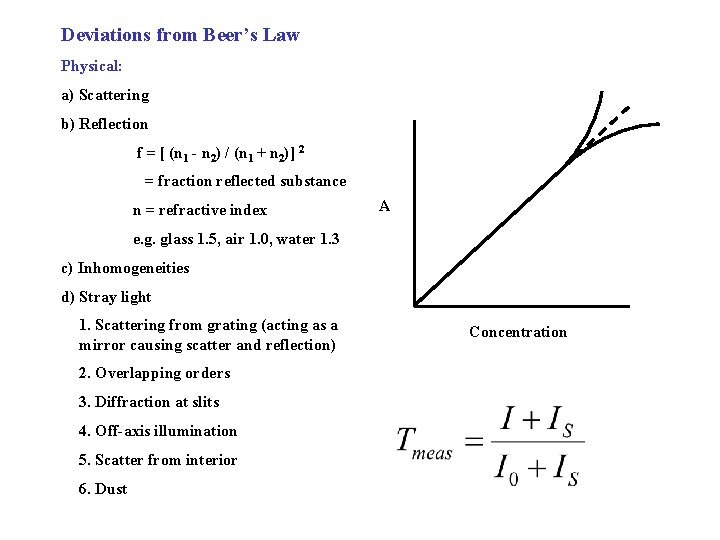
Deviations from Beer’s Law Physical: a) Scattering b) Reflection f = [ (n 1 - n 2) / (n 1 + n 2)] 2 = fraction reflected substance n = refractive index A e. g. glass 1. 5, air 1. 0, water 1. 3 c) Inhomogeneities d) Stray light 1. Scattering from grating (acting as a mirror causing scatter and reflection) 2. Overlapping orders 3. Diffraction at slits 4. Off-axis illumination 5. Scatter from interior 6. Dust Concentration
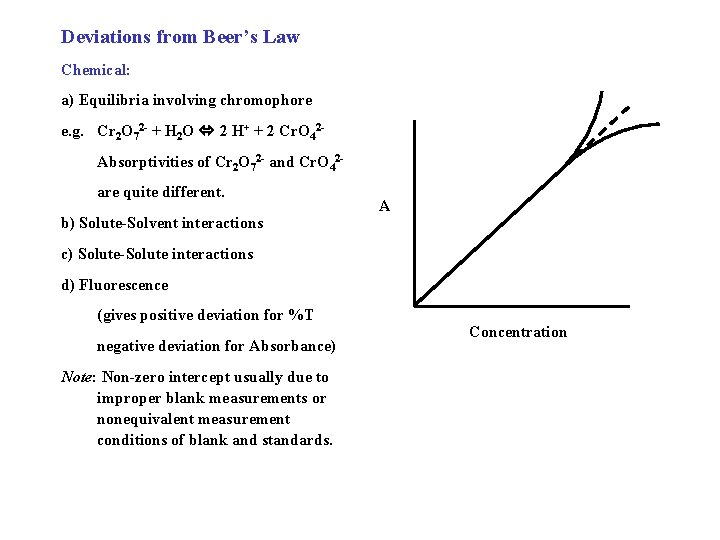
Deviations from Beer’s Law Chemical: a) Equilibria involving chromophore e. g. Cr 2 O 72 - + H 2 O 2 H+ + 2 Cr. O 42 Absorptivities of Cr 2 O 72 - and Cr. O 42 are quite different. b) Solute-Solvent interactions A c) Solute-Solute interactions d) Fluorescence (gives positive deviation for %T negative deviation for Absorbance) Note: Non-zero intercept usually due to improper blank measurements or nonequivalent measurement conditions of blank and standards. Concentration
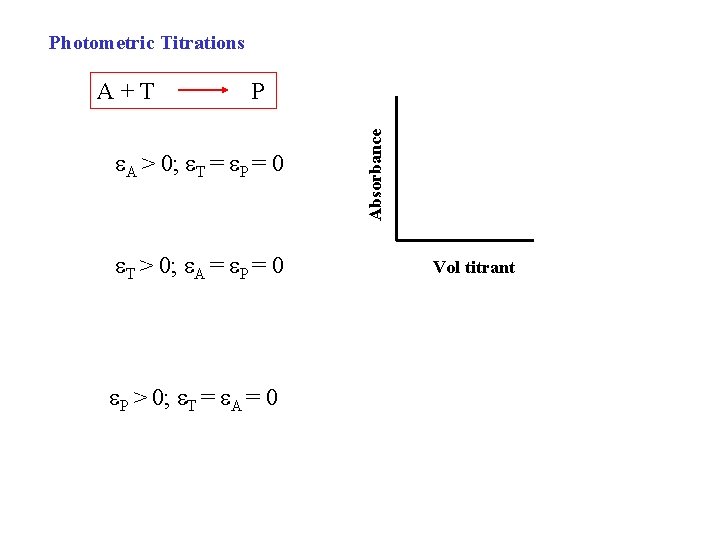
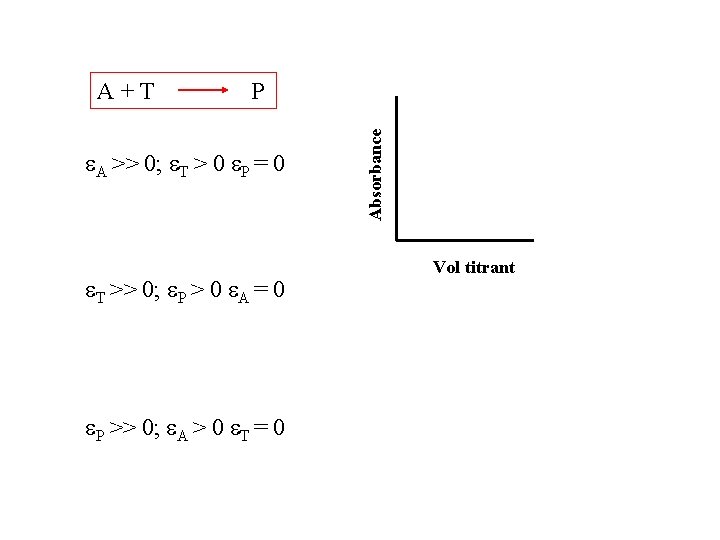
Photometric Titrations P A > 0; T = P = 0 T > 0; A = P = 0 P > 0; T = A = 0 Absorbance A+T Vol titrant
P A >> 0; T > 0 P = 0 T >> 0; P > 0 A = 0 P >> 0; A > 0 T = 0 Absorbance A+T Vol titrant