
ESS Vision 2020 implementation main achievements Mariana Kotzeva


- Slides: 24
ESS Vision 2020 implementation: main achievements Mariana Kotzeva Eurostat Deputy Director General, VIG Chair 16 March 2016, Bucharest
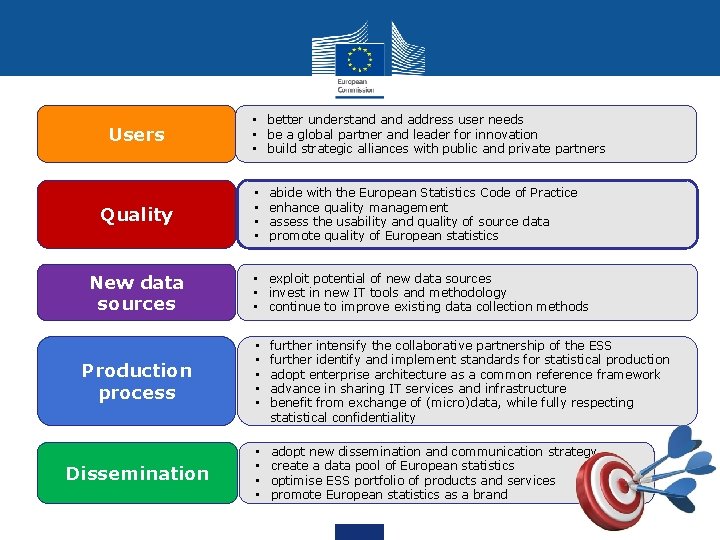
Users Quality New data sources Production process Dissemination • better understand address user needs • be a global partner and leader for innovation • build strategic alliances with public and private partners • • abide with the European Statistics Code of Practice enhance quality management assess the usability and quality of source data promote quality of European statistics • exploit potential of new data sources • invest in new IT tools and methodology • continue to improve existing data collection methods • • • further intensify the collaborative partnership of the ESS further identify and implement standards for statistical production adopt enterprise architecture as a common reference framework advance in sharing IT services and infrastructure benefit from exchange of (micro)data, while fully respecting statistical confidentiality • • adopt new dissemination and communication strategy create a data pool of European statistics optimise ESS portfolio of products and services promote European statistics as a brand
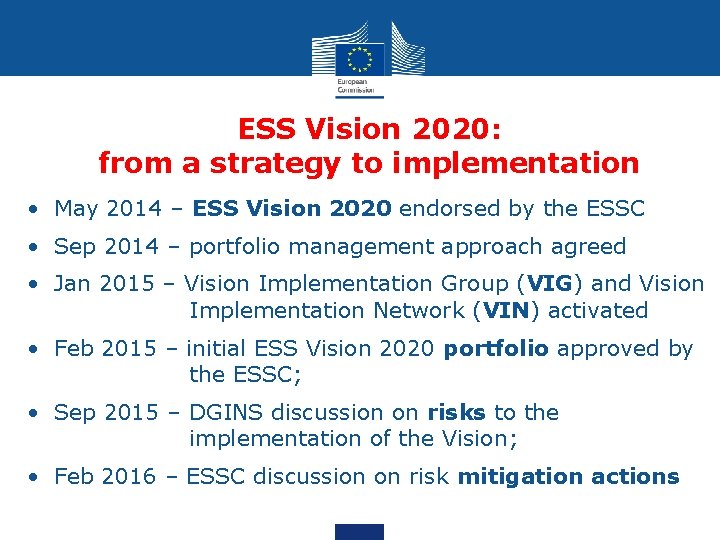
ESS Vision 2020: from a strategy to implementation • May 2014 – ESS Vision 2020 endorsed by the ESSC • Sep 2014 – portfolio management approach agreed • Jan 2015 – Vision Implementation Group (VIG) and Vision Implementation Network (VIN) activated • Feb 2015 – initial ESS Vision 2020 portfolio approved by the ESSC; • Sep 2015 – DGINS discussion on risks to the implementation of the Vision; • Feb 2016 – ESSC discussion on risk mitigation actions
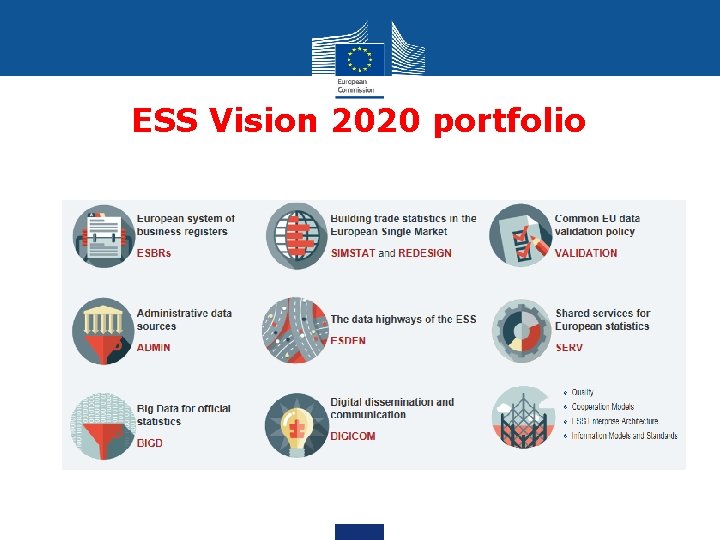
ESS Vision 2020 portfolio
Some highlights… • EGR 2. 0 and remote access by MS ensured; • Methodological Validation Handbook available; • 22 Member States collaborating on Big Data pilots; • ADMIN and DIGICOM projects launched; • ESS Enterprise Architecture Reference Framework • Strategic discussion on quality; • Progress by the TF on cooperation models
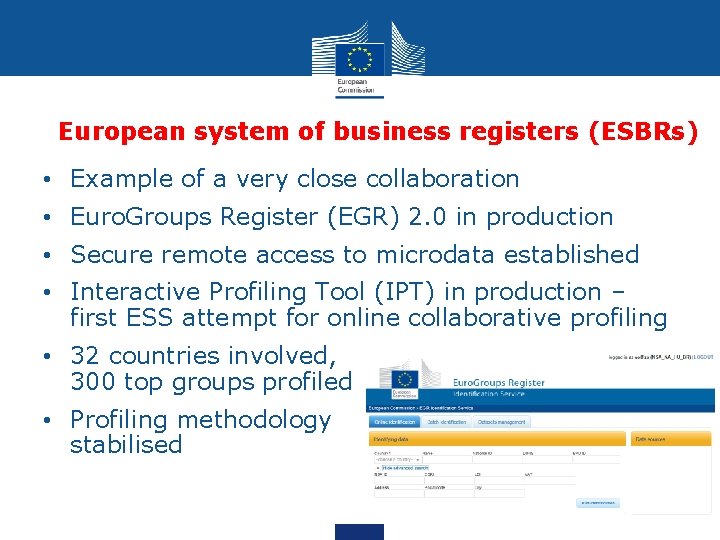
European system of business registers (ESBRs) • Example of a very close collaboration • Euro. Groups Register (EGR) 2. 0 in production • Secure remote access to microdata established • Interactive Profiling Tool (IPT) in production – first ESS attempt for online collaborative profiling • 32 countries involved, 300 top groups profiled • Profiling methodology stabilised
Success story: SIMSTAT+ESDEN • Successful pilot exchange of micro-data in SIMSTAT; • Large amount of data transferred without incidents; • No security problems concerning the data; • Connection of 20 Member States with a complicated network of actors involved; • ESDEN network can be re-used for other secure data exchanges!
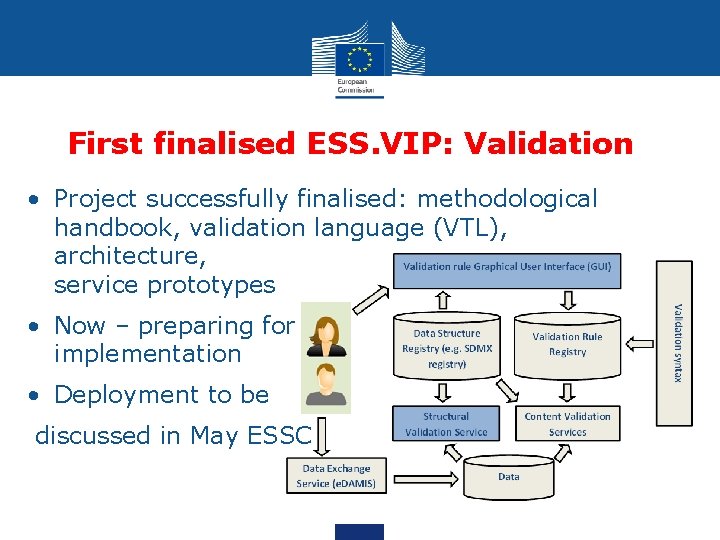
First finalised ESS. VIP: Validation • Project successfully finalised: methodological handbook, validation language (VTL), architecture, service prototypes • Now – preparing for implementation • Deployment to be discussed in May ESSC
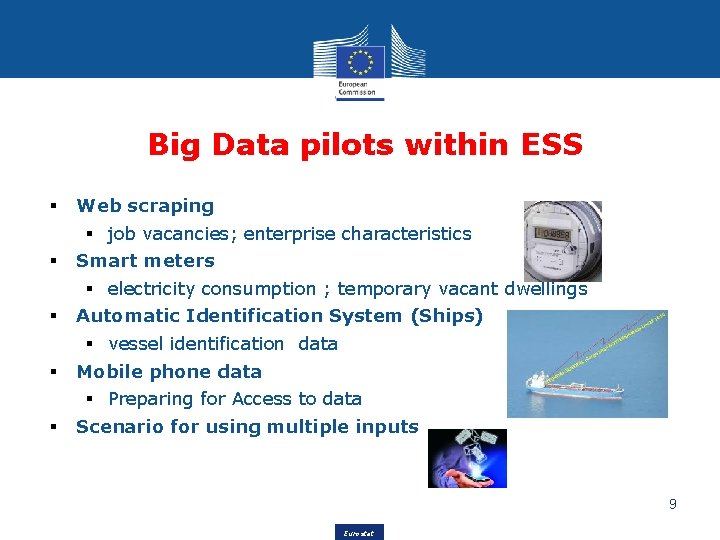
Big Data pilots within ESS § § § Web scraping § job vacancies; enterprise characteristics Smart meters § electricity consumption ; temporary vacant dwellings Automatic Identification System (Ships) § vessel identification data Mobile phone data § Preparing for Access to data Scenario for using multiple inputs 9 Eurostat
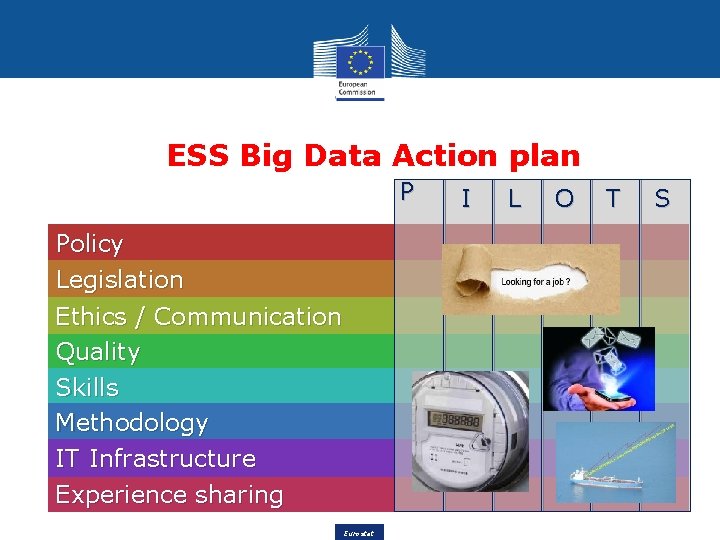
ESS Big Data Action plan P Policy Legislation Ethics / Communication Quality Skills Methodology IT Infrastructure Experience sharing Eurostat I L O T S
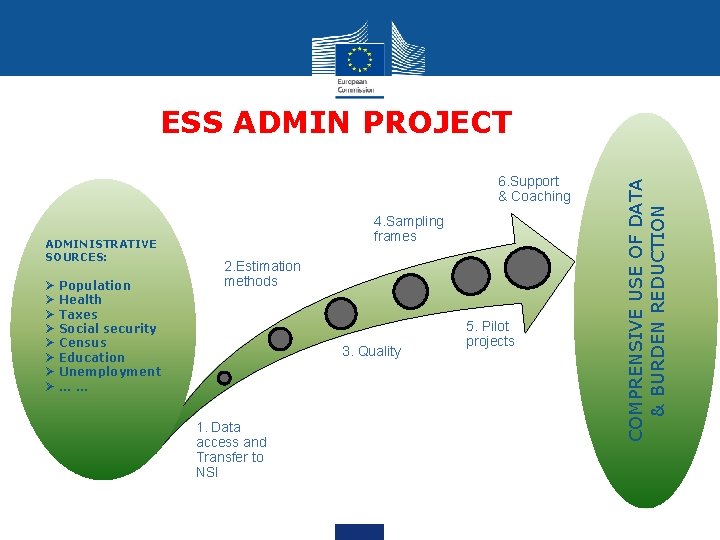
6. Support & Coaching ADMINISTRATIVE SOURCES: Ø Population Ø Health Ø Taxes Ø Social security Ø Census Ø Education Ø Unemployment Ø…… 4. Sampling frames 2. Estimation methods 3. Quality 1. Data access and Transfer to NSI 5. Pilot projects COMPRENSIVE USE OF DATA & BURDEN REDUCTION ESS ADMIN PROJECT
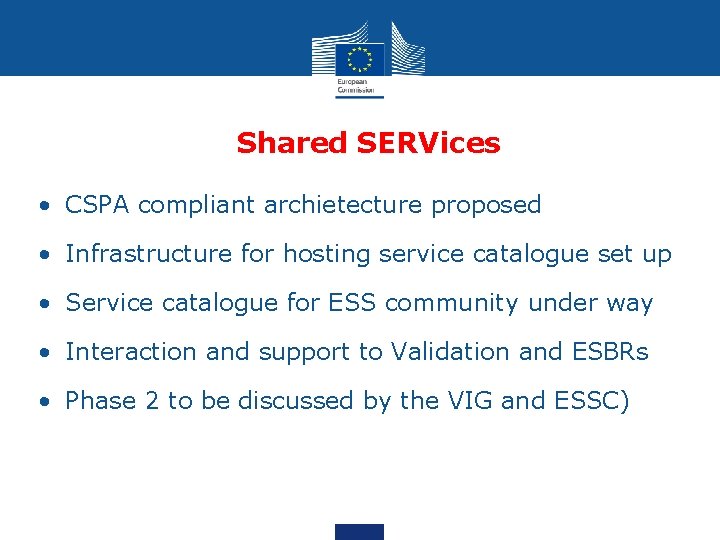
Shared SERVices • CSPA compliant archietecture proposed • Infrastructure for hosting service catalogue set up • Service catalogue for ESS community under way • Interaction and support to Validation and ESBRs • Phase 2 to be discussed by the VIG and ESSC)
QUALity framework • Review and coordination of quality aspects across the ESS Vision 2020 portfolio • Strategic discussion on quality in the ESS February ESSC workshop on quality • ESS Quality Declaration to be adopted in May ESSC • Possible revision of the Code of Practice
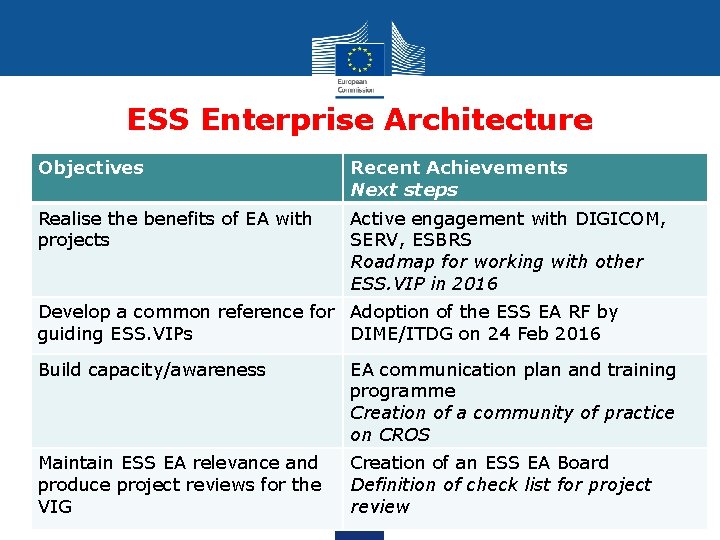
ESS Enterprise Architecture Objectives Recent Achievements Next steps Realise the benefits of EA with projects Active engagement with DIGICOM, SERV, ESBRS Roadmap for working with other ESS. VIP in 2016 Develop a common reference for Adoption of the ESS EA RF by guiding ESS. VIPs DIME/ITDG on 24 Feb 2016 Build capacity/awareness EA communication plan and training programme Creation of a community of practice on CROS Maintain ESS EA relevance and produce project reviews for the VIG Creation of an ESS EA Board Definition of check list for project review
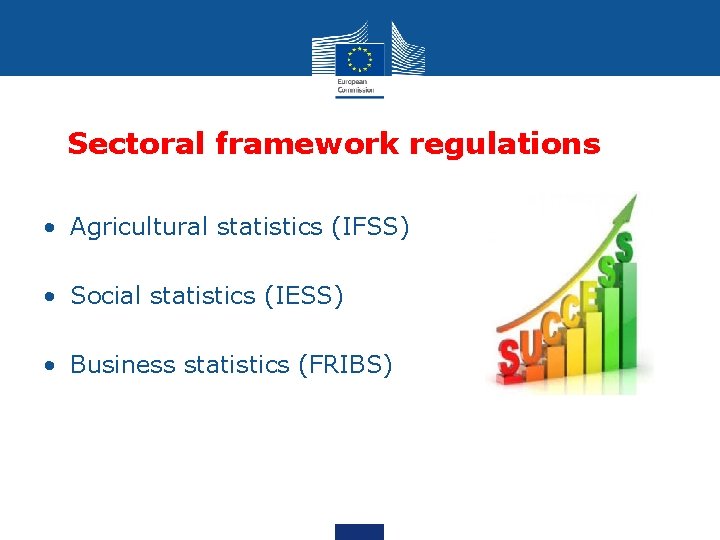
Sectoral framework regulations • Agricultural statistics (IFSS) • Social statistics (IESS) • Business statistics (FRIBS)
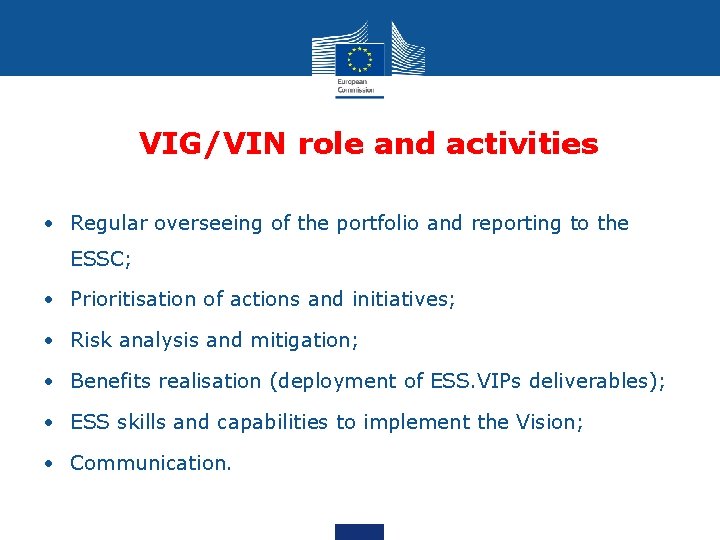
VIG/VIN role and activities • Regular overseeing of the portfolio and reporting to the ESSC; • Prioritisation of actions and initiatives; • Risk analysis and mitigation; • Benefits realisation (deployment of ESS. VIPs deliverables); • ESS skills and capabilities to implement the Vision; • Communication.
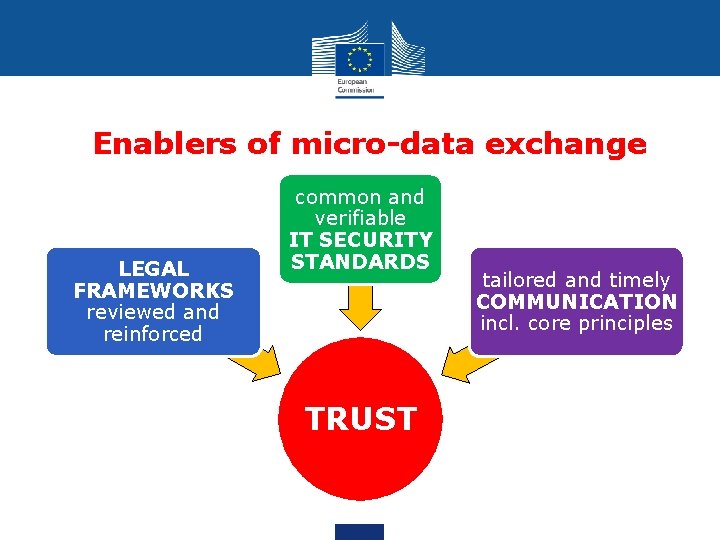
Enablers of micro-data exchange LEGAL FRAMEWORKS reviewed and reinforced common and verifiable IT SECURITY STANDARDS TRUST tailored and timely COMMUNICATION incl. core principles
Core principles of micro-data exchange • Actor: High-level PG TF: SI (Chair), DK, EE, IE, EL, IT, HU, NL, FI and Eurostat • Aim: to serve both internal (common understanding) and external purposes (public trust) • Outcome: "ESS core principles for the exchange of confidential micro-data on businesses for statistical purposes"
Core principles of micro-data exchange 1. Access minimisation 2. Purpose limitation 3. Value added 4. Data protection 5. Clear responsibilities and rights 6. Appropriate legal basis 7. Transparency
ESSC meeting in May 2016 • 1/2 day workshop on future orientation of Intrastat • ESS IT Security Framework • Phase 2 of ESDEN and SERV • Follow-up activities in Validation • Quality Declaration • Final report of the TF Cooperation Models
Conclusions • ESS Vision 2020 in full implementation in all 5 key areas; • Concrete results available in less than 2 years; • Currently among all, the focus is on: the way forward and follow-up after SIMSTAT+REDESIGN and Validation • Strategic reflections on quality • Sectoral modernisation initiatives advancing.
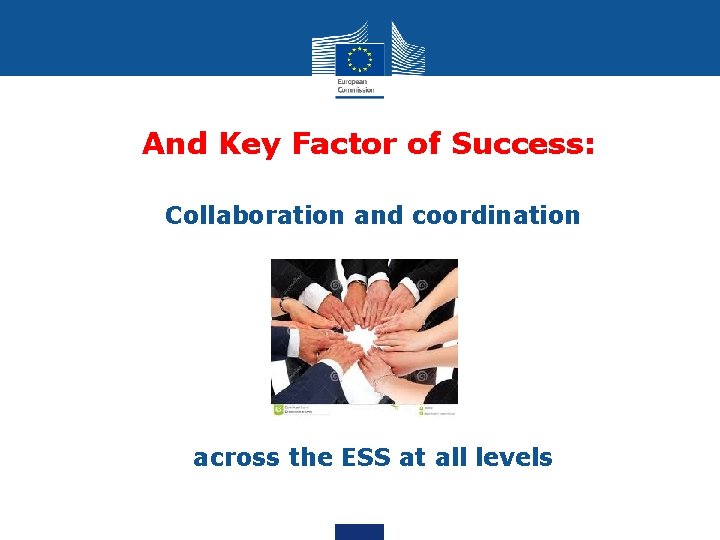
And Key Factor of Success: • Collaboration and coordination • across the ESS at all levels
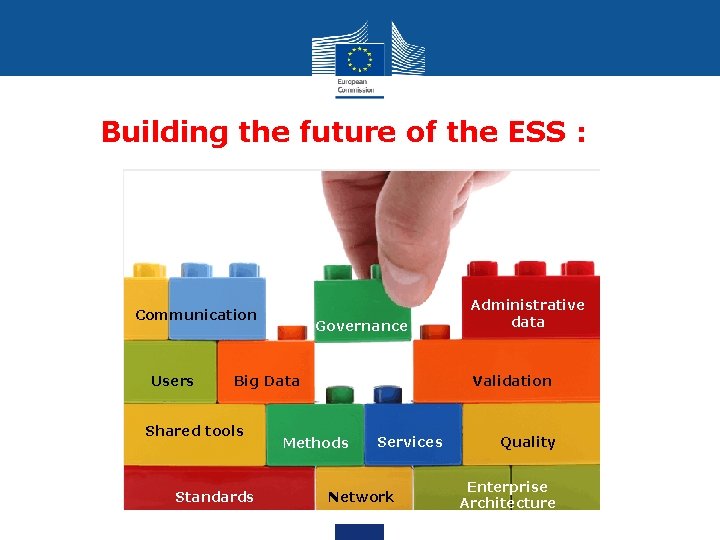
Building the future of the ESS : Communication Users Governance Big Data Shared tools Standards Administrative data Validation Methods Services Network Quality Enterprise Architecture
Thank you for your attention!