
ESS Enterprise Architecture Presentation for the Workshop on


- Slides: 22
ESS Enterprise Architecture Presentation for the Workshop on ESS EA 30 November 2016 Jean-Marc Museux Eurostat
Presentation outline v ESS EA: Origin and brief history v Some EA basics v Overview of the ESS EARF q q Overall structure Business Capabilities Model Building Blocks Statistical Production Reference Architecture v ESS EA at work v ESS EA Community 2 Eurostat
ESS EA: Origin and brief history Ø The origin of ESS EA is the ESS Vision 2020 released in May 2014: ü "We will adopt enterprise architecture as a common reference framework" ü "Enterprise architecture is a systematic language to describe the way our business wants to operate and how the various components fit together. It serves to translate our vision into implementation strategies and priorities in a systematic way. 3 Eurostat
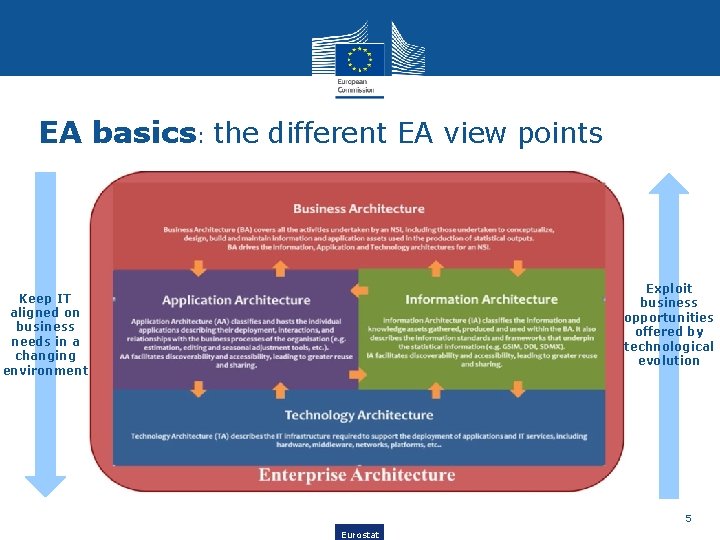
EA basics Ø Enterprise architecture aims at: ü Creating an environment which can change and support business goals ü Showing what are the business needs and where the organisation wants to be ü Helping to remove silos, improves collaboration across an organisation, helps standardizing organisations ü Ensuring that the technology is aligned to the business needs Ø EA discipline is based separation of concern and decoupling between 4 considered architectural layers: business, information, application, technology 4 Eurostat
EA basics: the different EA view points Exploit business opportunities offered by technological evolution Keep IT aligned on business needs in a changing environment 5 Eurostat
What Enterprise Architecture can provide to ESS Vision 2020 • EA can ensure that projects • remain aligned with the ESS Vision 2020 objectives • will deliver reusable components where possible • EA can supportfolio managers • to monitor progress, detect gaps, integrate new results in implementing the ESS Vision 2020 • to ensure that portfolio roadmap is well articulated, feasible and designed to achieve target
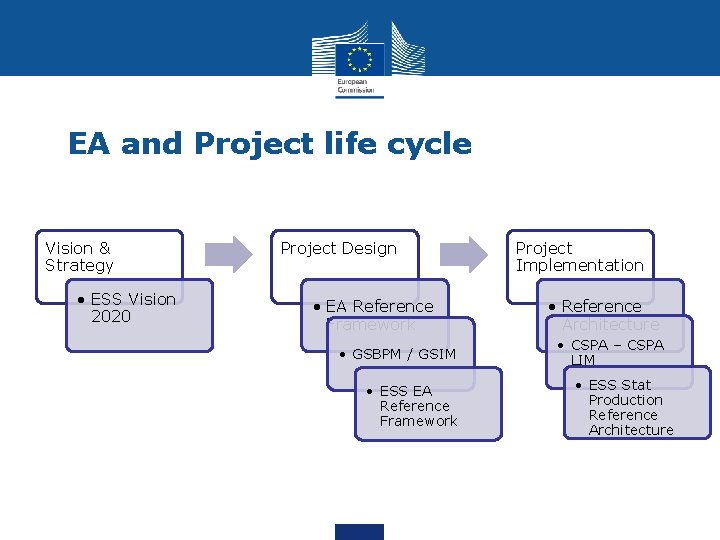
EA and Project life cycle Vision & Strategy • ESS Vision 2020 Project Design • EA Reference Framework • GSBPM / GSIM • ESS EA Reference Framework Project Implementation • Reference Architecture • CSPA – CSPA LIM • ESS Stat Production Reference Architecture
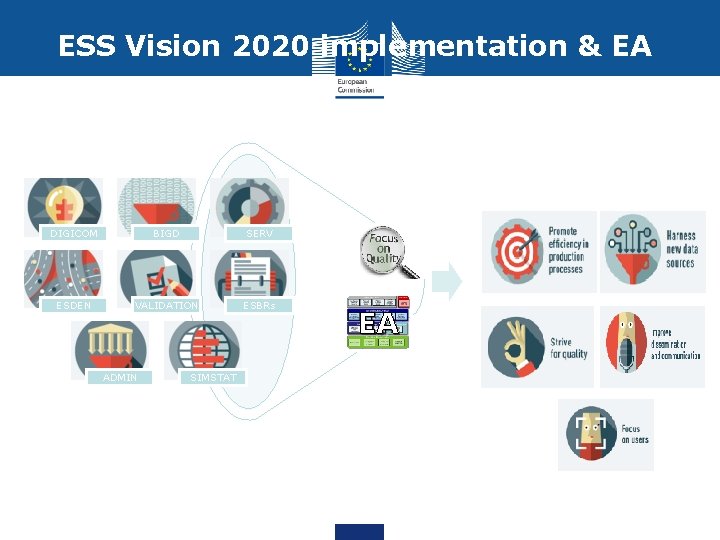
ESS Vision 2020 implementation & EA ESS Vision 2020 objectives DIGICOM BIGD SERV ESDEN VALIDATION ESBRs ADMIN SIMSTAT EA
ESS EARF : Origin and brief history Ø The ESS EARF is the result of the collective and iterative work of the DIME/ITDG Task Force on ESS EA which ran from April 2014 till August 2015 Ø ESS EA RF was adopted by the DIME and ITDG in February 2016 Ø Since then it has been used to review ESS Vision 2020 and is maintained by the ESS EA Board bringing together EA experts from NL, IT, FR, PL, NO, UK & Eurostat 9 Eurostat
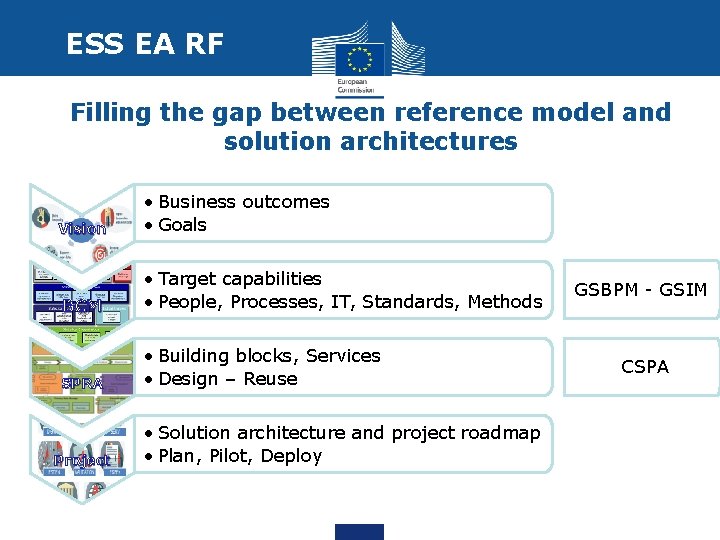
What is the ESS EA RF • A set of tools to be used by project/programme managers and ESS architects involved in the implementation of the ESS Vision 2020 • The framework provides a common set of terms, methods, models and standards which form a starter set for the points that should be addressed in ESS Vision projects • These tools build on the conceptual and global frameworks for Officials Statistics (such as CSPA, GAMSO, …) and aim to fill the gap between concepts and implementation.
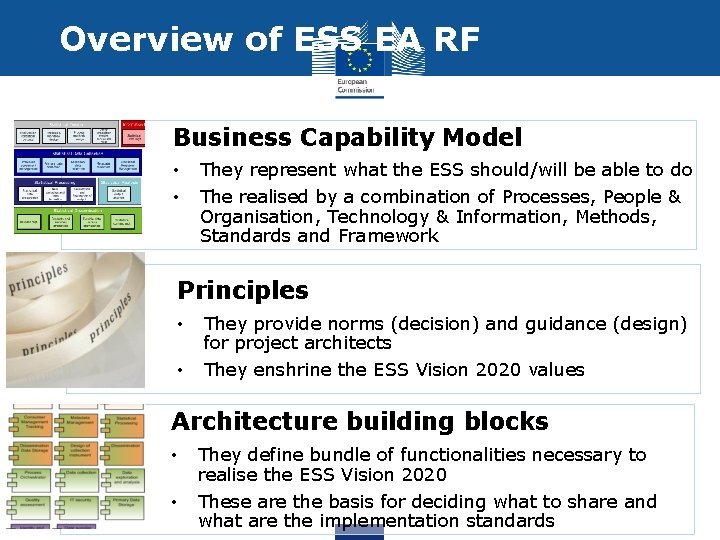
Overview of ESS EA RF Business Capability Model • • They represent what the ESS should/will be able to do The realised by a combination of Processes, People & Organisation, Technology & Information, Methods, Standards and Framework Principles • • They provide norms (decision) and guidance (design) for project architects They enshrine the ESS Vision 2020 values Architecture building blocks • • They define bundle of functionalities necessary to realise the ESS Vision 2020 These are the basis for deciding what to share and what are the implementation standards
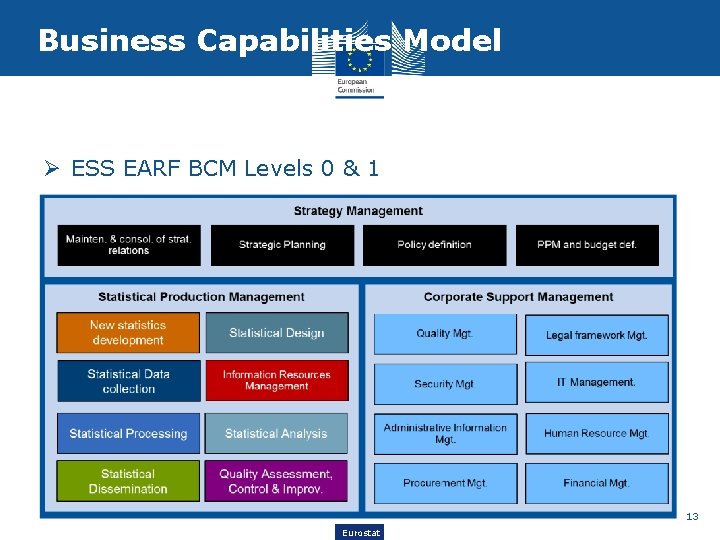
Business Capabilities Model Ø ESS EARF BCM Levels 0 & 1 13 Eurostat
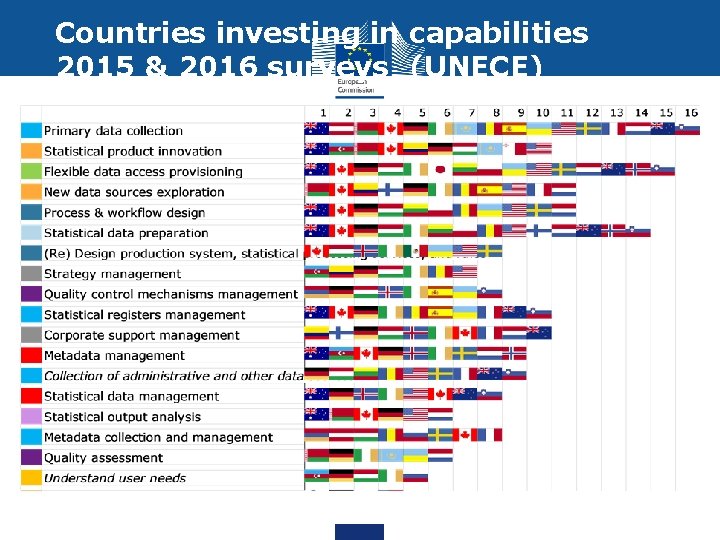
Countries investing in capabilities 2015 & 2016 surveys (UNECE)
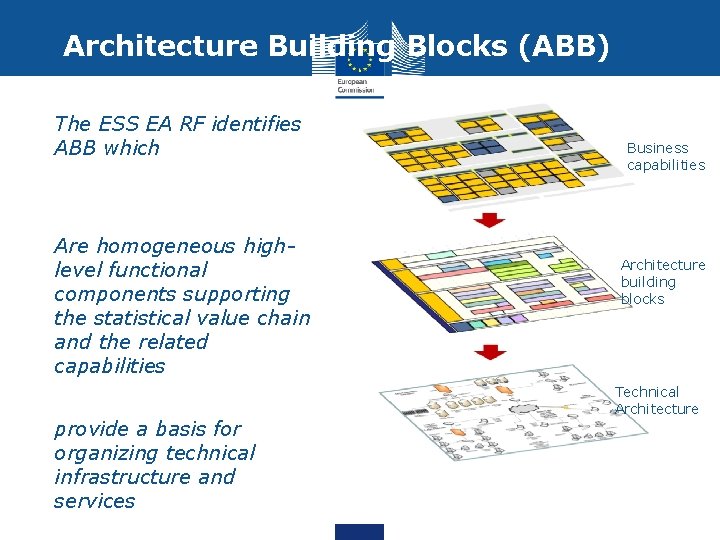
Architecture Building Blocks (ABB) • The ESS EA RF identifies ABB which 1. Are homogeneous highlevel functional components supporting the statistical value chain and the related capabilities 2. provide a basis for organizing technical infrastructure and services Business capabilities Architecture building blocks Technical Architecture
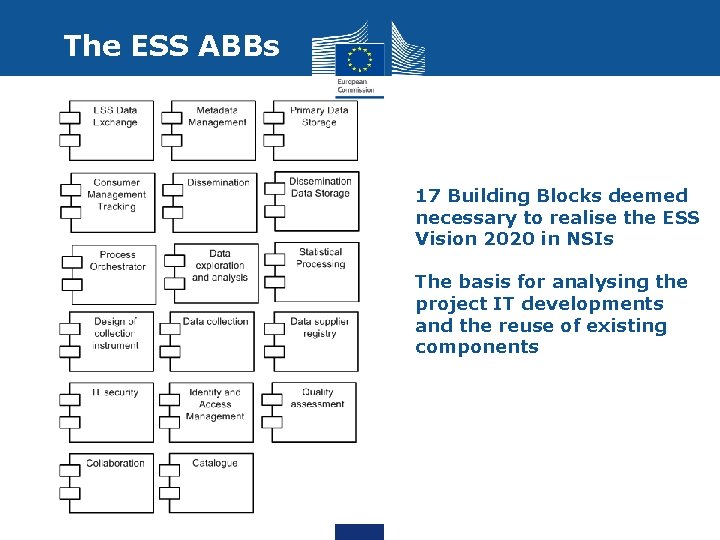
The ESS ABBs 17 Building Blocks deemed necessary to realise the ESS Vision 2020 in NSIs The basis for analysing the project IT developments and the reuse of existing components
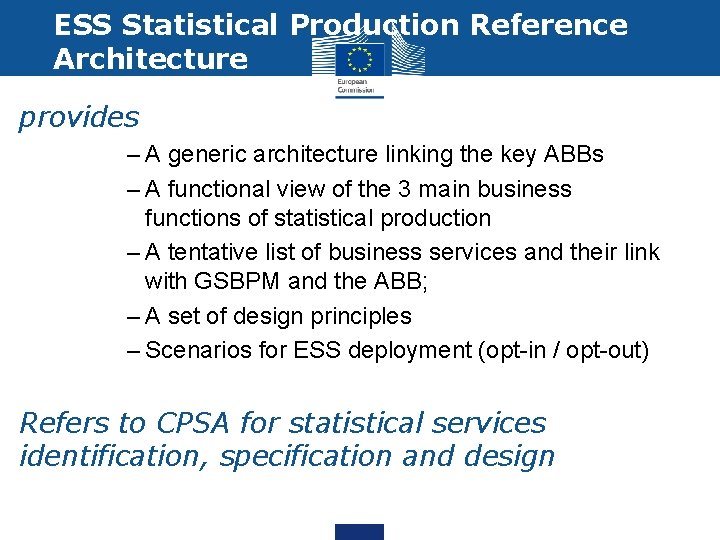
ESS Statistical Production Reference Architecture provides – A generic architecture linking the key ABBs – A functional view of the 3 main business functions of statistical production – A tentative list of business services and their link with GSBPM and the ABB; – A set of design principles – Scenarios for ESS deployment (opt-in / opt-out) Refers to CPSA for statistical services identification, specification and design
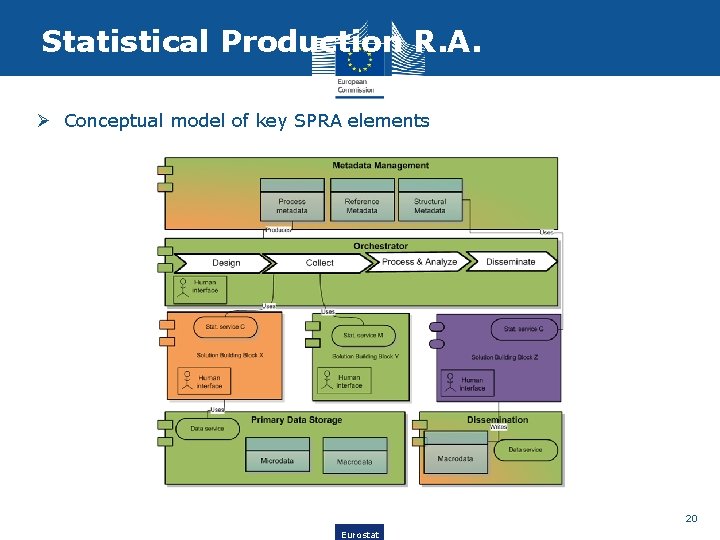
Statistical Production R. A. Ø Conceptual model of key SPRA elements 20 Eurostat
ESS EA RF Filling the gap between reference model and solution architectures Vision • Business outcomes • Goals BCM • Target capabilities • People, Processes, IT, Standards, Methods SPRA • Building blocks, Services • Design – Reuse Project • Solution architecture and project roadmap • Plan, Pilot, Deploy GSBPM - GSIM CSPA
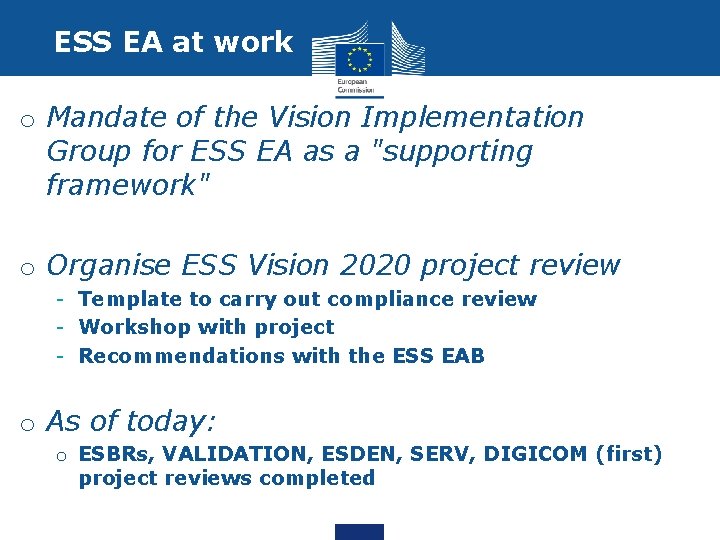
ESS EA at work o Mandate of the Vision Implementation Group for ESS EA as a "supporting framework" o Organise ESS Vision 2020 project review - Template to carry out compliance review - Workshop with project - Recommendations with the ESS EAB o As of today: o ESBRs, VALIDATION, ESDEN, SERV, DIGICOM (first) project reviews completed
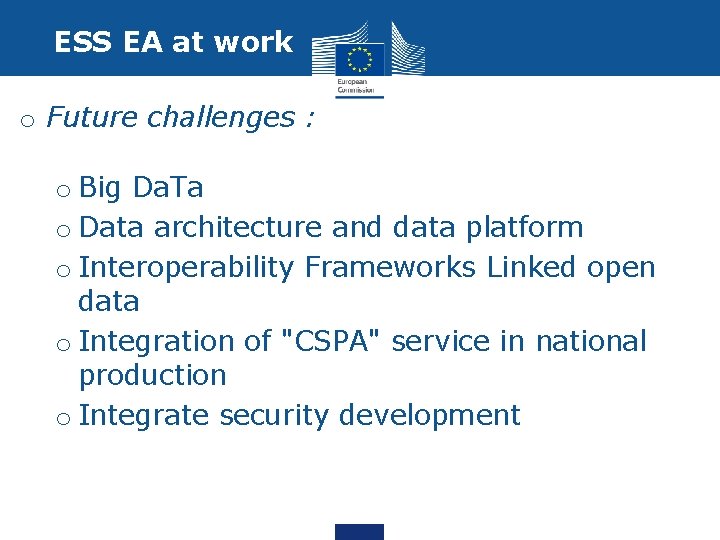
ESS EA at work o Future challenges : o Big Da. Ta o Data architecture and data platform o Interoperability Frameworks Linked open data o Integration of "CSPA" service in national production o Integrate security development
ESS Architecture Community https: //ec. europa. eu/eurostat/cros/content/ess-architecture_en
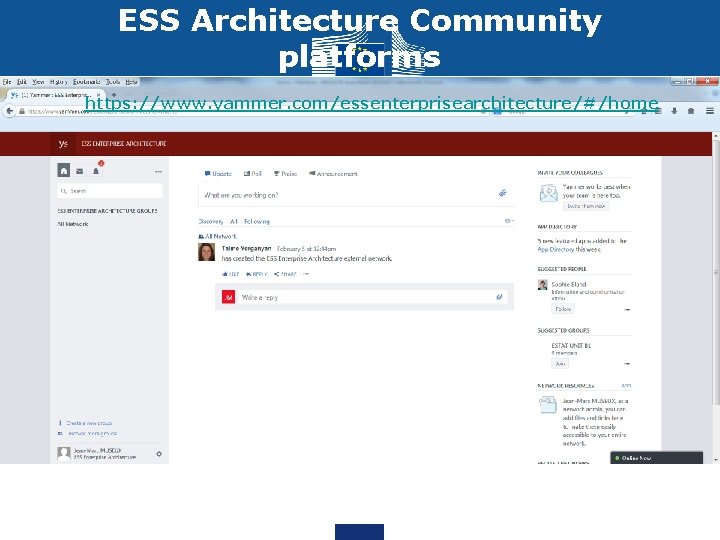
ESS Architecture Community platforms https: //www. yammer. com/essenterprisearchitecture/#/home