
ESS Cooling System Interface with DTL 1 John
- Slides: 12
ESS Cooling System Interface with DTL 1 John Jurns Cooling System Engineer
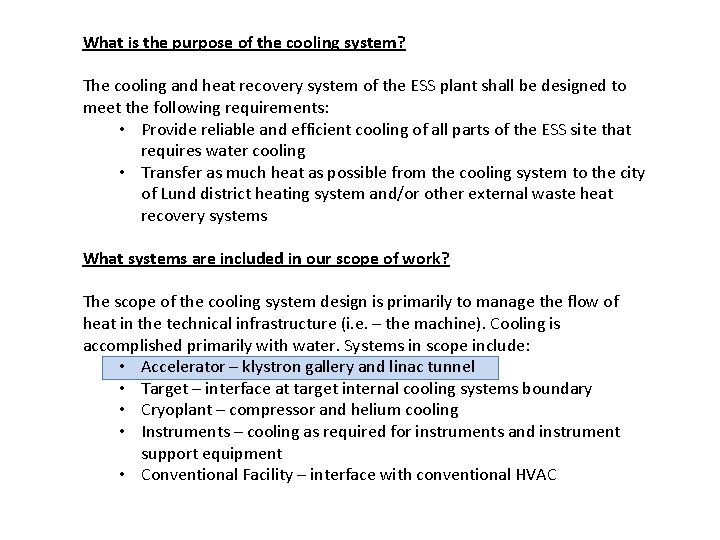
What is the purpose of the cooling system? The cooling and heat recovery system of the ESS plant shall be designed to meet the following requirements: • Provide reliable and efficient cooling of all parts of the ESS site that requires water cooling • Transfer as much heat as possible from the cooling system to the city of Lund district heating system and/or other external waste heat recovery systems What systems are included in our scope of work? The scope of the cooling system design is primarily to manage the flow of heat in the technical infrastructure (i. e. – the machine). Cooling is accomplished primarily with water. Systems in scope include: • Accelerator – klystron gallery and linac tunnel • Target – interface at target internal cooling systems boundary • Cryoplant – compressor and helium cooling • Instruments – cooling as required for instruments and instrument support equipment • Conventional Facility – interface with conventional HVAC
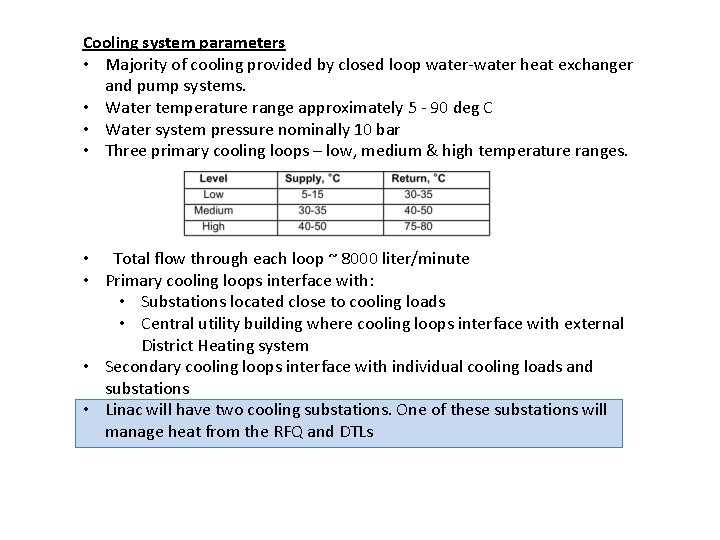
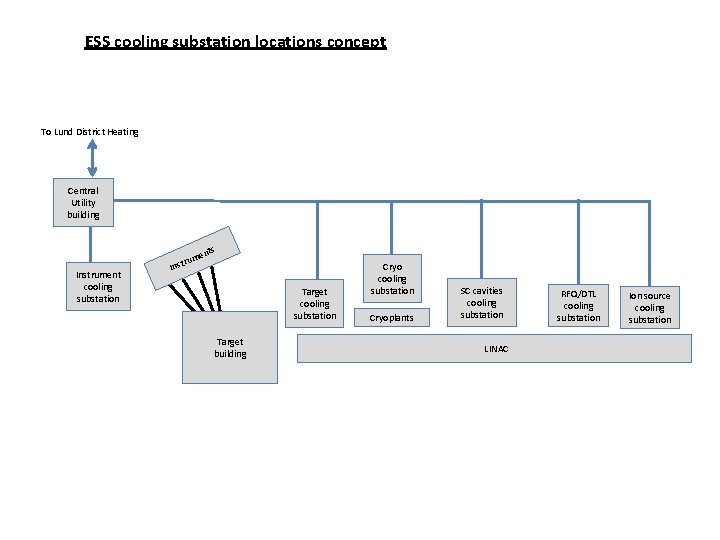
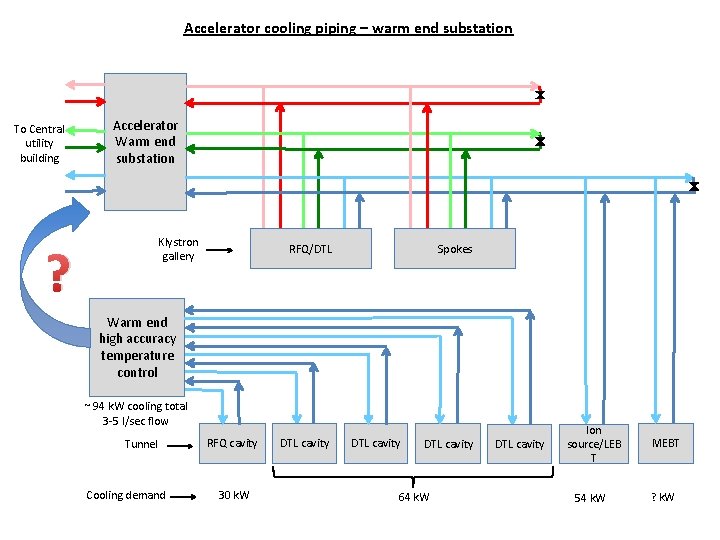
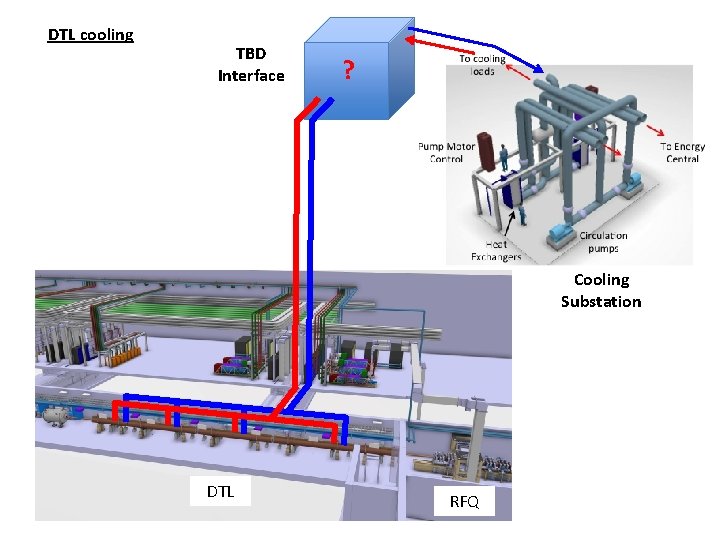
Cooling system parameters • Majority of cooling provided by closed loop water-water heat exchanger and pump systems. • Water temperature range approximately 5 - 90 deg C • Water system pressure nominally 10 bar • Three primary cooling loops – low, medium & high temperature ranges. • Total flow through each loop ~ 8000 liter/minute • Primary cooling loops interface with: • Substations located close to cooling loads • Central utility building where cooling loops interface with external District Heating system • Secondary cooling loops interface with individual cooling loads and substations • Linac will have two cooling substations. One of these substations will manage heat from the RFQ and DTLs
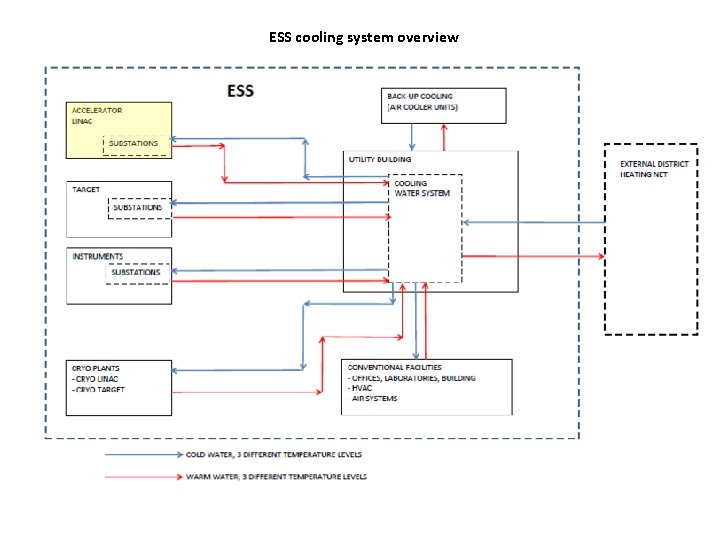
ESS cooling system overview
ESS cooling substation locations concept To Lund District Heating Central Utility building Instrument cooling substation rum Inst s ent Target cooling substation Target building Cryo cooling substation Cryoplants SC cavities cooling substation LINAC RFQ/DTL cooling substation Ion source cooling substation
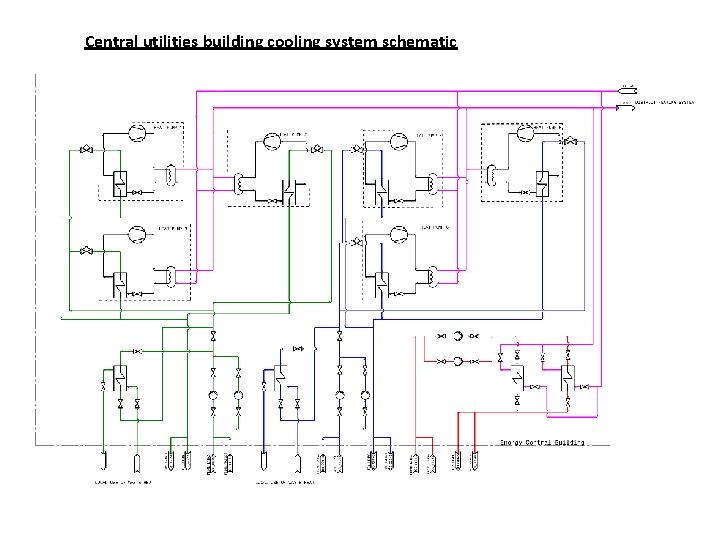
Central utilities building cooling system schematic
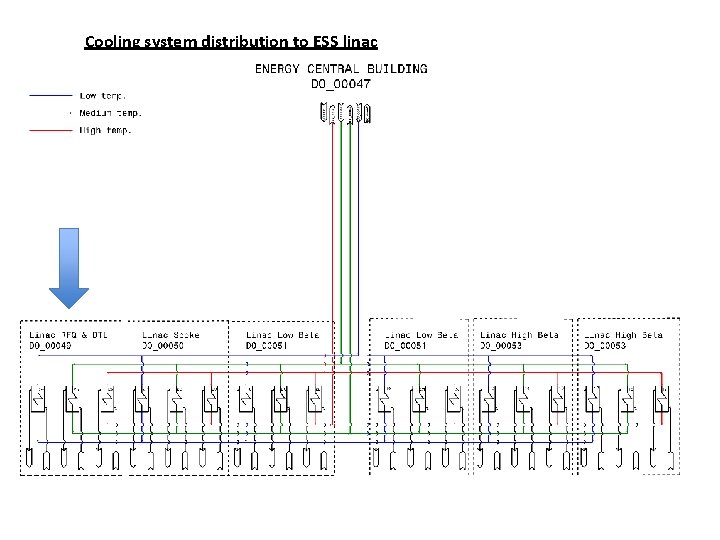
Cooling system distribution to ESS linac
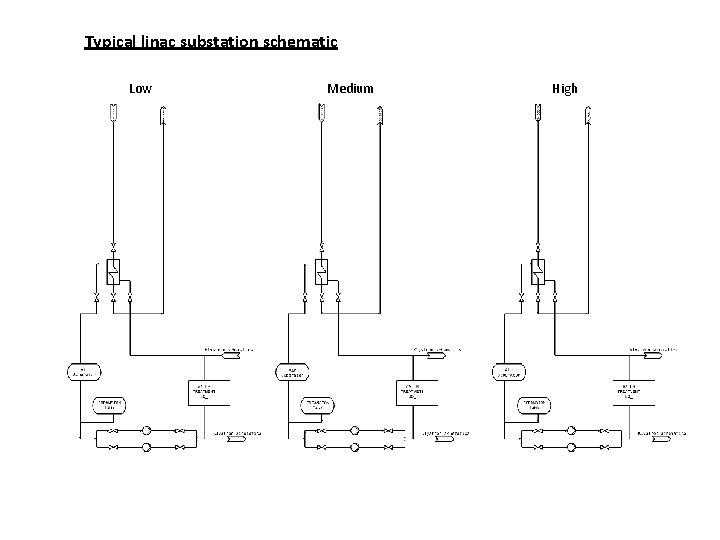
Typical linac substation schematic Low Medium High
Accelerator cooling piping – warm end substation To Central utility building Accelerator Warm end substation Klystron gallery ? RFQ/DTL Spokes Warm end high accuracy temperature control ~ 94 k. W cooling total 3 -5 l/sec flow Tunnel Cooling demand RFQ cavity 30 k. W DTL cavity 64 k. W DTL cavity Ion source/LEB T MEBT 54 k. W ? k. W
DTL cooling TBD Interface ? Cooling Substation DTL RFQ
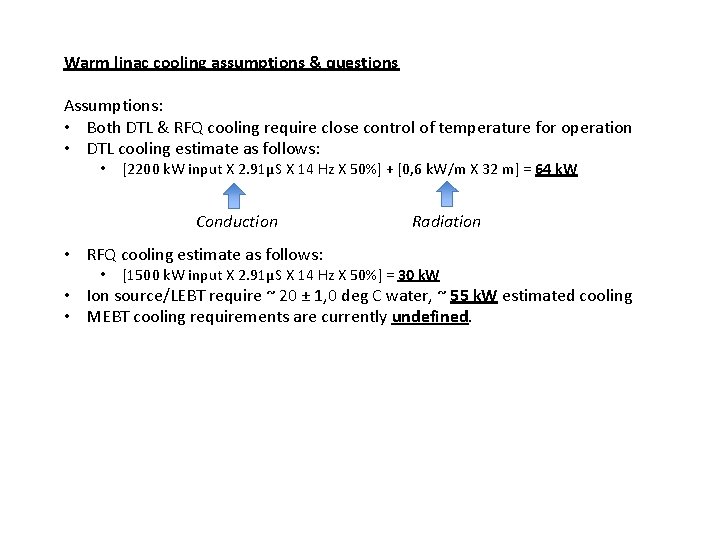
Warm linac cooling assumptions & questions Assumptions: • Both DTL & RFQ cooling require close control of temperature for operation • DTL cooling estimate as follows: • [2200 k. W input X 2. 91μS X 14 Hz X 50%] + [0, 6 k. W/m X 32 m] = 64 k. W Conduction Radiation • RFQ cooling estimate as follows: • [1500 k. W input X 2. 91μS X 14 Hz X 50%] = 30 k. W • Ion source/LEBT require ~ 20 ± 1, 0 deg C water, ~ 55 k. W estimated cooling • MEBT cooling requirements are currently undefined.
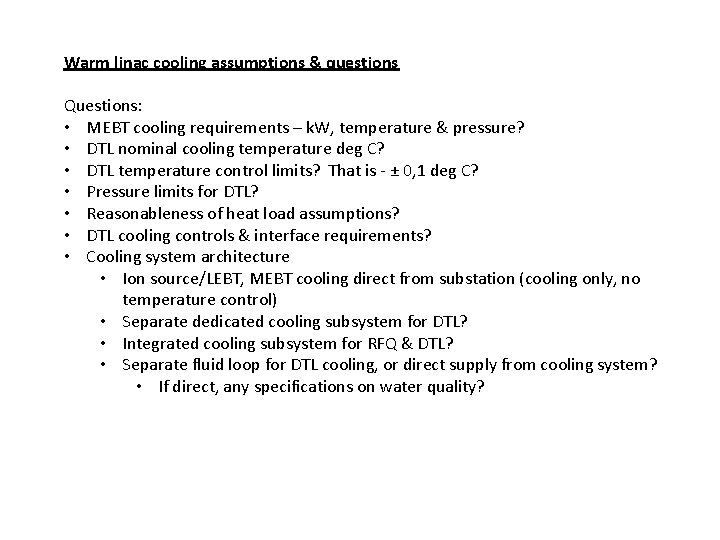
Warm linac cooling assumptions & questions Questions: • MEBT cooling requirements – k. W, temperature & pressure? • DTL nominal cooling temperature deg C? • DTL temperature control limits? That is - ± 0, 1 deg C? • Pressure limits for DTL? • Reasonableness of heat load assumptions? • DTL cooling controls & interface requirements? • Cooling system architecture • Ion source/LEBT, MEBT cooling direct from substation (cooling only, no temperature control) • Separate dedicated cooling subsystem for DTL? • Integrated cooling subsystem for RFQ & DTL? • Separate fluid loop for DTL cooling, or direct supply from cooling system? • If direct, any specifications on water quality?