
ESRF Operation Status Report Phase I and II
![Improved Coherence BRILLIANCE AND COHERENCE INCREASE Brilliance Hor. Emittance [nm] 4 0. 15](https://slidetodoc.com/presentation_image/fca962a26e71a482eb45ca09c1739bdc/image-28.jpg "Improved Coherence BRILLIANCE AND COHERENCE INCREASE Brilliance Hor. Emittance [nm] 4 0. 15")
- Slides: 40
ESRF Operation Status Report & Phase I and II Accelerator Upgrade Programme P. Raimondi On behalf of the Accelerator & Source Division Saclay, September 25 - 2014
ACCELERATOR AND SOURCE DIVISION (ASD) PROGRAMME • Deliver the X-ray Beam to the USERs > 5000 hours/year • Deliver the Accelerator Phase I Upgrade Programme • Implement the proposed Accelerator Phase II Upgrade Project The ASD has the additional duty of constantly improving the performances and reliability of the Source independently from the Upgrade Programmes. 2 Page 2
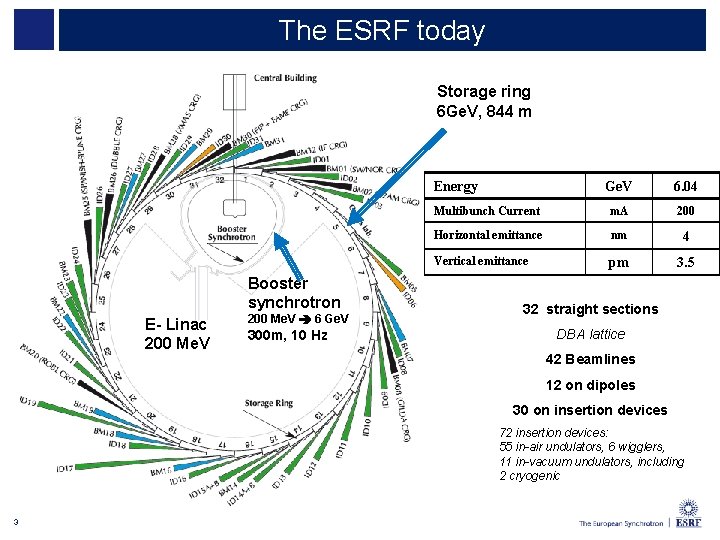
The ESRF today Storage ring 6 Ge. V, 844 m Energy Booster synchrotron E- Linac 200 Me. V 6 Ge. V 300 m, 10 Hz Ge. V 6. 04 Multibunch Current m. A 200 Horizontal emittance nm 4 Vertical emittance pm 3. 5 32 straight sections DBA lattice 42 Beamlines 12 on dipoles 30 on insertion devices 72 insertion devices: 55 in-air undulators, 6 wigglers, 11 in-vacuum undulators, including 2 cryogenic 3
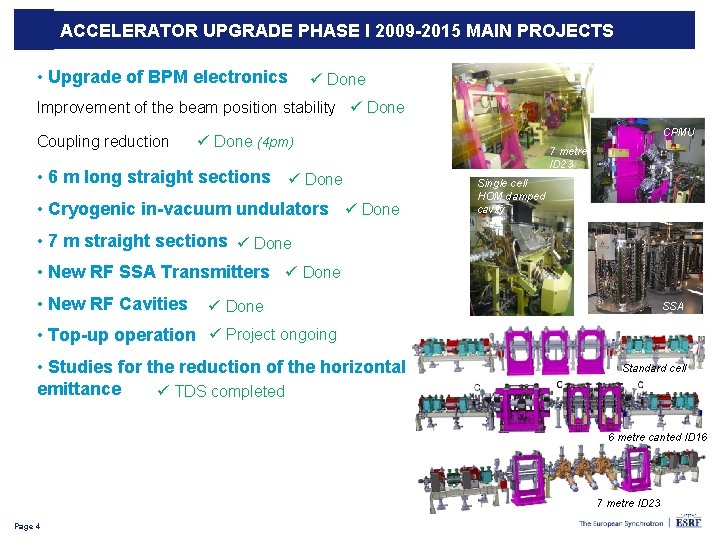
ACCELERATOR UPGRADE PHASE I 2009 -2015 MAIN PROJECTS • Upgrade of BPM electronics ü Done Improvement of the beam position stability ü Done Coupling reduction CPMU ü Done (4 pm) • 6 m long straight sections ü Done • Cryogenic in-vacuum undulators ü Done 7 metre ID 23 Single cell HOM damped cavity • 7 m straight sections ü Done • New RF SSA Transmitters ü Done • New RF Cavities ü Done SSA • Top-up operation ü Project ongoing • Studies for the reduction of the horizontal emittance ü TDS completed Standard cell 6 metre canted ID 16 7 metre ID 23 4 Page 4
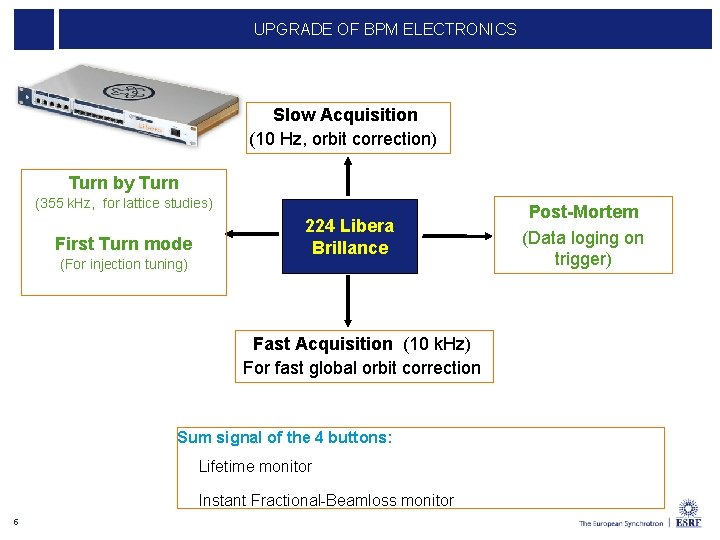
UPGRADE OF BPM ELECTRONICS Slow Acquisition (10 Hz, orbit correction) Turn by Turn (355 k. Hz, for lattice studies) First Turn mode (For injection tuning) 224 Libera Brillance Fast Acquisition (10 k. Hz) For fast global orbit correction Sum signal of the 4 buttons: Lifetime monitor Instant Fractional-Beamloss monitor 5 Post-Mortem (Data loging on trigger)
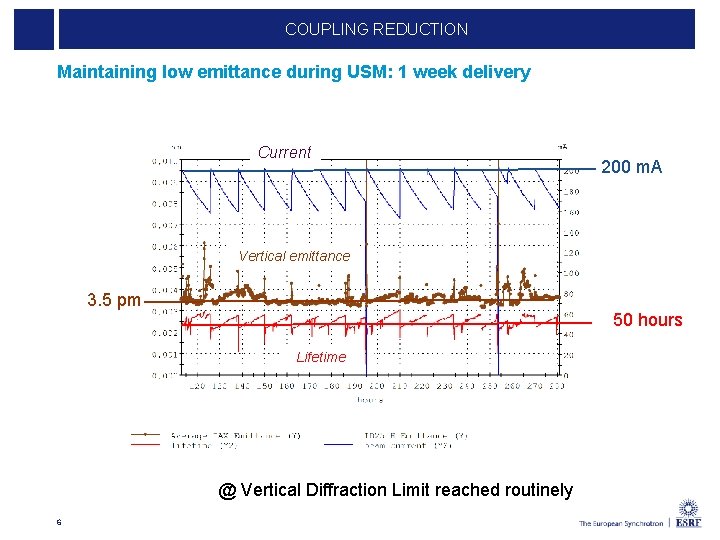
COUPLING REDUCTION Maintaining low emittance during USM: 1 week delivery Current 200 m. A Vertical emittance 3. 5 pm 50 hours Lifetime @ Vertical Diffraction Limit reached routinely 6
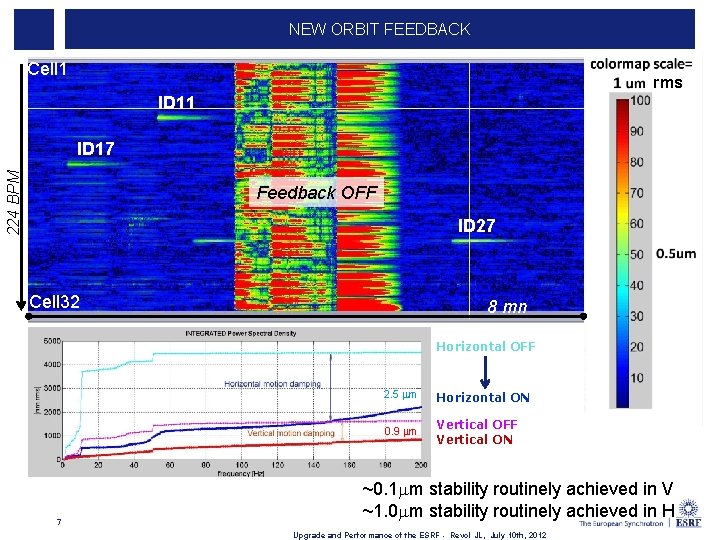
NEW ORBIT FEEDBACK Cell 1 rms ID 11 224 BPM ID 17 Feedback OFF ID 27 Cell 32 8 mn Horizontal OFF 7 2. 5 mm Horizontal ON 0. 9 mm Vertical OFF Vertical ON ~0. 1 mm stability routinely achieved in V ~1. 0 mm stability routinely achieved in H Upgrade and Performance of the ESRF - Revol JL, July 10 th, 2012
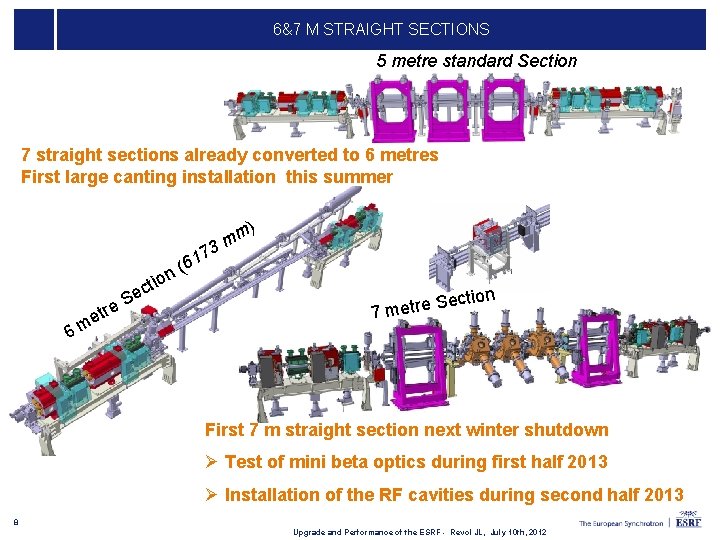
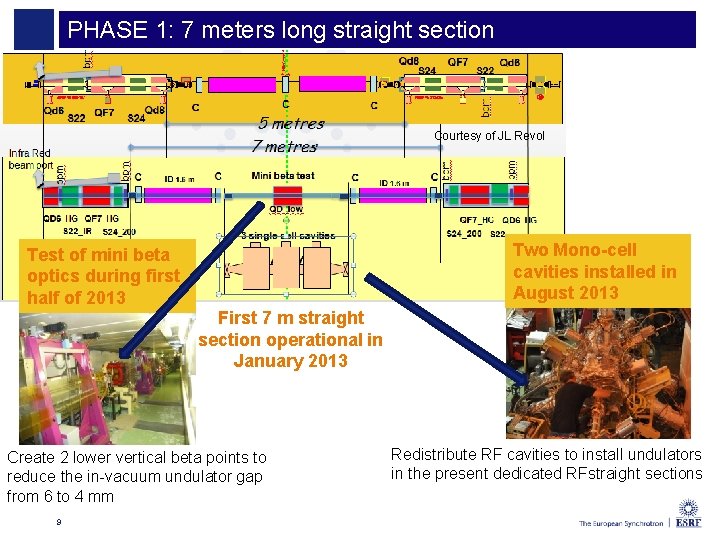
6&7 M STRAIGHT SECTIONS 5 metre standard Section 7 straight sections already converted to 6 metres First large canting installation this summer c tr e e. S e 6 m ( n o ti mm 3 17 ) 6 ection S e r t e 7 m First 7 m straight section next winter shutdown Ø Test of mini beta optics during first half 2013 Ø Installation of the RF cavities during second half 2013 8 Upgrade and Performance of the ESRF - Revol JL, July 10 th, 2012
PHASE 1: 7 meters long straight section Courtesy of JL Revol Two Mono-cell cavities installed in August 2013 Test of mini beta optics during first half of 2013 First 7 m straight section operational in January 2013 Create 2 lower vertical beta points to reduce the in-vacuum undulator gap from 6 to 4 mm 9 Redistribute RF cavities to install undulators in the present dedicated RFstraight sections
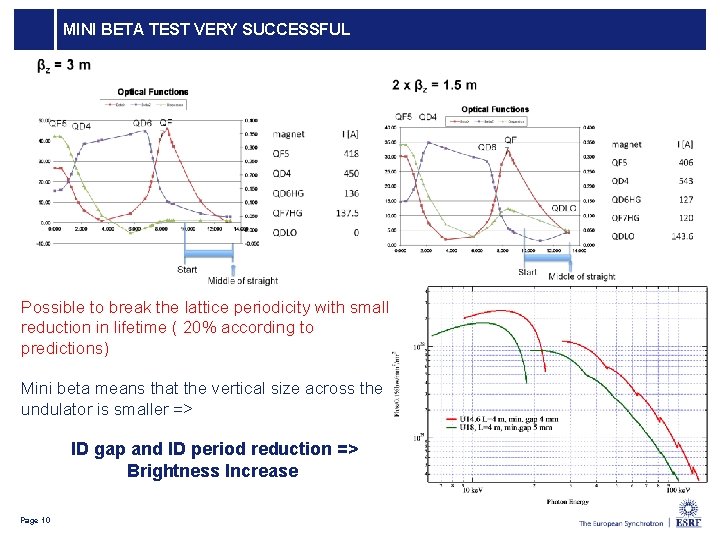
MINI BETA TEST VERY SUCCESSFUL Possible to break the lattice periodicity with small reduction in lifetime ( 20% according to predictions) Mini beta means that the vertical size across the undulator is smaller => ID gap and ID period reduction => Brightness Increase Page 10
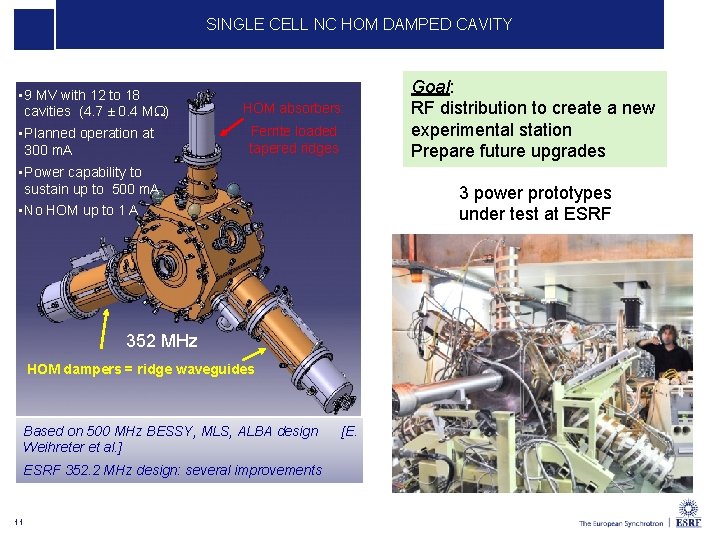
SINGLE CELL NC HOM DAMPED CAVITY • 9 MV with 12 to 18 cavities (4. 7 ± 0. 4 M ) • Planned operation at 300 m. A HOM absorbers: Ferrite loaded tapered ridges • Power capability to sustain up to 500 m. A 3 power prototypes under test at ESRF • No HOM up to 1 A 352 MHz HOM dampers = ridge waveguides Based on 500 MHz BESSY, MLS, ALBA design Weihreter et al. ] ESRF 352. 2 MHz design: several improvements 11 Goal: RF distribution to create a new experimental station Prepare future upgrades [E.
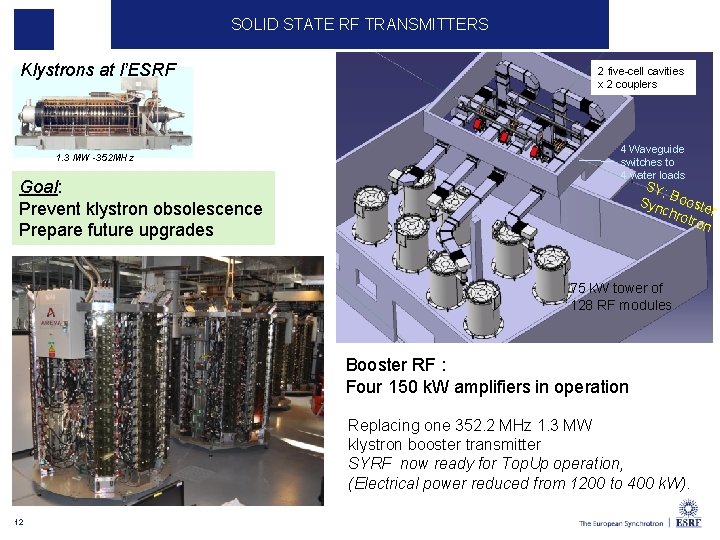
SOLID STATE RF TRANSMITTERS Klystrons at l’ESRF 1. 3 MW -352 MHz Goal: Prevent klystron obsolescence Prepare future upgrades 2 five-cell cavities x 2 couplers 4 Waveguide switches to 4 water loads SY: Syn Booste chro r tron 75 k. W tower of 128 RF modules Booster RF : Four 150 k. W amplifiers in operation Replacing one 352. 2 MHz 1. 3 MW klystron booster transmitter SYRF now ready for Top. Up operation, (Electrical power reduced from 1200 to 400 k. W). 12
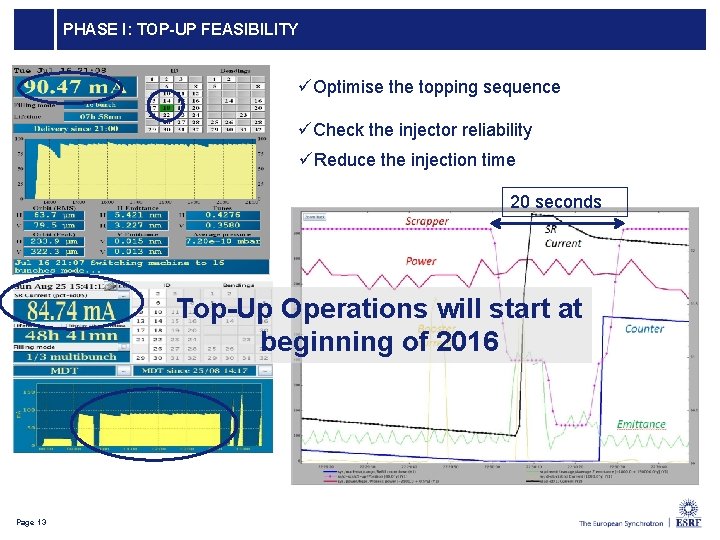
PHASE I: TOP-UP FEASIBILITY üOptimise the topping sequence üCheck the injector reliability üReduce the injection time 20 seconds Top-Up Operations will start at beginning of 2016 13 Page 13
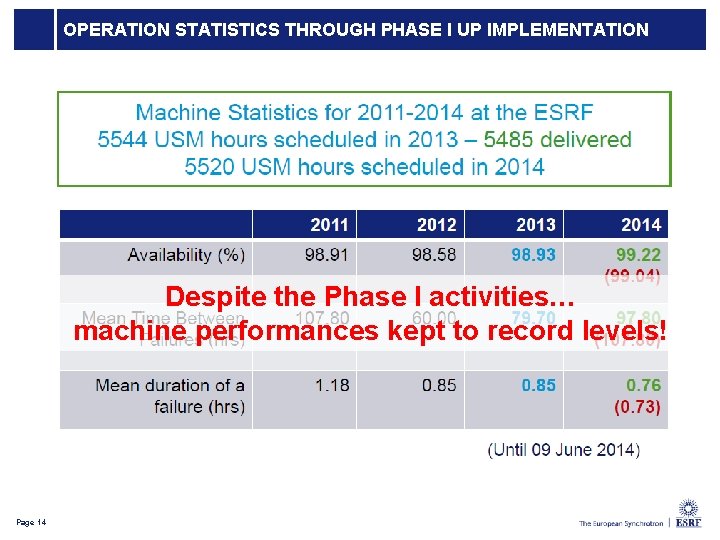
OPERATION STATISTICS THROUGH PHASE I UP IMPLEMENTATION Despite the Phase I activities… machine performances kept to record levels! 14 Page 14
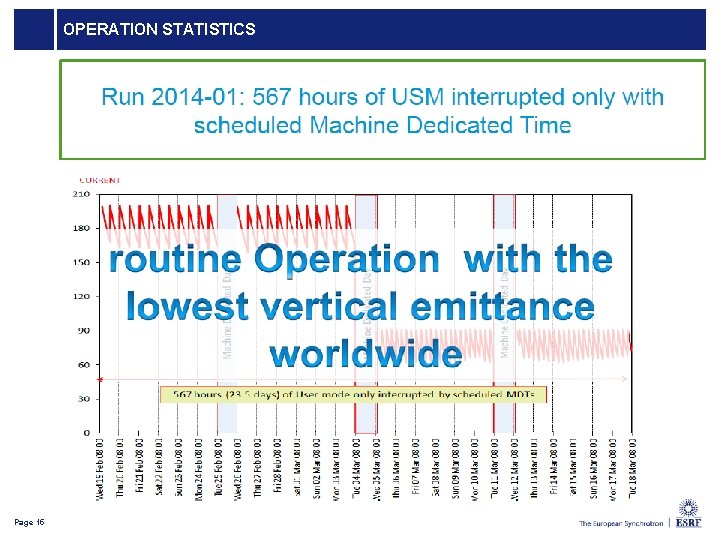
OPERATION STATISTICS Page 15
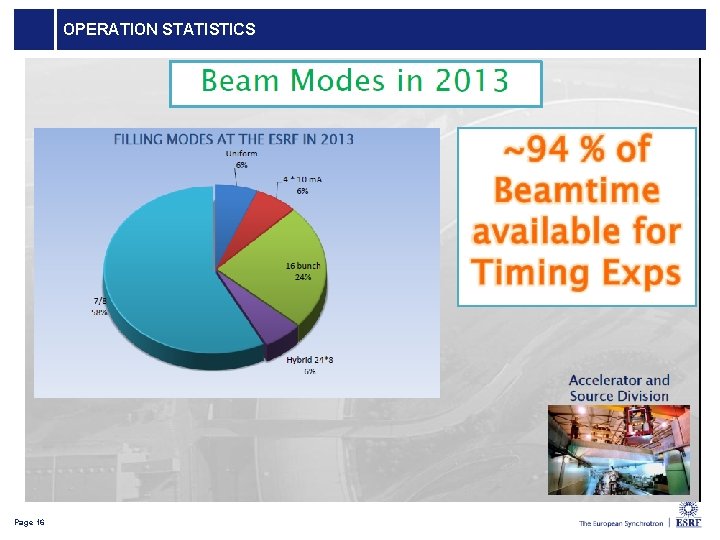
OPERATION STATISTICS Page 16
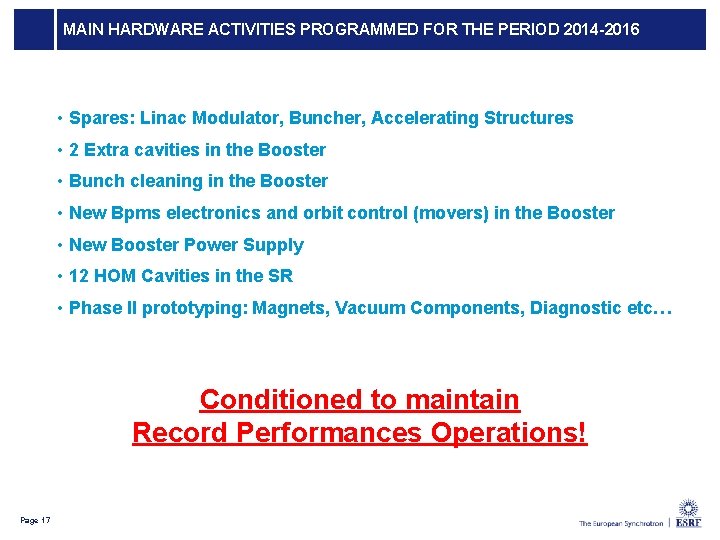
MAIN HARDWARE ACTIVITIES PROGRAMMED FOR THE PERIOD 2014 -2016 • Spares: Linac Modulator, Buncher, Accelerating Structures • 2 Extra cavities in the Booster • Bunch cleaning in the Booster • New Bpms electronics and orbit control (movers) in the Booster • New Booster Power Supply • 12 HOM Cavities in the SR • Phase II prototyping: Magnets, Vacuum Components, Diagnostic etc… Conditioned to maintain Record Performances Operations! Page 17
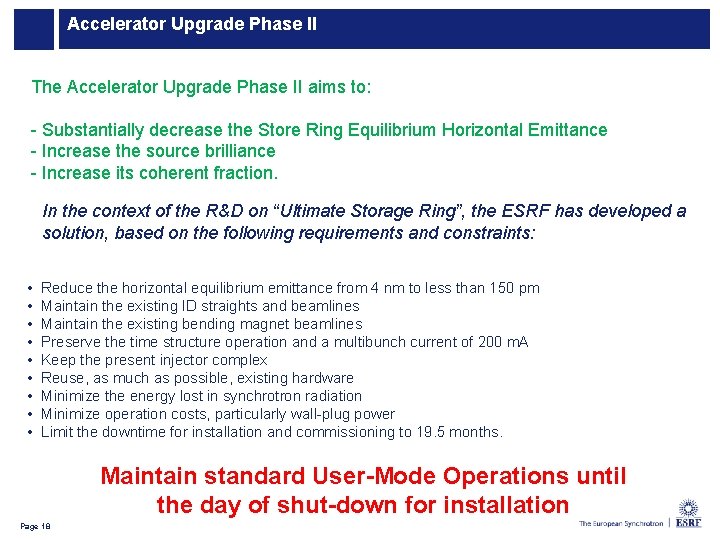
Accelerator Upgrade Phase II The Accelerator Upgrade Phase II aims to: - Substantially decrease the Store Ring Equilibrium Horizontal Emittance - Increase the source brilliance - Increase its coherent fraction. In the context of the R&D on “Ultimate Storage Ring”, the ESRF has developed a solution, based on the following requirements and constraints: • • • Reduce the horizontal equilibrium emittance from 4 nm to less than 150 pm Maintain the existing ID straights and beamlines Maintain the existing bending magnet beamlines Preserve the time structure operation and a multibunch current of 200 m. A Keep the present injector complex Reuse, as much as possible, existing hardware Minimize the energy lost in synchrotron radiation Minimize operation costs, particularly wall-plug power Limit the downtime for installation and commissioning to 19. 5 months. Maintain standard User-Mode Operations until the day of shut-down for installation 18 Page 18
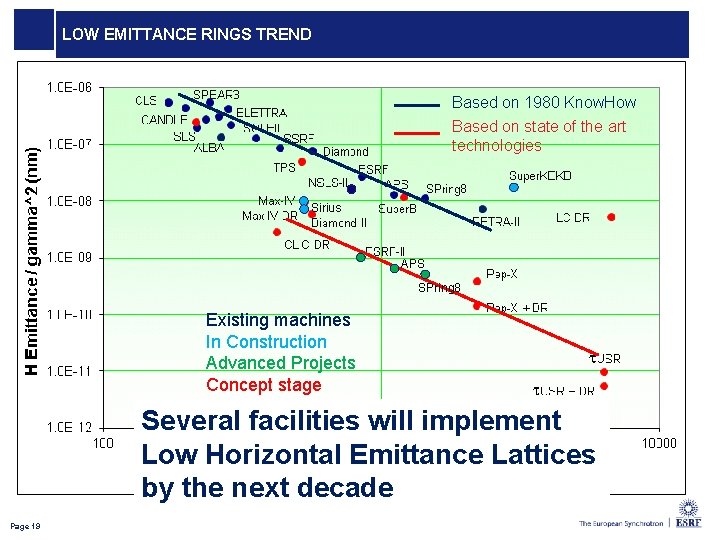
LOW EMITTANCE RINGS TREND Based on 1980 Know. How Based on state of the art technologies Sirius APS SPring 8 Existing machines In Construction Advanced Projects Concept stage Several facilities will implement Low Horizontal Emittance Lattices by the next decade 19 Page 19
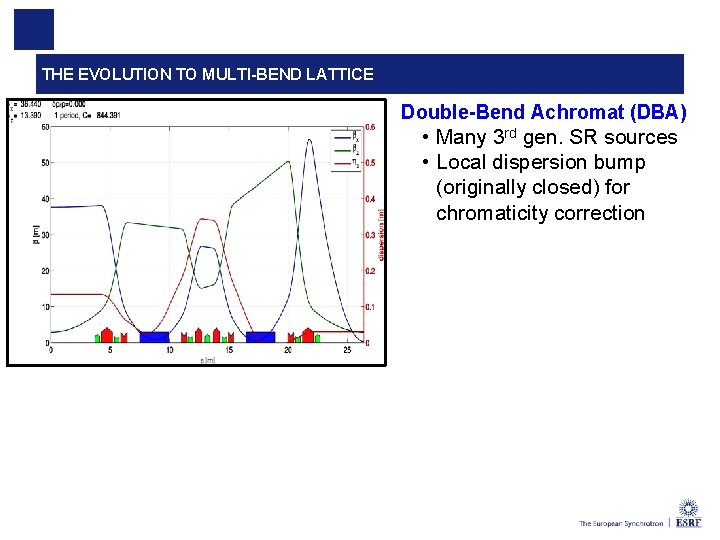
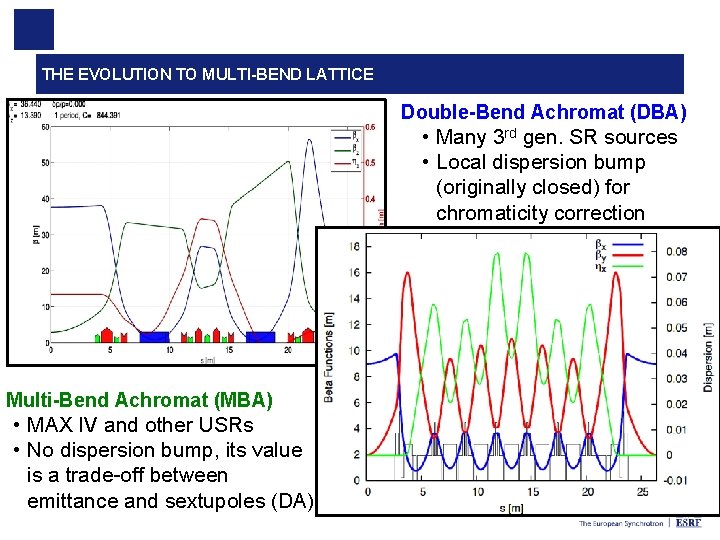
THE EVOLUTION TO MULTI-BEND LATTICE Double-Bend Achromat (DBA) • Many 3 rd gen. SR sources • Local dispersion bump (originally closed) for chromaticity correction 20 Andrea Franchi Optimization of dynamic aperture for the ESRF upgrade
THE EVOLUTION TO MULTI-BEND LATTICE Double-Bend Achromat (DBA) • Many 3 rd gen. SR sources • Local dispersion bump (originally closed) for chromaticity correction Multi-Bend Achromat (MBA) • MAX IV and other USRs • No dispersion bump, its value is a trade-off between emittance and sextupoles (DA) 21 Andrea Franchi Optimization of dynamic aperture for the ESRF upgrade
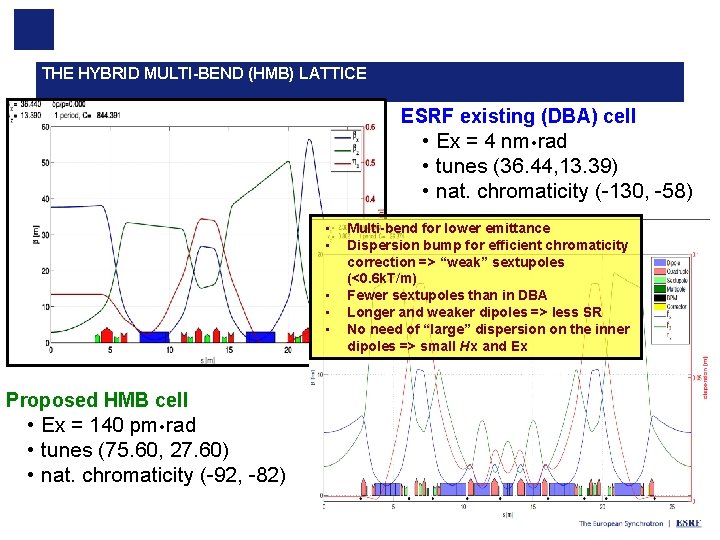
THE HYBRID MULTI-BEND (HMB) LATTICE ESRF existing (DBA) cell • Ex = 4 nm rad • tunes (36. 44, 13. 39) • nat. chromaticity (-130, -58) • • • Multi-bend for lower emittance Dispersion bump for efficient chromaticity correction => “weak” sextupoles (<0. 6 k. T/m) Fewer sextupoles than in DBA Longer and weaker dipoles => less SR No need of “large” dispersion on the inner dipoles => small Hx and Ex Proposed HMB cell • Ex = 140 pm rad • tunes (75. 60, 27. 60) • nat. chromaticity (-92, -82) 22 Andrea Franchi Optimization of dynamic aperture for the ESRF upgrade
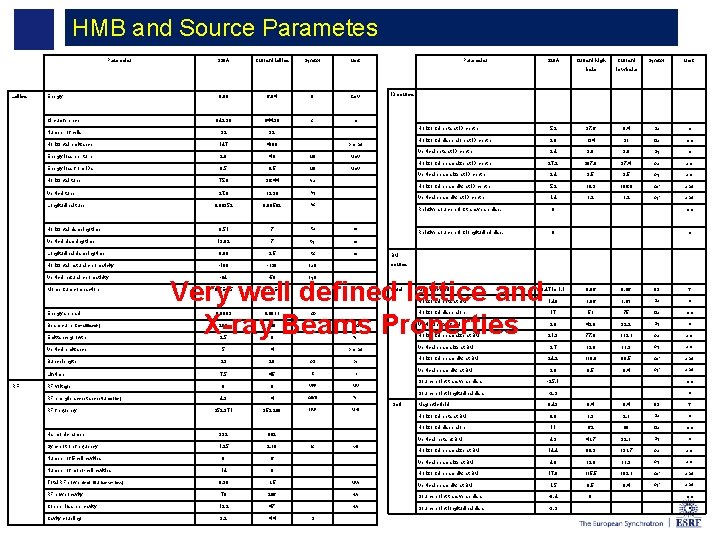
HMB and Source Parametes Parameter S 28 A Current lattice Symbol Unit 6. 00 6. 04 E Ge. V Circumference 843. 98 844. 39 C m Number of cells 32 32 Lattice Energy Horizontal emittance 147 4000 Energy loss per turn 2. 6 4. 9 pm·rad U 0 Energy loss from IDs 0. 5 U 0 Horizontal tune 75. 6 36. 44 νx Vertical tune Longitudinal tune Longitudinal damping time 8. 86 Horizontal natural chromaticity -100 Vertical natural chromaticity -84 -58 ξy 0 Momentum compaction 8. 7 E-05 17. 8 E-5 Me. V 27. 6 13. 39 νy 0. 00352 0. 00592 νs Horizontal damping time 8. 51 7 τx ms Vertical damping time 13. 02 7 τy ms 3. 5 τs ms -130 ξx 0 Parameter 0. 0011 σδ 200 I 2. 5 0 5. 2 37. 6 0. 4 βx m Horizontal dispersion at ID centre 2. 0 134 31 Dx mm Vertical beta at ID centre 2. 4 3. 0 βy m Horizontal beam size at ID centre 27. 2 387. 8 37. 4 σx μm Vertical beam size at ID centre 3. 4 3. 5 σy μm Horizontal beam div. at ID centre 5. 2 10. 3 106. 9 σx’ μrad Vertical beam div. at ID centre 1. 4 1. 2 σy’ μrad Relative source point transverse disp. 0 mm Relative source point longitudinal disp. 0 m BM Magnetic field 75 Dx 32. 2 βy m % Horizontal beam size at BM 21. 3 77. 9 112. 1 σx μm pm·rad Vertical beam size at BM 3. 7 12. 9 11. 3 σy μm Horizontal beam div. at BM 24. 2 110. 9 98. 5 σx’ μrad Vertical beam div. at BM 3. 0 0. 5 0. 4 σy’ μrad Source point transverse disp. -25. 1 Source point longitudinal disp. -2. 9 Soft Magnetic field 0. 43 0. 4 Bz T Horizontal beta at BM 0. 6 1. 3 2. 1 βx m Horizontal dispersion 11 62 89 Dx mm Vertical beta at BM 4. 3 41. 7 32. 1 βy m Horizontal beam size at BM 14. 4 98. 3 131. 7 σx μm Vertical beam size at BM 4. 6 12. 8 11. 3 σy μm Horizontal beam div. at BM 17. 8 115. 5 103. 1 σx’ μrad 0. 4 σy’ μrad 5 4 23 20 σz ps Lifetime 7. 5 45 t h RF frequency 352. 371 352. 200 f. RF mm 51 42. 0 Bunch length ∆E/E m 17 Vertical emittance 4 T βx 2. 8 4. 9 Bz 1. 61 Vertical beta at BM RF energie acceptance (5% for tlife) 0. 86 1. 06 Horizontal dispersion Emittance growth 0. 86 1. 40 VRF 0. 47 to 1. 1 Beam current (multibunch) 9 MV % MHz mm m Harmonic number 992 Synchrotron frequency 1. 25 2. 10 Number of 5 -cell cavities 0 6 Number of mono-cell cavities 14 0 Total RF power (incl. 10% transm. loss) 0. 98 1. 5 MW Vertical beam div. at BM 1. 5 0. 5 RF power/cavity 70 266 k. W Source point transverse disp. -6. 4 0 Copper loss per cavity 19. 2 47 k. W Source point longitudinal disp. -3. 3 Cavity coupling 3. 2 4. 4 23 fs Unit m. A Energy spread 6 Symbol source RF voltage low beta Horizontal beta at ID centre Hard 200 Current beta Very well defined lattice and X-ray Beams Properties 0. 0009 Current high ID source Horizontal beta at BM RF S 28 A k. Hz β Andrea Franchi Optimization of dynamic aperture for the ESRF upgrade mm m
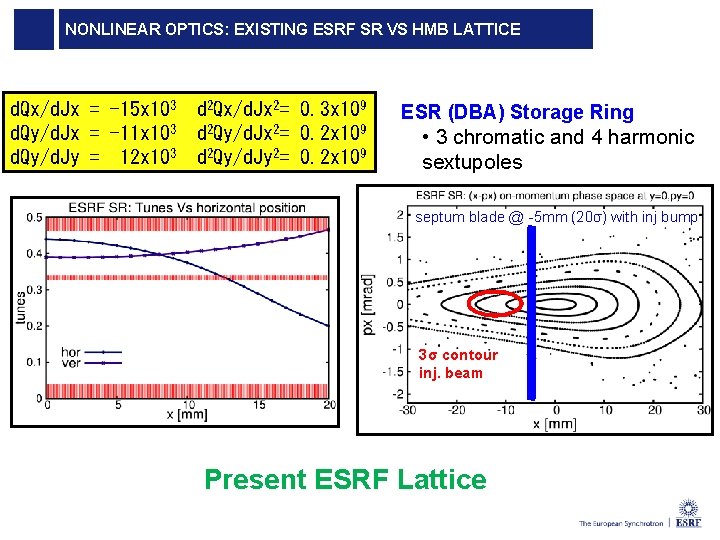
NONLINEAR OPTICS: EXISTING ESRF SR VS HMB LATTICE d. Qx/d. Jx = -15 x 103 d. Qy/d. Jx = -11 x 103 d. Qy/d. Jy = 12 x 103 d 2 Qx/d. Jx 2= 0. 3 x 10⁹ d 2 Qy/d. Jx 2= 0. 2 x 10⁹ d 2 Qy/d. Jy 2= 0. 2 x 10⁹ ESR (DBA) Storage Ring • 3 chromatic and 4 harmonic sextupoles septum blade @ -5 mm (20σ) with inj bump 3σ contour inj. beam Present ESRF Lattice 24 Andrea Franchi Optimization of dynamic aperture for the ESRF upgrade
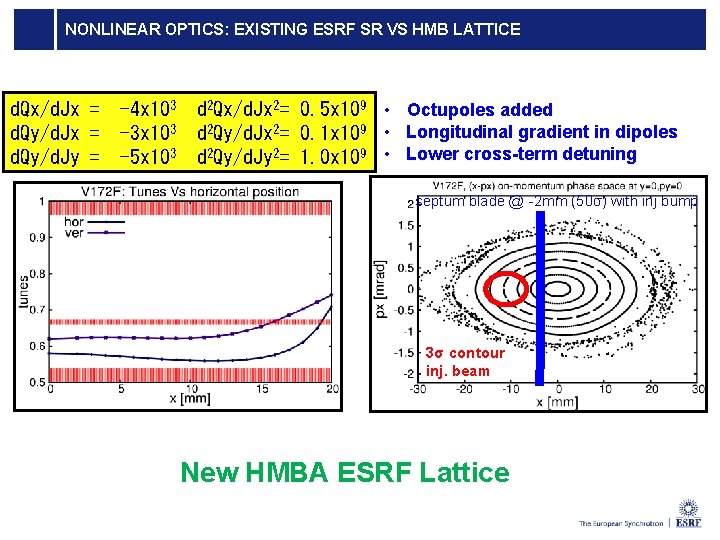
NONLINEAR OPTICS: EXISTING ESRF SR VS HMB LATTICE d. Qx/d. Jx = d. Qy/d. Jy = -4 x 10³ -3 x 10³ -5 x 10³ d 2 Qx/d. Jx 2= 0. 5 x 10⁹ • Octupoles added d 2 Qy/d. Jx 2= 0. 1 x 10⁹ • Longitudinal gradient in dipoles d 2 Qy/d. Jy 2= 1. 0 x 109 • Lower cross-term detuning septum blade @ -2 mm (50σ) with inj bump 3σ contour inj. beam New HMBA ESRF Lattice 25 Andrea Franchi Optimization of dynamic aperture for the ESRF upgrade
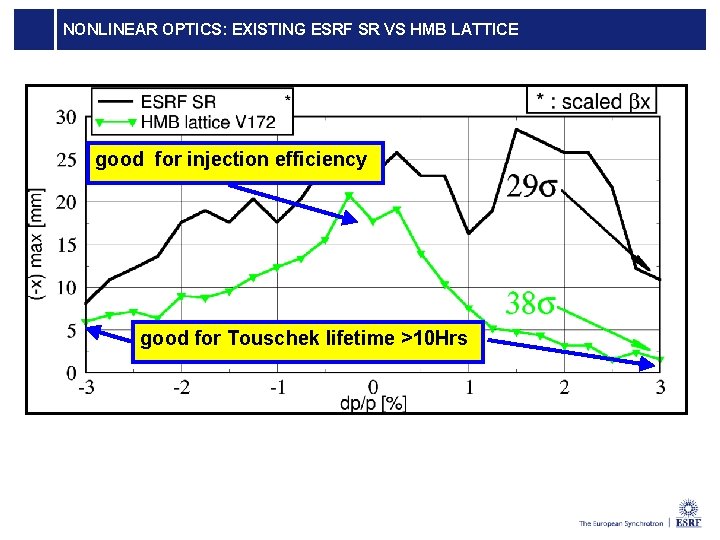
NONLINEAR OPTICS: EXISTING ESRF SR VS HMB LATTICE good for injection efficiency Δφx< π good for Touschek lifetime >10 Hrs 26 Andrea Franchi Optimization of dynamic aperture for the ESRF upgrade
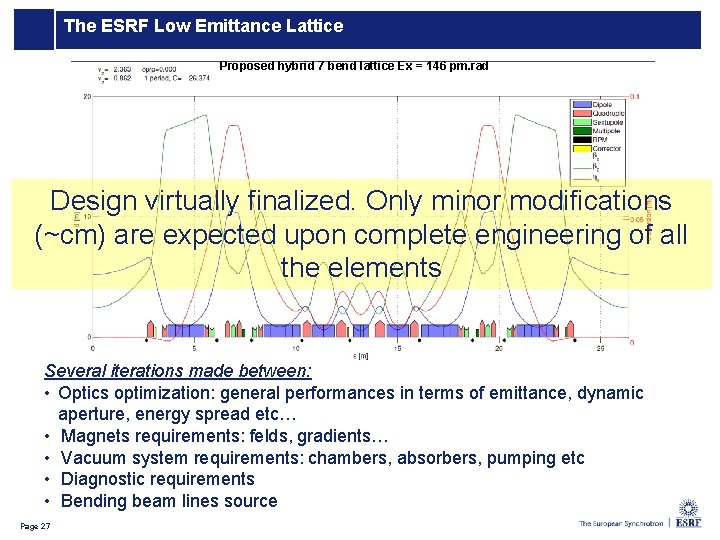
The ESRF Low Emittance Lattice Proposed hybrid 7 bend lattice Ex = 146 pm. rad Design virtually finalized. Only minor modifications (~cm) are expected upon complete engineering of all the elements Several iterations made between: • Optics optimization: general performances in terms of emittance, dynamic aperture, energy spread etc… • Magnets requirements: felds, gradients… • Vacuum system requirements: chambers, absorbers, pumping etc • Diagnostic requirements • Bending beam lines source 27 Page 27
Improved Coherence BRILLIANCE AND COHERENCE INCREASE Brilliance Hor. Emittance [nm] 4 0. 15 Vert. Emittance [pm] 3 2 Energy spread [%] 0. 1 0. 09 bx[m]/bz [m] 37/3 4. 3/2. 6 Coherence 28 Page 28
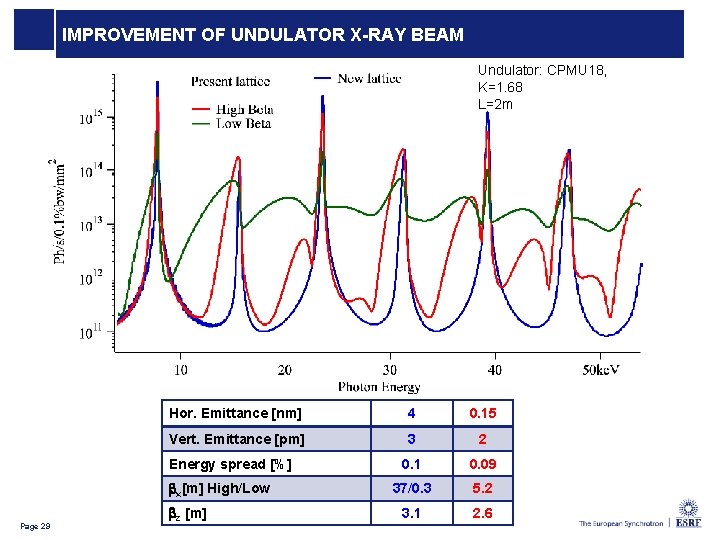
IMPROVEMENT OF UNDULATOR X-RAY BEAM Undulator: CPMU 18, K=1. 68 L=2 m Hor. Emittance [nm] 4 0. 15 Vert. Emittance [pm] 3 2 0. 1 0. 09 37/0. 3 5. 2 3. 1 2. 6 Energy spread [%] bx[m] High/Low 29 Page 29 bz [m]
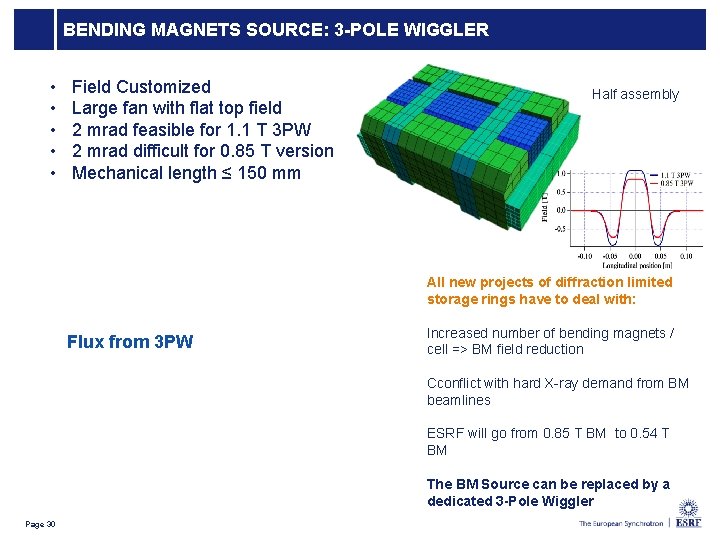
BENDING MAGNETS SOURCE: 3 -POLE WIGGLER • • • Field Customized Large fan with flat top field 2 mrad feasible for 1. 1 T 3 PW 2 mrad difficult for 0. 85 T version Mechanical length ≤ 150 mm Half assembly All new projects of diffraction limited storage rings have to deal with: Flux from 3 PW Increased number of bending magnets / cell => BM field reduction Cconflict with hard X-ray demand from BM beamlines ESRF will go from 0. 85 T BM to 0. 54 T BM The BM Source can be replaced by a dedicated 3 -Pole Wiggler Page 30
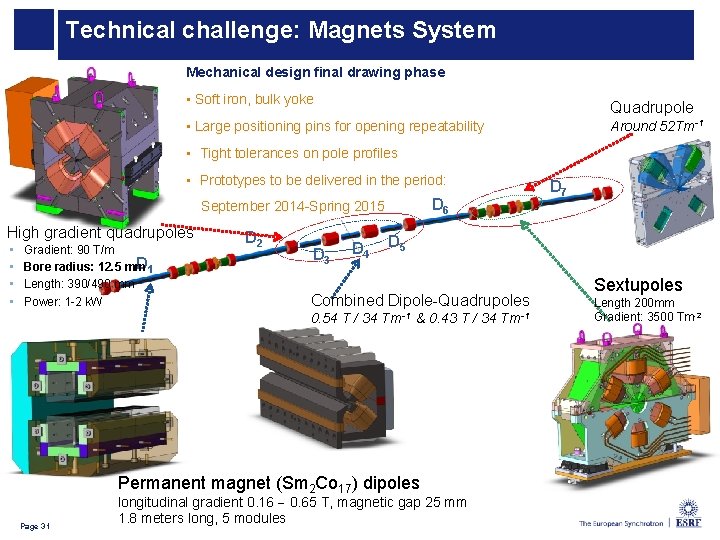
Technical challenge: Magnets System Mechanical design final drawing phase • Soft iron, bulk yoke Quadrupole • Large positioning pins for opening repeatability Around 52 Tm-1 • Tight tolerances on pole profiles • Prototypes to be delivered in the period: D 6 September 2014 -Spring 2015 High gradient quadrupoles • • Gradient: 90 T/m D 1 Bore radius: 12. 5 mm Length: 390/490 mm Power: 1 -2 k. W D 2 D 3 D 4 D 5 Combined Dipole-Quadrupoles 0. 54 T / 34 Tm-1 & 0. 43 T / 34 Permanent magnet (Sm 2 Co 17) dipoles 31 Page 31 D 7 longitudinal gradient 0. 16 0. 65 T, magnetic gap 25 mm 1. 8 meters long, 5 modules Tm-1 Sextupoles Length 200 mm Gradient: 3500 Tm-2
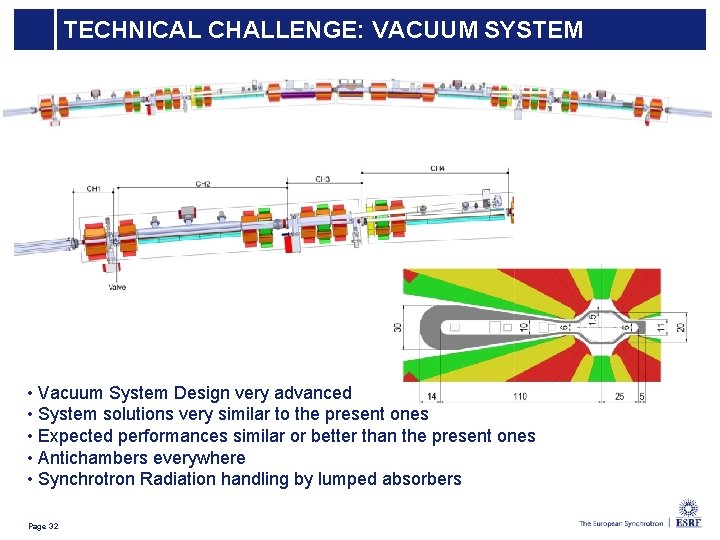
TECHNICAL CHALLENGE: VACUUM SYSTEM • Vacuum System Design very advanced • System solutions very similar to the present ones • Expected performances similar or better than the present ones • Antichambers everywhere • Synchrotron Radiation handling by lumped absorbers 32 Page 32
PREPARING THE UPGRADE PHASE II Technical Design Study (TDS) Completed and submitted to: Science Advisory Committee (SAC) Accelerator Project Committee (APAC) Cost Review Panel (CRP) ESRF Council All committees very positive to go ahead Page 33
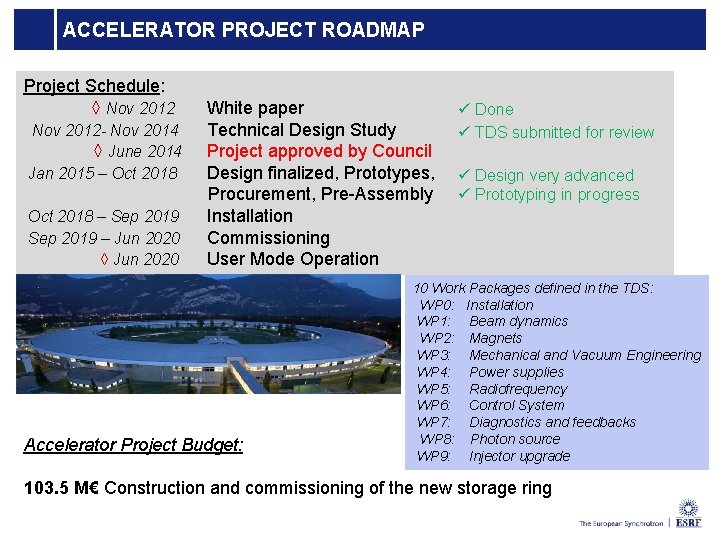
ACCELERATOR PROJECT ROADMAP Project Schedule: ◊ Nov 2012 - Nov 2014 ◊ June 2014 Jan 2015 – Oct 2018 – Sep 2019 – Jun 2020 ◊ Jun 2020 White paper Technical Design Study Project approved by Council Design finalized, Prototypes, Procurement, Pre-Assembly Installation Commissioning User Mode Operation Accelerator Project Budget: ü Done ü TDS submitted for review ü Design very advanced ü Prototyping in progress 10 Work Packages defined in the TDS: WP 0: Installation WP 1: Beam dynamics WP 2: Magnets WP 3: Mechanical and Vacuum Engineering WP 4: Power supplies WP 5: Radiofrequency WP 6: Control System WP 7: Diagnostics and feedbacks WP 8: Photon source WP 9: Injector upgrade 103. 5 M€ Construction and commissioning of the new storage ring 34
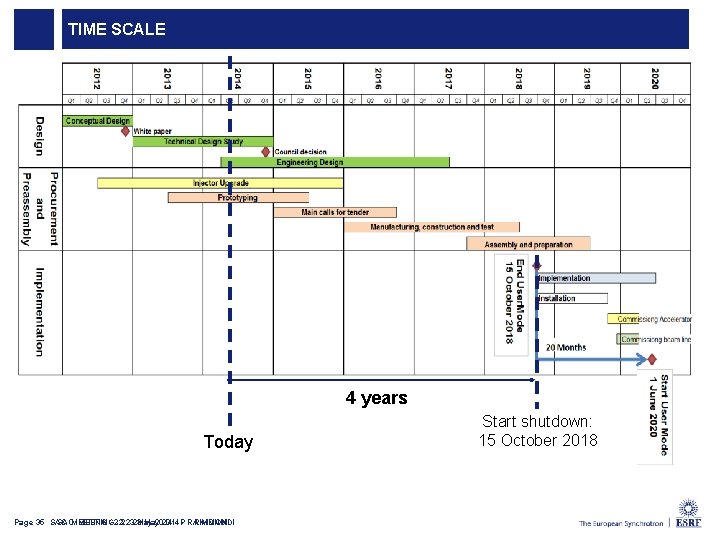
TIME SCALE 4 years Today Page 35 SAC MEETING - 22 -23 May 2014 - P RAIMONDI Start shutdown: 15 October 2018
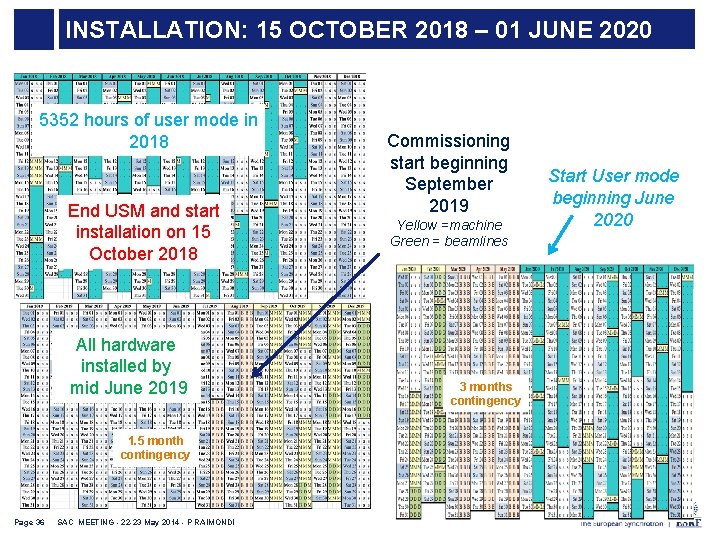
INSTALLATION: 15 OCTOBER 2018 – 01 JUNE 2020 5352 hours of user mode in 2018 End USM and start installation on 15 October 2018 All hardware installed by mid June 2019 1. 5 month contingency Page 36 SAC MEETING - 22 -23 May 2014 - P RAIMONDI Commissioning start beginning September 2019 Yellow =machine Green = beamlines 3 months contingency Start User mode beginning June 2020
Accelerator and Source Division Challenges Through the years ASD has delivered very high quality beam that have greatly contributed to maintain ESRF as the leader of the SR facilities. Phase I has been the opportunity to further push the Source performances, The ASD has successfully accomplished its projects while maintaining the beam delivery with the very high standards of ever. Phase II Accelerator Upgrade will further expand the ESRF frontiers and will insure the continuation of its leadership in Science and in Synchrotron Accelerators for the next decade(s). 37 Page 37
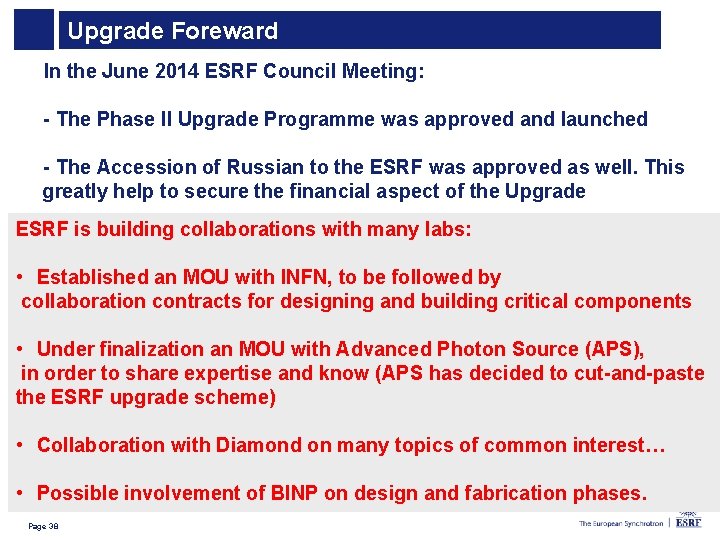
Upgrade Foreward In the June 2014 ESRF Council Meeting: - The Phase II Upgrade Programme was approved and launched - The Accession of Russian to the ESRF was approved as well. This greatly help to secure the financial aspect of the Upgrade ESRF is building collaborations with many labs: • Established an MOU with INFN, to be followed by collaboration contracts for designing and building critical components • Under finalization an MOU with Advanced Photon Source (APS), in order to share expertise and know (APS has decided to cut-and-paste the ESRF upgrade scheme) • Collaboration with Diamond on many topics of common interest… • Possible involvement of BINP on design and fabrication phases. 38 Page 38
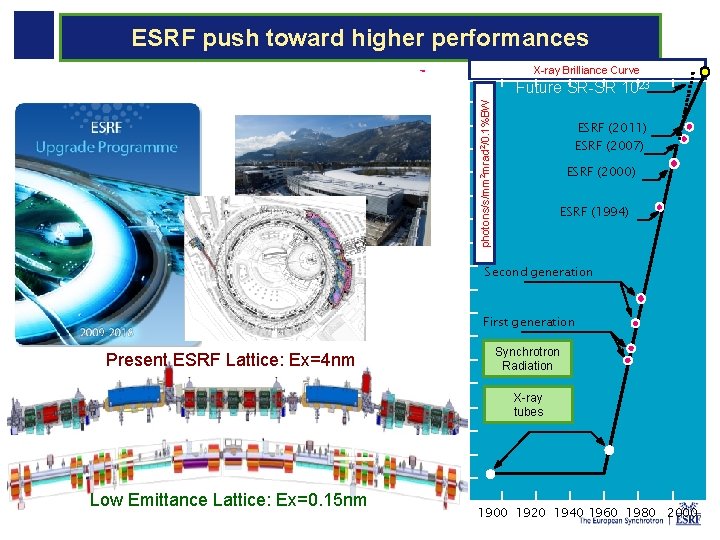
UP PI: Preparing the UP Phase II ESRF push toward higher performances photons/s/mm 2 mrad 2/0. 1%BW X-ray Brilliance Curve Future SR-SR 1023 ESRF (2011) ESRF (2007) ESRF (2000) ESRF (1994) Second generation First generation Present ESRF Lattice: Ex=4 nm Synchrotron Radiation X-ray tubes Low Emittance Lattice: Ex=0. 15 nm 1900 1920 1940 1960 1980 2000
MANY THANKS FOR YOUR ATTENTION Page 40