
ESPON Seminar Krakow Poland 29 30112011 METROBORDER Crossborder
ESPON Seminar Krakow, Poland 29 -30/11/2011 METROBORDER Cross-border polycentric metropolitan regions Tobias Chilla, University of Luxembourg
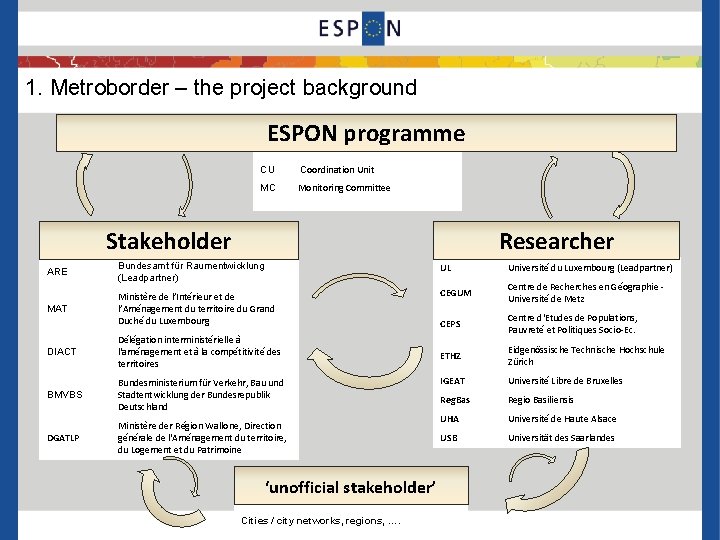
1. Metroborder – the project background ESPON programme CU Coordination Unit MC Monitoring Committee Stakeholder Researcher ARE Bundesamt für Raumentwicklung (Leadpartner) UL Université du Luxembourg (Leadpartner) CEGUM MAT Ministère de l’Intérieur et de l’Aménagement du territoire du Grand Duché du Luxembourg Centre de Recherches en Géographie Université de Metz CEPS Centre d'Etudes de Populations, Pauvreté et Politiques Socio-Ec. ETHZ Eidgenössische Technische Hochschule Zürich IGEAT Université Libre de Bruxelles Reg. Bas Regio Basiliensis UHA Université de Haute Alsace USB Universität des Saarlandes DIACT Délégation interministérielle à l'aménagement et à la compétitivité des territoires BMVBS Bundesministerium für Verkehr, Bau und Stadtentwicklung der Bundesrepublik Deutschland DGATLP Ministère der Région Wallone, Direction générale de l'Aménagement du territoire, du Logement et du Patrimoine ‘unofficial stakeholder’ Cities / city networks, regions, ….
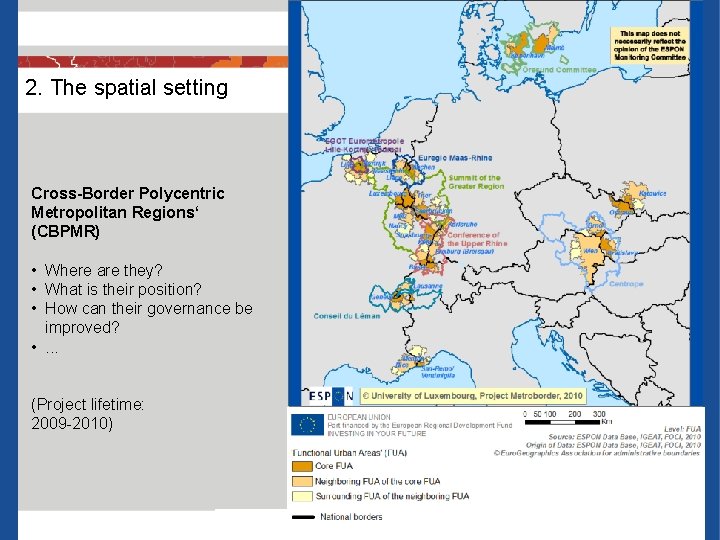
2. The spatial setting Cross-Border Polycentric Metropolitan Regions‘ (CBPMR) • Where are they? • What is their position? • How can their governance be improved? • . . . (Project lifetime: 2009 -2010)
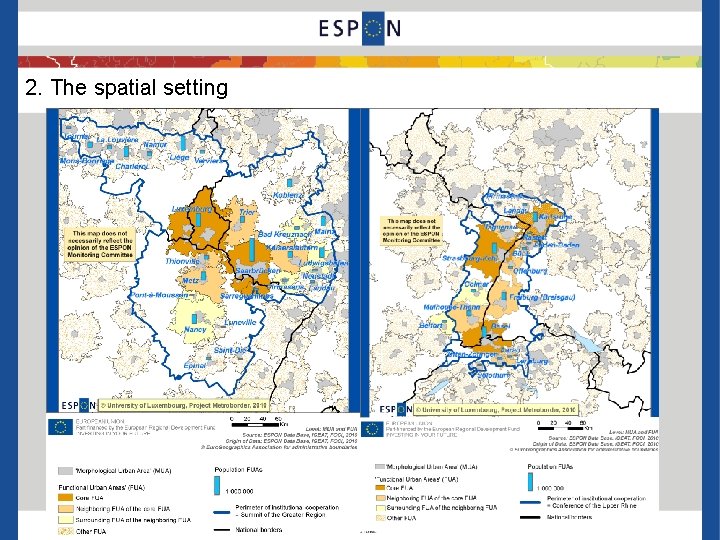
2. The spatial setting
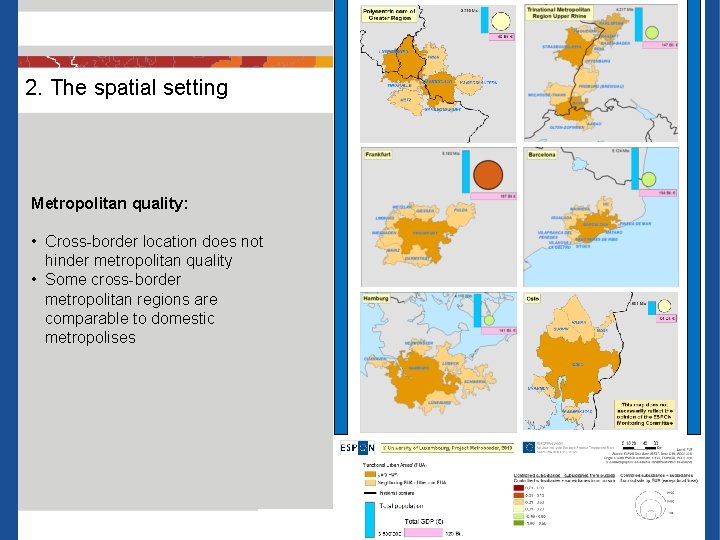
2. The spatial setting Metropolitan quality: • Cross-border location does not hinder metropolitan quality • Some cross-border metropolitan regions are comparable to domestic metropolises
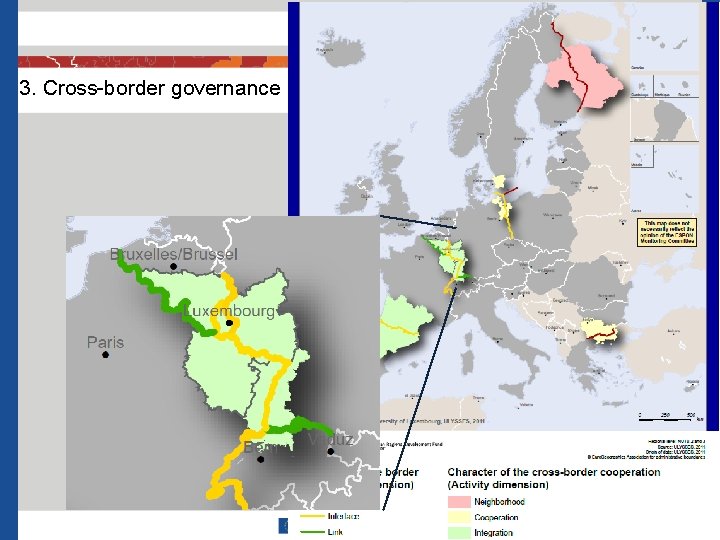
3. Cross-border governance
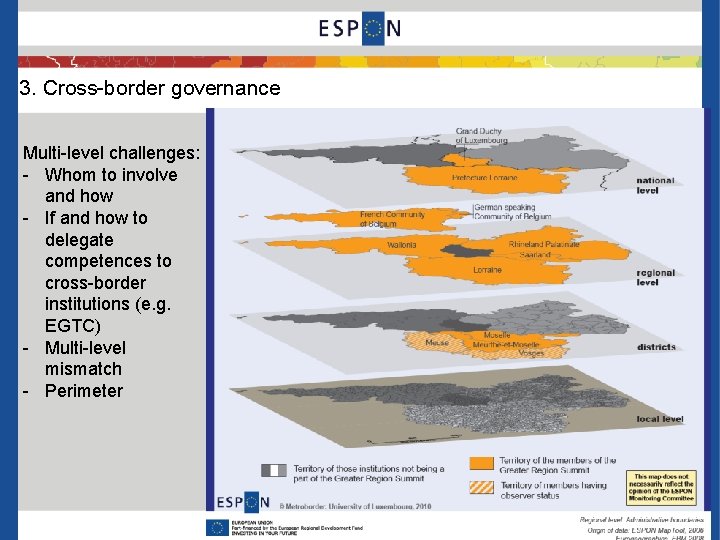
3. Cross-border governance Multi-level challenges: - Whom to involve and how - If and how to delegate competences to cross-border institutions (e. g. EGTC) - Multi-level mismatch - Perimeter
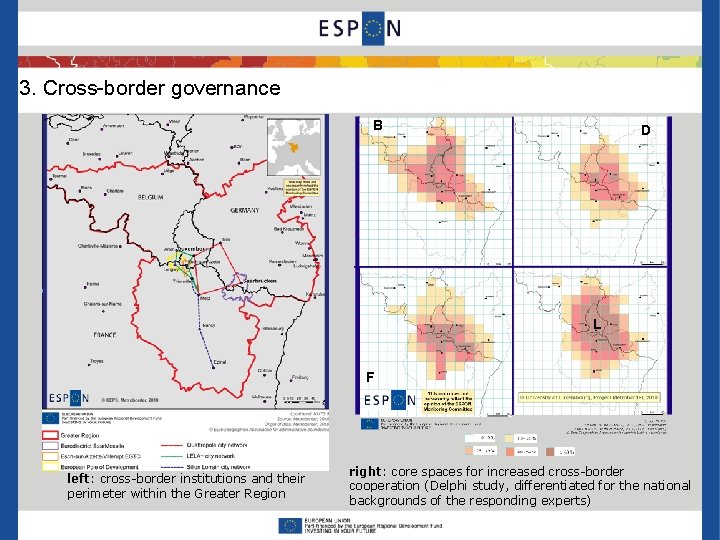
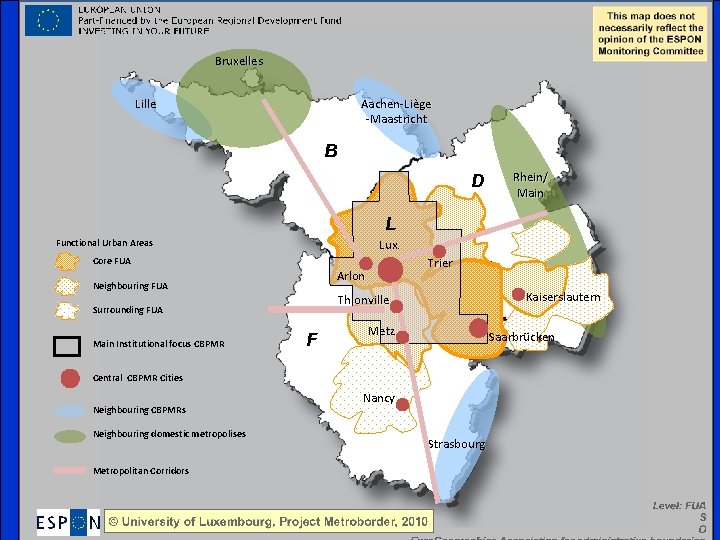
3. Cross-border governance B D B F L F left: cross-border institutions and their perimeter within the Greater Region right: core spaces for increased cross-border cooperation (Delphi study, differentiated for the national backgrounds of the responding experts)
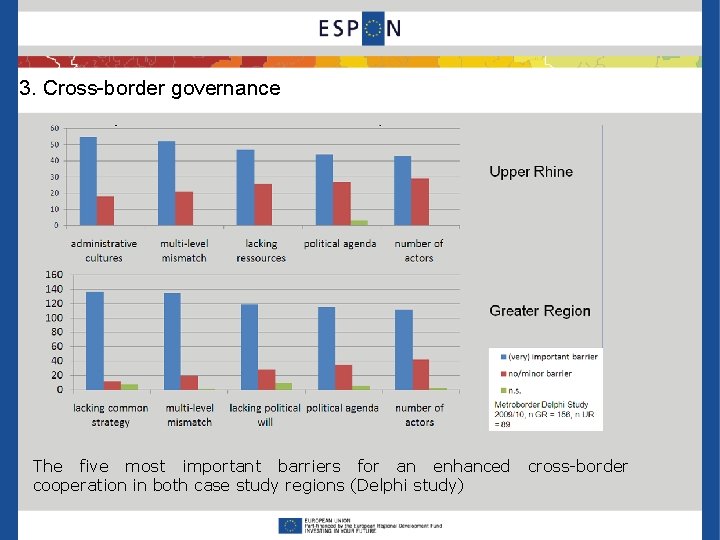
3. Cross-border governance The five most important barriers for an enhanced cooperation in both case study regions (Delphi study) cross-border
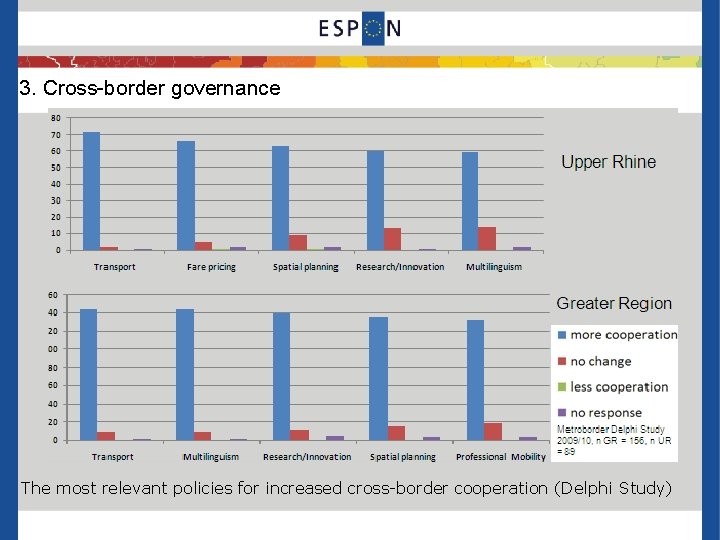
3. Cross-border governance The most relevant policies for increased cross-border cooperation (Delphi Study)
Bruxelles 4. Political conclusions? Aachen-Liège Lille -Maastricht B D Rhein/ Main L Lux. Functional Urban Areas Trier Core FUA Arlon Neighbouring FUA Main Institutional focus CBPMR Kaiserslautern Thionville Surrounding FUA F Metz Saarbrücken Central CBPMR Cities Neighbouring CBPMRs Neighbouring domestic metropolises Metropolitan Corridors Nancy Strasbourg
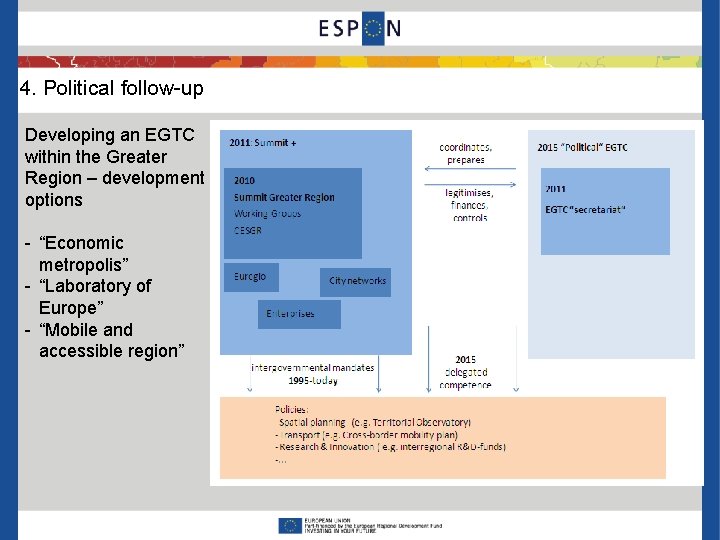
4. Political follow-up Developing an EGTC within the Greater Region – development options - “Economic metropolis” - “Laboratory of Europe” - “Mobile and accessible region”
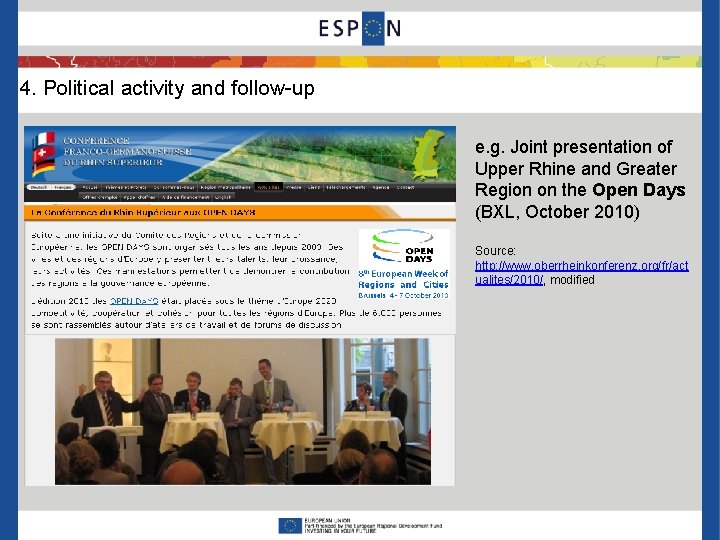
4. Political activity and follow-up e. g. Joint presentation of Upper Rhine and Greater Region on the Open Days (BXL, October 2010) Source: http: //www. oberrheinkonferenz. org/fr/act ualites/2010/, modified
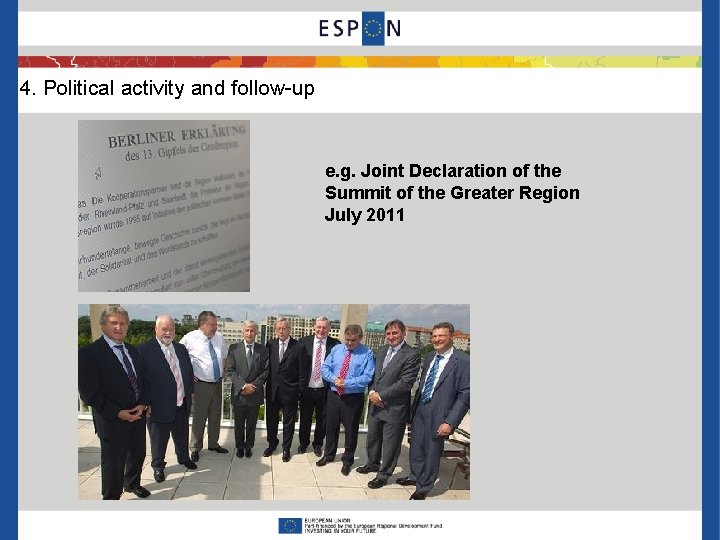
4. Political activity and follow-up e. g. Joint Declaration of the Summit of the Greater Region July 2011
ESPON Seminar Krakow, Poland 29 -30/11/2011 METROBORDER Cross-border polycentric metropolitan regions Tobias Chilla, University of Luxembourg
- Slides: 15