
ESPAOL I HOY ES MIRCOLES EL 23 DE
- Slides: 56
ESPAÑOL I HOY ES MIÉRCOLES, EL 23 DE ABRIL HOY ES JUEVES, EL 24 DE ABRIL Hola clase! When you leave, please push your chair under the desk and tidy up. Be sure to return my Adiós clase with Adiós Señora Español I O
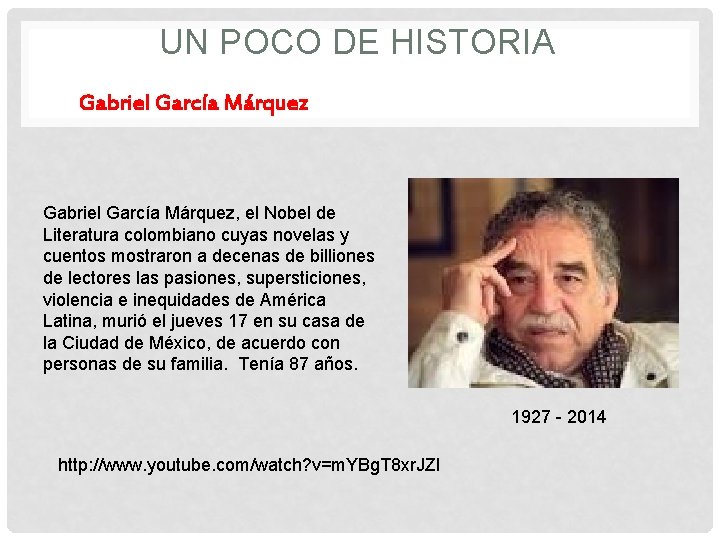
UN POCO DE HISTORIA Gabriel García Márquez, el Nobel de Literatura colombiano cuyas novelas y cuentos mostraron a decenas de billiones de lectores las pasiones, supersticiones, violencia e inequidades de América Latina, murió el jueves 17 en su casa de la Ciudad de México, de acuerdo con personas de su familia. Tenía 87 años. 1927 - 2014 http: //www. youtube. com/watch? v=m. YBg. T 8 xr. JZI
HAZLO AHORA Habla con un compañero o una compañera de clase y contesta las preguntas. 1. 2. 3. 4. 5. ¿Qué tiempo hace? ¿En qué estación del año estamos? ¿Cuántas estaciones hay en un año? ¿Cuántos días hay en una semana? ¿Cuáles son? ¿Cuántos meses hay en un año? ¿Cuáles son?
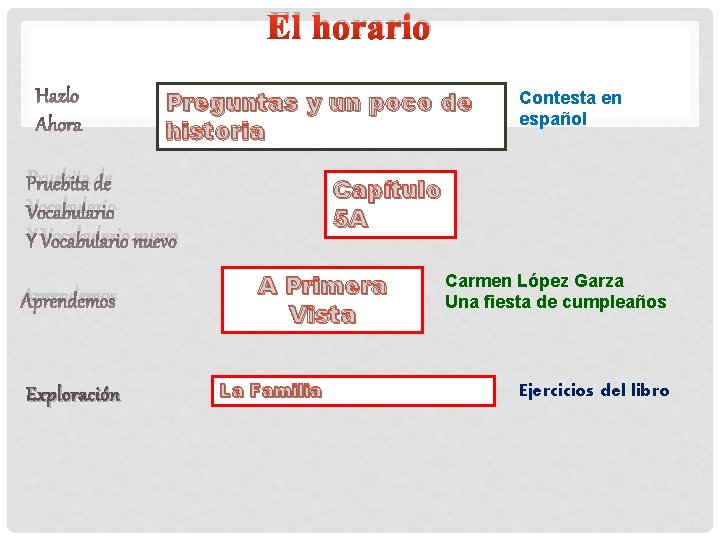
El horario Preguntas y un poco de historia Pruebita de Vocabulario Y Vocabulario nuevo Aprendemos Exploración Contesta en español Capítulo 5 A A Primera Vista La Familia Carmen López Garza Una fiesta de cumpleaños Ejercicios del libro
Cada día: • Habla español 5 minutos cada día • Aprende el vocabulario nuevo write each word and definition 5 -10 times each, repasa las otras palabras. Tienes que saber como se escribe, que quiere decir la palabra y también, la pronunciación. • Vocabulario Nuevo • Pruebita de las palabras de vocabulario • Quizlet. com: maklineliber Puede ayudarte Do not send to my lcps email Email to: mklspanish@hotmail. com
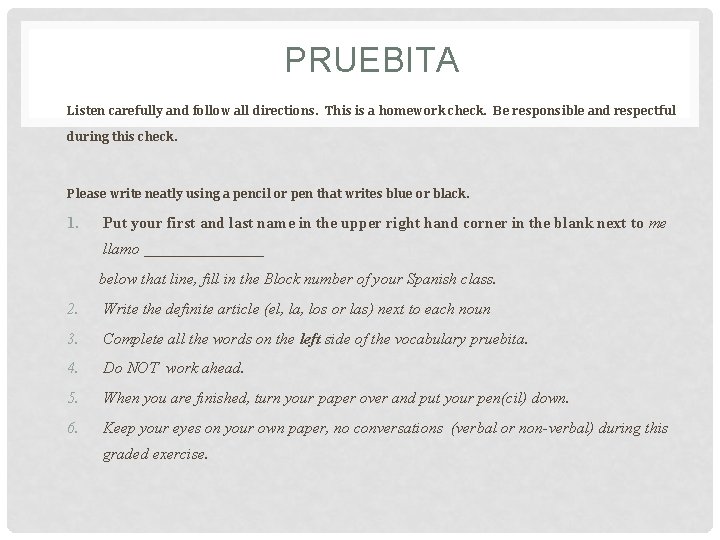
PRUEBITA Listen carefully and follow all directions. This is a homework check. Be responsible and respectful during this check. Please write neatly using a pencil or pen that writes blue or black. 1. Put your first and last name in the upper right hand corner in the blank next to me llamo ________ below that line, fill in the Block number of your Spanish class. 2. Write the definite article (el, la, los or las) next to each noun 3. Complete all the words on the left side of the vocabulary pruebita. 4. Do NOT work ahead. 5. When you are finished, turn your paper over and put your pen(cil) down. 6. Keep your eyes on your own paper, no conversations (verbal or non-verbal) during this graded exercise.
LOS QUE NO HAN TEMINADO COSAS Hora Actividades del libro 3 4 Fecha 4 -23 4 -24
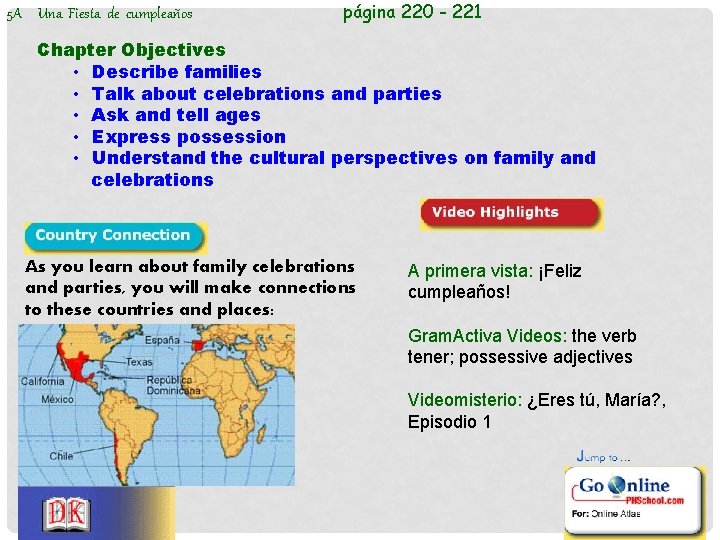
5 A Una Fiesta de cumpleaños página 220 - 221 Chapter Objectives • Describe families • Talk about celebrations and parties • Ask and tell ages • Express possession • Understand the cultural perspectives on family and celebrations As you learn about family celebrations and parties, you will make connections to these countries and places: A primera vista: ¡Feliz cumpleaños! Gram. Activa Videos: the verb tener; possessive adjectives Videomisterio: ¿Eres tú, María? , Episodio 1
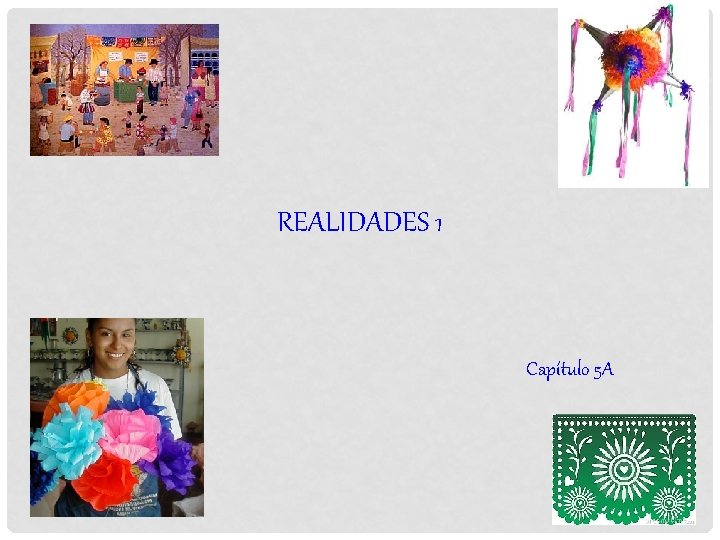
REALIDADES 1 Capítulo 5 A
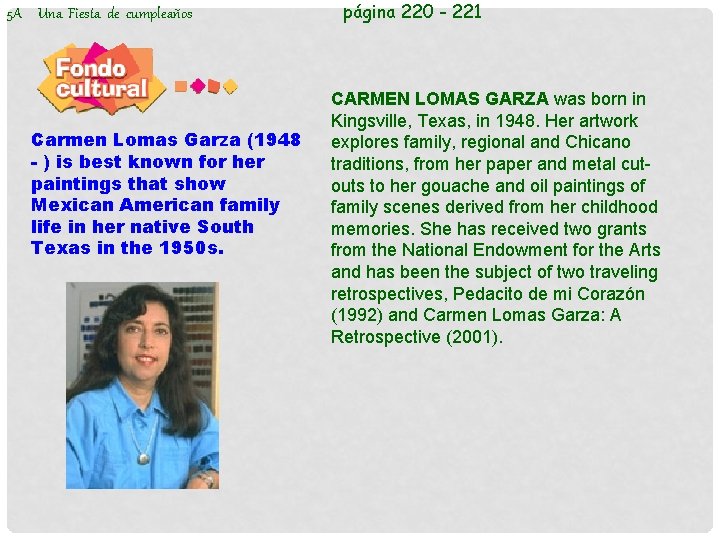
5 A Una Fiesta de cumpleaños Carmen Lomas Garza (1948 - ) is best known for her paintings that show Mexican American family life in her native South Texas in the 1950 s. página 220 - 221 CARMEN LOMAS GARZA was born in Kingsville, Texas, in 1948. Her artwork explores family, regional and Chicano traditions, from her paper and metal cutouts to her gouache and oil paintings of family scenes derived from her childhood memories. She has received two grants from the National Endowment for the Arts and has been the subject of two traveling retrospectives, Pedacito de mi Corazón (1992) and Carmen Lomas Garza: A Retrospective (2001).
VOCABULARIO CAPÍTULO 5 A
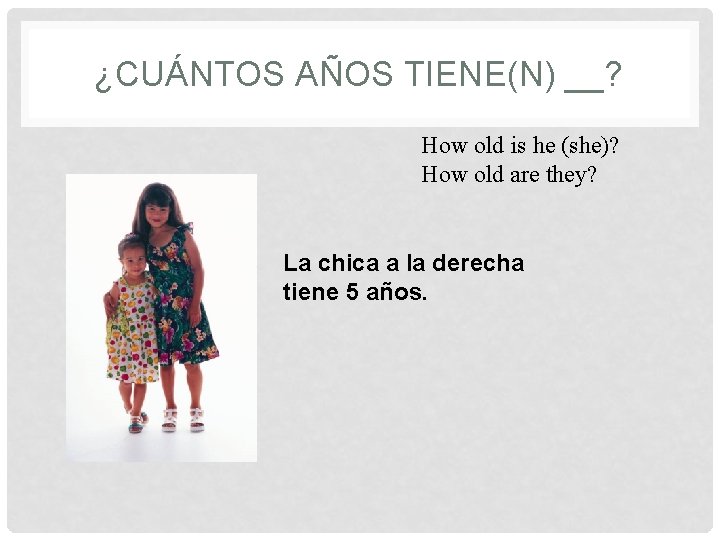
¿CUÁNTOS AÑOS TIENE(N) __? How old is he (she)? How old are they? La chica a la derecha tiene 5 años.
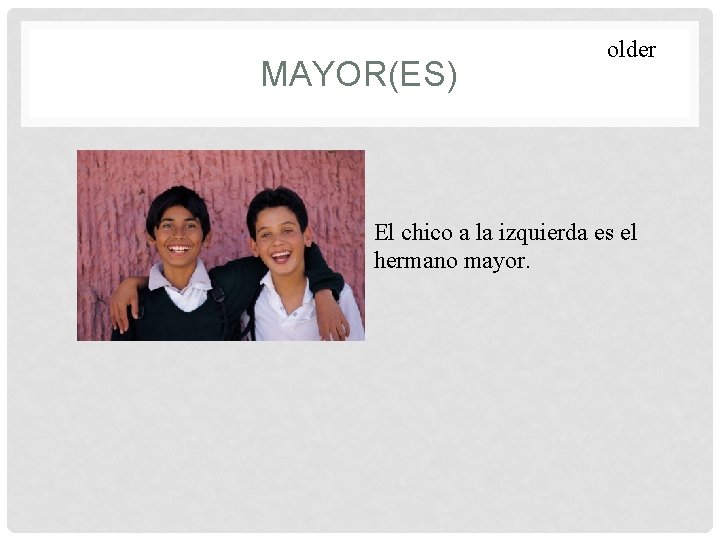
MAYOR(ES) older El chico a la izquierda es el hermano mayor.
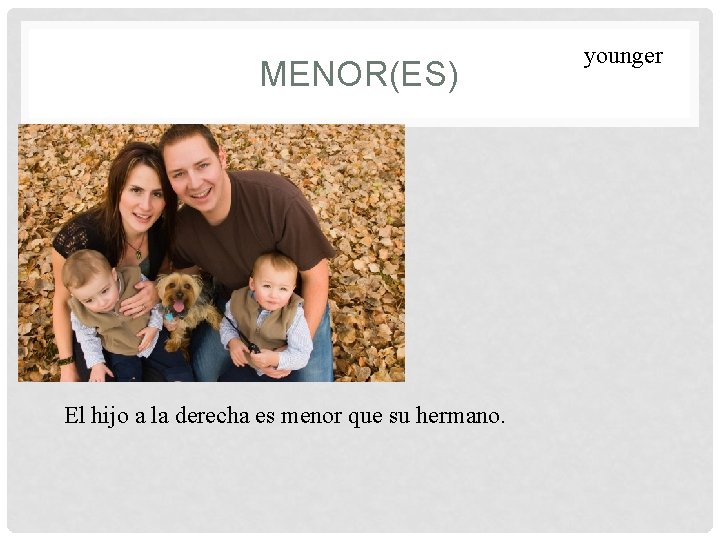
MENOR(ES) El hijo a la derecha es menor que su hermano. younger
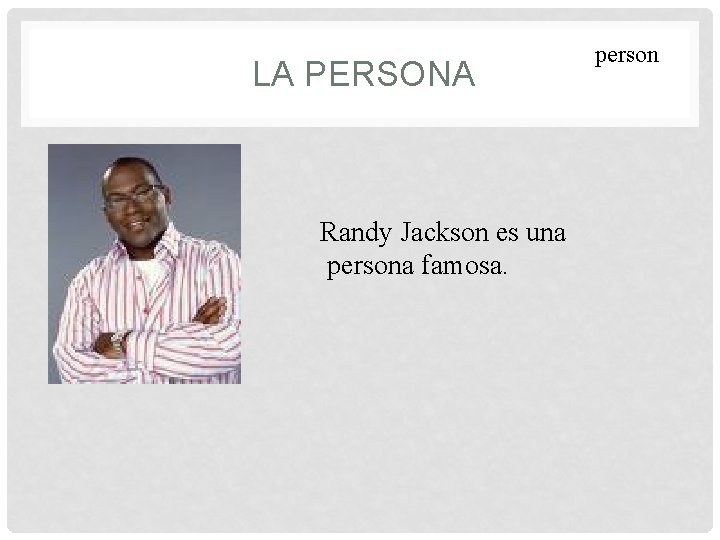
LA PERSONA Randy Jackson es una persona famosa. person
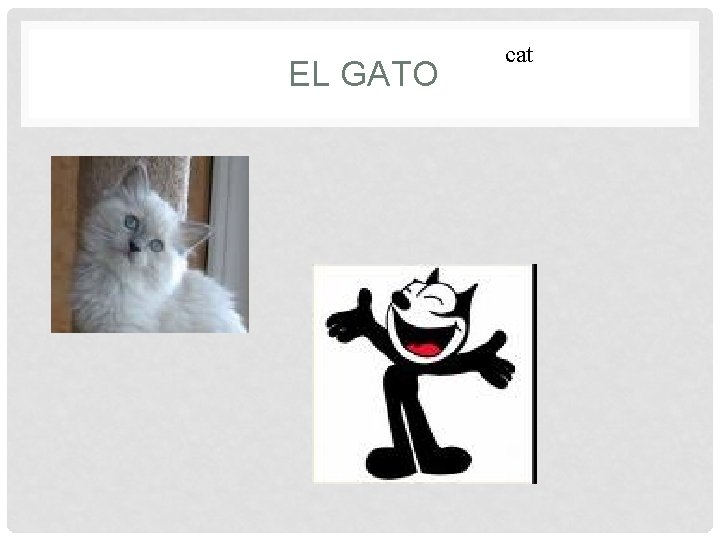
EL GATO cat
EL PERRO dog
ABRIR Los estudiantes abren los libros. to open
CELEBRAR to celebrate
DECORAR (LAS DECORACIONES) to decorate decorations
HACER UN VIDEO to videotape
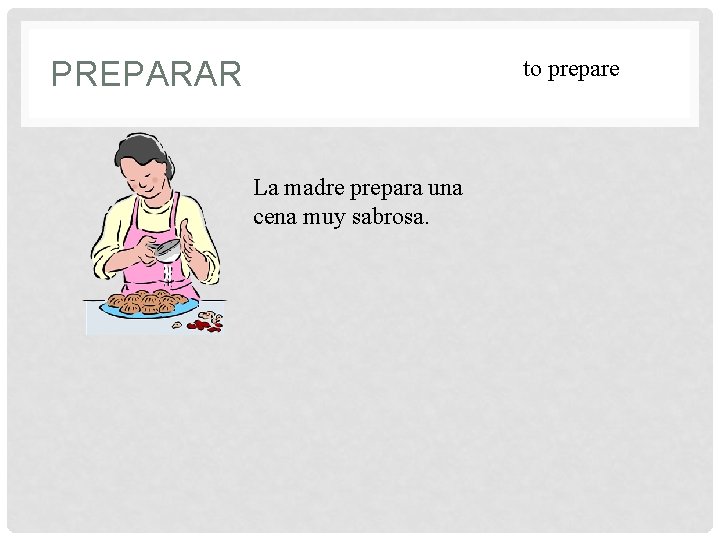
PREPARAR to prepare La madre prepara una cena muy sabrosa.
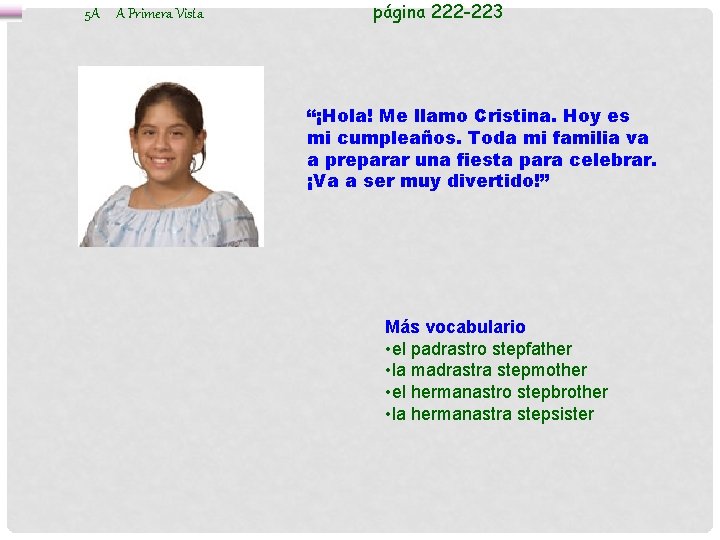
5 A A Primera Vista página 222 -223 “¡Hola! Me llamo Cristina. Hoy es mi cumpleaños. Toda mi familia va a preparar una fiesta para celebrar. ¡Va a ser muy divertido!” Más vocabulario • el padrastro stepfather • la madrastra stepmother • el hermanastro stepbrother • la hermanastra stepsister
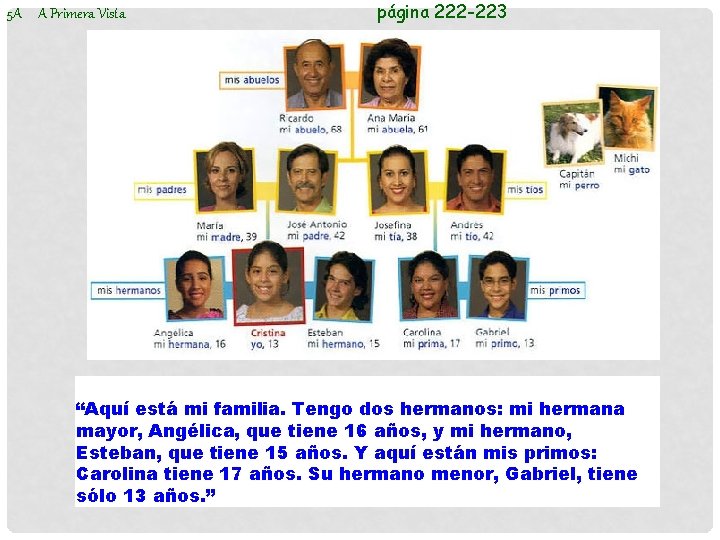
5 A A Primera Vista página 222 -223 “Aquí está mi familia. Tengo dos hermanos: mi hermana mayor, Angélica, que tiene 16 años, y mi hermano, Esteban, que tiene 15 años. Y aquí están mis primos: Carolina tiene 17 años. Su hermano menor, Gabriel, tiene sólo 13 años. ”
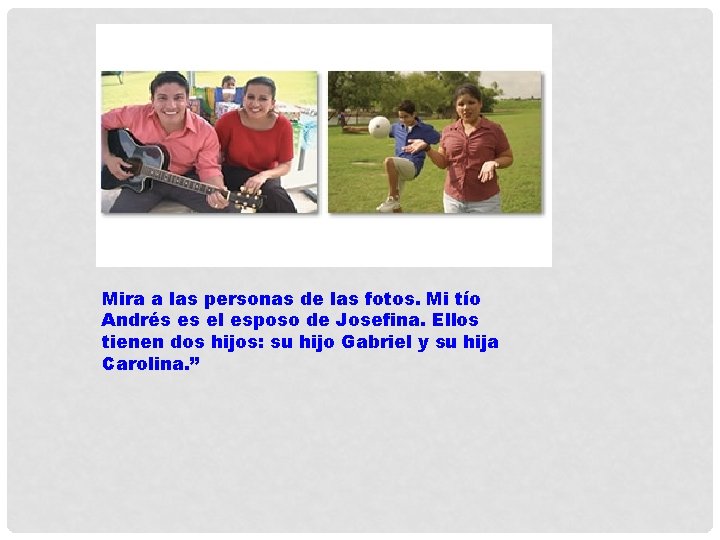
Mira a las personas de las fotos. Mi tío Andrés es el esposo de Josefina. Ellos tienen dos hijos: su hijo Gabriel y su hija Carolina. ”
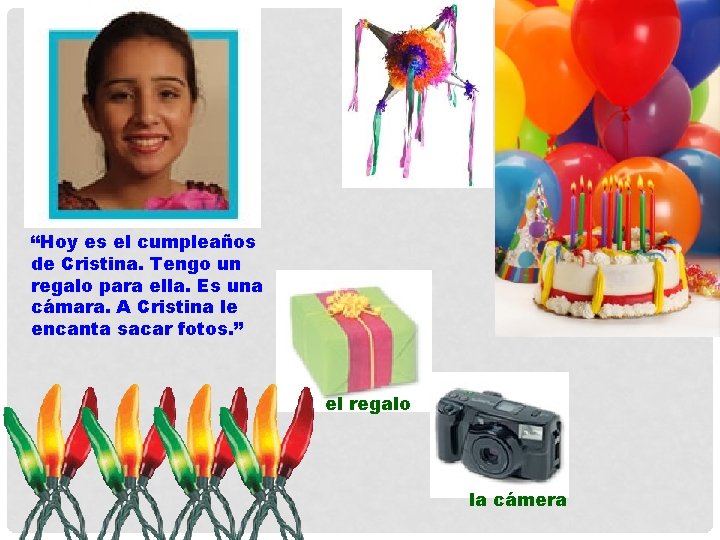
“Hoy es el cumpleaños de Cristina. Tengo un regalo para ella. Es una cámara. A Cristina le encanta sacar fotos. ” el regalo la cámera
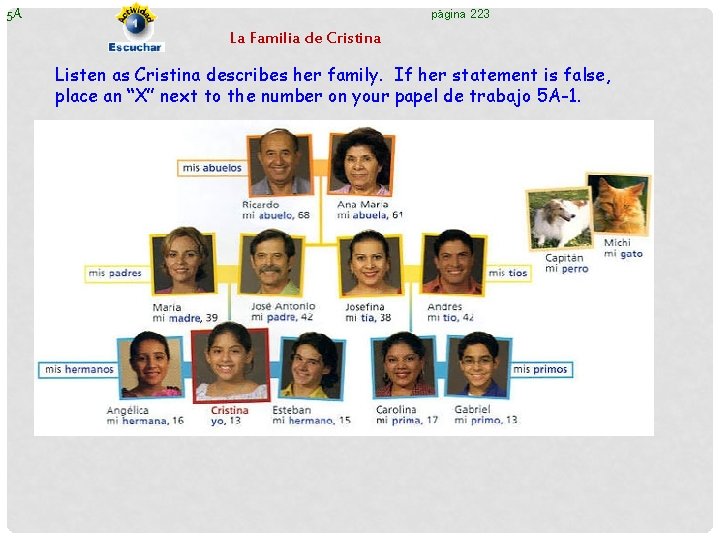
página 223 5 A La Familia de Cristina Listen as Cristina describes her family. If her statement is false, place an “X” next to the number on your papel de trabajo 5 A-1.
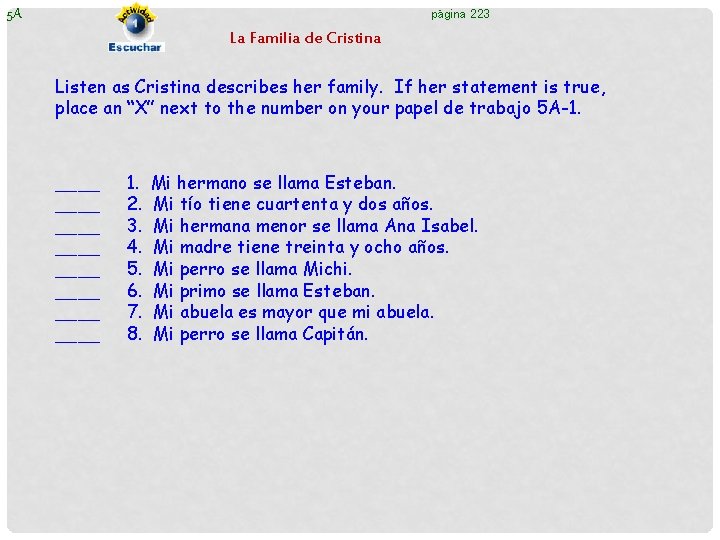
página 223 5 A La Familia de Cristina Listen as Cristina describes her family. If her statement is true, place an “X” next to the number on your papel de trabajo 5 A-1. ____ ____ 1. 2. 3. 4. 5. 6. 7. 8. Mi hermano se llama Esteban. Mi tío tiene cuartenta y dos años. Mi hermana menor se llama Ana Isabel. Mi madre tiene treinta y ocho años. Mi perro se llama Michi. Mi primo se llama Esteban. Mi abuela es mayor que mi abuela. Mi perro se llama Capitán.
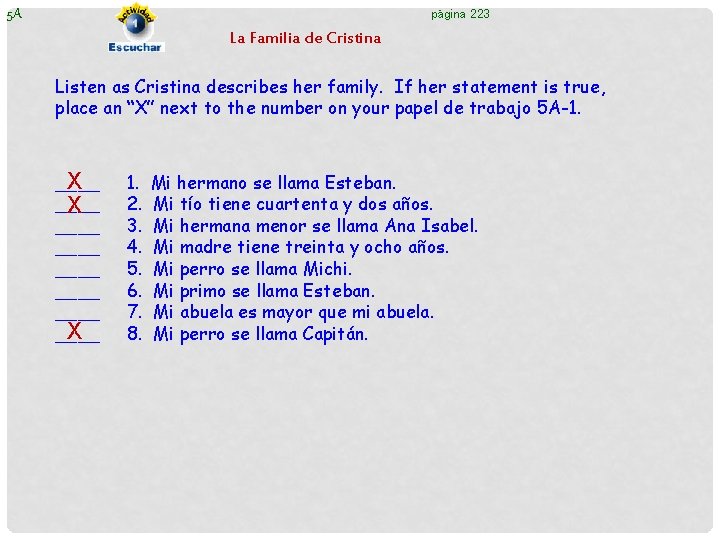
página 223 5 A La Familia de Cristina Listen as Cristina describes her family. If her statement is true, place an “X” next to the number on your papel de trabajo 5 A-1. ____ X ____ ____ X ____ 1. 2. 3. 4. 5. 6. 7. 8. Mi hermano se llama Esteban. Mi tío tiene cuartenta y dos años. Mi hermana menor se llama Ana Isabel. Mi madre tiene treinta y ocho años. Mi perro se llama Michi. Mi primo se llama Esteban. Mi abuela es mayor que mi abuela. Mi perro se llama Capitán.
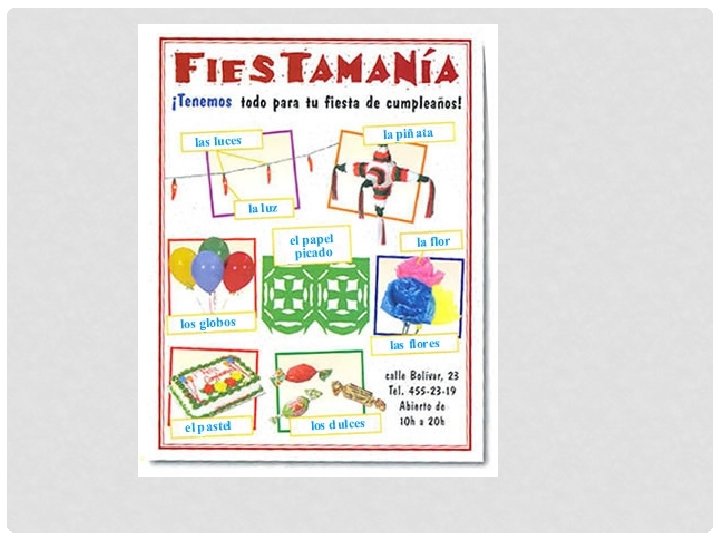
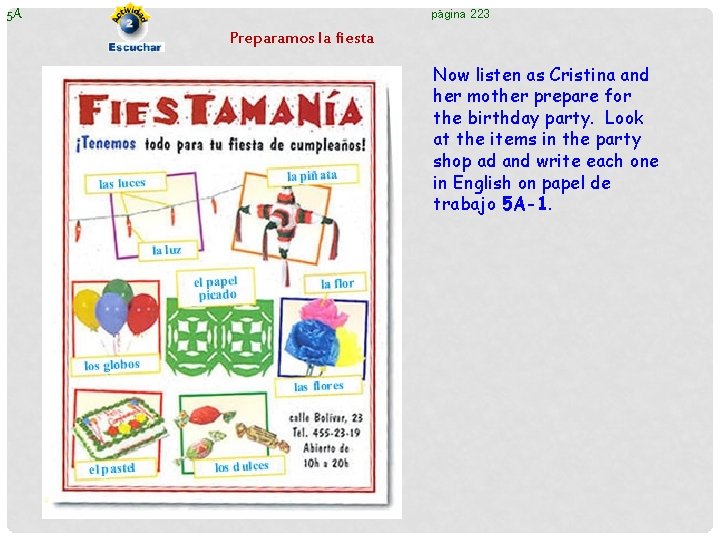
página 223 5 A Preparamos la fiesta Now listen as Cristina and her mother prepare for the birthday party. Look at the items in the party shop ad and write each one in English on papel de trabajo 5 A-1.
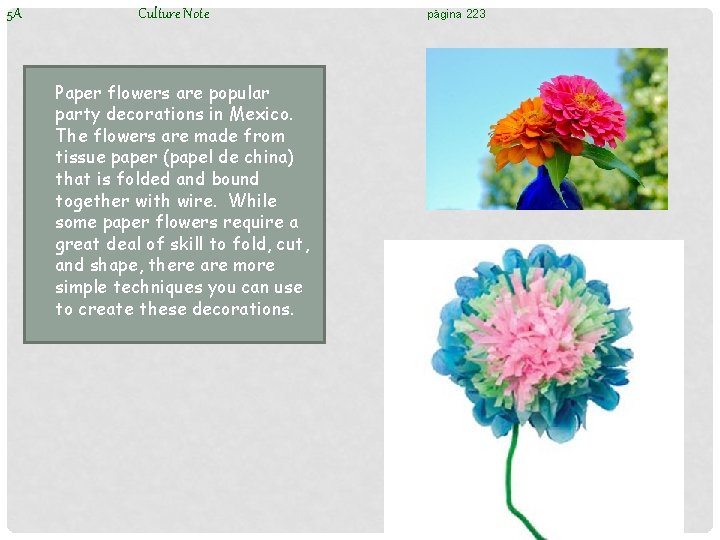
5 A Culture Note Paper flowers are popular party decorations in Mexico. The flowers are made from tissue paper (papel de china) that is folded and bound together with wire. While some paper flowers require a great deal of skill to fold, cut, and shape, there are more simple techniques you can use to create these decorations. página 223
5 A Back of WAVA Actividad 4. ¿Comprendes? página 88 At Cristina's party we met many family members. Why don't you introduce your family, too? Write three sentences about your family or a family you know well. Follow the examples. (write each sentence with at least 8 words and 1 descriptive adjective. ) Recuerda: subject/verb agreement adjective / noun agreement and placement
Start here on Fri/Mon April 25 and 28
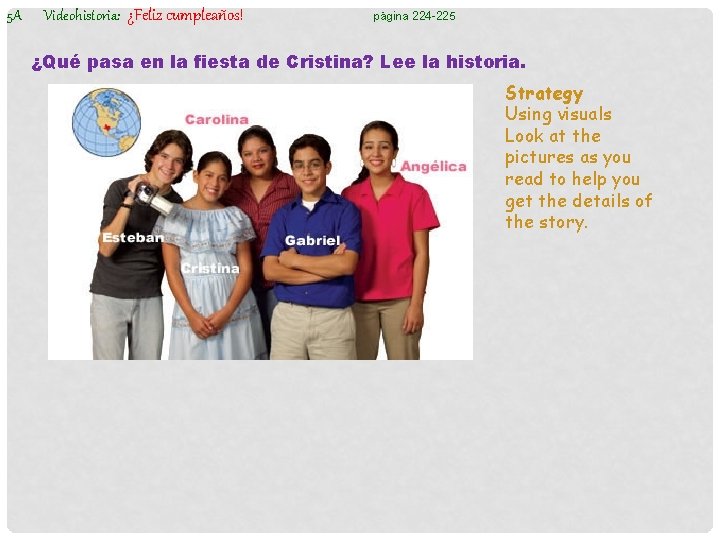
5 A Videohistoria: ¿Feliz cumpleaños! página 224 -225 ¿Qué pasa en la fiesta de Cristina? Lee la historia. Strategy Using visuals Look at the pictures as you read to help you get the details of the story.
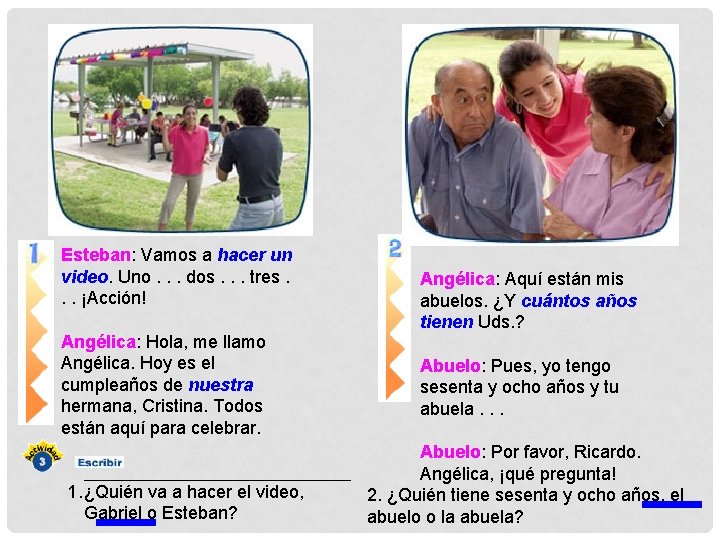
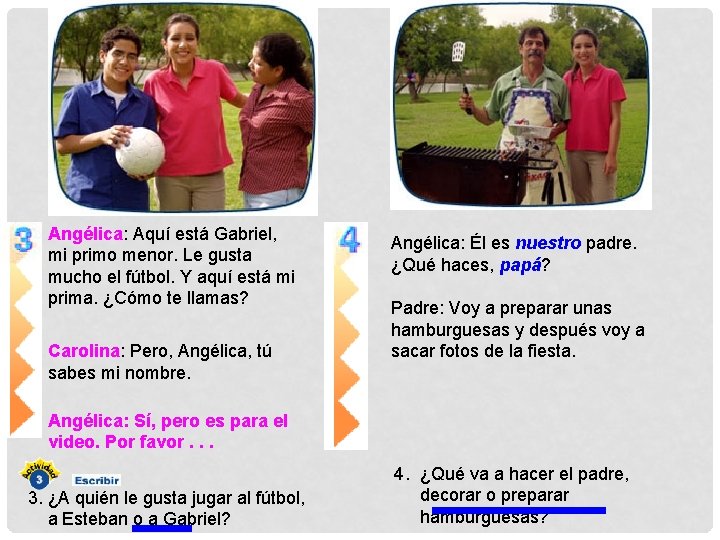
Esteban: Vamos a hacer un video. Uno. . . dos. . . tres. . . ¡Acción! Angélica: Hola, me llamo Angélica. Hoy es el cumpleaños de nuestra hermana, Cristina. Todos están aquí para celebrar. 1. ¿Quién va a hacer el video, Gabriel o Esteban? Angélica: Aquí están mis abuelos. ¿Y cuántos años tienen Uds. ? Abuelo: Pues, yo tengo sesenta y ocho años y tu abuela. . . Abuelo: Por favor, Ricardo. Angélica, ¡qué pregunta! 2. ¿Quién tiene sesenta y ocho años, el abuelo o la abuela?
Angélica: Aquí está Gabriel, mi primo menor. Le gusta mucho el fútbol. Y aquí está mi prima. ¿Cómo te llamas? Carolina: Pero, Angélica, tú sabes mi nombre. Angélica: Él es nuestro padre. ¿Qué haces, papá? Padre: Voy a preparar unas hamburguesas y después voy a sacar fotos de la fiesta. Angélica: Sí, pero es para el video. Por favor. . . 3. ¿A quién le gusta jugar al fútbol, a Esteban o a Gabriel? 4. ¿Qué va a hacer el padre, decorar o preparar hamburguesas?
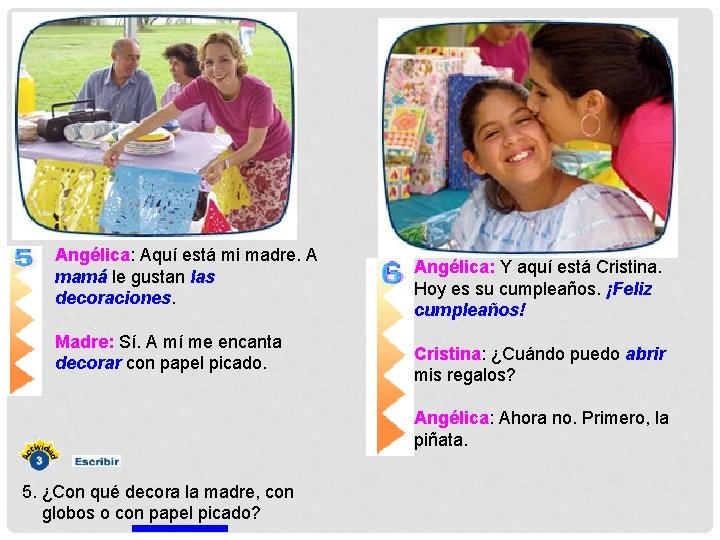
Angélica: Aquí está mi madre. A mamá le gustan las decoraciones. Madre: Sí. A mí me encanta decorar con papel picado. Angélica: Y aquí está Cristina. Hoy es su cumpleaños. ¡Feliz cumpleaños! Cristina: ¿Cuándo puedo abrir mis regalos? Angélica: Ahora no. Primero, la piñata. 5. ¿Con qué decora la madre, con globos o con papel picado?
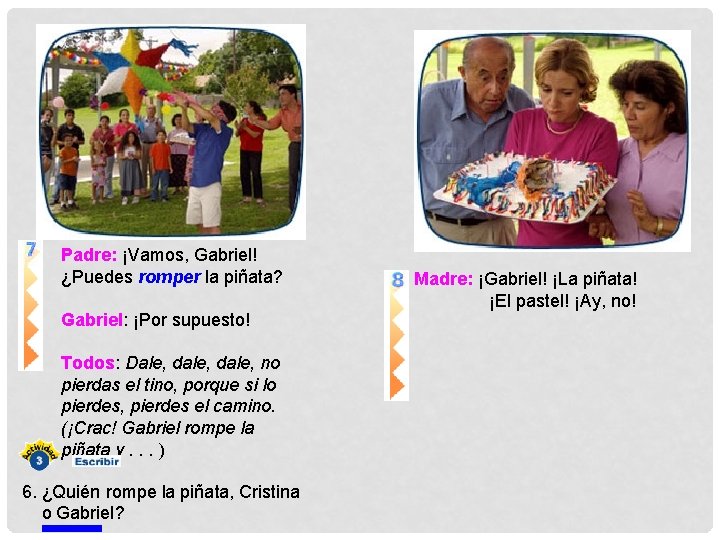
Padre: ¡Vamos, Gabriel! ¿Puedes romper la piñata? Gabriel: ¡Por supuesto! Todos: Dale, dale, no pierdas el tino, porque si lo pierdes, pierdes el camino. (¡Crac! Gabriel rompe la piñata y. . . ) 6. ¿Quién rompe la piñata, Cristina o Gabriel? Madre: ¡Gabriel! ¡La piñata! ¡El pastel! ¡Ay, no!
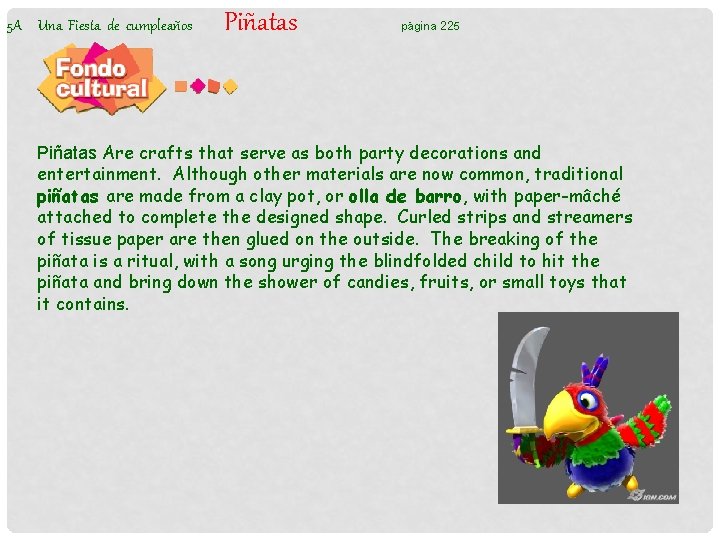
5 A Una Fiesta de cumpleaños Piñatas página 225 Piñatas Are crafts that serve as both party decorations and entertainment. Although other materials are now common, traditional piñatas are made from a clay pot, or olla de barro, with paper-mâché attached to complete the designed shape. Curled strips and streamers of tissue paper are then glued on the outside. The breaking of the piñata is a ritual, with a song urging the blindfolded child to hit the piñata and bring down the shower of candies, fruits, or small toys that it contains.
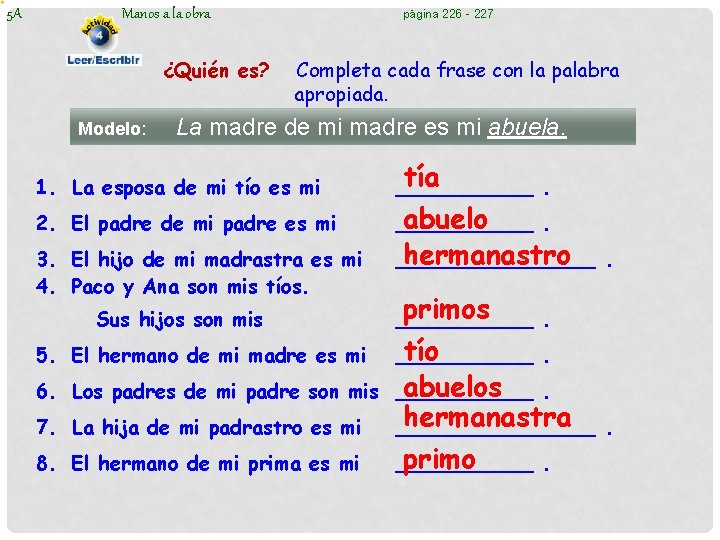
5 A página 226 - 227 Manos a la obra ¿Quién es? Modelo: La Completa cada frase con la palabra apropiada. madre de mi madre es mi abuela. 1. La esposa de mi tío es mi 2. El padre de mi padre es mi 3. El hijo de mi madrastra es mi 4. Paco y Ana son mis tíos. Sus hijos son mis tía ______. abuelo ______. hermanastro. ________ primos ______. 5. El hermano de mi madre es mi tío ______. 7. La hija de mi padrastro es mi hermanastra. ________ abuelos. 6. Los padres de mi padre son mis ______ 8. El hermano de mi prima es mi primo ______.
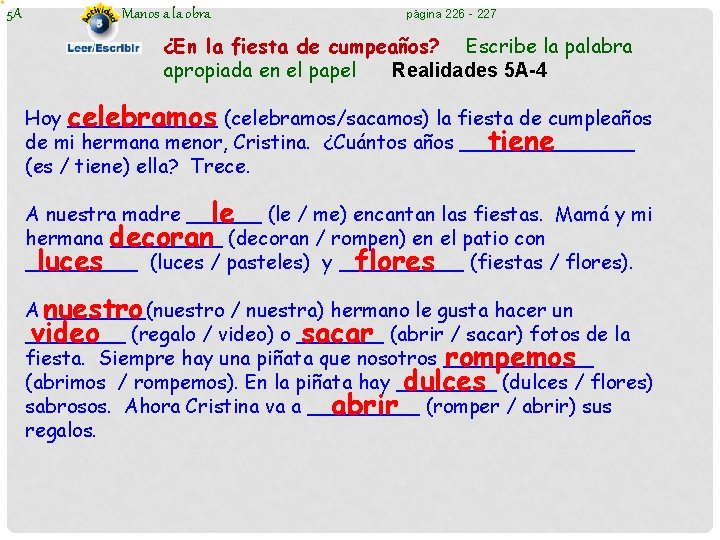
5 A Manos a la obra página 226 - 227 ¿En la fiesta de cumpeaños? Escribe la palabra apropiada en el papel Realidades 5 A-4 Hoy celebramos ______ (celebramos/sacamos) la fiesta de cumpleaños de mi hermana menor, Cristina. ¿Cuántos años _______ tiene (es / tiene) ella? Trece. A nuestra madre ______ le (le / me) encantan las fiestas. Mamá y mi hermana decoran _____ (decoran / rompen) en el patio con _____ (luces / pasteles) y _____ luces flores (fiestas / flores). A nuestro ____(nuestro / nuestra) hermano le gusta hacer un ____ video (regalo / video) o _______ sacar (abrir / sacar) fotos de la fiesta. Siempre hay una piñata que nosotros ______ rompemos (abrimos / rompemos). En la piñata hay ____ dulces (dulces / flores) sabrosos. Ahora Cristina va a _____ abrir (romper / abrir) sus regalos.
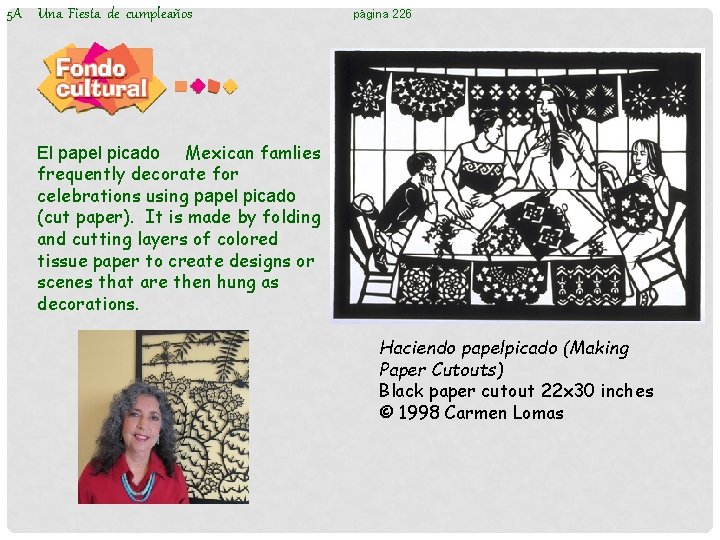
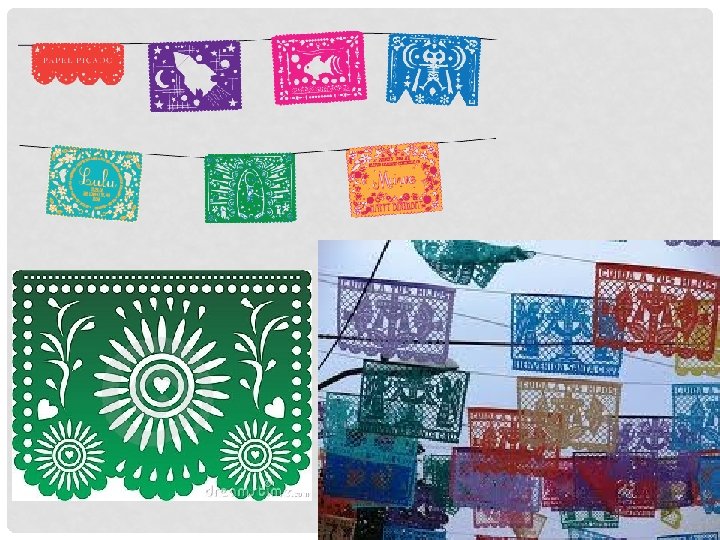
5 A Una Fiesta de cumpleaños página 226 El papel picado Mexican famlies frequently decorate for celebrations using papel picado (cut paper). It is made by folding and cutting layers of colored tissue paper to create designs or scenes that are then hung as decorations. Haciendo papelpicado (Making Paper Cutouts) Black paper cutout 22 x 30 inches © 1998 Carmen Lomas
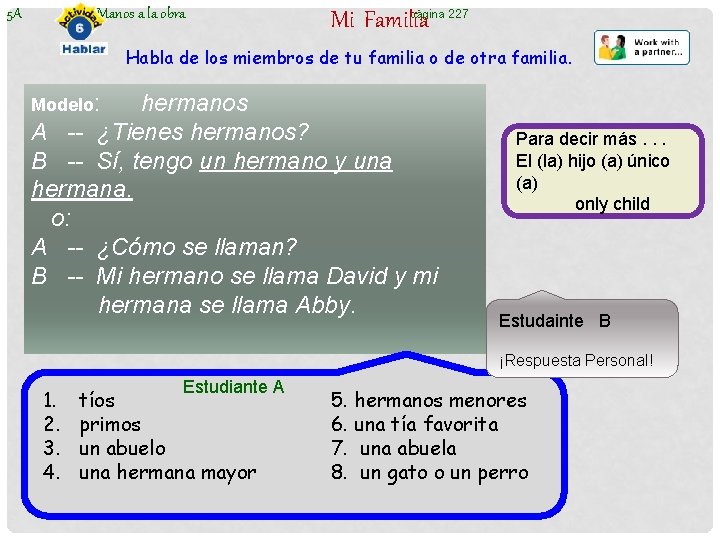
5 A Manos a la obra página 227 Mi Familia Habla de los miembros de tu familia o de otra familia. Modelo: hermanos A -- ¿Tienes hermanos? B -- Sí, tengo un hermano y una hermana. o: A -- ¿Cómo se llaman? B -- Mi hermano se llama David y mi hermana se llama Abby. Para decir más. . . El (la) hijo (a) único (a) only child Estudainte B ¡Respuesta Personal! 1. 2. 3. 4. Estudiante A tíos primos un abuelo una hermana mayor 5. hermanos menores 6. una tía favorita 7. una abuela 8. un gato o un perro
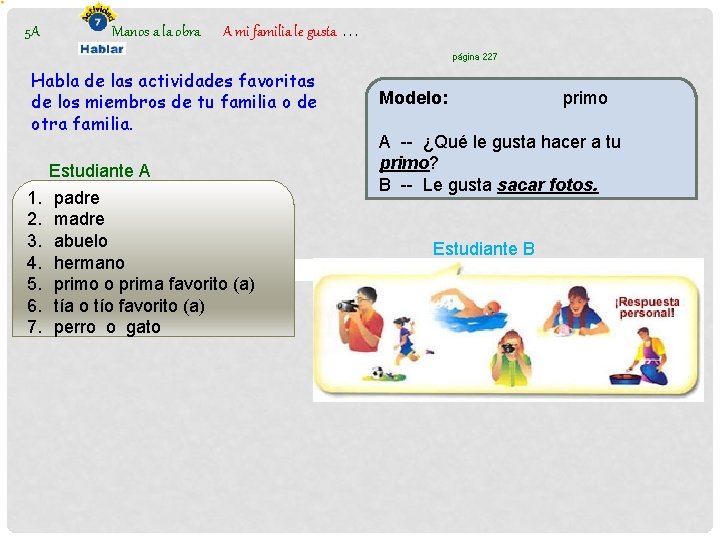
5 A Manos a la obra A mi familia le gusta. . . página 227 Habla de las actividades favoritas de los miembros de tu familia o de otra familia. 1. 2. 3. 4. 5. 6. 7. Estudiante A padre madre abuelo hermano primo o prima favorito (a) tía o tío favorito (a) perro o gato Modelo: primo A -- ¿Qué le gusta hacer a tu primo? B -- Le gusta sacar fotos. Estudiante B
REPASO DE GRAMÁTICA
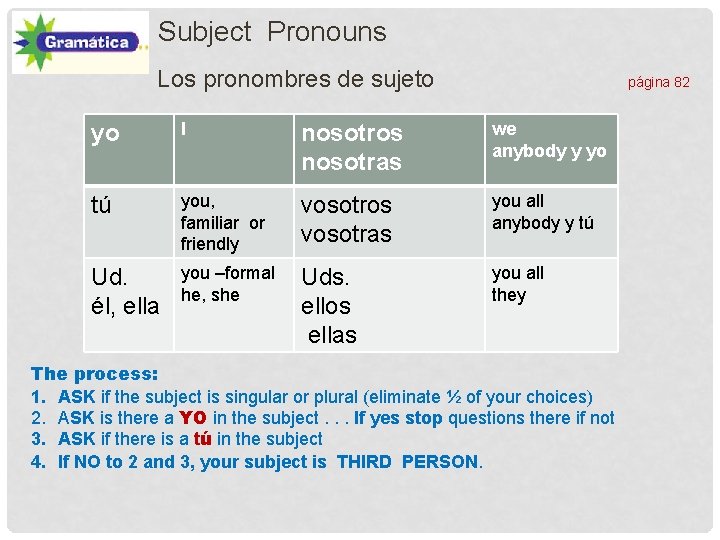
Subject Pronouns Los pronombres de sujeto página 82 yo I nosotros nosotras we anybody y yo tú you, familiar or friendly vosotros vosotras you all anybody y tú Ud. él, ella you –formal he, she Uds. ellos ellas you all they The process: 1. ASK if the subject is singular or plural (eliminate ½ of your choices) 2. ASK is there a YO in the subject. . . If yes stop questions there if not 3. ASK if there is a tú in the subject 4. If NO to 2 and 3, your subject is THIRD PERSON.
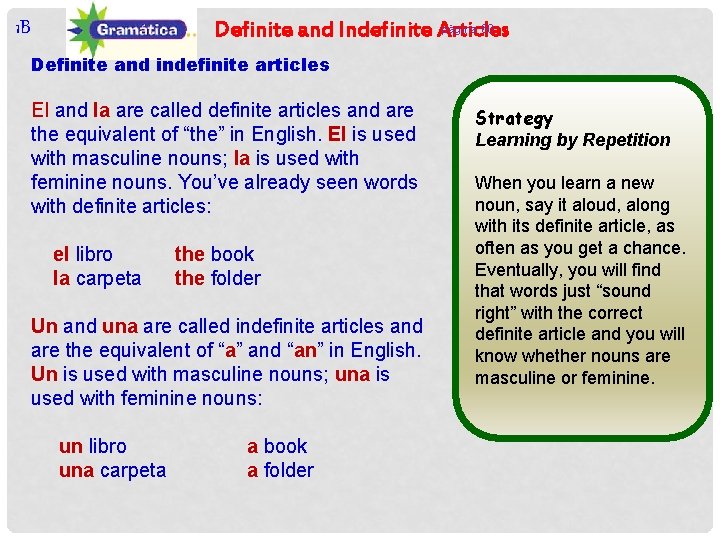
página 60 Definite and Indefinite Articles 1 B Definite and indefinite articles El and la are called definite articles and are the equivalent of “the” in English. El is used with masculine nouns; la is used with feminine nouns. You’ve already seen words with definite articles: el libro la carpeta the book the folder Un and una are called indefinite articles and are the equivalent of “a” and “an” in English. Un is used with masculine nouns; una is used with feminine nouns: un libro una carpeta a book a folder Strategy Learning by Repetition When you learn a new noun, say it aloud, along with its definite article, as often as you get a chance. Eventually, you will find that words just “sound right” with the correct definite article and you will know whether nouns are masculine or feminine.
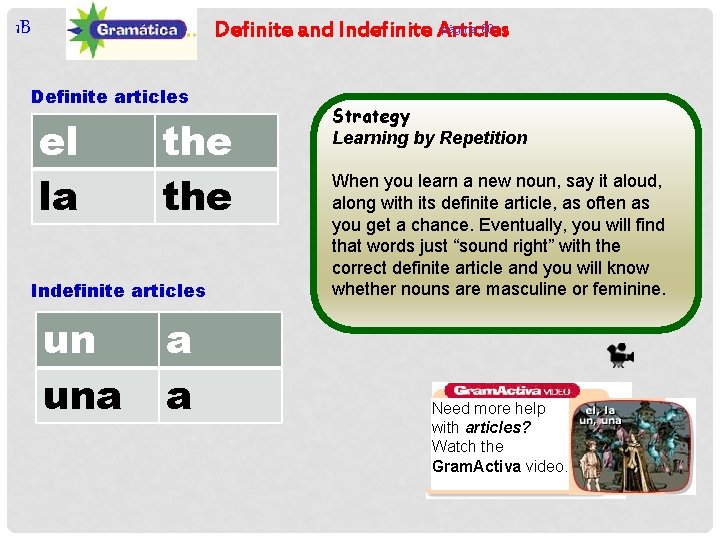
página 60 Definite and Indefinite Articles 1 B Definite articles el la the Indefinite articles un una a a Strategy Learning by Repetition When you learn a new noun, say it aloud, along with its definite article, as often as you get a chance. Eventually, you will find that words just “sound right” with the correct definite article and you will know whether nouns are masculine or feminine. Need more help with articles? Watch the Gram. Activa video.
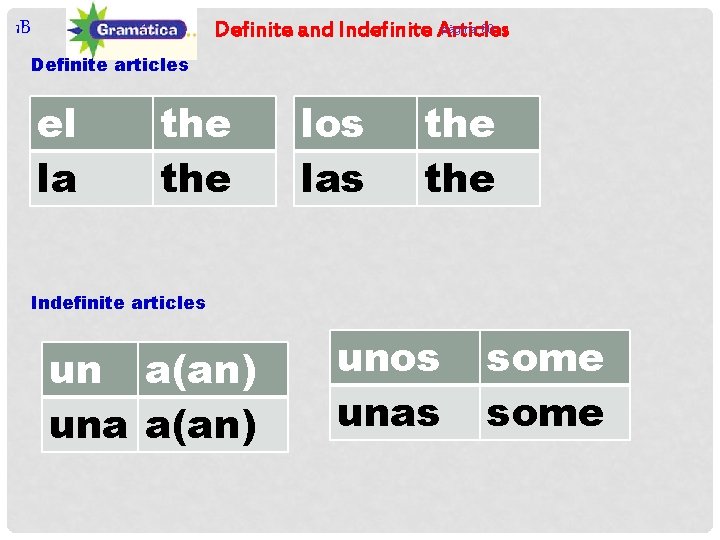
página 60 Definite and Indefinite Articles 1 B Definite articles el la the los las the Indefinite articles un a(an) una a(an) unos unas some
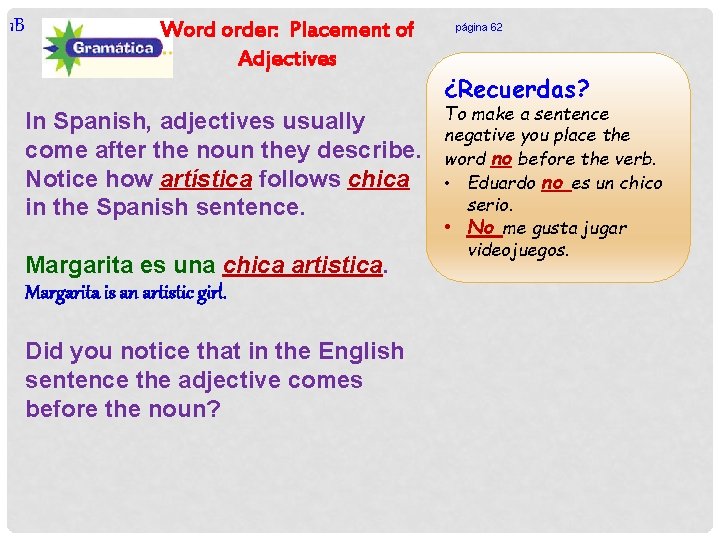
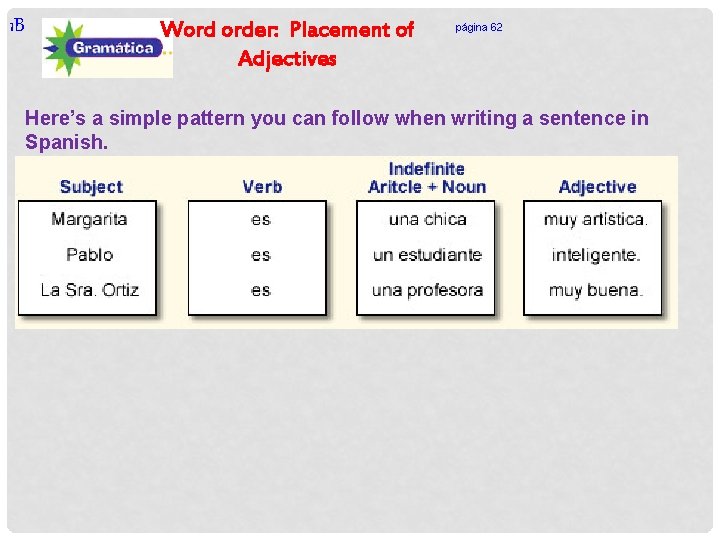
1 B Word order: Placement of Adjectives In Spanish, adjectives usually come after the noun they describe. Notice how artística follows chica in the Spanish sentence. Margarita es una chica artistica. Margarita is an artistic girl. Did you notice that in the English sentence the adjective comes before the noun? página 62 ¿Recuerdas? To make a sentence negative you place the word no before the verb. • Eduardo no es un chico serio. • No me gusta jugar videojuegos.
1 B Word order: Placement of Adjectives página 62 Here’s a simple pattern you can follow when writing a sentence in Spanish.
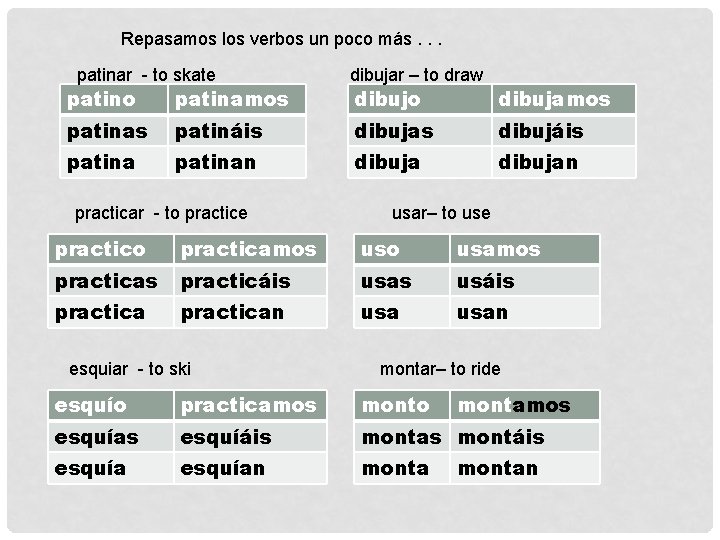
Repasamos los verbos un poco más. . . patinar - to skate dibujar – to draw patino patinamos dibujo dibujamos patinas patináis dibujas dibujáis patinan dibujan practicar - to practice usar– to use practico practicamos uso usamos practicas practicáis usas usáis practican usan esquiar - to ski montar– to ride esquío practicamos monto montamos esquías esquíáis montas montáis esquían montan
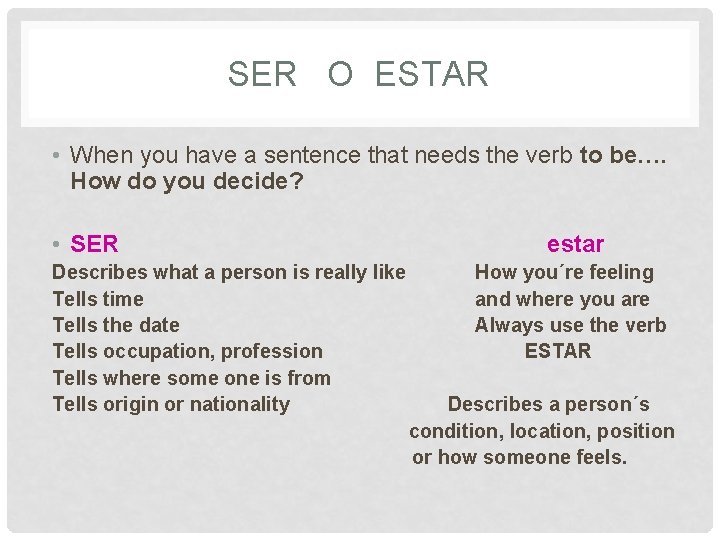
SER O ESTAR • When you have a sentence that needs the verb to be…. How do you decide? • SER Describes what a person is really like Tells time Tells the date Tells occupation, profession Tells where some one is from Tells origin or nationality estar How you´re feeling and where you are Always use the verb ESTAR Describes a person´s condition, location, position or how someone feels.
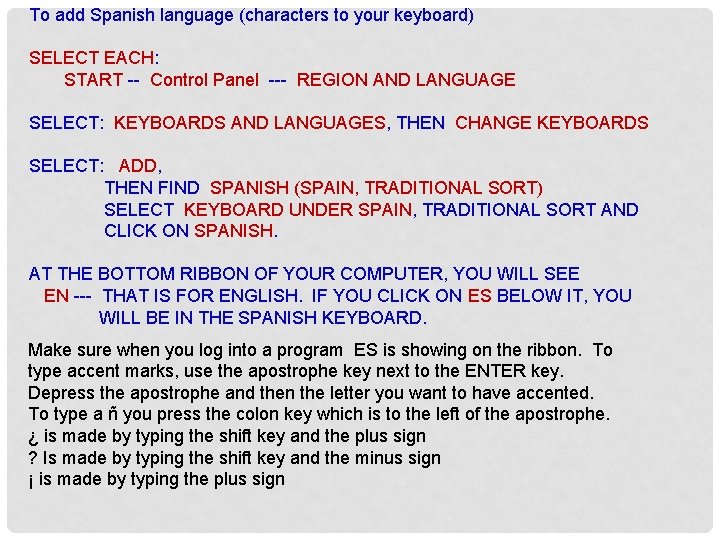
To add Spanish language (characters to your keyboard) SELECT EACH: START -- Control Panel --- REGION AND LANGUAGE SELECT: KEYBOARDS AND LANGUAGES, THEN CHANGE KEYBOARDS SELECT: ADD, THEN FIND SPANISH (SPAIN, TRADITIONAL SORT) SELECT KEYBOARD UNDER SPAIN, TRADITIONAL SORT AND CLICK ON SPANISH. AT THE BOTTOM RIBBON OF YOUR COMPUTER, YOU WILL SEE EN --- THAT IS FOR ENGLISH. IF YOU CLICK ON ES BELOW IT, YOU WILL BE IN THE SPANISH KEYBOARD. Make sure when you log into a program ES is showing on the ribbon. To type accent marks, use the apostrophe key next to the ENTER key. Depress the apostrophe and then the letter you want to have accented. To type a ñ you press the colon key which is to the left of the apostrophe. ¿ is made by typing the shift key and the plus sign ? Is made by typing the shift key and the minus sign ¡ is made by typing the plus sign