
Esherichia coli Gramnegative rod Facultative anaerobe Named for
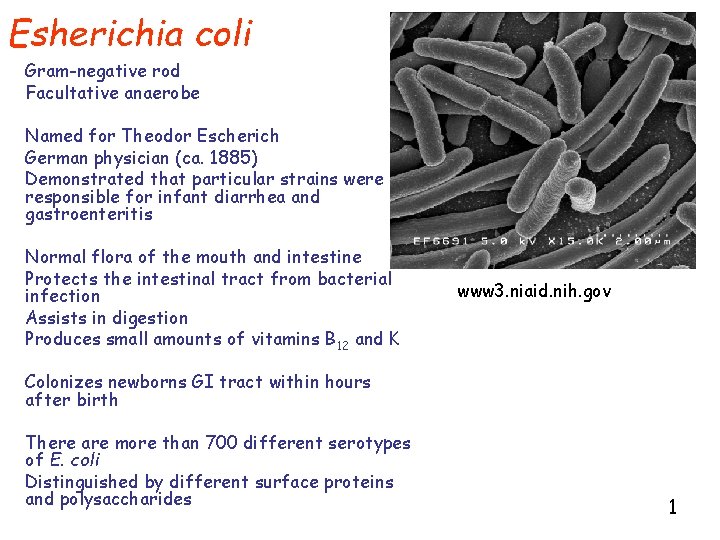
Esherichia coli Gram-negative rod Facultative anaerobe Named for Theodor Escherich German physician (ca. 1885) Demonstrated that particular strains were responsible for infant diarrhea and gastroenteritis Normal flora of the mouth and intestine Protects the intestinal tract from bacterial infection Assists in digestion Produces small amounts of vitamins B 12 and K www 3. niaid. nih. gov Colonizes newborns GI tract within hours after birth There are more than 700 different serotypes of E. coli Distinguished by different surface proteins and polysaccharides 1
Escherichia Bergey’s Manual of Systematic Bacteriology • Escherichia coli – coli- large intestine, colon – Mammalian large intestine • Escherichia blattae – blattae. L. n. blatta cockroach – Hindgut of cockroach Blatta orientalis 2
Escherichia coli K-12 strain • The original E. coli strain K-12 was obtained from a stool sample of a diphtheria patient in Palo Alto, CA in 1922 • Strain K-12 was used for biochemical and genetic studies for many years – – – Metabolism F+ plasmids Bacteriophages Operons Genome sequencing 3
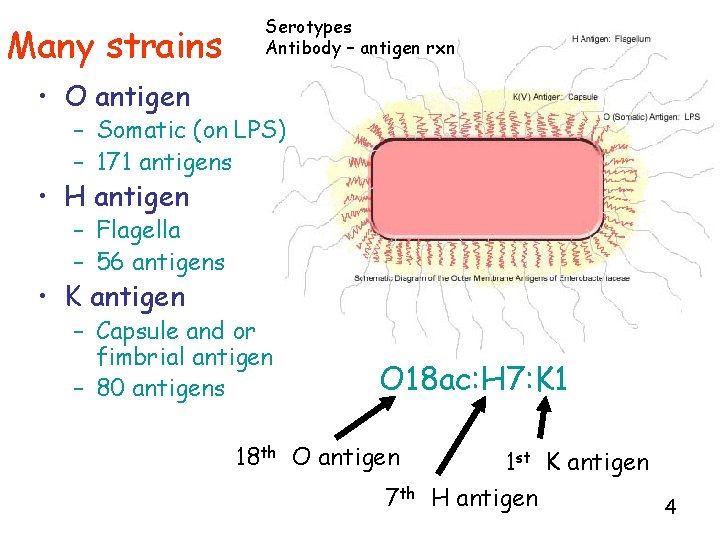
Many strains Serotypes Antibody – antigen rxn • O antigen – Somatic (on LPS) – 171 antigens • H antigen – Flagella – 56 antigens • K antigen – Capsule and or fimbrial antigen – 80 antigens O 18 ac: H 7: K 1 18 th O antigen 7 th 1 st K antigen H antigen 4
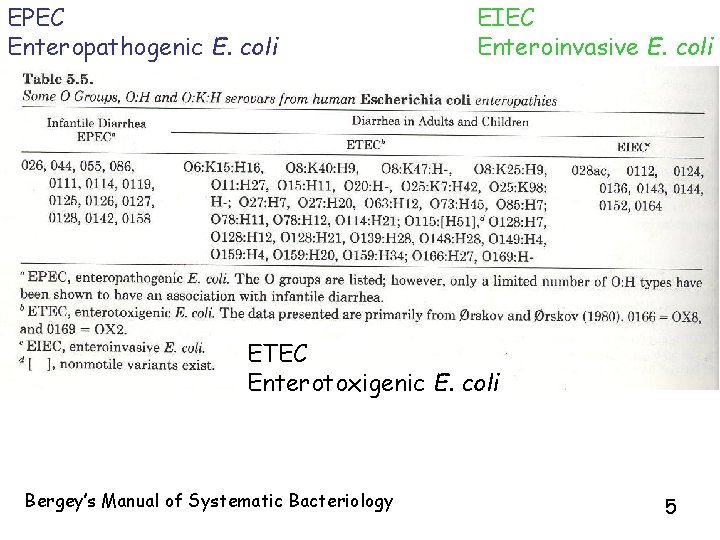
EPEC Enteropathogenic E. coli EIEC Enteroinvasive E. coli ETEC Enterotoxigenic E. coli Bergey’s Manual of Systematic Bacteriology 5
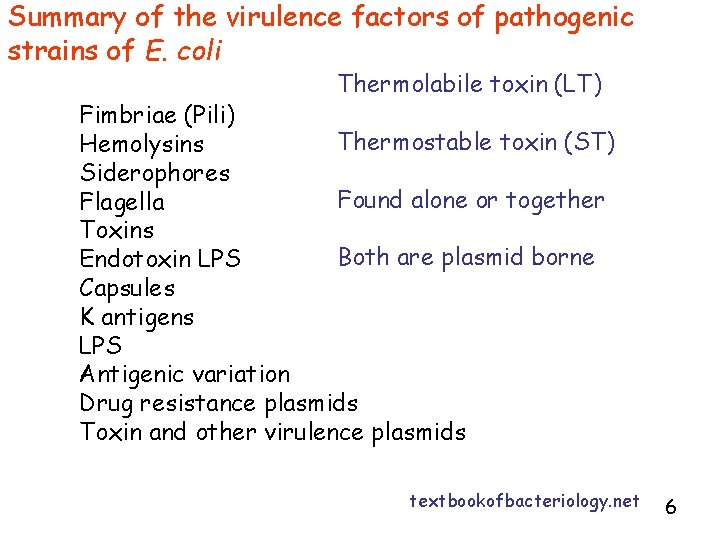
Summary of the virulence factors of pathogenic strains of E. coli Thermolabile toxin (LT) Fimbriae (Pili) Thermostable toxin (ST) Hemolysins Siderophores Found alone or together Flagella Toxins Both are plasmid borne Endotoxin LPS Capsules K antigens LPS Antigenic variation Drug resistance plasmids Toxin and other virulence plasmids textbookofbacteriology. net 6
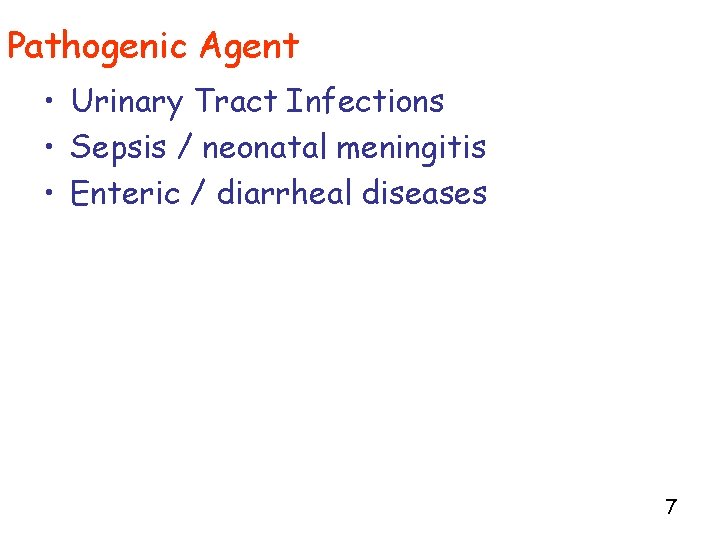
Pathogenic Agent • Urinary Tract Infections • Sepsis / neonatal meningitis • Enteric / diarrheal diseases 7
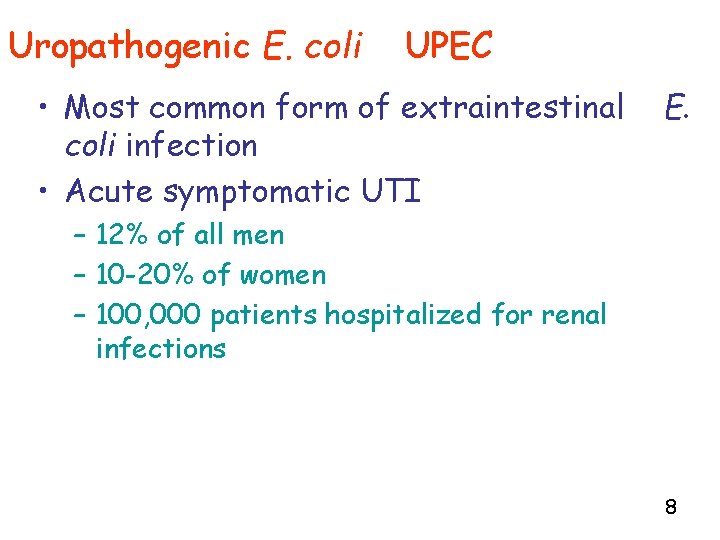
Uropathogenic E. coli UPEC • Most common form of extraintestinal coli infection • Acute symptomatic UTI E. – 12% of all men – 10 -20% of women – 100, 000 patients hospitalized for renal infections 8
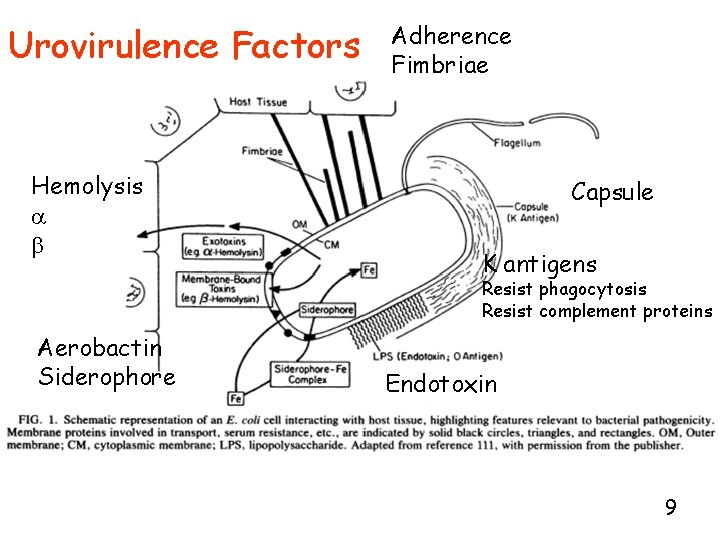
Urovirulence Factors Hemolysis a b Adherence Fimbriae Capsule K antigens Resist phagocytosis Resist complement proteins Aerobactin Siderophore Endotoxin 9
Neonatal Meningitis E. coli • NMEC • Meningitis in an infection of the fluid and membranes that cover the brain and spinal cord – Bacteria – Viruses – Fungi E. coli incites between 1/4 and 1/3 of meningitis cases in newborns – Less than 2% of cases of meningitis at all other ages Approximately 1 out of 5 newborns with E. coli meningitis dies – Survivors frequently sustain permanent brain damage The majority of cases occur in premature babies K-1 – 80% of NMEC E. coli strains produce K-1 capsular antigens – K 1 capsular polysaccharide – O 18 ac: H 7: K 1 – Inhibits phagocytosis Siderophore production • Endotoxin • • – Sequesters Fe 10
11
Enteric / diarrheal diseases E. coli can adhere to the mucosa of the large intestine 12
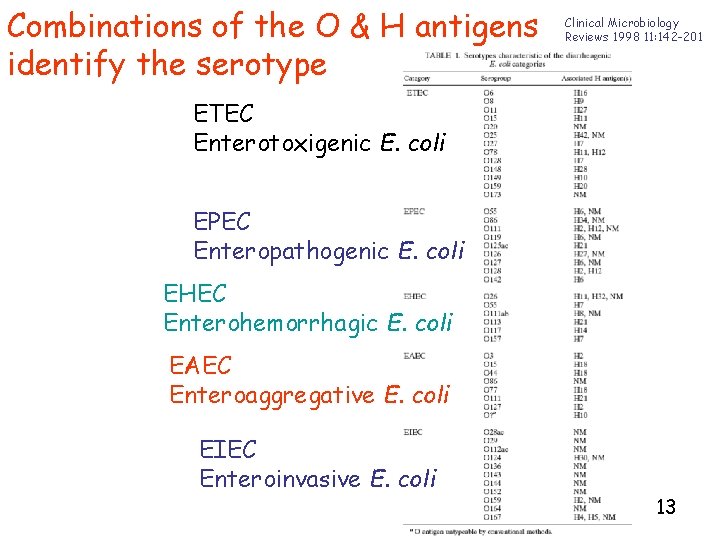
Combinations of the O & H antigens identify the serotype Clinical Microbiology Reviews 1998 11: 142 -201 ETEC Enterotoxigenic E. coli EPEC Enteropathogenic E. coli EHEC Enterohemorrhagic E. coli EAEC Enteroaggregative E. coli EIEC Enteroinvasive E. coli 13
Enterotoxigenic E. coli ETEC • Adhere to intestinal mucosa by fimbriae • Produce enterotoxins – Plasmids contain genes for enterotoxins – Cause leakage of intestinal epithelial cells • • Loss of electrolytes & water Attach by fimbriae Cause diarrhea in children & adults Toxins increase intracellular levels of c. AMP Causes cell leakage Traveler’s diarrhea Weanling diarrhea 14
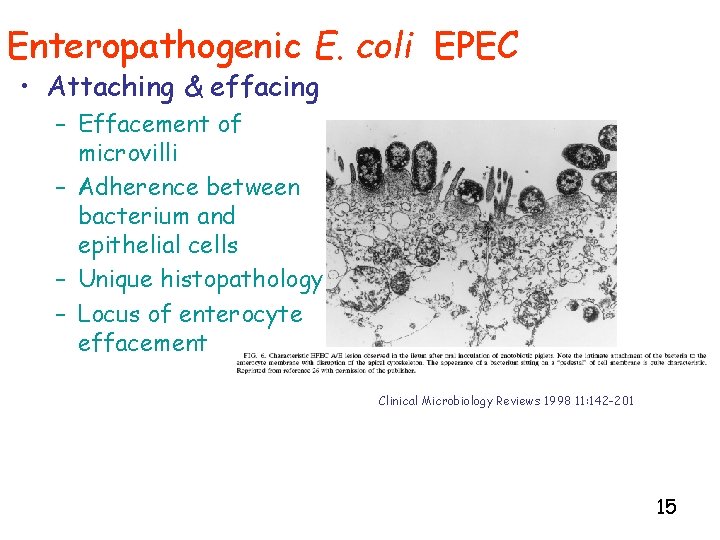
Enteropathogenic E. coli EPEC • Attaching & effacing – Effacement of microvilli – Adherence between bacterium and epithelial cells – Unique histopathology – Locus of enterocyte effacement Clinical Microbiology Reviews 1998 11: 142 -201 15
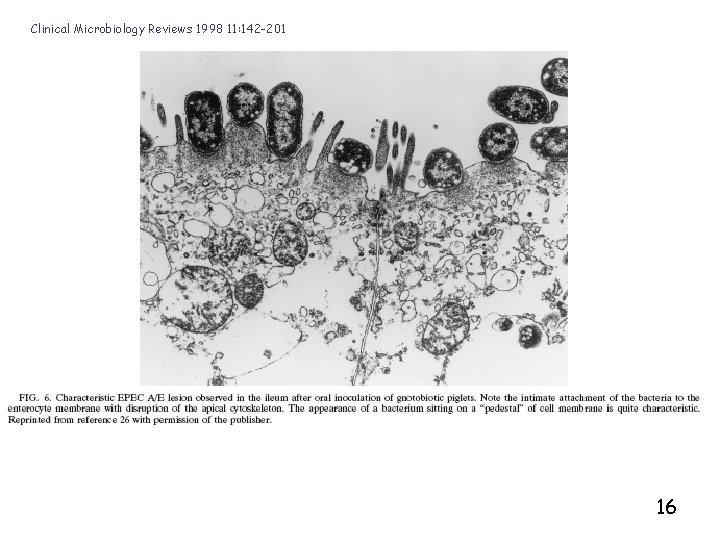
Clinical Microbiology Reviews 1998 11: 142 -201 16
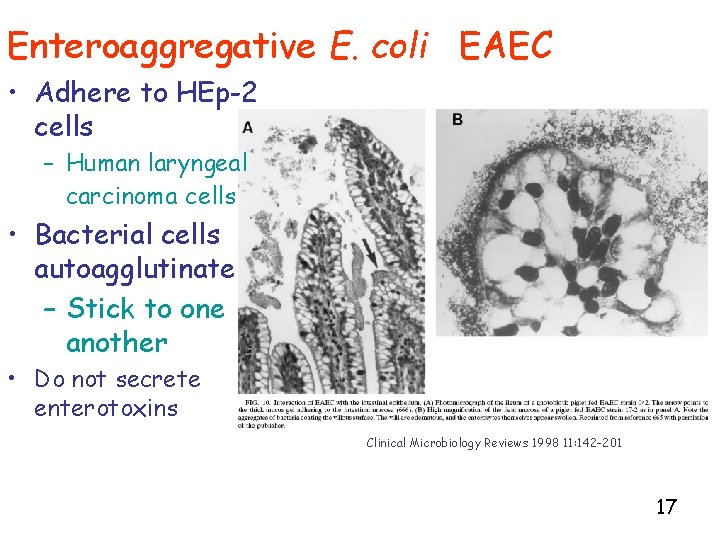
Enteroaggregative E. coli EAEC • Adhere to HEp-2 cells – Human laryngeal carcinoma cells • Bacterial cells autoagglutinate – Stick to one another • Do not secrete enterotoxins Clinical Microbiology Reviews 1998 11: 142 -201 17
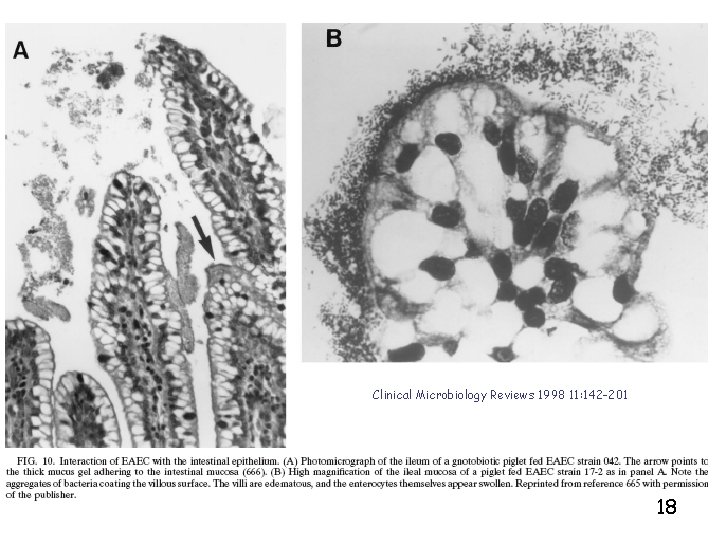
Clinical Microbiology Reviews 1998 11: 142 -201 18
Enteroinvasive E. coli EIEC • Biochemically, genetically, and pathogenetically closely related to Shigella spp. • Cause watery diarrhea – Not bloody • EIEC cells invade intestinal epithelial cells, lyse the phagosomal vacuole, spread through the cytoplasm and infect adjacent cell – Shigella does the same thing • Plasmid encoding a gene for a K surface antigen – Attach and invade mucosal cells 19
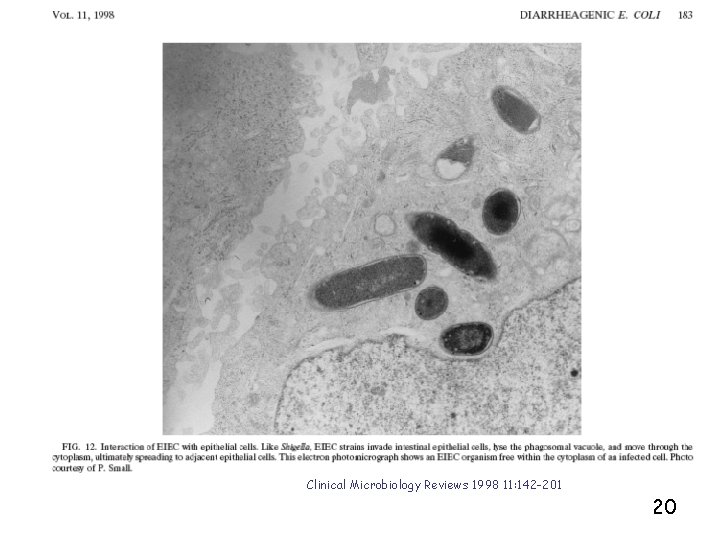
Clinical Microbiology Reviews 1998 11: 142 -201 20
Enterohemorrhagic E. coli EHEC • Severe gastrointestinal distress • Hemorrhagic colitis – – Crampy abdominal pain Watery diarrhea Little or no fever Bloody diarrhea • New serotype O 157: H 7 – 1983 – Undercooked hamburgers 21
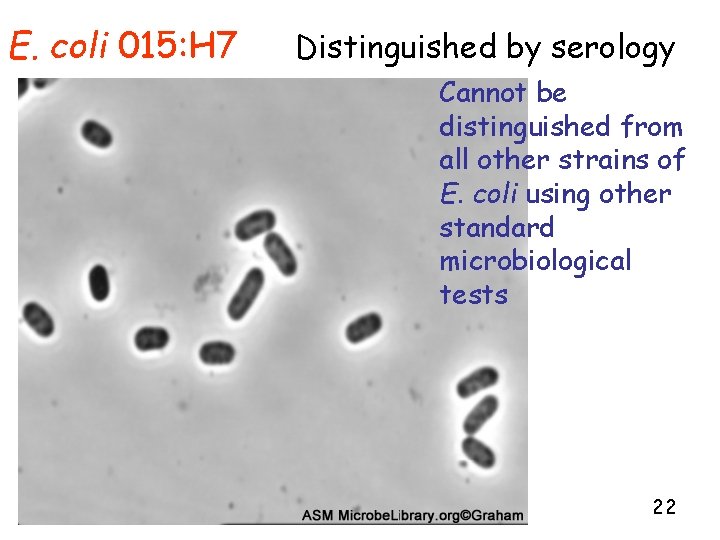
E. coli 015: H 7 Distinguished by serology Cannot be distinguished from all other strains of E. coli using other standard microbiological tests 22
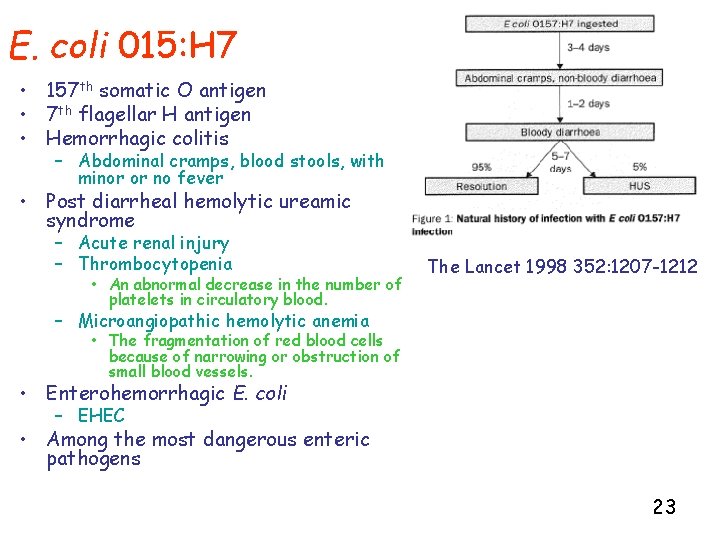
E. coli 015: H 7 • 157 th somatic O antigen • 7 th flagellar H antigen • Hemorrhagic colitis – Abdominal cramps, blood stools, with minor or no fever • Post diarrheal hemolytic ureamic syndrome – Acute renal injury – Thrombocytopenia • An abnormal decrease in the number of platelets in circulatory blood. The Lancet 1998 352: 1207 -1212 – Microangiopathic hemolytic anemia • The fragmentation of red blood cells because of narrowing or obstruction of small blood vessels. • Enterohemorrhagic E. coli – EHEC • Among the most dangerous enteric pathogens 23
Reservoir • Healthy cattle are the major reservoir for human infection – Deer, sheep, goats, horses, dogs, birds and flies • Bacterial cells can survive in manure and water troughs • Infection is more common during the summer in both the northern and southern hemisphere 24
• Transmitted via food – – – – Ground beef Raw milk Lamb meat Venison jerky Salami and other fermented dried meat products Lettuce, spinach, alfalfa sprouts Unpasteurized apple cider • Transmitted via water – Drinking and swimming in unchlorinated water • Direct person to person contact – Diaper changing – Improper sanitation – Day care & chronic adult care facilities 25
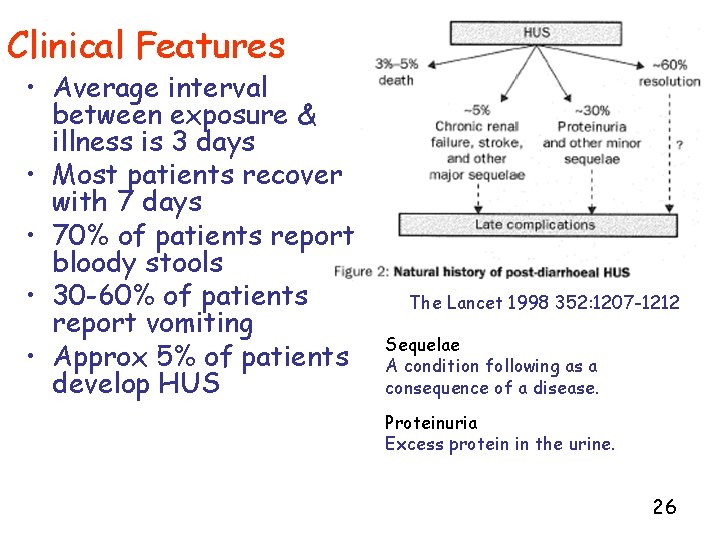
Clinical Features • Average interval between exposure & illness is 3 days • Most patients recover with 7 days • 70% of patients report bloody stools • 30 -60% of patients report vomiting • Approx 5% of patients develop HUS The Lancet 1998 352: 1207 -1212 Sequelae A condition following as a consequence of a disease. Proteinuria Excess protein in the urine. 26
Identification • Mac. Conkey agar (SMAC) – Does not ferment sorbitol rapidly – Forms colorless colonies on sorbitol containing Mac. Conkey agar • Serology – Colorless colonies on SMAC are screened for the 0157 antigen 27
Shiga Toxins • Exotoxin • Very similar to toxin produced by Shigella dysenteriae – Inhibits protein synthesis in host cell – A subunit inactivates the 60 S ribosomal subunit • Shiga toxin producing E. coli (STEC) – Verotoxins • Most OH 157 strains produce Shiga toxin 2 – 25% produce Shiga toxin 1 • Identical to Shigella toxin • A B exotoxin – A subunit exists on a temperate bacteriophage 28
• • • Cells leak Na+, Cl-, K+, HCO 3 - and water Watery diarrhea Cramps Nausea Vomiting Bloody stool 29
Virulence Factors • Virulence plasmid (p. O 157) – Encodes a hemolysin – O 157 strains can use iron from blood released into the intestine • Locus of enterocyte effacement – Adhesion proteins 30
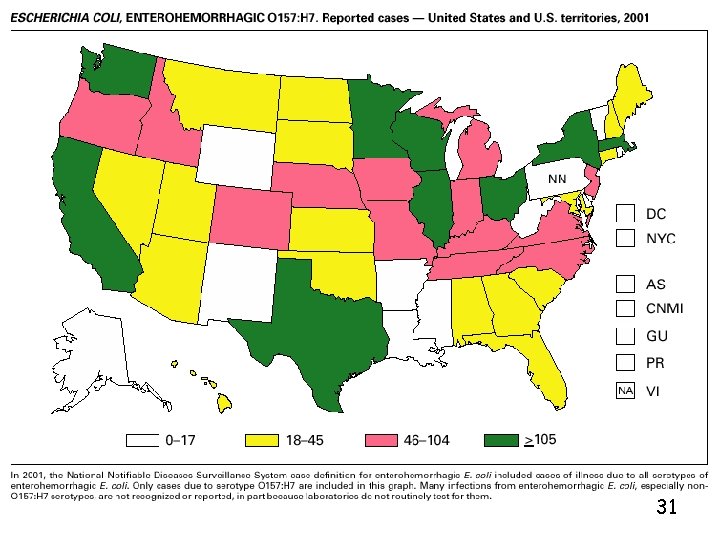
31
Non O 157 Shiga Toxin Producing E. coli • Several other serotypes of E. coli produce Shiga toxins – O 111: nonmotile – O 26: H 11 – O 132: H 2 • Incite diarrhea, hemorrhagic colitis & HUS • Labs generally not prepared to identify these strains – Many times go undetected 32
- Slides: 32