
ESA EO missions overview of satellites ground segment

- Slides: 60
ESA EO missions: overview of satellites, ground segment and data access evolution 29 September 2015 Mirko Albani, Pascal Gilles (ESA)
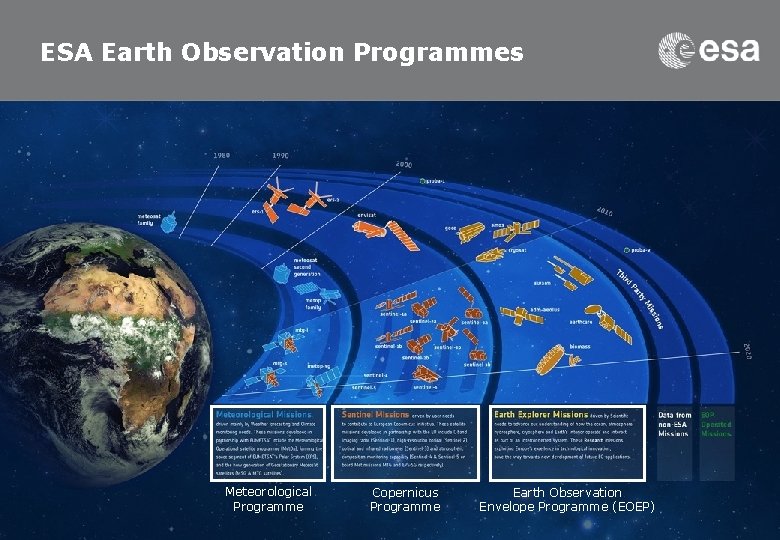
ESA Earth Observation Programmes Meteorological Programme Copernicus Programme Earth Observation Envelope Programme (EOEP)
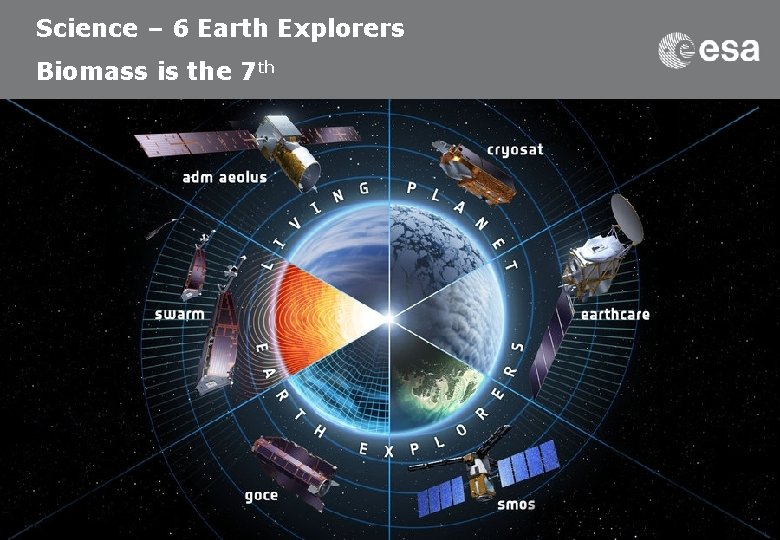
Science – 6 Earth Explorers Biomass is the 7 th
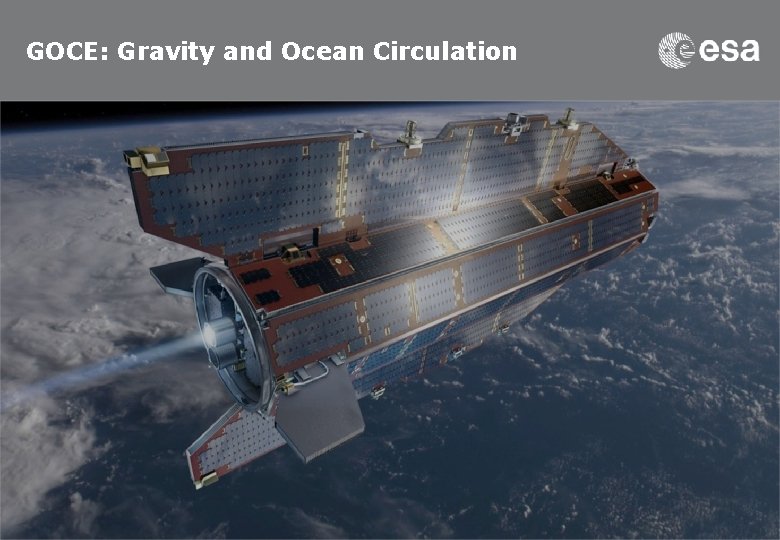
GOCE: Gravity and Ocean Circulation
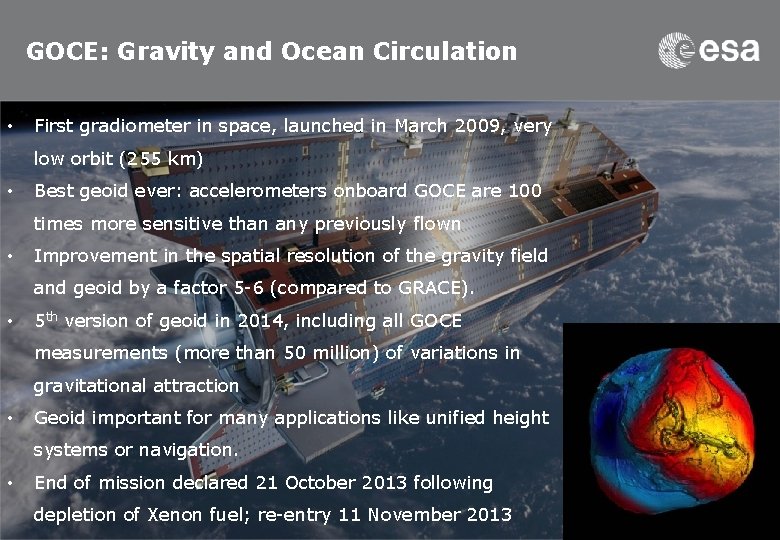
GOCE: Gravity and Ocean Circulation • First gradiometer in space, launched in March 2009, very low orbit (255 km) • Best geoid ever: accelerometers onboard GOCE are 100 times more sensitive than any previously flown • Improvement in the spatial resolution of the gravity field and geoid by a factor 5 -6 (compared to GRACE). • 5 th version of geoid in 2014, including all GOCE measurements (more than 50 million) of variations in gravitational attraction • Geoid important for many applications like unified height systems or navigation. • End of mission declared 21 October 2013 following depletion of Xenon fuel; re-entry 11 November 2013
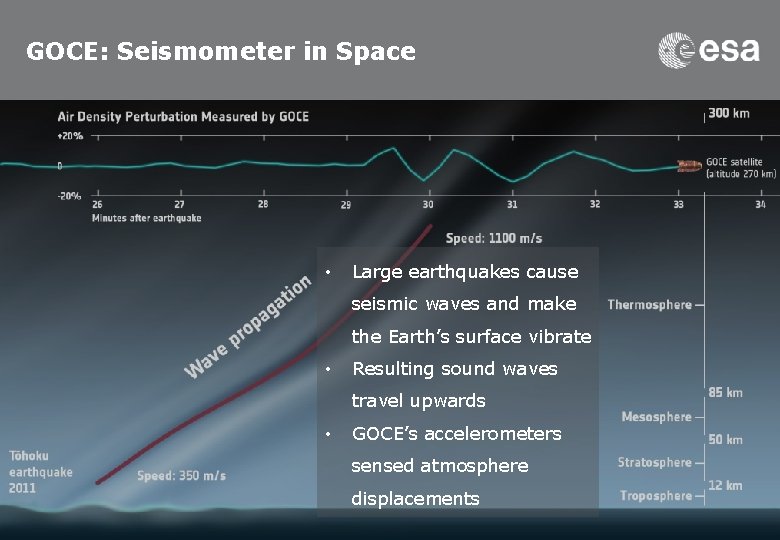
GOCE: Seismometer in Space • Large earthquakes cause seismic waves and make the Earth’s surface vibrate • Resulting sound waves travel upwards • GOCE’s accelerometers sensed atmosphere displacements
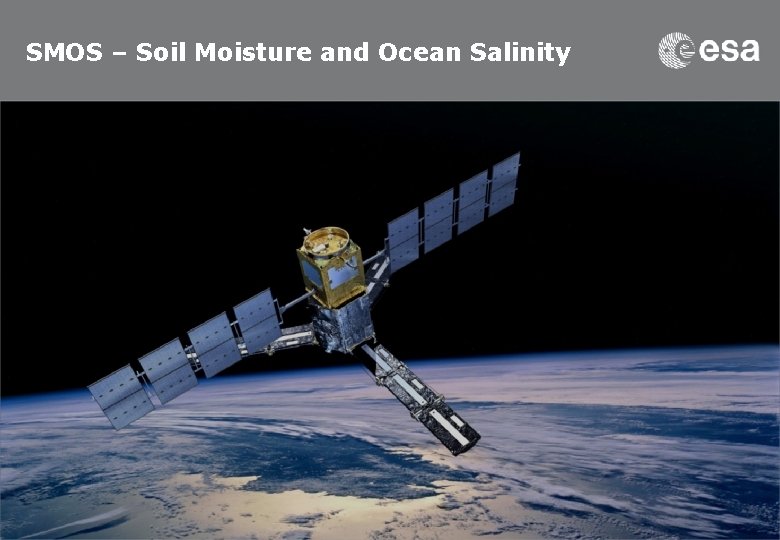
SMOS – Soil Moisture and Ocean Salinity
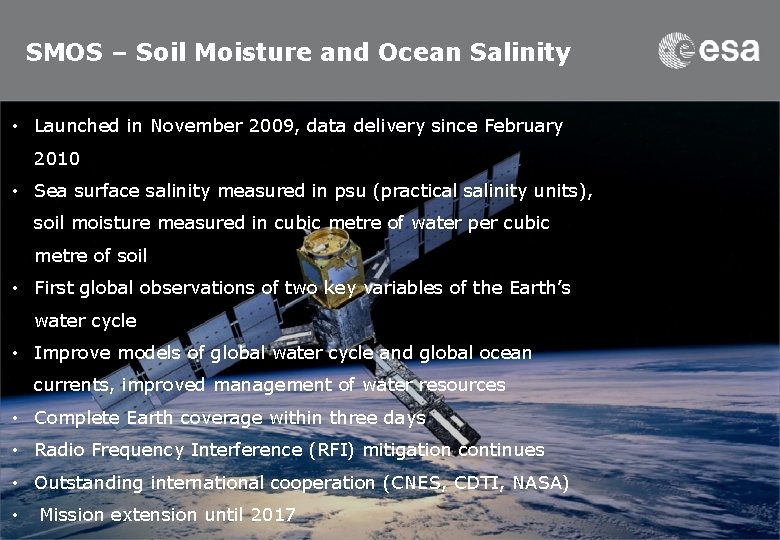
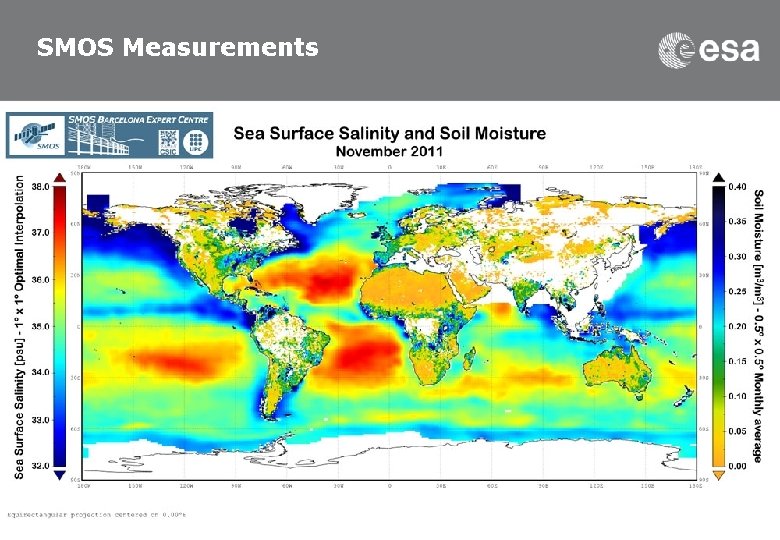
SMOS – Soil Moisture and Ocean Salinity • Launched in November 2009, data delivery since February 2010 • Sea surface salinity measured in psu (practical salinity units), soil moisture measured in cubic metre of water per cubic metre of soil • First global observations of two key variables of the Earth’s water cycle • Improve models of global water cycle and global ocean currents, improved management of water resources • Complete Earth coverage within three days • Radio Frequency Interference (RFI) mitigation continues • Outstanding international cooperation (CNES, CDTI, NASA) • Mission extension until 2017
SMOS Measurements Satellites for emergency relief: • Data acquisition in case of natural or man-made disasters • Data delivery to civil protection agencies, emergency and rescue services
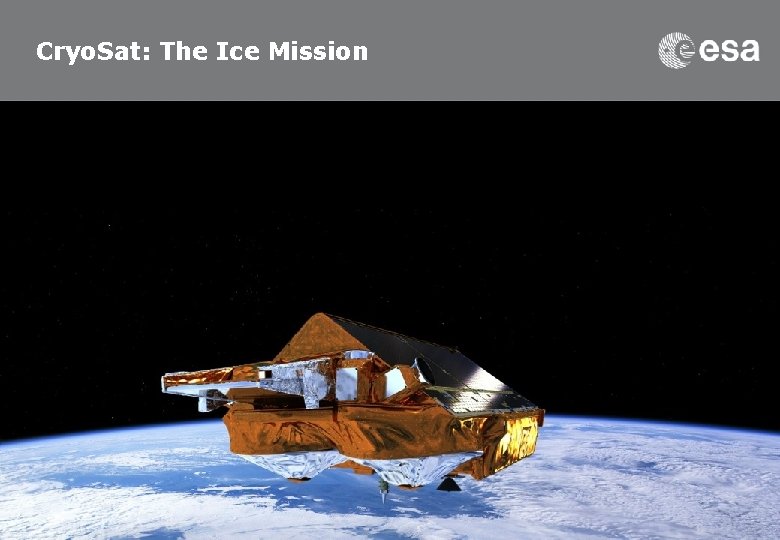
Cryo. Sat: The Ice Mission
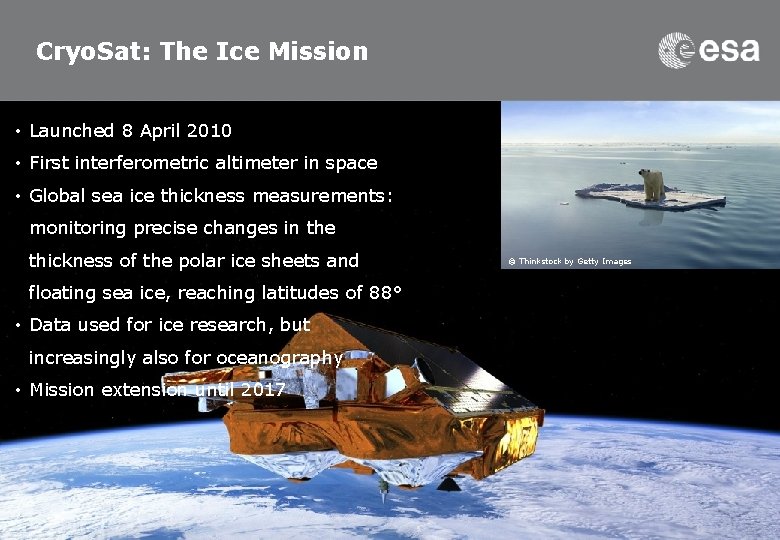
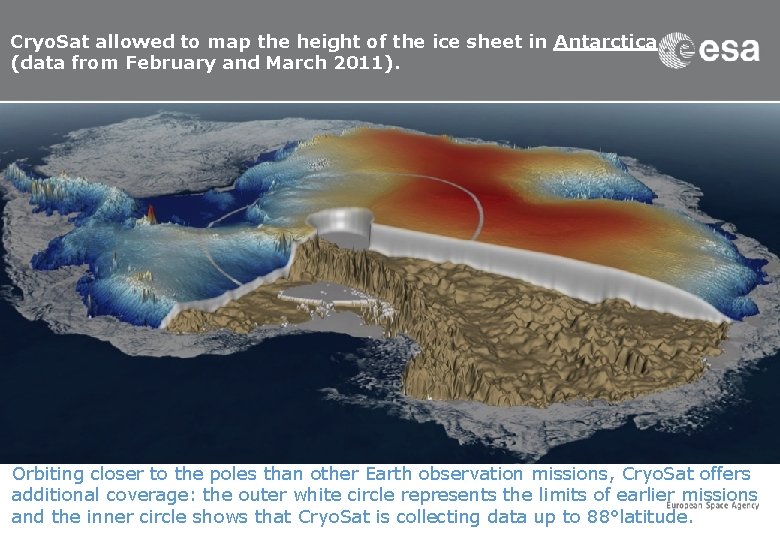
Cryo. Sat: The Ice Mission • Launched 8 April 2010 • First interferometric altimeter in space • Global sea ice thickness measurements: monitoring precise changes in the thickness of the polar ice sheets and floating sea ice, reaching latitudes of 88° • Data used for ice research, but increasingly also for oceanography • Mission extension until 2017 © Thinkstock by Getty Images
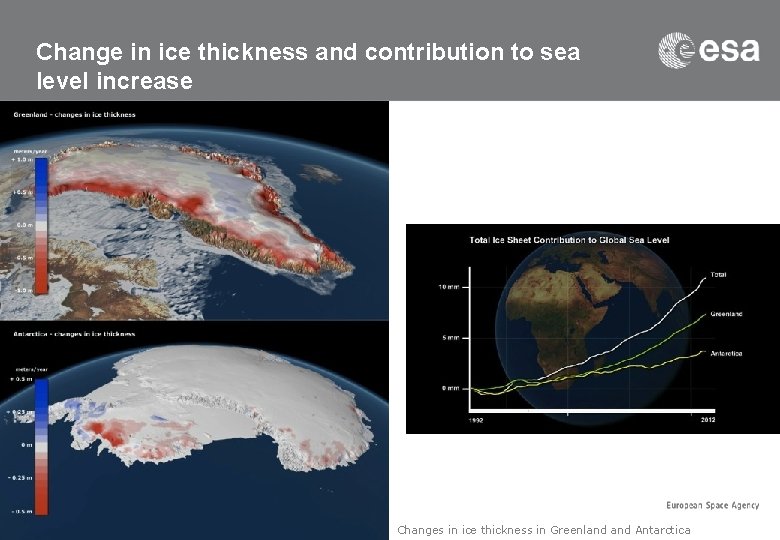
Change in ice thickness and contribution to sea level increase Changes in ice thickness in Greenland Antarctica
Cryo. Sat allowed to map the height of the ice sheet in Antarctica (data from February and March 2011). Orbiting closer to the poles than other Earth observation missions, Cryo. Sat offers additional coverage: the outer white circle represents the limits of earlier missions and the inner circle shows that Cryo. Sat is collecting data up to 88°latitude.
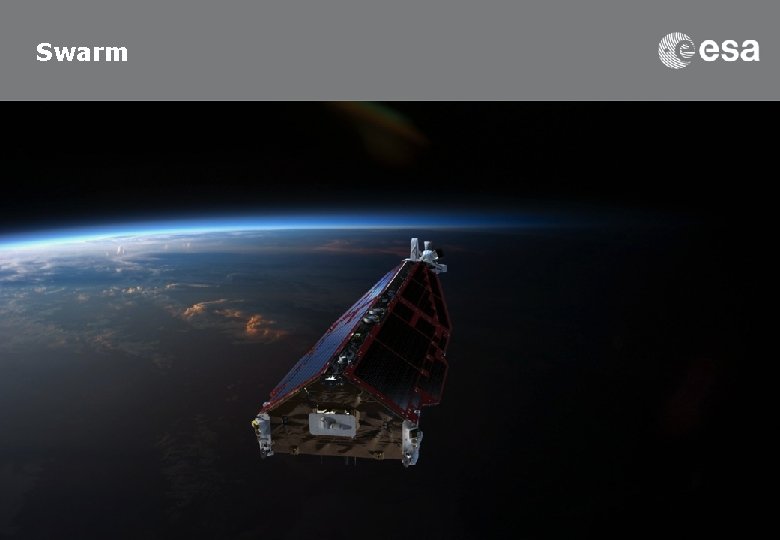
Swarm
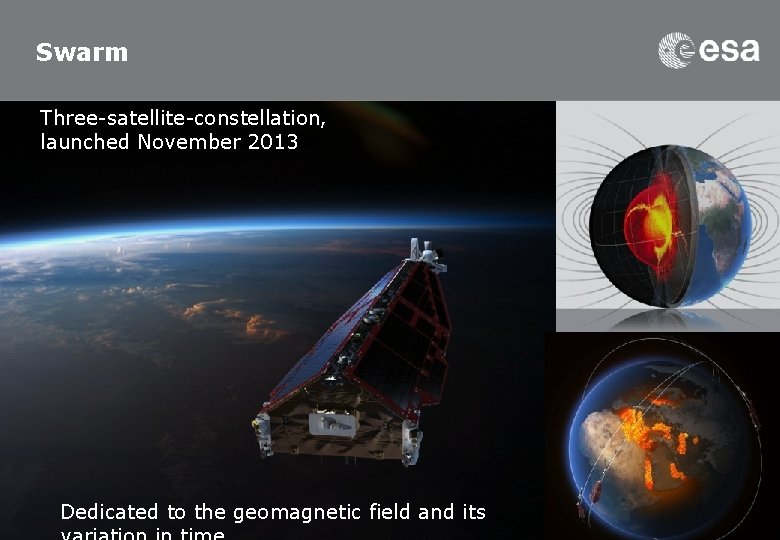
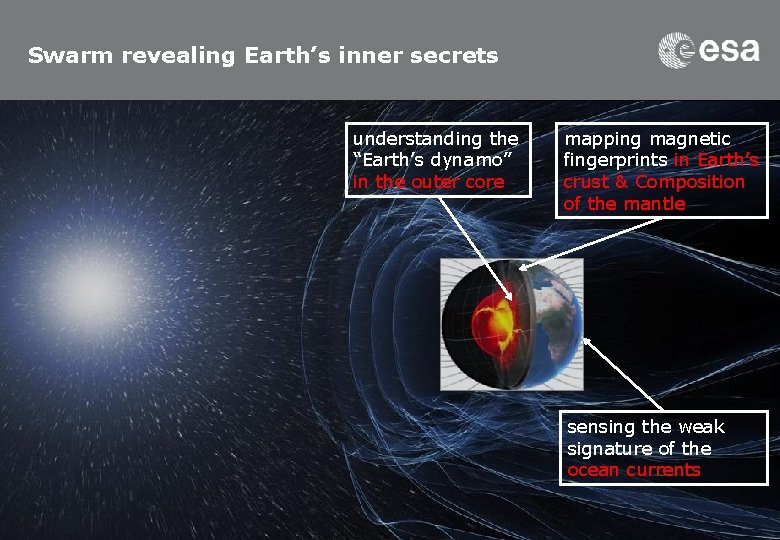
Swarm Three-satellite-constellation, launched November 2013 Dedicated to the geomagnetic field and its
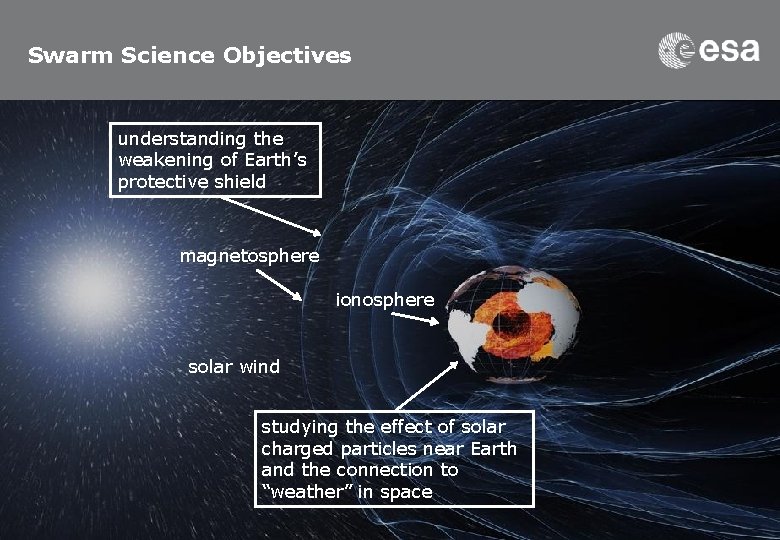
Swarm Science Objectives understanding the weakening of Earth’s protective shield magnetosphere ionosphere solar wind studying the effect of solar charged particles near Earth and the connection to “weather” in space
Swarm revealing Earth’s inner secrets understanding the “Earth’s dynamo” in the outer core mapping magnetic fingerprints in Earth’s crust & Composition of the mantle sensing the weak signature of the ocean currents
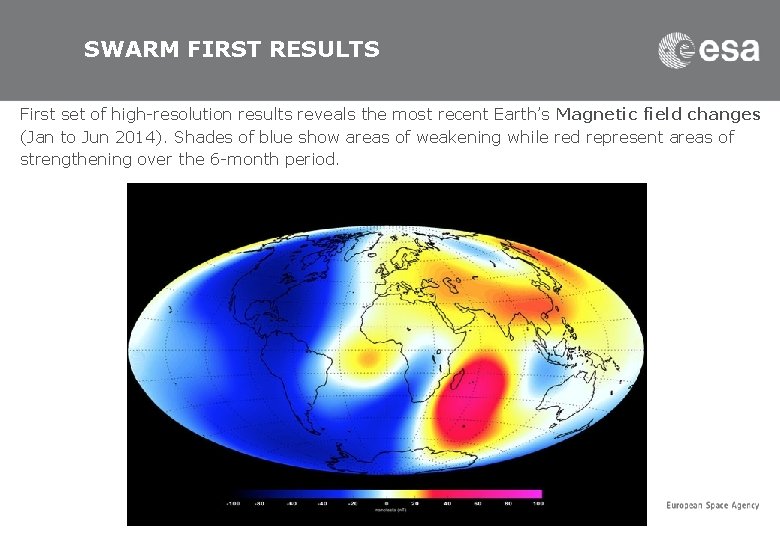
SWARM FIRST RESULTS First set of high-resolution results reveals the most recent Earth’s Magnetic field changes (Jan to Jun 2014). Shades of blue show areas of weakening while red represent areas of strengthening over the 6 -month period.
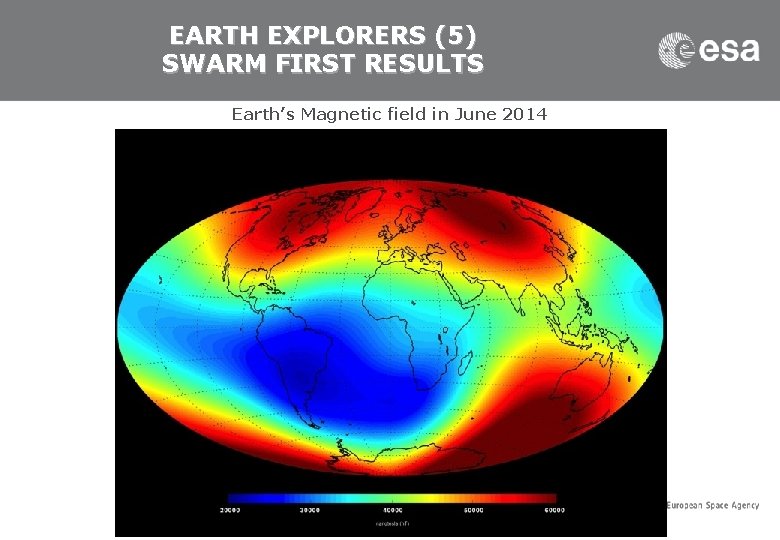
EARTH EXPLORERS (5) SWARM FIRST RESULTS Earth’s Magnetic field in June 2014
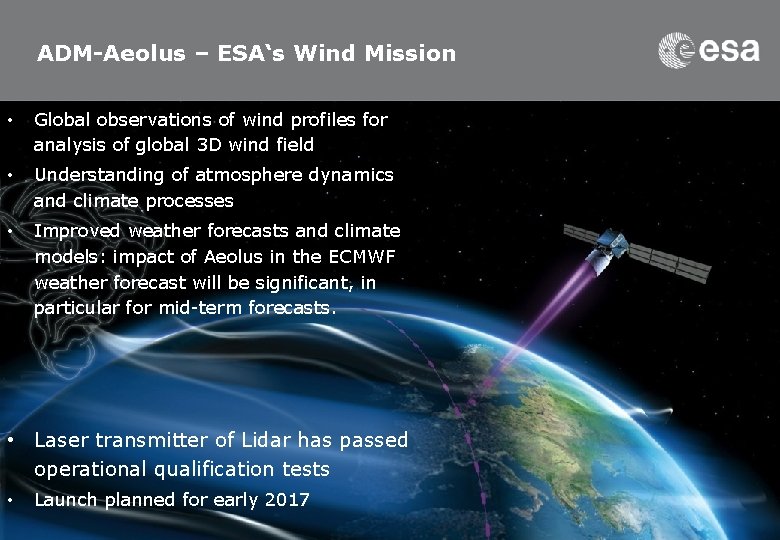
ADM-Aeolus – ESA‘s Wind Mission
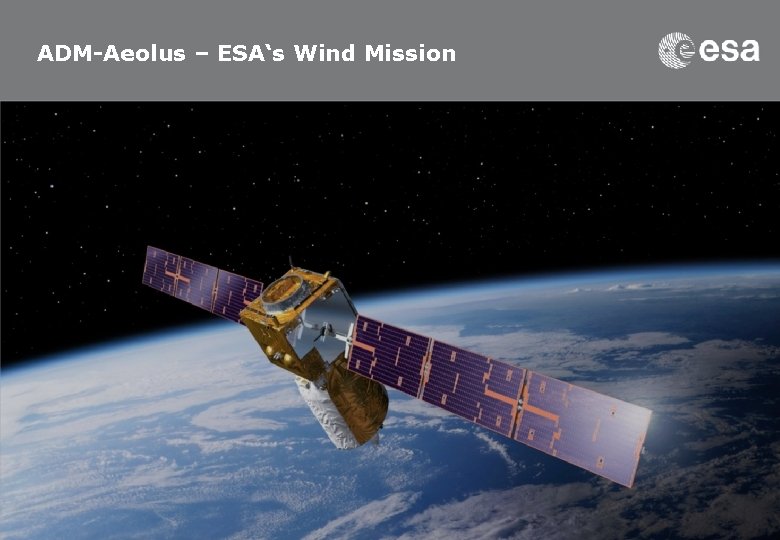
ADM-Aeolus – ESA‘s Wind Mission • Global observations of wind profiles for analysis of global 3 D wind field • Understanding of atmosphere dynamics and climate processes • Improved weather forecasts and climate models: impact of Aeolus in the ECMWF weather forecast will be significant, in particular for mid-term forecasts. • Laser transmitter of Lidar has passed operational qualification tests • Launch planned for early 2017
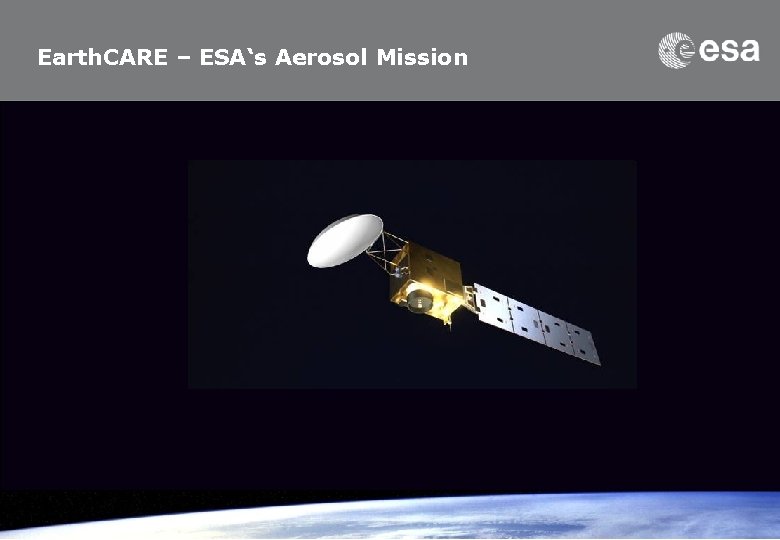
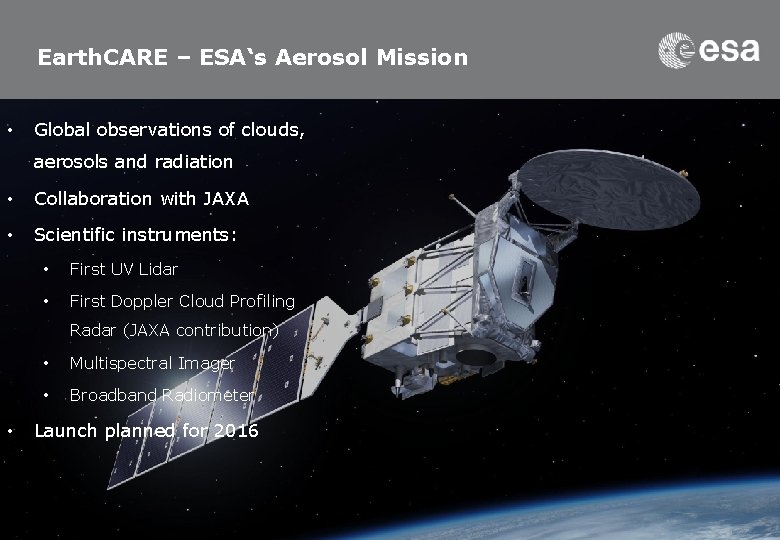
Earth. CARE – ESA‘s Aerosol Mission
Earth. CARE – ESA‘s Aerosol Mission • Global observations of clouds, aerosols and radiation • Collaboration with JAXA • Scientific instruments: • First UV Lidar • First Doppler Cloud Profiling Radar (JAXA contribution) • • Multispectral Imager • Broadband Radiometer Launch planned for 2016
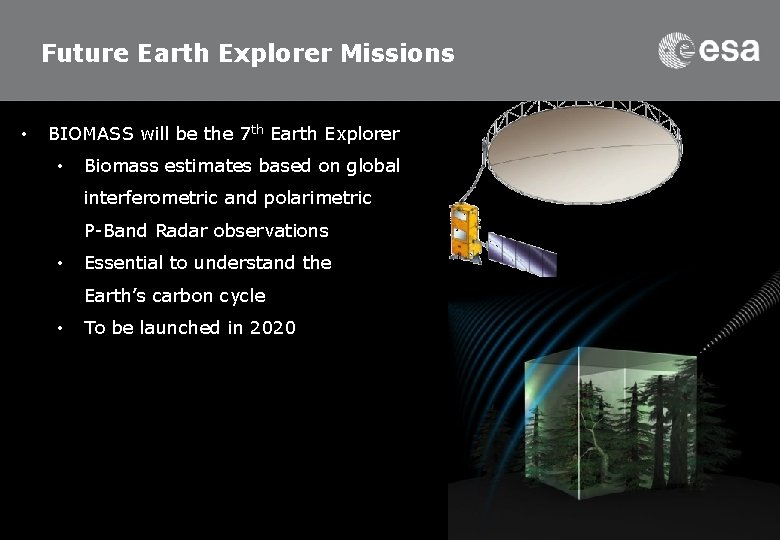
Future Earth Explorer Missions • BIOMASS will be the 7 th Earth Explorer • Biomass estimates based on global interferometric and polarimetric P-Band Radar observations • Essential to understand the Earth’s carbon cycle • To be launched in 2020
Future Earth Explorer Missions • Candidate missions for 8 th Earth Explorer: Flex and Carbon. Sat • ESAG has recommended FLEX • The Fluorescence Explorer mission, FLEX, aims to provide global maps of vegetation fluorescence, which can be converted into an indicator of actual photosynthetic activity. These data would provide information on plant health and stress, thereby improving our understanding of the global carbon cycle and supporting food security. The FLEX satellite would orbit in tandem with one of the Copernicus Sentinel-3 satellites.
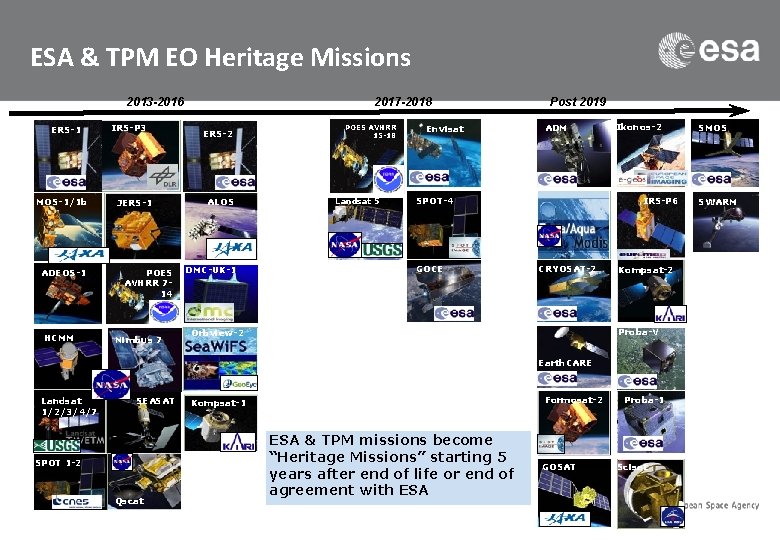
ESA & TPM EO Heritage Missions 2013 -2016 ERS-1 MOS-1/1 b ADEOS-1 HCMM IRS-P 3 JERS-1 POES AVHRR 714 Nimbus 7 2017 -2018 ERS-2 ALOS DMC-UK-1 POES AVHRR 15 -18 Landsat 5 Envisat Post 2019 ADM SPOT-4 GOCE Ikonos-2 IRS-P 6 CRYOSAT-2 Kompsat-2 Proba-V Orbview-2 Earth. CARE Landsat 1/2/3/4/7 SEASAT SPOT 1 -2 Qscat Formosat-2 Kompsat-1 ESA & TPM missions become “Heritage Missions” starting 5 years after end of life or end of agreement with ESA GOSAT Proba-1 Scisat SMOS SWARM
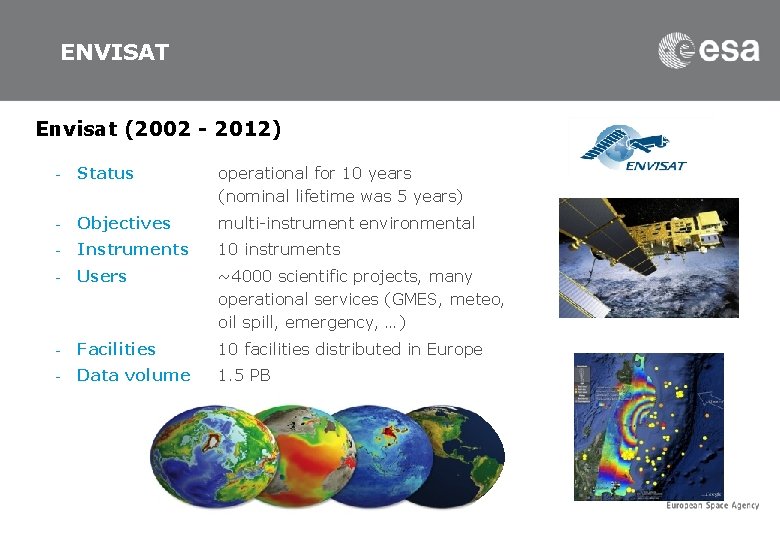
ENVISAT Envisat (2002 - 2012) - Status operational for 10 years (nominal lifetime was 5 years) - Objectives multi-instrument environmental - Instruments 10 instruments - Users ~4000 scientific projects, many operational services (GMES, meteo, oil spill, emergency, …) - Facilities 10 facilities distributed in Europe - Data volume 1. 5 PB
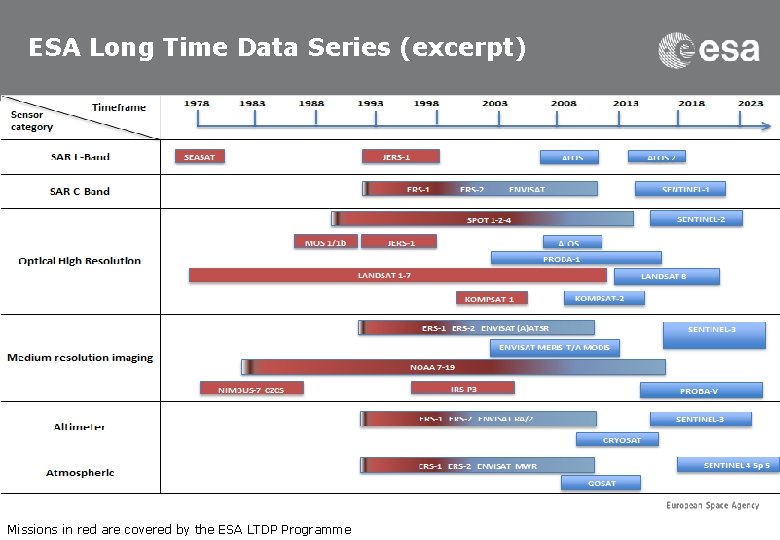
ESA Long Time Data Series (excerpt) Missions in red are covered by the ESA LTDP Programme
ESA EO Ground Segment
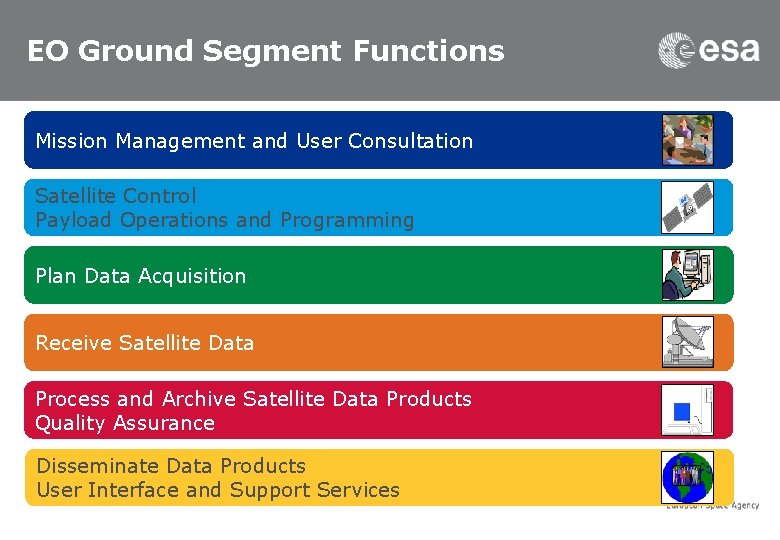
EO Ground Segment Functions Mission Management and User Consultation Satellite Control Payload Operations and Programming Plan Data Acquisition Receive Satellite Data Process and Archive Satellite Data Products Quality Assurance Disseminate Data Products User Interface and Support Services
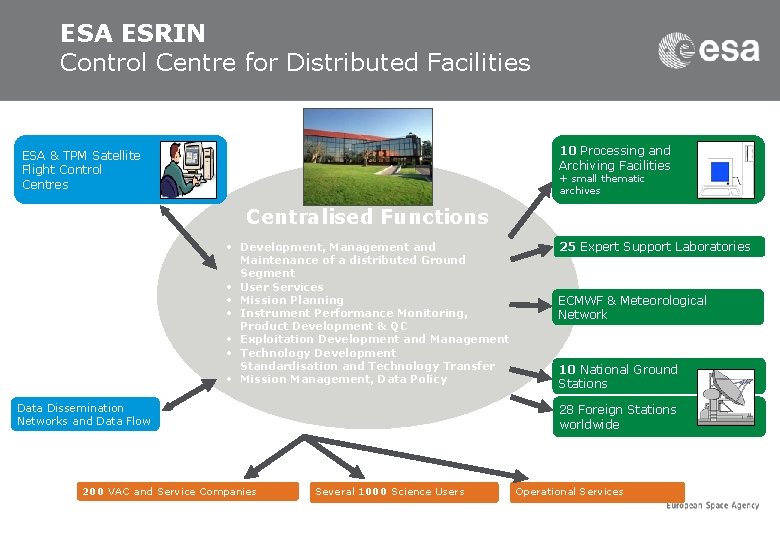
ESA ESRIN Control Centre for Distributed Facilities 10 Processing and Archiving Facilities ESA & TPM Satellite Flight Control Centres + small thematic archives Centralised Functions • Development, Management and Maintenance of a distributed Ground Segment • User Services • Mission Planning • Instrument Performance Monitoring, Product Development & QC • Exploitation Development and Management • Technology Development Standardisation and Technology Transfer • Mission Management, Data Policy Data Dissemination Networks and Data Flow 200 VAC and Service Companies 25 Expert Support Laboratories ECMWF & Meteorological Network 10 National Ground Stations 28 Foreign Stations worldwide Several 1000 Science Users Operational Services
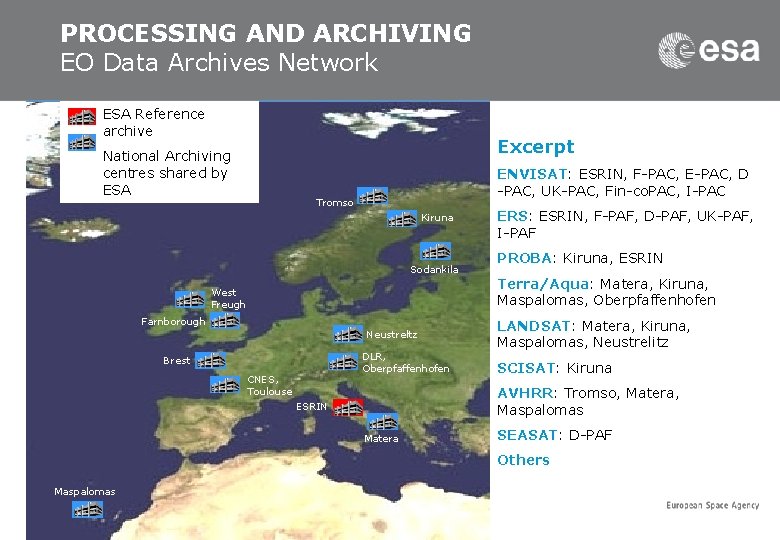
PROCESSING AND ARCHIVING EO Data Archives Network ESA Reference archive Excerpt National Archiving centres shared by ESA ENVISAT: ESRIN, F-PAC, E-PAC, D -PAC, UK-PAC, Fin-co. PAC, I-PAC Tromso Kiruna Sodankila West Freugh Farnborough Neustreltz DLR, Oberpfaffenhofen Brest CNES, Toulouse ERS: ESRIN, F-PAF, D-PAF, UK-PAF, I-PAF PROBA: Kiruna, ESRIN Terra/Aqua: Matera, Kiruna, Maspalomas, Oberpfaffenhofen LANDSAT: Matera, Kiruna, Maspalomas, Neustrelitz SCISAT: Kiruna AVHRR: Tromso, Matera, Maspalomas ESRIN Matera SEASAT: D-PAF Others Maspalomas
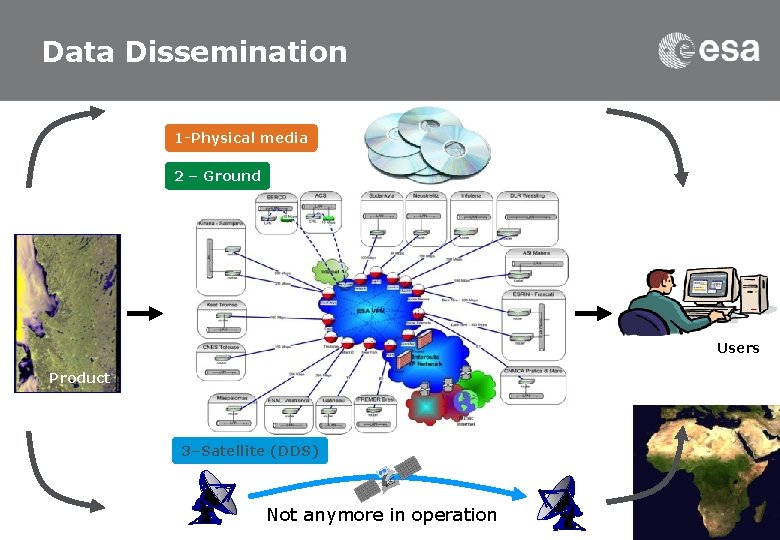
Data Dissemination 1 -Physical media 2 – Ground Users Product 3–Satellite (DDS) Not anymore in operation
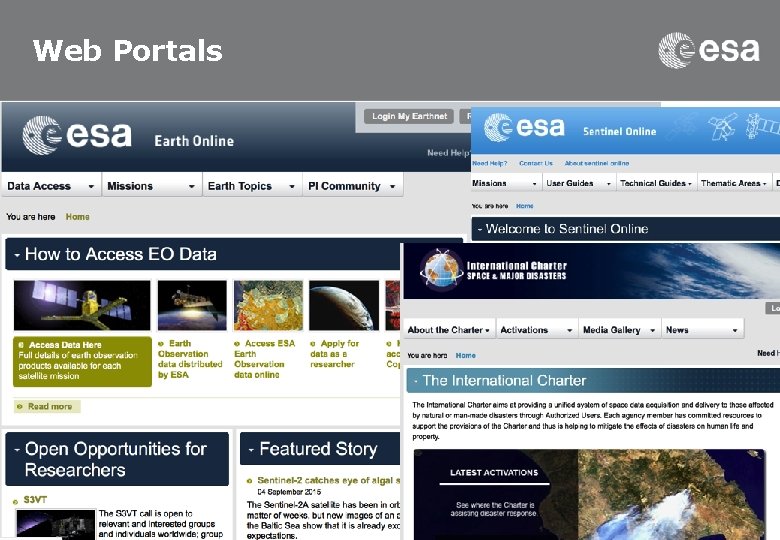
Web Portals
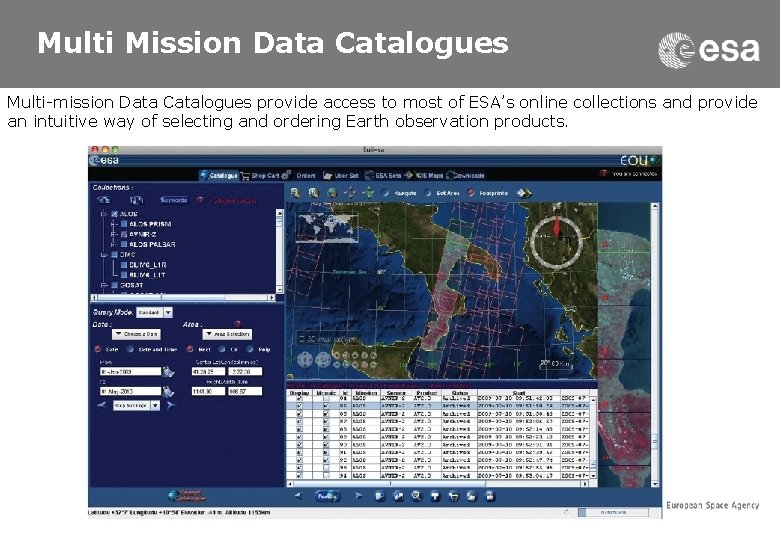
Multi Mission Data Catalogues Multi-mission Data Catalogues provide access to most of ESA’s online collections and provide an intuitive way of selecting and ordering Earth observation products.
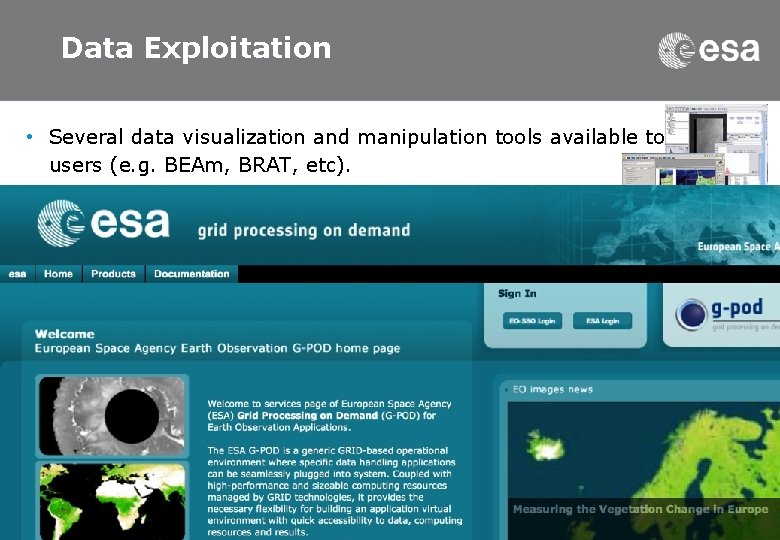
Data Exploitation • Several data visualization and manipulation tools available to users (e. g. BEAm, BRAT, etc). https: //earth. esa. int/web/guest/pi-community/toolboxes • Service Support Environment (SSE) for Service creation, chaining, provision (services remain by Service Providers). • Grid Processing on Demand (GPOD): A User-Segment data processing environment with AO permanently open to scientists: – Hosts user processors: “production” lab / “collaboration” environment. http: //gpod. eo. esa. int/ Geohazard Community (Pilot) Science Community x Science Community y Operational Service 1 Operational Service 2 Community operated plug-in processors (L 2+) Science and Service Exploitation Platform (Paa. S or Saa. S) Private/Commercial Cloud as Federated Collaboration Platform providing Processing Storage and Network Capabilities (Iaa. S)
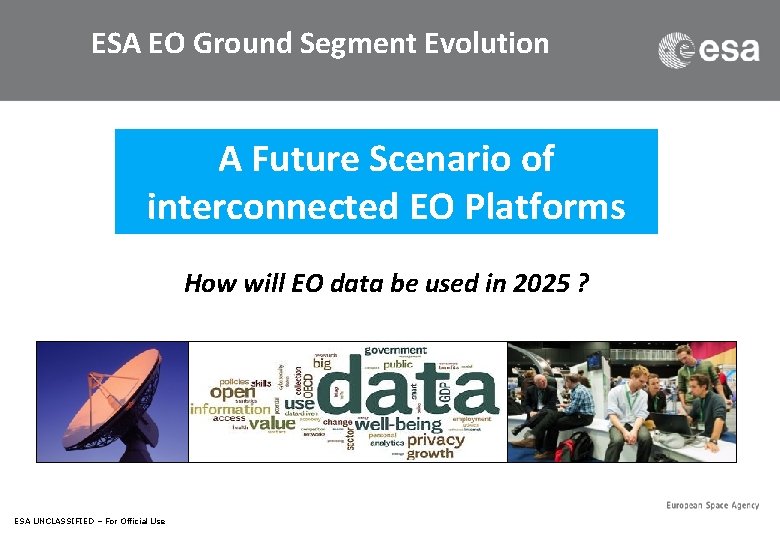
ESA EO Ground Segment Evolution A Future Scenario of interconnected EO Platforms How will EO data be used in 2025 ? ESA UNCLASSIFIED – For Official Use
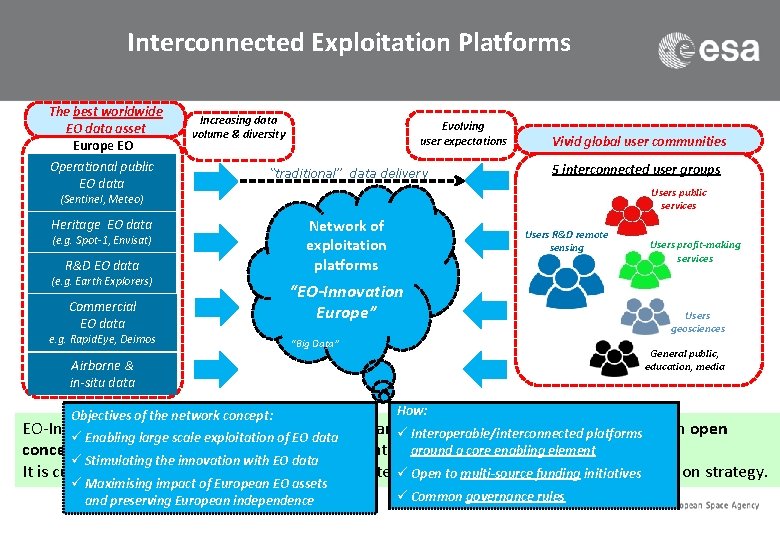
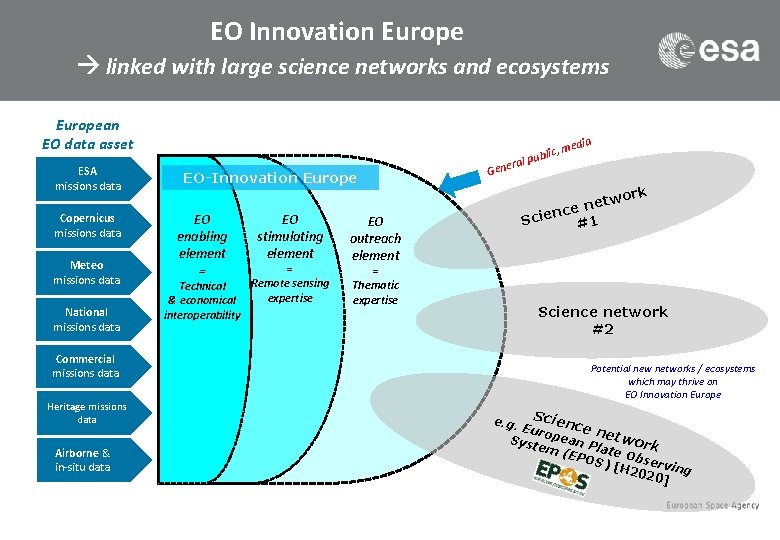
Interconnected Exploitation Platforms The best worldwide EO data asset Europe EO Operational public EO data Increasing data volume & diversity Evolving user expectations “traditional” data delivery Vivid global user communities 5 interconnected user groups Users public services (Sentinel, Meteo) Heritage EO data (e. g. Spot-1, Envisat) R&D EO data (e. g. Earth Explorers) Commercial EO data e. g. Rapid. Eye, Deimos Network of exploitation platforms Users R&D remote sensing “EO-Innovation Europe” “Big Data” Users profit-making services Users geosciences General public, education, media Airborne & in-situ data Objectives of the network concept: How: ü Maximising impact of European EO assets and preserving European independence ü Common governance rules EO-Innovation Europe is a concept providing a framework for “innovation andplatforms science”. An open ü Interoperable/interconnected ü Enabling large scale exploitation of EO data around core enabling element concept, inviting initiatives of partners, at EC, national and aindustrial level. ü Stimulating the innovation with EO data It is currently under discussion with Member Statesüas. Open parttoof the Ground Segment evolution strategy. multi-source funding initiatives
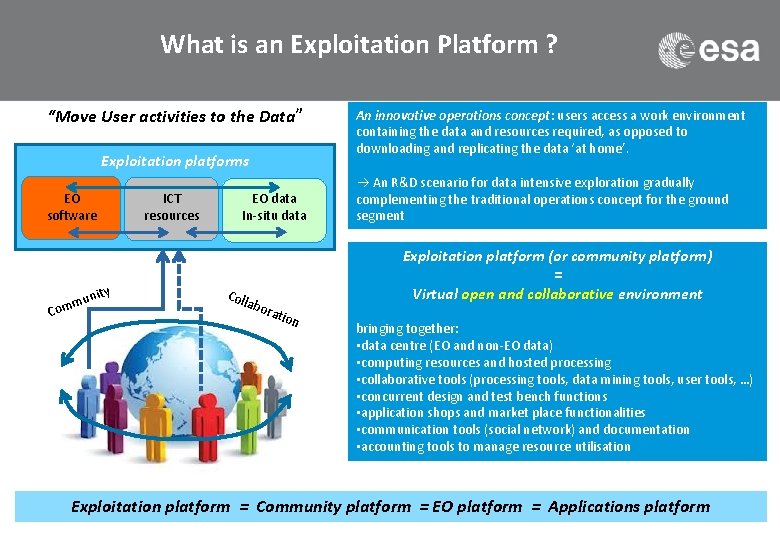
What is an Exploitation Platform ? “Move User activities to the Data” Exploitation platforms EO software y unit m Com ICT resources EO data In-situ data Coll abo r An innovative operations concept: users access a work environment containing the data and resources required, as opposed to downloading and replicating the data ‘at home’. An R&D scenario for data intensive exploration gradually complementing the traditional operations concept for the ground segment atio Exploitation platform (or community platform) = Virtual open and collaborative environment n bringing together: • data centre (EO and non-EO data) • computing resources and hosted processing • collaborative tools (processing tools, data mining tools, user tools, …) • concurrent design and test bench functions • application shops and market place functionalities • communication tools (social network) and documentation • accounting tools to manage resource utilisation Exploitation platform = Community platform = EO platform = Applications platform
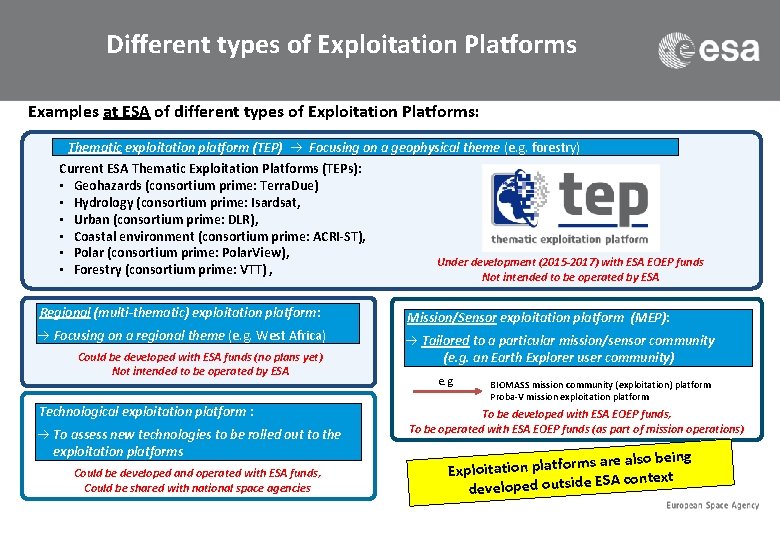
Different types of Exploitation Platforms Examples at ESA of different types of Exploitation Platforms: Thematic exploitation platform (TEP) Focusing on a geophysical theme (e. g. forestry) Current ESA Thematic Exploitation Platforms (TEPs): • Geohazards (consortium prime: Terra. Due) • Hydrology (consortium prime: Isardsat, • Urban (consortium prime: DLR), • Coastal environment (consortium prime: ACRI-ST), • Polar (consortium prime: Polar. View), • Forestry (consortium prime: VTT) , Under development (2015 -2017) with ESA EOEP funds Not intended to be operated by ESA Regional (multi-thematic) exploitation platform: Mission/Sensor exploitation platform (MEP): Focusing on a regional theme (e. g. West Africa) Tailored to a particular mission/sensor community (e. g. an Earth Explorer user community) Could be developed with ESA funds (no plans yet) Not intended to be operated by ESA Technological exploitation platform : To assess new technologies to be rolled out to the exploitation platforms Could be developed and operated with ESA funds, Could be shared with national space agencies e. g. BIOMASS mission community (exploitation) platform Proba-V mission exploitation platform To be developed with ESA EOEP funds, To be operated with ESA EOEP funds (as part of mission operations) rms are also being o tf la p n o ti a it lo xp E ESA context developed outside
EO Innovation Europe linked with large science networks and ecosystems European EO data asset ESA missions data Copernicus missions data Meteo missions data National missions data EO-Innovation Europe EO enabling element = Technical & economical interoperability EO stimulating element = Remote sensing expertise , m ublic p l a r Gene ork netw e c n Scie #1 EO outreach element = Thematic expertise Science network #2 Commercial missions data Heritage missions data Airborne & in-situ data edia Potential new networks / ecosystems which may thrive on EO Innovation Europe e. g. Scie Euro nce n Syst pean P etwor k em (EPO late Ob s e S) [ H 20 rving 20]
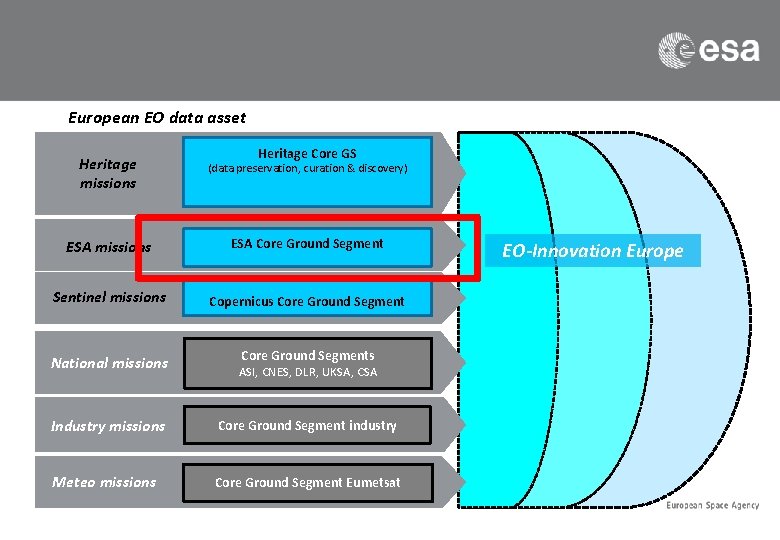
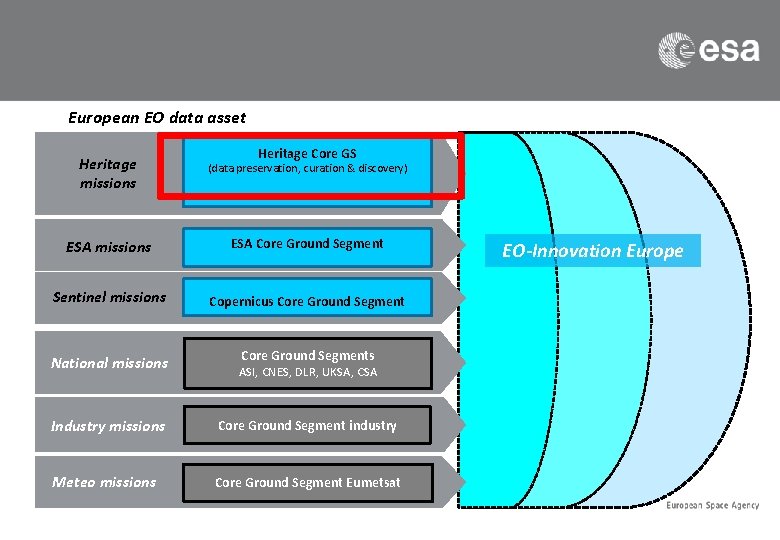
European EO data asset Heritage Core GS Heritage missions (data preservation, curation & discovery) ESA missions ESA Core Ground Segment Sentinel missions Copernicus Core Ground Segment National missions Core Ground Segments ASI, CNES, DLR, UKSA, CSA Industry missions Core Ground Segment industry Meteo missions Core Ground Segment Eumetsat EO-Innovation Europe
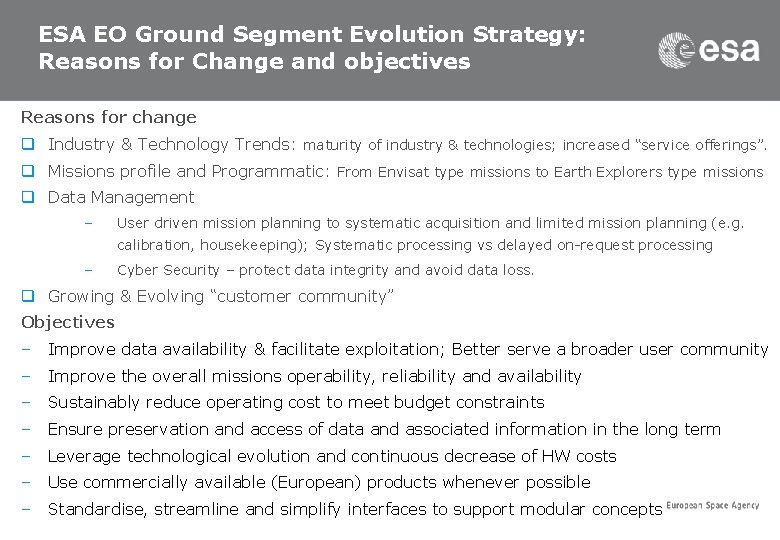
ESA EO Ground Segment Evolution Strategy: Reasons for Change and objectives Reasons for change q Industry & Technology Trends: maturity of industry & technologies; increased “service offerings”. q Missions profile and Programmatic: From Envisat type missions to Earth Explorers type missions q Data Management – User driven mission planning to systematic acquisition and limited mission planning (e. g. calibration, housekeeping); Systematic processing vs delayed on-request processing – Cyber Security – protect data integrity and avoid data loss. q Growing & Evolving “customer community” Objectives – Improve data availability & facilitate exploitation; Better serve a broader user community – Improve the overall missions operability, reliability and availability – Sustainably reduce operating cost to meet budget constraints – Ensure preservation and access of data and associated information in the long term – Leverage technological evolution and continuous decrease of HW costs – Use commercially available (European) products whenever possible – Standardise, streamline and simplify interfaces to support modular concepts
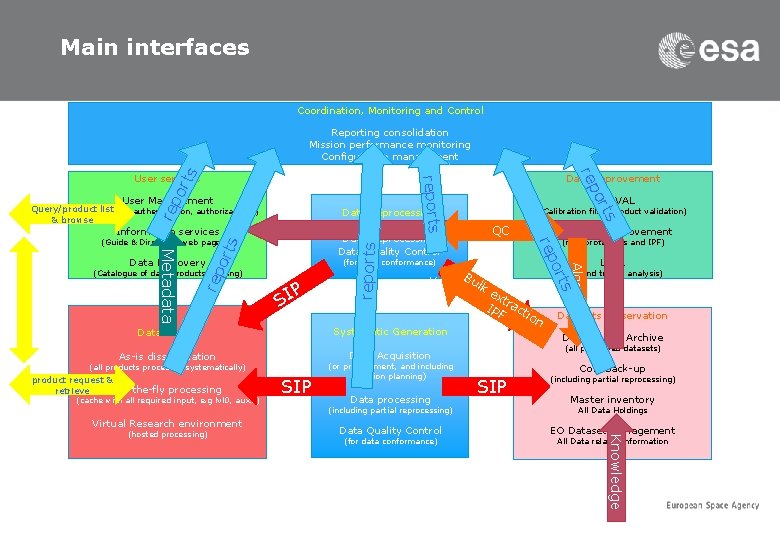
Main interfaces Coordination, Monitoring and Control ort rep F s Systematic Generation As-is dissemination Data Acquisition (all products processed systematically) SIP (or procurement, and including mission planning) Data processing LTPA (QC and trends analysis) Sl. Ik ex P tra IP Algo-IPF K Bu s rep ort (new prototypes and IPF) ort P SI Data access cti on Datasets Preservation Data Master Archive (all preserved datasets) Cold back-up SIP (including partial reprocessing) Master inventory (including partial reprocessing) All Data Holdings Data Quality Control EO Dataset Management (for data conformance) Knowledge (hosted processing) Algorithm improvement (for data conformance) (Catalogue of data products offering) Virtual Research environment QC rep Metadata Discovery (Calibration files, product validation) s Information services reports Data Reprocessing Data consolidation Data Reprocessing Data Quality Control (Guide & Directory, web pages…) (cache with all required input, e. g lvl 0, aux…) CAL/VAL ort User Management Query/product list (registration, authentication, authorization…) & browse product request & On-the-fly processing retrieve Data improvement reports User services rep s Reporting consolidation Mission performance monitoring Configuration management All Data related information
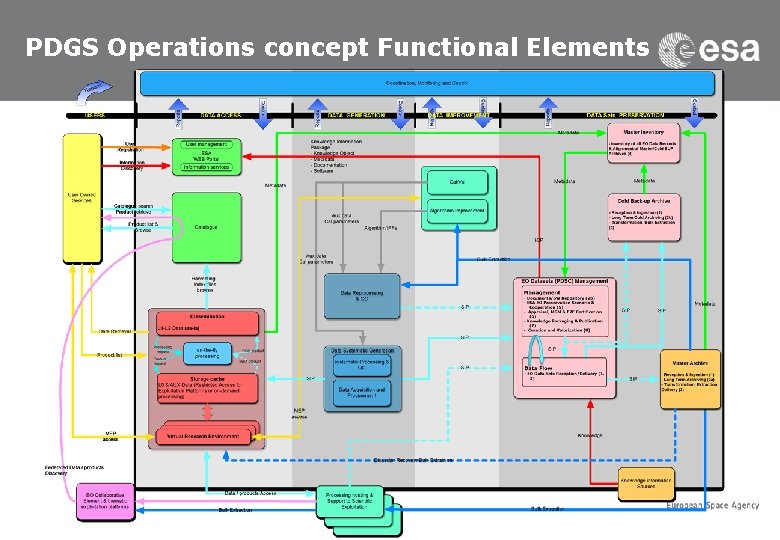
PDGS Operations concept Functional Elements
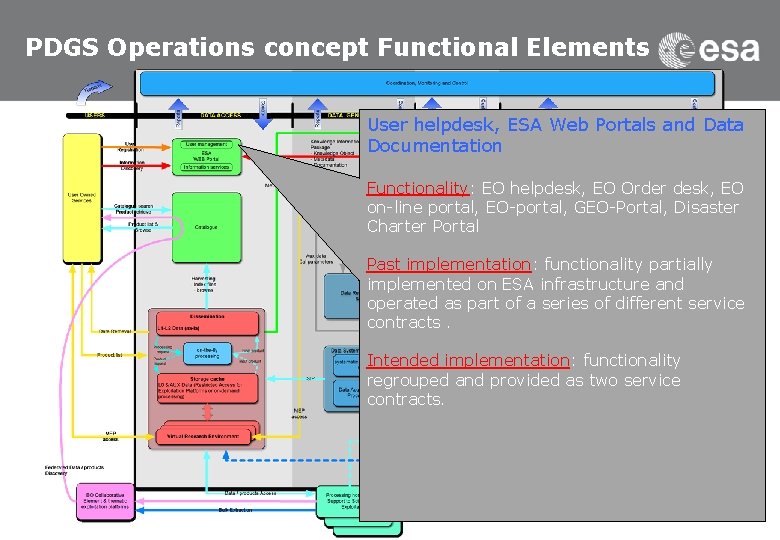
PDGS Operations concept Functional Elements User helpdesk, ESA Web Portals and Data Documentation Functionality: EO helpdesk, EO Order desk, EO on-line portal, EO-portal, GEO-Portal, Disaster Charter Portal Past implementation: functionality partially implemented on ESA infrastructure and operated as part of a series of different service contracts. Intended implementation: functionality regrouped and provided as two service contracts.
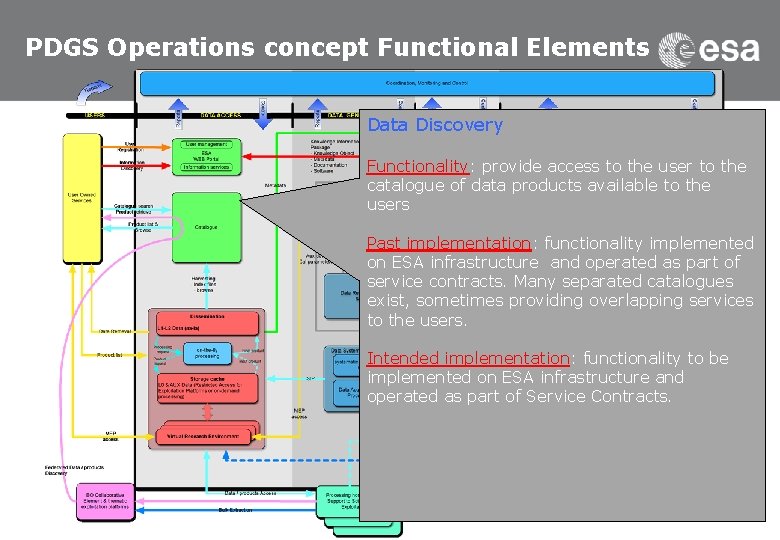
PDGS Operations concept Functional Elements Data Discovery Functionality: provide access to the user to the catalogue of data products available to the users Past implementation: functionality implemented on ESA infrastructure and operated as part of service contracts. Many separated catalogues exist, sometimes providing overlapping services to the users. Intended implementation: functionality to be implemented on ESA infrastructure and operated as part of Service Contracts.
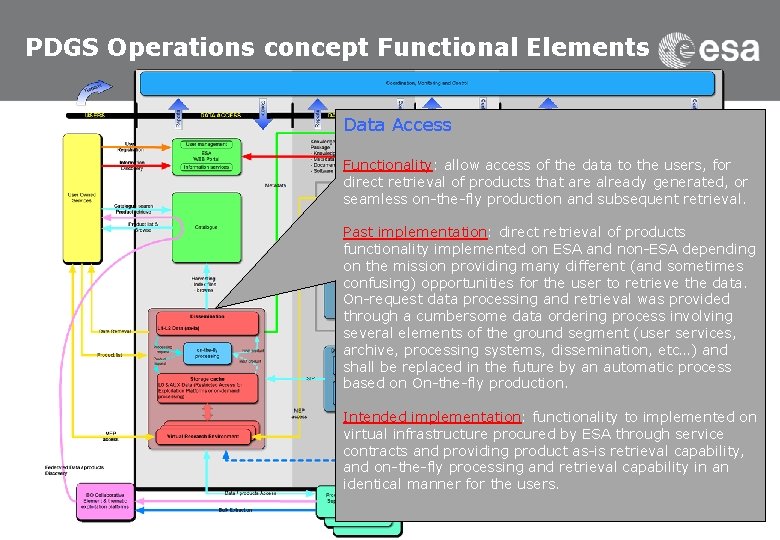
PDGS Operations concept Functional Elements Data Access Functionality: allow access of the data to the users, for direct retrieval of products that are already generated, or seamless on-the-fly production and subsequent retrieval. Past implementation: direct retrieval of products functionality implemented on ESA and non-ESA depending on the mission providing many different (and sometimes confusing) opportunities for the user to retrieve the data. On-request data processing and retrieval was provided through a cumbersome data ordering process involving several elements of the ground segment (user services, archive, processing systems, dissemination, etc…) and shall be replaced in the future by an automatic process based on On-the-fly production. Intended implementation: functionality to implemented on virtual infrastructure procured by ESA through service contracts and providing product as-is retrieval capability, and on-the-fly processing and retrieval capability in an identical manner for the users.
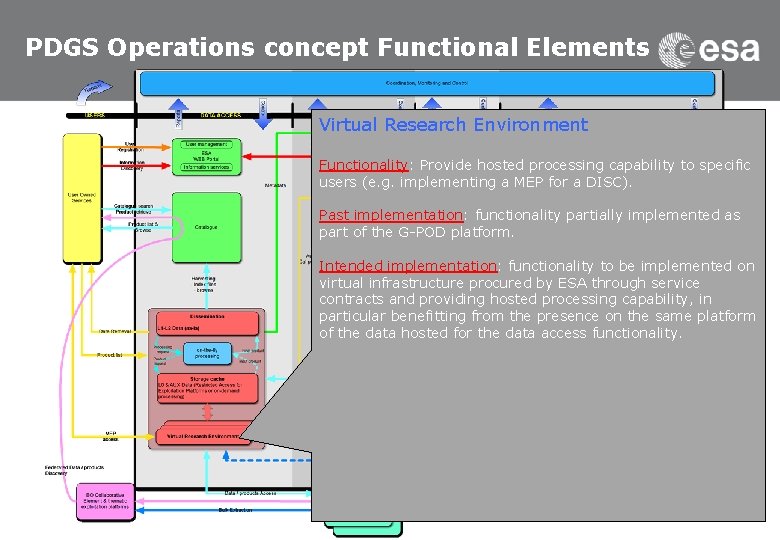
PDGS Operations concept Functional Elements Virtual Research Environment Functionality: Provide hosted processing capability to specific users (e. g. implementing a MEP for a DISC). Past implementation: functionality partially implemented as part of the G-POD platform. Intended implementation: functionality to be implemented on virtual infrastructure procured by ESA through service contracts and providing hosted processing capability, in particular benefitting from the presence on the same platform of the data hosted for the data access functionality.
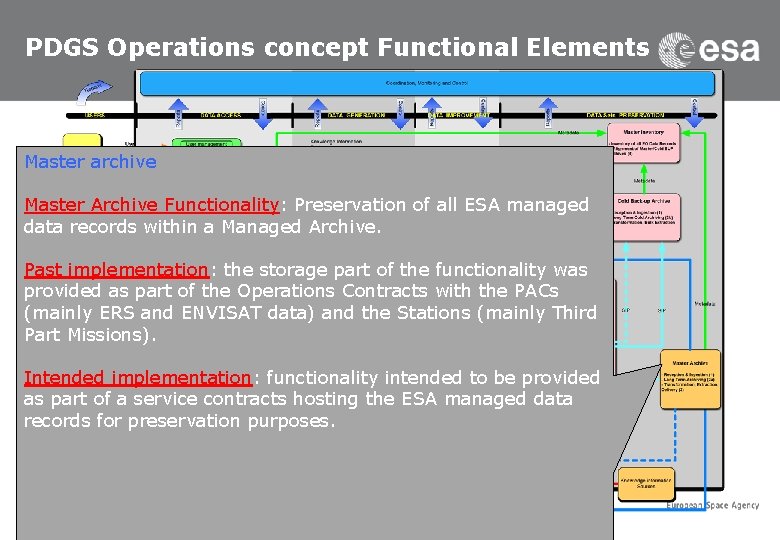
PDGS Operations concept Functional Elements Master archive Master Archive Functionality: Preservation of all ESA managed data records within a Managed Archive. Past implementation: the storage part of the functionality was provided as part of the Operations Contracts with the PACs (mainly ERS and ENVISAT data) and the Stations (mainly Third Part Missions). Intended implementation: functionality intended to be provided as part of a service contracts hosting the ESA managed data records for preservation purposes.
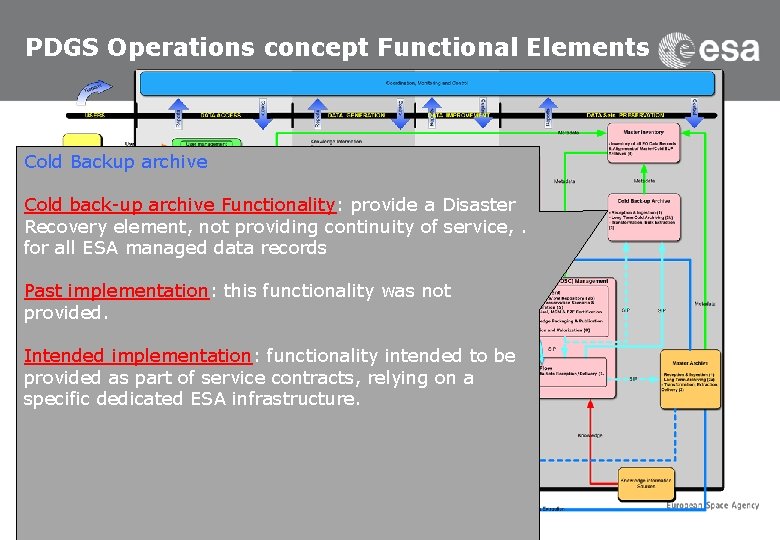
PDGS Operations concept Functional Elements Cold Backup archive Cold back-up archive Functionality: provide a Disaster Recovery element, not providing continuity of service, . for all ESA managed data records Past implementation: this functionality was not provided. Intended implementation: functionality intended to be provided as part of service contracts, relying on a specific dedicated ESA infrastructure.
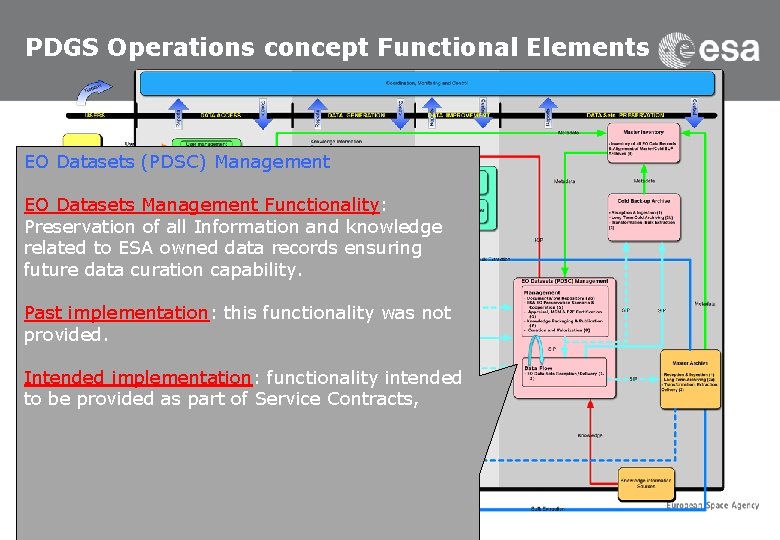
PDGS Operations concept Functional Elements EO Datasets (PDSC) Management EO Datasets Management Functionality: Preservation of all Information and knowledge related to ESA owned data records ensuring future data curation capability. Past implementation: this functionality was not provided. Intended implementation: functionality intended to be provided as part of Service Contracts,
European EO data asset Heritage Core GS Heritage missions (data preservation, curation & discovery) ESA missions ESA Core Ground Segment Sentinel missions Copernicus Core Ground Segment National missions Core Ground Segments ASI, CNES, DLR, UKSA, CSA Industry missions Core Ground Segment industry Meteo missions Core Ground Segment Eumetsat EO-Innovation Europe
Future EO Data Preservation and Valorisation Scenarios
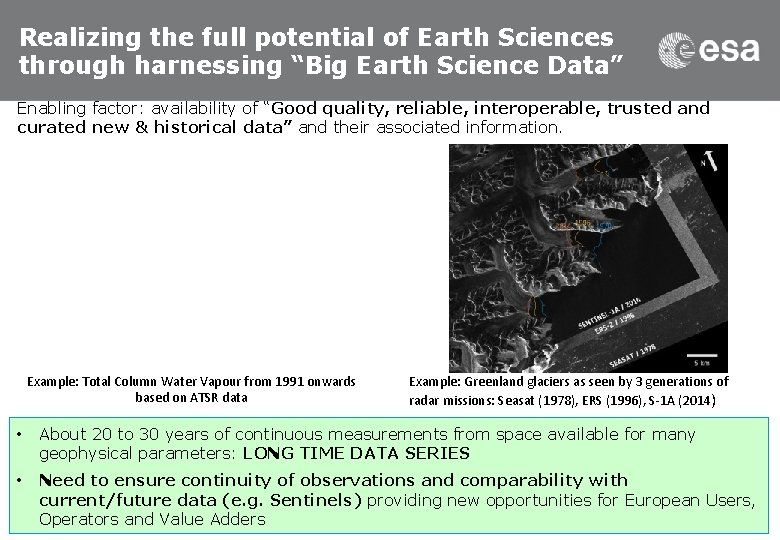
Realizing the full potential of Earth Sciences through harnessing “Big Earth Science Data” Enabling factor: availability of “Good quality, reliable, interoperable, trusted and curated new & historical data” and their associated information. Example: Total Column Water Vapour from 1991 onwards based on ATSR data Example: Greenland glaciers as seen by 3 generations of radar missions: Seasat (1978), ERS (1996), S-1 A (2014) • About 20 to 30 years of continuous measurements from space available for many geophysical parameters: LONG TIME DATA SERIES • Need to ensure continuity of observations and comparability with current/future data (e. g. Sentinels) providing new opportunities for European Users, Operators and Value Adders
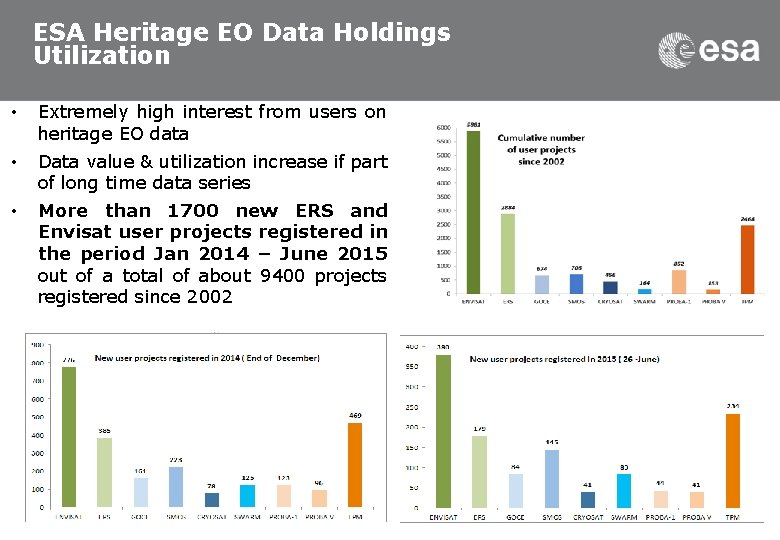
ESA Heritage EO Data Holdings Utilization • Extremely high interest from users on heritage EO data • Data value & utilization increase if part of long time data series • More than 1700 new ERS and Envisat user projects registered in the period Jan 2014 – June 2015 out of a total of about 9400 projects registered since 2002
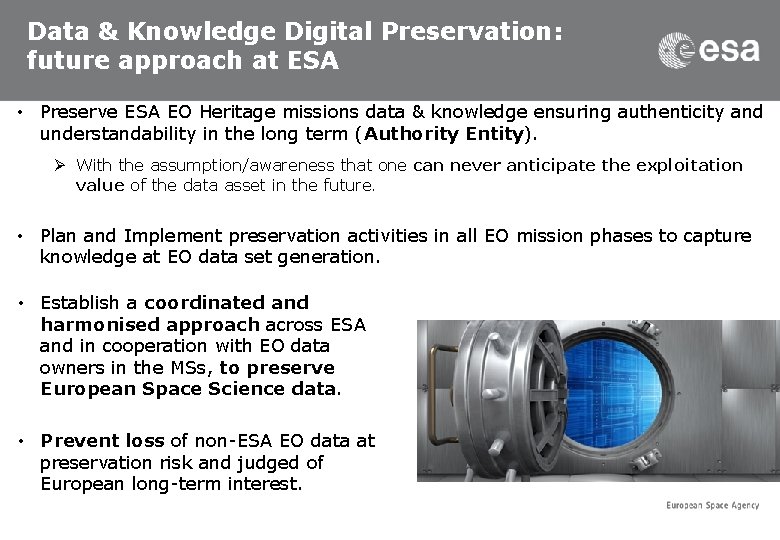
Data & Knowledge Digital Preservation: future approach at ESA • Preserve ESA EO Heritage missions data & knowledge ensuring authenticity and understandability in the long term (Authority Entity). Ø With the assumption/awareness that one can never anticipate the exploitation value of the data asset in the future. • Plan and Implement preservation activities in all EO mission phases to capture knowledge at EO data set generation. • Establish a coordinated and harmonised approach across ESA and in cooperation with EO data owners in the MSs, to preserve European Space Science data. • Prevent loss of non-ESA EO data at preservation risk and judged of European long-term interest.
Data Curation and Valorization: future approach at ESA • Make sure the full content of the ESA EO heritage archives is maintained discoverable, accessible and usable in the long term through state of art technologies and innovative tools & services. • Valorize ESA EO Heritage Data: Ø Ensure the full content of the ESA EO archives is fit for contemporary purpose thus enabling multi-disciplinary applications & broader data use. Ø Improve data quality through algorithms evolution, data reprocessing, data validation and traceability (QA 4 EO). Ø Build long time series of coherent data and data collections for specific applications. Ø In cooperation with other EO data owners and users in the Member States. • Generate Fundamental Earth Observation Data Records based on the combination of archived data assets (heritage and current) from MSs National & ESA EO Missions, for land, marine, atmosphere, solid Earth and also climate research, to better address high priority societal challenges in Europe.
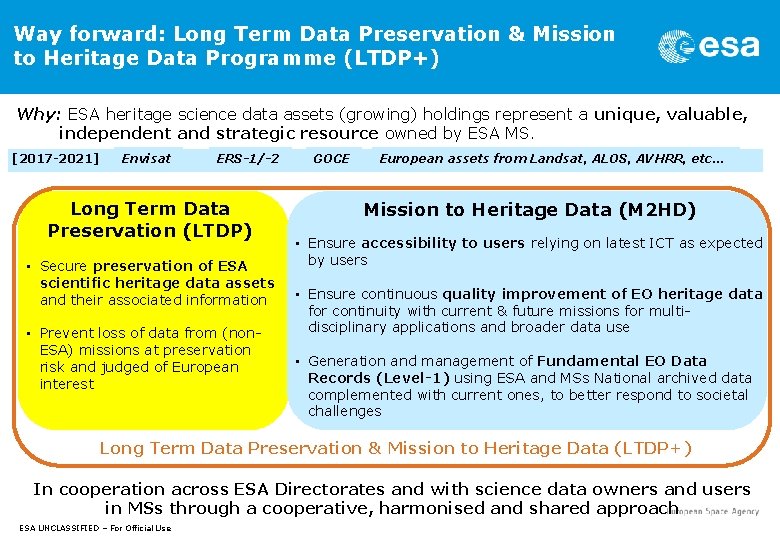
Way forward: Long Term Data Preservation & Mission to Heritage Data Programme (LTDP+) Why: ESA heritage science data assets (growing) holdings represent a unique, valuable, independent and strategic resource owned by ESA MS. [2017 -2021] Envisat ERS-1/-2 Long Term Data Preservation (LTDP) • Secure preservation of ESA scientific heritage data assets and their associated information • Prevent loss of data from (non. ESA) missions at preservation risk and judged of European interest GOCE European assets from Landsat, ALOS, AVHRR, etc… Mission to Heritage Data (M 2 HD) • Ensure accessibility to users relying on latest ICT as expected by users • Ensure continuous quality improvement of EO heritage data for continuity with current & future missions for multidisciplinary applications and broader data use • Generation and management of Fundamental EO Data Records (Level-1) using ESA and MSs National archived data complemented with current ones, to better respond to societal challenges Long Term Data Preservation & Mission to Heritage Data (LTDP+) In cooperation across ESA Directorates and with science data owners and users in MSs through a cooperative, harmonised and shared approach ESA UNCLASSIFIED – For Official Use
Thank you for your attention 60