
ES 101 Introduction to Environmental Science Youre in
- Slides: 19
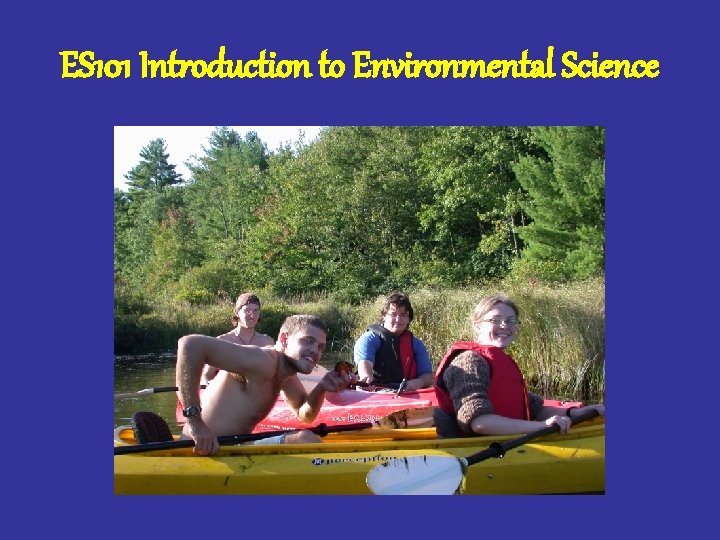
ES 101 Introduction to Environmental Science
You’re in the right place if… • You are thinking about majoring or minoring in Environmental Science • You need a 2 -semester science class to fulfill your core requirements • You enjoy the outdoors – don’t take this class if you don’t like WALKING OUTSIDE! • You are concerned about environmental issues AND • You have NOT already taken Integrated Science -Environment
Goals of the Course 1. Recognize that environmental problems are often the result of a conflict between individual desires and community health 2. Learn how to solve environmental problems 3. Encourage respect for diversity – of people, of all life forms – and for the entire “earth community” 4. Help you “learn how to learn” – find information, judge the quality of the information, analyze data, make reasonable conclusions, etc.
How will we achieve these goals? 1. LABS – hands on, outside! 2. LECTURES – team taught 3. READINGS – Textbook, field guide and Sand County Almanac 4. SHORT ASSIGNMENTS 5. EXAMS 6. FINAL PROJECT Syllabus explains how these are counted – certain number of points for each
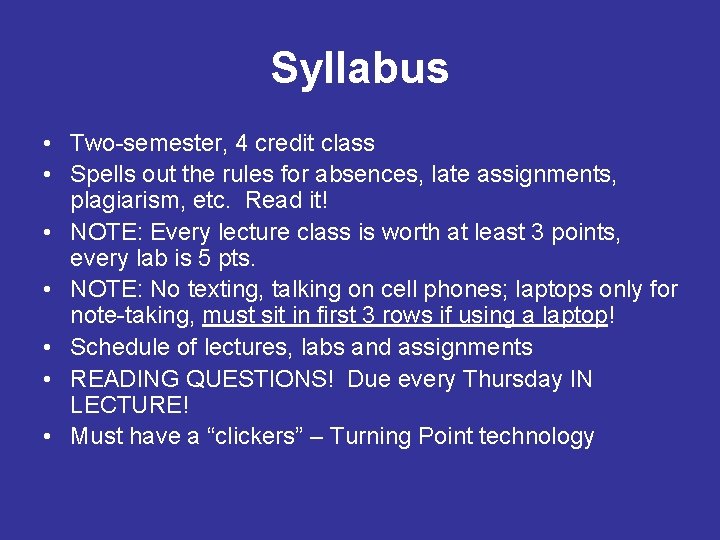
Syllabus • Two-semester, 4 credit class • Spells out the rules for absences, late assignments, plagiarism, etc. Read it! • NOTE: Every lecture class is worth at least 3 points, every lab is 5 pts. • NOTE: No texting, talking on cell phones; laptops only for note-taking, must sit in first 3 rows if using a laptop! • Schedule of lectures, labs and assignments • READING QUESTIONS! Due every Thursday IN LECTURE! • Must have a “clickers” – Turning Point technology
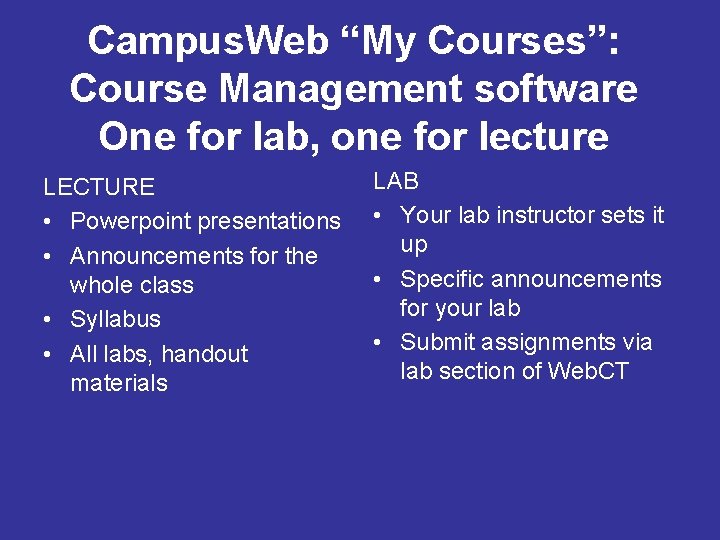
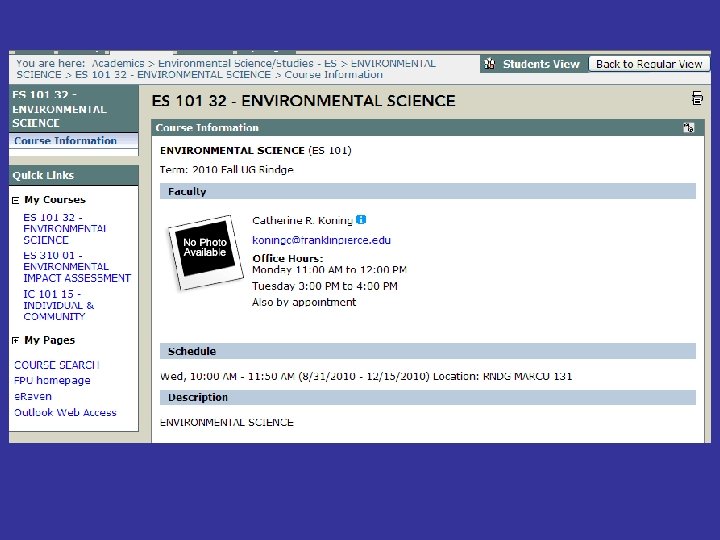
Campus. Web “My Courses”: Course Management software One for lab, one for lecture LECTURE • Powerpoint presentations • Announcements for the whole class • Syllabus • All labs, handout materials LAB • Your lab instructor sets it up • Specific announcements for your lab • Submit assignments via lab section of Web. CT
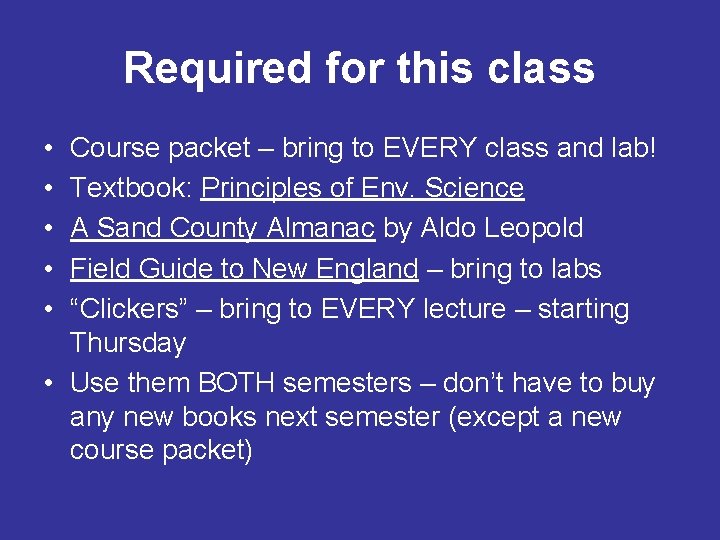
Required for this class • • • Course packet – bring to EVERY class and lab! Textbook: Principles of Env. Science A Sand County Almanac by Aldo Leopold Field Guide to New England – bring to labs “Clickers” – bring to EVERY lecture – starting Thursday • Use them BOTH semesters – don’t have to buy any new books next semester (except a new course packet)
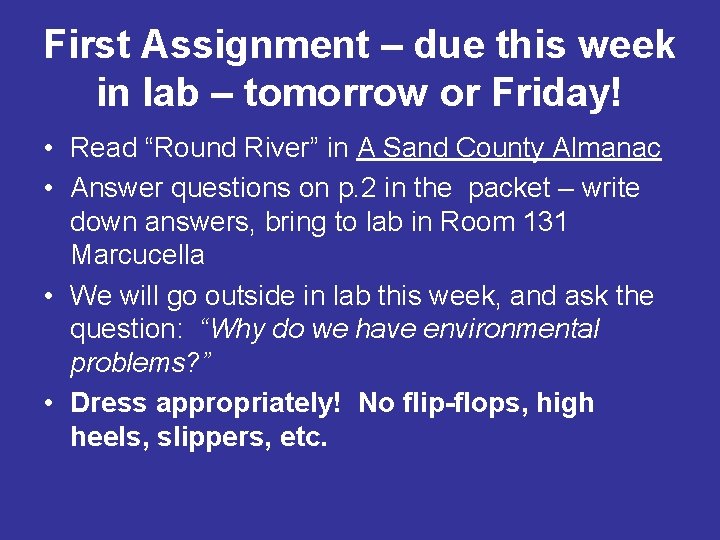
First Assignment – due this week in lab – tomorrow or Friday! • Read “Round River” in A Sand County Almanac • Answer questions on p. 2 in the packet – write down answers, bring to lab in Room 131 Marcucella • We will go outside in lab this week, and ask the question: “Why do we have environmental problems? ” • Dress appropriately! No flip-flops, high heels, slippers, etc.
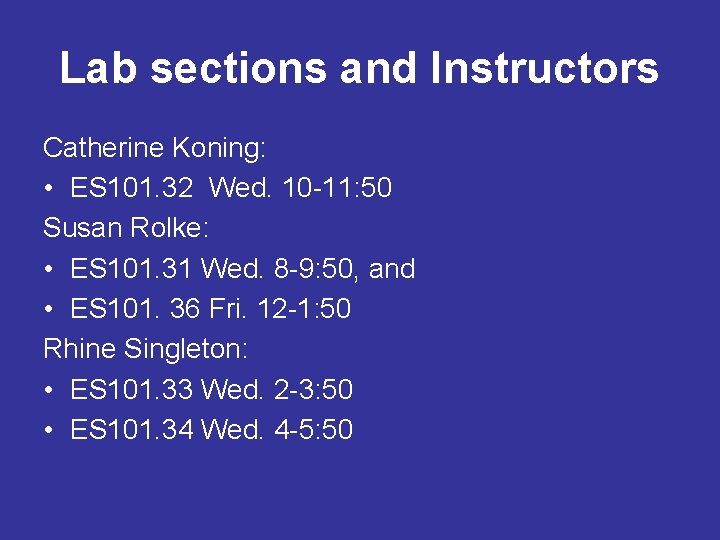
Lab sections and Instructors Catherine Koning: • ES 101. 32 Wed. 10 -11: 50 Susan Rolke: • ES 101. 31 Wed. 8 -9: 50, and • ES 101. 36 Fri. 12 -1: 50 Rhine Singleton: • ES 101. 33 Wed. 2 -3: 50 • ES 101. 34 Wed. 4 -5: 50
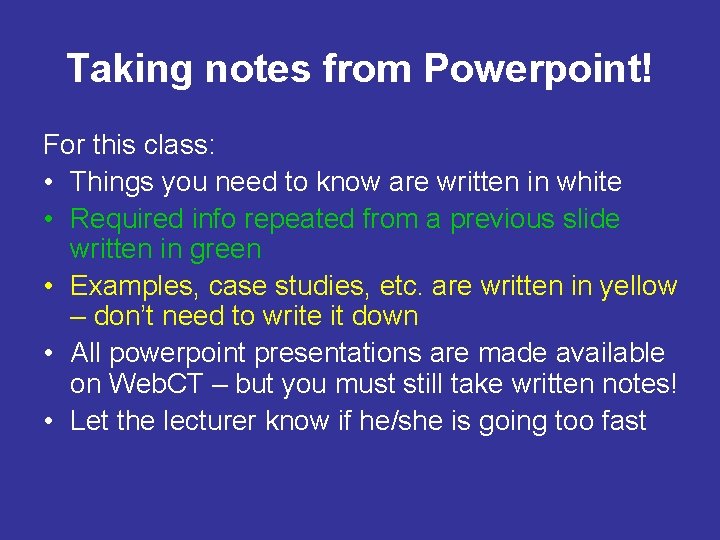
Taking notes from Powerpoint! For this class: • Things you need to know are written in white • Required info repeated from a previous slide written in green • Examples, case studies, etc. are written in yellow – don’t need to write it down • All powerpoint presentations are made available on Web. CT – but you must still take written notes! • Let the lecturer know if he/she is going too fast
What is Environmental Science? (ES) • Study of the impact of humans on the natural world
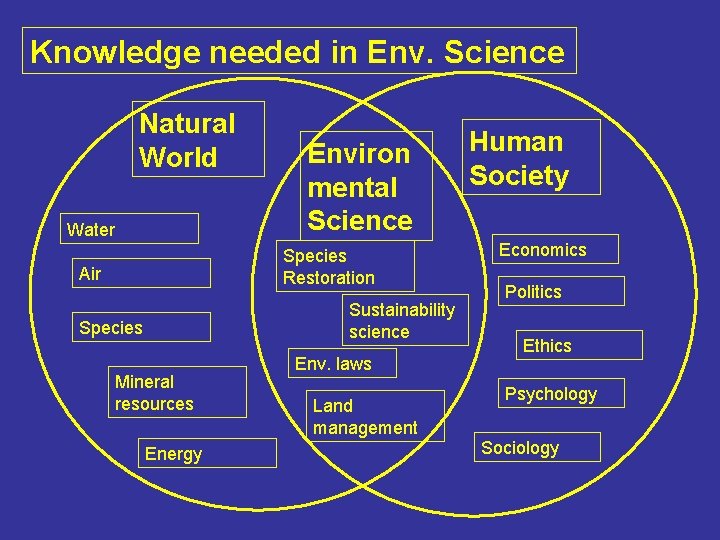
Knowledge needed in Env. Science Natural World Water Environ mental Science Species Restoration Air Sustainability science Species Mineral resources Energy Env. laws Land management Human Society Economics Politics Ethics Psychology Sociology
ES Goal: Sustainability = Lasting ecological “balance” and human progress (textbook definition) = meeting the needs of the present generation (of all species) without compromising the ability of future generations to meet their own needs (Bruntland Commission, 1987)
Three dimensions of Sustainability 1. Environment: Environment can produce the resources needed 2. Economy: Economy can continue to support us on the resources we have 3. Equity/Fairness: Fair distribution of resources – people of all cultures, and all species, must be considered
Evidence of Sustainability? • • • Reducing rates of human population growth Bald eagle populations have recovered! In U. S. we don’t dump raw sewage into the water Many laws protecting the environment Awareness of the problem Etc. !
Evidence of unsustainability? • Global climate change, increasing greenhouse gases • Human population still growing fast • More wars, conflicts over resources • Running out of oil • Species going extinct faster than they would without humans • Etc. !
Outside in Lab this week! • Do the reading, answer the questions! • Dress appropriately! No flip-flops, high heels, slippers, etc.
Lab sections and Instructors Catherine Koning: • ES 101. 32 Wed. 10 -11: 50 Susan Rolke: • ES 101. 31 Wed. 8 -9: 50, and • ES 101. 36 Fri. 12 -1: 50 Rhine Singleton: • ES 101. 33 Wed. 2 -3: 50 • ES 101. 34 Wed. 4 -5: 50