
ERYTHROCYTOSIS By Dr Hussein Ali Naji Erythrocytosis is
ERYTHROCYTOSIS By Dr. Hussein Ali Naji
Erythrocytosis is defined as an increase in peripheral RBC numbers, hemoglobin concentration, and calculated hematocrit or packed cell volume (PCV) above established reference intervals. Often, erythrocytosis is used interchangeably with the term polycythemia. Polycythemia can be divided in to two types
1. Relative Erythrocytosis (Polycythemia) Relative erythrocytosis is the most common form of erythrocytosis in dogs and cats. In relative erythrocytosis, the increased PCV is not accompanied by an expanded RBC mass. The causes of relative of polycythemia include. a. Hemoconcentration due to fluid loss (i. e. severe dehydration associated with vomiting, diarrhea, or polyuria without suffi cient water intake). b. Splenic contraction (in dogs and horse) associated with excitement or anxiety. This catecholamine mediated release of RBCs from their storage site in the spleen causes transient mild erythrocytosis unassociated with clinical signs.
2 - Absolute Erythrocytosis (Polycythemia) Absolute erythrocytosis, defined as a true increase in RBC mass, can develop from primary or secondary causes. a. Primary Erythrocytosis (Polycythemia Vera) Primary erythrocytosis results from autonomous proliferation of erythroid precursors that require little to no EPO for differentiation. also called polycythemia vera, is a chronic myeloproliferative disorder resulting from the clonal expansion of hematopoietic progenitor cells. Causes in human, dogs and cat. 1. Splenomegaly 2 -Leukocytosis. 3 Thrombocytosis, may progress to myelofibrosis or leukemia.
a. Secondary Erythrocytosis Secondary erythrocytosis develops from excessive production of EPO. Include three types. 1. Appropriate Secondary Erythrocytosis In physiologically appropriate erythrocytosis, the EPO mediated increased RBC mass expands the oxygen carrying capacity of the blood in an attempt to improve inadequate tissue oxygenation (hypoxia). the causes include a. Cardiac Disorder. b. Respiratory Disorder. c. Hemoglobin Disorder.
2 Inappropriate Secondary Erythrocytosis Excess production of EPO in the absence of systemic hypoxia, termed physiologically inappropriate erythrocytosis, is caused by: a. Kidney Neoplasia b. Miscellaneous Neoplasia c. Non neoplastic Kidney Disorders 3 - Endocrinopathy - Associated Erythrocytosis Hormones other than EPO, such as cortisol, androgen, thyroxine, and growth hormone, also may stimulate erythropoiesis either directly, or indirectly through increased production of EPO or alternate pathophysiologic mechanisms.
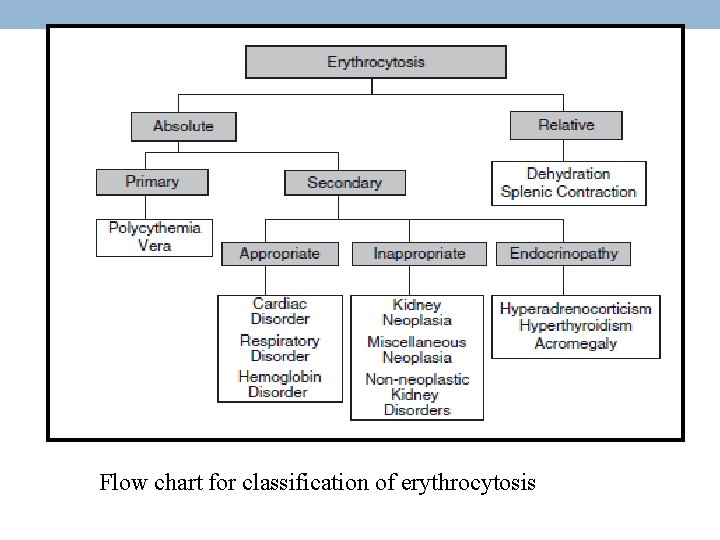
Flow chart for classification of erythrocytosis
LEUKOPOIESIS Neutrophil Production Neutrophilic cells within the bone marrow can be included in two pools. A- Mitotic pool The proliferation and maturation pool includes myeloblasts, promyelocytes, and myelocytes. Approximately four or five divisions occur over several days.
B- Postmitotic pool Its maturation and storage pool includes metamyelocytes, bands, and segmented neutrophils. Cells within this pool nor mally undergo maturation and storage for several more days prior to the migration of mature neutrophils through the vascular endothelium and into the circulation.
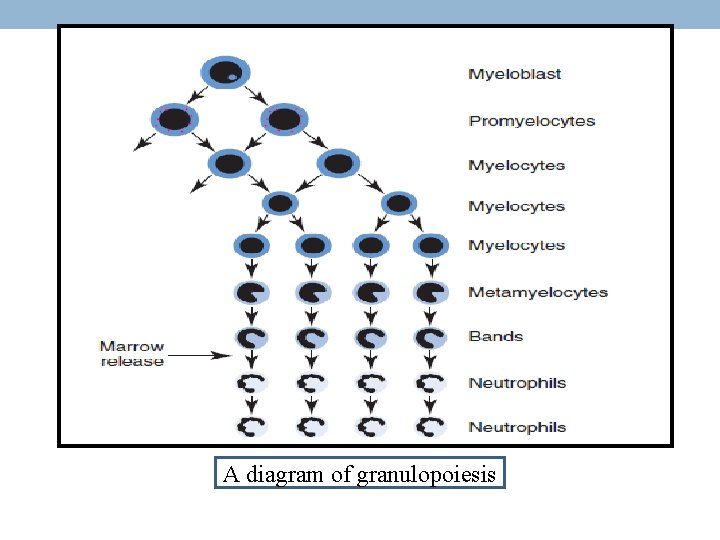
A diagram of granulopoiesis
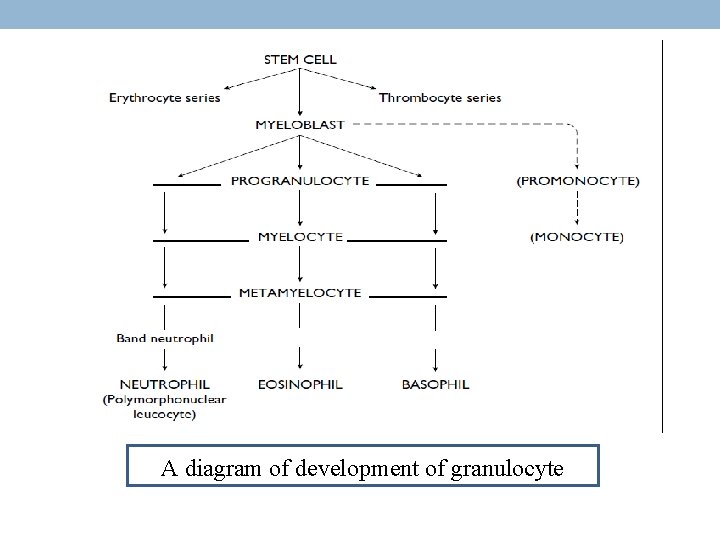
A diagram of development of granulocyte
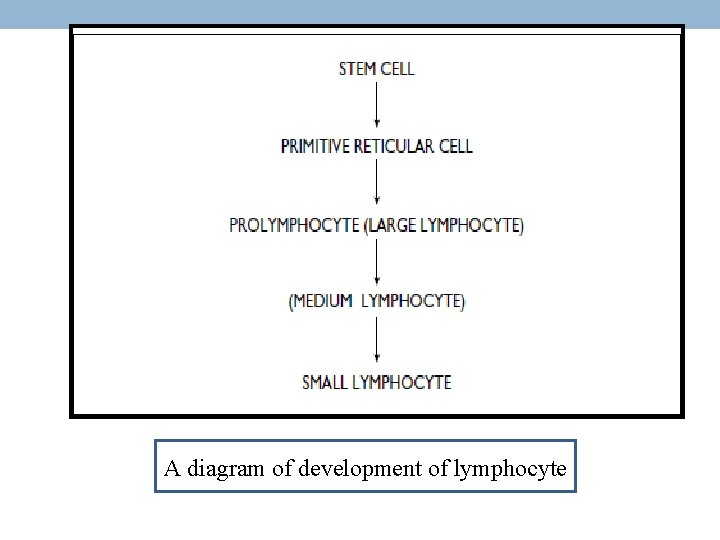
A diagram of development of lymphocyte
- Slides: 12